

















7.4.3 Energy Efficiency Services For Industry
Direct Support for Local Industry
Universitas Islam Sultan Agung (UNISSULA) provides free direct services to local industry aimed at improving energy efficiency, clean-energy adoption, and the practical use of renewable-energy technologies.
In 2025, these services included training, technical assistance, technology demonstrations, renewable-energy education, and applied technology support for local farmers, food producers, and small-scale production businesses.
All participating beneficiaries received the services free of charge. The programmes were supported through community-service funding, and participants were not charged participation fees, training fees, mentoring fees, or technology-access fees.
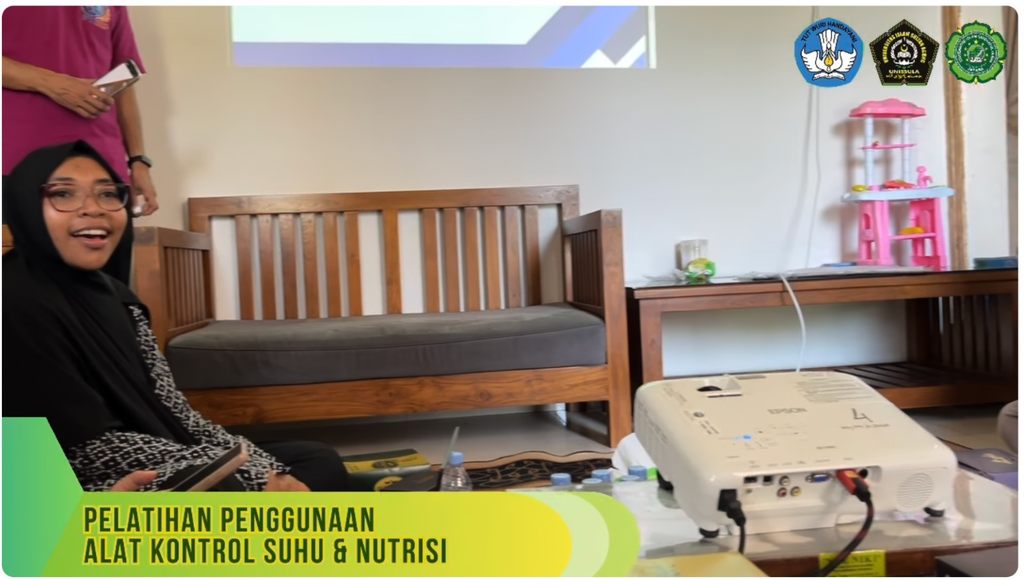

Free Photovoltaic and Solar-Energy Training
One of UNISSULA’s 2025 activities was practical training on the use of photovoltaic and solar-panel technology for local farmers and food producers.
The documented training was held on 12 September 2025 and introduced participants to renewable-energy applications that can support agricultural and production activities.
The training covered:
- basic photovoltaic systems;
- solar-energy applications;
- renewable energy for agricultural operations;
- equipment operation;
- integration of green energy into production activities; and
- potential reduction of dependence on conventional energy sources.
This service gave local producers direct access to university expertise related to clean energy and practical renewable-energy technology.
Improving Energy Efficiency in Local Production
UNISSULA also provided practical support related to more efficient production systems.
Through smart-farming and technology-transfer activities, local producers received training and guidance on:
- temperature monitoring;
- nutrient monitoring;
- automated control systems;
- efficient management of hydroponic production;
- Internet of Things technology; and
- the use of renewable energy in agricultural production.
These services were designed to help participants operate their production systems more efficiently and make better use of energy and other resources.
Practical Technology Demonstrations
The 2025 programmes were implemented as interactive knowledge-transfer activities rather than passive information sessions.
Participants were able to:
- observe technology demonstrations;
- examine and use relevant equipment;
- discuss technical and operational challenges;
- receive direct guidance from university experts;
- gain hands-on experience; and
- learn how the technologies could be adapted to their production conditions.
This practical approach helped bridge the gap between university research and the operational needs of local producers.
Support for Local Food Producers
UNISSULA also provided direct support to local food producers.
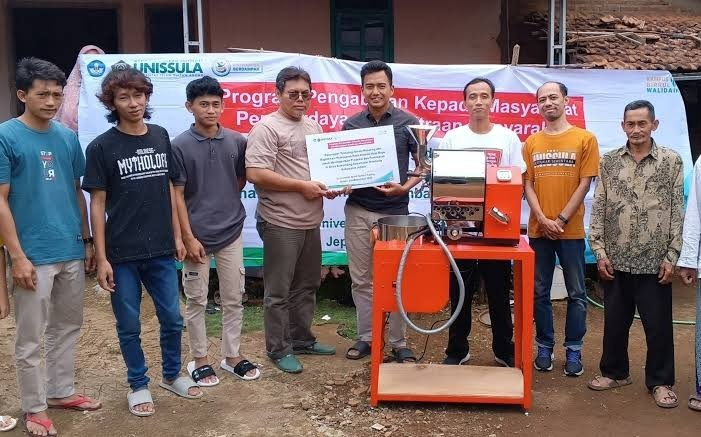
One example was the 2025 programme for Kopi Vinzoei / Kopi Boyo, a local coffee producer in Sumanding Village, Kembang District, Jepara.
On 30 August 2025, the UNISSULA Community Service Team provided coffee-roasting technology together with practical training to strengthen the producer’s technical and production capabilities.
The training included:
- coffee-roasting machine operation;
- roasting temperature;
- roasting time;
- machine maintenance;
- production management;
- packaging;
- internet marketing; and
- financial recording.
This support strengthened production efficiency and helped the local producer operate technology more effectively.
Energy and Resource Efficiency for Local Industry
UNISSULA’s approach to local-industry support combines clean energy with production efficiency.
The university helps local producers understand how technology can be used to:
- reduce unnecessary energy consumption;
- improve equipment operation;
- adopt renewable-energy sources;
- monitor production conditions;
- improve process efficiency; and
- reduce dependence on conventional energy.
This creates a practical pathway for local businesses to improve both operational performance and environmental sustainability.
Free Access to University Expertise
All services provided through these programmes were free for participating local producers.
Beneficiaries were not required to pay for:
- participation;
- technical training;
- mentoring;
- technology demonstrations; or
- access to university expertise.
This free-service model ensures that local businesses and producers can access clean-energy knowledge and energy-efficiency support without financial barriers.
Renewable-Energy Options for Local Producers
UNISSULA’s services also help local producers understand renewable-energy options that may be suitable for their activities.
Through solar-panel training and green-energy demonstrations, participants were introduced to:
- photovoltaic technology;
- solar-powered systems;
- energy storage;
- renewable-energy integration; and
- the potential substitution of conventional energy sources with cleaner alternatives.
This type of support directly contributes to increasing awareness and adoption of clean-energy options among local industries.
Knowledge Transfer for Sustainable Production
UNISSULA’s local-industry services follow a practical knowledge-transfer model:
University expertise → Technical training → Technology demonstration → Practical application → Improved efficiency → Cleaner production
This model helps local producers translate academic knowledge into practical improvements within their own operations.
Contribution to Local Economic and Environmental Sustainability
By providing free energy-efficiency and clean-energy services, UNISSULA helps local industries strengthen both economic and environmental performance.
Improved energy management and access to renewable-energy knowledge can help local producers:
- reduce operating costs;
- improve production efficiency;
- improve technology use;
- reduce resource waste;
- adopt cleaner technologies; and
- strengthen long-term business sustainability.