

















7.4.2 100% Renewable Energy Pledge
Public Commitment to the Transition toward 100% Renewable Energy
Universitas Islam Sultan Agung (UNISSULA) publicly promotes a long-term commitment toward 100% renewable energy beyond the university.
UNISSULA recognises that the transition toward a fully renewable-energy future requires broad participation from communities, educational institutions, industry, government, professional organisations, researchers, and other public stakeholders.
Through public discussions, academic events, technology demonstrations, community engagement, external collaboration, and clean-energy innovation, UNISSULA encourages wider society to progressively increase the use of renewable energy, improve energy efficiency, and reduce dependence on fossil-based energy sources.
This public commitment supports the wider transition toward cleaner, more efficient, and more sustainable energy systems.
UNISSULA Public Renewable Energy Pledge
UNISSULA promotes the following public pledge:
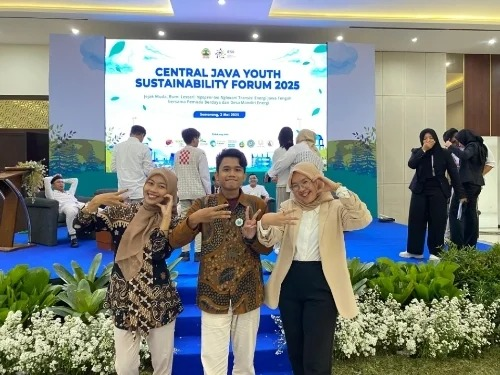
Universitas Islam Sultan Agung supports and promotes the long-term transition toward 100% renewable energy and encourages communities, educational institutions, industries, government institutions, and other public stakeholders to increase the adoption of renewable energy, improve energy efficiency, develop clean-energy technologies, and progressively reduce dependence on fossil-based energy sources.
The pledge is promoted through public and external activities involving discussions, technology demonstrations, academic forums, community programmes, and participation in clean-energy and energy-efficiency initiatives.
UNISSULA views the transition toward 100% renewable energy as a collective process requiring technological innovation, education, awareness, collaboration, and progressive changes in energy use.
Promoting Green Technology through International Public Discussion
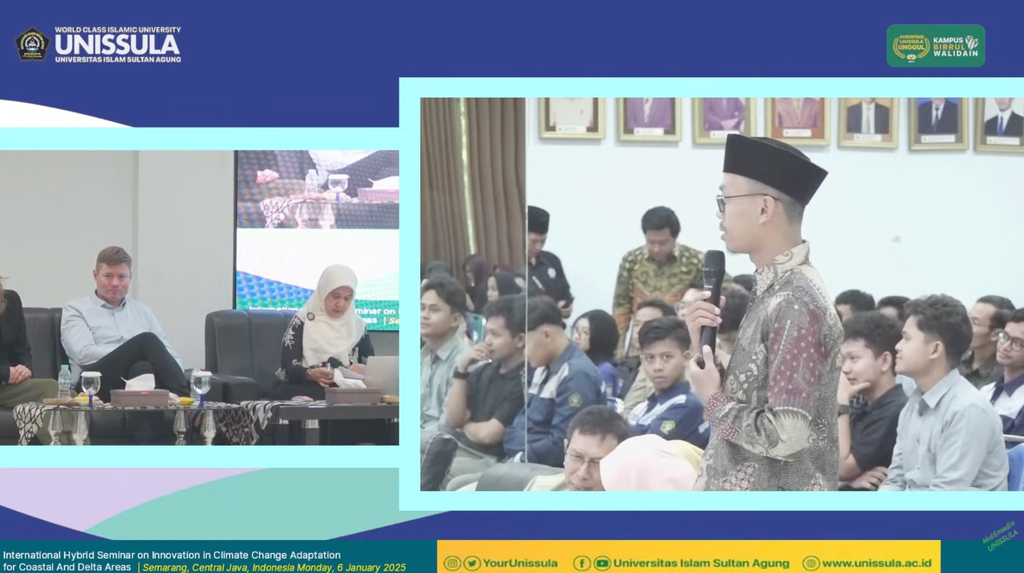
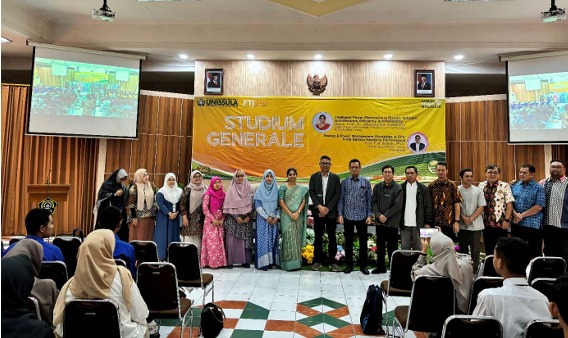
In 2025, the Faculty of Industrial Technology of UNISSULA organised the International Studium General FTI 2025 with the theme:
“Green Technology for a Sustainable Future: Innovations, Challenges, and Opportunities.”
The event provided a forum for discussing green technology, sustainability, innovation, and the role of cleaner technologies in supporting a more sustainable future.
Through this international academic forum, UNISSULA promoted discussion on sustainable technology and encouraged wider understanding of the importance of reducing environmental impacts through technological innovation.
The activity contributes to UNISSULA’s broader public promotion of the transition toward cleaner and renewable energy systems.
Promoting Energy-Efficient Electric Mobility
UNISSULA also promoted clean-energy and energy-efficiency awareness through a Studium General on electric vehicles held in 2025.
The programme brought external experts to discuss topics including:
- intelligent power electronics;
- electric-vehicle architecture;
- energy efficiency;
- battery systems;
- energy management;
- power management; and
- reliability of electric-vehicle technologies.
The event highlighted the role of electrification and efficient energy management in reducing dependence on conventional fossil-fuel-based transportation.
By discussing electric mobility and energy management with external experts and participants, UNISSULA supported wider awareness of how cleaner transportation technologies can contribute to a low-carbon and renewable-energy future.
Participation in the Kontes Mobil Hemat Energi 2025
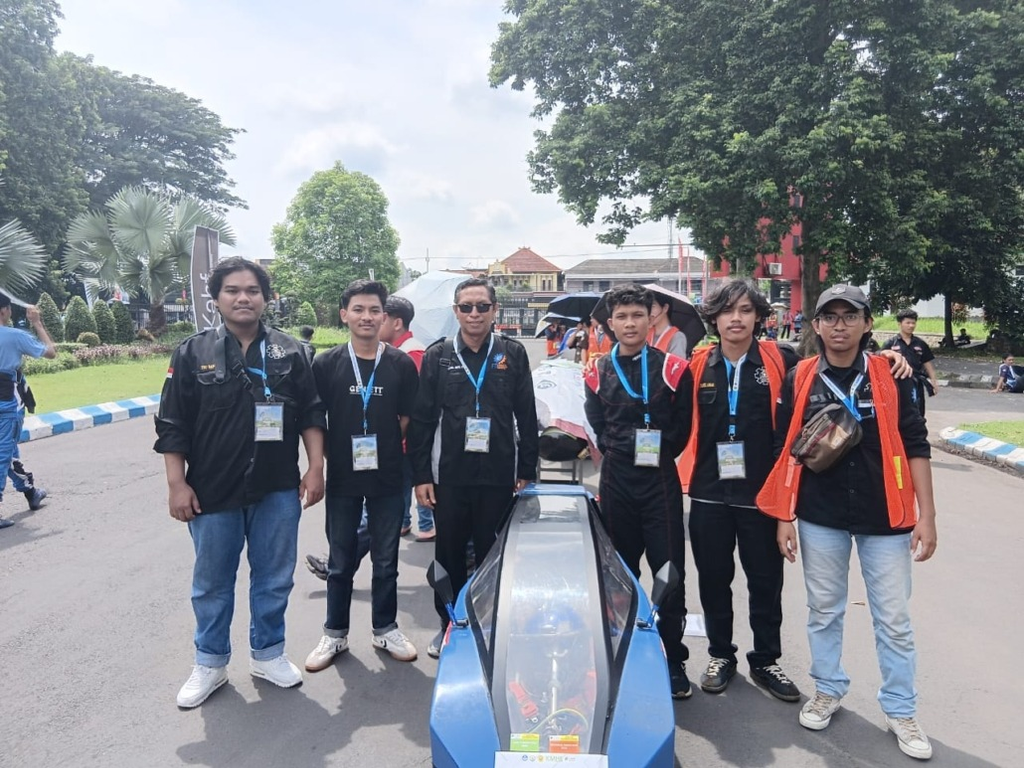
UNISSULA further promoted energy efficiency and cleaner transportation through its participation in the Kontes Mobil Hemat Energi 2025.
The university was represented by the Molex Renewable Team from the Faculty of Industrial Technology through the development and demonstration of an electric prototype vehicle.
Participation in this national event provided an opportunity to promote:
- energy-efficient vehicle technology;
- electric mobility;
- reduced dependence on conventional fuel;
- sustainable transportation; and
- technological innovation for lower energy consumption.
The programme connected UNISSULA with a broader national network of universities, students, academics, government-linked higher-education institutions, and technology communities.
This external engagement supports UNISSULA’s public promotion of energy efficiency and the wider transition toward renewable-powered transportation.
Renewable Energy for Agricultural Communities
UNISSULA also promotes renewable-energy applications through community-oriented agricultural technology.
One of the university’s 2025 activities involved the development and field application of an automatic shallot-field irrigation system based on Floating Solar PV.
The technology demonstrates how solar photovoltaic energy can be used to support agricultural activities and reduce dependence on conventional energy sources.
Through field implementation and demonstration, agricultural stakeholders can directly observe the use of renewable energy in practical farming operations.
This programme promotes awareness of:
- solar photovoltaic technology;
- renewable-energy applications in agriculture;
- energy-efficient irrigation;
- clean agricultural technology; and
- the practical benefits of reducing reliance on fossil-based energy.
Renewable-Energy Education through TANI-V1
UNISSULA also developed the TANI-V1 automatic hydroponic system at SMAN 12 Palembang.
The system integrates a 100 WP monocrystalline solar panel, battery storage, sensors, microcontrollers, and Internet of Things technology.
The system was designed not only to support automated hydroponic operations but also to become a practical learning medium for students to understand the application of renewable energy and IoT-based automation.
TANI-V1 provides a practical demonstration of how renewable energy can be integrated into educational and agricultural applications.
The project also demonstrates efficient energy use, with the system consuming approximately 5 watts while operating through solar-powered components.
Public Promotion Beyond the University
UNISSULA’s renewable-energy pledge is not limited to internal campus operations.
The university promotes the transition toward renewable energy among:
- local communities;
- schools and students;
- agricultural communities;
- industry;
- government;
- researchers;
- other universities;
- professional and technology communities; and
- wider public stakeholders.
Through these external activities, UNISSULA encourages stakeholders to understand the importance of renewable energy and to progressively participate in the transition toward cleaner energy systems.
From Energy Efficiency to 100% Renewable Energy
UNISSULA recognises that the transition toward 100% renewable energy is a long-term process.
Energy efficiency is an important foundation because reducing unnecessary energy demand makes it easier for renewable-energy sources to meet total energy requirements.
UNISSULA therefore promotes a transition pathway based on:
energy conservation → energy efficiency → clean technology → electrification → increased renewable-energy adoption → progressive reduction of fossil-energy dependence → 100% renewable energy
This approach links energy efficiency, technological innovation, renewable-energy deployment, and public awareness into a single long-term transition pathway.
Encouraging Wider Stakeholder Participation
UNISSULA encourages external stakeholders to contribute to the renewable-energy transition according to their respective capacities.
The university promotes:
- increased use of solar and other renewable-energy technologies;
- greater energy efficiency in buildings, transportation, agriculture, and industry;
- clean-energy education;
- development of energy-efficient technologies;
- electric mobility;
- responsible energy use; and
- reduced dependence on coal, oil, and other fossil-based energy sources.
By promoting these actions through public discussions, events, demonstrations, research applications, and external engagement, UNISSULA seeks to broaden participation in the transition toward a sustainable energy future.
Collective Commitment to a Renewable-Energy Future
UNISSULA recognises that achieving 100% renewable energy requires cooperation across society.
Universities can contribute through education, research, innovation, public discussion, technology demonstration, and community engagement.
Industry can contribute by improving efficiency and adopting cleaner technologies.
Government can support the transition through policy and infrastructure.
Communities can contribute through responsible energy use and renewable-energy adoption.
Schools can introduce renewable-energy learning to future generations.
UNISSULA therefore promotes a collective commitment in which universities and wider society work together toward the long-term goal of 100% renewable energy.
Contribution to SDG 7
UNISSULA’s public pledge supports SDG 7: Affordable and Clean Energy by promoting renewable-energy adoption, energy efficiency, clean technologies, sustainable transportation, and public participation in the energy transition.
The university’s 2025 activities demonstrate this commitment through:
- international discussions on green technology;
- electric-vehicle and energy-management education;
- participation in national energy-efficiency programmes;
- solar photovoltaic applications in agriculture; and
- renewable-energy learning in schools.
These activities provide multiple channels through which UNISSULA promotes its renewable-energy commitment beyond the university.