

















7.2.2 Upgrading Existing Buildings to Higher Energy Efficiency
Improving the Energy Performance of Existing Campus Buildings
Universitas Islam Sultan Agung (UNISSULA) has an ongoing approach to progressively improve the energy efficiency of its existing campus buildings through renovation, replacement of inefficient equipment, energy-efficient lighting, natural lighting and ventilation, energy monitoring, and other green-building measures.
The aim is to ensure that older buildings are not only maintained, but are gradually upgraded to achieve better energy performance and more sustainable operation.
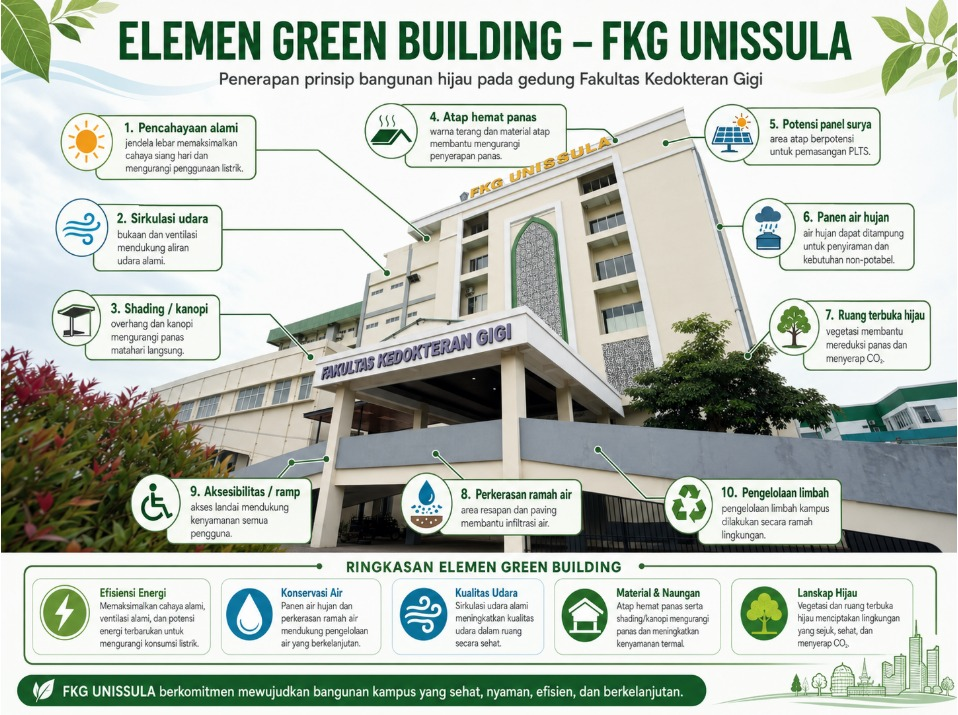


Energy-Efficiency Upgrades in Existing Buildings
UNISSULA’s green-building evidence specifically includes non-residential existing buildings and identifies energy-efficiency measures across multiple buildings.
The documented measures include:
- minimum energy-efficiency performance;
- lighting zoning;
- electrical sub-metering;
- renewable-energy integration;
- improved building energy performance;
- commissioning and re-commissioning;
- post-occupancy commissioning;
- energy-efficiency monitoring and improvement; and
- sustainable maintenance.
This demonstrates that energy-efficiency improvement is applied not only to new buildings, but also to existing buildings already in operation.
LED Lighting Upgrades
One of the main energy-efficiency measures applied to renovated and existing buildings is the replacement of conventional lighting with energy-saving LED lighting.
UNISSULA’s green-building documentation states that energy-efficient lighting systems, including LED lamps and efficient lighting fixtures, are used in classrooms, offices, corridors, laboratories, and public facilities. These systems consume less electricity than conventional lamps and have a longer service life.
In renovated buildings, LED lighting is applied as part of the upgrade process to reduce electricity consumption and improve operational efficiency.
Renovated Building as an Implementation Example
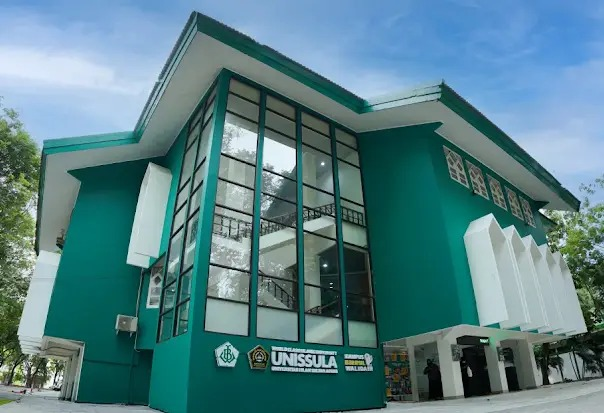
One example of this approach is a renovated existing UNISSULA building shown in the supporting photographic documentation.
The renovated building incorporates:
- LED lighting throughout the building;
- large glazed openings;
- increased use of natural daylight;
- improved indoor lighting conditions; and
- building features that reduce dependence on artificial lighting during daytime use.
The renovation demonstrates how an existing building can be upgraded to a higher level of energy efficiency rather than simply being restored to its previous condition.
Maximising Natural Daylight
Natural daylight is an important part of UNISSULA’s energy-efficiency strategy.
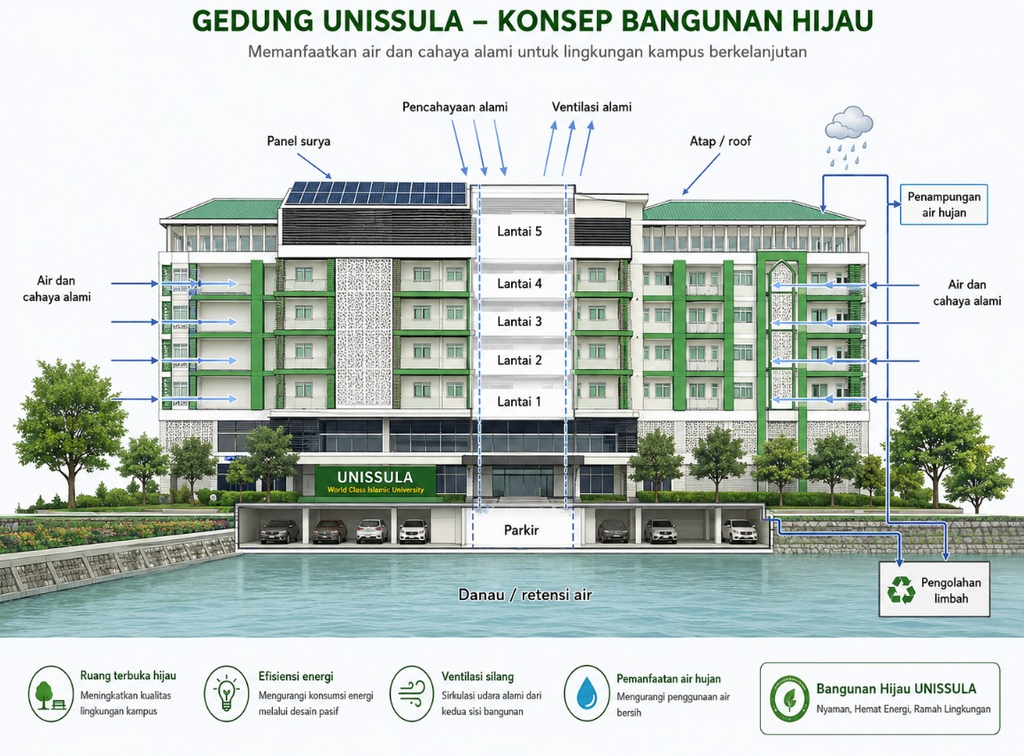
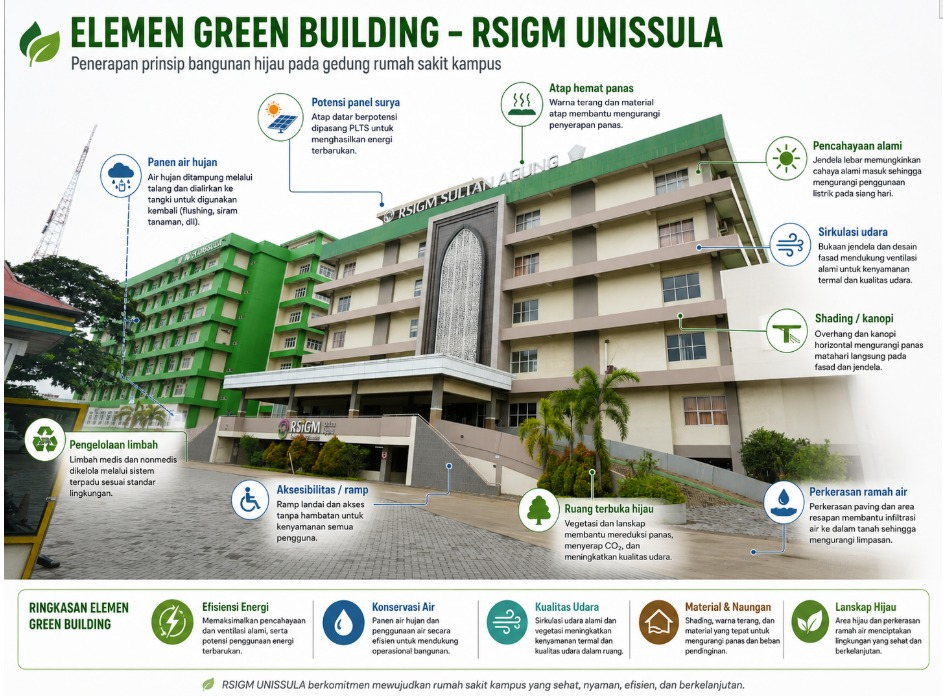
The green-building documentation explains that many campus buildings use windows, openings, corridors, and building orientation to allow daylight into classrooms, offices, laboratories, and common areas.
This reduces dependence on artificial lighting and helps lower electricity consumption.
The renovated building shown in the supporting images reflects this approach through its large glazed façade and extensive daylight penetration.
Natural Ventilation and Reduced Cooling Demand
UNISSULA also improves building energy performance through the use of natural ventilation and air circulation.
Existing and renovated campus buildings use:
- open corridors;
- wide windows;
- ventilation openings; and
- semi-open spaces.
These measures improve airflow and can reduce the need for mechanical cooling in suitable areas.
This contributes to lower cooling demand and improved energy efficiency.
Efficient Air-Conditioning and Electrical Equipment
The university also applies more efficient electrical and mechanical systems in campus buildings.
UNISSULA’s green-building documentation identifies:
- efficient air-conditioning units;
- controlled lighting;
- scheduled equipment operation; and
- responsible use of computers, projectors, laboratory equipment, and office devices.
These measures support the progressive upgrading of existing buildings as equipment reaches the end of its useful life or when renovation is undertaken.
Energy Monitoring and Improvement
Energy efficiency in existing buildings is also supported by monitoring and control measures.
The Green Building Index evidence for existing non-residential buildings includes:
- electrical sub-metering;
- energy-efficiency monitoring and improvement;
- commissioning and re-commissioning; and
- ongoing post-occupancy commissioning.
These measures allow building performance to be reviewed and improved over time.
Smart Building Technologies
UNISSULA also uses more advanced systems in selected buildings to improve energy performance.
The Sustainability Report 2025 documents the use of:
- Building Management Systems;
- sub-metered energy monitoring;
- environmental sensors;
- demand-controlled HVAC;
- façade shielding; and
- real-time monitoring dashboards.
These systems support more efficient building operation and provide a model for the progressive improvement of other existing buildings.
Sustainable Building Maintenance
Energy-efficiency upgrades are supported by ongoing building maintenance.
UNISSULA maintains lighting, air-conditioning systems, sanitation systems, drainage, safety equipment, and surrounding facilities as part of sustainable building operation.
Regular maintenance helps preserve efficiency gains and prevents unnecessary energy losses caused by poorly performing equipment.
Progressive Upgrade Approach
UNISSULA’s approach to existing buildings can therefore be summarised as a progressive improvement programme involving:
- conversion to LED lighting;
- optimisation of natural daylight;
- improvement of natural ventilation;
- replacement of inefficient air-conditioning equipment;
- improved electrical equipment management;
- installation of sub-metering;
- energy-performance monitoring;
- commissioning and re-commissioning; and
- adoption of smart-building technologies where technically feasible.
This allows existing buildings to achieve higher energy performance over time.