

















UNISSULA SUSTAINABILITY REPORTING
SDG 7 – Affordable and Clean Energy
Progress Report 2025
2025 Report Overview
In 2025, Universitas Islam Sultan Agung (UNISSULA) documented its progress towards SDG 7 – Affordable and Clean Energy through energy-efficient building standards, campus energy conservation, carbon-emission reduction measures, renewable-energy development, and sustainable investment policies. The university reviewed electricity consumption across 19 major campus buildings and facilities, recording 12,722,000 kWh, while implementing energy-efficiency plans, solar photovoltaic technologies, and low-carbon transportation initiatives. UNISSULA also supported local communities and industries through clean-energy training, technology transfer, renewable-energy policy research, and low-carbon entrepreneurship programmes. This report presents the university’s measurable achievements, institutional initiatives, and continuing priorities for sustainable energy development during the 2025 reporting period.
Full SDG 7 Progress Report 2025
7.2.1
Energy-Efficient Renovation And Building
7.2.1 Energy-Efficient Renovation and Building Policy at UNISSULA
Ensuring Energy Efficiency in New Buildings and Renovations
Universitas Islam Sultan Agung (UNISSULA) has established an institutional policy requiring energy-efficiency standards to be applied to all new building construction and all building renovation activities across the university.
The policy is formalised through Circular Letter No. 8391/J/SA/IX/2025, dated 4 September 2025, and applies to units throughout the university.
The circular states that, in order to improve energy efficiency, support sustainable development, and reduce energy consumption, every new building and every renovation must apply energy-efficiency standards.
Mandatory Application to All New Buildings and Renovations
The policy explicitly requires:
Every new building construction and all building renovations within UNISSULA to implement energy-efficiency standards.
This requirement applies across the university and is intended to ensure that energy efficiency is incorporated from the planning stage through implementation.
The policy therefore covers both:
- new building development; and
- renovation of existing buildings.
This creates a consistent institutional approach to energy-efficient building development.
Relevant Energy-Efficiency Standards
UNISSULA requires building planning and renovation activities to refer to relevant national energy-efficiency standards.
The policy specifically identifies:
- SNI 6197:2020 – energy conservation for lighting systems;
- SNI 6390:2020 – energy conservation for building air-conditioning systems;
- SNI 6389:2020 – energy-efficiency standards for building envelopes; and
- applicable Green Building regulations.
These standards are directly stated in the university policy as references for planning and implementation.
Energy-Efficient Lighting
For both new buildings and renovation projects, UNISSULA requires the use of energy-efficient technologies.
The policy identifies the use of LED lighting or equivalent energy-efficient systems as one of the measures to be prioritised.
In addition, the design of buildings and renovated spaces is expected to make greater use of natural daylight where appropriate, reducing unnecessary electricity consumption for artificial lighting.
Natural Ventilation and Efficient Air Conditioning
The policy also promotes the use of natural ventilation as part of energy-conscious building design.
Where mechanical cooling is required, new buildings and renovations are expected to use energy-efficient air-conditioning systems.
This approach helps reduce cooling demand while improving the overall efficiency of building operations.
Efficient Electrical Equipment
UNISSULA also requires new construction and renovation projects to prioritise energy-efficient electrical equipment.
This supports the wider objective of reducing operational energy consumption after construction or renovation is completed.
By incorporating efficiency requirements at the procurement and installation stage, the university can reduce long-term energy demand across its facilities.
Building Envelope Efficiency
The policy requires reference to SNI 6389:2020, which addresses energy efficiency in building envelopes.
This is important because the thermal performance of walls, roofs, openings, glazing, and other external building elements directly affects the amount of energy required for cooling and lighting.
By including building-envelope efficiency in the standards applied to new builds and renovations, UNISSULA integrates energy efficiency into the physical design of its buildings.
Review Before Implementation
UNISSULA’s policy also requires building and renovation planning documents to be evaluated before implementation.
The purpose of this evaluation is to ensure that proposed construction or renovation activities comply with the required energy-efficiency standards before work begins.
This provides an important control mechanism because energy efficiency is checked during the planning process rather than only after a project has been completed.
University-Wide Implementation
The circular is addressed to leaders of faculties, the Director of RSIGM, heads of bureaus, institutes, technical units, organisational units, and administrative offices throughout UNISSULA.
This demonstrates that the policy is intended to be implemented across the university rather than being limited to a single faculty or building.
Supporting Sustainable Campus Development
Through this policy, UNISSULA integrates energy efficiency into campus development and renovation.
The main measures include:
- mandatory energy-efficiency requirements for new buildings;
- mandatory energy-efficiency requirements for renovations;
- application of national energy standards;
- use of LED lighting;
- optimisation of natural lighting and ventilation;
- use of efficient air-conditioning systems;
- use of energy-efficient electrical equipment;
- consideration of building-envelope efficiency; and
- technical evaluation before construction or renovation begins.
Together, these measures support more sustainable building performance and reduced long-term energy consumption.
7.2.2
Upgrade Buildings To Higher Energy Efficiency
7.2.2 Upgrading Existing Buildings to Higher Energy Efficiency
Improving the Energy Performance of Existing Campus Buildings
Universitas Islam Sultan Agung (UNISSULA) has an ongoing approach to progressively improve the energy efficiency of its existing campus buildings through renovation, replacement of inefficient equipment, energy-efficient lighting, natural lighting and ventilation, energy monitoring, and other green-building measures.
The aim is to ensure that older buildings are not only maintained, but are gradually upgraded to achieve better energy performance and more sustainable operation.
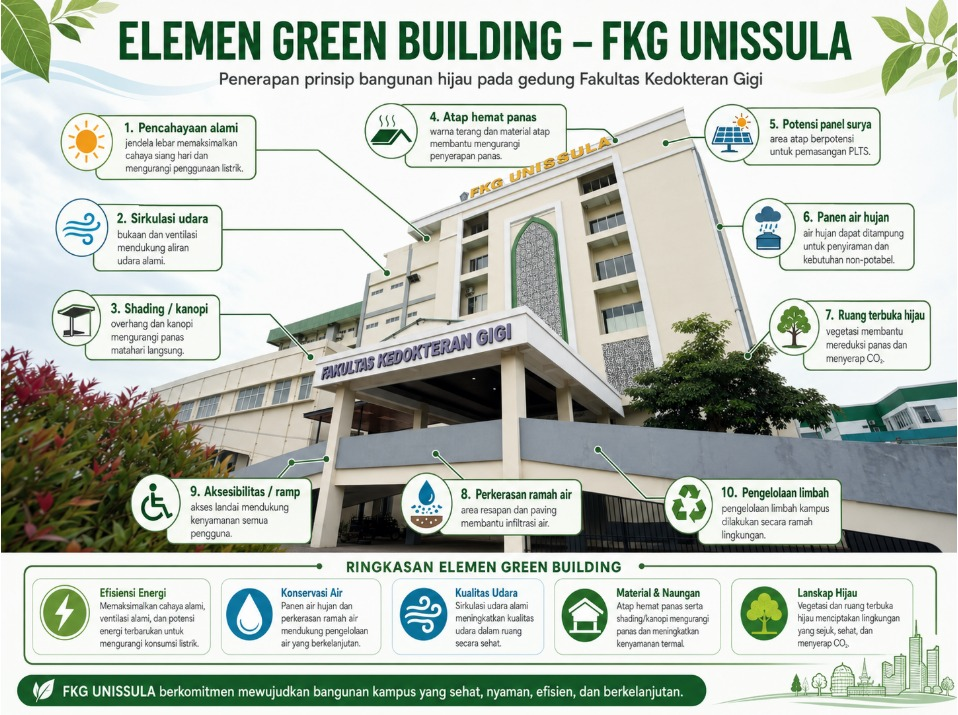


Energy-Efficiency Upgrades in Existing Buildings
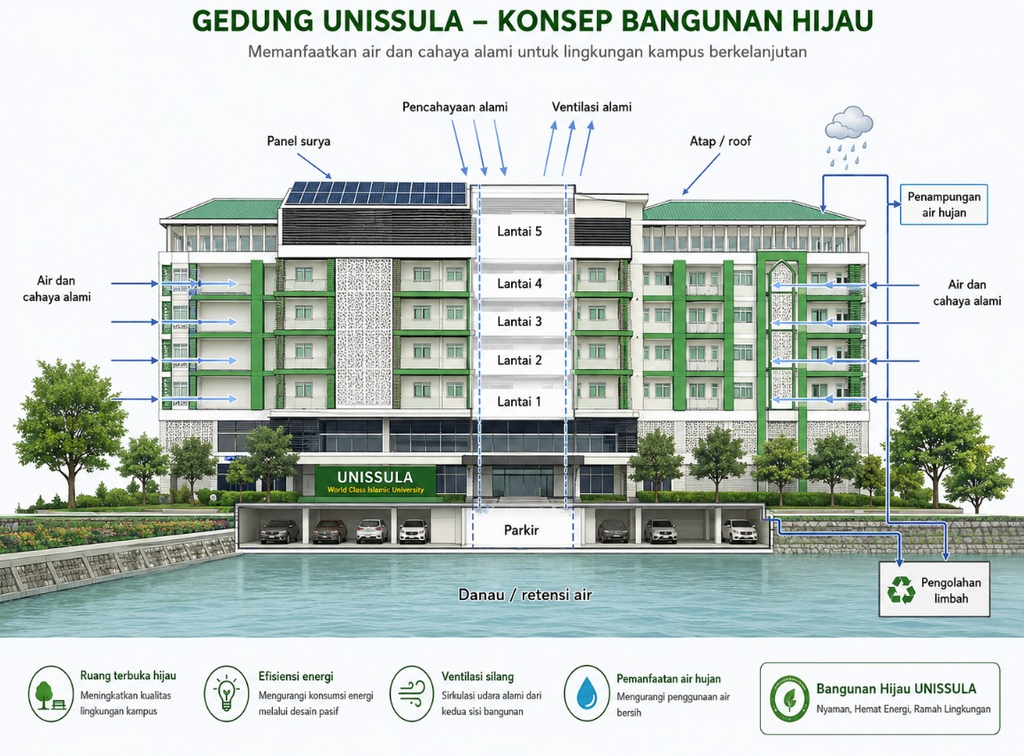
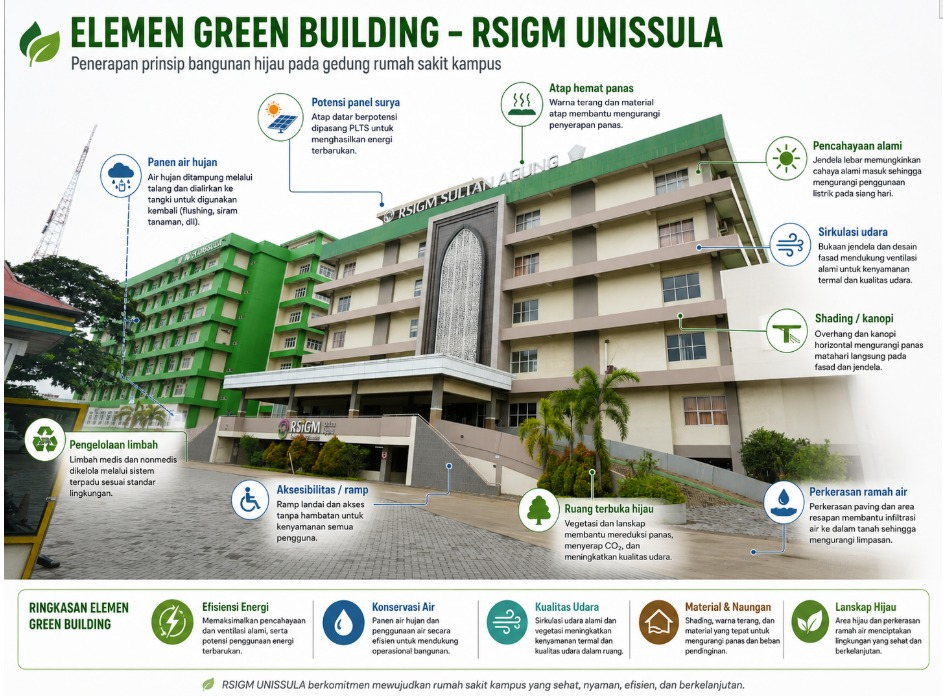
UNISSULA’s green-building evidence specifically includes non-residential existing buildings and identifies energy-efficiency measures across multiple buildings.
The documented measures include:
- minimum energy-efficiency performance;
- lighting zoning;
- electrical sub-metering;
- renewable-energy integration;
- improved building energy performance;
- commissioning and re-commissioning;
- post-occupancy commissioning;
- energy-efficiency monitoring and improvement; and
- sustainable maintenance.
This demonstrates that energy-efficiency improvement is applied not only to new buildings, but also to existing buildings already in operation.
LED Lighting Upgrades
One of the main energy-efficiency measures applied to renovated and existing buildings is the replacement of conventional lighting with energy-saving LED lighting.
UNISSULA’s green-building documentation states that energy-efficient lighting systems, including LED lamps and efficient lighting fixtures, are used in classrooms, offices, corridors, laboratories, and public facilities. These systems consume less electricity than conventional lamps and have a longer service life.
In renovated buildings, LED lighting is applied as part of the upgrade process to reduce electricity consumption and improve operational efficiency.
Renovated Building as an Implementation Example
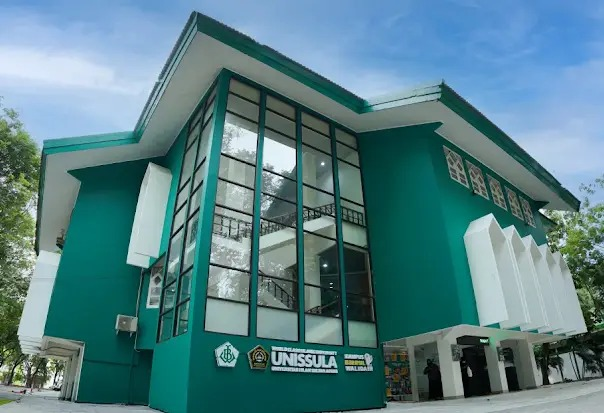
One example of this approach is a renovated existing UNISSULA building shown in the supporting photographic documentation.
The renovated building incorporates:
- LED lighting throughout the building;
- large glazed openings;
- increased use of natural daylight;
- improved indoor lighting conditions; and
- building features that reduce dependence on artificial lighting during daytime use.
The renovation demonstrates how an existing building can be upgraded to a higher level of energy efficiency rather than simply being restored to its previous condition.
Maximising Natural Daylight
Natural daylight is an important part of UNISSULA’s energy-efficiency strategy.
The green-building documentation explains that many campus buildings use windows, openings, corridors, and building orientation to allow daylight into classrooms, offices, laboratories, and common areas.
This reduces dependence on artificial lighting and helps lower electricity consumption.
The renovated building shown in the supporting images reflects this approach through its large glazed façade and extensive daylight penetration.
Natural Ventilation and Reduced Cooling Demand
UNISSULA also improves building energy performance through the use of natural ventilation and air circulation.
Existing and renovated campus buildings use:
- open corridors;
- wide windows;
- ventilation openings; and
- semi-open spaces.
These measures improve airflow and can reduce the need for mechanical cooling in suitable areas.
This contributes to lower cooling demand and improved energy efficiency.
Efficient Air-Conditioning and Electrical Equipment
The university also applies more efficient electrical and mechanical systems in campus buildings.
UNISSULA’s green-building documentation identifies:
- efficient air-conditioning units;
- controlled lighting;
- scheduled equipment operation; and
- responsible use of computers, projectors, laboratory equipment, and office devices.
These measures support the progressive upgrading of existing buildings as equipment reaches the end of its useful life or when renovation is undertaken.
Energy Monitoring and Improvement
Energy efficiency in existing buildings is also supported by monitoring and control measures.
The Green Building Index evidence for existing non-residential buildings includes:
- electrical sub-metering;
- energy-efficiency monitoring and improvement;
- commissioning and re-commissioning; and
- ongoing post-occupancy commissioning.
These measures allow building performance to be reviewed and improved over time.
Smart Building Technologies
UNISSULA also uses more advanced systems in selected buildings to improve energy performance.
The Sustainability Report 2025 documents the use of:
- Building Management Systems;
- sub-metered energy monitoring;
- environmental sensors;
- demand-controlled HVAC;
- façade shielding; and
- real-time monitoring dashboards.
These systems support more efficient building operation and provide a model for the progressive improvement of other existing buildings.
Sustainable Building Maintenance
Energy-efficiency upgrades are supported by ongoing building maintenance.
UNISSULA maintains lighting, air-conditioning systems, sanitation systems, drainage, safety equipment, and surrounding facilities as part of sustainable building operation.
Regular maintenance helps preserve efficiency gains and prevents unnecessary energy losses caused by poorly performing equipment.
Progressive Upgrade Approach
UNISSULA’s approach to existing buildings can therefore be summarised as a progressive improvement programme involving:
- conversion to LED lighting;
- optimisation of natural daylight;
- improvement of natural ventilation;
- replacement of inefficient air-conditioning equipment;
- improved electrical equipment management;
- installation of sub-metering;
- energy-performance monitoring;
- commissioning and re-commissioning; and
- adoption of smart-building technologies where technically feasible.
This allows existing buildings to achieve higher energy performance over time.
7.2.3
Carbon Reduction And Emission Reduction Processr System Population
7.2.3 Carbon Management and Carbon Dioxide Emission Reduction at UNISSULA
Managing and Reducing Carbon Emissions
Universitas Islam Sultan Agung (UNISSULA) implements a campus-wide process to manage energy use and reduce carbon dioxide emissions through energy conservation, energy-efficient buildings, renewable energy, low-carbon transportation, and environmental management.
The university combines operational measures with infrastructure improvements to reduce dependence on conventional energy and fossil-fuel-based transportation.
This process supports UNISSULA’s transition toward a more energy-efficient and lower-carbon campus.
Energy Conservation as Part of Carbon Management
Reducing unnecessary energy consumption is one of the main components of UNISSULA’s carbon-reduction process.
The university promotes responsible energy use across faculties, offices, and other campus units, including switching off lighting, air-conditioning, computers, printers, and other electrical equipment when they are no longer required.
Reducing electricity consumption helps lower the indirect carbon dioxide emissions associated with campus energy use.
Energy-Efficient Buildings
UNISSULA progressively improves the energy efficiency of campus buildings through green-building principles and building renovation.
Measures implemented include:
- energy-efficient LED lighting;
- natural daylighting;
- natural ventilation;
- efficient air-conditioning equipment;
- controlled use of electrical equipment;
- building shading; and
- sustainable building maintenance.
UNISSULA’s green-building documentation confirms the use of energy-saving lighting such as LED lamps and efficient lighting fixtures in classrooms, offices, corridors, laboratories, and public facilities.
The university also uses efficient air-conditioning units and promotes controlled operation of lighting and electrical equipment.
Natural Lighting and Ventilation
Building design and renovation are also used to reduce energy demand.
Many UNISSULA buildings utilise windows, openings, corridors, and building orientation to maximise natural daylight and reduce dependence on artificial lighting.
Natural ventilation is supported through open corridors, wide windows, ventilation openings, and semi-open spaces. These measures can reduce indoor heat and decrease the need for mechanical cooling in appropriate areas.
Reducing lighting and cooling demand contributes directly to reducing energy-related carbon emissions.
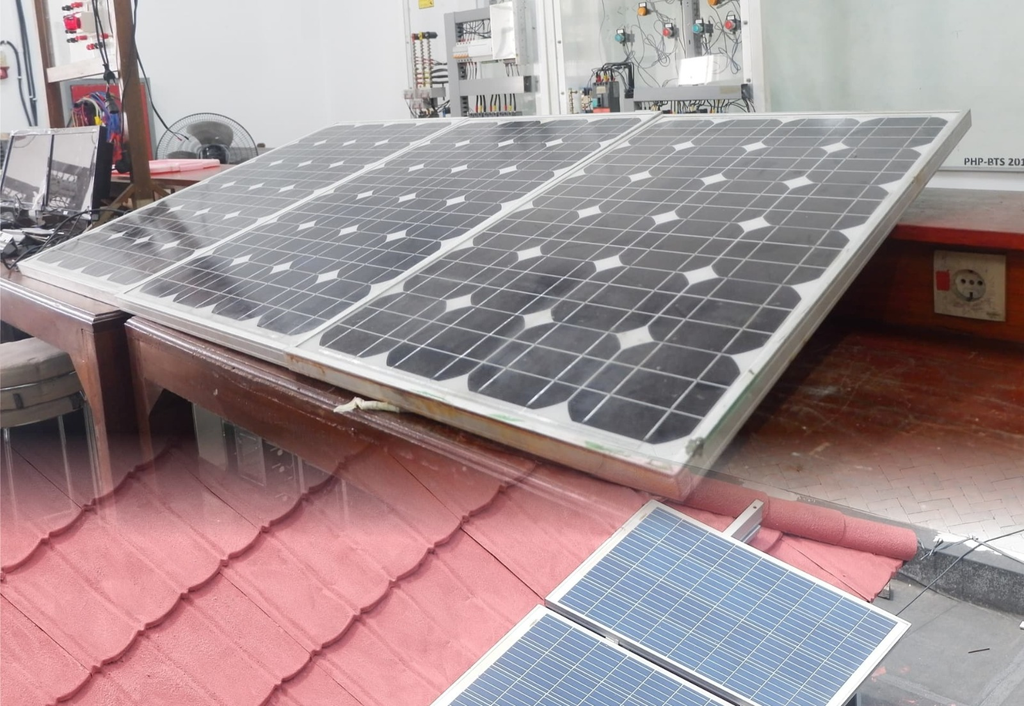
Renewable Energy Through Solar Photovoltaic Systems
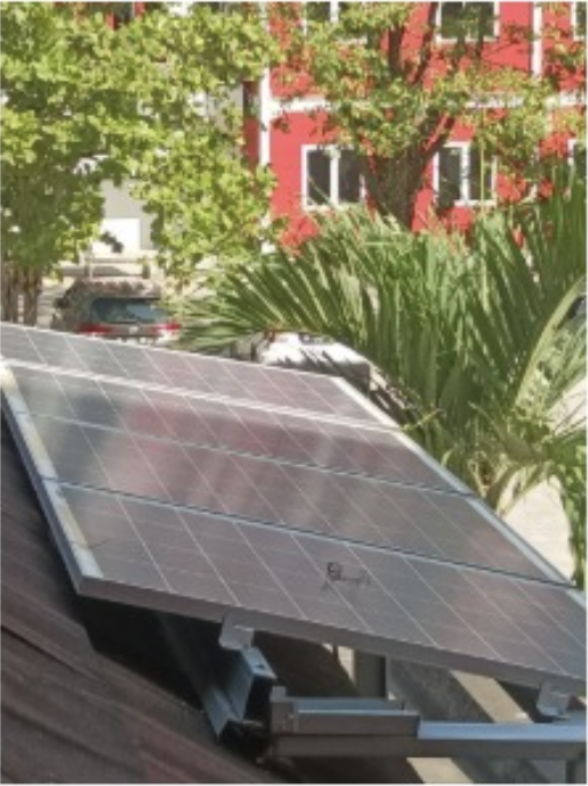
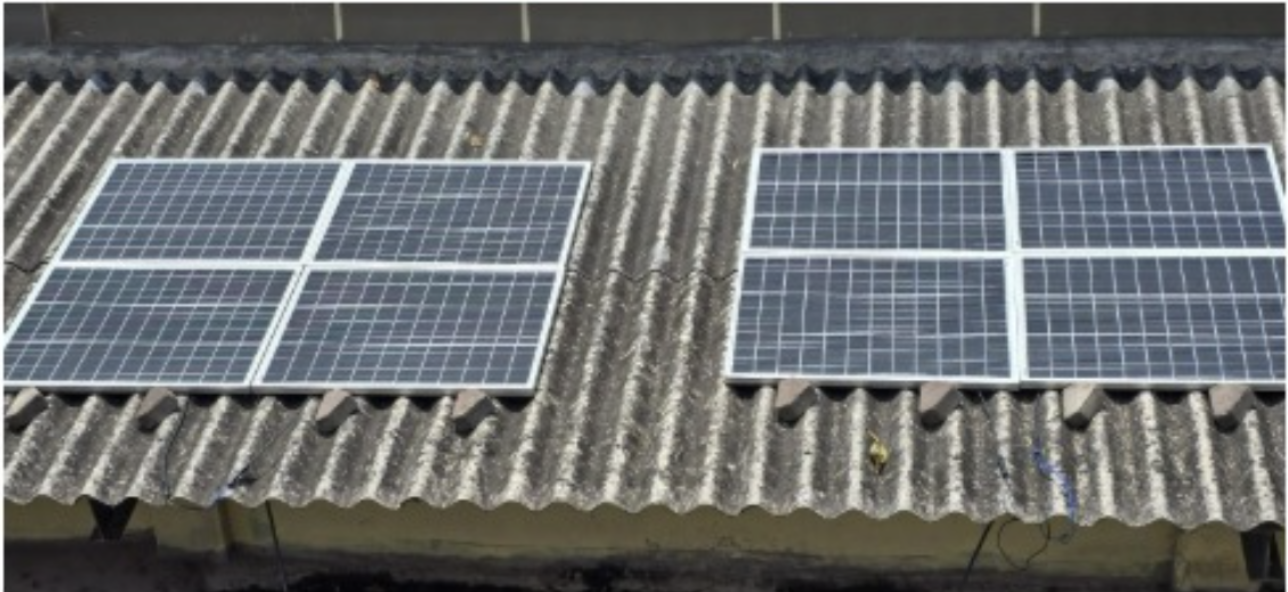
UNISSULA also supports carbon reduction through the use and development of solar photovoltaic technology.
Solar panels are installed and developed within the university environment to utilise solar energy as an alternative to conventional electricity sources.
The university’s 2025 sustainability documentation identifies rooftop solar photovoltaic systems as part of UNISSULA’s renewable-energy implementation.
Using solar energy reduces dependence on conventional energy and supports lower-carbon campus operations.
Development and Use of Electric Vehicles
Transportation is another area addressed by UNISSULA’s carbon-reduction process.
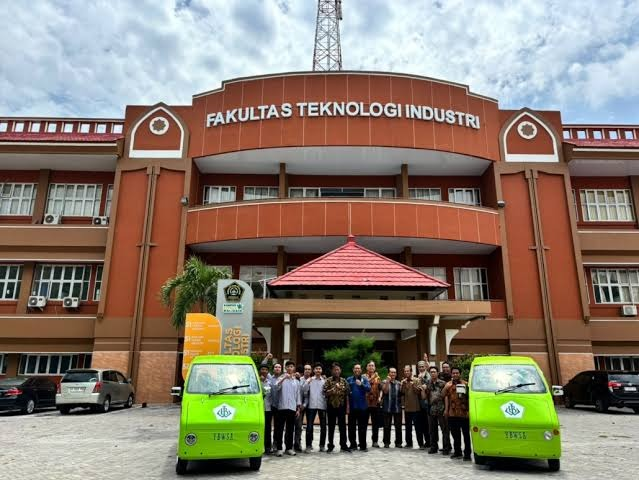
UNISSULA has developed electric vehicles and uses them to support transportation between faculties and buildings within the university environment.
The use of electric vehicles provides an alternative to conventional fossil-fuel-powered vehicles for short-distance campus mobility.
This reduces direct fuel consumption and supports the university’s efforts to lower transportation-related carbon dioxide emissions.
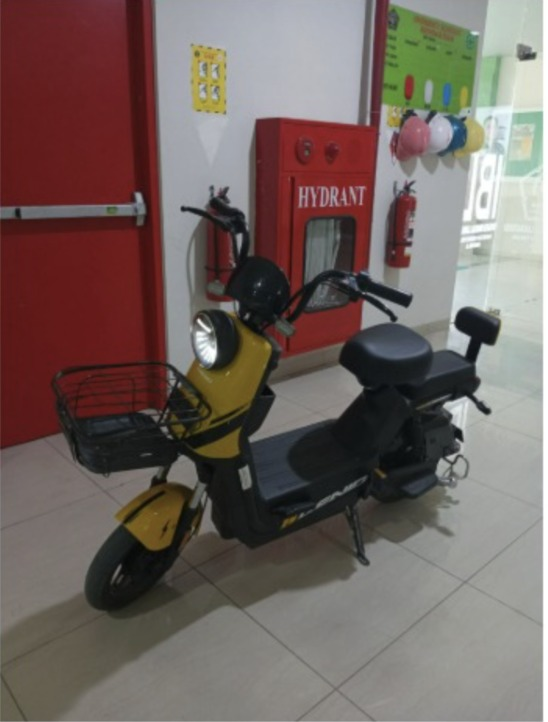
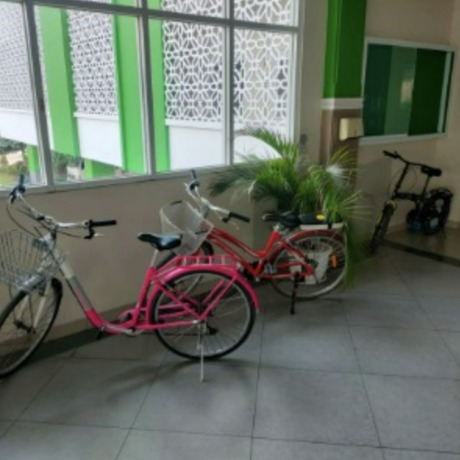
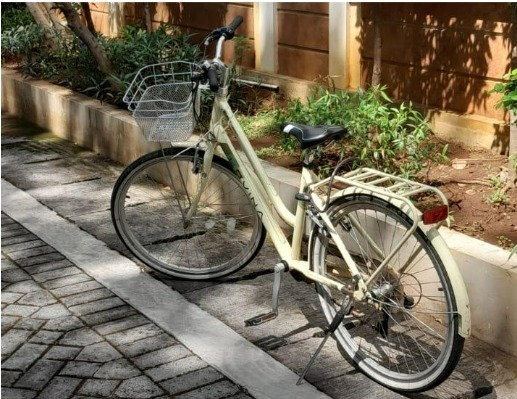
Electric Bicycles and Conventional Bicycles
UNISSULA also provides and promotes lower-carbon forms of transportation through:
- electric bicycles; and
- conventional bicycles.
These vehicles are suitable for mobility between buildings and faculties.
Conventional bicycles generate no direct operational carbon emissions, while electric bicycles require significantly less energy than conventional motor vehicles.
Together with electric vehicles, these facilities help reduce reliance on motorcycles and cars for internal campus transportation.
Reducing Fossil-Fuel-Based Campus Mobility
UNISSULA’s low-carbon transportation approach therefore includes several alternatives for short campus journeys.
Where appropriate, mobility between buildings and faculties can be supported by:
walking → bicycles → electric bicycles → electric campus vehicles
rather than relying solely on conventional fossil-fuel-powered vehicles.
This forms an important component of the university’s wider emission-reduction process.
Renovation and Improvement of Existing Buildings
Carbon reduction is also supported through improvements to existing buildings.
UNISSULA’s green-building documentation for existing non-residential buildings includes energy-efficiency elements such as:
- minimum energy-efficiency performance;
- lighting zoning;
- renewable-energy use;
- energy-efficiency improvement; and
- sustainable maintenance.
Renovations that replace conventional lamps with LEDs and increase the use of natural daylight provide practical examples of energy-efficiency improvements in existing campus buildings.
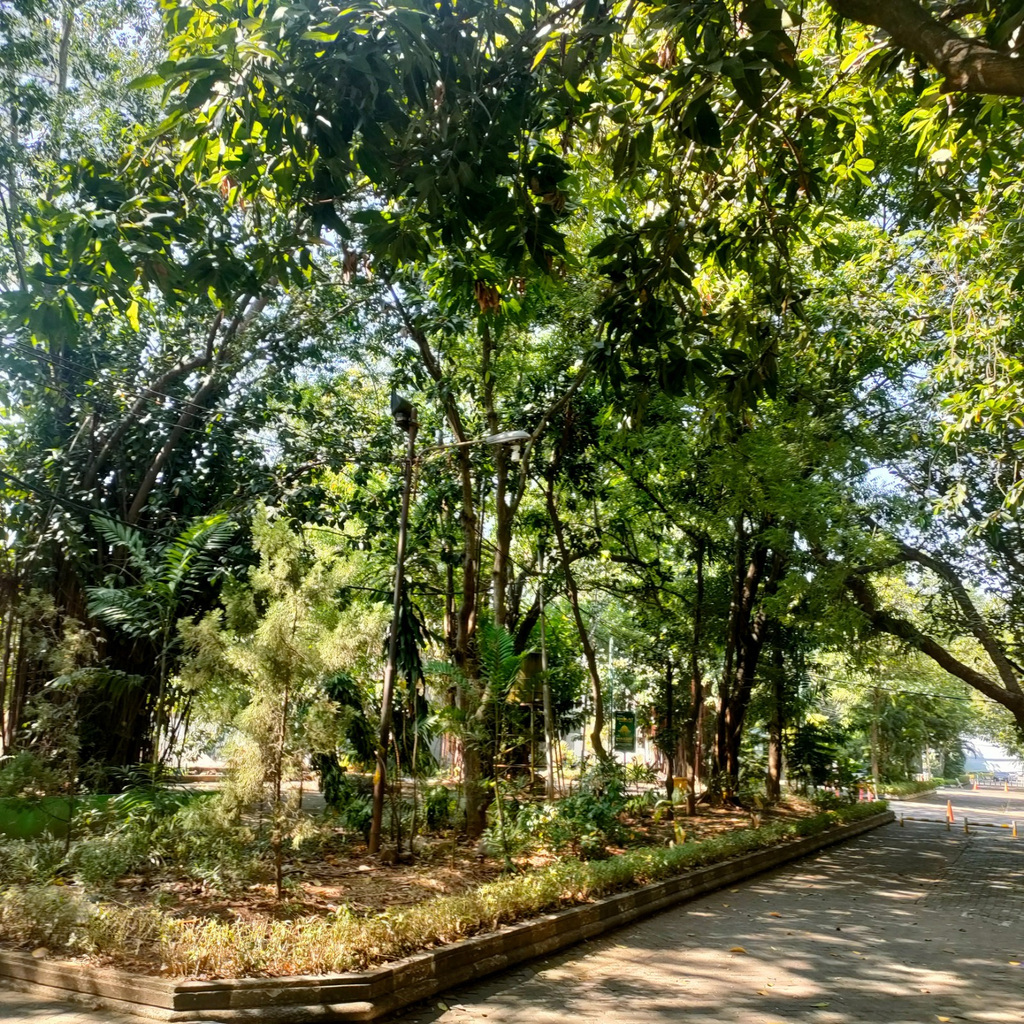
Green Areas and Campus Vegetation
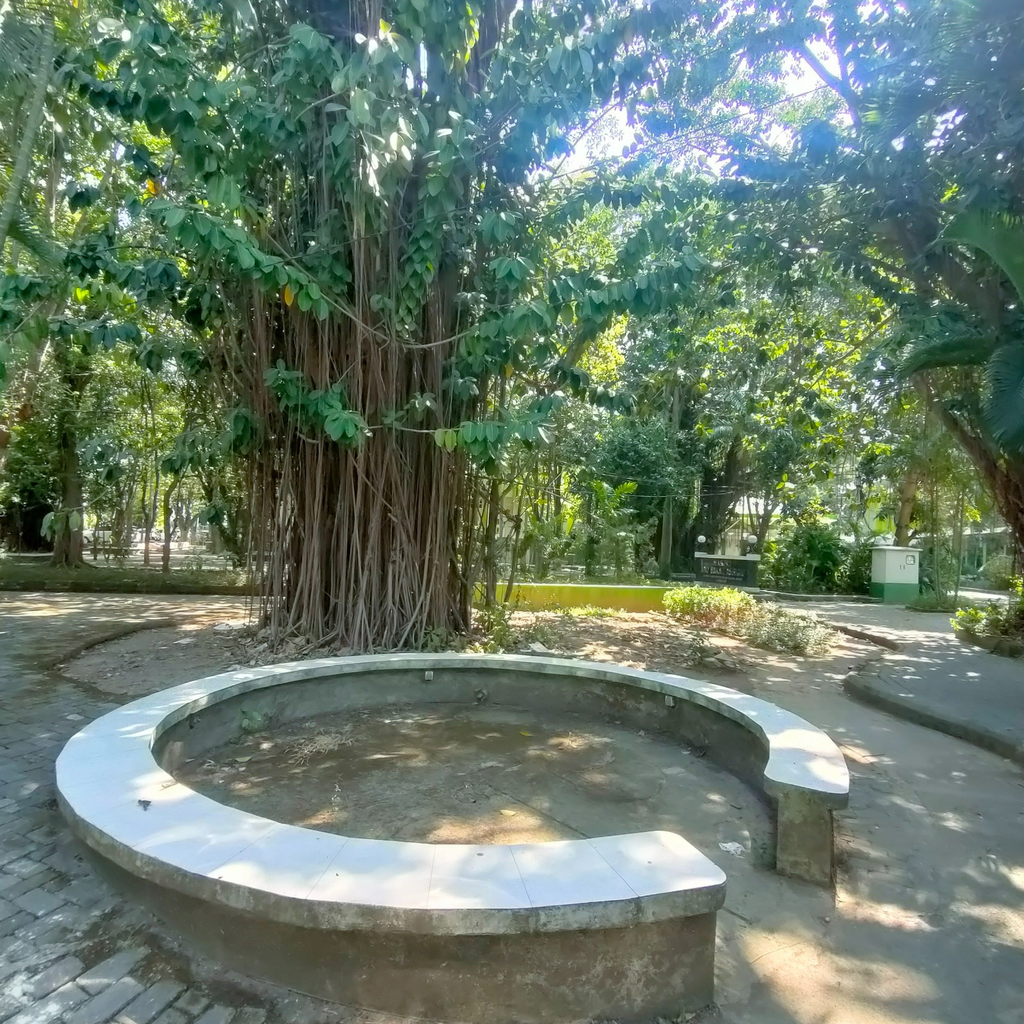
UNISSULA maintains green open spaces, trees, gardens, and landscaped areas around campus buildings.
Vegetation provides shade, improves the campus microclimate, and can help reduce heat around buildings, thereby supporting lower cooling demand.
The university’s green-building documentation identifies green spaces around campus buildings as contributing to reduced heat and improved environmental quality.
These measures complement the university’s energy and transportation initiatives.
UNISSULA Carbon-Reduction Process
UNISSULA’s carbon-management process can be summarised through the following cycle:
identify major energy and fuel uses → reduce unnecessary consumption → improve building efficiency → increase renewable-energy use → provide low-carbon transportation → maintain and improve environmental performance
The process addresses emissions through practical interventions rather than relying on a single technology.
The principal measures include:
- energy conservation;
- LED lighting;
- efficient air-conditioning;
- natural lighting and ventilation;
- energy-efficient renovation;
- solar photovoltaic systems;
- electric vehicles;
- electric bicycles;
- conventional bicycles; and
- campus green spaces.
Continuous Improvement
UNISSULA continues to improve its energy and environmental performance through building maintenance, renovation, adoption of more efficient technology, renewable-energy development, and sustainable transport.
Regular maintenance of lighting, air-conditioning systems, and other building facilities helps maintain energy efficiency over time.
As existing equipment and infrastructure are upgraded, energy-efficient and lower-carbon alternatives are prioritised wherever practicable.
7.2.4
Plan To Reduce Energy Consumption
7.2.4 Energy Efficiency Plan to Reduce Overall Energy Consumption at UNISSULA
University-Wide Energy Efficiency Planning
Universitas Islam Sultan Agung (UNISSULA) has established an institutional Energy Efficiency Plan to reduce overall energy consumption across the university.
The plan is formalised through Circular Letter No. 8392/J/SA/IX/2025, dated 4 September 2025, and applies to all faculties, units, buildings, and university facilities.
The circular explicitly states that UNISSULA establishes an Energy Efficiency Plan in order to improve energy efficiency, support sustainable development, and reduce overall energy consumption across the university.
Reducing Overall Energy Consumption
The main objective of the plan is to reduce energy consumption at the institutional level rather than only within individual buildings or units.
UNISSULA applies the plan across:
- faculties;
- administrative units;
- university buildings;
- operational units; and
- other university facilities.
This university-wide scope ensures that energy-efficiency measures are implemented as part of a coordinated institutional approach.
Energy-Efficiency Measures
The plan identifies a number of practical measures to reduce energy consumption.
These include:
- use of LED lighting;
- use of energy-efficient air-conditioning;
- use of energy-efficient electrical equipment;
- optimisation of natural lighting;
- optimisation of natural ventilation;
- improvement of building efficiency through renovation;
- use of solar panels; and
- switching off lighting and electronic equipment when they are not in use.
These measures address both technical efficiency and daily operational behaviour.
LED Lighting
UNISSULA promotes the use of LED lighting as part of its energy-efficiency plan.
LED systems require less electricity than conventional lighting and also have longer operating lifetimes.
The use of LED lighting therefore supports reductions in electricity consumption across classrooms, offices, corridors, laboratories, and other university spaces.
Energy-Efficient Air Conditioning and Electrical Equipment
The plan also includes the use of more efficient air-conditioning systems and electrical equipment.
Air-conditioning represents a significant source of electricity demand in many university buildings.
By using energy-efficient systems and operating them responsibly, UNISSULA seeks to reduce unnecessary electricity consumption while maintaining appropriate indoor comfort.
Natural Lighting and Ventilation
The Energy Efficiency Plan also promotes greater use of natural lighting and ventilation.
Natural daylight can reduce dependence on artificial lighting during daytime operation.
Natural ventilation can also reduce the need for mechanical cooling in suitable spaces.
These measures help lower building energy demand while supporting more sustainable building operation.
Energy-Efficient Renovation
Improvement of existing buildings through renovation forms another part of the plan.
Renovation provides an opportunity to:
- replace inefficient lighting;
- improve ventilation;
- improve natural daylighting;
- install more efficient electrical equipment; and
- improve the overall energy performance of existing buildings.
This links the Energy Efficiency Plan with UNISSULA’s broader approach to upgrading existing campus buildings.
Renewable Energy Through Solar Panels
UNISSULA also includes the use of solar panels within its Energy Efficiency Plan.
The use of solar energy helps reduce dependence on conventional electricity sources and supports cleaner campus energy use.
The inclusion of solar panels in the plan demonstrates that overall energy reduction is supported not only by conservation measures, but also by the increased use of renewable energy.
Responsible Use of Energy
Operational behaviour is also an important part of the plan.
UNISSULA requires lights and electronic equipment to be switched off when no longer needed.
This helps prevent unnecessary electricity consumption from:
- lighting;
- computers;
- air-conditioning;
- office equipment; and
- other electrical devices.
Such measures complement technological improvements by encouraging responsible energy use across the university community.
Periodic Evaluation of Energy Consumption
The plan also establishes a process for reviewing energy consumption.
Energy use in university units and facilities is evaluated periodically to identify:
- areas of high energy consumption;
- opportunities for energy saving; and
- areas where further efficiency improvements can be made.
This makes the plan more than a list of efficiency measures because it includes an ongoing evaluation process.
Continuous Improvement
The results of energy-use evaluations are used to support continuous improvement.
The policy states that evaluation results are used to increase energy efficiency and reduce overall university energy consumption on an ongoing basis.
UNISSULA’s approach can therefore be summarised as:
implement energy-efficiency measures → evaluate energy use → identify opportunities for improvement → implement further efficiency measures
This establishes a continuous cycle of energy-performance improvement.
Integration with Building and Campus Development
The Energy Efficiency Plan is also connected with other campus sustainability measures.
Energy efficiency is supported through:
- efficient building renovation;
- LED lighting;
- natural daylight;
- natural ventilation;
- efficient air-conditioning;
- efficient electrical equipment;
- renewable energy; and
- responsible operational practices.
This integrated approach helps reduce energy consumption across both existing infrastructure and future campus development.
7.2.5
Energy wastage identification
7.2.5 Energy Wastage Identification at UNISSULA
Periodic Energy Review to Identify Areas of Energy Wastage
Universitas Islam Sultan Agung (UNISSULA) conducts periodic energy reviews to identify buildings, operational areas, and activities with relatively high energy consumption and potential energy wastage.
The review supports the university’s broader Energy Efficiency Plan by assessing electricity use across major campus buildings and identifying areas where energy-saving measures should be prioritised.
The review process considers electricity consumption, building function, operational patterns, the use of air-conditioning, laboratory and clinical equipment, lighting, lifts, computers, refrigeration equipment, and other electrical appliances.
The objective is not only to identify buildings with high energy consumption, but also to determine whether part of that consumption can be reduced through more efficient operation and improved energy management.
Campus Buildings Included in the Energy Review
The 2025 energy review covers 19 major buildings and facilities across the UNISSULA campus.
| No. | Building / Unit | Energy Consumption 2025 | Energy-Waste Areas Reviewed | Follow-up Action |
|---|---|---|---|---|
| 1 | Faculty of Pharmacy | 716,000 kWh | Laboratories, air-conditioning, refrigeration and laboratory equipment | Review equipment and AC operating hours |
| 2 | Faculty of Pharmacy – Midwifery Building | 378,000 kWh | Practice rooms, air-conditioning, lighting and teaching equipment | Evaluate operating hours and room utilisation |
| 3 | Faculty of Nursing | 437,000 kWh | Air-conditioning and practical teaching equipment | Improve operational scheduling by room |
| 4 | Faculty of Law | 398,000 kWh | Air-conditioning, computers and lighting | Optimise AC operation and equipment shutdown |
| 5 | Faculty of Islamic Studies | 358,000 kWh | Air-conditioning and lighting | Increase use of natural lighting |
| 6 | Faculty of Economics | 477,000 kWh | Air-conditioning, computers and classrooms | Apply zoning and operational controls |
| 7 | Faculty of Engineering | 576,000 kWh | Laboratories, air-conditioning, machinery and electrical equipment | Review high-power equipment |
| 8 | Faculty of Industrial Technology | 676,000 kWh | Computer laboratories, air-conditioning and technical equipment | Review equipment use and laboratory schedules |
| 9 | Faculty of Medicine | 1,431,000 kWh | Lifts, laboratories, air-conditioning and academic equipment | Prioritise laboratory and AC review |
| 10 | Faculty of Dentistry | 1,232,000 kWh | Lifts, air-conditioning and dental/clinical equipment | Review equipment and AC operating hours |
| 11 | GKB Building | 2,067,000 kWh | Lifts, air-conditioning, lighting, classrooms and long operating hours | Prioritise AC, lift and lighting review |
| 12 | IUP Building | 1,034,000 kWh | Air-conditioning, lifts and lighting | Optimise AC settings and operating hours |
| 13 | Rectorate Building | 596,000 kWh | Air-conditioning, computers and office equipment | Improve shutdown procedures and AC control |
| 14 | Auditorium Building | 517,000 kWh | Air-conditioning, lighting and sound system | Match energy use with event schedules |
| 15 | CILAD / LPPM Building | 278,000 kWh | Air-conditioning, computers and lighting | Improve shutdown practices and daylight use |
| 16 | Khumaira Building – Canteen | 338,000 kWh | Refrigerators/freezers, cooking equipment, dispensers, lighting and exhaust fans | Review operating hours and after-hours equipment use |
| 17 | Student Activity Unit Building | 318,000 kWh | Evening use and lighting | Control operating hours and room usage |
| 18 | Library | 656,000 kWh | Air-conditioning, lighting, computers and long operating hours | Apply zoning based on occupied areas |
| 19 | Abu Bakar Assegaf Mosque | 239,000 kWh | Lighting, fans, sound system and water pumps | Align equipment use with prayer and activity schedules |
| Total Consumption | 12,722,000 kWh/year |
The reviewed buildings account for approximately 12.722 million kWh of electricity consumption in 2025, equivalent to approximately 45,799 GJ, rounded to 45,800 GJ.
Identification of Priority Energy-Use Areas
The energy review identifies several buildings that require greater attention because of their relatively high electricity consumption and energy-intensive functions.
The five highest energy-consuming buildings are:
- GKB Building – 2,067,000 kWh/year
- Faculty of Medicine – 1,431,000 kWh/year
- Faculty of Dentistry – 1,232,000 kWh/year
- IUP Building – 1,034,000 kWh/year
- Faculty of Pharmacy – 716,000 kWh/year
These buildings are prioritised for further assessment because they combine relatively high energy demand with energy-intensive systems such as air-conditioning, lifts, laboratories, clinical equipment, lighting, and extended operating hours.
High electricity consumption alone is not automatically classified as energy wastage. Rather, these buildings are treated as priority locations for determining whether part of the consumption results from avoidable or inefficient practices.
Areas of Potential Energy Wastage
The energy review examines several common sources of potential energy wastage across campus facilities.
These include:
- lights remaining on in unoccupied rooms;
- air-conditioning operating when rooms are not in use;
- air-conditioning operating outside required hours;
- computers and office equipment remaining switched on after working hours;
- inefficient operation of laboratory and clinical equipment;
- excessive dependence on artificial lighting where adequate daylight is available;
- lifts and building systems operating during low-occupancy periods;
- refrigeration and cooking equipment operating unnecessarily; and
- electrical equipment remaining in standby mode for extended periods.
The findings are used to identify where corrective action can provide the greatest opportunity for reducing unnecessary electricity consumption.
Review of High-Consumption Buildings
1. GKB Building
The GKB Building records the highest electricity consumption among the reviewed campus facilities, at approximately 2,067,000 kWh per year.
Its energy demand is influenced by the operation of lifts, air-conditioning systems, lighting, classrooms, and extended building use.
The review therefore prioritises:
- AC operating schedules;
- lighting zoning;
- lift operation;
- switching off unused equipment; and
- matching electricity use with actual room occupancy.
2. Faculty of Medicine
The Faculty of Medicine records approximately 1,431,000 kWh per year.
Its energy consumption is influenced by laboratories, air-conditioning, lifts, teaching facilities, and academic equipment.
The review focuses on identifying equipment and cooling systems that may operate longer than required and determining opportunities for improving energy efficiency without affecting teaching, research, or laboratory activities.
3. Faculty of Dentistry
The Faculty of Dentistry records approximately 1,232,000 kWh per year.
Its energy requirements are associated with dental and clinical equipment, air-conditioning, lifts, lighting, and academic facilities.
Energy reviews therefore examine equipment operating hours, AC use, and opportunities to reduce unnecessary consumption outside active teaching and clinical periods.
4. IUP Building
The IUP Building records approximately 1,034,000 kWh per year.
Its review particularly focuses on air-conditioning, lift use, lighting, and operating hours.
Energy-saving opportunities include improved operational scheduling, efficient AC settings, lighting control, and switching off systems in unused areas.
5. Faculty of Pharmacy
The Faculty of Pharmacy records approximately 716,000 kWh per year.
Energy review activities focus particularly on laboratories, refrigeration equipment, air-conditioning, and other electrical appliances.
The university reviews whether operating schedules can be optimised without compromising teaching, research, laboratory safety, or the storage requirements of laboratory materials.
Energy Review of Other Campus Facilities
Energy wastage identification at UNISSULA is not limited to high-rise buildings or facilities with laboratories.
The university also reviews the operational characteristics of smaller and specialised facilities.
The Khumaira Building – Canteen, for example, is reviewed for refrigerators, freezers, cooking equipment, dispensers, lighting, exhaust fans, and electrical equipment that may remain operating after business hours.
The Abu Bakar Assegaf Mosque, which does not use air-conditioning, is reviewed primarily for lighting, fans, sound systems, water pumps, and the alignment of electricity use with prayer times and other activities.
The Library records approximately 656,000 kWh per year and is reviewed because of its relatively long operating hours and the use of air-conditioning, computers, and lighting across occupied areas.
This building-specific approach enables UNISSULA to identify potential energy wastage according to the function and operational characteristics of each facility.
Corrective Actions
Following energy reviews, UNISSULA implements or prioritises practical measures to reduce avoidable energy consumption.
These include:
- switching off lighting and electrical equipment when not in use;
- optimising air-conditioning operating hours;
- improving AC temperature management;
- replacing less efficient lighting with LED systems;
- increasing the use of natural daylight;
- improving natural ventilation where appropriate;
- zoning lighting and air-conditioning according to occupied areas;
- reviewing the operating schedules of laboratories and high-power equipment;
- reducing unnecessary standby electricity consumption; and
- incorporating energy-efficiency improvements into building renovation.
These measures are designed to reduce unnecessary electricity use while maintaining the operational requirements of teaching, research, administration, worship, student activities, and campus services.
Connection with the UNISSULA Energy Efficiency Plan
The energy review supports UNISSULA’s institutional Energy Efficiency Plan.
The plan applies across faculties, units, buildings, and university facilities and includes LED lighting, energy-efficient air-conditioning and electrical equipment, natural lighting and ventilation, building renovation, solar panels, and switching off equipment when it is not required.
The university’s energy plan also provides for periodic evaluation of energy consumption to identify high-consumption areas and opportunities for energy saving.
The results of these reviews are used to support continuous improvements in energy efficiency and further reductions in overall energy consumption.
Continuous Energy Review Process
UNISSULA applies a continuous energy-management cycle:
review energy consumption → identify high-use areas → investigate potential energy wastage → determine corrective measures → improve operational efficiency → conduct further review
This process allows the university to progressively identify inefficient energy use and focus improvement measures on areas with the greatest potential for energy savings.
Total Energy Reviewed
Across the 19 major campus buildings and facilities included in the review, total electricity consumption in 2025 is:
12,722,000 kWh/year
Using the conversion:
1 kWh = 0.0036 GJ
the total is equivalent to:
12,722,000 × 0.0036 = 45,799.2 GJ
or approximately:
45,800 GJ
This figure provides a quantitative basis for UNISSULA’s campus-wide energy review and supports the identification of priority areas for efficiency improvement.
7.2.6
Sustainable Investment and Divestment from Carbon-Intensive Energy Industries
7.2.6 Sustainable Investment and Divestment from Carbon-Intensive Energy Industries at UNISSULA
Sustainable Investment and Divestment Policy
Universitas Islam Sultan Agung (UNISSULA) has established a university-wide policy on sustainable investment and divestment from carbon-intensive energy industries.
The policy is formalised through Circular Letter No. 8393/J/SA/IX/2025, issued on 4 September 2025. It supports sustainable development, carbon-emission reduction, and responsible university investment management.
Through this policy, UNISSULA commits to avoiding new investments in carbon-intensive energy industries and to progressively divesting from existing exposure to such industries, particularly coal and oil.
No New Investment in Coal and Oil
UNISSULA explicitly states that it does not make new investments in companies, business entities, or investment instruments whose principal business activities are based on carbon-intensive energy industries, especially coal and oil.
This policy is intended to ensure that future university investment decisions are aligned with sustainable and low-carbon development.
The university therefore avoids directing new investment toward activities that are strongly associated with high carbon emissions and prioritises more environmentally responsible investment practices.
Progressive Divestment from Existing Exposure
The policy also addresses investments that may already exist.
If UNISSULA holds investments with exposure to coal- and oil-based industries, the university conducts a review and implements progressive divestment from those investments.
The divestment process takes into account:
- institutional governance;
- applicable legal requirements;
- investment risk; and
- the sustainable management of university assets.
This approach allows UNISSULA to reduce exposure to carbon-intensive industries in a structured and responsible manner.
Prioritising Sustainable and Low-Carbon Investment
UNISSULA also directs its investment approach toward sectors that support sustainable development.
The university prioritises investment in areas related to:
- clean energy;
- resource efficiency;
- environmentally friendly technology;
- sustainable development; and
- low-carbon economic activities.
This approach connects the university’s financial decision-making with its wider sustainability commitments.
By prioritising lower-carbon and environmentally responsible sectors, UNISSULA seeks to ensure that investment practices support long-term environmental and institutional sustainability.
Periodic Review of Investment Portfolios
UNISSULA conducts periodic reviews of investment portfolios and financial assets under the authority of the university.
These reviews are intended to ensure continued alignment with:
- the university’s sustainable investment policy;
- its carbon-reduction commitment; and
- its approach to avoiding and divesting from carbon-intensive energy industries.
Periodic review is important because investment portfolios can change over time.
Through regular assessment, the university can identify any exposure to carbon-intensive industries and determine whether corrective or divestment action is required.
University-Wide Institutional Scope
The policy is communicated across the university and addressed to faculty leaders, the Director of RSIGM, heads of bureaus, institutes, technical units, organisational units, and administrative offices within UNISSULA.
This demonstrates that the policy forms part of institutional governance rather than being limited to a single unit or sustainability programme.
The management of university investments and financial assets is therefore expected to consider sustainability and carbon-related risks in accordance with this institutional policy.
Supporting a Low-Carbon Transition
UNISSULA recognises that financial decisions can contribute to the transition toward a lower-carbon economy.
The university’s approach combines four key principles:
avoid new investment in carbon-intensive industries → review existing investment exposure → progressively divest from coal and oil → prioritise sustainable and low-carbon investment
This framework provides a clear direction for responsible investment management while supporting broader environmental sustainability objectives.
7.4.1
Local Community Outreach For Energy Efficiency
7.4.1 Local Community Programmes for Energy Efficiency and Clean Energy at UNISSULA
Community Learning on Energy Efficiency and Clean Energy
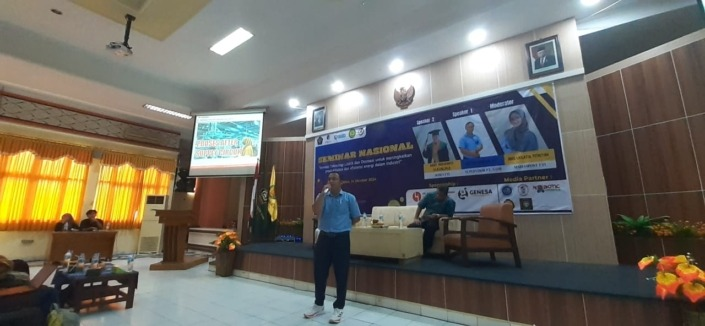
Universitas Islam Sultan Agung (UNISSULA) provides programmes and applied learning activities that introduce communities outside the university to the importance and practical application of energy efficiency, renewable energy, and clean-energy technologies.
In 2025, these activities included the field application and demonstration of solar-powered technologies for agriculture as well as renewable-energy learning applications in schools. Through these programmes, UNISSULA connects university research and technological innovation with practical learning opportunities for farmers, students, schools, and other community stakeholders.
The programmes demonstrate that clean energy can be applied not only at university facilities but also in agriculture, education, and everyday community activities.
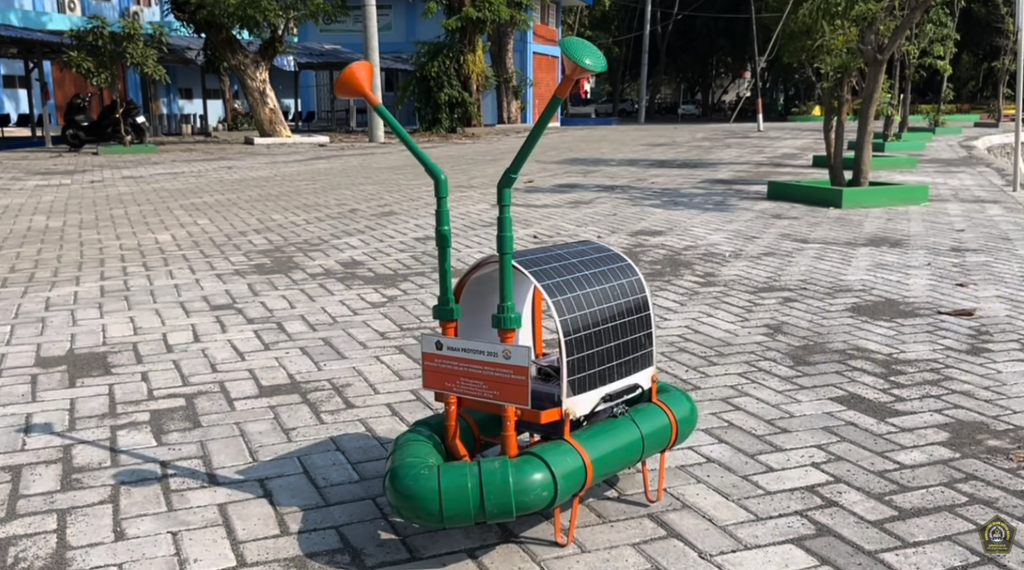
Floating Solar PV for Agricultural Irrigation
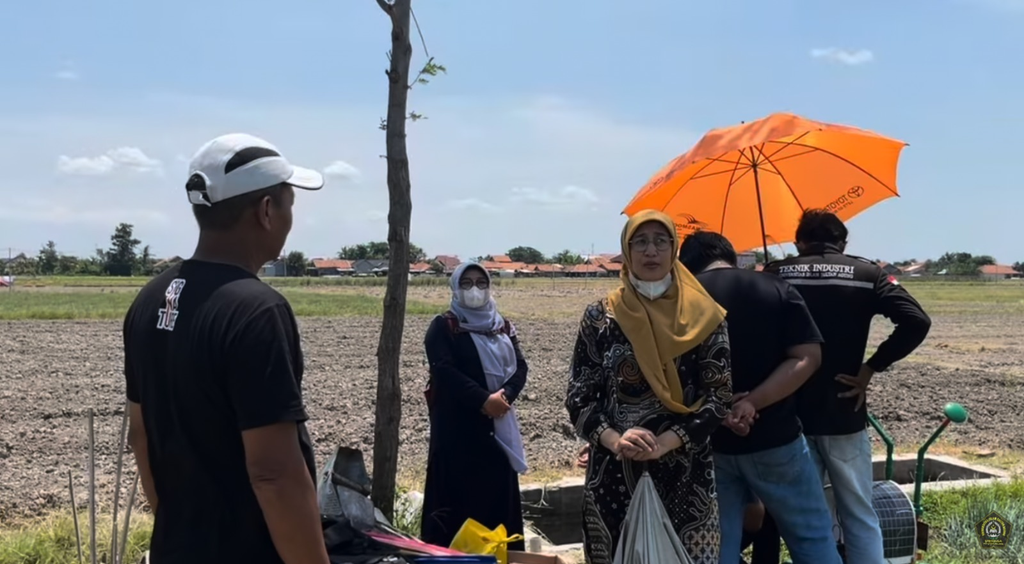
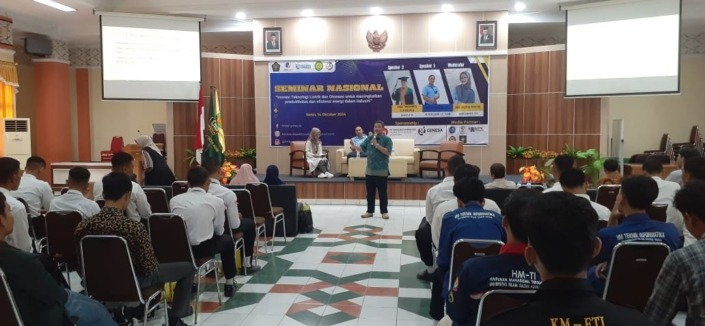
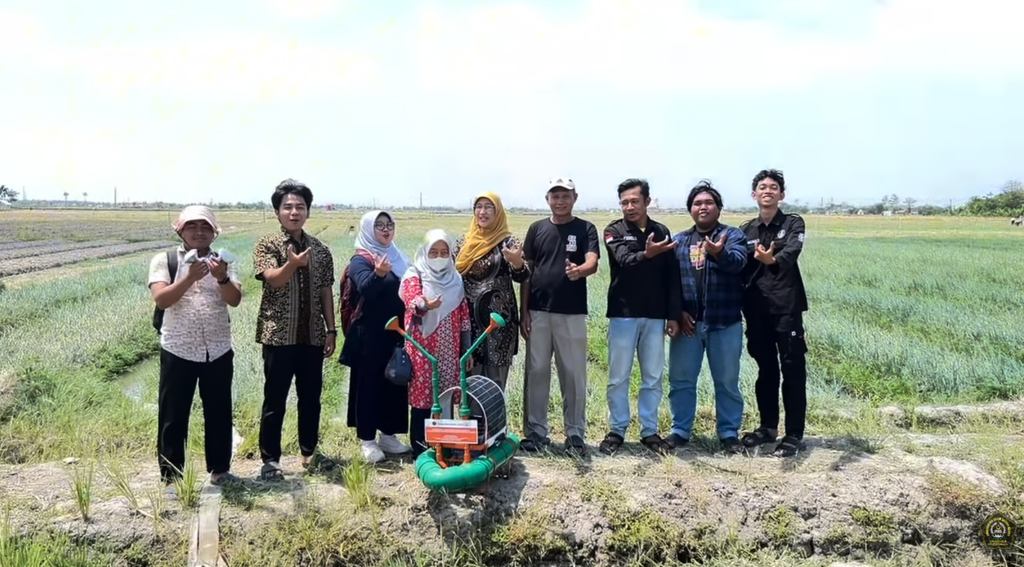
One of UNISSULA’s 2025 clean-energy initiatives was the Research Downstreaming Programme for Model and Prototype Testing (Program Hilirisasi Riset Pengujian Model dan Prototipe 2025).
The programme developed and tested an:
Automatic Shallot Field Irrigation System Based on Floating Solar PV with an Autonomous Navigation System.
The technology uses solar photovoltaic energy as part of an automated agricultural irrigation system.
Through field testing and demonstration in an agricultural environment, the programme provides a practical example of how renewable energy can support agricultural activities while reducing dependence on conventional electricity or fossil-fuel-based energy sources.
The programme connects several sustainability concepts:
- solar photovoltaic energy;
- efficient use of energy in agricultural operations;
- automation of irrigation;
- efficient use of resources;
- application of clean technology in farming; and
- practical implementation of renewable-energy research.
The field implementation also creates opportunities for agricultural stakeholders to observe how solar-powered technology can be applied directly to farming operations.
Clean Energy as a Practical Learning Experience
UNISSULA’s approach to community clean-energy education is based not only on lectures or theoretical explanations, but also on technology demonstration and practical implementation.
In the floating solar PV irrigation programme, renewable energy is demonstrated through a functioning technology that converts solar energy into useful power for agricultural applications.
This allows participants and community stakeholders to understand the relationship between:
solar energy → electricity generation → automated equipment → efficient agricultural operation
Such practical exposure helps communicate the value of renewable energy in a form that can be directly connected to community needs.
Solar-Powered Hydroponic Learning at SMAN 12 Palembang
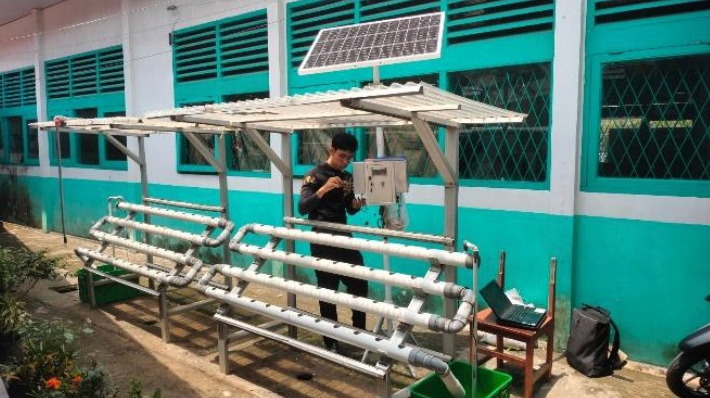
UNISSULA also developed the TANI-V1 automatic hydroponic system at SMAN 12 Palembang.
The system was designed and developed using renewable energy from a solar power system together with microcontroller-based automation. It uses a 100 WP monocrystalline solar panel and a 12 V 5 Ah battery as the main power supply for sensors, microcontrollers, and other system components.
The system combines:
- solar photovoltaic energy;
- hydroponic agriculture;
- automated water management;
- environmental sensors;
- microcontrollers;
- Internet of Things technology; and
- digital monitoring.
The research explicitly identifies TANI-V1 as having the potential to become a practical learning medium for students to understand the application of renewable energy and IoT-based automation.
Learning About How Solar Energy Works
The TANI-V1 programme provides students with a practical example of how solar energy can replace or reduce reliance on conventional sources for selected electrical loads.
The system uses a semi-off-grid architecture in which a 100 WP solar panel charges a battery through a solar charge controller. The stored energy supplies low-power equipment such as sensors and microcontrollers, while heavier loads are managed separately.
This provides an educational environment in which students can learn about:
- photovoltaic energy conversion;
- batteries and energy storage;
- efficient electricity use;
- renewable-energy integration;
- automated energy management; and
- the relationship between clean energy and modern agriculture.
Energy Efficiency Through Low-Power Technology
The TANI-V1 system also demonstrates the importance of energy efficiency.
The measured power demand of the control system is relatively low, with the system consuming approximately 5 watts.
This provides a practical example of how an automated system can perform monitoring and control functions while maintaining low electricity consumption.
The project therefore introduces students not only to renewable energy, but also to the principle that technology should be designed to use energy efficiently.
Renewable Energy as an Educational Tool
The TANI-V1 implementation demonstrates how renewable energy can serve simultaneously as:
- an energy source;
- an educational technology;
- an agricultural innovation; and
- a sustainability learning platform.
The published study concludes that the system operates using solar energy, consumes only around 5 watts, and provides an environmentally friendly and educational example of renewable-energy technology in a school environment.
This makes the project particularly relevant to community learning because students can see renewable-energy technology operating directly within their own educational environment.
Linking Research with Community Application
UNISSULA uses research downstreaming to bring university-developed technology into settings where it can be observed and used by communities.
The 2025 floating solar PV irrigation programme demonstrates renewable-energy applications in agriculture, while TANI-V1 demonstrates renewable energy and efficient technology in a school environment.
Together, these activities show a broader approach:
research → prototype development → field implementation → demonstration → community learning
Through this process, clean-energy concepts are translated from academic research into technologies that can be understood through direct application.
Topics Communicated Through the Programmes
The programmes help external communities understand several important clean-energy concepts, including:
- the importance of reducing dependence on conventional energy sources;
- the role of solar photovoltaic technology as a renewable-energy source;
- the use of efficient electrical systems;
- the integration of renewable energy with agriculture;
- the use of automation to reduce unnecessary resource consumption;
- the role of energy storage and batteries; and
- the potential of clean-energy technology to support sustainable community activities.
These topics help participants see energy efficiency and clean energy as practical solutions rather than purely theoretical concepts.
Practical Benefits for Communities
For agricultural communities, solar-powered technologies offer the potential to support irrigation and other activities using renewable energy.
For schools, technologies such as TANI-V1 provide students with direct exposure to solar panels, batteries, sensors, automation, and energy-efficient system design.
The programmes therefore strengthen public understanding of clean energy through applications that are connected to real community needs.
7.4.2
100% renewable energy Pledge
7.4.2 100% Renewable Energy Pledge
Public Commitment to the Transition toward 100% Renewable Energy
Universitas Islam Sultan Agung (UNISSULA) publicly promotes a long-term commitment toward 100% renewable energy beyond the university.
UNISSULA recognises that the transition toward a fully renewable-energy future requires broad participation from communities, educational institutions, industry, government, professional organisations, researchers, and other public stakeholders.
Through public discussions, academic events, technology demonstrations, community engagement, external collaboration, and clean-energy innovation, UNISSULA encourages wider society to progressively increase the use of renewable energy, improve energy efficiency, and reduce dependence on fossil-based energy sources.
This public commitment supports the wider transition toward cleaner, more efficient, and more sustainable energy systems.
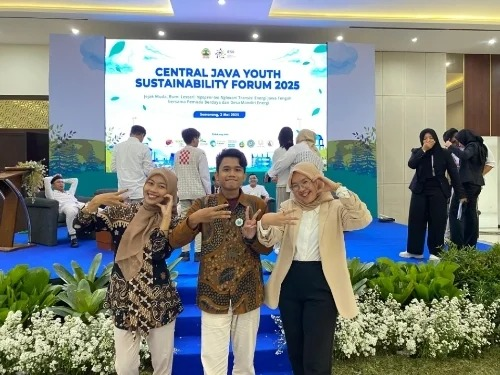
UNISSULA Public Renewable Energy Pledge
UNISSULA promotes the following public pledge:
Universitas Islam Sultan Agung supports and promotes the long-term transition toward 100% renewable energy and encourages communities, educational institutions, industries, government institutions, and other public stakeholders to increase the adoption of renewable energy, improve energy efficiency, develop clean-energy technologies, and progressively reduce dependence on fossil-based energy sources.
The pledge is promoted through public and external activities involving discussions, technology demonstrations, academic forums, community programmes, and participation in clean-energy and energy-efficiency initiatives.
UNISSULA views the transition toward 100% renewable energy as a collective process requiring technological innovation, education, awareness, collaboration, and progressive changes in energy use.
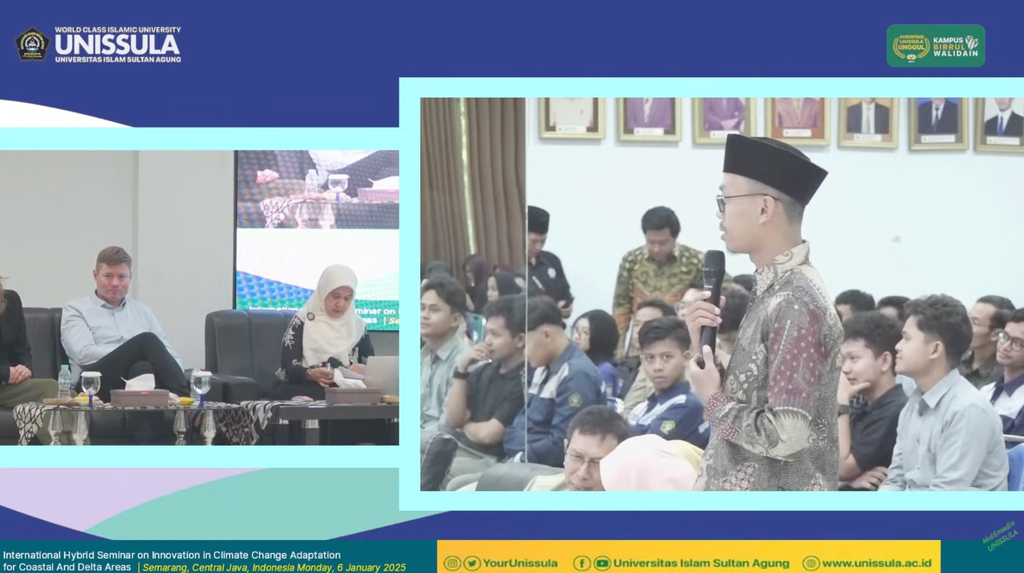
Promoting Green Technology through International Public Discussion
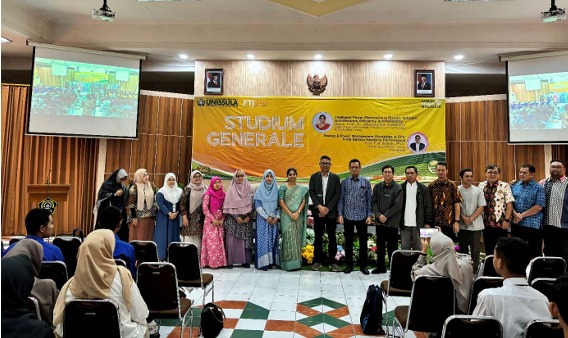
In 2025, the Faculty of Industrial Technology of UNISSULA organised the International Studium General FTI 2025 with the theme:
“Green Technology for a Sustainable Future: Innovations, Challenges, and Opportunities.”
The event provided a forum for discussing green technology, sustainability, innovation, and the role of cleaner technologies in supporting a more sustainable future.
Through this international academic forum, UNISSULA promoted discussion on sustainable technology and encouraged wider understanding of the importance of reducing environmental impacts through technological innovation.
The activity contributes to UNISSULA’s broader public promotion of the transition toward cleaner and renewable energy systems.
Promoting Energy-Efficient Electric Mobility
UNISSULA also promoted clean-energy and energy-efficiency awareness through a Studium General on electric vehicles held in 2025.
The programme brought external experts to discuss topics including:
- intelligent power electronics;
- electric-vehicle architecture;
- energy efficiency;
- battery systems;
- energy management;
- power management; and
- reliability of electric-vehicle technologies.
The event highlighted the role of electrification and efficient energy management in reducing dependence on conventional fossil-fuel-based transportation.
By discussing electric mobility and energy management with external experts and participants, UNISSULA supported wider awareness of how cleaner transportation technologies can contribute to a low-carbon and renewable-energy future.
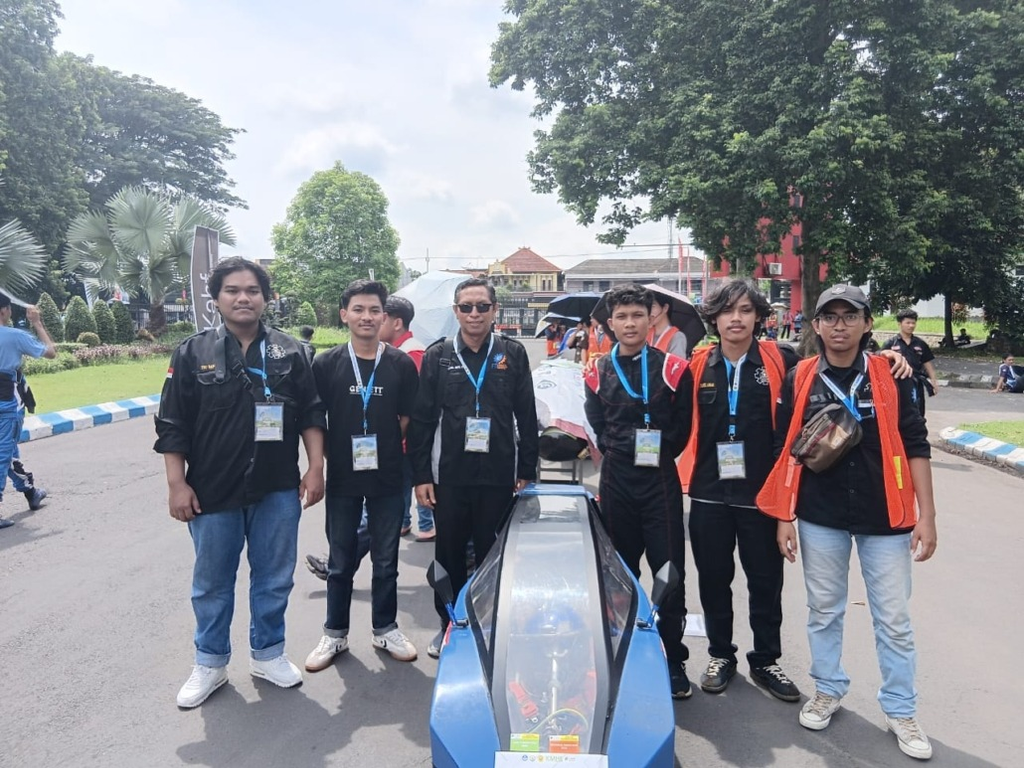
Participation in the Kontes Mobil Hemat Energi 2025
UNISSULA further promoted energy efficiency and cleaner transportation through its participation in the Kontes Mobil Hemat Energi 2025.
The university was represented by the Molex Renewable Team from the Faculty of Industrial Technology through the development and demonstration of an electric prototype vehicle.
Participation in this national event provided an opportunity to promote:
- energy-efficient vehicle technology;
- electric mobility;
- reduced dependence on conventional fuel;
- sustainable transportation; and
- technological innovation for lower energy consumption.
The programme connected UNISSULA with a broader national network of universities, students, academics, government-linked higher-education institutions, and technology communities.
This external engagement supports UNISSULA’s public promotion of energy efficiency and the wider transition toward renewable-powered transportation.
Renewable Energy for Agricultural Communities
UNISSULA also promotes renewable-energy applications through community-oriented agricultural technology.
One of the university’s 2025 activities involved the development and field application of an automatic shallot-field irrigation system based on Floating Solar PV.
The technology demonstrates how solar photovoltaic energy can be used to support agricultural activities and reduce dependence on conventional energy sources.
Through field implementation and demonstration, agricultural stakeholders can directly observe the use of renewable energy in practical farming operations.
This programme promotes awareness of:
- solar photovoltaic technology;
- renewable-energy applications in agriculture;
- energy-efficient irrigation;
- clean agricultural technology; and
- the practical benefits of reducing reliance on fossil-based energy.
Renewable-Energy Education through TANI-V1
UNISSULA also developed the TANI-V1 automatic hydroponic system at SMAN 12 Palembang.
The system integrates a 100 WP monocrystalline solar panel, battery storage, sensors, microcontrollers, and Internet of Things technology.
The system was designed not only to support automated hydroponic operations but also to become a practical learning medium for students to understand the application of renewable energy and IoT-based automation.
TANI-V1 provides a practical demonstration of how renewable energy can be integrated into educational and agricultural applications.
The project also demonstrates efficient energy use, with the system consuming approximately 5 watts while operating through solar-powered components.
Public Promotion Beyond the University
UNISSULA’s renewable-energy pledge is not limited to internal campus operations.
The university promotes the transition toward renewable energy among:
- local communities;
- schools and students;
- agricultural communities;
- industry;
- government;
- researchers;
- other universities;
- professional and technology communities; and
- wider public stakeholders.
Through these external activities, UNISSULA encourages stakeholders to understand the importance of renewable energy and to progressively participate in the transition toward cleaner energy systems.
From Energy Efficiency to 100% Renewable Energy
UNISSULA recognises that the transition toward 100% renewable energy is a long-term process.
Energy efficiency is an important foundation because reducing unnecessary energy demand makes it easier for renewable-energy sources to meet total energy requirements.
UNISSULA therefore promotes a transition pathway based on:
energy conservation → energy efficiency → clean technology → electrification → increased renewable-energy adoption → progressive reduction of fossil-energy dependence → 100% renewable energy
This approach links energy efficiency, technological innovation, renewable-energy deployment, and public awareness into a single long-term transition pathway.
Encouraging Wider Stakeholder Participation
UNISSULA encourages external stakeholders to contribute to the renewable-energy transition according to their respective capacities.
The university promotes:
- increased use of solar and other renewable-energy technologies;
- greater energy efficiency in buildings, transportation, agriculture, and industry;
- clean-energy education;
- development of energy-efficient technologies;
- electric mobility;
- responsible energy use; and
- reduced dependence on coal, oil, and other fossil-based energy sources.
By promoting these actions through public discussions, events, demonstrations, research applications, and external engagement, UNISSULA seeks to broaden participation in the transition toward a sustainable energy future.
Collective Commitment to a Renewable-Energy Future
UNISSULA recognises that achieving 100% renewable energy requires cooperation across society.
Universities can contribute through education, research, innovation, public discussion, technology demonstration, and community engagement.
Industry can contribute by improving efficiency and adopting cleaner technologies.
Government can support the transition through policy and infrastructure.
Communities can contribute through responsible energy use and renewable-energy adoption.
Schools can introduce renewable-energy learning to future generations.
UNISSULA therefore promotes a collective commitment in which universities and wider society work together toward the long-term goal of 100% renewable energy.
Contribution to SDG 7
UNISSULA’s public pledge supports SDG 7: Affordable and Clean Energy by promoting renewable-energy adoption, energy efficiency, clean technologies, sustainable transportation, and public participation in the energy transition.
The university’s 2025 activities demonstrate this commitment through:
- international discussions on green technology;
- electric-vehicle and energy-management education;
- participation in national energy-efficiency programmes;
- solar photovoltaic applications in agriculture; and
- renewable-energy learning in schools.
These activities provide multiple channels through which UNISSULA promotes its renewable-energy commitment beyond the university.
7.4.3
Energy Efficiency Services For Industry
7.4.3 Energy Efficiency Services For Industry
Direct Support for Local Industry
Universitas Islam Sultan Agung (UNISSULA) provides free direct services to local industry aimed at improving energy efficiency, clean-energy adoption, and the practical use of renewable-energy technologies.
In 2025, these services included training, technical assistance, technology demonstrations, renewable-energy education, and applied technology support for local farmers, food producers, and small-scale production businesses.
All participating beneficiaries received the services free of charge. The programmes were supported through community-service funding, and participants were not charged participation fees, training fees, mentoring fees, or technology-access fees.

Free Photovoltaic and Solar-Energy Training
One of UNISSULA’s 2025 activities was practical training on the use of photovoltaic and solar-panel technology for local farmers and food producers.
The documented training was held on 12 September 2025 and introduced participants to renewable-energy applications that can support agricultural and production activities.
The training covered:
- basic photovoltaic systems;
- solar-energy applications;
- renewable energy for agricultural operations;
- equipment operation;
- integration of green energy into production activities; and
- potential reduction of dependence on conventional energy sources.
This service gave local producers direct access to university expertise related to clean energy and practical renewable-energy technology.
Improving Energy Efficiency in Local Production
UNISSULA also provided practical support related to more efficient production systems.
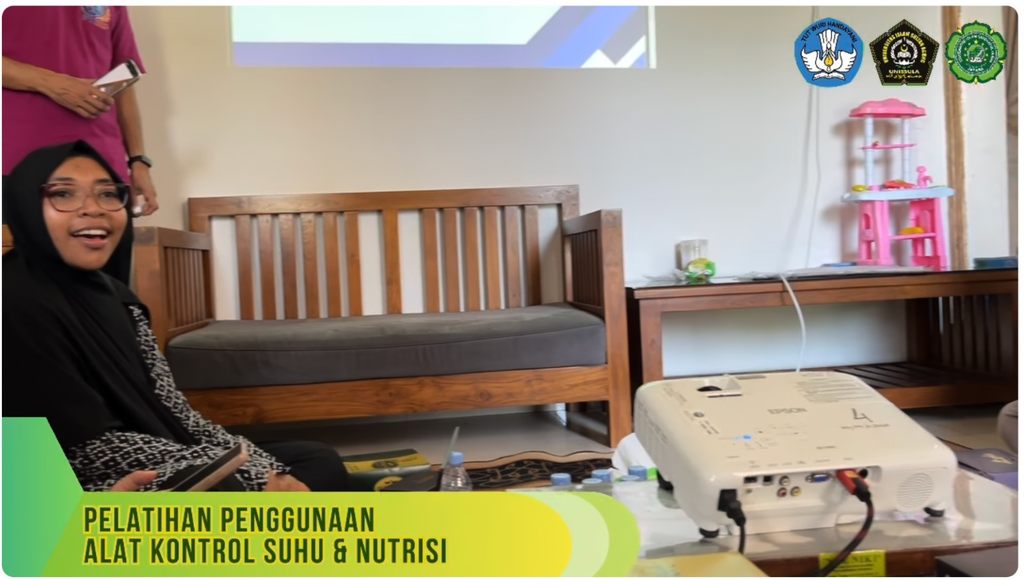
Through smart-farming and technology-transfer activities, local producers received training and guidance on:
- temperature monitoring;
- nutrient monitoring;
- automated control systems;
- efficient management of hydroponic production;
- Internet of Things technology; and
- the use of renewable energy in agricultural production.
These services were designed to help participants operate their production systems more efficiently and make better use of energy and other resources.
Practical Technology Demonstrations
The 2025 programmes were implemented as interactive knowledge-transfer activities rather than passive information sessions.
Participants were able to:
- observe technology demonstrations;
- examine and use relevant equipment;
- discuss technical and operational challenges;
- receive direct guidance from university experts;
- gain hands-on experience; and
- learn how the technologies could be adapted to their production conditions.
This practical approach helped bridge the gap between university research and the operational needs of local producers.
Support for Local Food Producers
UNISSULA also provided direct support to local food producers.
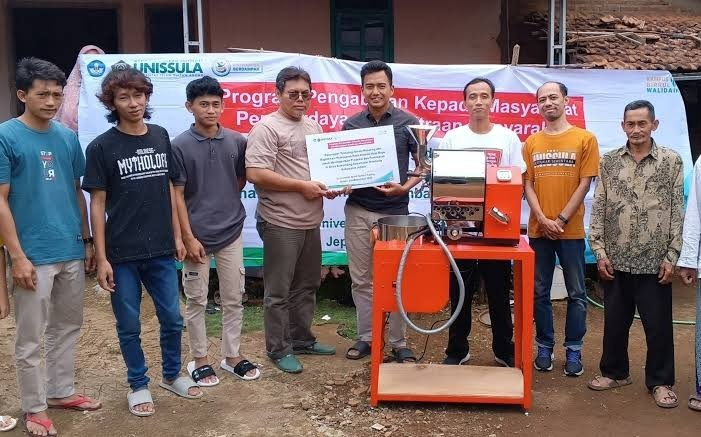
One example was the 2025 programme for Kopi Vinzoei / Kopi Boyo, a local coffee producer in Sumanding Village, Kembang District, Jepara.
On 30 August 2025, the UNISSULA Community Service Team provided coffee-roasting technology together with practical training to strengthen the producer’s technical and production capabilities.
The training included:
- coffee-roasting machine operation;
- roasting temperature;
- roasting time;
- machine maintenance;
- production management;
- packaging;
- internet marketing; and
- financial recording.
This support strengthened production efficiency and helped the local producer operate technology more effectively.
Energy and Resource Efficiency for Local Industry
UNISSULA’s approach to local-industry support combines clean energy with production efficiency.
The university helps local producers understand how technology can be used to:
- reduce unnecessary energy consumption;
- improve equipment operation;
- adopt renewable-energy sources;
- monitor production conditions;
- improve process efficiency; and
- reduce dependence on conventional energy.
This creates a practical pathway for local businesses to improve both operational performance and environmental sustainability.
Free Access to University Expertise
All services provided through these programmes were free for participating local producers.
Beneficiaries were not required to pay for:
- participation;
- technical training;
- mentoring;
- technology demonstrations; or
- access to university expertise.
This free-service model ensures that local businesses and producers can access clean-energy knowledge and energy-efficiency support without financial barriers.
Renewable-Energy Options for Local Producers
UNISSULA’s services also help local producers understand renewable-energy options that may be suitable for their activities.
Through solar-panel training and green-energy demonstrations, participants were introduced to:
- photovoltaic technology;
- solar-powered systems;
- energy storage;
- renewable-energy integration; and
- the potential substitution of conventional energy sources with cleaner alternatives.
This type of support directly contributes to increasing awareness and adoption of clean-energy options among local industries.
Knowledge Transfer for Sustainable Production
UNISSULA’s local-industry services follow a practical knowledge-transfer model:
University expertise → Technical training → Technology demonstration → Practical application → Improved efficiency → Cleaner production
This model helps local producers translate academic knowledge into practical improvements within their own operations.
Contribution to Local Economic and Environmental Sustainability
By providing free energy-efficiency and clean-energy services, UNISSULA helps local industries strengthen both economic and environmental performance.
Improved energy management and access to renewable-energy knowledge can help local producers:
- reduce operating costs;
- improve production efficiency;
- improve technology use;
- reduce resource waste;
- adopt cleaner technologies; and
- strengthen long-term business sustainability.
7.4.4
Policy Development For Clean Energy Technology
7.4.4 Supporting Government in Clean-Energy and Energy-Efficient Technology Policy Development
Supporting Government through Research, Policy Recommendations, and Technical Expertise
Universitas Islam Sultan Agung (UNISSULA) supports government institutions in the development of clean-energy and energy-efficient technology policy through policy-oriented research, academic expertise, collaboration with government agencies, and international knowledge exchange.
In 2025, this support was demonstrated through three complementary approaches:
- research specifically producing renewable-energy policy recommendations for Central Java;
- collaboration with BRIDA Jawa Tengah and representatives of regional government agencies; and
- an international policy-oriented seminar involving government institutions and international experts in renewable energy and sustainable infrastructure.
These activities provide a pathway through which academic research and technical knowledge can inform government planning and policy discussions related to clean energy, renewable energy, and sustainable technology.
Renewable-Energy Policy Brief for Central Java
One of UNISSULA’s clearest policy-oriented research activities in 2025 was:
“Rekomendasi Policy Brief Pembangunan Jawa Tengah pada Sektor Energi Terbarukan Menggunakan Metode Sentence-BERT Berbasis Retrieval Augmented Generation.”
In English:
“Policy Brief Recommendations for Central Java Development in the Renewable Energy Sector Using Sentence-BERT Based on Retrieval Augmented Generation.”
The project is officially listed among UNISSULA’s 2025 faculty research activities and is led by Imam Much Ibnu Subroto, ST., M.Sc., Ph.D.
The research directly combines three elements relevant to public policy:
Central Java development → renewable energy → policy brief recommendations
Its policy-oriented design provides an academic basis for organising and translating research evidence into recommendations relevant to renewable-energy development in Central Java.
The project also applies Sentence-BERT and Retrieval Augmented Generation (RAG) as methods to support the retrieval, organisation, and synthesis of information for policy-oriented analysis.
Through this research, UNISSULA contributes evidence and academic expertise that can inform government discussion and planning in the renewable-energy sector.
Collaboration with BRIDA Jawa Tengah
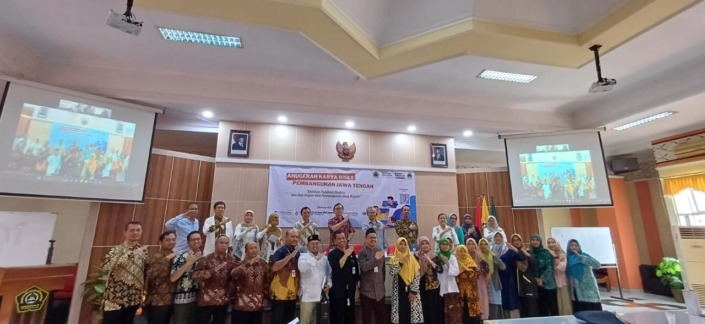
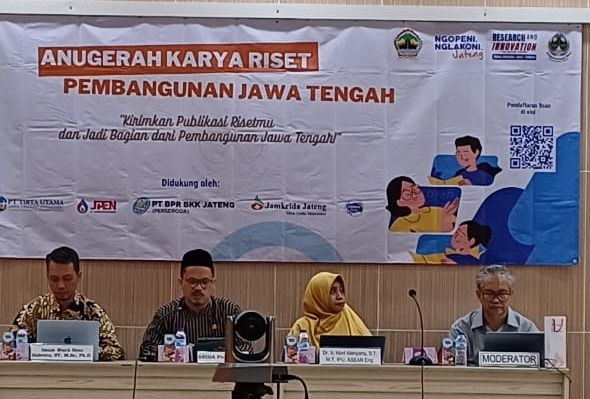
UNISSULA also strengthened its direct engagement with regional government institutions through collaboration with the Central Java Regional Research and Innovation Agency (BRIDA Jawa Tengah).
On 15 May 2025, the Faculty of Industrial Technology of UNISSULA and BRIDA Jawa Tengah held the socialisation of the 2025 Regional Research Work Appreciation Programme.
According to the official UNISSULA report, the activity brought together academics, researchers, and representatives of Regional Government Organisations (Organisasi Perangkat Daerah / OPD) across Central Java to strengthen research and innovation synergy for regional development. UNISSULA academics also served as speakers in the programme.
The programme therefore created a direct interface between university researchers and regional government stakeholders.
This relationship is important for policy development because it provides a channel through which university research and technological expertise can be connected with government development priorities.
Connecting Renewable-Energy Research with Government Engagement
UNISSULA’s renewable-energy policy research and its engagement with BRIDA Jawa Tengah complement each other.
The policy-brief research provides clean-energy policy content, while collaboration with BRIDA and OPD provides a government engagement mechanism.
Together, they create the following pathway:
Research evidence → Renewable-energy policy recommendations → University–government engagement → Regional policy discussion
This demonstrates that UNISSULA’s role extends beyond conducting renewable-energy research internally. The university also engages with government institutions and regional innovation stakeholders in ways that can support evidence-based policymaking.
International Knowledge Exchange for Government Policy Development
UNISSULA also facilitated international knowledge exchange involving government institutions and experts in fields relevant to clean energy and sustainable technology.
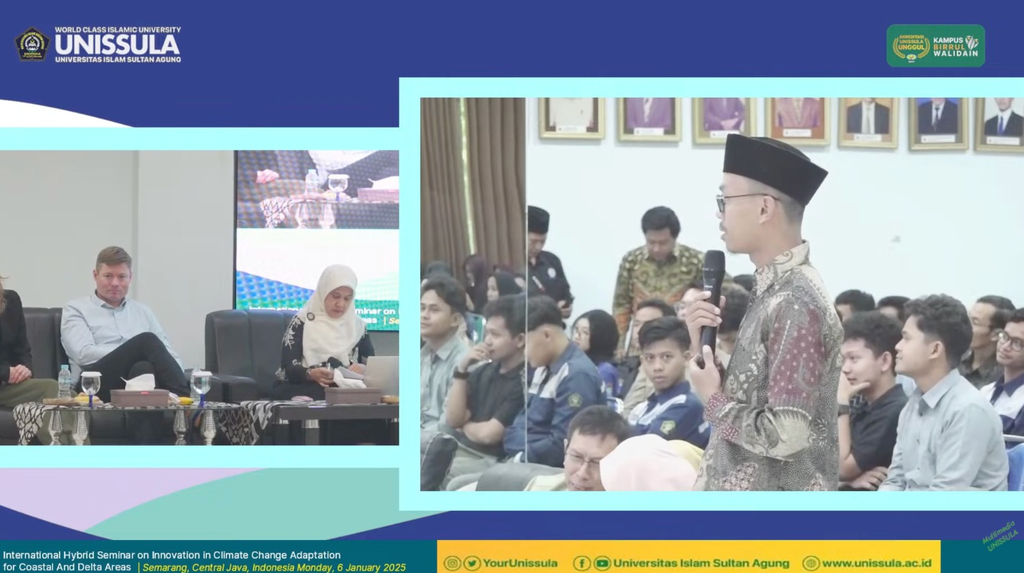
On 6 January 2025, the Faculty of Engineering organised the International Hybrid Seminar:
“Innovation in Climate Change Adaptation for Coastal and Delta Areas.”
The seminar was designed as a platform for academics, researchers, practitioners, and policymakers to exchange knowledge and innovative solutions. Its objectives included strengthening regional and global partnerships and promoting knowledge-sharing among government, academia, the private sector, and local communities.
Government and International Expert Participation
The seminar programme included government and international stakeholders directly relevant to policy and sustainable technology.
The proposal listed the Minister of Environment of the Republic of Indonesia as a speaker on national policies and strategic frameworks for climate mitigation and adaptation.
It also included international experts from:
- Hanze University of Applied Sciences, the Netherlands, discussing advanced water management, flood control, and sustainable urban planning;
- VIA University College, Denmark, presenting approaches to climate resilience through renewable-energy integration, sustainable infrastructure, and community-based solutions; and
- UNISSULA experts discussing adaptive infrastructure and policy in the Indonesian context.
Government-linked participants included the Central Java Provincial Environmental Service, environmental agencies from regencies and cities in Central Java, the Central Java public works and water-resources authority, BBWS Pemali Juana, and other regional institutions.
Policy Recommendations as an Intended Outcome
The international seminar was not designed only as an academic discussion.
Its stated expected outcomes included:
“a practical framework for addressing climate change in Indonesia, including actionable strategies and policy recommendations.”
It also sought to document international best practices from the Netherlands and Denmark, strengthen collaboration among stakeholders, and identify technological innovation opportunities.
Because renewable-energy integration and sustainable infrastructure were included in the seminar’s international knowledge exchange, the programme provided government stakeholders with access to expertise relevant to clean-energy and energy-efficient technology development.
Forms of Support Provided by UNISSULA
Through these 2025 activities, UNISSULA supported government policy development in several ways:
- producing policy-oriented research on renewable-energy development;
- preparing research specifically framed as a policy brief for Central Java;
- engaging directly with BRIDA Jawa Tengah and regional government organisations;
- providing university experts in government-linked research and innovation forums;
- facilitating dialogue between government institutions and international experts;
- sharing knowledge on renewable-energy integration and sustainable infrastructure; and
- supporting the development of actionable strategies and policy recommendations.
These forms of assistance demonstrate an institutional role in informing government through academic evidence and technical expertise.
Technical Expertise Relevant to Clean-Energy Policy
UNISSULA’s policy contribution is supported by broader research competence in clean and efficient energy technologies.
Official 2025 research records include work on:
- an adaptive energy-management and efficiency model for green hydrogen production;
- Floating Solar PV technology;
- solar-powered monitoring systems; and
- renewable-energy policy recommendations.
This technical research base strengthens the university’s capacity to contribute informed perspectives to government discussions on renewable-energy and energy-efficient technologies.
Evidence-Based University–Government Cooperation
UNISSULA’s approach can be summarised as:
Technical research → Policy analysis → Policy recommendations → Government engagement → Knowledge exchange
This model allows academic expertise to contribute to public decision-making while respecting the government’s formal role in policymaking.
UNISSULA does not claim to determine government policy. Rather, it provides information, research evidence, expertise, and recommendations that can support government institutions in developing more informed policies related to clean energy and sustainable technology.
Contribution to Sustainable Energy Development
By linking renewable-energy research with government collaboration and international expertise, UNISSULA contributes to broader efforts to:
- expand renewable-energy adoption;
- improve energy efficiency;
- support cleaner technologies;
- strengthen evidence-based regional planning;
- encourage low-carbon development; and
- increase collaboration between government, academia, and international partners.
This strengthens the role of research and innovation in supporting sustainable energy policy.
7.4.5
Assistance To Low-Carbon Innovation
7.4.5 Assistance for Start-ups Supporting a Low-Carbon Economy and Technology
Supporting Low-Carbon Entrepreneurship and Innovation
Universitas Islam Sultan Agung (UNISSULA) provides assistance to emerging businesses, student entrepreneurs, ecopreneurs, and local enterprises whose innovations can contribute to a low-carbon economy, cleaner production, renewable energy, circular-economy practices, and sustainable technology.
In 2025, this support was delivered through entrepreneurship development programmes, mentoring and business training, international ecopreneurship collaboration, technology transfer, and direct assistance for enterprises implementing low-carbon technologies.
UNISSULA’s approach combines:
entrepreneurship development → mentoring → sustainable innovation → technology transfer → low-carbon business application
Through these activities, the university helps entrepreneurial ventures develop both their business capacity and their contribution to environmental sustainability.
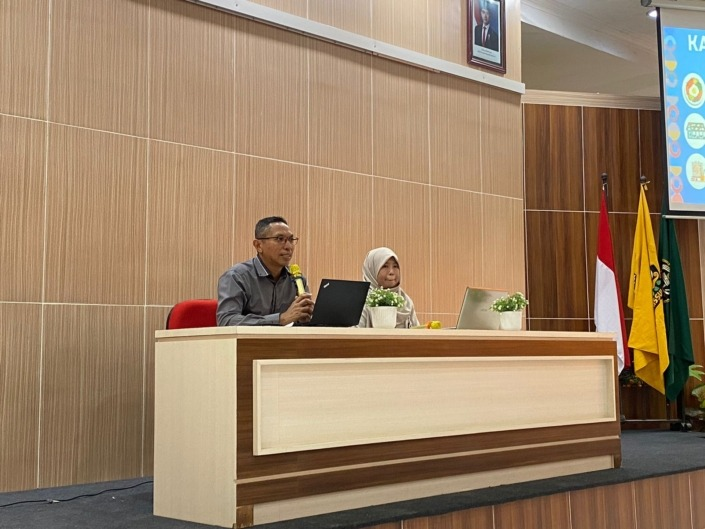

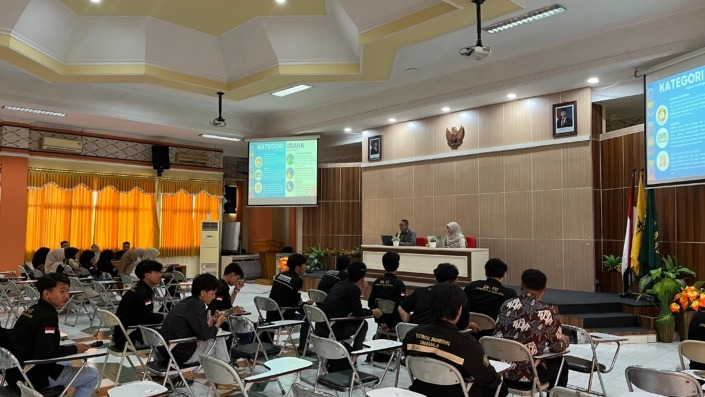
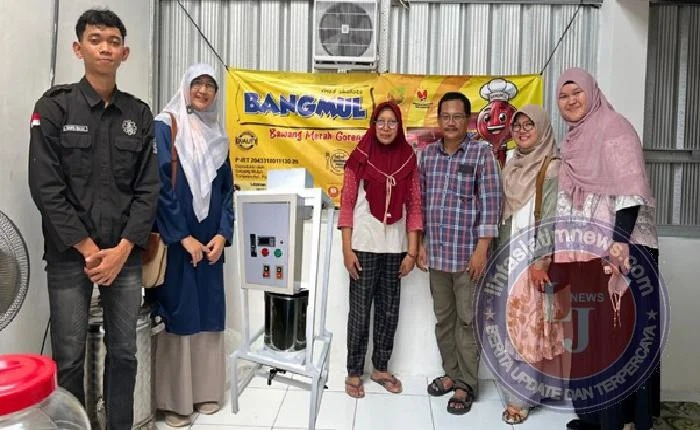
Start-up Assistance through the P2MW Entrepreneurship Programme
In 2025, the Faculty of Industrial Technology (FTI) of UNISSULA organised training and socialisation for the Program Pembinaan Mahasiswa Wirausaha (P2MW), or Student Entrepreneurship Development Programme.
The activity was held on 22 January 2025 and was organised by FTI’s academic and student-affairs division in cooperation with UNISSULA’s student and alumni development institution.
P2MW is designed to strengthen the entrepreneurship ecosystem in higher education. Importantly, the programme covers both:
- early-stage businesses; and
- growing businesses.
Participants receive entrepreneurship assistance through coaching, mentoring, and business training, providing a structured mechanism through which UNISSULA supports the development of new and growing entrepreneurial ventures.
This programme provides an institutional foundation through which emerging entrepreneurs can develop innovative and sustainability-oriented business ideas.
Developing Ecopreneurs for a Sustainable Economy
UNISSULA also strengthened the sustainability orientation of entrepreneurship through international collaboration.
In January 2025, the Faculty of Economics of UNISSULA and Universiti Teknologi MARA (UiTM), Malaysia, implemented the annual UNISSULA–UiTM CT International Collaborative Program (UUICP 2025) under the theme:
“Ecopreneurs of Tomorrow: Digital Innovations for a Sustainable Future in Indonesia and Malaysia.”
The programme was specifically designed to promote sustainable innovation through digital approaches and to develop a new generation of ecopreneurs capable of addressing global sustainability challenges.
This is significant for low-carbon entrepreneurship because ecopreneurship links entrepreneurial development with environmental responsibility, sustainable innovation, and business models that can contribute to lower-impact economic activities.
Through international seminars, academic collaboration, and knowledge exchange, UNISSULA provides future entrepreneurs with exposure to sustainability-oriented business development and innovation.
From Entrepreneurship to a Low-Carbon Economy
UNISSULA’s entrepreneurship support encourages a transition from conventional business development toward entrepreneurship that considers environmental impacts and sustainability.
Low-carbon entrepreneurship can involve businesses and technologies that:
- reduce fossil-energy dependence;
- use renewable energy;
- improve energy efficiency;
- transform waste into useful resources;
- reduce emissions;
- improve resource efficiency;
- introduce cleaner production technologies; and
- implement circular-economy business models.
The ecopreneurship orientation of UUICP 2025 complements UNISSULA’s broader entrepreneurship mentoring programmes by embedding sustainability into entrepreneurial development.
Direct Assistance for Low-Carbon Enterprise Technology
A particularly strong example of UNISSULA’s support for low-carbon economic activity in 2025 was its assistance to small-scale businesses in the fried-shallot industrial centre in Batangan District, Pati Regency.
These businesses generate significant quantities of used cooking oil as a production waste stream.
UNISSULA’s community-service team introduced a technological solution that enables the waste oil to be converted into biodiesel, creating an alternative energy source while reducing environmental pollution.
The university did not merely provide information. It provided direct assistance through:
- biodiesel-production training;
- operational mentoring;
- technology transfer; and
- construction of a small-industry-scale biodiesel reactor.
This represents a practical example of university assistance enabling a local enterprise to adopt low-carbon and circular-economy technology.
Converting Waste into Renewable Fuel
Before the intervention, used cooking oil generated by the local fried-shallot industry was largely discarded or stored without productive use.
The UNISSULA programme demonstrated that this waste could instead become an economically useful energy resource.
The technology converts used cooking oil into biodiesel using a transesterification process developed through UNISSULA research. The resulting biodiesel met the relevant parameters reported against SNI 7182:2015 in the university’s programme documentation.
The intervention therefore creates a transition:
Waste cooking oil → Processing technology → Biodiesel → Alternative energy → Economic value
This links waste management, renewable fuel production, technological innovation, and local enterprise development.
Supporting Circular-Economy Business Development
The biodiesel programme is also relevant to the circular economy because a material previously treated as waste becomes an input for a new productive process.
Instead of following a conventional linear model:
production → waste → disposal
the programme promotes:
production → waste recovery → conversion → renewable fuel → new economic value
The local enterprises can therefore potentially gain two benefits:
- reduced environmental impact from used cooking-oil disposal; and
- new economic opportunities associated with biodiesel production.
UNISSULA reported that the installation of the production unit provides participating enterprises with opportunities to generate additional economic value while reducing environmental pollution.
Research Supporting Low-Carbon Enterprise Development
UNISSULA’s assistance is also supported by research into the technical, environmental, and financial feasibility of biodiesel production from used cooking oil.
A 2025 UNISSULA study analysed used cooking oil from a local fried-shallot SME in Pati as a biodiesel feedstock.
The research examined:
- technical feasibility;
- financial feasibility;
- environmental impacts;
- life-cycle impacts; and
- the potential contribution to sustainable industry.
The study found that converting the waste oil into biodiesel offered environmental advantages compared with direct disposal and supported circular-economy and sustainable-industry principles.
This demonstrates an important feature of UNISSULA’s approach: entrepreneurial support is connected to research-based technological development, rather than being limited to general business training.
Technology Transfer to Emerging and Small Businesses
UNISSULA uses technology transfer as a mechanism for helping enterprises adopt sustainable innovations.
In the biodiesel programme, assistance included both knowledge and physical technology.
The university provided:
- technical knowledge;
- operating guidance;
- production training;
- mentoring;
- research-based processing technology; and
- an operational biodiesel reactor.
This model reduces barriers that small enterprises may otherwise face when attempting to adopt low-carbon technologies.
It also demonstrates how university research can move beyond laboratories and become commercially and environmentally useful technology.
Entrepreneurship Assistance across Different Development Stages
UNISSULA’s 2025 activities support entrepreneurial development across multiple stages.
For early-stage and growing student businesses, P2MW provides coaching, mentoring, and business training.
For sustainability-oriented future entrepreneurs, UUICP 2025 promotes ecopreneurship and sustainable digital innovation.
For existing small businesses transitioning toward cleaner production, the biodiesel programme provides technical assistance, technology transfer, mentoring, and renewable-energy applications.
Together, these activities create an entrepreneurial support ecosystem that can move ideas from business development toward practical low-carbon implementation.
Forms of Assistance Provided by UNISSULA
UNISSULA’s assistance for entrepreneurship and low-carbon innovation in 2025 included:
- entrepreneurship coaching;
- start-up and early-business mentoring;
- business-development training;
- ecopreneurship education;
- international knowledge exchange;
- sustainable-innovation development;
- technical mentoring;
- renewable-energy technology transfer;
- prototype and equipment support;
- applied research;
- circular-economy solutions; and
- support for the commercial and operational application of low-carbon technology.
This combination of business and technological assistance helps emerging ventures translate sustainable ideas into practical activities.
Contribution to a Low-Carbon Economy
The programmes support a low-carbon economy through several pathways.
Renewable energy: Used cooking oil is converted into biodiesel as an alternative energy source.
Circular economy: Production waste is converted into a resource with economic value.
Cleaner production: Businesses are assisted in reducing harmful waste disposal.
Sustainable entrepreneurship: Students and future entrepreneurs are encouraged to develop sustainability-oriented businesses.
Technology transfer: Research-based low-carbon technology is transferred from the university to enterprises.
Economic opportunity: Environmentally beneficial activities are connected with new potential sources of income.
These characteristics demonstrate that environmental sustainability and economic development can be pursued together.
International Dimension of Sustainable Entrepreneurship
The collaboration with UiTM Malaysia further expands the programme beyond the local level.
Through the “Ecopreneurs of Tomorrow” programme, UNISSULA and UiTM seek to develop entrepreneurs capable of responding to sustainability challenges in both Indonesia and Malaysia.
The programme emphasises digital innovation and sustainable development and is intended to help build a generation of ecopreneurs prepared for global sustainability challenges.
This provides an international knowledge environment for sustainability-oriented entrepreneurship while complementing UNISSULA’s local technology-transfer activities.
Linking University Innovation with Entrepreneurial Development
UNISSULA’s model can therefore be represented as:
University research and expertise
↓
Entrepreneurship training and mentoring
↓
Ecopreneurship and sustainable innovation
↓
Technology transfer
↓
Business application
↓
Low-carbon and circular economy
This model helps connect education, research, entrepreneurship, and sustainability.
Contribution to SDG 7
These activities contribute to SDG 7: Affordable and Clean Energy by supporting entrepreneurial activity related to renewable energy and low-carbon technologies.
In particular, the biodiesel programme demonstrates how university assistance can enable small enterprises to use waste-derived renewable fuel technology.
The wider entrepreneurship programmes help create the human and business capacity needed to develop further sustainability-oriented ventures.
The programmes also contribute to related sustainability objectives, particularly responsible production, innovation, circular economy, and climate mitigation.