


















UNISSULA SUSTAINABILITY REPORTING
SDG 16 – Peace, Justice and Strong Institutions
Progress Report 2025
2025 Report Overview
In 2025, Universitas Islam Sultan Agung (UNISSULA) documented its progress towards SDG 16 – Peace, Justice and Strong Institutions through inclusive university governance, student representation, stakeholder engagement, institutional transparency, anti-corruption measures, and academic freedom. The university strengthened public accountability through the recognition of independent student organisations, publication of institutional financial data, and cooperation with government institutions on legal policy, judicial governance, and regional development. UNISSULA also facilitated dialogue on legislative reform, public policy, and democratic accountability while supporting community-oriented decision-making and evidence-based governance. This report presents the university’s documented achievements, institutional initiatives, and continuing priorities for strengthening peaceful, just, and accountable institutions during the 2025 reporting period.
Full SDG 16 Progress Report 2025
16.2.1
Elected Representation
16.2.1 Elected Representation
Universitas Islam Sultan Agung (UNISSULA) supports elected representation and stakeholder participation in university governance. Faculty members and students have representative mechanisms through which their perspectives can contribute to university affairs.
University Senate
UNISSULA has established the University Senate as an important university-level governance body responsible for academic deliberation, policy consideration, and supervision. Its membership includes university leaders, professors, faculty leaders, and one Faculty Representative from each faculty.
Elected Faculty Representation
Faculty members are formally represented in the University Senate through Faculty Representatives from their respective faculties. The UNISSULA Statute stipulates that the selection mechanism for Senate members from the Faculty Representative element is regulated through University Senate regulations, providing a formal basis for elected faculty representation.
Student Leadership Elections
UNISSULA recognises university-level student representation for undergraduate and postgraduate students. Student leadership is selected through an electoral process in which students are able to vote. These elected student representatives provide a formal channel for student voices, interests, and concerns to be communicated within university affairs.
Evidence of Implementation
The emphasis on elected representation supports transparent, participatory, and inclusive governance by providing faculty members and students with representative mechanisms to contribute their perspectives to university life and institutional decision-making.
Reference : Statuta UNISSULA
16.2.2
Students’ Union
16.2.2 Recognition of Independent Student Organisations at Universitas Islam Sultan Agung (UNISSULA)
Institutional Recognition of Independent Student Organisations
Universitas Islam Sultan Agung (UNISSULA) formally recognises student representative organisations, including the Student Executive Board (Badan Eksekutif Mahasiswa Keluarga Mahasiswa, BEM KM) and the Student Senate (Senat Mahasiswa), as important institutions representing student interests and supporting student participation in university life.
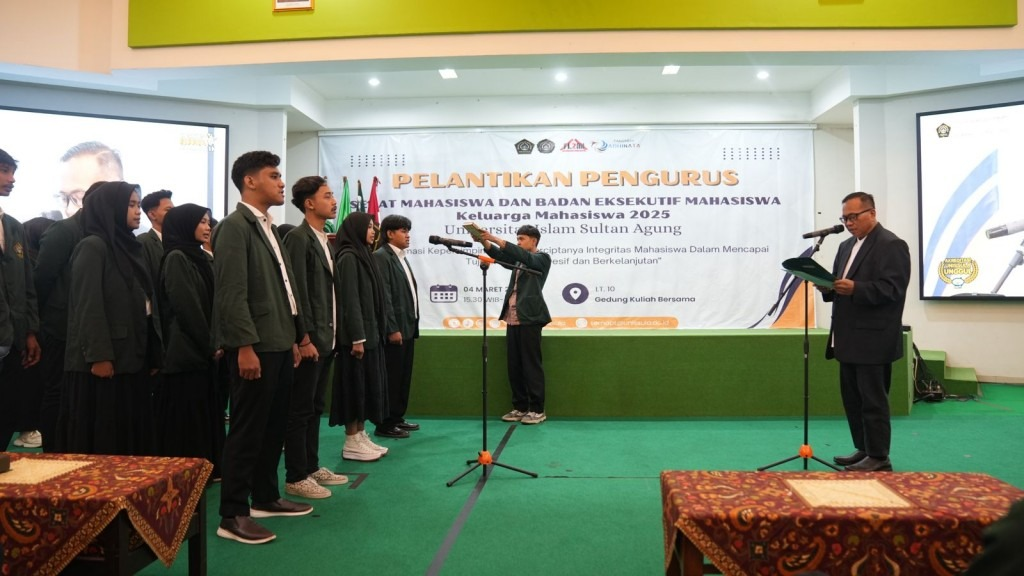
These organisations provide mechanisms for student representation, organisational governance, leadership development, student support, and community engagement.
UNISSULA’s official recognition is demonstrated through the inauguration of the Student Senate and BEM KM leadership for the 2025–2026 period by the Rector of UNISSULA in March 2025. The inauguration affirmed the important role of student representatives in representing the interests of the university’s student community.
The university recognises student-led organisational mechanisms, including leadership selection, internal deliberation, programme planning, and organisational accountability. These mechanisms enable student organisations to exercise their representative functions within the university’s institutional framework.
Official evidence:
https://unissula.ac.id/blog/rektor-lantik-senat-dan-bem-km-unissula
Independent Student Governance and Representation
UNISSULA supports student participation in organisational decision-making through student representative bodies at university and faculty levels.
One documented example is the Student Organisations General Assembly (Musyawarah Besar) held at the Faculty of Industrial Technology on 18–20 December 2025.
The assembly brought together representatives from eight student organisations and provided a forum for student-led deliberation and organisational accountability.

The activities included discussion of organisational regulations, review of the Articles of Association and Bylaws (AD/ART), evaluation of accountability reports, and selection of student organisation leaders.
The leadership selection process was conducted through recognised student deliberation mechanisms, reflecting the role of students in managing their organisational affairs.
In January 2025, student representative organisations at the Faculty of Industrial Technology also participated in a work-planning assembly to discuss organisational priorities, activities, and student programme development.
These processes demonstrate practical mechanisms through which student representatives contribute to organisational governance and express the collective interests of students.
Official evidence:
https://fti.unissula.ac.id/lembaga-kemahasiswaan-fti-ikuti-musyawarah-besar-2025
https://fti.unissula.ac.id/musyawarah-kerja-lembaga-kemahasiswaan-fti-periode-2025
Student Support and Advocacy
BEM KM and Student Senate organisations provide institutional channels for student representation, communication, and advocacy.
Through these organisations, students can express aspirations, raise concerns relating to student affairs, participate in discussions about academic and non-academic activities, and contribute to the development of university student programmes.
The university’s recognition of the BEM KM and Student Senate leadership in 2025 reinforces their representative responsibility towards the broader student community.
Student organisations also undertake programme evaluation and coordination activities to support organisational effectiveness and student development.
The consolidation meetings held by student organisations at the Faculty of Industrial Technology in 2025 provided opportunities to evaluate organisational activities, identify implementation challenges, and coordinate improvements.
These student-led mechanisms contribute to student participation, leadership development, and the representation of student interests within the university.
Official evidence:
https://unissula.ac.id/blog/rektor-lantik-senat-dan-bem-km-unissula
https://fti.unissula.ac.id/lembaga-kemahasiswaan-fti-ikuti-rapat-konsolidasi-ketiga
Student-Led Social Activities and Community Engagement
Beyond their representative and organisational responsibilities, student organisations at UNISSULA actively promote social solidarity and community engagement.
An example is the humanitarian fundraising initiative conducted by BEM KM UNISSULA through its Ministry of Social Affairs (Kementerian Sosial Masyarakat, KEMENSOSMA).
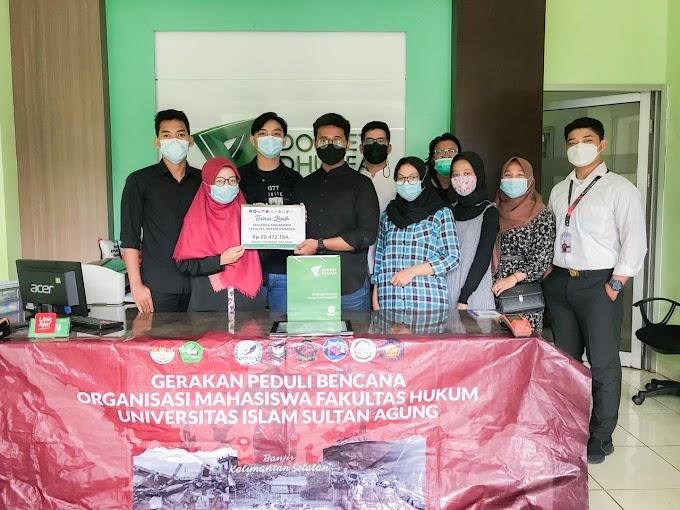
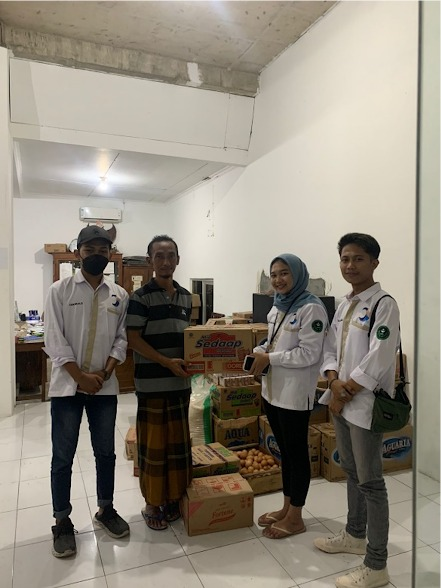
The initiative was organised to support communities affected by tidal flooding in the coastal areas of Semarang and Demak, Central Java.
BEM KM members conducted fundraising through public donation collection and online campaigns on social media.
The fundraising initiative collected IDR 2,176,100, which was used to purchase essential household supplies, including:
- Five cartons of instant noodles
- One crate of eggs
- 75 kilograms of rice
- One carton of sugar
- Five packs of tea
- Two cartons of cooking oil
- One carton of laundry soap
The assistance was distributed to residents of Sriwulan Village, Sayung District, Demak Regency, who were affected by coastal flooding.
This student-led humanitarian initiative demonstrates the ability of BEM KM to mobilise students, organise fundraising activities, manage donated resources, and provide assistance to communities in need.
The activities reflect the social responsibility of student representative organisations and their contribution to community welfare.
The humanitarian activity is presented as an example of BEM KM’s community engagement. Its implementation year should be verified separately before being classified as 2025 evidence.
Institutional Recognition and Organisational Autonomy
UNISSULA recognises the role of student organisations in managing organisational responsibilities through student-led procedures and representative mechanisms.
The formal recognition of BEM KM and the Student Senate provides an institutional foundation for student participation, while organisational assemblies and leadership selection processes enable students to take part directly in decisions concerning their organisations.
The 2025 student general assembly, work-planning activities, and organisational consolidation meetings demonstrate student involvement in the development, management, and evaluation of organisational activities.
BEM KM’s community initiatives further illustrate the practical role of student organisations in undertaking activities that respond to societal needs.
Together, these institutional and student-led practices support meaningful student representation, organisational participation, leadership development, and community engagement.
16.2.3
Identify And Engage With Local Stakeholders
16.2.3 Written Policies and Procedures for Identifying and Engaging Local External Stakeholders at Universitas Islam Sultan Agung (UNISSULA)
Institutional Commitment to Local Stakeholder Engagement
Universitas Islam Sultan Agung (UNISSULA) has established formal written policies and procedures for identifying, assessing, and engaging external stakeholders, including local government institutions, educational organisations, non-governmental organisations, non-profit institutions, businesses, industries, and other community partners.
The university’s approach to stakeholder engagement is governed by Rector Regulation Number 04 of 2020 concerning Guidelines for Cooperation with Partners (Peraturan Rektor Nomor 04 Tahun 2020 tentang Pedoman Kerja Sama dengan Mitra).
This regulation provides a university-wide framework for identifying potential partners, assessing their suitability, initiating engagement, establishing formal cooperation, implementing collaborative activities, and evaluating partnership outcomes.
The policy applies across university organisational levels, including faculties, study programmes, research centres, administrative bureaus, institutes, and technical implementation units.
The framework supports UNISSULA’s commitment to transparency, accountability, institutional cooperation, community engagement, and sustainable partnerships.
Official university regulation:
https://lp3m.unissula.ac.id/img/store/dokumen/39_1605672523.pdf
Written Policy for Identifying External Stakeholders
UNISSULA’s Rector Regulation Number 04 of 2020 explicitly establishes categories of external institutions and organisations eligible to become university partners.
Article 21 – Cooperation Partners identifies the following stakeholder categories:
- Educational institutions operating nationally and internationally.
- Central and local government institutions.
- Non-governmental organisations.
- Non-profit organisations working in education, research, and community service.
- Businesses, industries, and commercial organisations.
These categories provide an institutional basis for recognising external stakeholders whose participation can contribute to UNISSULA’s educational, research, community service, and institutional development objectives.
Importantly, the inclusion of local government institutions, non-governmental organisations, and non-profit organisations provides a basis for engaging stakeholders operating in Semarang, Central Java, and surrounding communities.
Article 22 – Requirements for Prospective Cooperation Partners establishes a mandatory assessment process before cooperation is undertaken.
Under this provision, university units are required to analyse prospective partners based on several considerations, including:
- Legal status and institutional qualifications.
- Strategic relevance and potential institutional benefits.
- Management capability and ethical considerations.
- Compatibility of organisational objectives, interests, and values.
- Availability of resources and willingness to cooperate.
- Capacity for sharing information and managing joint responsibilities.
- Commitment, mutual trust, and potential for organisational synergy.
Article 22 also requires the assessment of prospective partners to be conducted transparently and accountably.
These provisions demonstrate that identifying external stakeholders is supported by a documented institutional assessment process rather than relying solely on informal contacts or ad hoc cooperation.
Policy evidence – Articles 21 and 22:
https://lp3m.unissula.ac.id/img/store/dokumen/39_1605672523.pdf
Written Procedures for Stakeholder Engagement
UNISSULA’s stakeholder engagement framework extends beyond stakeholder identification by establishing formal procedures for initiating and implementing cooperation.
Article 14 – Stages of Cooperation establishes four stages:
- Initial exploration and identification of potential cooperation.
- Negotiation with prospective partners.
- Preparation of formal cooperation documents.
- Signing of cooperation agreements.
Article 15 – Initial Exploration requires the initiating university unit to prepare a cooperation proposal containing the background of the proposed cooperation, basic information about the prospective partner, university units involved, proposed activities, and potential risks.
The proposal is reviewed through the university’s internal approval process, involving the relevant unit leadership, the Technical Implementation Unit for Cooperation and International Affairs (UPT KUI), and the Vice-Rector.
Article 15 also provides for direct communication with prospective partners by the initiating university unit, with assistance from UPT KUI where necessary.
Article 16 – Negotiation and Agreement Preparation establishes procedures for discussions between the university and prospective partners, preparation of cooperation documents, and institutional review before formal approval.
These provisions enable engagement to proceed through identifiable stages with documented responsibilities and institutional oversight.
Official procedural evidence – Articles 14–16:
https://lp3m.unissula.ac.id/img/store/dokumen/39_1605672523.pdf
Institutional Responsibilities and Implementation
The Rector Regulation establishes responsibilities for stakeholder cooperation across different levels of the university.
Articles 6–13 regulate cooperation at university, faculty, study programme, research centre, bureau, institute, and technical implementation unit levels.
These provisions allow cooperation initiatives to be undertaken by organisational units according to their respective academic and institutional responsibilities.
Article 17 identifies the officials authorised to sign cooperation agreements at different organisational levels.
Article 18 – Implementation of Cooperation requires cooperation activities to be undertaken according to agreed plans and programmes.
Completed activities must be documented in written reports submitted to UPT KUI and uploaded through the university information system.
The regulation also emphasises reciprocal satisfaction and the development of more detailed Standard Operating Procedures for implementing cooperation activities.
These mechanisms support accountability and help ensure that stakeholder engagement is implemented through documented institutional processes.
Official policy and implementation procedures:
https://lp3m.unissula.ac.id/img/store/dokumen/39_1605672523.pdf
Engagement with Local Government, Community Organisations, and External Partners
UNISSULA’s written framework provides a basis for working with local external stakeholders across education, research, community service, and institutional development.
Article 21 expressly includes regional government institutions, non-governmental organisations, non-profit institutions, and businesses within the categories of potential partners.
In the context of local engagement, these provisions allow relevant university units to identify and evaluate potential cooperation with external organisations operating within Semarang, Central Java, and surrounding regions.
Such cooperation may address academic development, research collaboration, community service initiatives, professional development, institutional capacity building, or other mutually agreed objectives.
Article 5 – Forms of Cooperation specifically recognises activities in education, training, research and development, community service, institutional management, human resource capacity building, and infrastructure development.
Accordingly, the written policy enables the university to engage external stakeholders through a range of collaborative activities consistent with its institutional mission.
The regulation establishes the policy framework for such engagement; individual partnership agreements and implementation reports provide the corresponding evidence of specific activities.
Official policy evidence – Articles 5 and 21:
https://lp3m.unissula.ac.id/img/store/dokumen/39_1605672523.pdf
Monitoring, Evaluation, and Continuing Stakeholder Relationships
UNISSULA’s stakeholder engagement procedures incorporate mechanisms for monitoring cooperation and evaluating partnership outcomes.
Article 18 requires reporting on completed cooperation activities.
Articles 19 and 20 establish procedures for the extension or termination of cooperation based on the evaluation of implementation and the continued relevance of partnership objectives.
These procedures provide a basis for reviewing cooperation effectiveness and determining whether partnerships should be continued, expanded, or concluded.
Additional written standards are documented through the Faculty of Engineering Cooperation Standard (Standar Kerjasama Fakultas Teknik).
The Faculty of Engineering standard was formally approved in January 2023 and records Revision 02 dated 16 January 2023.
The standard addresses the development of cooperation networks, implementation procedures, evaluation of partnerships, and periodic stakeholder satisfaction surveys.
It requires partner and stakeholder satisfaction surveys at least annually and provides for monitoring, evaluation, and reporting of partnership activities.
This document demonstrates the development of operational cooperation standards at faculty level within the university’s broader partnership framework.
Official Faculty of Engineering Cooperation Standard (2023):
https://ft.unissula.ac.id/wp-content/uploads/2023/10/SNA-5-Kerjasama.pdf
Transparency and Public Accessibility of Written Policies
UNISSULA makes its institutional cooperation regulation publicly accessible through an official university domain.
The Rector Regulation Number 04 of 2020 establishes a documented framework for identifying prospective external stakeholders, assessing their suitability, initiating engagement, formalising cooperation, and evaluating implementation.
The Faculty of Engineering’s revised 2023 cooperation standard provides additional publicly accessible evidence of written operational requirements for partnership development and evaluation.
Together, these documents demonstrate a formal approach to stakeholder identification and engagement, supported by publicly available institutional regulations and operational standards.
Publicly available policy documents:
Rector Regulation Number 04 of 2020 – Guidelines for Cooperation with Partners
https://lp3m.unissula.ac.id/img/store/dokumen/39_1605672523.pdf
Faculty of Engineering Cooperation Standard – Revision 02, 16 January 2023
https://ft.unissula.ac.id/wp-content/uploads/2023/10/SNA-5-Kerjasama.pdf
16.2.4
Participatory bodies for stakeholder engagement
16.2.4 Local Stakeholder Participation in University Decision-Making at Universitas Islam Sultan Agung (UNISSULA)
Institutional Commitment to Inclusive and Participatory Decision-Making
Universitas Islam Sultan Agung (UNISSULA) recognises the importance of meaningful participation by local external stakeholders in institutional decision-making, particularly in matters concerning public infrastructure, environmental sustainability, community welfare, and the utilisation of university-associated resources.
UNISSULA facilitates stakeholder engagement through institutional consultation, interinstitutional coordination meetings, joint infrastructure reviews, and cooperation procedures that provide opportunities for external parties to contribute their perspectives to university-related decisions.
These mechanisms enable the university to engage with local government institutions, public authorities, community stakeholders, and other relevant external organisations when addressing matters affecting both the university and the surrounding community.
A documented example of this participatory approach was implemented in 2025 through UNISSULA’s collaboration with the Semarang City Government, Yayasan Badan Wakaf Sultan Agung (YBWSA), and relevant public infrastructure agencies in addressing flooding in the Kaligawe area of Semarang.
The collaboration involved consultation and coordination concerning the utilisation of university-associated land, the integration of retention pond facilities, and the development of an emergency drainage diversion channel (sodetan).
The initiative demonstrates how engagement with external stakeholders can contribute to institutional resource-use decisions and practical solutions to challenges affecting surrounding communities.

Local Government Participation through Joint Consultation and Infrastructure Review
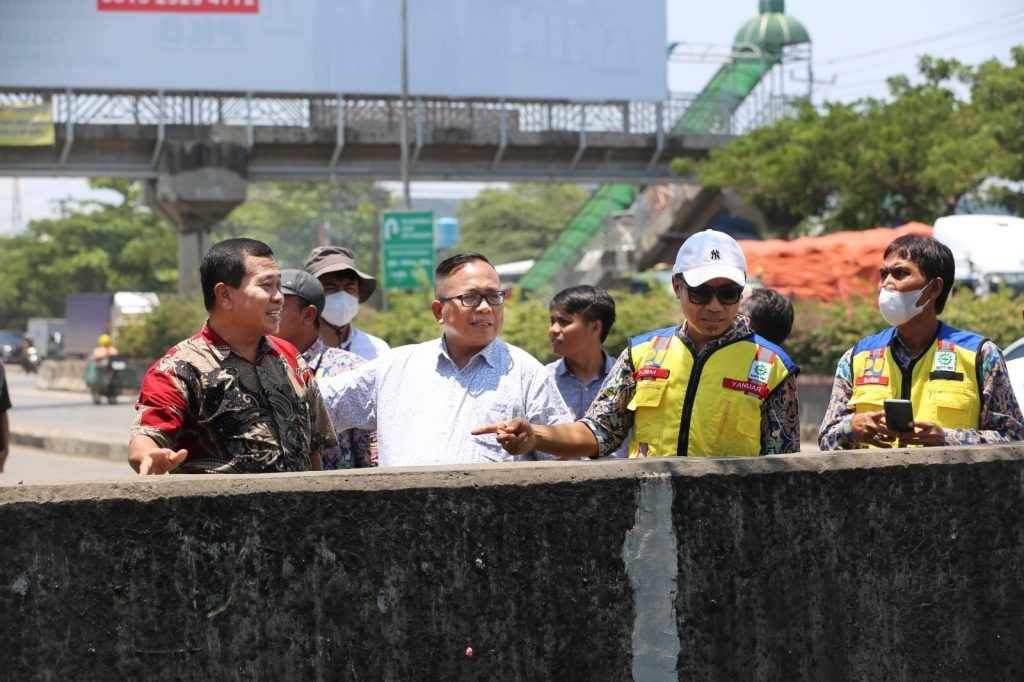
On 30 October 2025, UNISSULA and YBWSA participated in a joint infrastructure review involving the Mayor of Semarang, Agustina Wilujeng Pramestuti, and representatives of the Semarang City Government.
The engagement also involved senior university leadership, including UNISSULA’s Vice-Rectors.
The participating institutions reviewed the construction of an emergency drainage diversion channel in the Kaligawe area and the retention pond infrastructure associated with the UNISSULA and YBWSA complex.
The consultation and site review addressed several interconnected issues, including drainage connectivity, land utilisation, floodwater management, infrastructure accessibility, and the potential benefits of the project for surrounding communities.
The participation of local government representatives provided an opportunity for public-sector perspectives and regional flood management priorities to be considered alongside the university’s institutional interests.
Through this direct consultation mechanism, university representatives and external stakeholders were able to exchange information, review ongoing infrastructure development, and coordinate activities affecting shared environmental resources.
This engagement illustrates a practical mechanism for stakeholder participation in university-related decisions rather than cooperation limited to ceremonial agreements.
Reference:
https://suarabaru.id/2025/10/30/walikota-tinjau-pembangunan-sodetan-untuk-atasi-banjir-di-kaligawe
Stakeholder Engagement in Decisions Concerning University-Associated Land
In 2025, UNISSULA and YBWSA supported flood mitigation infrastructure development by making land available for the construction of a drainage diversion channel connecting the Kaligawe area with retention ponds behind the university campus.
The initiative required coordination between university-related institutions, public infrastructure authorities, and the Semarang City Government concerning the utilisation of land and water management facilities.
The contribution of university-associated resources formed part of a collaborative response to flooding that affected public mobility, transportation infrastructure, local economic activities, and the university environment.
The engagement addressed practical considerations related to drainage alignment, access to retention facilities, coordination with public infrastructure systems, and the broader interests of surrounding communities.
On 2 November 2025, the Semarang City Government publicly acknowledged UNISSULA and YBWSA’s contribution to the flood mitigation initiative.
The institutional decision to make land available demonstrates a tangible outcome associated with cooperation and consultation involving external government stakeholders.
The initiative illustrates how decisions concerning university-associated resources can be connected to the needs and priorities of local stakeholders.
Reference:
Participatory Coordination with Public Authorities
The Kaligawe flood mitigation project brought together several institutions with responsibilities and interests in environmental management and public infrastructure.
The participating organisations included UNISSULA, YBWSA, the Semarang City Government, and relevant government infrastructure agencies.
Their engagement supported coordination on a shared environmental challenge directly affecting the university and surrounding communities.
The areas of coordination included:
- Reviewing the proposed and ongoing development of flood mitigation infrastructure.
- Considering the availability and utilisation of university-associated land.
- Coordinating the connection of drainage infrastructure with existing retention ponds.
- Supporting access to infrastructure needed for emergency flood management.
- Considering the potential effects of infrastructure development on surrounding communities.
- Coordinating implementation activities between institutional and public-sector stakeholders.
These activities provide a documented example of direct dialogue and coordinated implementation involving local government and university representatives.
The joint infrastructure review and interinstitutional coordination served as practical channels for exchanging information and considering external stakeholder interests in the implementation of a university-related infrastructure initiative.
References:
https://suarabaru.id/2025/10/30/walikota-tinjau-pembangunan-sodetan-untuk-atasi-banjir-di-kaligawe
Implementation of Stakeholder-Related Decisions in 2025
The engagement between the university-related institutions and public authorities was accompanied by the implementation of emergency flood mitigation infrastructure in October and November 2025.
The Ministry of Public Works implemented the construction of an emergency drainage diversion channel measuring approximately 227 metres.
Construction commenced on 26 October 2025 and was completed on 1 November 2025.
The channel connected the Kaligawe national road drainage system with retention pond infrastructure behind the UNISSULA campus.
This connection enabled floodwater to be diverted towards retention facilities and subsequently managed through the broader drainage and pumping system serving the Kaligawe and Terboyo areas.
The initiative required practical cooperation involving infrastructure access, the integration of existing facilities, and the utilisation of land associated with UNISSULA and YBWSA.
The completion of the drainage diversion project demonstrates that the engagement was associated with an implemented infrastructure outcome.
It also illustrates the university’s contribution to collaborative initiatives addressing community needs beyond its immediate academic activities.
Official government references:
Institutional Mechanisms Supporting External Stakeholder Participation
UNISSULA maintains written institutional procedures to support engagement with external stakeholders.
These procedures are established under Rector Regulation Number 04 of 2020 concerning Guidelines for Cooperation with Partners (Peraturan Rektor Nomor 04 Tahun 2020 tentang Pedoman Kerja Sama dengan Mitra).
The regulation provides an institutional framework for identifying prospective external partners, initiating communication, conducting discussions, developing cooperation arrangements, implementing collaborative activities, and evaluating cooperation outcomes.
The framework recognises several categories of external stakeholders, including government institutions, educational organisations, non-governmental organisations, non-profit institutions, and business partners.
The written procedures provide a basis for structured engagement between university units and external institutions.
In practice, such engagement can take place through consultation meetings, institutional discussions, joint reviews, and the implementation of agreed activities.
The 2025 Kaligawe flood mitigation initiative provides an example of these forms of engagement involving government institutions and university-related resources.
Through this initiative, external public authorities participated in the review and coordination of infrastructure activities associated with the university environment.
The combination of institutional cooperation procedures and documented consultation demonstrates that UNISSULA has channels for engaging external stakeholders in matters involving shared institutional and public interests.
Official university regulation:
https://lp3m.unissula.ac.id/img/store/dokumen/39_1605672523.pdf
Stakeholder Participation and Community-Oriented Institutional Decisions
UNISSULA recognises that decisions regarding university-associated infrastructure can have consequences beyond the campus.
The Kaligawe area is an important transportation corridor connecting Semarang, Demak, and surrounding communities.
Flooding in the area can disrupt transportation, access to education, economic activities, and the daily lives of local residents.
The 2025 flood mitigation initiative therefore addressed an issue of shared concern to the university, local government, and the wider community.
The participation of government representatives helped connect institutional infrastructure arrangements with public flood management priorities.
The use of university-associated land and retention ponds for public infrastructure demonstrates how UNISSULA can contribute resources to initiatives that respond to community needs.
The documented stakeholder engagement also illustrates how external perspectives and institutional resources can be brought together to address practical challenges.
Through such engagement, UNISSULA supports cooperation between higher education institutions and local authorities in responding to environmental risks and promoting community resilience.
Contribution to SDG 16 – Peace, Justice and Strong Institutions
UNISSULA’s stakeholder engagement practices contribute to SDG 16 by supporting consultation, institutional accountability, and cooperation between universities and public authorities.
The 2025 Kaligawe flood mitigation initiative demonstrates several relevant institutional practices:
- Direct consultation between UNISSULA representatives and the Semarang City Government.
- Participation of external government stakeholders in reviewing university-associated infrastructure development.
- Coordination regarding the utilisation of university-associated land and water management facilities.
- Collaborative implementation of infrastructure intended to benefit surrounding communities.
- Public reporting of institutional contributions and project outcomes.
These practices demonstrate stakeholder engagement in a matter connecting university resources with local public interests.
The initiative also highlights the importance of maintaining mechanisms through which universities and external stakeholders can communicate, coordinate, and consider shared priorities.
Such engagement supports responsive institutional development and contributes to stronger relationships between the university, government institutions, and the surrounding community.
16.2.5
University Principles On Corruption And Bribery
16.2.5 University Principles and Commitments Against Organised Crime, Corruption and Bribery at Universitas Islam Sultan Agung (UNISSULA)
Institutional Commitment to Integrity and Good Governance
Universitas Islam Sultan Agung (UNISSULA) is committed to promoting integrity, transparency, accountability, ethical conduct, and responsible governance throughout its academic and administrative activities.
Guided by its Islamic Academic Culture (Budaya Akademik Islami – BudAI), UNISSULA upholds honesty, justice, professional responsibility, and compliance with applicable laws as fundamental principles of institutional governance.
The university rejects corruption, bribery, organised criminal activities, fraudulent conduct, abuse of authority, and other unlawful practices that undermine institutional integrity and public trust.
These principles are supported by formal university regulations, an institutional anti-corruption task force, lecturer ethical standards, public awareness initiatives, and reporting mechanisms.
UNISSULA’s commitment is reflected in several institutional instruments, including:
- Rector Decree Number 1999/E/SA/III/2022 concerning the Anti-Corruption Prevention and Handling Task Force.
- Rector Decree Number 2663/A.1/SA/III/2023 concerning the Code of Ethics for Lecturers.
- The university’s public commitment to rejecting bribery, corruption, and organised crime.
- Lapor Sultan, the university’s official complaint and reporting platform.
Together, these institutional measures demonstrate UNISSULA’s commitment to strengthening ethical governance and preventing misconduct.

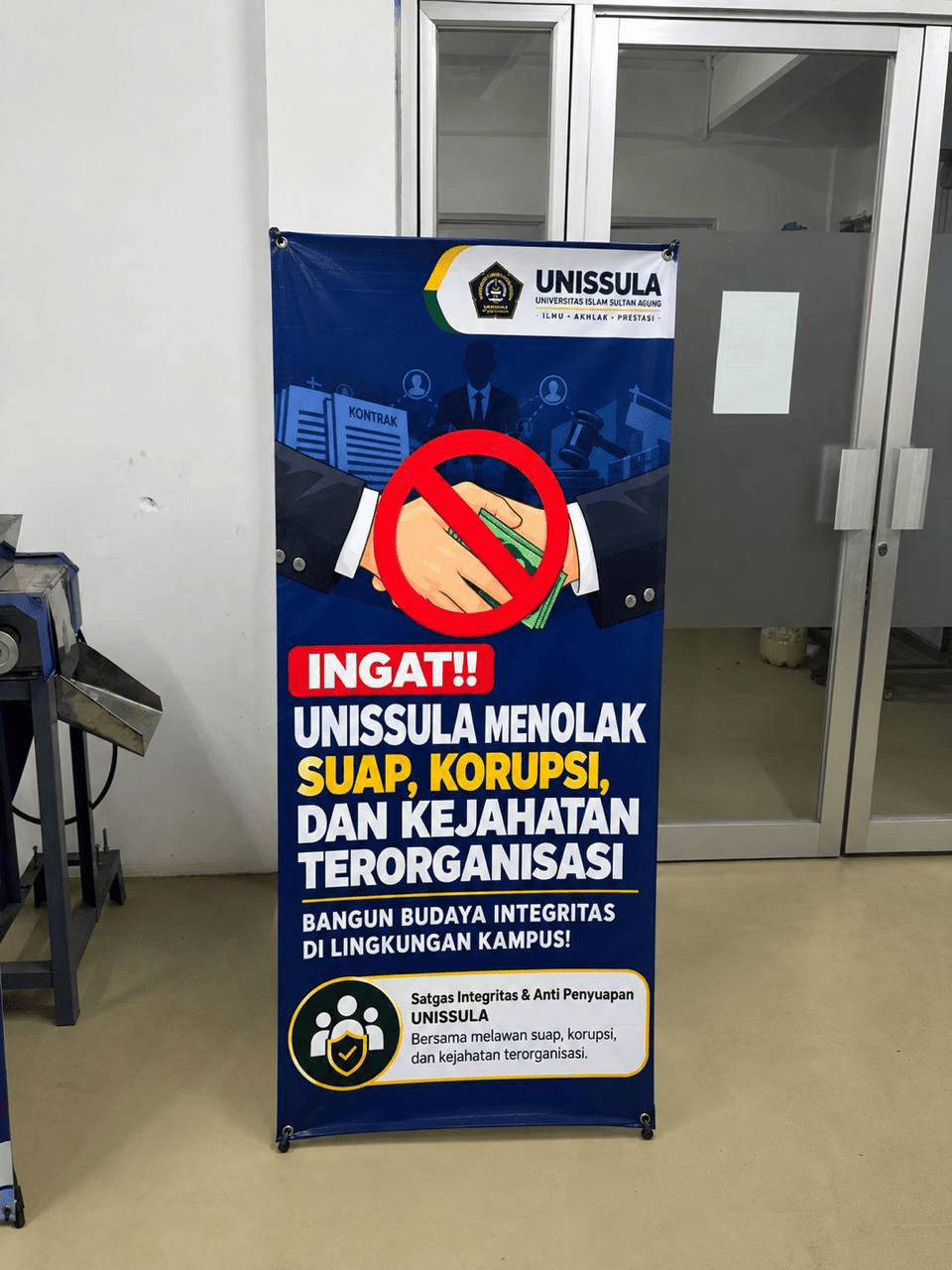
Institutional Anti-Corruption Commitment and Task Force
UNISSULA formally established its Anti-Corruption Prevention and Handling Task Force (Satuan Tugas Pencegahan dan Penanganan Anti Korupsi) through Rector Decree Number 1999/E/SA/III/2022, dated 14 March 2022.
The decree provides a formal university-level mechanism for supporting corruption prevention and the handling of corruption-related matters.
The task force operates within the university’s governance structure and is accountable to the Rector.
The Rector Decree assigns the task force responsibility for preparing and carrying out its duties and submitting written reports to university leadership.
Its organisational structure includes several functional divisions:
- Prevention Division: Supporting institutional efforts to prevent corruption.
- Handling Division: Supporting the handling of corruption-related matters.
- Assistance Division: Providing assistance within the task force’s institutional activities.
- Public Communication Division: Supporting information dissemination and awareness.
- Administrative and Logistics Division: Supporting operational activities.
The establishment of the task force demonstrates UNISSULA’s formal commitment to addressing corruption through designated institutional responsibilities.
It also provides an organisational basis for internal coordination and accountability in the university’s anti-corruption efforts.
Official Institutional Evidence:
Rector Decree Number 1999/E/SA/III/2022 concerning the Anti-Corruption Prevention and Handling Task Force, dated 14 March 2022.
Public Commitment Against Bribery, Corruption and Organised Crime
UNISSULA communicates its institutional commitment to integrity through public awareness materials that explicitly reject bribery, corruption, and organised crime.
The university’s integrity campaign carries the statement:
“UNISSULA MENOLAK SUAP, KORUPSI, DAN KEJAHATAN TERORGANISASI.”
“UNISSULA Rejects Bribery, Corruption and Organised Crime.”
The statement communicates the university’s position that such activities are incompatible with institutional ethics, responsible governance, and the values of its academic community.
The commitment encompasses three important principles.
Prevention of Bribery
UNISSULA rejects the use of improper payments, illicit benefits, or inducements intended to influence academic, administrative, financial, or institutional decisions.
Prevention of Corruption
UNISSULA supports the prevention of dishonest practices, fraudulent financial conduct, misuse of authority, and improper utilisation of institutional resources.
Rejection of Organised Crime
UNISSULA rejects organised criminal activities, including unlawful collective conduct and other criminal practices that threaten institutional integrity, safety, and public trust.
The university’s public integrity campaign promotes awareness of these principles and encourages responsible conduct among members of the academic community.
This communication complements the university’s formal anti-corruption task force and ethical regulations.
Supporting Evidence:
UNISSULA Institutional Integrity Campaign – “UNISSULA Menolak Suap, Korupsi, dan Kejahatan Terorganisasi.”
Rector Regulation on the Code of Ethics for Lecturers
UNISSULA maintains formal ethical standards governing lecturer conduct through Rector Decree Number 2663/A.1/SA/III/2023 concerning the Code of Ethics for Lecturers, enacted on 2 March 2023.
The regulation establishes principles of academic integrity, professional ethics, responsible behaviour, and compliance with applicable laws.
The Code of Ethics provides a university-level regulatory framework for lecturers and establishes specific prohibitions against misconduct.
Article 2 – Ethical and Professional Responsibilities
Lecturers are required to uphold the law, academic values, institutional objectives, and standards of ethical conduct.
Article 22 – Prohibited Conduct
The regulation prohibits various forms of misconduct, including:
- Improper use of university facilities and resources.
- Fraudulent or misleading financial reporting.
- Violations of university financial regulations.
- Intimidation, threats, and violent conduct.
- Misuse of institutional authority and academic positions.
- Activities prohibited under Indonesian criminal law.
- Conduct that undermines university safety, professional ethics, and institutional integrity.
These provisions provide a formal ethical foundation for preventing improper conduct and addressing unlawful practices within the university environment.
The prohibition of criminal acts also supports the university’s wider commitment to rejecting conduct associated with organised criminal activity.
Official Institutional Evidence:
Rector Decree Number 2663/A.1/SA/III/2023 concerning the Code of Ethics for Lecturers, dated 2 March 2023, particularly Articles 2 and 22.
Financial Integrity and Prevention of Corruption
UNISSULA promotes responsible financial conduct through institutional ethical regulations and anti-corruption measures.
The Code of Ethics for Lecturers contains provisions prohibiting financial misconduct and misuse of university resources.
Article 22 includes prohibitions concerning manipulation of financial reports and activities that violate university financial regulations.
These provisions establish ethical responsibilities relevant to financial integrity and the proper management of university resources.
The university’s Anti-Corruption Prevention and Handling Task Force provides an additional institutional mechanism supporting efforts to prevent and address corruption.
Together, the Rector Decrees of 2022 and 2023 reinforce UNISSULA’s commitment to:
- Preventing corruption and financial misconduct.
- Upholding integrity in institutional activities.
- Preventing misuse of university resources.
- Encouraging compliance with applicable laws and ethical standards.
- Supporting accountability through formal institutional responsibilities.
These measures contribute to ethical financial governance and the protection of institutional resources.
Official Institutional Evidence:
Rector Decree Number 1999/E/SA/III/2022 – Anti-Corruption Prevention and Handling Task Force.
Rector Decree Number 2663/A.1/SA/III/2023 – Code of Ethics for Lecturers, Article 22.
Examination Procedures, Sanctions and Institutional Enforcement
UNISSULA’s Code of Ethics establishes procedures for examining and addressing alleged ethical violations.
The regulation provides an institutional framework for investigating misconduct, determining accountability, and implementing appropriate disciplinary measures.
Article 23 – Examination Procedures
The regulation establishes procedures for examining alleged violations, documenting relevant information, and preparing formal examination records.
Article 25 – Disciplinary Sanctions
The Code of Ethics provides disciplinary measures that may be applied according to the nature and severity of violations.
Article 26 – University Ethics Council
UNISSULA establishes a University Ethics Council (Dewan Etik Universitas) responsible for supervising the implementation of the Code of Ethics and processing allegations of ethical misconduct.
The Council provides a formal mechanism supporting ethical accountability for lecturers.
These procedures demonstrate that UNISSULA’s ethical principles are supported by institutional examination and disciplinary mechanisms.
The framework reinforces the importance of compliance with university regulations and responsible professional conduct.
Official Institutional Evidence:
Rector Decree Number 2663/A.1/SA/III/2023, Articles 23–26.
Public Reporting and Institutional Accountability through Lapor Sultan
UNISSULA provides an official complaint and reporting platform known as Lapor Sultan.
The platform allows university stakeholders and members of the public to submit complaints and institutional concerns through an accessible reporting channel.
Lapor Sultan includes a structured reporting mechanism through which users can submit reports and monitor their handling.
Its features include:
- Online complaint and report submission.
- Direction of reports to relevant university units.
- Unique ticket identification for submitted reports.
- Complaint status tracking.
- Confidentiality provisions for complainant information.
The platform supports transparency, accountability, and responsiveness by providing a channel for communication between the university and its stakeholders.
Lapor Sultan complements UNISSULA’s institutional ethical governance framework and supports responsible reporting of concerns.
Official University Reporting Platform:
Anti-Corruption Awareness, Education and Institutional Culture
UNISSULA promotes ethical awareness and the prevention of corruption through its institutional culture and academic activities.
The university’s public integrity campaign communicates its rejection of bribery, corruption, and organised crime, reinforcing ethical expectations within the academic environment.
UNISSULA also contributes to academic discussion of anti-corruption issues through its Faculty of Law.
The Faculty of Law has established the Centre for Anti-Corruption Studies (Pusat Studi Kajian Anti Korupsi – PUSKAP) as part of its legal research activities.
The existence of this academic centre demonstrates institutional engagement with corruption-related legal studies and the development of relevant knowledge.
Together with the university’s ethical regulations and awareness activities, such academic initiatives contribute to a broader institutional culture supporting integrity and responsible conduct.
Official University Reference:
https://unissula.ac.id/fh-unissula-miliki-tujuh-pusat-studi-hukum
Contribution to SDG 16 – Peace, Justice and Strong Institutions
UNISSULA’s institutional principles and anti-corruption measures contribute to SDG 16 by promoting ethical governance, institutional accountability, and lawful conduct.
The university’s documented commitments include:
- Formal establishment of an Anti-Corruption Prevention and Handling Task Force in 2022.
- Adoption of updated lecturer ethical regulations in 2023.
- Public communication rejecting bribery, corruption, and organised crime.
- Formal procedures for examining ethical violations and imposing disciplinary measures.
- An official institutional complaint and reporting platform.
- Academic engagement with anti-corruption studies and legal research.
These measures demonstrate institutional efforts to prevent misconduct, uphold accountability, and strengthen ethical governance.
By integrating formal regulations, institutional responsibilities, public awareness, and reporting channels, UNISSULA supports the development of a university environment based on integrity, professional responsibility, and the rule of law.
16.2.6
Academic freedom Policy
16.2.6 Academic Freedom, Freedom of Research and Teaching, and Scientific Autonomy at Universitas Islam Sultan Agung (UNISSULA)
Institutional Commitment to Academic Freedom
Universitas Islam Sultan Agung (UNISSULA) recognises and upholds academic freedom, freedom of the academic forum, and scientific autonomy as fundamental principles of its institutional governance, educational activities, research development, and scholarly engagement.
These principles are formally established in the UNISSULA Statute of 2019 (Statuta UNISSULA Tahun 2019) and further supported by the university’s academic quality standards and Research Strategic Plan for 2025–2029.
UNISSULA supports the academic freedom of its academic staff, including both senior and junior academics, to undertake research, develop knowledge, conduct teaching activities, disseminate research findings, and communicate scholarly perspectives within their respective areas of expertise.
The university’s academic freedom framework is implemented in accordance with professional responsibility, scientific ethics, applicable regulations, and the institution’s Islamic academic values.
Through its institutional policies, UNISSULA provides a formal foundation for academic independence, responsible scholarship, and the development and dissemination of scientific knowledge.
Formal Recognition of Academic Freedom in the UNISSULA Statute
The primary institutional foundation for academic freedom is established in the UNISSULA Statute of 2019, particularly Articles 15–17.
Article 15 formally recognises three interconnected principles:
- Academic Freedom (Kebebasan Akademik): The freedom to conduct academic activities, including education, research, and community service, independently and responsibly.
- Freedom of the Academic Forum (Kebebasan Mimbar Akademik): The freedom to communicate academic thoughts, scientific opinions, and scholarly perspectives openly within an individual’s area of expertise.
- Scientific Autonomy (Otonomi Keilmuan): The autonomy to develop branches of science, technology, and the arts according to their respective academic disciplines.
Article 16 further recognises academic freedom as a right and responsibility of lecturers and students in conducting academic activities.
These provisions establish academic freedom as a university-level policy rather than an arrangement limited to individual faculties or study programmes.
The Statute provides an institutional basis for academic staff to undertake scholarly activities and communicate knowledge while maintaining scientific integrity, ethical responsibility, and compliance with applicable regulations.
Official Policy Reference – Statuta UNISSULA Tahun 2019, Articles 15–17:
https://lp3m.unissula.ac.id/img/store/dokumen/35_1600864083.pdf
Freedom to Choose Research Areas and Topics
UNISSULA explicitly recognises researchers’ freedom to select research topics through its Research Strategic Plan 2025–2029 (Rencana Strategis Penelitian UNISSULA Tahun 2025–2029).
The Research Strategic Plan was formally approved through Rector Decree Number 3088/B.1/SA/III/2025, dated 19 March 2025.
Under Chapter I, Section D, Kebijakan Umum Riset UNISSULA, Point 12, the university establishes that researchers are free to choose their research topics, including seeking research funding and publishing their findings, within the institution’s stated Islamic academic framework.
The policy establishes the following principles:
Research Topic Selection
Researchers are recognised as having freedom to select their research topics and develop scholarly investigations within their areas of expertise, subject to the university’s academic values and ethical requirements.
Research Funding
Researchers may seek appropriate funding opportunities to support their research, including funding from institutional and external sources.
Research Publication
Researchers are supported in disseminating the findings of their research through recognised academic publications.
Scientific Responsibility
Research activities must observe scientific integrity, professional standards, ethical responsibilities, and the academic principles of UNISSULA.
The Research Strategic Plan also recognises basic research, applied research, and developmental research as legitimate forms of scholarly activity.
Through these provisions, UNISSULA provides a documented university-level framework supporting researchers’ freedom to select research topics and disseminate scientific findings.
Official Evidence – Research Strategic Plan UNISSULA 2025–2029:
Rector Decree Number 3088/B.1/SA/III/2025
Approval Date: 19 March 2025
Chapter I, Section D, Points 9–12
Document: Renstra Penelitian Universitas Islam Sultan Agung Tahun 2025–2029
Academic Freedom for Senior and Junior Academics
UNISSULA’s academic freedom provisions apply to lecturers as members of the university’s academic community.
Article 16 of the UNISSULA Statute recognises academic freedom as a right and responsibility of lecturers and students without establishing a distinction between senior and junior academic positions.
Accordingly, the policy framework encompasses academic staff at different career stages, including:
- Junior lecturers and early-career researchers.
- Assistant professors and lecturers developing their academic careers.
- Senior lecturers and associate professors.
- Professors and senior academic researchers.
Academic staff across these categories are covered by the university’s general provisions concerning academic freedom, scholarly development, and research responsibilities.
The Research Strategic Plan 2025–2029 further establishes research guidelines for lecturers and researchers throughout the university, supporting research activity across academic ranks and disciplinary fields.
This university-wide application supports opportunities for both senior and junior academics to participate in research, develop scientific knowledge, and communicate research findings.
Policy References:
https://lp3m.unissula.ac.id/img/store/dokumen/35_1600864083.pdf
Research Strategic Plan UNISSULA 2025–2029, Chapter I, Section D.
Freedom of Teaching and Academic Expression
UNISSULA supports freedom of teaching and academic expression through the provisions of its 2019 Statute.
Article 15 recognises academic freedom in the implementation of the university’s educational, research, and community service responsibilities.
These provisions support lecturers in conducting academic teaching activities and communicating scholarly knowledge within their respective disciplines.
The freedom of the academic forum further recognises opportunities for academics to communicate scientific opinions and perspectives openly in accordance with their areas of expertise.
Academic expression may take place through appropriate scholarly activities, including:
- University lectures and academic teaching.
- Academic seminars and scientific discussions.
- Research presentations and scholarly conferences.
- Scientific publications and academic writings.
- Academic forums and professional discussions.
These activities provide opportunities for academics to explain research findings, discuss scholarly developments, and contribute to public understanding of scientific issues.
UNISSULA’s academic freedom framework places these activities within the principles of scientific responsibility, professional ethics, and institutional academic values.
The relevant statutory provisions apply generally to lecturers and are not restricted to professors or other senior academic positions.
Official Policy Reference – UNISSULA Statute, Articles 15–17:
https://lp3m.unissula.ac.id/img/store/dokumen/35_1600864083.pdf
Implementation through Academic Quality Standards
UNISSULA’s commitment to academic freedom is further reflected in its institutional quality assurance framework and academic atmosphere standards.
The Academic Atmosphere Standard (Standar Suasana Akademik) establishes provisions supporting academic freedom, freedom of the academic forum, scientific autonomy, and scholarly activities.
At the Faculty of Engineering, the Academic Atmosphere Standard was formally revised in January 2023 as Revision 02.
The standard supports lecturers in conducting academic and scholarly activities, communicating research findings, and participating in academic forums.
These provisions reinforce the implementation of academic freedom through faculty-level academic quality management.
The document provides evidence that the university’s established principles are reflected in operational academic standards and that the relevant faculty-level standard underwent formal revision during the 2022–2026 assessment period.
Official Supporting Evidence – Standar Suasana Akademik, Faculty of Engineering, Revision 02 (2023):
https://ft.unissula.ac.id/wp-content/uploads/2023/10/SNA-6-Suasana-Akademik.pdf
University-Level Research Policy Approved in 2025
The adoption of the Research Strategic Plan 2025–2029 represents a significant development in UNISSULA’s institutional research governance.
The plan was approved through Rector Decree Number 3088/B.1/SA/III/2025 on 19 March 2025 and establishes the direction of university research for the 2025–2029 period.
Importantly, the plan explicitly recognises freedom in selecting research topics, seeking research funding, and publishing scientific findings.
The document also establishes policies supporting scientific publication, research ethics, interdisciplinary research, academic collaboration, and the dissemination of research results.
The approval of this strategic document in 2025 demonstrates that the university’s research freedom principles are incorporated into its current institutional research governance framework.
The Research Strategic Plan complements the academic freedom provisions established in the 2019 Statute and the operational academic standards maintained by university faculties.
Together, these instruments provide a policy framework covering the recognition of academic freedom, research topic selection, teaching, scientific expression, and research dissemination.
Official Institutional Document:
Rector Decree Number 3088/B.1/SA/III/2025, dated 19 March 2025.
Responsible Academic Freedom and Scientific Integrity
UNISSULA recognises that academic freedom is accompanied by professional responsibility and ethical obligations.
The university’s Statute and Research Strategic Plan establish that academic activities should be undertaken in accordance with scientific standards, professional ethics, applicable laws, and institutional values.
The Research Strategic Plan 2025–2029 includes provisions concerning:
- Research ethics and professional responsibility.
- Scientific integrity and accountability.
- The dissemination of research results through recognised publications.
- Respect for intellectual property rights.
- The protection of research participants through applicable ethical procedures.
- The development of scientific knowledge in accordance with the university’s Islamic academic principles.
These provisions support the responsible exercise of academic freedom while promoting scholarly accountability and research quality.
UNISSULA’s framework therefore combines recognition of academic freedom with established standards of academic conduct.
Contribution to SDG 16 – Peace, Justice and Strong Institutions
Academic freedom plays an important role in strengthening transparent, accountable, and knowledge-based institutions.
UNISSULA’s academic freedom policies contribute to SDG 16 by supporting the responsible development of knowledge, scholarly expression, research participation, and the dissemination of scientific findings.
The university’s framework supports:
- Institutional recognition of academic freedom and scientific autonomy.
- Freedom to select research topics within established academic and ethical principles.
- Academic rights and responsibilities applicable to senior and junior lecturers.
- Freedom to communicate scholarly perspectives through teaching and academic forums.
- Research publication and dissemination of scientific knowledge.
- The continued development of institutional academic standards and research governance.
These commitments strengthen the university’s capacity to generate knowledge, contribute to informed public discussion, and support evidence-based societal development.
16.2.7
Publish Financial Data
16.2.7 Publication of University Financial Data at Universitas Islam Sultan Agung (UNISSULA)
Financial Transparency and Accountability
Universitas Islam Sultan Agung (UNISSULA) is committed to financial transparency, accountability, and responsible institutional governance through the publication of its annual financial information.
UNISSULA includes its university financial statements in the 2025 Rector’s Annual Report (Laporan Tahunan Rektor UNISSULA 2025), providing financial information covering revenue, expenditure, assets, liabilities, and institutional financial performance.
The financial information is presented in the report’s Financial Management Section (Keuangan UNISSULA), pages 75–79.
University Financial Data for 2025
UNISSULA’s 2025 financial report provides the following key information:
| Financial Indicator | 2025 |
|---|---|
| Budget Revenue Realisation | IDR 488,831,517,776 |
| Budget Expenditure Realisation | IDR 375,577,792,874 |
| Total Assets | IDR 447,934,301,244 |
| Total Liabilities | IDR 0 |
| Accounting Surplus | IDR 77,759,856,795 |
The financial statements are presented using ISAK 35, the Indonesian financial reporting interpretation applicable to non-profit entities.
The report also includes comparative financial information for 2024, supporting transparency and the assessment of the university’s financial position and institutional sustainability.
Public Access to Financial Information
UNISSULA provides its financial information as part of its institutional annual reporting framework.
The 2025 Rector’s Annual Report includes budget realisation, financial position, comprehensive income, and changes in net assets.
Making this information publicly accessible supports institutional accountability and allows stakeholders to examine the university’s financial performance and resource management.
Official Financial Evidence:
16.3.1
Provide Expert Advice To Government
16.3.1 Provision of Expert Advice to Local, Regional and National Government by Universitas Islam Sultan Agung (UNISSULA)
Institutional Commitment to Evidence-Based Government Decision-Making
Universitas Islam Sultan Agung (UNISSULA) actively supports local, regional, and national government institutions through academic expertise, policy-oriented research, technical studies, and evidence-based institutional collaboration.
As part of its commitment to the Tri Dharma Perguruan Tinggi, UNISSULA connects academic research and professional expertise with government needs, particularly in legal policy development, regional planning, public housing, and community development.
In 2025, UNISSULA strengthened its engagement with government institutions through cooperation with the Supreme Court of the Republic of Indonesia, the Central Java Provincial Government, and local governments in Central Java.
These collaborations provide channels through which the university’s expertise, research capacity, and field-based information can contribute to public policy development, government programmes, and regional decision-making.
Legal and Judicial Policy Guidance for the Supreme Court of Indonesia
UNISSULA, through its Faculty of Law, established formal cooperation with the Centre for Legal and Judicial Policy Strategy (Pusat Strategi Kebijakan Hukum dan Peradilan) of the Supreme Court of the Republic of Indonesia.
The cooperation is documented under Cooperation Agreement Number 264/A.1/SA-H/II/2025.
The partnership focuses on developing recommendations and evaluating strategies concerning legal and judicial policy.
Its areas of cooperation include policy-oriented legal research, examination of judicial governance issues, and the development of recommendations relevant to the improvement of legal and judicial institutions.
This cooperation creates a formal framework through which UNISSULA’s legal scholars and researchers can contribute academic expertise to national government policy development.
The partnership reflects the university’s role in connecting legal scholarship with the formulation and evaluation of public institutional policy.
Official University Reference:
Provision of Field-Based Evidence for Government Housing Programmes
In 2025, UNISSULA collaborated with the Central Java Provincial Government to support the verification of beneficiaries under the Uninhabitable Housing Renovation Programme (Rumah Tidak Layak Huni – RTLH).
The cooperation was supported by an institutional Memorandum of Understanding with the Central Java Provincial Government dated 16 March 2025.
On 26 May 2025, UNISSULA mobilised 1,685 students participating in its Community Service Programme (Kuliah Kerja Nyata – KKN) to support government verification activities in Sayung and Mranggen, Demak Regency.
The initiative involved cooperation with government institutions, including the relevant housing and settlement agencies.
The verification activities were designed to support accurate identification of eligible beneficiaries and strengthen the targeting of housing renovation assistance.
Through field engagement, the university contributed personnel and community-based information-gathering capacity to the implementation of a government programme.
The initiative illustrates how universities can support public administration through structured data verification and evidence-oriented community activities.
It also demonstrates cooperation between academic institutions and government agencies in addressing housing vulnerability and improving programme accountability.
Official University Reference:
Regional Planning Expertise for Local Governments in Central Java
UNISSULA contributes expertise in urban and regional planning through its Urban and Regional Planning Study Programme (Program Studi Perencanaan Wilayah dan Kota – PWK) within the Faculty of Engineering.
On 6 October 2025, the programme implemented its Studio 1 regional planning activities focusing on Batang Regency and Pekalongan Regency in Central Java.
The activities involved identifying regional development potential, examining spatial and environmental challenges, and conducting field-based assessments of local conditions.
UNISSULA’s regional planning academic activities follow a structured sequence:
- Studio 1 – Identification: Identifying regional potential, existing conditions, and development challenges.
- Studio 2 – Analysis: Examining regional planning issues and analysing relevant spatial and development information.
- Studio 3 – Planning: Developing planning proposals and recommendations based on the results of previous assessments.
The programme involves regional government stakeholders as partners, connecting academic analysis with practical regional development needs.
These activities enable academic staff and students to develop planning reports and proposals relevant to local government development priorities.
The engagement strengthens the relationship between academic planning expertise and evidence-based regional development.
The resulting academic studies provide potential inputs for local planning discussions, including spatial planning and regional development programmes.
Official University Reference:
https://unissula.ac.id/pwk-unissula-berkontribusi-nyata-membangun-daerah-di-jawa-tengah
Institutional Mechanisms for Government Engagement
UNISSULA provides institutional channels for collaboration with government authorities through formal cooperation agreements, academic research activities, technical consultation, and field-based studies.
These mechanisms support engagement with public institutions at different levels of government.
National Government Engagement
The Faculty of Law’s cooperation with the Supreme Court’s Centre for Legal and Judicial Policy Strategy provides a formal mechanism for policy-oriented research and the development of legal and judicial policy recommendations.
Provincial Government Engagement
The cooperation with the Central Java Provincial Government supports government programmes through community service, data-verification activities, and academic collaboration.
Local Government Engagement
The Urban and Regional Planning Study Programme works with regional government stakeholders to identify development problems, undertake technical analyses, and produce planning-related academic outputs.
These forms of engagement demonstrate how UNISSULA contributes different types of institutional expertise to public-sector needs.
They also provide opportunities for research findings, technical assessments, and academic recommendations to inform government initiatives.
Contribution to Public Policy and Government Programme Development
UNISSULA’s government-related activities in 2025 demonstrate its commitment to applying academic knowledge to public-sector challenges.
The university’s contributions were directed towards three principal areas.
Legal and Judicial Governance
Supporting policy-oriented research and cooperation with national judicial institutions concerning the development and evaluation of legal and judicial policy strategies.
Public Housing and Social Welfare
Supporting government housing programmes through community-based verification activities intended to improve the accuracy and accountability of beneficiary identification.
Regional and Spatial Planning
Conducting studies of regional development potential and challenges, and preparing academic outputs that can inform local government planning processes.
These initiatives reflect the university’s commitment to connecting academic expertise with public needs and government decision-making.
They also strengthen opportunities for continuing cooperation between the university, government institutions, and the communities served by public programmes.
Contribution to SDG 16 – Peace, Justice and Strong Institutions
UNISSULA’s engagement with government institutions contributes to SDG 16 by supporting knowledge-based governance, institutional accountability, and the use of evidence in public decision-making.
The university’s 2025 activities demonstrate:
- Formal cooperation on legal and judicial policy research with a national government institution.
- Support for government beneficiary verification in a public housing programme.
- Technical and academic engagement with local governments concerning regional development and spatial planning.
- Collaboration between university researchers, government institutions, and communities.
- Application of academic knowledge to public-sector challenges.
Through these activities, UNISSULA strengthens its role as an academic partner supporting the development of responsive and evidence-informed public institutions.
16.3.2
Policy- And Lawmakers Outreach And Education
16.3.2 Educational Outreach and Capacity Building for Local Government Policymakers at Universitas Islam Sultan Agung (UNISSULA)
Institutional Commitment to Policy Education and Capacity Building
Universitas Islam Sultan Agung (UNISSULA) supports the development of effective, accountable, and sustainable local governance through educational outreach, professional training, and capacity-building programmes.
Through its community engagement activities, UNISSULA applies academic expertise to strengthen knowledge and practical skills in economics, financial management, cooperative governance, and public service administration.
These activities connect the university’s educational mission with the needs of local communities and government institutions, particularly in supporting village-level economic development.
In 2025, UNISSULA’s Faculty of Economics and Business (FEB) conducted educational outreach activities in Manggihan and Banyubiru villages, Semarang Regency, Central Java, focusing on the management and accounting practices relevant to the Indonesian government’s Koperasi Merah Putih initiative.
The programme provided a platform for knowledge exchange and practical learning relevant to community economic development and local cooperative governance.

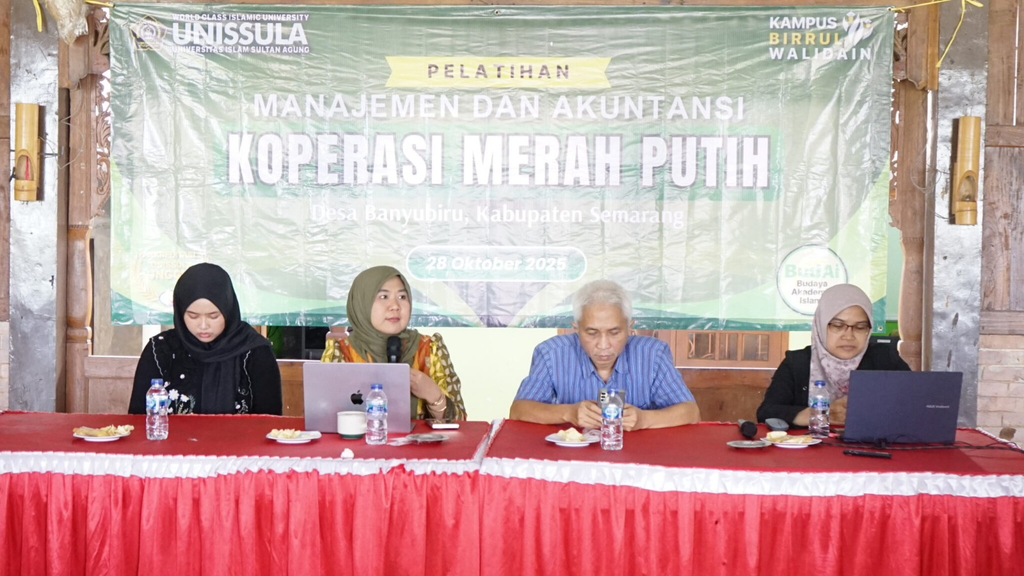
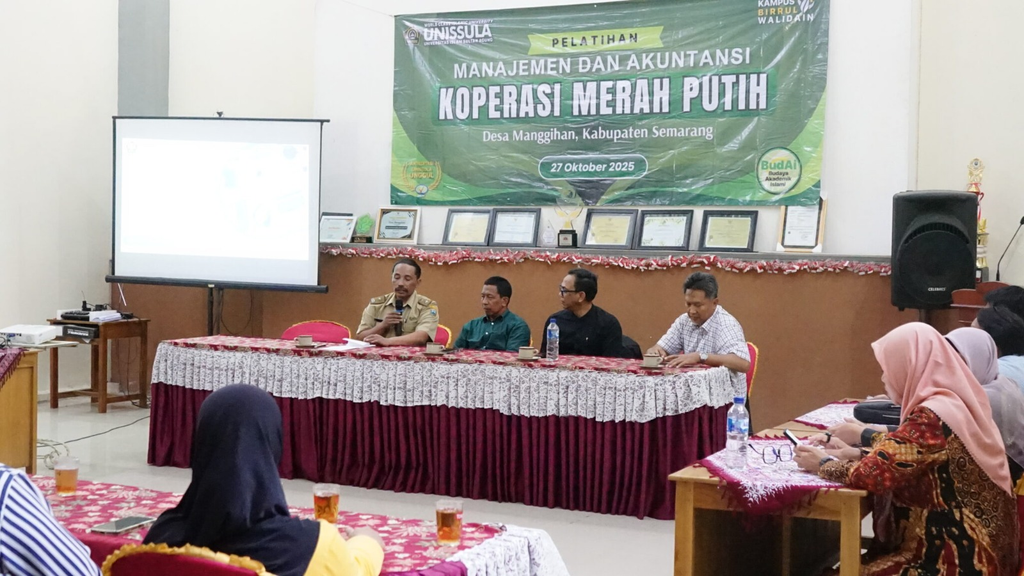
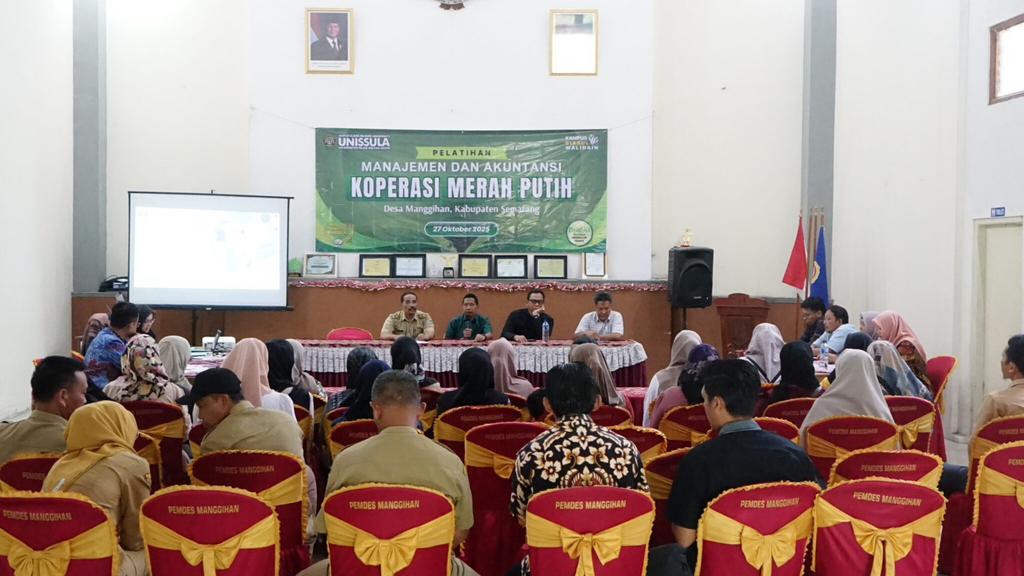
Economic and Financial Management Training in Manggihan and Banyubiru
On 27–28 October 2025, lecturers from the Accounting and Management Study Programmes of UNISSULA’s Faculty of Economics and Business conducted community training activities in two villages in Semarang Regency:
- Manggihan Village, Getasan District: 27 October 2025.
- Banyubiru Village, Banyubiru District: 28 October 2025.
The activities were organised under the theme:
“Management and Accounting Training for Koperasi Merah Putih.”
The programme focused on strengthening participants’ understanding of business management, financial recordkeeping, cooperative management, and Islamic cooperative principles.
The training addressed practical challenges in managing community-based economic activities, supporting financial accountability, and improving organisational sustainability.
Academic staff provided educational sessions followed by interactive discussions, questions and answers, and practical guidance.
Participants discussed challenges concerning financial records, business planning, and marketing strategies, enabling the university team to provide advice adapted to local needs.
The programme demonstrated the university’s commitment to sharing economic and management knowledge beyond the classroom and supporting local economic development.
Official University Publication:
Capacity Building Relevant to Village Economic Governance
The Koperasi Merah Putih programme is closely associated with village economic development and community-based institutional management.
UNISSULA’s educational outreach addressed subjects relevant to the knowledge and competencies needed for responsible cooperative governance and local economic development.
The training covered three principal areas.
Economic Management and Business Planning
Lecturers introduced practical approaches to managing economic activities, improving organisational effectiveness, and supporting sustainable business operations.
Accounting and Financial Accountability
Participants received guidance on basic financial recordkeeping, financial management, and the importance of accurate documentation in managing cooperative and business activities.
Cooperative Governance and Islamic Cooperative Principles
The training introduced cooperative management practices, including approaches relevant to cooperative sustainability, community participation, and Islamic economic principles.
These learning areas support the development of skills that are relevant to village-level economic governance and the implementation of community economic programmes.
The involvement of village government officials with relevant policy responsibilities, where documented in the programme’s participant records, provides a direct connection between the training activities and capacity building for local policymakers.
Interactive Education and Knowledge Transfer
UNISSULA’s training programme combined academic instruction with participatory learning.
Rather than relying exclusively on lectures, the activities encouraged participants to identify practical problems and discuss possible solutions with university experts.
Topics raised during the discussions included:
- financial administration;
- business planning;
- marketing; and
- the management of cooperative activities.
This approach enabled participants to connect economic and accounting concepts with challenges encountered in local economic development.
The university team provided practical guidance intended to help participants strengthen their management capabilities and make better-informed organisational decisions.
Through these educational activities, UNISSULA contributed to the transfer of academic knowledge to stakeholders involved in community development and local economic activities.
Strengthening University–Government–Community Collaboration
UNISSULA recognises that sustainable economic development requires collaboration between academic institutions, government authorities, local organisations, and communities.
Village-level economic initiatives benefit from access to financial management knowledge, organisational expertise, and practical education.
The 2025 activities in Manggihan and Banyubiru created opportunities for engagement between university lecturers and local stakeholders on economic and cooperative management issues.
The programme supports UNISSULA’s wider institutional commitment to promoting community-based economic development and responsible organisational practices.
Where village government policymakers participate directly in such educational activities, the university’s expertise can also strengthen their capacity to oversee, guide, and support local economic development initiatives.
This form of collaboration contributes to closer connections between academic knowledge and public-sector responsibilities.
Contribution to SDG 16 – Peace, Justice and Strong Institutions
UNISSULA’s educational outreach and capacity-building initiatives contribute to SDG 16: Peace, Justice and Strong Institutions by promoting practical knowledge, responsible financial conduct, and stronger local institutions.
The 2025 programme demonstrated the university’s provision of:
- educational outreach in economics and management;
- training in accounting and financial recordkeeping;
- capacity building relevant to cooperative governance;
- interactive learning and practical problem-solving; and
- community engagement supporting village economic development.
These activities support the broader objective of strengthening institutional knowledge and responsible governance at the local level.
They also illustrate how universities can contribute to the skills and capabilities needed by local stakeholders and government officials involved in economic development initiatives.
16.3.3
Participation In Government Research
16.3.3 Policy-Focused Research Collaboration with Government Institutions at Universitas Islam Sultan Agung (UNISSULA)
Institutional Commitment to Policy-Oriented Research
Universitas Islam Sultan Agung (UNISSULA) is committed to supporting evidence-based policymaking and strengthening public institutions through academic research, policy studies, and collaboration with government bodies.
As part of its Tri Dharma Perguruan Tinggi, UNISSULA develops institutional partnerships that connect academic expertise with government responsibilities in legal reform, judicial governance, democratic integrity, public administration, regional development, and economic regulation.
These partnerships provide formal mechanisms for undertaking policy-focused research, exchanging knowledge, developing research agendas, and exploring academic recommendations relevant to public decision-making.
During 2025, UNISSULA strengthened its research cooperation framework with national and regional government institutions, including the Indonesian Competition Commission, the Judicial Commission, the Supreme Court’s legal and judicial policy strategy unit, and provincial and district governments.
Government Research Cooperation Framework
UNISSULA maintains formal cooperation agreements with public institutions whose responsibilities involve the development, implementation, evaluation, and oversight of public policy.
The following agreements establish research-related cooperation frameworks relevant to government policy and institutional development.
| Government Institution | Agreement Number | Date | Research and Policy Focus |
|---|---|---|---|
| Indonesian Competition Commission (KPPU) | 2/KPPU/NK/III/2025 and 004/C.2/MoU-DN/SA/III/2025 | 5 March 2025 | Competition law, market oversight, enforcement, business partnerships, and research |
| Supreme Court of Indonesia – Centre for Legal and Judicial Policy Strategy | PKS 264/A.1/SA-H/II/2025 | 2025 | Legal and judicial policy recommendations and evaluation |
| Judicial Commission of Indonesia | 18/NK/KL.01.03/06/2025 and 012/C.2/MoU-DN/SA/VI/2025 | 18 June 2025 | Judicial integrity, clean justice, research, and institutional development |
| Honorary Council of Election Organisers (DKPP) | 06/MoU.DKPP/IX/2024 and 028/C.2/MoU-DN/SA/IX/2024 | 17 September 2024 | Electoral integrity, democracy, election data studies, and research |
| Central Java Provincial Government | 100.3.7.1/013/2025 and 005/C.2/MoU-DN/SA/III/2025 | 17 March 2025 | Research and regional development |
| Kudus Regency Government | 017/C.2/MoU-DN/SA/X/2025 and Agreement No. 30 of 2025 | 13 October 2025 | Research, community development, and regional competitiveness |
| Banggai Regency Government | 008/C.2/MoU-DN/SA/V/2025 and 100.3.7.1/07/KESBER/Bag.Kerjasama | 12 June 2025 | Education, research, and community development |
| South Kalimantan Provincial Government | 31/C.2/MoU-DN/SA/XI/2024 and 100.3.7.1/22/KSB.B/PEM.OTDA/2024 | 4 November 2024 | Government administration, research, and regional development |
These agreements demonstrate the breadth of UNISSULA’s formal research-related relationships with government institutions.
They also establish administrative foundations for developing specific research projects and technical cooperation arrangements.
Policy Research Cooperation with the Indonesian Competition Commission
On 5 March 2025, UNISSULA established formal cooperation with the Indonesian Competition Commission (Komisi Pengawas Persaingan Usaha – KPPU).
The agreement addresses cooperation in competition law enforcement, supervision, prevention of anti-competitive practices, education, research, and the development of business partnerships.
The cooperation includes academic expertise relevant to economic regulation and the legal framework governing market competition.
On 24 April 2025, KPPU representatives visited UNISSULA to discuss further implementation of the institutional agreement.
The discussion addressed potential joint research on strategic issues, including:
- digitalisation of the economy and competition policy;
- development and empowerment of micro, small, and medium enterprises;
- public procurement of goods and services; and
- competition law and the proposed revision of Law Number 5 of 1999.
These topics are directly relevant to government policy development, economic regulation, and institutional oversight.
The cooperation establishes an opportunity for university researchers to contribute policy analysis and academic evidence to the development of competition-related regulation.
Official Government Publication:
Official Institutional Evidence:
Memorandum of Understanding between KPPU and UNISSULA, dated 5 March 2025.
Legal and Judicial Policy Research with the Supreme Court of Indonesia
UNISSULA’s Faculty of Law has established a policy-research cooperation framework with the Centre for Legal and Judicial Policy Strategy (Pusat Strategi Kebijakan Hukum dan Peradilan) of the Supreme Court of the Republic of Indonesia.
The partnership is identified under Cooperation Agreement Number 264/A.1/SA-H/II/2025.
The stated cooperation concerns the preparation of recommendations and the evaluation of legal and judicial policy strategies.
The partnership connects academic legal research with the government’s need for policy analysis and evaluation of judicial institutions.
It provides a formal basis for cooperation in examining legal and judicial governance issues and developing evidence-informed policy recommendations.
Official University Reference:
Additional Research Cooperation Reference:
https://hukum.unissula.ac.id/id/internasional/joint-research
Judicial Integrity and Clean Justice Research Cooperation
On 18 June 2025, UNISSULA signed a Memorandum of Understanding with the Judicial Commission of the Republic of Indonesia (Komisi Yudisial).
The agreement concerns strengthening judicial integrity and supporting the development of a clean justice system.
The cooperation covers educational activities, research, community engagement, expert participation, and institutional development.
The partnership provides a framework for research and academic engagement addressing the integrity of judges, professional ethics, judicial accountability, and the functioning of the justice system.
Through this cooperation, UNISSULA supports the development of academic relationships relevant to strengthening public confidence in judicial institutions.
Official Institutional Evidence:
Memorandum of Understanding between the Judicial Commission and UNISSULA, dated 18 June 2025.
Agreement Numbers:
- 18/NK/KL.01.03/06/2025
- 012/C.2/MoU-DN/SA/VI/2025
Research Cooperation on Electoral Integrity and Democratic Governance
UNISSULA maintains a formal partnership with the Honorary Council of Election Organisers (Dewan Kehormatan Penyelenggara Pemilihan Umum – DKPP).
The agreement was signed on 17 September 2024 and provides a framework for cooperation related to strengthening democracy and electoral integrity.
Its scope explicitly includes:
- research and academic studies;
- scientific forums and policy discussions;
- academic publications;
- studies and assistance relating to electoral data; and
- educational and professional development activities.
These areas support the development of research collaboration relevant to electoral governance, institutional ethics, and democratic accountability.
The agreement provides a foundation for policy-oriented studies addressing the effectiveness, integrity, and accountability of electoral institutions.
Official Institutional Evidence:
Memorandum of Understanding between DKPP and UNISSULA, dated 17 September 2024.
Agreement Numbers:
- 06/MoU.DKPP/IX/2024
- 028/C.2/MoU-DN/SA/IX/2024
Regional Development Research with Provincial and Local Governments
UNISSULA also maintains institutional research cooperation arrangements with provincial and district governments.
These agreements support collaboration in regional development, public administration, research, education, and community engagement.
Central Java Provincial Government
On 17 March 2025, UNISSULA established cooperation with the Central Java Provincial Government to support regional development through the university’s educational, research, and community engagement activities.
The agreement explicitly includes research as part of the cooperation framework.
Agreement Numbers:
- 100.3.7.1/013/2025
- 005/C.2/MoU-DN/SA/III/2025
Kudus Regency Government
On 13 October 2025, UNISSULA signed a cooperation agreement with the Kudus Regency Government concerning education, research, community engagement, and regional competitiveness.
The partnership supports opportunities for research addressing local development priorities and public-sector challenges.
Agreement Numbers:
- 017/C.2/MoU-DN/SA/X/2025
- Agreement No. 30 of 2025
South Kalimantan Provincial Government
UNISSULA also maintains a cooperation framework with the South Kalimantan Provincial Government concerning regional development and the implementation of the university’s academic responsibilities.
The agreement includes research and improving government administration as part of its broader objectives.
Agreement Numbers:
- 31/C.2/MoU-DN/SA/XI/2024
- 100.3.7.1/22/KSB.B/PEM.OTDA/2024
These regional partnerships establish opportunities for applying academic research to public administration and government development priorities.
Contribution to Evidence-Based Policymaking and SDG 16
UNISSULA’s government research partnerships support its institutional commitment to connecting scientific knowledge with public-sector needs.
The cooperation frameworks cover significant policy areas, including competition law, judicial integrity, electoral governance, and regional development.
Through these relationships, the university seeks to contribute academic expertise to policy analysis, institutional development, and the improvement of public governance.
Such cooperation is relevant to SDG 16: Peace, Justice and Strong Institutions because evidence-informed public policy and accountable institutions are essential to the development of inclusive, effective, and transparent governance.
16.3.4
Neutral Platform To Discuss Issues
16.3.4 UNISSULA Provides Neutral and Inclusive Platforms for Political Dialogue, Legislative Discussion and Public Accountability
Institutional Commitment to Political Neutrality and Open Academic Dialogue
Universitas Islam Sultan Agung (UNISSULA) promotes academic independence, open dialogue, freedom of expression, and constructive engagement among stakeholders with different political and public policy perspectives.
As an institution of higher education, UNISSULA recognises the importance of academic forums in bringing together policymakers, legislators, students, legal experts, government representatives, and members of society to discuss important public challenges.
The university supports the exchange of ideas, critical discussion, and evidence-informed debate while maintaining its institutional independence from political parties.
Throughout 2025, UNISSULA facilitated and participated in several dialogue initiatives addressing democratic governance, legislative reform, parliamentary accountability, criminal justice, and public policy.
These initiatives were implemented through the Faculty of Law, university student organisations, and engagement with national and regional legislative institutions.
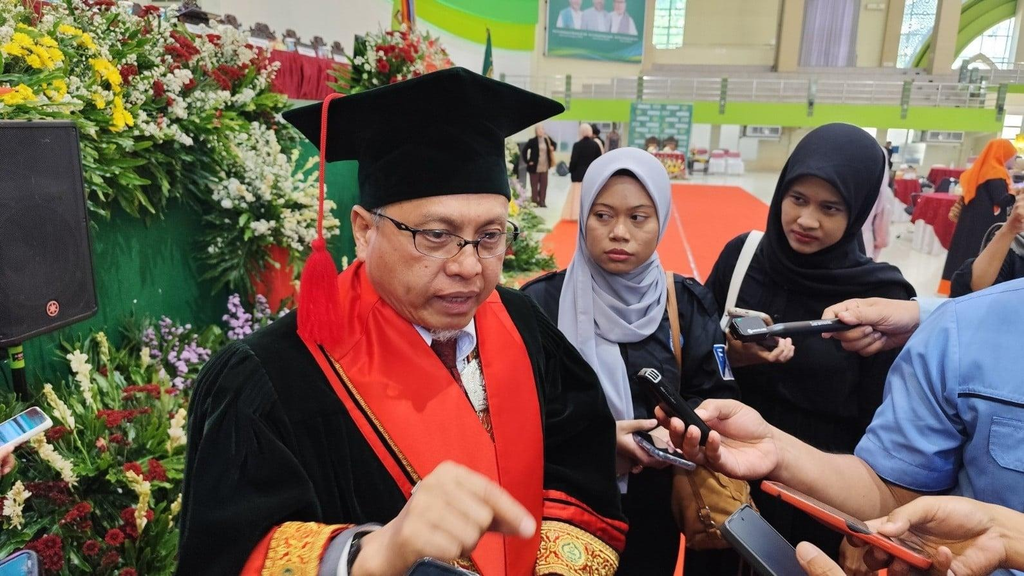

Institutional Political Neutrality and Independence
UNISSULA maintains an institutional commitment to political neutrality and academic independence.
On 18 August 2025, Professor Jawade Hafidz, Dean of the Faculty of Law, publicly explained that UNISSULA welcomes engagement with political parties while maintaining its independence as an academic institution.
He emphasised that the university remains open to communication with different political parties without establishing institutional affiliation with any particular party.
The statement followed a visit by the Secretary-General of the Democratic Party to UNISSULA.
This institutional position reflects the university’s commitment to maintaining an open academic environment in which engagement with political actors does not necessarily imply political endorsement.
By maintaining independence from individual political parties, UNISSULA supports opportunities for dialogue, academic discussion, and the exchange of perspectives across political backgrounds.
The university’s role is to facilitate constructive engagement and academic examination of public issues rather than act as an extension of a political organisation.
Public Evidence:
Prof Jawade Sebut Unissula Open dengan Parpol, Namun Tetap Jaga Netralitas, SuaraBaru.id, 19 August 2025.
Facilitating National Legislative Dialogue with the Regional Representative Council (DPD RI)
On 16 October 2025, the Faculty of Law of UNISSULA collaborated with the Regional Representative Council of the Republic of Indonesia (Dewan Perwakilan Daerah – DPD RI) to organise a Focus Group Discussion (FGD) concerning the National Legislative Programme.
The discussion addressed the 2026 Priority National Legislative Programme and the 2025–2029 Medium-Term National Legislative Programme.
The forum took place at the Faculty of Law, UNISSULA, and brought together national legislative representatives, legal academics, and legislative policy experts.
Among the participants were:
- Abdul Kholik, Chair of the DPD RI Legislative Drafting Committee;
- Professor Jawade Hafidz, Dean of the Faculty of Law, UNISSULA;
- Winanto, legal expert;
- Arwani Hidayat, expert staff member of the DPR RI Legislative Body; and
- Dr. Ricca Anggraeni, expert staff member of the DPD RI Legislative Drafting Committee.
The discussion examined legislative planning, the role of the DPD RI, the effectiveness of proposed legislation, and challenges in responding to the legal needs of society.
Participants examined several issues relevant to national governance, including legislative priorities, the proposed Asset Forfeiture Law, regional government-owned enterprises, and the effectiveness of legislative procedures.
The forum provided an academic setting in which government representatives and legal experts could exchange views on legislative challenges and potential reforms.
Through this engagement, UNISSULA supported dialogue between stakeholders with different institutional roles in the legislative process.
The discussion also demonstrated how academic institutions can contribute independent legal perspectives to national policy deliberation.
Public Evidence:
DPD RI Gandeng Unissula Bahas Prolegnas, Dorong DPR Sahkan UU Perampasan Aset, NU Online Jawa Tengah, 17 October 2025.
Providing an Open Platform for Students and Members of Parliament
On 30 August 2025, the Student Executive Board of UNISSULA (Badan Eksekutif Mahasiswa Keluarga Mahasiswa – BEM KM) facilitated direct dialogue with Yoyok Sudibyo, a member of the Indonesian House of Representatives (DPR RI) representing Central Java Electoral District X.
The discussion provided an opportunity for students and an elected national policymaker to engage directly on issues concerning parliamentary accountability, public demonstrations, legislative responsibilities, and citizens’ aspirations.
Student representatives expressed criticism of parliamentary allowances and questioned the responsiveness of elected representatives to public concerns.
The Chair of BEM KM UNISSULA, Wiyu Ghaniy Allathif Yudistira, raised concerns about parliamentary accountability and the importance of ensuring that legislative decision-making responds to public needs.
The attending member of parliament explained his position, addressed criticism, and responded to students’ concerns.
The discussion provided a practical example of direct communication between stakeholders expressing different perspectives on political accountability and public policy.
Through this initiative, BEM KM UNISSULA facilitated a forum where questions, criticism, and responses could be exchanged openly.
The discussion illustrated the role of student organisations in promoting civic participation and facilitating communication between the public and elected representatives.
Public Evidence:
BEM KM Unissula Fasilitasi Audiensi dengan DPR RI, SuaraBaru.id, 1 September 2025.
https://suarabaru.id/2025/09/01/bem-km-unissula-fasilitasi-audiensi-dengan-dpr-ri
Facilitating Dialogue on Criminal Law Reform, Narcotics Policy and Asset Forfeiture
On 28 November 2025, the Faculty of Law of UNISSULA organised a Focus Group Discussion addressing Indonesia’s National Criminal Code, narcotics policy, and the forfeiture of assets obtained through criminal activities.
The forum examined legal and policy challenges associated with the implementation of the National Criminal Code and the treatment of narcotics offences.
Participants included legal academics, law enforcement representatives, and experts with experience in national narcotics policy and criminal justice.
The speakers included:
- Commissioner General (Ret.) Dr. Anang Iskandar, former Head of the National Narcotics Agency;
- Brigadier General Dr. Agus Rohmat, Head of the Central Java Provincial National Narcotics Agency;
- Muklis, representative of the Central Java Prosecutor’s Office responsible for asset recovery; and
- Dr. Muhammad Taufiq, academic from the Faculty of Law, UNISSULA.
The discussion was moderated by Dr. Djunaedi.
The forum examined differing legal approaches concerning the rehabilitation of narcotics users, criminal sanctions, and the timing and legal basis for asset forfeiture.
Participants considered questions involving rehabilitation, criminal responsibility, due process, and the recovery of assets linked to criminal offences.
These issues involve complex legal and institutional considerations that benefit from multidisciplinary and evidence-informed discussion.
By hosting the discussion, UNISSULA provided an academic platform where legal specialists and public-sector practitioners could examine policy challenges, consider alternative approaches, and exchange professional perspectives.
The Rector of UNISSULA, Professor Gunarto, emphasised the contribution of academic discussion to generating ideas and perspectives relevant to government policymaking.
Public Evidence:
FGD FH Unissula Kaji Lebih Dalam KUHP Nasional 2026: Penegakan Hukum dan Penyalahgunaan Narkotika dan Perampasan Aset, UNISSULA, 28 November 2025.
Encouraging Dialogue Between Students and Regional Legislators
On 3 January 2025, the Student Senate of UNISSULA (Senat Mahasiswa Keluarga Mahasiswa – SEMA KM) participated in direct dialogue with Commission E of the Central Java Provincial Regional House of Representatives (DPRD Jawa Tengah).
The activity took place at the DPRD Central Java office and provided an opportunity for student representatives to engage directly with regional policymakers.
The discussion addressed the legislative, budgetary, and oversight functions of the provincial parliament.
Student representatives also raised questions concerning government coordination in disaster prevention and flood management.
Members of the Regional House of Representatives responded to the students’ questions and discussed the responsibilities of regional legislators.
This activity complemented UNISSULA’s campus-based forums by extending student civic engagement into public legislative institutions.
The exchange demonstrated the university student community’s active participation in dialogue concerning regional governance and public accountability.
Public Evidence:
Komisi E Minta Mahasiswa Wajib Mengetahui Tugas DPRD Jateng, DPRD Central Java, 3 January 2025.
Academic Dialogue, Respectful Disagreement and Public Participation
The different activities undertaken and supported by UNISSULA in 2025 demonstrate its contribution to open academic discussion and constructive engagement with public institutions.
The university’s forums address complex challenges that require dialogue across professional, institutional, and political perspectives.
The National Legislative Programme discussion brought together legislative representatives and academic experts to examine national legislative priorities.
The BEM KM dialogue enabled students to question and challenge an elected representative regarding public accountability.
The criminal law discussion brought together academic experts and practitioners to consider alternative approaches to narcotics policy and asset forfeiture.
The university’s publicly stated commitment to political neutrality provides an important foundation for engagement with different political actors without institutional party affiliation.
Together, these activities support respectful disagreement, critical inquiry, and evidence-informed discussion within an academic environment.
They demonstrate UNISSULA’s contribution to creating opportunities for public discussion in which complex political and legal issues can be examined through dialogue.
Contribution to SDG 16 – Peace, Justice and Strong Institutions
UNISSULA’s facilitation of political and legal dialogue contributes to SDG 16: Peace, Justice and Strong Institutions by strengthening civic participation, public accountability, and engagement between academic institutions and government representatives.
The university’s documented initiatives in 2025 include:
- an institutional statement supporting political neutrality and openness to engagement with different political parties;
- a national legislative policy discussion involving the DPD RI and legal academics;
- direct dialogue between student representatives and a member of the DPR RI;
- an academic forum on criminal law reform, narcotics policy, and asset forfeiture involving law enforcement and legal experts; and
- student engagement with members of the Central Java Provincial DPRD concerning regional governance and public policy.
These activities demonstrate the university’s capacity to convene academic and public-sector stakeholders and facilitate discussions of issues relevant to democratic institutions, law, and public accountability.
The initiatives also reinforce the importance of universities as independent spaces for knowledge exchange and constructive public dialogue.