


















UNISSULA SUSTAINABILITY REPORTING
SDG 1 – No Poverty
Progress Report 2025
2025 Progress Overview
In 2025, Universitas Islam Sultan Agung (UNISSULA) documented its progress towards SDG 1 – No Poverty through financial assistance for economically disadvantaged students, targeted scholarship programmes, student welfare support, and community economic empowerment. The university supported access to higher education and student study continuity while implementing entrepreneurship training, MSME development, and community assistance programmes. This report presents UNISSULA’s institutional initiatives, documented achievements, and continuing priorities for poverty reduction during the 2025 reporting period.
Full SDG 1 Progress Report 2025
1.3.1
Bottom Financial Quintile Admission Target
1.3.1 Admission Target for Students from the Bottom 20% of Household Income Groups
Universitas Islam Sultan Agung (UNISSULA) is committed to widening participation in higher education by ensuring that students from economically disadvantaged households have meaningful access to university education. This commitment forms part of the university’s broader approach to inclusive and equitable higher education, particularly for prospective students whose financial circumstances may otherwise limit their ability to enter and continue university study.
UNISSULA implements a targeted admission and financial-support approach for prospective students from low-income households, including applicants who fall within, or are equivalent to, the lowest socioeconomic groups identified through nationally recognised social-protection and higher-education assistance mechanisms.
The purpose of this approach is to ensure that qualified students from the most economically vulnerable groups are represented within the university’s incoming student population and are provided with sufficient support to overcome financial barriers to higher education.
Targeted Admission for Economically Disadvantaged Students
A principal mechanism used by UNISSULA to implement this commitment is the Kartu Indonesia Pintar Kuliah (KIP Kuliah) admission and financial-support pathway.
KIP Kuliah is intended for students who demonstrate academic potential but face financial limitations. UNISSULA’s official Rector Decrees explicitly recognise the programme as part of the university’s efforts to improve fairness and access to higher education for students with limited economic capacity.
Through this mechanism, UNISSULA identifies prospective students from economically vulnerable households using recognised socioeconomic criteria and supporting documentation. These criteria enable the university to distinguish applicants who require targeted financial support from those applying through the general admission process.
In line with UNISSULA’s widening-participation objective, this targeted admission mechanism is directed toward prospective students from the lowest-income households, including students from the bottom 20% of household income groups, where identified through nationally recognised socioeconomic and social-protection criteria, as well as more tightly defined poverty-based categories..
The use of a dedicated mechanism ensures that access to higher education is not based solely on academic eligibility, but also takes socioeconomic disadvantage into account where appropriate.
Use of Nationally Recognised Low-Income Criteria
UNISSULA uses nationally recognised social-protection and economic-vulnerability mechanisms to identify students requiring targeted support.
Eligibility for KIP Kuliah is associated with conditions demonstrating limited economic capacity and documented financial need. Through this approach, the university is able to identify and support students from households facing significant socioeconomic disadvantage.
In the context of SDG 1.3.1, these nationally recognised low-income categories provide a practical institutional mechanism for identifying students who represent, or are equivalent to, the lowest household-income groups.
UNISSULA therefore uses these criteria as part of its widening-participation strategy to increase access for students from lower socioeconomic backgrounds, including students corresponding to the bottom 20% of household income groups or equivalent nationally recognised low-income categories.
Formal Institutional Implementation
UNISSULA formalises the implementation of its targeted admission and financial-support mechanism through official Rector Decrees.
Rector Decree No. 7500/F/SA/VIII/2025 formally establishes recipients of the KIP Kuliah programme among new students admitted to UNISSULA in 2025. The decree confirms that the listed students are officially designated as KIP Kuliah beneficiaries within the university’s new-student admission framework.
In addition, Rector Decree No. 10263/F/SA/X/2025 establishes additional KIP Kuliah recipients under the Usulan Masyarakat (USMAS) scheme for new students admitted in 2025.
These Rector Decrees provide formal institutional evidence that UNISSULA has an organised mechanism for identifying, admitting, and supporting students from economically disadvantaged backgrounds.
The existence of these formal decisions demonstrates that support for low-income students is not implemented on an ad hoc basis, but through a structured, documented, and institutionally recognised process.
Financial Support Linked to Admission
The targeted admission mechanism is directly connected to substantial financial assistance for eligible students.
Under the KIP Kuliah programme, recipients receive education-cost assistance according to the programme of study. The official Rector Decrees specify tuition support at different levels, including funding of up to IDR 15,000,000 per student per semester for certain programmes.
In addition to tuition assistance, KIP Kuliah recipients are also eligible to receive living-cost assistance in accordance with applicable national programme regulations.
This combination of admission access, tuition assistance, and living-cost support helps reduce the financial barriers that may otherwise prevent students from lower-income households from entering, participating in, and completing higher education.
Institutional Commitment to Widening Participation
UNISSULA’s approach goes beyond the provision of general scholarships. The university maintains a dedicated mechanism that connects admission, socioeconomic eligibility, official beneficiary designation, and financial assistance.
This structure supports the university’s institutional objective of widening access for economically vulnerable students and increasing their participation in higher education.
By using recognised indicators of economic disadvantage, UNISSULA seeks to ensure that prospective students from the lowest-income groups receive specific consideration and appropriate support within the admission and financial-aid process.
This approach is consistent with the university’s broader commitment to inclusive education, equal opportunity, and reducing socioeconomic inequality in access to higher education.
Monitoring and Continuity
UNISSULA regularly implements and documents its support for economically disadvantaged students through its admission and financial-aid processes.
The university records KIP Kuliah recipients through official Rector Decrees, maintains formal lists of beneficiaries, and integrates the programme into its new-student admission and student-support systems.
This recurring process enables UNISSULA to monitor the participation of students from low-income households and to evaluate the implementation of its targeted admission and financial-support mechanisms over time.
UNISSULA continues to strengthen this approach by ensuring that low-income and economically vulnerable applicants can be identified, admitted, and supported through clearly defined institutional procedures.
Evidence of Implementation
UNISSULA’s targeted admission and financial-support approach for economically disadvantaged students is supported by formal institutional evidence, including:
- Rector Decree No. 7500/F/SA/VIII/2025 concerning the designation of KIP Kuliah recipients among new students admitted to UNISSULA in 2025.
- Rector Decree No. 10263/F/SA/X/2025 concerning the designation of KIP Kuliah recipients under the Usulan Masyarakat (USMAS) scheme for new students admitted to UNISSULA in 2025.
KIP Kuliah Scholarship
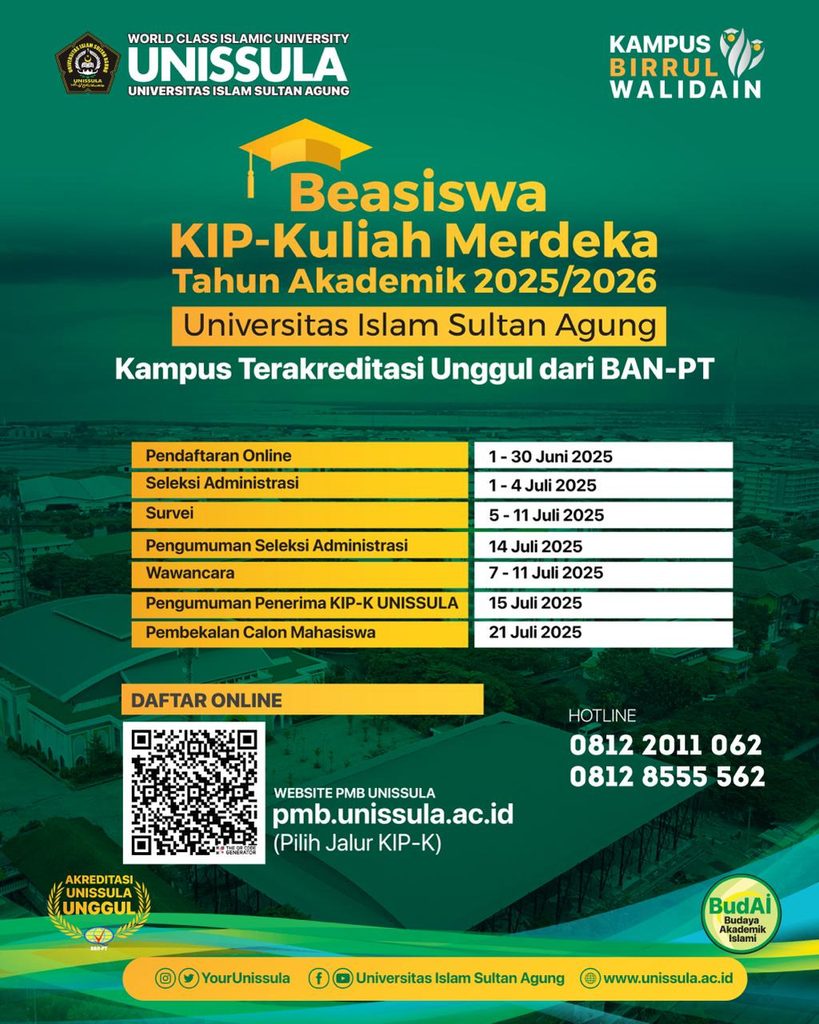
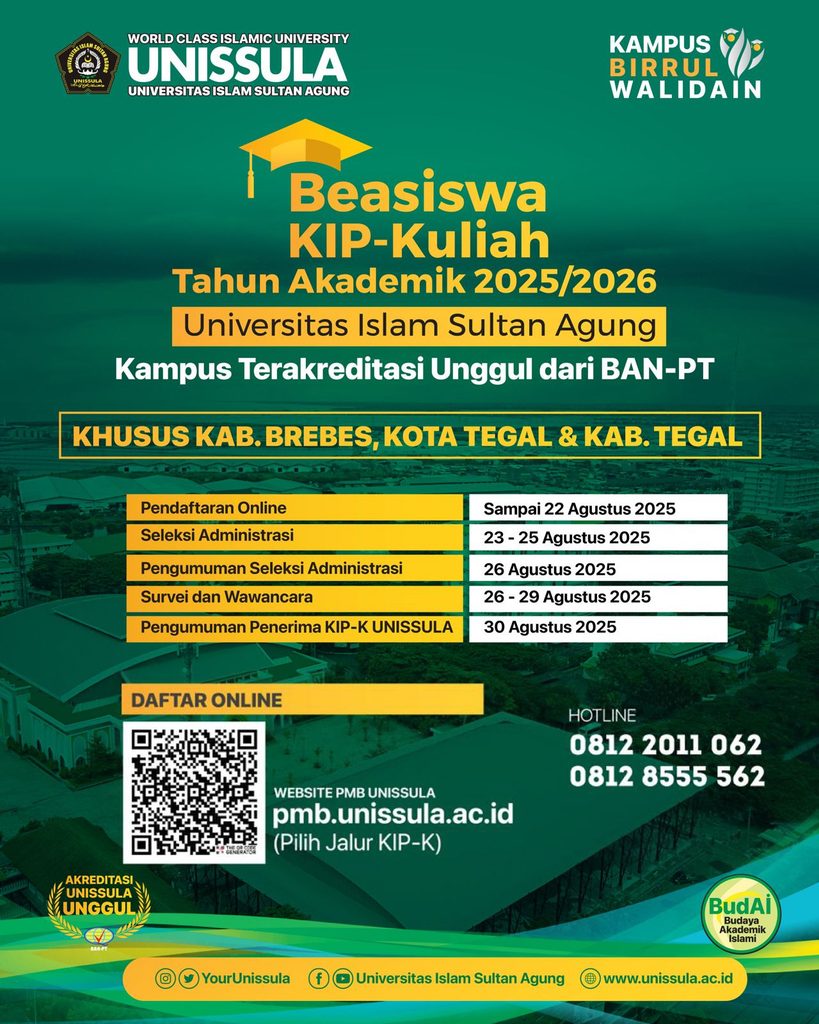
Universitas Islam Sultan Agung (UNISSULA) also implements the Kartu Indonesia Pintar (KIP) Kuliah Scholarship, a government-funded financial assistance programme intended to support students from low-income and economically disadvantaged families. The programme is implemented through a dedicated admission and selection process for eligible prospective students and continues to serve as one of UNISSULA’s main mechanisms for expanding equitable access to higher education.
Through the KIP Kuliah programme, verified recipients receive financial assistance in the form of tuition support and living-cost allowances in accordance with applicable government regulations. This support helps reduce the financial burden faced by students from economically vulnerable households and enables them to continue their studies without being hindered by tuition and basic living expenses.
By consistently participating in and implementing the KIP Kuliah programme, UNISSULA reinforces its commitment to ensuring that students from low-income households, including those within the bottom financial quintile, have greater opportunities to access, participate in, and successfully complete higher education.
Source :
Regular Admission Pathway with 50% DPI Discount
Universitas Islam Sultan Agung (UNISSULA) provides a Regular Admission Pathway with a 50% discount on the Institutional Development Fee (Dana Pengembangan Institusi/DPI) as part of its effort to improve affordability and widen access to higher education. This financial incentive is available to eligible prospective students who register through the regular admission scheme in accordance with the university’s admission policies and applicable terms and conditions.
The 50% DPI discount is designed to reduce the initial financial burden associated with university enrolment, particularly for families who may face constraints in meeting upfront education costs. By lowering a significant component of the admission fee, UNISSULA enables a broader range of prospective students to consider and access higher education opportunities.
This initiative complements UNISSULA’s broader financial support framework, including scholarships and other tuition assistance schemes. Through the provision of admission fee reductions under the regular pathway, UNISSULA demonstrates its commitment to creating a more inclusive and accessible admissions system while supporting students from diverse socioeconomic backgrounds.
Source :
Independent Achievement Admission Pathway with 50% DPI Discount
Universitas Islam Sultan Agung (UNISSULA) provides an Independent Achievement Admission Pathway for prospective students who demonstrate outstanding academic or non-academic achievements. This pathway is designed to recognise student potential while providing greater opportunities for high-achieving applicants to access higher education at UNISSULA.
As part of this admission scheme, eligible applicants receive a 50% discount on the Institutional Development Fee (Dana Pengembangan Institusi/DPI). The reduction in DPI helps lower the initial financial burden of university enrolment and makes higher education more accessible for talented students from diverse socioeconomic backgrounds.
The Independent Achievement Admission Pathway reflects UNISSULA’s commitment to combining merit-based admission with financial support. By recognising student achievement and providing a substantial reduction in admission-related costs, UNISSULA encourages talented prospective students to continue their education without being disproportionately constrained by financial considerations.
This initiative complements UNISSULA’s wider range of scholarship, tuition assistance, and admission support programmes, strengthening the university’s commitment to inclusive, equitable, and merit-based access to higher education.
Source :
Hafiz and Hafidzah Scholarship
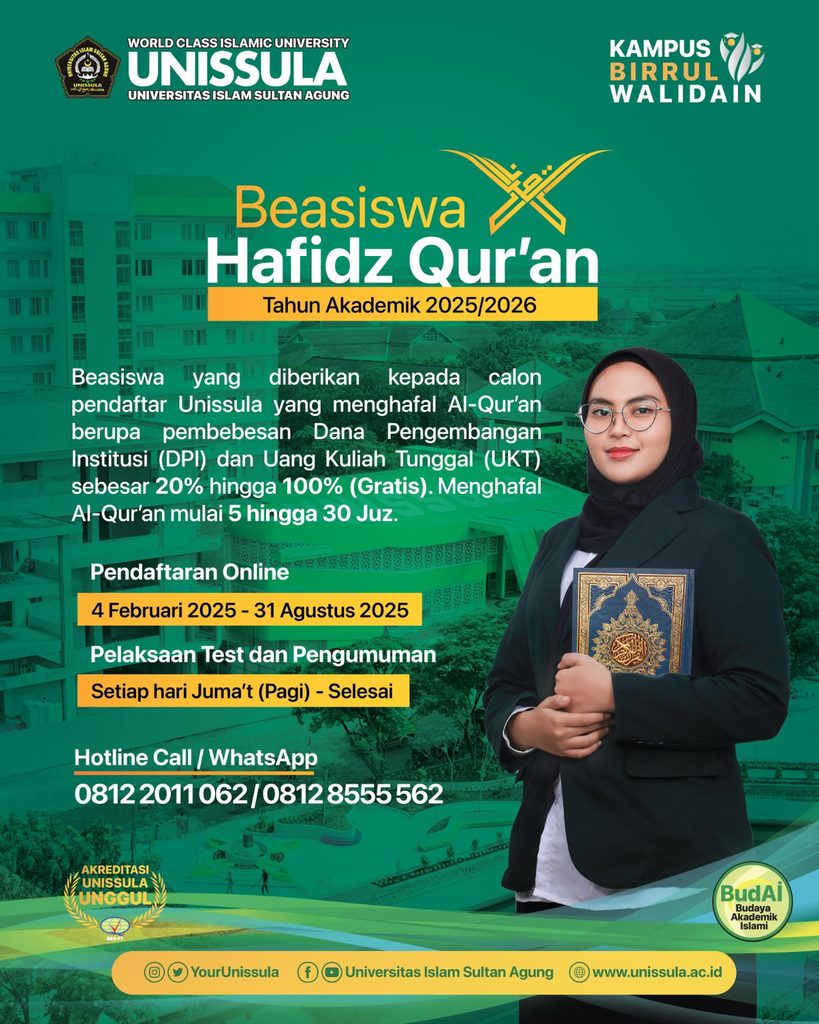
Universitas Islam Sultan Agung (UNISSULA) provides the Hafiz and Hafidzah Al-Qur’an Scholarship as part of its commitment to widening access to higher education while recognising prospective students who have demonstrated outstanding achievement in memorising the Qur’an. The programme provides a dedicated scholarship pathway for male and female Qur’an memorisers who meet the university’s admission and tahfidz selection requirements.
Through this scholarship programme, eligible prospective students receive significant financial support to reduce the cost of entering and continuing higher education. UNISSULA provides a 100% exemption from the Institutional Development Fee (Dana Pengembangan Institusi/DPI) for students admitted through the Hafidz Al-Qur’an Scholarship programme.
The scholarship is available to prospective students with demonstrated Qur’an memorisation ability. Applicants are required to provide evidence of their memorisation and participate in a tahfidz selection process. Scholarship support may also be differentiated according to the number of juz memorised, thereby recognising different levels of achievement while providing opportunities for Qur’an memorisers to pursue university education. UNISSULA information indicates that prospective students with memorisation starting from five juz may apply, subject to the applicable selection requirements.
The programme is implemented as a structured component of UNISSULA’s new student admission process. Selection results for the 2026/2027 academic year, for example, were formally determined through a university admission selection meeting involving university leaders, faculty representatives, and the New Student Admission Committee and were publicly announced through the official UNISSULA admission website.
Through the Hafiz and Hafidzah Scholarship, UNISSULA combines merit-based recognition with financial assistance, helping reduce financial barriers for talented prospective students and broadening opportunities to access higher education. The initiative also reflects UNISSULA’s institutional identity as an Islamic university by supporting the development of academically capable graduates who maintain strong Qur’anic values and contribute positively to society.
Source :
1.3.2
Bottom Financial Quintile Student Success
1.3.2 Graduation and Completion Target for Students from the Bottom 20% of Household Income Groups
Universitas Islam Sultan Agung (UNISSULA) is committed not only to widening access to higher education for students from economically disadvantaged households, but also to supporting their successful completion of university study.
As part of this institutional commitment, UNISSULA establishes a graduation and completion target for students from the lowest-income households, including students within the bottom 20% of household income groups or more tightly defined poverty-based categories identified through nationally recognised socioeconomic and social-protection criteria.
The university’s target is to support students within these groups so that they can successfully complete their degree within the standard duration of their academic programme.
This completion target complements UNISSULA’s targeted admission and financial-support mechanisms and reflects the university’s commitment to ensuring that financial disadvantage does not prevent students from progressing from admission to graduation.
Institutional Graduation and Completion Target
UNISSULA targets students from the bottom 20% of household income groups, or more tightly defined poverty-based categories, to successfully complete their studies within the standard duration of their academic programme.
For students receiving Kartu Indonesia Pintar Kuliah (KIP Kuliah) and other institutionally recognised poverty-based financial assistance, UNISSULA supports this target by providing financial assistance throughout the normal study period and by monitoring students’ academic progression and continued enrolment.
The completion target is intended to reduce the risk that poverty or serious financial disadvantage results in delayed study, interruption of enrolment, or withdrawal before graduation.
Target Population
The graduation and completion target focuses on students whose socioeconomic circumstances place them within the lowest-income and poverty-affected groups, including:
- students within the bottom 20% of household income groups;
- students falling within more tightly defined poverty-based categories;
- students meeting nationally recognised poverty and social-protection criteria;
- KIP Kuliah recipients who meet economic eligibility requirements; and
- students with documented serious financial disadvantage.
UNISSULA uses recognised socioeconomic criteria and supporting documentation to identify students requiring targeted financial and academic assistance.
These mechanisms enable the university to direct completion-support measures toward students whose financial circumstances may otherwise make continued participation in higher education difficult.
KIP Kuliah as a Completion-Support Mechanism
One of the principal mechanisms supporting this completion target is the Kartu Indonesia Pintar Kuliah (KIP Kuliah) programme.
UNISSULA’s official Rector Decrees state that KIP Kuliah is intended for students who demonstrate academic potential but whose economic capacity is limited.
The programme provides substantial financial support so that eligible students can continue their studies without tuition and living costs becoming barriers to academic progression.
UNISSULA formally establishes KIP Kuliah recipients through Rector Decrees. Rector Decree No. 7500/F/SA/VIII/2025 establishes KIP Kuliah recipients among newly admitted students in 2025, while Rector Decree No. 10263/F/SA/X/2025 establishes additional recipients through the Usulan Masyarakat (USMAS) scheme.
These formal decisions demonstrate UNISSULA’s structured implementation of financial support for students experiencing serious economic disadvantage.
Financial Support Throughout the Study Period
KIP Kuliah support is designed to continue throughout the normal duration of the recipient’s study programme, subject to applicable programme requirements.
Recipients receive education-cost assistance and living-cost support, helping them maintain active enrolment and continue progressing toward graduation.
By reducing tuition and living-cost pressures, this support contributes directly to UNISSULA’s completion target for economically disadvantaged students.
Financial assistance is therefore not limited to facilitating university entry. It also serves as an important mechanism for supporting student retention, academic progression, and successful completion.
Institutional Financial Measures Supporting Completion
UNISSULA also maintains institutional financial policies designed to reduce financial barriers during the later stages of study.
Under Rector Decree No. 9700/D.3/SA/IX/2024 concerning Educational Fees for the 2025/2026 Academic Year, students who have not completed their studies within the normal semester period are subject to reduced educational fees according to their remaining academic activities.
The policy provides that:
- students who are still taking courses are charged 75% of the applicable UKT;
- students completing a thesis, final examination, pendadaran, or munaqosah are charged 50% of the applicable UKT; and
- students who are only waiting for a final examination are charged 25% of the applicable UKT.
These arrangements reduce the additional financial burden faced by students during the final stages of their studies and provide an institutional mechanism that supports continued enrolment through to completion.
Additional Support for Economically Disadvantaged Students
UNISSULA’s institutional scholarship policy also provides support specifically for economically disadvantaged students.
The 2025/2026 Rector Decree includes the Khaira Ummah Scholarship, which is provided to new students who are financially disadvantaged and academically capable. Subject to the applicable scholarship quota and eligibility requirements, the scholarship may provide 100% relief from Development Contribution Fees (DPI) and Tuition Fees (UKT).
The same policy also provides forms of financial relief for dhuafa and other economically disadvantaged students.
These institutional scholarship mechanisms complement KIP Kuliah and strengthen UNISSULA’s broader framework for supporting students whose economic circumstances could otherwise affect their ability to remain enrolled and complete their studies.
Academic Progress and Completion Monitoring
UNISSULA supports the achievement of its completion target through continued monitoring of students receiving poverty-based financial assistance.
Monitoring focuses on:
- continued active enrolment;
- satisfactory academic progression;
- semester-to-semester retention;
- progression toward completion within the standard study period; and
- successful graduation.
Where students experience academic or financial difficulties that may affect completion, the university’s student-support and financial-assistance mechanisms are intended to help maintain their progression toward graduation.
This monitoring approach ensures that the university’s commitment is not limited to admission but extends throughout the student lifecycle.
From Access to Successful Graduation
UNISSULA recognises that widening participation requires more than providing access to higher education.
Students from the lowest-income households must also have sufficient financial and institutional support to remain enrolled, progress academically, and complete their qualifications.
UNISSULA therefore combines:
- a defined graduation and completion target;
- KIP Kuliah financial assistance;
- institutional scholarships for economically disadvantaged students;
- tuition and living-cost support;
- reduced educational fees during the final stages of study;
- academic progression monitoring; and
- continuing student-support mechanisms.
Through these measures, UNISSULA supports students from the bottom 20% of household income groups, or more tightly defined poverty-based categories, in progressing successfully from admission through to graduation within the standard duration of their academic programme.
Evidence of Implementation
UNISSULA’s graduation and completion target for economically disadvantaged students is supported by the following institutional evidence:
- A public institutional graduation and completion target for students from the bottom 20% of household income groups or more tightly defined poverty-based categories
- Rector Decree No. 7500/F/SA/VIII/2025, establishing KIP Kuliah recipients among newly admitted students.
- Rector Decree No. 10263/F/SA/X/2025, establishing additional KIP Kuliah recipients under the Usulan Masyarakat (USMAS) scheme.
- Rector Decree No. 9700/D.3/SA/IX/2024, establishing educational-fee and scholarship provisions for the 2025/2026 academic year, including reduced fees for students completing the final stages of study and scholarships for financially disadvantaged students.
- Institutional monitoring and student-support mechanisms aimed at maintaining academic progression, student retention, and successful completion.
1.3.3
Low-income student support
1.3.3 Support for Students from Low-Income Families to Complete University
Universitas Islam Sultan Agung (UNISSULA) provides a range of financial and non-financial support mechanisms for students from low-income and economically disadvantaged families to help them remain enrolled, progress academically, and successfully complete their university education.
UNISSULA recognises that financial barriers to completing higher education extend beyond tuition fees. Students from low-income families may also experience difficulties in meeting daily living expenses, including food, accommodation, transportation, healthcare, and other essential needs.
To reduce these barriers, UNISSULA combines direct financial assistance, living-cost support, scholarships, institutional fee relief, student accommodation, transportation facilities, academic guidance, and other student-support mechanisms throughout the period of study.
Direct Financial and Living-Cost Support
A principal mechanism for supporting students from low-income families is the Kartu Indonesia Pintar Kuliah (KIP Kuliah) programme.
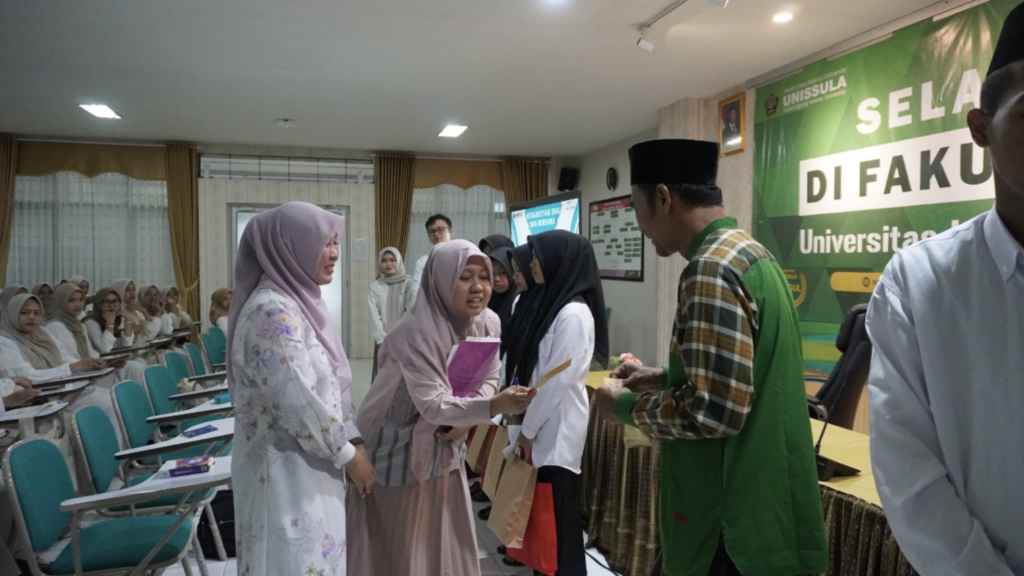
UNISSULA’s official Rector Decrees establish KIP Kuliah support for students who demonstrate academic potential but have limited economic capacity. The programme therefore supports students whose financial circumstances might otherwise restrict their ability to participate in and complete higher education.
KIP Kuliah recipients at UNISSULA receive both education-cost assistance and living-cost assistance.
Living-cost assistance provides direct financial support that can help eligible students meet essential day-to-day expenses during their studies, including food, accommodation, local transportation, and other basic living needs.
This assistance represents one of UNISSULA’s principal mechanisms for helping students from low-income families maintain active enrolment and continue progressing toward graduation.
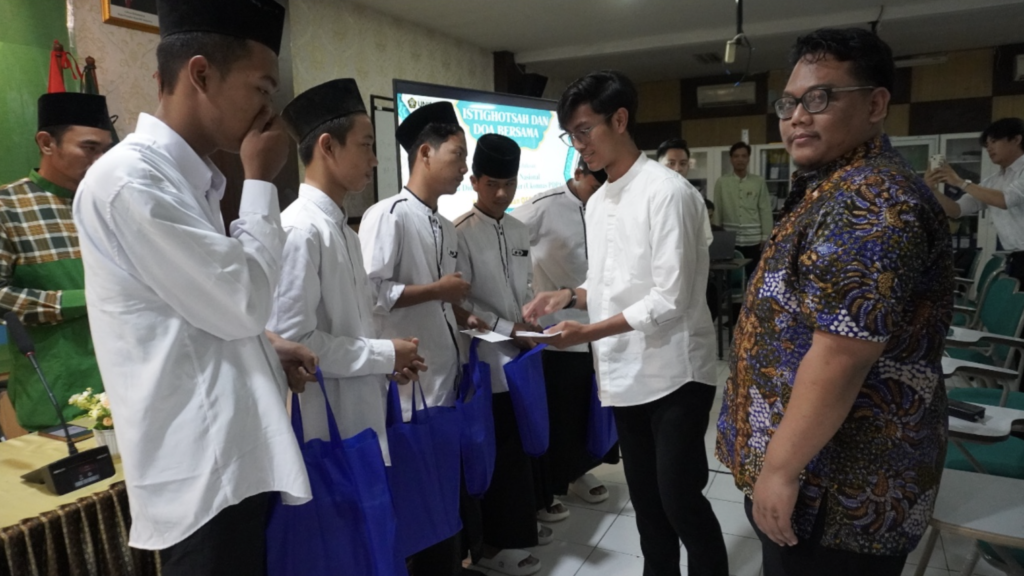
Free Meal Support
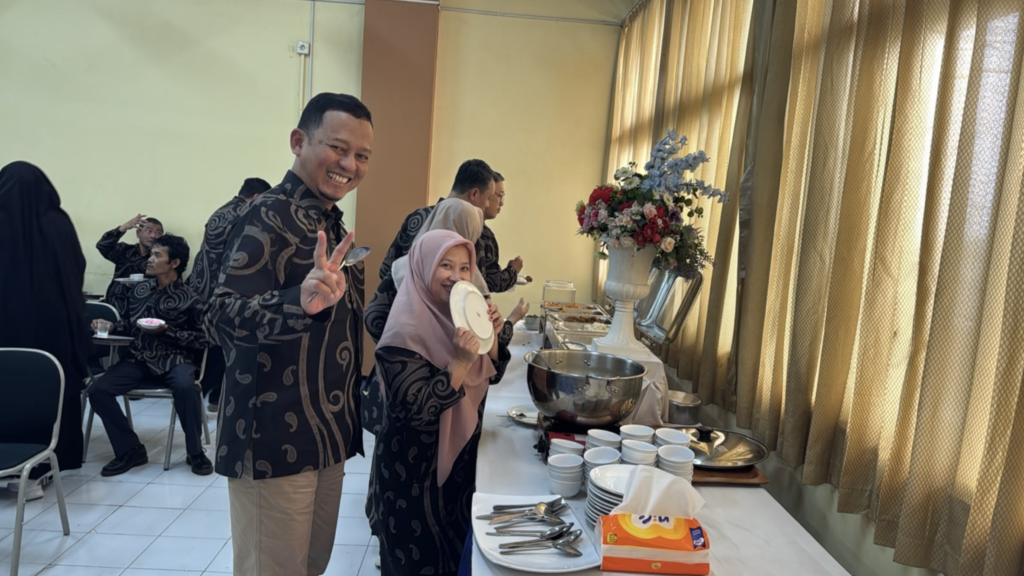
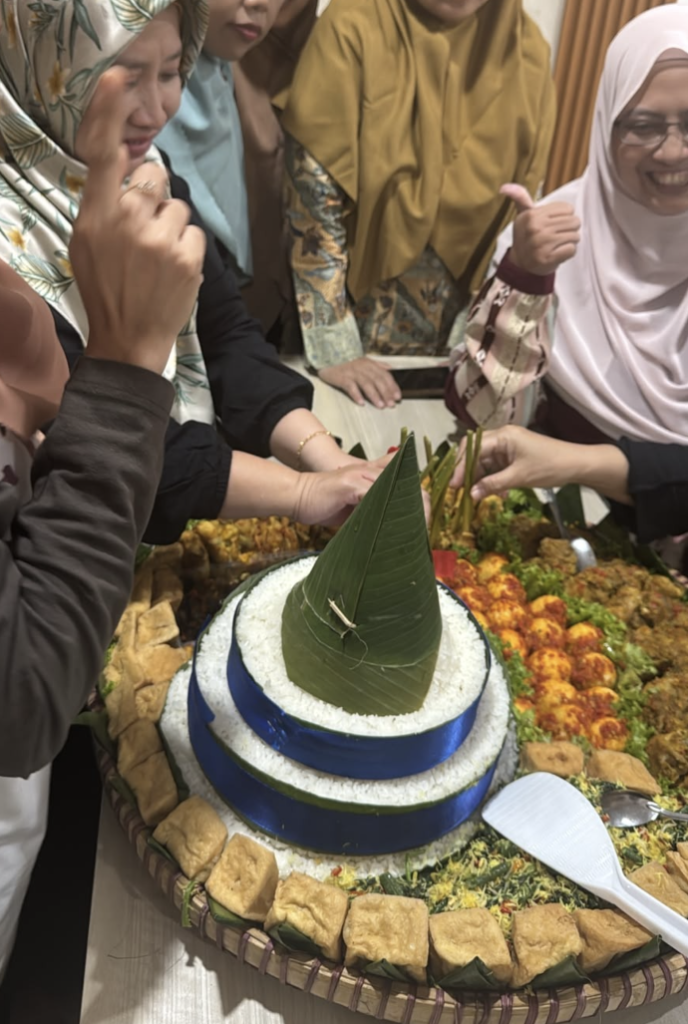
UNISSULA also provides free meals for members of the university community, including students, lecturers, and staff, as part of its institutional welfare and community-support activities.
The provision of free meals helps reduce students’ day-to-day food expenditure and is particularly beneficial for students from low-income families, for whom regular living expenses can create additional barriers to continuing university study.
Because the meals are provided free of charge, eligible students can access food support without incurring additional costs. This complements UNISSULA’s other low-income student-support mechanisms, including KIP Kuliah living-cost assistance, the Khaira Ummah Scholarship, and LAZIS Sultan Agung support.
For students experiencing financial hardship, access to free meals can help reduce essential living expenses and support continued participation in academic activities.
Formal Institutional Support for Low-Income Students
UNISSULA formally documents the implementation of KIP Kuliah through official Rector Decrees.
Rector Decree No. 7500/F/SA/VIII/2025 establishes KIP Kuliah beneficiaries among newly admitted students in 2025 and formally recognises their participation in the programme.
Rector Decree No. 10263/F/SA/X/2025 establishes additional KIP Kuliah beneficiaries through the Usulan Masyarakat (USMAS) scheme and provides education-cost and living-cost support for eligible recipients.
These formal decisions demonstrate that support for low-income students is implemented through a structured, documented, and institutionally recognised mechanism rather than through ad hoc assistance.
Continued Financial Support for KIP Kuliah Beneficiaries in 2025
In 2025, Universitas Islam Sultan Agung (UNISSULA) formally continued financial assistance for 1,074 existing KIP Kuliah beneficiaries through Rector Decree No. 6683/F/SA/VIII/2025, dated 14 August 2025.
The decree covers students admitted in 2022, 2023, and 2024 who continued receiving financial support during the odd semester of the 2025/2026 academic year. The programme provides tuition assistance administered through the university and living-cost support for eligible students.
This formal continuation of assistance demonstrates UNISSULA’s institutional commitment to reducing financial barriers, maintaining student enrolment, and supporting the academic progression of economically disadvantaged students towards successful degree completion.
LAZIS Sultan Agung and Khaira Ummah Scholarship
UNISSULA’s low-income student-support framework is complemented by assistance provided through LAZIS Sultan Agung and the Khaira Ummah Scholarship.
The Khaira Ummah Scholarship is formally integrated into UNISSULA’s new-student admission process. Through this scholarship pathway, the university provides additional opportunities for financially disadvantaged and academically capable students to access and continue higher education.
Under UNISSULA’s educational-fee policy, eligible Khaira Ummah Scholarship recipients may receive substantial financial relief, including up to 100% exemption from Development Contribution Fees (DPI) and Tuition Fees (UKT), subject to eligibility requirements, programme provisions, and available quotas.
This scholarship provides an additional institutional mechanism for reducing educational costs that could otherwise limit students’ ability to continue their studies.
Support throughout the Study Period
UNISSULA’s approach is not limited to providing financial assistance at the point of admission.
Financial difficulties may arise at different stages of study and can affect students’ ability to maintain enrolment, meet educational costs, and complete academic requirements.
UNISSULA therefore combines:
- tuition assistance;
- living-cost assistance;
- scholarships for financially disadvantaged students;
- institutional fee relief;
- academic advising and progression support;
- student welfare support; and
- complementary accommodation and transportation facilities.
Together, these measures help students from low-income families remain enrolled and continue progressing toward successful completion.
Financial Relief during the Final Stages of Study
UNISSULA also provides institutional financial measures designed to reduce the burden on students who require additional time to complete their final academic requirements.
Under Rector Decree No. 9700/D.3/SA/IX/2024 concerning Educational Fees for the 2025/2026 Academic Year, reduced tuition obligations apply according to students’ remaining academic activities.
The policy provides that:
- students who are still taking courses may be charged 75% of the applicable UKT;
- students completing a thesis, final examination, pendadaran, or munaqosah may be charged 50% of the applicable UKT; and
- students who are only waiting for a final examination may be charged 25% of the applicable UKT.
These provisions reduce the additional financial burden students may face while completing the final stages of their studies.
Although these fee reductions apply more broadly than to low-income students alone, they complement UNISSULA’s targeted financial-support framework and contribute to supporting continued enrolment through completion.
Housing and Accommodation Support
UNISSULA also provides university-managed student accommodation through the Pesantren Mahasiswa Sultan Agung (Pesanmasa) residential system.
Pesanmasa provides student housing close to the university environment together with supporting facilities such as furnished rooms, Wi-Fi, common areas, parking areas, sports facilities, a canteen, laundry services, convenience-store facilities, and a student health unit.
For students coming from outside Semarang, university-managed accommodation helps reduce the practical difficulty of securing housing independently and provides a structured residential environment close to academic facilities.
Pesanmasa should be regarded as a form of student accommodation support rather than a universal free-housing programme, as available institutional evidence does not establish that accommodation is provided free of charge to all low-income students.
For economically disadvantaged students, however, the availability of university-managed accommodation complements direct financial assistance such as KIP Kuliah living-cost support.
Transportation Support
UNISSULA provides several forms of institutional transportation support to reduce mobility barriers for students and other members of the university community.
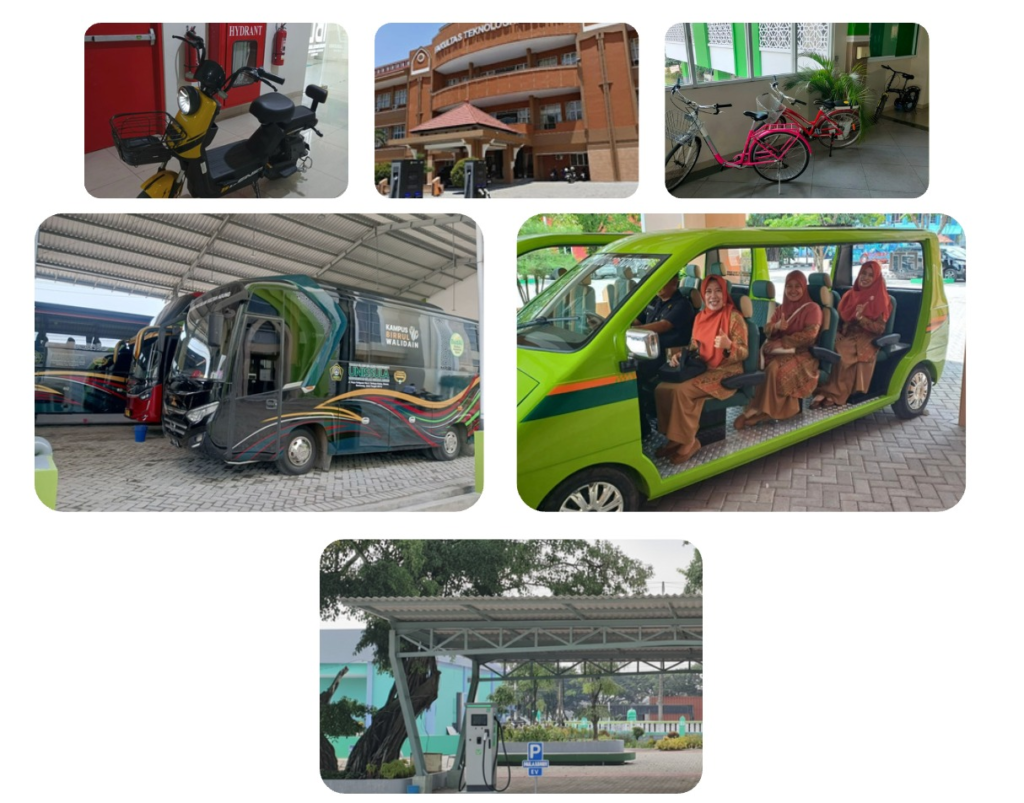
For internal campus mobility, UNISSULA provides university-developed electric vehicles and electric bicycles free of charge for movement between faculties, academic buildings, administrative units, and other campus facilities. These services are available to students, lecturers, and staff and support short-distance mobility without requiring users to rely on private motorcycles or cars.
The internal electric-mobility facilities help:
- reduce transportation costs for campus users;
- improve access between faculties and university facilities;
- support students who may face financial barriers to daily mobility;
- reduce dependence on private vehicles; and
- promote low-emission transportation within the campus.
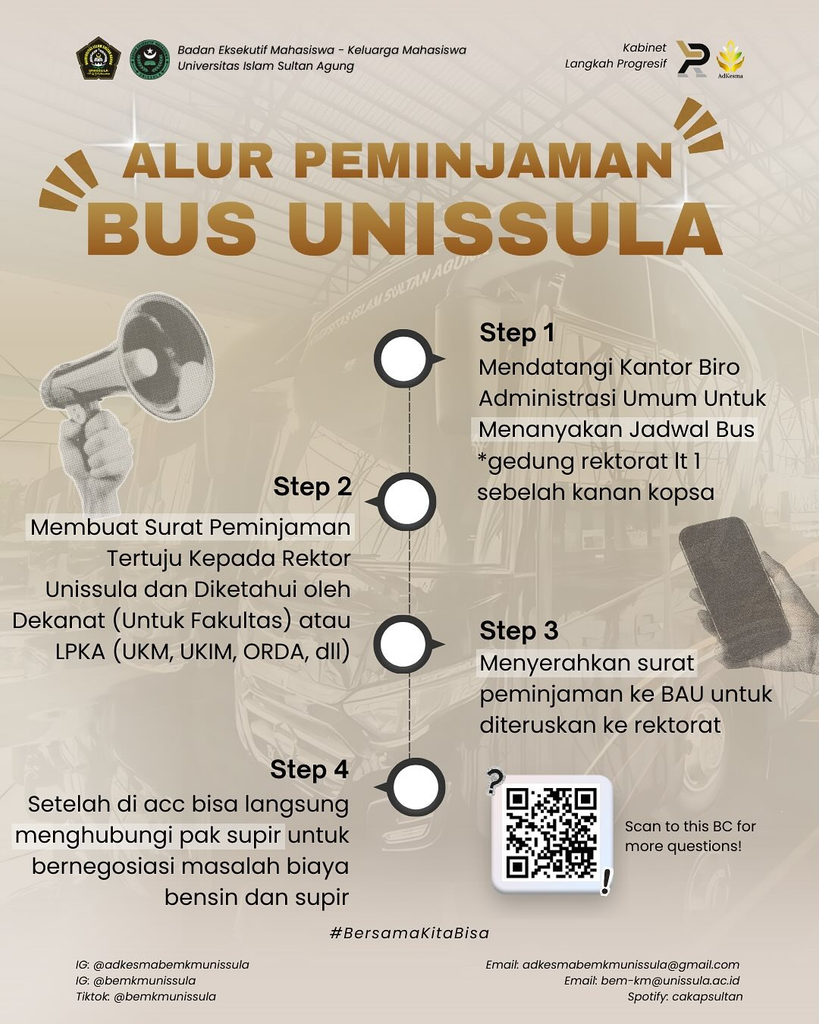
For longer-distance university activities, students and student organisations may request the use of UNISSULA buses through a formal borrowing procedure. The process requires checking bus availability with the General Administration Bureau, submitting a borrowing request for institutional approval, and coordinating with the driver after approval.
Legal Services (Free Legal Aid and Consultation)
Universitas Islam Sultan Agung (UNISSULA) provides institutional legal consultation and assistance through the Biro Konsultasi Hukum dan Bantuan Hukum Masyarakat (BKBHM) within the Faculty of Law.
BKBHM serves as an institutional legal-support unit that provides consultation, assistance, and legal services to members of the university community and the wider public.
The Faculty of Law Academic Guidelines establish BKBHM as a formal unit within the Faculty of Law. The Head of BKBHM is responsible for developing and implementing programmes related to legal consultation and legal assistance, managing legal-service mechanisms, and strengthening BKBHM as an institutional legal-support service.
Through this mechanism, members of the university community, including students, can access legal consultation and assistance when they face legal issues requiring professional support.
Scope of Legal Assistance
BKBHM provides legal-support services that may include:
- legal consultation;
- review of legal documents;
- preparation of legal responses and related documents;
- legal advocacy;
- assistance in resolving legal disputes; and
- support or representation in formal legal proceedings, where applicable.
Publicly documented activities demonstrate that BKBHM is actively involved in providing legal assistance and advocacy through its institutional role within the Faculty of Law.
Support for Students Facing Legal Difficulties
Access to university-based legal support can be particularly important for students when legal problems create financial, psychological, social, or academic pressures that may interfere with their studies.
Students from low-income families may have limited financial capacity to independently obtain professional legal consultation or representation.
The availability of BKBHM therefore provides an additional institutional support mechanism that can help students address legal difficulties without relying solely on privately funded legal services.
This support may contribute to reducing non-academic barriers that could otherwise affect students’ continued enrolment, academic progression, or ability to complete their university education.
Complementary Student Support
Legal assistance through BKBHM complements UNISSULA’s broader framework of financial and non-financial support for students from low-income and economically disadvantaged backgrounds.
This broader support framework includes:
- KIP Kuliah education and living-cost assistance;
- the Khaira Ummah Scholarship;
- LAZIS Sultan Agung support;
- meal and welfare assistance;
- student accommodation facilities;
- transportation support;
- academic guidance and counselling; and
- institutional legal consultation and assistance through BKBHM.
Together, these mechanisms support students in addressing both financial and non-financial challenges that could otherwise contribute to interruption of study or difficulty in completing their university education.
Institutional Role in Supporting Study Continuity
UNISSULA recognises that successful completion of university study may be affected by a range of circumstances beyond academic performance and tuition costs.
Legal difficulties can become significant barriers, particularly for students who do not have sufficient financial resources to obtain professional assistance independently.
By providing access to institutional legal consultation and assistance through BKBHM, UNISSULA strengthens its wider student-support framework and helps ensure that students facing legal difficulties have access to appropriate support mechanisms while continuing their studies.
Academic and Student-Support Mechanisms
Financial and practical assistance is complemented by academic and student-support mechanisms designed to help students maintain academic progression.
Through academic advising, study planning, counselling, and other student-support services, students can receive assistance when academic, personal, or financial difficulties affect their continued enrolment or academic progress.
For students from low-income families, these mechanisms complement financial assistance by addressing circumstances that could otherwise lead to delayed progression, interruption of study, or withdrawal from university.
Supporting Retention and Successful Completion
UNISSULA recognises that supporting students from low-income families requires more than simply enabling them to enter university.
Students must also be able to meet essential educational and living costs throughout their studies and receive appropriate institutional support when difficulties arise.
Through KIP Kuliah education and living-cost assistance, LAZIS Sultan Agung support, the Khaira Ummah Scholarship, institutional fee relief, university-managed accommodation, campus transportation, academic guidance, and student-support mechanisms, UNISSULA provides a comprehensive framework to help students from low-income families remain enrolled, progress academically, and successfully complete their university education.
This approach addresses both direct educational costs and broader barriers associated with living expenses, accommodation, transportation, and study continuity.
Evidence of Implementation
UNISSULA’s support for students from low-income families is demonstrated through the following institutional evidence:
- KIP Kuliah living-cost assistance for students with limited economic capacity.
- KIP Kuliah education-cost assistance covering eligible educational expenses.
- Rector Decree No. 7500/F/SA/VIII/2025, formally establishing KIP Kuliah recipients among new students admitted in 2025.
- Rector Decree No. 10263/F/SA/X/2025, establishing additional KIP Kuliah recipients under the USMAS scheme and providing education-cost and living-cost assistance.
- LAZIS Sultan Agung and Khaira Ummah Scholarship support for financially disadvantaged students, including substantial tuition and institutional-fee relief.
- Rector Decree No. 9700/D.3/SA/IX/2024, providing scholarship and fee-relief mechanisms for the 2025/2026 academic year.
- Free meal provision for students, providing food support without charge and reducing daily living expenses.
- Pesantren Mahasiswa Sultan Agung (Pesanmasa), providing university-managed student accommodation and residential facilities.
- UNISSULA campus transportation facilities, available through an institutional procedure for approved student activities.
- Legal consultation and assistance through BKBHM, Faculty of Law UNISSULA, providing institutional access to legal consultation, assistance, advocacy, and related legal-support services.
- Institutional academic advising, counselling, student-support, and progression-monitoring mechanisms supporting continued enrolment and successful completion.
1.3.4
Bottom financial quintile student support
1.3.4 Bottom Financial Quintile Student Support
Universitas Islam Sultan Agung (UNISSULA) provides targeted programmes and initiatives to support students from the bottom 20% of household income groups, or more tightly defined poverty-based categories, in successfully completing their university studies.
These initiatives combine financial assistance, scholarship-recipient communities, academic monitoring, counselling, peer support, mentoring, and student-development mechanisms designed to reduce the risk that poverty-related difficulties lead to delayed academic progression, interruption of study, or withdrawal from university.
Target Population
UNISSULA’s bottom-financial-quintile student-support initiatives focus on students whose socioeconomic circumstances place them within the lowest-income or poverty-affected groups, including:
- students within the bottom 20% of household income groups;
- students falling within more tightly defined poverty-based categories;
- KIP Kuliah recipients who meet economic eligibility requirements;
- students identified through nationally recognised poverty and social-protection criteria; and
- students with documented serious financial disadvantage.
This targeted approach helps ensure that support is directed toward students whose ability to continue and complete higher education may be affected by financial hardship or poverty-related barriers.
FORBISA UNISSULA – Peer and Scholarship Recipient Support
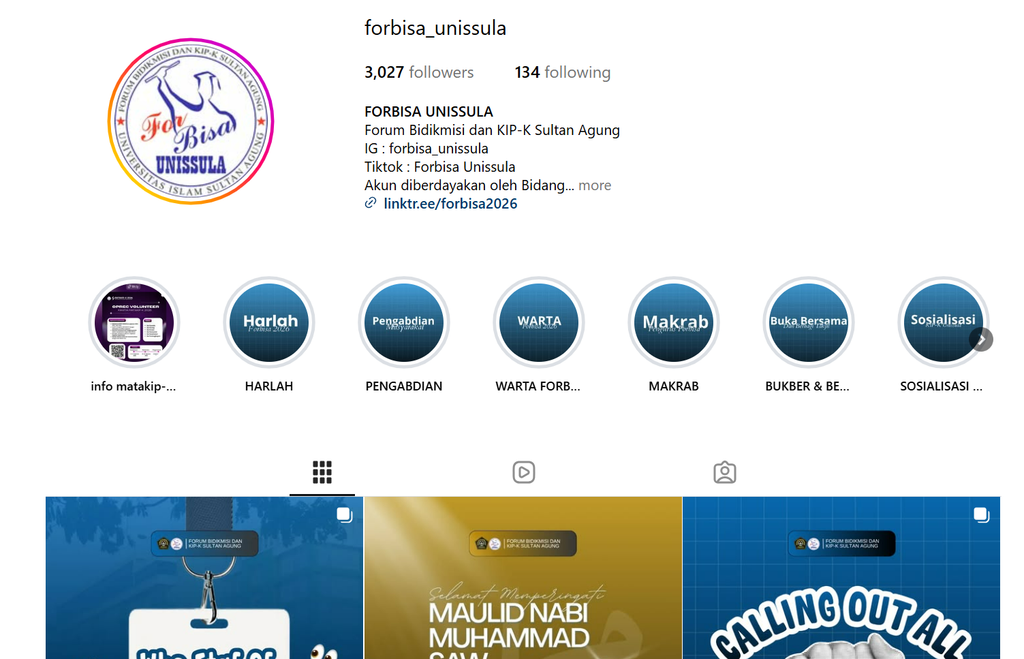
One of the key initiatives supporting economically disadvantaged students is FORBISA UNISSULA, a student community that brings together scholarship recipients, including students supported through KIP Kuliah and related financial-assistance schemes.
FORBISA provides a structured environment for:
- scholarship information sharing;
- peer support;
- motivation and encouragement;
- communication among scholarship recipients;
- mutual assistance;
- social inclusion; and
- student engagement.
Through FORBISA, students from financially disadvantaged backgrounds can build peer-support networks, exchange information about scholarship requirements and university activities, and receive encouragement throughout their studies.
This support is particularly important for students from the bottom financial quintile because financial hardship may be accompanied by academic, social, and psychological pressures that can affect study continuity and academic progression.
FORBISA therefore serves as a complementary support mechanism alongside formal financial assistance by strengthening students’ sense of community, access to information, and engagement with university life.
Academic Monitoring and Counselling
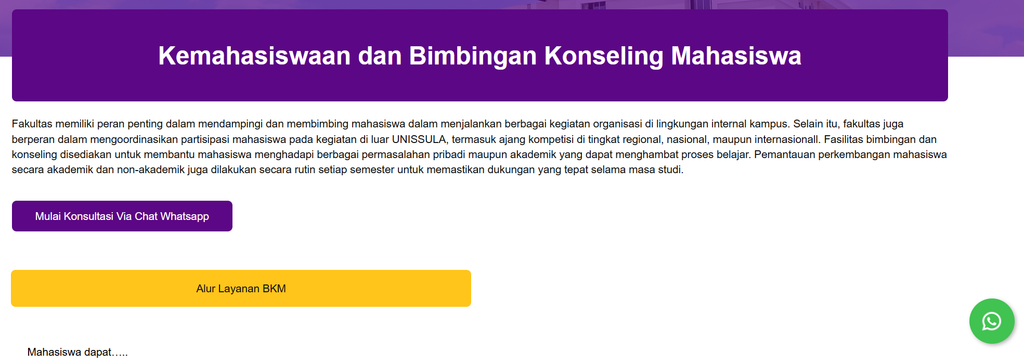
UNISSULA complements financial and peer support with structured academic guidance and counselling mechanisms.
Students have access to academic and personal counselling through available institutional consultation channels, including direct consultation and accessible communication services.
Academic and non-academic development is also monitored periodically, including through semester-based academic monitoring. This enables faculties, study programmes, and academic advisors to identify students experiencing difficulties and provide appropriate guidance before those difficulties significantly affect academic progression.
For students from the bottom 20% of household income groups or more tightly defined poverty-based categories, these mechanisms provide an additional safeguard against interruption of study
Financial Support for Completion
Students from economically disadvantaged backgrounds are also supported through a range of financial-assistance mechanisms, including:
- KIP Kuliah tuition assistance;
- KIP Kuliah living-cost assistance;
- LAZIS Sultan Agung support;
- Khaira Ummah Scholarship;
- institutional fee relief; and
- other poverty-targeted financial-support mechanisms.
In 2025, UNISSULA formally continued financial assistance for 1,074 KIP Kuliah beneficiaries from the 2022, 2023, and 2024 student cohorts, as established under Rector Decree No. 6683/F/SA/VIII/2025, dated 14 August 2025. The decree confirms the continuation of tuition and living-cost assistance during the odd semester of the 2025/2026 academic year, supporting student retention and academic progression.
These forms of assistance reduce the financial pressures that could otherwise prevent students from maintaining active enrolment, meeting essential educational and living costs, and successfully completing their degrees.
Financial support is therefore integrated with broader academic and student-support initiatives rather than being limited to initial access to university.
Mentoring and Student-Development Support
UNISSULA also provides mentoring, referral, follow-up, and student-development mechanisms to support students who experience academic, personal, social, or financial difficulties.
These mechanisms are intended to help students access appropriate assistance and remain engaged with their academic responsibilities.
For students from low-income backgrounds, mentoring and follow-up support can complement financial assistance by helping them address non-financial barriers that may affect academic performance or study continuity.
Supporting Successful Completion
UNISSULA recognises that students affected by poverty require continued support throughout their academic journey, not only at the point of admission.
By combining financial aid, scholarship-recipient communities, peer support, counselling, academic monitoring, mentoring, and student-development mechanisms, UNISSULA provides targeted support for students from the bottom 20% of household income groups or more tightly defined poverty-based categories.
These initiatives are designed to help students:
- remain actively enrolled;
- maintain satisfactory academic progress;
- access appropriate academic and personal support;
- overcome poverty-related financial and non-financial barriers; and
- successfully complete their university education.
Through this integrated approach, UNISSULA strengthens the continuity of support from admission through to successful graduation.
Evidence of Implementation
UNISSULA’s bottom-financial-quintile student-support framework is demonstrated through the following institutional mechanisms:
- FORBISA UNISSULA, providing peer support, scholarship information, motivation, communication, and mutual assistance for scholarship recipients.
- KIP Kuliah financial and living-cost assistance for economically disadvantaged students.
- LAZIS Sultan Agung and Khaira Ummah Scholarship support for students experiencing financial disadvantage.
- Academic advising and semester-based academic monitoring to support continued academic progression.
- Guidance and counselling services, including accessible consultation channels for academic and personal support.
- Student mentoring, referral, follow-up, and student-development mechanisms designed to address academic and non-academic difficulties.
- Institutional support mechanisms designed to help students from the bottom 20% of household income groups, or more tightly defined poverty-based categories, remain enrolled, progress academically, and successfully complete their studies
1.3.5
1.3.5 Low or lower-middle income countries student support
1.3.5 Support for Poor Students from Low- and Lower-Middle-Income Countries
Universitas Islam Sultan Agung (UNISSULA) provides scholarship and international-student support mechanisms that expand access to higher education for students from developing countries, including countries classified by the World Bank as low-income and lower-middle-income economies.
UNISSULA recognises that international students from economically disadvantaged backgrounds may face significant financial barriers when pursuing higher education abroad. These barriers may include tuition fees, institutional charges, living costs, travel expenses, healthcare costs, and other expenses associated with studying in another country.
To reduce these barriers, UNISSULA provides and participates in scholarship schemes that substantially reduce the cost of higher education for eligible international students. Financial assistance is complemented by academic, language, administrative, social, and cultural-support mechanisms designed to help international students successfully begin, continue, and complete their studies.
UNISSULA International Moslem Scholarship (UIMS)
A principal institutional mechanism for supporting international students is the UNISSULA International Moslem Scholarship (UIMS).
UIMS is an institutional scholarship programme available to international Muslim students pursuing Bachelor’s, Master’s, and Doctoral programmes at UNISSULA.
The programme continued to be offered in 2025, demonstrating UNISSULA’s continuing institutional commitment to expanding international access to higher education.
Under the UIMS scheme, UNISSULA provides substantial tuition-related financial assistance. Covered educational costs may include:
- Institutional Development Fee (DPI);
- fixed semester tuition fees;
- student activity fees;
- IT practicum fees;
- registration fees;
- orientation fees;
- university healthcare fees;
- English tutorial fees;
- final-project fees; and
- community-service fees.
These provisions substantially reduce the direct educational costs faced by eligible international scholarship recipients.
For the purposes of SDG 1.3.5, UNISSULA identifies scholarship recipients originating from countries classified by the World Bank as low-income or lower-middle-income economies and, where applicable, verifies whether recipients also meet relevant financial-need or poverty-based criteria.
2025 Beneficiaries from Low- and Lower-Middle-Income Countries
For THE reporting purposes, UNISSULA classifies the country of origin of UIMS recipients according to the applicable World Bank income classification.
The following table presents verified 2025 data on international students from countries classified by the World Bank as low-income or lower-middle-income economies who are supported through UNISSULA scholarship or financial-assistance schemes.
| Country of Origin | World Bank Income Group | Number of Students | Financial-Need / Poverty Eligibility |
|---|---|---|---|
| Afghanistan | Low income | 1 | Scholarship recipient; financial-need eligibility verified |
| Gambia | Low income | 9 | Scholarship recipient; financial-need eligibility verified |
| Niger | Low income | 1 | Scholarship recipient; financial-need eligibility verified |
| Somalia | Low income | 2 | Scholarship recipient; financial-need eligibility verified |
| Yemen | Low income | 2 | Scholarship recipient; financial-need eligibility verified |
| Egypt | Lower-middle income | 6 | Scholarship recipient; financial-need eligibility verified |
| Morocco | Lower-middle income | 7 | Scholarship recipient; financial-need eligibility verified |
| Pakistan | Lower-middle income | 6 | Scholarship recipient; financial-need eligibility verified |
| Palestine | Lower-middle income | 6 | Scholarship recipient; financial-need eligibility verified |
| Timor-Leste | Lower-middle income | 47 | Scholarship recipient; financial-need eligibility verified |
| Vietnam | Lower-middle income | 1 | Scholarship recipient; financial-need eligibility verified |
| Jordan | Lower-middle income | 1 | Scholarship recipient; financial-need eligibility verified |
| Zambia | Lower-middle income | 1 | Scholarship recipient; financial-need eligibility verified |
The inclusion of verified financial-need or poverty-based criteria is important because SDG 1.3.5 specifically concerns poor students from low- or lower-middle-income countries, rather than all international students originating from those countries.
Developing Countries Partnership Scholarship (KNB)
UNISSULA has also expanded its support for international students through participation in the Developing Countries Partnership Scholarship (Beasiswa Kemitraan Negara Berkembang – KNB).
UNISSULA was officially appointed as a participating institution in the KNB programme in 2026. The programme is funded by the Government of Indonesia and provides comprehensive financial assistance for international students from developing countries pursuing Bachelor’s, Master’s, and Doctoral degrees.
KNB financial support includes major educational and living expenses such as:
- international airfare;
- settlement allowance;
- tuition fees;
- language and academic programme fees;
- health insurance;
- living allowance; and
- book and research allowances.
In the 2026/2027 academic year, UNISSULA welcomed its first three KNB recipients from Kenya, Nigeria, and Vietnam.
Because the SDG 1.3.5 reporting period under consideration is 2025, UNISSULA’s participation in the KNB programme should be presented as evidence of the continuation and expansion of its international student-support framework from 2026 onward, rather than as primary evidence for the 2025 reporting year.
Academic, Language, and Administrative Support
Financial assistance for international students is complemented by a broader institutional support system.
These services are designed to reduce administrative, linguistic, academic, and social barriers that may affect international students during their period of study.
Office of International Affairs Support
UNISSULA’s Office of International Affairs (OIA) assists international students with a range of administrative and immigration-related matters, including:
- admission procedures;
- Letters of Offer and Acceptance;
- study permits;
- student visas; and
- other immigration requirements.
These services reduce administrative barriers that could otherwise interfere with international students’ ability to begin and continue their studies.
Indonesian Language and Academic Support
Through the Center for International Language Development (CILAD), UNISSULA provides Indonesian-language support through the Bahasa Indonesia bagi Penutur Asing (BIPA) programme.
Language and academic support may include:
- intensive Indonesian-language classes;
- Academic BIPA;
- academic-language development; and
- other courses designed to strengthen international students’ communication skills for academic and everyday activities.
These programmes help international students adapt to the academic environment and communicate more effectively during their studies in Indonesia.
Student Buddy Programme
International students are also supported through the Student Buddy Programme.
Student buddies may assist international students with:
- campus orientation;
- university administration;
- academic systems;
- local transportation;
- accommodation;
- daily-life adaptation;
- language exchange; and
- social integration.
The programme provides peer-based assistance that can help international students adapt more effectively to university and community life.
International Student Helpdesk and Cultural Integration
UNISSULA also provides consultation and cultural-integration support through CILAD and related international-student services.
International students can receive assistance in addressing language barriers, academic adaptation, cultural adjustment, and practical issues associated with living and studying in Indonesia.
Cultural immersion activities further support international students in understanding Semarang, Indonesian traditions, public services, local food, and university life.
These activities contribute to students’ social integration and help create a supportive environment for continued study.
Accommodation Support
UNISSULA provides student dormitory and boarding-house facilities as part of its campus and student-support infrastructure.
These facilities provide accommodation options for students who require university-associated housing and form part of the wider support environment available during their studies.
Unless specific institutional evidence confirms that accommodation is provided free of charge or specifically subsidised for poor international students from low- or lower-middle-income countries, this support should be described as accommodation support rather than as a universal free-housing programme.
Supporting Successful Completion
UNISSULA’s approach extends beyond providing admission opportunities for international students.
Through scholarship assistance, tuition-cost reductions, language training, immigration assistance, peer mentoring, cultural integration, academic support, accommodation assistance, and other student services, the university provides an environment designed to help international scholarship recipients remain enrolled and successfully complete their studies.
For students from low- and lower-middle-income countries who also meet verified financial-need or poverty-based criteria, these mechanisms can substantially reduce both financial and non-financial barriers to higher education.
Through this integrated approach, UNISSULA supports international students not only in accessing higher education, but also in adapting to university life, maintaining academic progression, and progressing toward successful graduation.
Evidence of Implementation
UNISSULA’s support framework for poor students from low- and lower-middle-income countries is demonstrated through the following mechanisms:
- UNISSULA International Moslem Scholarship (UIMS), continuously offered in 2025.
- Substantial UIMS tuition and institutional-fee support for eligible international students.
- Verified 2025 international students from World Bank low- or lower-middle-income countries supported through UNISSULA scholarship or financial-assistance schemes.
- Verified financial-need or poverty-based eligibility for relevant scholarship recipients.
- Participation in the Developing Countries Partnership Scholarship (KNB), expanding comprehensive international scholarship support from 2026 onward.
- Office of International Affairs administrative and immigration support.
- BIPA language and academic support through CILAD.
- Student Buddy Programme.
- International Student Helpdesk and cultural-integration support.
- Accommodation and other international-student support facilities supporting study continuity and student welfare.
1.4.1
Local start-up assistance
1.4.1 Local Start-Up Assistance
Universitas Islam Sultan Agung (UNISSULA) provides free education, mentoring, technical assistance, digitalisation support, business-development resources, and access to university expertise to help local communities establish and develop financially and socially sustainable businesses.
UNISSULA’s assistance is directed not only toward established Micro, Small, and Medium Enterprises (MSMEs), but also toward community members who are developing new income-generating activities and small businesses.
Through community-service programmes, entrepreneurship training, business mentoring, digital marketing, technology transfer, financial-management support, product development, and business legalisation assistance, the university helps local entrepreneurs strengthen their capacity to establish, operate, and sustain viable enterprises.
These entrepreneurship and MSME assistance activities are provided free of charge to participating beneficiaries. Programme costs are supported by UNISSULA and/or institutional community-service funding, enabling local entrepreneurs and community members to access university expertise without additional financial barriers.
Free Community Business Assistance
UNISSULA recognises entrepreneurship and local business development as important mechanisms for economic empowerment and poverty reduction.
Through its community-service activities, the university provides participating local communities and MSMEs with free access to relevant education and practical resources, including:
- entrepreneurship and technical training;
- business mentoring;
- digital marketing assistance;
- e-commerce support;
- technology transfer;
- business and financial-management training;
- product-development assistance;
- business legalisation support;
- access to university expertise; and
- other practical business-development resources.
This approach is designed to help community members increase their capacity to create sustainable sources of income while strengthening the competitiveness and resilience of local businesses.
2025 Community Business Development in Gebangsari, Semarang
One of UNISSULA’s 2025 local entrepreneurship-support initiatives was implemented for residents of Gebangsari, Genuk, Semarang.
The programme was designed to address economic difficulties and limited employment opportunities by helping community members develop practical and marketable skills that could be transformed into income-generating service businesses.
UNISSULA lecturers provided practical training in:
- air-conditioning maintenance;
- air-conditioning repair;
- e-commerce; and
- digital marketing.
Participants developed practical AC maintenance and repair skills while also gaining access to digital e-commerce tools that could be used to promote their services.
The programme therefore combined technical capability with entrepreneurship-oriented digital skills.
The training and business-development assistance were provided free of charge to participating community members through UNISSULA’s community-service activities.
The initiative supported the creation and development of local businesses through practical education, entrepreneurship skills, digital-marketing resources, e-commerce capability, and business-development knowledge.
Through this programme, UNISSULA helped local community members strengthen their ability to develop independent service businesses and sustainable sources of income.
2025 Support for Madu Klanceng Omah RaFi MSME in Jepara
Another significant initiative in 2025 was UNISSULA’s collaboration with Universitas Islam Nahdlatul Ulama (UNISNU) Jepara to support Madu Klanceng Omah RaFi, a local MSME in Jepara.
The programme was implemented through a community-service grant and involved UNISSULA academics and students working directly with the MSME to address production, product-development, and marketing challenges.
Assistance included:
- transfer of dehumidification technology to improve honey quality;
- provision of additional productive stingless-bee colonies;
- utilisation of beeswax waste to produce antibacterial soap with commercial value;
- development of innovative product packaging;
- application of Augmented Reality technology to product packaging; and
- optimisation of internet marketing.
The technology transfer, mentoring, product-development assistance, and marketing support were provided without charge to the beneficiary MSME as part of the funded community-service programme.
These interventions were designed to improve product quality, production capacity, product diversification, market reach, competitiveness, and sales.
The programme also demonstrates the connection between financial, social, and environmental sustainability. Underutilised beeswax waste was transformed into a commercially valuable product, while a locally owned enterprise received technology and university expertise intended to improve its long-term business viability.
Entrepreneurship Education and Mentoring
UNISSULA supports local business development through a broader entrepreneurship ecosystem that includes training, mentoring, workshops, business-development assistance, and access to university expertise.
The university’s Business Incubator and Career Center work with study programmes and external partners to provide entrepreneurship learning and assistance, including:
- entrepreneurship workshops;
- business surveys;
- business mentoring;
- business proposal preparation;
- practical business development;
- product promotion; and
- business legalisation support.
These resources provide an institutional foundation for entrepreneurship assistance and enable UNISSULA to transfer business-development knowledge beyond the classroom to entrepreneurs and local communities.
Digital and Financial Management Support for MSMEs
UNISSULA also provides business-management training aimed at strengthening the operational and financial sustainability of local MSMEs.
Community assistance has included:
- digital transaction recording;
- business transaction management;
- financial reporting;
- monitoring and evaluation;
- digital entrepreneurship;
- digital marketing; and
- business-performance evaluation.
For example, UNISSULA lecturers assisted MSMEs associated with the Rahmat Semesta Foundation in Rowosari, Kendal.
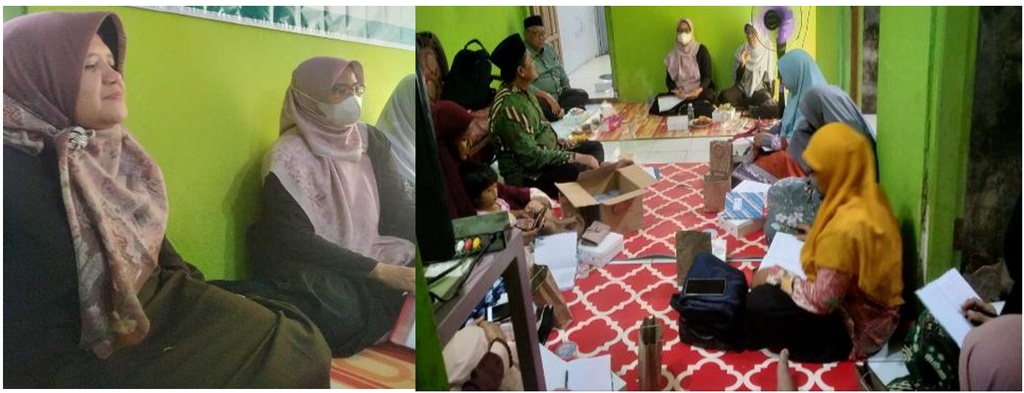
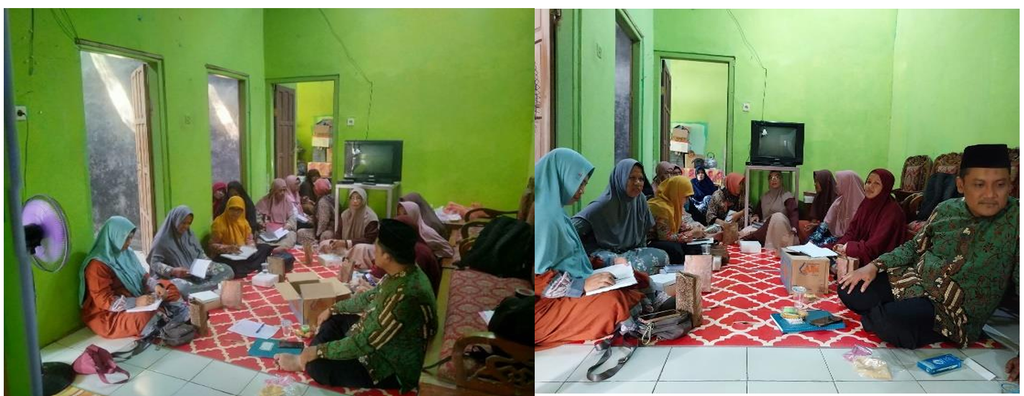
Participants were trained to move from manual business processes toward digital transaction management and more systematic financial reporting.
This type of assistance helps small-business owners understand their transactions, assess profitability, and make better business decisions.
These activities are provided as part of UNISSULA’s community-service commitment and are delivered without charge to participating beneficiaries.
Digitalpreneurship Support for Local MSMEs
UNISSULA academics have also implemented digitalpreneurship programmes for MSMEs in Krobokan Village, Semarang.
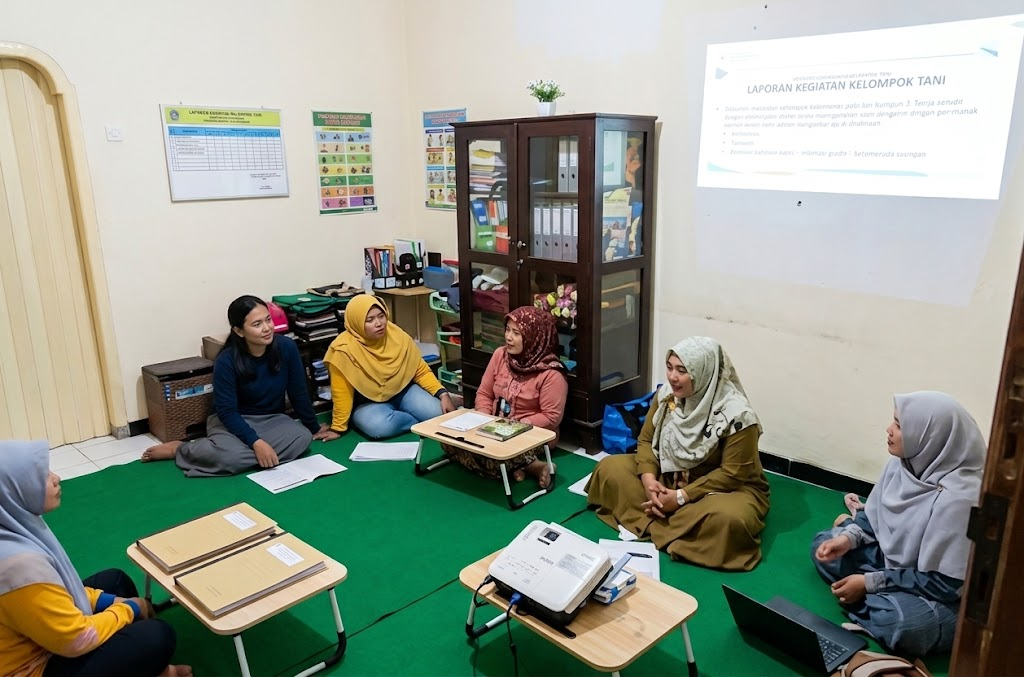
These activities were designed to strengthen local entrepreneurs’ ability to use digital tools, respond to changing consumer behaviour, and expand market access without requiring large investments in physical infrastructure.
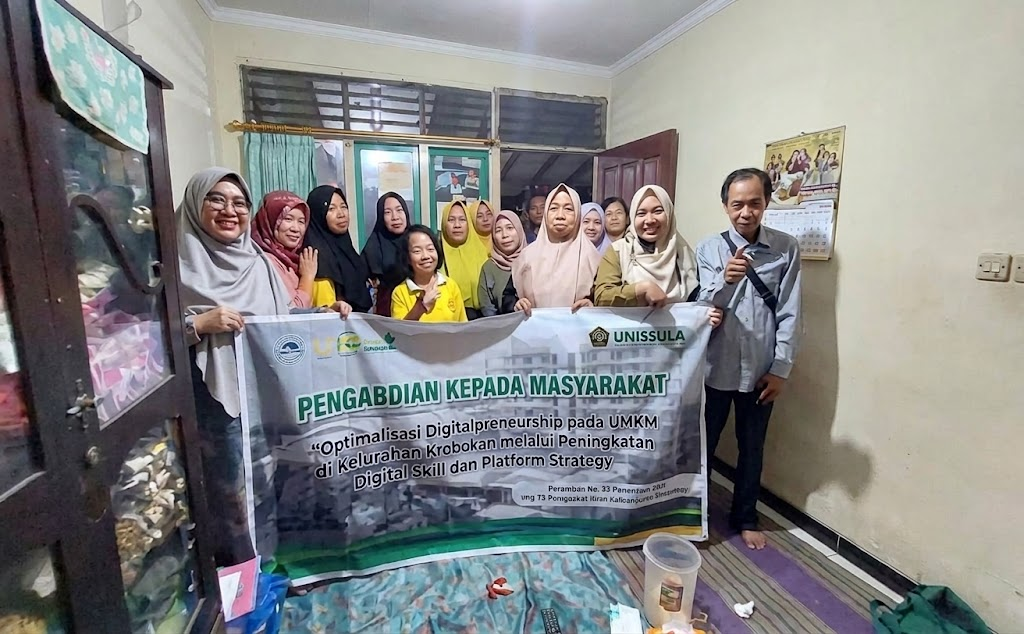
Such programmes strengthen the competitiveness of micro and small businesses while increasing opportunities for sustainable local income generation.
Digitalpreneurship assistance complements UNISSULA’s broader approach by combining business education with practical technology resources that local entrepreneurs can apply directly to their enterprises.
Continuing MSME Mentoring in Central Java
UNISSULA’s assistance to local entrepreneurs forms part of a continuing institutional commitment rather than an isolated activity.
In an earlier MSME development programme, UNISSULA was selected to mentor two MSME partners in Central Java:
- Wedang Rempah Sri Katon, Semarang; and
- Kainratu, Jepara.
Assistance included mentoring, training, workshops, equipment support, and other business-development resources intended to improve business performance and strengthen export orientation.
This earlier programme demonstrates continuity in UNISSULA’s approach to strengthening community economic capacity through education, mentoring, and practical resources.
Legal and Business-Sustainability Support
UNISSULA’s entrepreneurship-support framework also addresses the legal dimensions of business sustainability.
The Faculty of Law has implemented community-service activities providing legal-business mentoring for MSMEs, aimed at improving legal awareness and empowering community participants.
Business legalisation and legal awareness can contribute to long-term sustainability by helping entrepreneurs understand regulatory requirements, business obligations, rights, and appropriate legal structures.
This legal assistance complements the university’s technical, financial-management, marketing, and entrepreneurship-support programmes.
Financial Sustainability
UNISSULA’s local start-up and MSME assistance is designed to strengthen the financial sustainability of participating businesses.
Support contributes to improvements in:
- business and technical skills;
- production quality;
- transaction management;
- financial management;
- digital marketing;
- product diversification;
- market access;
- competitiveness; and
- business profitability.
By strengthening these capabilities, UNISSULA helps entrepreneurs move beyond short-term business activity toward enterprises that are more capable of surviving, growing, and providing sustainable income.
Social Sustainability
UNISSULA also recognises that sustainable business development should provide benefits beyond individual business owners.
Its community programmes support social sustainability through:
- development of local skills;
- economic self-reliance;
- community empowerment;
- creation of income-generating opportunities;
- employment potential;
- stronger local economic resilience; and
- environmentally responsible product innovation.
The 2025 Gebangsari initiative equipped community members with technical and digital-business skills that could be used to establish independent service businesses.
The Madu Klanceng programme combined commercial development with waste utilisation and product innovation, demonstrating how business development can simultaneously contribute to economic, social, and environmental sustainability.
Supporting Poverty Reduction through Entrepreneurship
UNISSULA recognises sustainable entrepreneurship as an important instrument for poverty reduction.
By providing free education, mentoring, technology transfer, business-development resources, digitalisation assistance, and access to university expertise, UNISSULA helps members of local communities strengthen their capacity to establish and sustain income-generating businesses.
These initiatives contribute directly to SDG 1: No Poverty by supporting economic independence and sustainable livelihoods.
They also contribute to:
- SDG 8: Decent Work and Economic Growth, through entrepreneurship and employment opportunities;
- SDG 9: Industry, Innovation and Infrastructure, through technology transfer and digital business innovation; and
- SDG 17: Partnerships for the Goals, through collaboration among universities, government programmes, businesses, and local communities.
Institutional Commitment to Free Local Business Assistance
UNISSULA provides its community-service entrepreneurship and MSME assistance free of charge to participating beneficiaries.
The costs of training, mentoring, university expertise, technical assistance, and business-development activities are covered through UNISSULA and/or institutional community-service funding.
This enables entrepreneurs and community members, including those with limited financial resources, to access university knowledge, skills, technology, and business-development resources without creating additional economic barriers.
Through these programmes, UNISSULA provides local communities with free education and resources that support the establishment and development of financially and socially sustainable businesses.
Evidence of Implementation
UNISSULA’s local start-up and business assistance is demonstrated through the following institutional activities:
- Free 2025 Electrical Engineering and E-Commerce Training for the Gebangsari Community, Semarang, providing technical skills, e-commerce training, and digital-marketing resources to support the creation and development of independent AC maintenance and repair businesses.
- Free 2025 Madu Klanceng Omah RaFi MSME Development Programme in Jepara, providing technology transfer, production improvement, product diversification, packaging innovation, mentoring, and internet-marketing assistance.
- UNISSULA Business Incubator and entrepreneurship-support system, providing training, mentoring, business proposal development, product promotion, and business legalisation support.
- Free digital business-management assistance for local MSMEs, including transaction recording, financial reporting, monitoring, evaluation, and business-performance improvement.
- Free digitalpreneurship support for MSMEs in Krobokan Village, Semarang, strengthening digital-market capabilities and business sustainability.
- Continuing MSME mentoring in Central Java, including training, workshops, equipment support, and business-development assistance.
- Legal-business mentoring for MSMEs, strengthening legal awareness and supporting the sustainability and formalisation of local businesses.
1.4.2
Local start-up financial assistance
1.4.2 Local Start-Up Financial Assistance
Universitas Islam Sultan Agung (UNISSULA) provides financial and in-kind productive-capital assistance to local communities and Micro, Small, and Medium Enterprises (MSMEs) to support the establishment, development, and long-term sustainability of local businesses.
UNISSULA recognises that one of the principal barriers faced by small businesses and emerging community enterprises is limited access to productive capital. For this reason, the university’s community-engagement programmes do not rely solely on education, training, or mentoring.
Selected programmes also provide funded productive equipment, technology, infrastructure, and other business assets that reduce the capital expenditure required by local entrepreneurs.
In 2025, UNISSULA implemented community business-support programmes in which local MSMEs received productive assets and technology through funded community-service initiatives. These forms of assistance provide direct economic value to beneficiaries and strengthen their ability to increase production, reduce operating costs, expand markets, and generate sustainable income.
2025 Productive-Capital Assistance for Kopi Vinzoei / Kopi Boyo in Jepara
A major example of UNISSULA’s local business financial assistance in 2025 was the community-service programme supporting Kopi Vinzoei / Kopi Boyo, a local coffee MSME in Sumanding Village, Kembang District, Jepara.
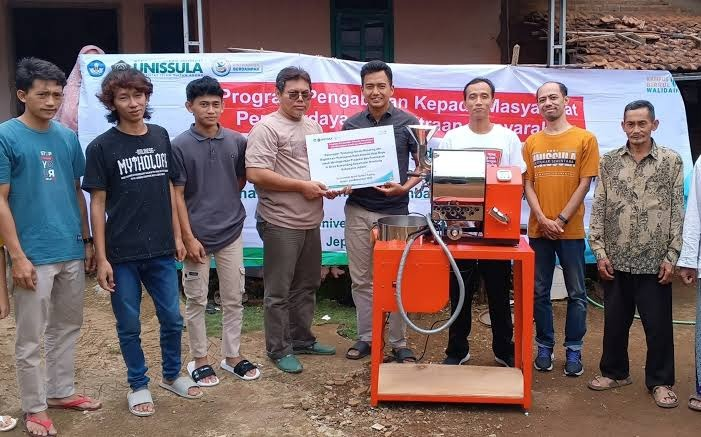
On 30 August 2025, the UNISSULA Community Service Team formally provided the MSME with a coffee roasting machine with a capacity of approximately one kilogram per batch, representing productive-capital assistance valued at approximately IDR 17,000,000.
Before receiving its own roasting machine, the business depended on third-party roasting services, creating additional operating costs and slowing the production process.
The productive asset provided through the UNISSULA programme therefore reduced a significant financial and operational constraint faced by the local business.
The programme formed part of a community-engagement initiative conducted from July to December 2025 and supported through funding from the Indonesian Ministry of Higher Education, Science and Technology.
UNISSULA implemented the programme as an institutional community-service activity aimed at increasing the production and marketing capacity of the local coffee enterprise.
Economic Value of the Assistance
The provision of the coffee roasting machine, valued at approximately IDR 17,000,000, represents direct in-kind productive-capital assistance. The beneficiary MSME received this economically valuable productive asset without having to independently finance the equipment.
Following the introduction of the machine, the MSME reported several improvements, including:
- lower roasting and production costs;
- faster production processes;
- greater control over product quality;
- increased monthly production from approximately 50 kg to 80–100 kg; and
- an increase in turnover of approximately 30% following the broader intervention.
The productive asset was complemented by:
- technical training in machine operation and maintenance;
- internet marketing assistance;
- redesign of product packaging;
- business-management support; and
- financial-recording assistance.
This combination of productive-capital assistance and business-development support helps the MSME become more financially independent and better positioned for long-term growth.
Productive Assets as Financial Assistance
UNISSULA’s approach to local start-up financial assistance includes not only direct financial support, but also productive assets and funded resources with measurable economic value.
The IDR 17,000,000 productive-capital contribution reduced the initial investment that would otherwise have been borne by the local MSME. By absorbing this capital cost through the funded community-service programme, UNISSULA enabled the enterprise to redirect its own resources toward production, marketing, working capital, and further business development.
For micro and small businesses, the cost of machinery, production equipment, agricultural infrastructure, or other productive technology can represent a major barrier to business establishment and expansion.
By supplying such assets through funded community-service programmes, UNISSULA reduces the amount of capital that local entrepreneurs must obtain independently.
In the 2025 Kopi Boyo programme, this principle was demonstrated through the provision of approximately IDR 17,000,000 in productive-equipment assistance.
This form of in-kind capital support enables beneficiaries to:
- avoid or reduce major initial capital expenditure;
- lower recurring production costs;
- increase production capacity;
- improve product consistency and quality;
- expand market opportunities; and
- reinvest business income into further development.
2025 Technology and Productive-Asset Support for Local Enterprises
UNISSULA’s 2025 community-service portfolio demonstrates a broader institutional approach to supporting local enterprises through productive technology and resources.
The Faculty of Industrial Technology recorded several 2025 programmes involving technology transfer and business-capacity development, including:
- technology for honey processing and product diversification in Jepara;
- coffee roasting machinery and digital marketing for Kopi Boyo in Sumanding Village;
- smart-farming and green-energy technology for hydroponic agriculture;
- assistance in establishing biodiesel production from used cooking oil for a local fried-onion enterprise; and
- hygiene and sanitation assistance for local coffee MSMEs.
These programmes demonstrate that UNISSULA’s community-based business assistance includes tangible productive resources in addition to education, training, and mentoring.
Green-Economy Support for Local Farmers
UNISSULA has also supported local agricultural enterprises and community groups through the provision and development of productive infrastructure and appropriate technology.
A community-empowerment programme in Sumanding Village, Jepara, documented in 2025, applied green-economy principles to improve community welfare and strengthen productive activity.
The programme produced productive innovations including:
- a cultivator machine for horticultural farming;
- a greenhouse for hydroponic agriculture;
- branding development;
- packaging development;
- digital-sales support;
- institutional strengthening; and
- financial-management assistance.
The provision of such infrastructure and productive technology reduces the investment burden faced by local agricultural groups while strengthening their capacity to create sustainable economic activity.
Financial Sustainability of Supported Businesses
UNISSULA’s financial and productive-capital assistance is designed to improve long-term business sustainability rather than provide only temporary relief.
For the Kopi Boyo programme, productive equipment directly reduced dependence on external roasting services and increased production capacity. The accompanying marketing and management assistance further strengthened the commercial effectiveness of the investment.
Financial sustainability is supported through:
- lower production costs;
- increased production capacity;
- improved operational efficiency;
- increased sales potential;
- better financial management;
- expanded digital-market access;
- improved business competitiveness; and
- reduced dependency on external production services.
These outcomes help beneficiary enterprises become more capable of generating stable and sustainable income.
Social Sustainability and Local Economic Impact
UNISSULA’s local business financial assistance is also intended to generate wider social benefits.
Local MSMEs and community businesses can contribute to:
- employment creation;
- household income generation;
- utilisation of local resources;
- development of village-based economic activity;
- community economic resilience;
- entrepreneurship opportunities; and
- stronger local supply chains.
The Kopi Boyo programme, for example, is designed not only to strengthen an individual enterprise but also to contribute to the development of the local coffee economy and community welfare in Sumanding Village.
Financial Assistance Combined with Mentoring
UNISSULA combines productive-capital assistance with education and mentoring because financial support can be more effective when beneficiaries also have the knowledge and skills required to manage and develop the supported business.
Beneficiaries may therefore receive complementary support such as:
- business-management training;
- financial-recording assistance;
- digital marketing;
- technical equipment training;
- product and packaging development;
- production-process improvement; and
- continued monitoring and evaluation.
This integrated approach helps ensure that productive assets are used effectively and contribute to sustainable business development rather than providing only short-term benefits.
Institutional and Partnership-Based Funding
UNISSULA implements local business financial-assistance programmes through its institutional community-service framework and, where appropriate, through competitive government grants and external partnerships.
The 2025 Kopi Boyo programme was funded through a national community-service programme and implemented by UNISSULA academics for the benefit of a local MSME. Through this mechanism, approximately IDR 17,000,000 in productive-equipment value was converted into direct in-kind financial assistance for the beneficiary business.
This model allows UNISSULA to mobilise external funding and university expertise and convert them into direct productive assistance for local communities.
For beneficiaries, the key benefit is that they receive productive business resources without having to independently purchase the supported equipment or technology.
Continuing Institutional Commitment
UNISSULA has a continuing record of providing productive resources and financial-support mechanisms to local communities.
Earlier programmes include the development of agricultural infrastructure for farmers and collaboration with external partners to strengthen local MSMEs.
These initiatives demonstrate that UNISSULA’s 2025 productive-capital assistance forms part of a broader and continuing institutional commitment to local economic empowerment.
Historical activities provide evidence of continuity, while the university’s 2025 programmes remain the primary evidence for the current reporting period.
Contribution to Poverty Reduction
Financial barriers are among the most significant obstacles to starting and developing micro and small businesses.
By providing productive assets, funded technology, infrastructure, and complementary business-development assistance, UNISSULA reduces capital barriers for local entrepreneurs and strengthens their capacity to generate sustainable income.
These activities contribute directly to SDG 1: No Poverty by promoting local economic self-reliance and sustainable livelihoods.
They also support:
- SDG 8: Decent Work and Economic Growth, through business development and job creation;
- SDG 9: Industry, Innovation and Infrastructure, through productive technology and innovation;
- SDG 12: Responsible Consumption and Production, where programmes involve resource efficiency and waste utilisation; and
- SDG 17: Partnerships for the Goals, through university-government-community collaboration.
Institutional Commitment to Local Business Financial Assistance
Through its community-service programmes, UNISSULA mobilises institutional and external grant funding to provide local entrepreneurs with productive capital, equipment, technology, infrastructure, and other economically valuable business resources.
In 2025, one documented example was the provision of approximately IDR 17,000,000 in productive-equipment assistance to Kopi Vinzoei / Kopi Boyo in Jepara.
Beneficiary MSMEs receive these resources without being required to independently finance the full cost of the supported productive assets.
By combining financial and in-kind capital assistance with technical training, mentoring, financial management, digitalisation, and market-development support, UNISSULA helps local businesses overcome capital barriers and build enterprises capable of generating sustainable income and wider social benefits.
Evidence of Implementation
UNISSULA’s local start-up financial assistance is demonstrated through the following institutional activities:
- 2025 Productive-Capital Assistance for Kopi Vinzoei / Kopi Boyo in Jepara, including the provision of a coffee roasting machine to reduce production costs and increase production capacity.
- 2025 funded community-service programme for Kopi Boyo, providing productive technology, digital marketing, packaging development, management assistance, and financial-recording support.
- 2025 productive technology and asset-support programmes implemented through the Faculty of Industrial Technology, supporting MSMEs and local community enterprises in Central Java.
- Green-economy productive infrastructure for community agriculture, including cultivator and greenhouse technology supporting farming and hydroponic business activities.
- Complementary business mentoring, financial-management training, digitalisation, marketing, and monitoring, designed to ensure that productive-capital assistance contributes to financially sustainable businesses.
1.4.3
Programmes for services access
1.4.3 Programmes for Services Access
UNISSULA Programmes to Improve Access to Basic Services for All
Universitas Islam Sultan Agung (UNISSULA) organises and directly delivers programmes that improve access to basic services for students, members of the university community, and the wider public.
These programmes address essential needs including healthcare, preventive health services, maternal and child health, education, legal assistance, food access, housing support, and community welfare.
In 2025, UNISSULA implemented a range of directly supplied community programmes designed to reduce barriers to essential services, particularly for communities that may experience financial, geographic, informational, or social constraints.
UNISSULA’s approach combines university expertise, healthcare professionals, community-service programmes, training, screening, counselling, and institutional facilities to improve access to essential services.
2025 Free Cervical Cancer Screening and Reproductive Health Education
One of UNISSULA’s strongest 2025 examples of directly supplied basic-service access was a community health programme conducted at Puskesmas Pandanaran, Semarang, on 12 and 21 August 2025.
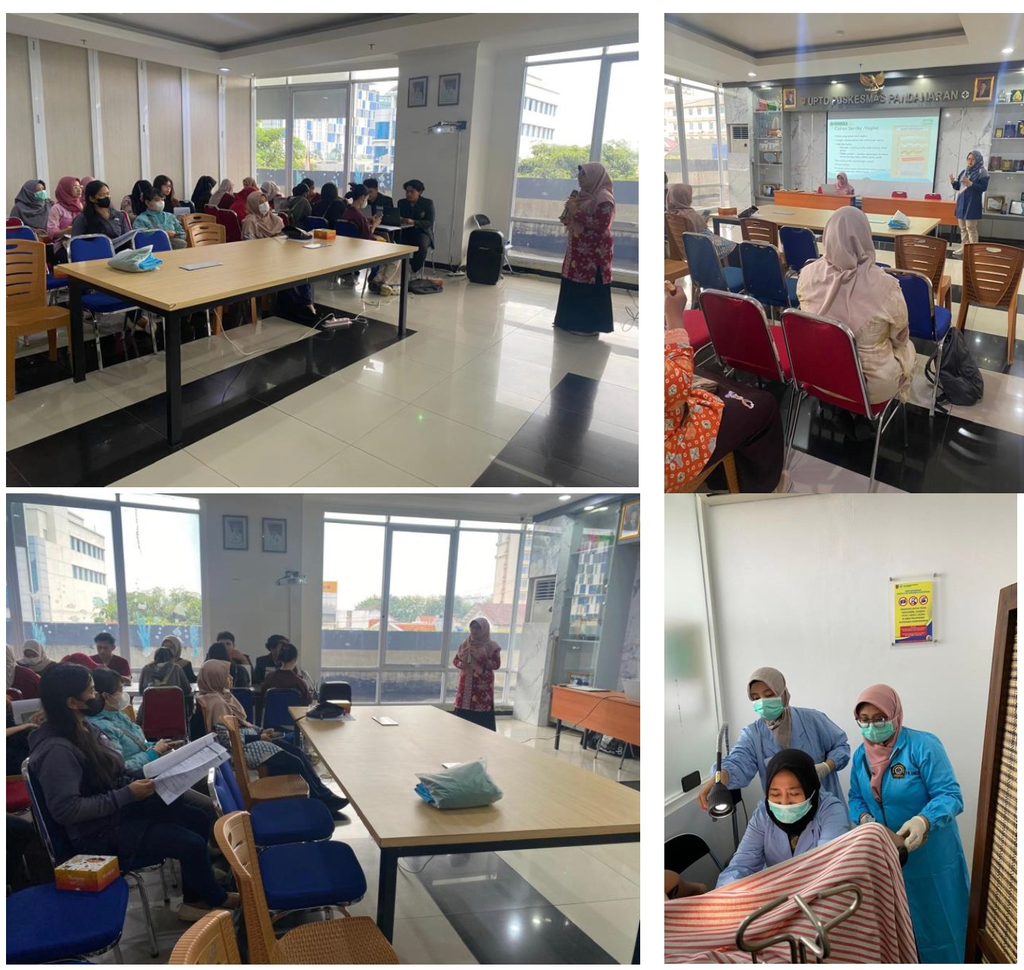
The programme was implemented in collaboration with UNISSULA’s Faculty of Medicine and local healthcare providers and focused on improving access to reproductive-health education and early detection of cervical cancer.
Activities included:
- interactive reproductive-health education;
- group discussions;
- vaginal secretion examination;
- Visual Inspection with Acetic Acid (IVA);
- HPV DNA testing; and
- early-detection counselling.
The examinations were provided free of charge to participants.
A total of 46 women of reproductive age participated in the programme, and all participants underwent the screening procedures following the educational session.
This programme directly improved access to essential preventive healthcare services that participants might otherwise have difficulty obtaining due to cost, limited awareness, or accessibility barriers.
2025 Free Health Screening Programme
UNISSULA also directly provided free health screening through collaboration between the Faculty of Pharmacy UNISSULA and Puskesmas Bulusan.
On 19 May 2025, the programme provided free screening for chronic-disease risk factors, including:
- blood-pressure measurement;
- blood-glucose testing;
- cholesterol testing;
- electrocardiography (ECG);
- body-weight measurement; and
- health education on healthy lifestyles and the prevention of non-communicable diseases.
The programme was designed as a preventive and promotive healthcare intervention, helping participants identify health risks at an early stage and improving awareness of chronic-disease prevention.
Because these services were provided directly and free of charge, the programme represents a clear example of UNISSULA improving access to basic healthcare services.
2025 Maternal and Child Health Programmes
UNISSULA’s Midwifery Programme also implemented several community-service initiatives in 2025 aimed at improving access to maternal and child healthcare knowledge and services.
These programmes included:
- training Posyandu cadres as immunisation educators to improve childhood immunisation coverage in Sembungharjo, Semarang;
- empowering community health cadres to provide lactation-preparation education for pregnant women;
- reproductive and sexual-health education for children; and
- health education related to pregnancy and maternal wellbeing.
By training local health cadres, UNISSULA strengthens community-level access to basic preventive healthcare and enables essential health information to reach mothers, children, and families more effectively.
This approach also increases the capacity of community-based health services by equipping local volunteers and cadres with relevant knowledge and practical skills.
Improving Access to Immunisation Services
A particularly important 2025 initiative involved strengthening the role of Posyandu cadres as immunisation education agents in Sembungharjo, Semarang.
Posyandu cadres play an important role in connecting families with primary healthcare services.
Through training and education, UNISSULA helped strengthen their ability to:
- explain the importance of immunisation;
- communicate effectively with parents and families;
- encourage participation in childhood immunisation;
- support community understanding of preventive health services; and
- strengthen connections between households and local healthcare providers.
This programme improves access not only by providing information, but also by strengthening the community system through which essential child-health services are delivered.
Community Health Education and Disease Prevention
UNISSULA also organises community health programmes that focus on prevention and early intervention.
Examples of activities include:
- health education;
- disease-prevention campaigns;
- health screening;
- maternal and child health education;
- nutrition education;
- chronic-disease prevention; and
- community health promotion.
These programmes are important because access to basic health services depends not only on the existence of healthcare facilities, but also on people’s ability to understand when, where, and how to obtain appropriate care.
Hypertension Education and Community Health Empowerment
In 2025, UNISSULA’s community-health activities also addressed hypertension and healthy lifestyles.
A community programme in Sendangmulyo involved local leaders and health cadres in identifying priority health problems and developing a community response.
The programme included:
- hypertension education;
- healthy-diet education;
- physical-activity promotion;
- discussion of smoking and excessive caffeine consumption;
- community empowerment; and
- collaboration with local health services.
Health education for older residents was conducted on 9 May 2025 as part of a broader community-health intervention.
This type of programme improves access to basic health knowledge and supports the prevention of non-communicable diseases at the community level.
Access to Healthcare through RSI Sultan Agung
UNISSULA also supports basic-service access through Sultan Agung Islamic Hospital (RSI Sultan Agung), a university-affiliated healthcare institution.
RSI Sultan Agung provides preventive, curative, and rehabilitative healthcare services to patients from diverse socioeconomic backgrounds.
The university’s health faculties work alongside healthcare facilities in education, research, screening, health promotion, and community-service programmes.
Hospital-based services therefore complement the university’s directly supplied outreach programmes by providing continuing healthcare referral and service infrastructure.
Education Access and Financial Support
UNISSULA also operates programmes that reduce financial barriers to education.
These include:
- KIP Kuliah;
- LAZIS Sultan Agung educational assistance;
- institutional scholarships; and
- other financial-support mechanisms.
KIP Kuliah provides tuition and living-cost support for students from economically disadvantaged households, allowing eligible students to access and continue higher education despite financial constraints.
Although these programmes primarily support university students rather than the wider community, they form part of UNISSULA’s broader framework for improving access to the basic service of education.
Food Access
UNISSULA supports access to food through campus food facilities and welfare programmes.
The university provides accessible food services for students, lecturers, and staff, helping members of the university community meet essential daily needs without requiring additional travel.
UNISSULA also implements free-meal activities for members of the university community as part of its welfare and social-support programmes.
Food access is particularly important for economically disadvantaged students because daily living costs can directly affect academic participation and study continuity.
Housing Access
UNISSULA provides student accommodation through Pesantren Mahasiswa Sultan Agung (PESANMASA).
The facility provides:
- student rooms;
- learning spaces;
- internet access;
- common facilities; and
- supporting student services.
University-managed accommodation helps reduce housing-access barriers for students who come from outside Semarang and require safe and accessible accommodation during their studies.
Legal Services and Access to Justice
UNISSULA also supports access to legal services through the Faculty of Law and its legal-assistance mechanisms.
Services include:
- legal consultation;
- legal education;
- community legal-awareness programmes; and
- assistance with legal issues.
Access to legal assistance is an important basic service because individuals with limited financial resources may otherwise face difficulties in obtaining professional legal support.
UNISSULA’s legal-service activities therefore complement healthcare, education, housing, and other programmes aimed at reducing barriers to essential services.
Community Empowerment through LPPM
Through the Institute for Research and Community Service (LPPM), UNISSULA coordinates programmes that directly address social and economic needs in surrounding communities.
Programme areas include:
- community health;
- education;
- digital literacy;
- MSME empowerment;
- poverty alleviation;
- social welfare; and
- community capacity building.
These activities enable UNISSULA lecturers and students to directly transfer knowledge, skills, and services to communities beyond the university campus.
Direct Provision of Basic-Service Programmes
UNISSULA’s approach goes beyond simply referring beneficiaries to external service providers.
In several programmes, UNISSULA directly supplies:
- free health screening;
- reproductive-health examinations;
- healthcare education;
- community-health training;
- immunisation education;
- maternal and child health support;
- counselling;
- legal education; and
- other community services.
This direct-delivery model helps ensure that essential services reach communities that may otherwise face financial, informational, geographic, or social barriers.
Contribution to Poverty Reduction
Limited access to basic services can reinforce poverty and socioeconomic disadvantage.
Healthcare costs, lack of preventive services, limited access to education, inadequate housing, food insecurity, and difficulty accessing legal assistance can all affect household wellbeing and economic resilience.
By organising and directly providing programmes that improve access to these services, UNISSULA helps reduce barriers that can contribute to poverty.
The university’s 2025 programmes demonstrate an integrated approach in which healthcare professionals, academic faculties, community health workers, university facilities, and community-service structures work together to improve access to essential services.
Institutional Commitment to Directly Supplied Services
UNISSULA directly organises and supplies programmes that improve access to basic services for students and surrounding communities.
The strongest 2025 evidence is the university’s direct provision of free healthcare screening, reproductive-health examinations, health education, and community-health training.
Through these initiatives, UNISSULA reduces financial and informational barriers to essential services and ensures that university expertise and resources are made available directly to beneficiaries.
Evidence of Implementation
UNISSULA’s programmes for improving access to basic services are demonstrated through the following institutional activities:
- 2025 free cervical cancer screening and reproductive-health education at Puskesmas Pandanaran, including free IVA, vaginal secretion examination, and HPV DNA testing for 46 women.
- 2025 free health screening by the Faculty of Pharmacy and Puskesmas Bulusan, including blood-pressure, blood-glucose, cholesterol, ECG, and preventive-health education.
- 2025 Posyandu cadre training for immunisation education in Sembungharjo, strengthening community access to childhood immunisation information and services.
- 2025 maternal and child health programmes, including lactation-preparation education and community-health empowerment.
- 2025 hypertension education and community health empowerment in Sendangmulyo, providing preventive-health education and community engagement.
- RSI Sultan Agung healthcare services and community-health outreach, supporting access to preventive, curative, and rehabilitative healthcare.
- Educational financial-support programmes, including KIP Kuliah and LAZIS Sultan Agung assistance.
- Food-access programmes and campus welfare support for students and members of the university community.
- PESANMASA student accommodation, supporting access to safe university-managed housing.
- Legal consultation, legal education, and community legal-assistance programmes delivered through the Faculty of Law.
1.4.4
Policy addressing poverty
1.4.4 Policy Addressing Poverty
UNISSULA Participation in Policy Development and Implementation to Address Poverty
Universitas Islam Sultan Agung (UNISSULA) participates in government and stakeholder frameworks that support the development and implementation of programmes addressing poverty and its multidimensional causes.
UNISSULA recognises that poverty is not limited to income. Poverty is also associated with unequal access to education, employment, healthcare, economic opportunities, skills, technology, public services, and sustainable livelihoods.
In 2025, UNISSULA strengthened its participation in local and regional development-policy frameworks through formal cooperation with local and provincial governments.
Through education, research, community service, regional development initiatives, and the transfer of university expertise, UNISSULA contributes evidence, knowledge, human-resource development, and community-based interventions that can support public programmes aimed at improving welfare and reducing socioeconomic disadvantage.
Local-Level Participation: Cooperation with the Government of Kudus Regency
In 2025, UNISSULA entered into a formal cooperation agreement with the Government of Kudus Regency.
The agreement, No. 017/C.2/MoU-DN/SA/X/2025 / No. 30 Tahun 2025, was signed on 13 October 2025 by the Rector of UNISSULA and the Regent of Kudus.
The agreement establishes cooperation in:
- education;
- research;
- community service; and
- improvement of regional competitiveness in Kudus Regency.
The partnership is intended to strengthen cooperation in education, research, and community service and to utilise the potential and resources of both institutions to support their respective development objectives.
The scope of cooperation includes:
- improving the quality of human resources through education and training;
- providing information, teaching materials, educational facilities, expertise, and the development of science and technology;
- developing human-resource potential, infrastructure, and other regional resources in a planned, integrated, transparent, accountable, effective, and efficient manner;
- strengthening cooperation in research and community service to improve the quality of development in Kudus Regency; and
- implementing other development activities mutually agreed upon by both parties.
These areas are relevant to several dimensions associated with poverty reduction, particularly human-capital development, skills improvement, access to education, local economic capacity, community development, and regional competitiveness.
Joint Institutional and Public Funding
The 2025 UNISSULA–Kudus Regency agreement also establishes a framework for joint implementation and financing.
Implementation costs may be supported through:
- the UNISSULA budget;
- the Kudus Regency Regional Revenue and Expenditure Budget (APBD); and
- other legally permitted funding sources.
This funding framework demonstrates that the partnership is not limited to informal consultation. It creates an institutional mechanism through which university expertise and public resources can be mobilised jointly for education, research, community-service, and regional-development programmes.
Through this framework, UNISSULA participates in the implementation environment of local-government development policies and programmes.
Supporting Local Poverty Reduction through Human and Economic Development
The UNISSULA–Kudus cooperation framework provides opportunities for university expertise to contribute to programmes addressing several structural dimensions of poverty.
Potential areas covered by the formal agreement include:
- education and skills development;
- workforce and human-resource capacity;
- community empowerment;
- local entrepreneurship;
- MSME development;
- application of science and technology;
- access to knowledge and training;
- regional economic competitiveness; and
- community-based research and development.
These interventions can contribute to poverty reduction by improving people’s capacity to obtain employment, generate income, develop businesses, access knowledge, and participate in regional economic development.
UNISSULA therefore contributes not only through research and academic discussion, but also through formal institutional cooperation with government in the implementation of development programmes.
Regional-Level Participation: Government of Central Java Province
At the regional level, UNISSULA also maintains formal cooperation with the Government of Central Java Province.
In 2025, a cooperation agreement identified as No. 016/C.2/SA-LPPM/III/2025 covered the implementation of the Tri Dharma of Higher Education in support of regional development.
This cooperation creates an institutional framework through which UNISSULA can contribute:
- research;
- evidence and academic expertise;
- community-service programmes;
- innovation;
- human-resource development; and
- university-community engagement.
Such university-government cooperation is relevant to multidimensional poverty because regional development policy encompasses economic welfare, employment, education, community resilience, public services, and local development.
Research and Innovation for Regional Policy Development
UNISSULA’s regional engagement is also demonstrated through collaboration with the Central Java Regional Research and Innovation Agency (BRIDA Jawa Tengah).
In May 2025, UNISSULA’s Faculty of Industrial Technology collaborated with BRIDA Central Java in activities related to the 2025 Regional Research Works Appreciation programme.
The initiative brought together academics, researchers, and representatives of regional government agencies to strengthen synergy between research, innovation, and regional development.
This form of engagement strengthens the connection between university research and public-sector decision-making by encouraging research outputs that respond to regional development challenges.
Place-Based Development Evidence
UNISSULA also contributes to local and regional development through applied planning activities.
In 2025, the Urban and Regional Planning Programme conducted field-based planning activities in Batang and Pekalongan Regencies.
These activities involved government stakeholders and produced not only academic outputs but also development ideas and analysis for the regions concerned.
Such place-based research and planning can provide local governments with university-generated analysis relevant to development priorities involving:
- community infrastructure;
- economic potential;
- settlements;
- public services; and
- regional welfare.
Research-Based Policy Contribution
UNISSULA supports policy engagement through research addressing socioeconomic and community-development challenges.
Relevant research and community-engagement areas include:
- poverty alleviation;
- MSME empowerment;
- Islamic social finance;
- zakat and social welfare;
- entrepreneurship;
- digital economic inclusion;
- community economic resilience;
- healthcare access;
- education;
- disaster resilience; and
- community capacity building.
Through the Institute for Research and Community Service (LPPM) and academic faculties, research findings can be translated into programmes, recommendations, and applied interventions developed with government and community partners.
Islamic Social Finance and Poverty Reduction
UNISSULA also addresses poverty through Islamic social-finance mechanisms.
Through LAZIS Sultan Agung, zakat, infaq, and sadaqah are used to support:
- educational assistance;
- economically disadvantaged beneficiaries;
- social welfare;
- community empowerment; and
- other poverty-related needs.
This provides an institutional model linking university social responsibility with practical programmes targeting socioeconomic vulnerability.
While LAZIS activities primarily represent programme implementation rather than government policy making, the experience generated through these programmes strengthens UNISSULA’s practical understanding of poverty intervention and community welfare.
From Research to Government and Community Programmes
UNISSULA’s policy contribution is based on an integrated cycle of:
research and evidence → cooperation with government → programme development → community implementation → evaluation and knowledge transfer
This model enables university expertise to contribute to development challenges beyond the campus.
Through formal government agreements and collaborative development activities, UNISSULA participates in frameworks that connect academic knowledge with government programmes and community needs.
Multidimensional Approach to Poverty
UNISSULA approaches poverty as a multidimensional development issue.
Its government and community partnerships address dimensions including:
- income and livelihoods;
- education and skills;
- employment;
- MSME development;
- healthcare;
- social welfare;
- digital inclusion;
- infrastructure;
- community resilience;
- innovation; and
- regional economic competitiveness.
This approach supports the implementation of programmes and policies intended to improve welfare and reduce conditions that contribute to poverty.
Institutional Commitment to Policy Participation
UNISSULA’s role in poverty reduction extends beyond delivering isolated community programmes.
Through formal partnerships with local and regional governments, applied research, community engagement, regional planning, and the mobilisation of university expertise, UNISSULA participates in development-policy and programme-implementation frameworks that address socioeconomic disadvantage and multiple dimensions associated with poverty.
For the 2025 reporting period, the strongest documented participation is at:
- Local level: Government of Kudus Regency
- Regional level: Government of Central Java Province
These partnerships demonstrate UNISSULA’s participation in government development frameworks through education, research, community service, human-resource development, regional competitiveness, and evidence-based interventions.
Evidence of Policy Participation
UNISSULA’s policy participation in 2025 is demonstrated through the following institutional activities:
- Local level – Government of Kudus Regency: formal 2025 agreement between UNISSULA and the Government of Kudus Regency covering education, research, community service, human-resource development, and improvement of regional competitiveness.
- Local-level implementation framework: joint financing may involve UNISSULA resources, the Kudus Regency APBD, and other lawful funding sources, creating a mechanism for jointly implemented development programmes.
- Regional level – Government of Central Java Province: formal 2025 cooperation supporting the Tri Dharma of Higher Education in regional development under document No. 016/C.2/SA-LPPM/III/2025.
- Regional research and policy ecosystem: collaboration with BRIDA Central Java involving academics, researchers, and regional government agencies in strengthening research and innovation for regional development.
- Local and regional planning contribution: applied regional-planning activities involving local governments and development analysis in Central Java.
- Research, community-service, and Islamic social-finance programmes addressing socioeconomic vulnerability and other multidimensional aspects associated with poverty.