


















UNISSULA SUSTAINABILITY REPORTING
SDG 13 – Climate Action
Progress Report 2025
2025 Report Overview
In 2025, Universitas Islam Sultan Agung (UNISSULA) documented its progress towards SDG 13 – Climate Action through low-carbon energy monitoring, climate change education, disaster-risk reduction, community resilience, and partnerships with government and international organisations. The university recorded 9,284 GJ of low-carbon energy, representing 20.27% of total institutional energy use, while advancing climate adaptation initiatives, flood-risk management, and sustainable water solutions. UNISSULA also strengthened cooperation with the Central Java Provincial Government and Wetskills Foundation and established a long-term commitment to achieving carbon neutrality by 2040. This report presents the university’s measurable achievements, institutional initiatives, and continuing priorities for climate action during the 2025 reporting period.
Full SDG 13 Progress Report 2025
13.2.1
Low-Carbon Energy Tracking
13.2.1 Low-Carbon Energy Tracking Across the University
Universitas Islam Sultan Agung (UNISSULA) monitors energy consumption across its university operations as part of its institutional approach to energy efficiency, environmental management, and the transition toward lower-carbon energy use.
The monitoring framework records total institutional energy use and separately identifies energy derived from low-carbon sources. In 2025, low-carbon energy at UNISSULA was supplied primarily through Solar Photovoltaic (Solar PV / PLTS) systems and biodiesel used within university operations.
This approach enables UNISSULA to quantify the contribution of low-carbon energy to overall institutional energy consumption and to establish a measurable baseline for future energy-management improvements.

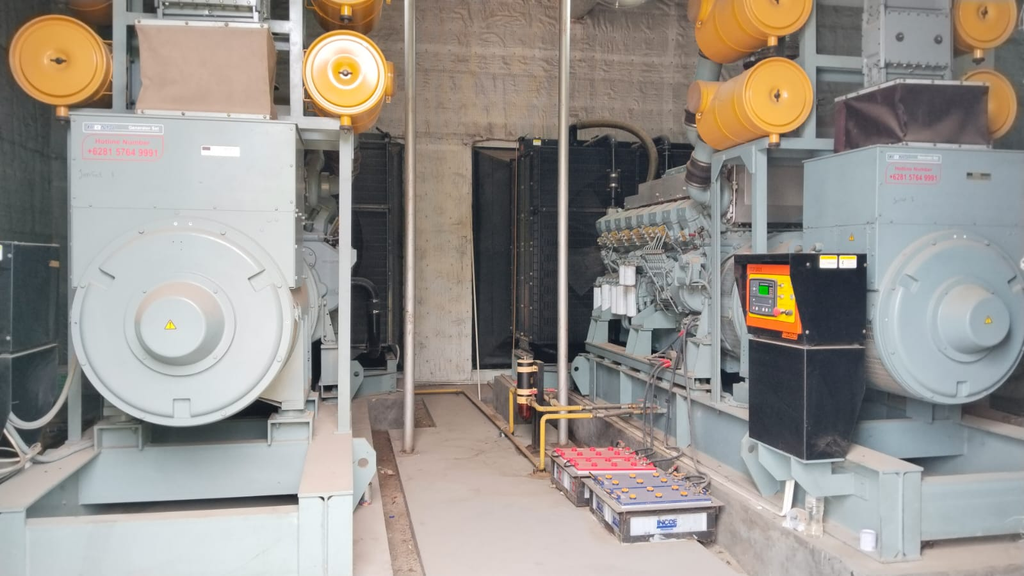
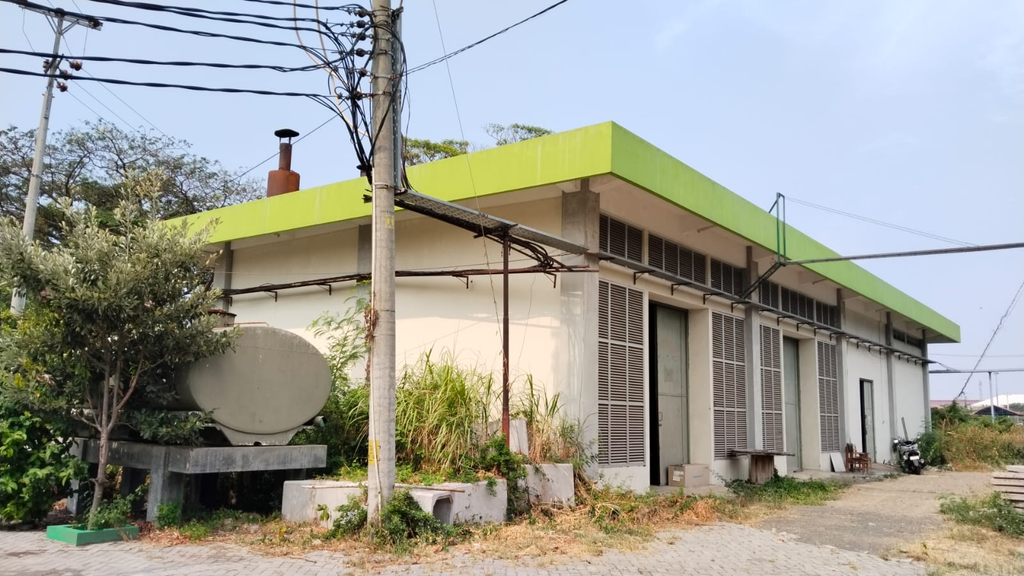

University-Wide Energy Monitoring
UNISSULA maintains energy-consumption records across its major academic, administrative, service, religious, and student facilities.
As part of the university’s 2025 energy review, electricity consumption was monitored across 19 major buildings and facilities, including faculties, academic buildings, the Rectorate, Library, Auditorium, laboratories, student facilities, canteen, mosque, and other operational areas.
This building-level monitoring forms part of a broader institutional energy inventory used to evaluate energy demand, identify areas of high consumption, support energy-efficiency measures, and monitor the contribution of low-carbon energy sources.
For 2025, the institutional energy inventory records:
Total Energy Used: 45,799 GJ
Tracking Low-Carbon Energy
UNISSULA separately tracks energy derived from low-carbon sources within its overall energy consumption.
The university’s 2025 low-carbon energy portfolio consists primarily of:
- Solar Photovoltaic (Solar PV / PLTS) energy; and
- Biodiesel energy used in university operations.
Together, these sources accounted for:
9,284 GJ of low-carbon energy in 2025.
This represents approximately:
20.27% of total institutional energy use.
The separation of low-carbon energy from overall consumption enables the university to evaluate the contribution of cleaner energy sources and monitor changes in its institutional energy profile over time.
Low-Carbon Energy Composition
The monitored low-carbon energy portfolio for 2025 is composed approximately of 54% Solar PV and 46% biodiesel.
| Low-Carbon Energy Source | Energy Use 2025 | Share of Low-Carbon Energy | Share of Total Energy |
|---|---|---|---|
| Solar PV / PLTS | 5,013 GJ | 54.00% | 10.95% |
| Biodiesel | 4,271 GJ | 46.00% | 9.33% |
| Total Low-Carbon Energy | 9,284 GJ | 100.00% | 20.27% |
| Total Institutional Energy Use | 45,799 GJ | — | 100.00% |
The figures establish a measurable institutional baseline for evaluating the role of low-carbon energy in university operations.
Solar Photovoltaic Energy
Solar photovoltaic systems form an important component of UNISSULA’s low-carbon energy portfolio.
Solar PV installations support electricity use across campus facilities, including building-related lighting and campus road lighting. Energy generated and used through these systems is monitored so that its contribution can be distinguished from conventional energy consumption.
In 2025, Solar PV accounted for approximately:
5,013 GJ
or approximately:
54% of the university’s recorded low-carbon energy use.
Relative to total institutional energy consumption, Solar PV represented approximately 10.95%.
The monitoring of Solar PV enables UNISSULA to evaluate the contribution of renewable electricity and establish a basis for assessing future expansion of solar-energy infrastructure.
Biodiesel as a Low-Carbon Energy Source
UNISSULA also records the use of biodiesel as part of its low-carbon energy inventory.
Biodiesel contributes to reducing reliance on conventional fossil-based energy sources in relevant university operations. Its consumption is incorporated into the institutional energy-monitoring framework and converted into a common energy unit so that it can be evaluated together with other energy sources.
In 2025, biodiesel accounted for approximately:
4,271 GJ
or approximately:
46% of recorded low-carbon energy use.
This represents approximately 9.33% of total institutional energy consumption.
By incorporating biodiesel into its energy inventory, UNISSULA is able to monitor low-carbon energy beyond electricity generation alone and obtain a more comprehensive picture of institutional energy use.
Institutional Energy Profile
The overall energy profile for 2025 can therefore be summarised as follows:
| Energy Indicator | Energy Use 2025 | Share of Total |
|---|---|---|
| Low-Carbon Energy | 9,284 GJ | 20.27% |
| Other Energy Sources | 36,515 GJ | 79.73% |
| Total Energy Used | 45,799 GJ | 100.00% |
The low-carbon component is further divided between Solar PV and biodiesel.
This institutional-level approach allows different energy sources to be consolidated using Gigajoules (GJ) as a common unit of measurement.
Relationship with Building-Level Electricity Monitoring
Low-carbon energy tracking complements UNISSULA’s existing building-level electricity monitoring.
The university conducts periodic energy reviews across major campus facilities to identify buildings and activities with relatively high electricity consumption and potential energy wastage. The review examines areas such as air-conditioning systems, laboratories, clinical equipment, lifts, lighting, computers, refrigeration equipment, and other electrical installations.
The university also identifies operational practices that can lead to unnecessary electricity consumption, including lighting in unoccupied rooms, air-conditioning operating outside required periods, equipment remaining active after working hours, standby electricity use, and inefficient equipment operation.
Low-carbon energy monitoring expands this process by assessing not only how much energy is consumed, but also what proportion of institutional energy comes from lower-carbon sources.
Integration with the Energy Efficiency Plan
Low-carbon energy tracking is linked to UNISSULA’s broader Energy Efficiency Plan.
The university’s energy-management approach includes measures such as energy-efficient lighting, efficient air-conditioning and electrical equipment, natural lighting and ventilation, building renovation, solar panels, and improved equipment shutdown practices.
The integration of energy efficiency and low-carbon energy monitoring supports two complementary objectives:
- Reducing unnecessary energy demand; and
- Increasing the contribution of lower-carbon energy sources.
Solar PV and biodiesel monitoring therefore form part of a broader institutional approach to improving energy performance.
University-Wide Measurement
Energy monitoring is consolidated at institutional level to provide a university-wide assessment.
Building electricity records, renewable-energy monitoring, and records of other energy sources are brought together in a common institutional energy inventory.
This enables UNISSULA to report:
- Total institutional energy use; and
- Total energy used from low-carbon sources.
Both are measured using a consistent unit of measurement.
For 2025:
- Total Energy Used: 45,799 GJ
- Total Energy Used from Low-Carbon Sources: 9,284 GJ
- Low-Carbon Energy Share: 20.27%
Consistent Energy Accounting
UNISSULA uses an institutional energy-accounting approach in which low-carbon energy is treated as a component of total energy use rather than being added separately after the total has been calculated.
Accordingly:
Low-Carbon Energy + Other Energy Sources = Total Energy Used
For 2025:
9,284 GJ + 36,515 GJ = 45,799 GJ
This approach helps prevent double counting and provides a consistent basis for comparing energy sources.
Continuous Energy Monitoring
UNISSULA applies an ongoing energy-management cycle that links measurement with operational evaluation and improvement.
The existing campus energy-management process involves reviewing energy consumption, identifying high-use areas, investigating potential energy wastage, determining corrective measures, improving operational efficiency, and conducting further review.
Low-carbon energy tracking complements this cycle by enabling changes in Solar PV and biodiesel use to be monitored from year to year.
The monitoring results can therefore be used to evaluate whether the university is progressively increasing the contribution of low-carbon energy while improving overall energy efficiency.
Data-Based Energy Management
Quantitative monitoring supports evidence-based energy management at UNISSULA.
Energy data allow the university to evaluate high-consumption facilities, identify efficiency opportunities, monitor Solar PV production and utilisation, record biodiesel energy use, determine the proportion of low-carbon energy, and establish institutional baselines for future comparison.
The use of a common energy unit also enables different energy sources to be assessed within a single institutional framework.
Evidence of Implementation
- University-wide institutional energy monitoring for 2025, covering major campus operations and facilities.
- Building-level electricity review covering 19 major buildings and facilities, supporting campus-wide energy management.
- Total institutional energy use of 45,799 GJ in 2025.
- Separate tracking of low-carbon energy totalling 9,284 GJ.
- Solar PV / PLTS monitoring, contributing approximately 5,013 GJ of low-carbon energy.
- Biodiesel energy monitoring, contributing approximately 4,271 GJ.
- Low-carbon energy share of approximately 20.27% of total institutional energy consumption.
- Integration with university energy-efficiency activities, including Solar PV, efficient lighting, electrical equipment management, operational review, and continuous energy evaluation.
13.3.1
Local Education Programmes On Climate
13.3.1 Local Climate Change Education and Community Awareness Programmes
Universitas Islam Sultan Agung (UNISSULA) provides educational programmes, seminars, outreach activities, and community-oriented initiatives that address climate change risks, impacts, mitigation, adaptation, impact reduction, and resilience. These activities are delivered through academic faculties, research centres, community-service programmes, and collaboration with government agencies, international universities, NGOs, and local communities.
In 2025, UNISSULA implemented several programmes that directly addressed climate-related challenges affecting Indonesia, particularly coastal and delta areas in Central Java. These programmes combined public education, knowledge exchange, climate adaptation, infrastructure resilience, flood-risk reduction, and stakeholder collaboration.
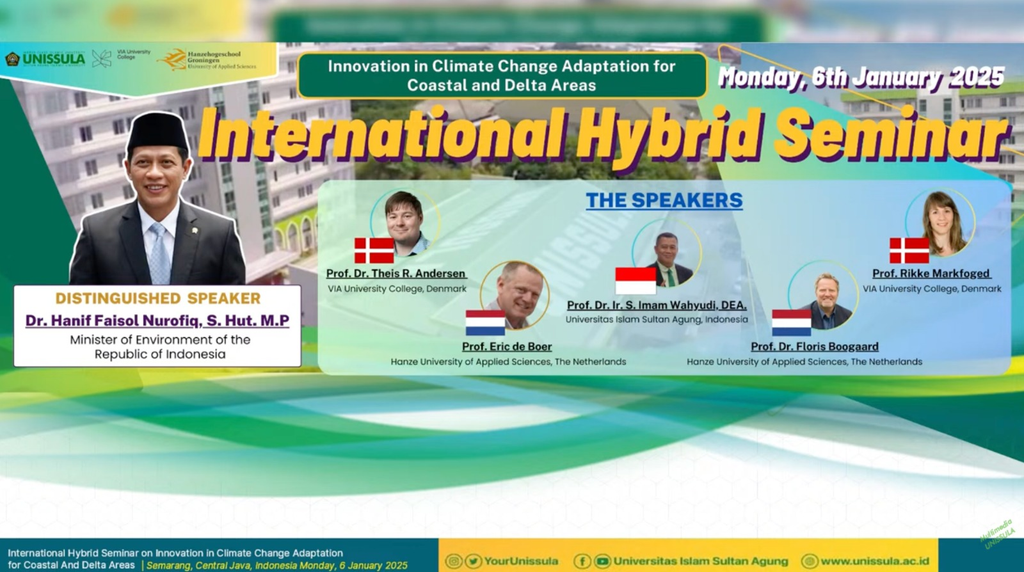

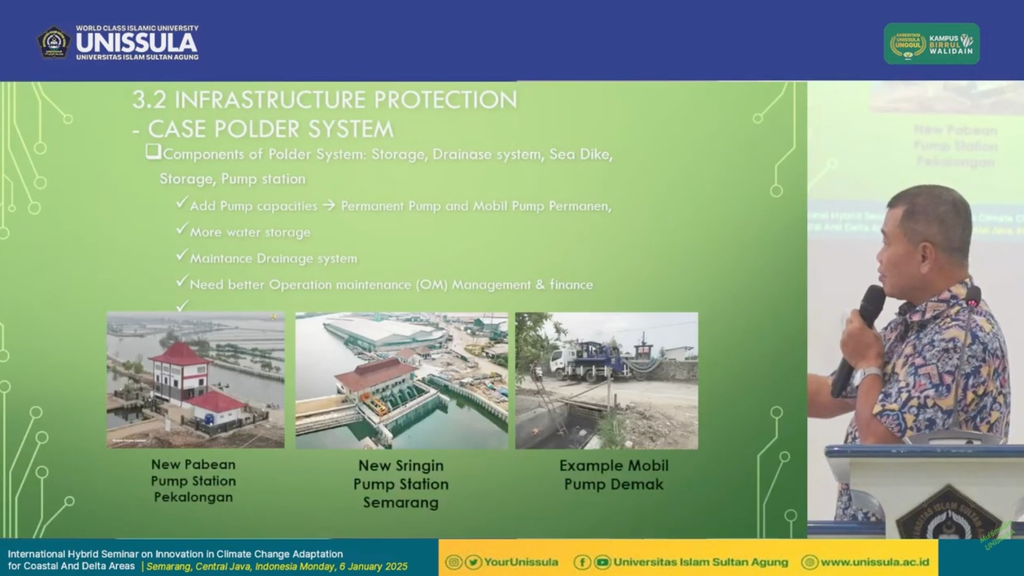

International Hybrid Seminar on Climate Change Adaptation and Resilience
On 6 January 2025, the Faculty of Engineering of UNISSULA organised an international hybrid seminar focused on climate change adaptation and resilience.
The seminar was designed to develop a practical framework for addressing climate change in Indonesia, including actionable strategies and policy recommendations. Its expected outcomes included strengthening collaboration among stakeholders in coastal and delta regions, supporting climate adaptation and resilience-building, and identifying opportunities for technological innovation and funding for climate adaptation initiatives. (Fakultas Teknik UNISSULA)
The programme involved a broad range of local and regional stakeholders, including:
- Central Java Provincial Environmental Service;
- Environmental agencies from regencies and cities in Central Java;
- Public works, water resources, and spatial planning institutions;
- BBWS Pemali Juana;
- Regional settlement infrastructure agencies;
- Academics and students from universities in Central Java; and
- Non-governmental organisations.
The seminar was delivered through keynote presentations, panel discussions, and interactive sessions, enabling participants to exchange knowledge and discuss practical responses to climate-related challenges. (Fakultas Teknik UNISSULA)
This activity strengthened public and stakeholder understanding of climate risks, adaptation strategies, resilience planning, water management, renewable energy, sustainable infrastructure, and hydrological challenges.
ICCDA 6: Advancing Climate Adaptation and Resilience
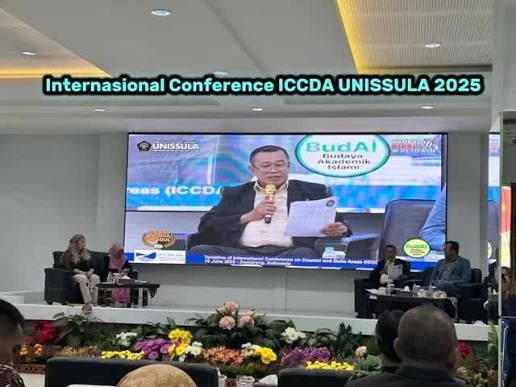
UNISSULA also organised the 6th International Conference on Coastal and Delta Areas (ICCDA 6) on 2 July 2025.
The conference theme was:
“Build A Strong Nation: Advancing Climate Adaptation and Resilience through Sustainable Development in Coastal and Delta Areas.”
The programme focused on climate change challenges affecting coastal and delta regions, which are particularly vulnerable to flooding, sea-level rise, environmental degradation, and other climate-related hazards. UNISSULA used the conference as a platform for international knowledge exchange, research dissemination, and discussion of innovative approaches to climate adaptation and resilience. (UNISSULA)
The conference brought together experts from Indonesia and several other countries and addressed issues related to climate change, sustainable infrastructure, water management, environmental technology, and resilience in vulnerable coastal environments. (UNISSULA)
Through this programme, climate-change education was extended beyond academic research to broader discussions on how communities, governments, and institutions can respond to current and future climate risks.
Climate Change Risks and Impacts in Coastal Areas
A significant focus of UNISSULA’s climate education activities is the vulnerability of coastal communities in northern Java.
Flooding, tidal flooding, sea-level rise, coastal erosion, and infrastructure disruption are among the climate-related risks frequently addressed in UNISSULA’s education, research, and community-service activities.
Research published through UNISSULA in 2025, for example, examined the adaptive capacity of communities affected by tidal flooding in Sriwulan Village, Sayung, Demak. The study assessed community responses to flood impacts and highlighted adaptive practices such as raising houses, raising roads, using technology, strengthening social institutions, and using local knowledge to anticipate tidal flooding. (UNISSULA Journals)
These issues are closely connected with the educational themes presented in seminars, conferences, and community programmes.
Climate Adaptation through International Collaboration
UNISSULA’s climate education activities are also strengthened through international collaboration.
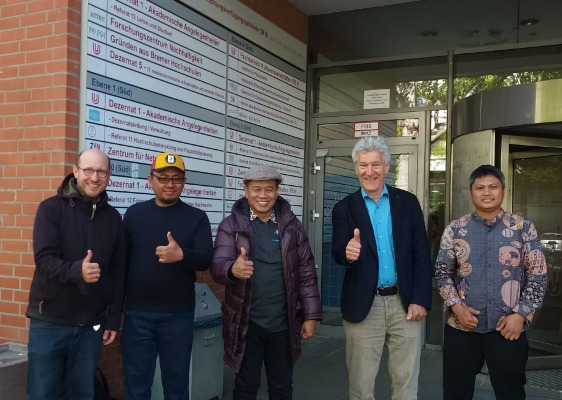
In May 2025, academics from the Faculty of Engineering collaborated with VIA University College Denmark. One of the key academic topics presented during the collaboration was climate change adaptation along the northern coast of Java. The programme also included discussions and field visits related to environmental and infrastructure research relevant to Indonesian climate challenges. (UNISSULA)
These international exchanges provide additional knowledge and examples of adaptation practices that can be transferred into education, research, and community engagement in Indonesia.
Community Education on Flood and Tidal-Flood Risk
UNISSULA also conducts community-service activities that address flood and tidal-flood mitigation.
The university’s community-service portfolio includes activities such as:
- Operational assistance for flood and tidal-flood mitigation in Sayung, Demak;
- Education to increase awareness among residents in flood-prone areas;
- Operational guidance and public outreach for flood and tidal-flood management in the Sringin Polder area, Semarang; and
- Environmental planning for local communities. (PDTS Unissula)
One programme specifically focuses on education and awareness for residents in flood-prone areas at SD Kaligawe, Semarang, with the objective of increasing public participation in maintaining flood-control infrastructure. (PDTS Unissula)
These initiatives demonstrate that climate-related education at UNISSULA is not limited to university classrooms. It also reaches local communities affected by flooding and other environmental risks.
Flood Mitigation and Impact Reduction
UNISSULA has also applied research findings to practical flood-risk reduction.
Through community engagement in Cilacap, UNISSULA supported the development and implementation of flood-control solutions for communities affected by tidal flooding. Measures discussed and implemented included polder systems, movable water-control structures, pipe gates, and multifunction pumps.
The programme also included a Focus Group Discussion involving government agencies, local authorities, village officials, and community members. (LPPM Unissula)
UNISSULA’s Delta Centre on Climate Change has also been involved in research, innovation, and assistance to areas in Central Java affected by flooding associated with sea-level rise and climate change. (LPPM Unissula)
These activities support climate-change education by connecting scientific knowledge with practical approaches to reducing climate-related impacts.
Mitigation, Adaptation, and Resilience
UNISSULA’s programmes address several complementary dimensions of climate action.
Climate risks and impacts are discussed through education on flooding, tidal flooding, sea-level rise, coastal vulnerability, and infrastructure disruption.
Mitigation is addressed through discussions of renewable energy, sustainable infrastructure, efficient resource use, and lower-carbon development.
Adaptation is addressed through coastal resilience, flood-control infrastructure, community preparedness, water management, and climate-responsive planning.
Impact reduction is supported through practical measures such as flood-control systems, drainage and polder management, infrastructure maintenance, and community participation.
Resilience is strengthened through collaboration among universities, government agencies, technical institutions, NGOs, students, and affected communities.
Climate Preparedness and Early-Warning Awareness
Climate preparedness is an important part of reducing risks from extreme weather, flooding, and coastal hazards.
UNISSULA’s educational and community-oriented programmes encourage communities and stakeholders to understand environmental conditions, recognise risks, improve preparedness, and strengthen their ability to respond to flood and climate-related events.
Community-based research conducted at UNISSULA has also documented the use of local knowledge and environmental observation to anticipate tidal flooding, showing how community knowledge can contribute to preparedness and adaptive capacity. (UNISSULA Journals)
While early-warning technology is not the sole focus of these programmes, awareness, risk recognition, preparedness, and community response are incorporated into broader climate-resilience and flood-risk education.
Collaboration with Local Stakeholders
UNISSULA’s climate education activities use a multi-stakeholder approach.
Participants and partners include environmental agencies, public works institutions, water-resource authorities, universities, NGOs, local governments, village administrations, schools, and community members.
This approach helps ensure that climate knowledge is not restricted to academic audiences but can be shared with institutions and communities that directly manage or experience climate-related risks.
Evidence of Implementation
- International Hybrid Seminar, 6 January 2025, addressing practical climate-change responses, adaptation, resilience, sustainable infrastructure, water management, and collaboration with government agencies, academics, students, and NGOs. (Fakultas Teknik UNISSULA)
- ICCDA 6, 2 July 2025, focused on advancing climate adaptation and resilience in coastal and delta areas. (UNISSULA)
- International collaboration with VIA University College Denmark, including education on climate-change adaptation along the northern coast of Java. (UNISSULA)
- Community-service programmes on flood and tidal-flood mitigation, including resident education, operational assistance, and flood-control awareness in Central Java. (PDTS Unissula)
- Applied flood-mitigation and community-engagement activities, including FGD and practical solutions for tidal-flood-affected communities. (LPPM Unissula)
- Research and education on community adaptation to tidal flooding, strengthening understanding of risk, adaptation, preparedness, and local resilience.
13.3.2
Climate Action Plan, Shared
13.3.2 Climate Action Plan Shared with Local Government and Community Partners
Universitas Islam Sultan Agung (UNISSULA) integrates climate action into its institutional strategic planning, environmental management, research, community engagement, and disaster-risk reduction activities. The university’s climate action framework is aligned with the UNISSULA Strategic Plan 2025–2029 and is supported by formal collaboration with local and regional government institutions, including the Government of Central Java through the Regional Disaster Management Agency (BPBD).
The framework provides a strategic basis for measuring environmental performance, planning climate-related actions, reducing greenhouse-gas emissions and related environmental impacts, improving resilience, and strengthening collaboration with communities and government partners.
Institutional Climate Action Framework
The UNISSULA Strategic Plan 2025–2029 establishes the university’s institutional direction for sustainability and environmental performance.
The Strategic Plan states that environmental action should be translated into measurable indicators covering:
- Energy;
- Emissions;
- Water;
- Waste;
- Transport;
- Open space;
- Sustainability education; and
- Sustainability research.
This establishes a broad institutional framework for climate and environmental action rather than treating sustainability as a stand-alone activity.
The Strategic Plan also requires university targets to be measurable, traceable, periodically evaluated, and supported by clear ownership of indicators, data, implementation, and evidence.
Climate Action Priorities
UNISSULA’s climate-action framework includes both mitigation and adaptation measures.
Key areas include:
Energy efficiency and low-carbon energy
UNISSULA monitors institutional energy use, reviews areas of high electricity consumption, promotes energy-efficiency measures, and tracks low-carbon energy sources such as Solar PV and biodiesel.
Greenhouse-gas and emissions management
The university’s environmental planning identifies emissions as a measurable environmental indicator and connects energy management with wider climate-performance monitoring.
Water and flood resilience
Climate adaptation activities include attention to flooding, tidal flooding, water management, drainage, coastal resilience, and infrastructure preparedness.
Waste reduction and recycling
UNISSULA implements institutional waste measurement, recycling monitoring, plastic reduction, disposable-item reduction, and hazardous-waste management.
Sustainable transport and mobility
Environmental planning includes transport as one of the operational areas to be measured and improved.
Education and research
Climate action is supported through teaching, seminars, applied research, community-service programmes, and international collaboration addressing climate risks, adaptation, resilience, and sustainable development.
Measuring and Monitoring Climate Action
The climate-action framework is implemented through the university’s broader performance-management system.
UNISSULA’s Strategic Plan establishes a monitoring architecture involving strategic objectives, measurable indicators, implementation activities, data owners, risk owners, and review cycles.
The governance system includes:
- Operational monitoring;
- Periodic performance review;
- Evidence-based evaluation;
- Risk management;
- Corrective action; and
- Continuous improvement.
The university conducts operational reviews, quarterly performance reviews, annual evaluations, a mid-term evaluation, and a final strategic-plan evaluation.
This governance structure provides a mechanism for ensuring that environmental and climate objectives are monitored and adjusted over time.
Collaboration with Government and Community Stakeholders
UNISSULA applies an external collaboration model based on the pentahelix approach, involving government, industry, society, media, and global academia.
Within this framework, government provides policy direction and institutional support, while communities participate as co-creation partners and beneficiaries of university programmes.
This model allows climate-related programmes to be connected with local and regional needs, particularly in areas such as flood resilience, disaster-risk reduction, coastal adaptation, environmental education, and community preparedness.
Formal Cooperation with the Government of Central Java
A major example of the sharing and implementation of UNISSULA’s climate- and resilience-related action is the formal cooperation between UNISSULA and the Government of Central Java through BPBD Provinsi Jawa Tengah.
This cooperation was formalised through Cooperation Agreement No. 005/C.2/MoA-DN/SA/IX/2025, dated 29 September 2025, establishes collaboration between the Government of Central Java and UNISSULA for higher-education activities supporting disaster management in Central Java.
The agreement supports the integration of education, research, and community service with regional disaster-management priorities.
Its stated purpose is to strengthen the potential and resources of both institutions in supporting disaster-management implementation in Central Java through university tridharma activities.
Scope of Government Collaboration
The cooperation with BPBD Central Java includes several areas relevant to climate resilience and climate-impact reduction.
The scope includes:
- Support for provincial disaster-management and environmental programmes;
- Activities in the field of disaster management;
- Research and development;
- Community service;
- Student internships and work-based learning;
- Teaching assistance in educational institutions;
- Humanitarian projects; and
- Other activities jointly agreed by the parties.
These areas are explicitly set out in the cooperation agreement.
The collaboration therefore provides a formal mechanism through which UNISSULA’s institutional climate, resilience, and disaster-related activities are connected with regional government priorities.
Supporting Climate Adaptation and Disaster Resilience
Climate change in Central Java is closely associated with risks such as extreme rainfall, flooding, tidal flooding, coastal vulnerability, sea-level rise, and disruption to infrastructure and communities.
UNISSULA’s climate-action approach therefore combines greenhouse-gas reduction and environmental management with adaptation and resilience.
The cooperation with BPBD provides an institutional pathway for joint activities related to disaster management, community education, applied research, preparedness, humanitarian response, and resilience-building.
This is particularly relevant to communities in Semarang and other areas of Central Java that experience flooding and coastal hazards.
Shared Implementation with Government
The climate-action framework is not limited to internal university operations.
Through cooperation with regional government institutions, UNISSULA connects its planning, research, education, and community-service activities with external stakeholders responsible for environmental management and disaster-risk reduction.
The BPBD agreement demonstrates that climate- and disaster-related activities are implemented through formal collaboration with the Government of Central Java rather than being managed solely within the university.
The cooperation also includes access to data, information, facilities, teaching support, community programmes, and joint evaluation.
Community Engagement
Community involvement forms an important part of UNISSULA’s climate-action approach.
The Strategic Plan positions society as both a partner in co-creation and a beneficiary of university activities.
Climate-related community engagement includes education, applied research, public outreach, disaster preparedness, flood mitigation, infrastructure resilience, and other community-service activities.
Through these activities, climate action is translated from institutional planning into practical collaboration with communities and public-sector partners.
Integration with Research and Community Service
UNISSULA’s Strategic Plan emphasises research and community service that produce measurable social impact.
Research and community-service programmes are expected to move beyond activity counts and demonstrate adoption, outcomes, sustainability, and benefits for partners and communities.
This approach supports the application of climate-related research in areas such as flood management, water systems, infrastructure, energy, resilience, and community adaptation.
Governance and Responsibility
The implementation of institutional plans follows the university’s formal governance structure.
The Rectorate provides strategic integration and resource allocation, faculties and study programmes implement academic and operational activities, and supporting units are responsible for standards, data, assurance, research, community service, and institutional monitoring.
This structure ensures that climate-related activities can be integrated across teaching, research, operations, community service, and external partnerships.
Continuous Review and Improvement
UNISSULA’s climate-action framework is designed as an ongoing process.
Environmental performance is reviewed within the wider strategic-management cycle, enabling the university to evaluate progress, identify risks, correct implementation gaps, and strengthen future programmes.
The Strategic Plan explicitly uses evidence-based monitoring and a continuous cycle of target setting, implementation, monitoring, evaluation, risk control, and improvement.
This creates a foundation for progressively strengthening energy efficiency, emissions management, climate adaptation, disaster resilience, and community collaboration.
Evidence of Implementation
- UNISSULA Strategic Plan 2025–2029, which identifies environmental action areas including energy, emissions, water, waste, transport, open space, sustainability education, and sustainability research.
- Institutional monitoring and evaluation framework, including measurable indicators, data ownership, periodic review, risk management, and evidence-based evaluation.
- Pentahelix stakeholder collaboration model, involving government, society, industry, media, and academia.
- Cooperation Agreement between the Government of Central Java and UNISSULA dated 29 September 2025, supporting disaster-management activities through education, research, and community service.
- Government collaboration covering disaster management, environmental programmes, research, community service, teaching assistance, humanitarian projects, and joint programme implementation.
- Formal university governance and monitoring structures, supporting continuous planning, implementation, evaluation, corrective action, and institutional improvement.
13.3.3
Co-Operative Planning For Climate Change Disasters
13.3.3 Co-operative Planning for Climate Change Disasters with Government
Universitas Islam Sultan Agung (UNISSULA) participates in co-operative planning and implementation for climate-related disaster risk reduction through formal collaboration with government institutions, research activities, community engagement, and disaster-management programmes.
A key institutional mechanism is UNISSULA’s formal cooperation with the Government of Central Java through the Regional Disaster Management Agency (BPBD Provinsi Jawa Tengah). This cooperation provides a structured framework for joint planning, resource sharing, research, community service, education, humanitarian activities, and disaster-management implementation.
The collaboration strengthens UNISSULA’s contribution to climate resilience, particularly in a region exposed to flooding, tidal flooding, extreme rainfall, coastal hazards, and other environmental risks.
Formal Cooperation with the Government of Central Java
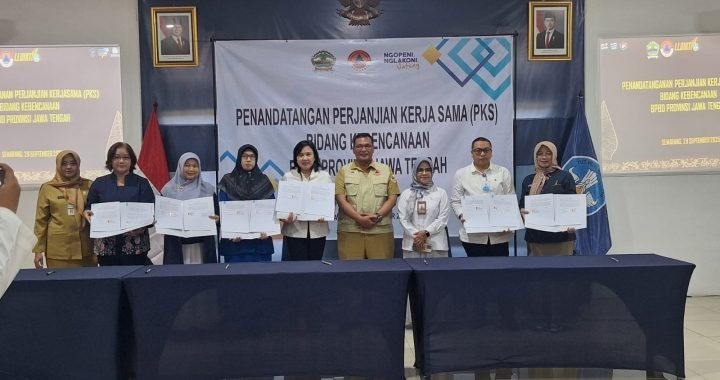
On 29 September 2025, the Government of Central Java and Universitas Islam Sultan Agung entered into a formal Cooperation Agreement concerning the implementation of higher-education tridharma activities in support of disaster management in Central Java.
The agreement was established between:
- Government of Central Java, represented through BPBD Provinsi Jawa Tengah; and
- Universitas Islam Sultan Agung, represented through its Research and Community Service Institute.
The agreement establishes a formal institutional basis for joint work in disaster management and related activities.
Purpose of the Cooperation
The cooperation is intended to strengthen the combined potential and resources of the participating institutions in supporting disaster-management implementation in Central Java.
The agreement states that collaboration is carried out through university tridharma activities, including education, research, and community service.
This approach enables academic expertise, research capacity, students, community-service programmes, government data, public-sector facilities, and disaster-management resources to be brought together within a coordinated framework.
Scope of Co-operative Disaster Planning
The cooperation covers a range of activities relevant to disaster planning, risk reduction, and resilience.
The scope includes:
- Support for priority disaster-management and environmental programmes of the Central Java Provincial Government;
- Activities in the field of disaster management;
- Research and development;
- Community service;
- Student internships and work-based learning;
- Teaching assistance in educational institutions;
- Humanitarian projects; and
- Other jointly agreed activities.
The agreement therefore goes beyond a general memorandum of understanding and provides an operational framework for coordinated activities involving government and university resources.
Climate-Related Disaster Context
Climate-related disasters are particularly relevant to Central Java because of recurring environmental risks affecting coastal, urban, and river-basin communities.
UNISSULA’s climate-related research, education, and community programmes have addressed issues such as:
- Flooding;
- Tidal flooding;
- Coastal vulnerability;
- Extreme rainfall;
- Water-management challenges;
- Sea-level-related risks;
- Infrastructure resilience; and
- Community preparedness.
These issues are consistent with the broader climate-action priorities incorporated into UNISSULA’s institutional planning, which identifies energy, emissions, water, waste, transport, environmental management, education, and sustainability research as areas requiring measurable action.
Integration of Disaster Planning with University Activities
UNISSULA contributes to co-operative disaster planning through the integration of disaster-related activities into teaching, research, innovation, and community service.
The university’s strategic framework emphasises research and community-service programmes that respond to real-world problems and generate measurable impact for society.
This allows disaster-management collaboration with government to include both technical and social dimensions.
Technical contributions may involve engineering, water management, infrastructure resilience, environmental monitoring, and risk assessment.
Social contributions may include public education, community preparedness, capacity building, humanitarian activities, and community-based adaptation.
Joint Use of Resources and Expertise
The cooperation agreement also establishes reciprocal responsibilities between the Government of Central Java and UNISSULA.
Government partners provide support such as data, information, facilities, programme materials, and disaster-management resources.
UNISSULA contributes academic personnel, researchers, students, expertise, educational activities, community-service capacity, and programme implementation.
This reciprocal arrangement allows disaster-related planning to benefit from both governmental operational experience and university research and educational expertise.
Research and Development for Disaster Resilience
Research and development are explicitly included within the scope of the cooperation.
This creates opportunities for UNISSULA researchers to support disaster planning through:
- Hazard and vulnerability studies;
- Flood and tidal-flood research;
- Water-management research;
- Resilient infrastructure development;
- Environmental monitoring;
- Community-resilience studies;
- Applied engineering solutions; and
- Evaluation of disaster-management strategies.
Research findings can therefore contribute to government decision-making and programme development while also strengthening academic understanding of climate-related disaster risks.
Community Service and Local Resilience
Community service is another major component of the cooperation.
UNISSULA’s community-engagement approach is designed to connect university knowledge with practical challenges faced by society.
The university’s Strategic Plan positions communities as partners in co-creation and beneficiaries of university activities, while government institutions provide policy direction, public resources, and implementation support.
This model is particularly relevant to disaster resilience because effective disaster planning requires cooperation among government institutions, universities, communities, and other stakeholders.
Humanitarian Projects
The cooperation agreement specifically includes humanitarian projects as part of its scope.
This enables UNISSULA students, academics, and institutional units to participate in activities supporting communities affected by disasters.
Humanitarian activities may complement preparedness, response, recovery, community education, and resilience-building programmes implemented together with government authorities.
Education and Disaster Preparedness
The cooperation also includes educational activities such as teaching assistance and disaster-related learning.
This creates a pathway for disaster preparedness and risk awareness to be incorporated into educational programmes involving schools, communities, students, and other stakeholders.
Educational activities can strengthen understanding of:
- Disaster risks;
- Environmental hazards;
- Preparedness measures;
- Community response;
- Climate adaptation;
- Resilience; and
- Risk-reduction strategies.
Coordination and Programme Evaluation
The agreement establishes coordination responsibilities between both parties.
UNISSULA is required to coordinate and report with the government partner in relation to programme implementation, evaluation, and follow-up.
This provides an institutional mechanism for ensuring that collaborative activities are not isolated events but part of a continuing process of implementation, assessment, and improvement.
Connection with UNISSULA’s Institutional Planning
The disaster-management cooperation is also consistent with UNISSULA’s wider institutional planning framework.
The Strategic Plan 2025–2029 uses a governance cycle involving target setting, programme implementation, monitoring, evaluation, risk management, corrective action, and continuous improvement.
This management approach supports the integration of climate resilience and disaster-risk reduction into institutional decision-making.
Pentahelix Collaboration
UNISSULA applies a pentahelix model of external collaboration involving:
- Government;
- Society;
- Industry;
- Media; and
- Academia.
Within this model, government provides policy direction and institutional support, while society participates as a partner and beneficiary.
The model is particularly useful for climate-related disaster planning because disaster resilience depends on cooperation across multiple sectors rather than action by a single institution.
Addressing Climate-Related Displacement Risks
Climate-related disasters can create conditions that disrupt livelihoods, damage homes and infrastructure, and in severe cases contribute to temporary or longer-term population displacement.
UNISSULA’s cooperation framework with government is designed primarily around disaster management, preparedness, resilience, research, community engagement, and humanitarian support.
Although population displacement is not identified as a separate stand-alone programme within the current cooperation agreement, the institutional framework provides a mechanism through which issues associated with disaster-affected communities, humanitarian needs, and recovery can be addressed in collaboration with government.
Evidence of Implementation
- Formal Cooperation Agreement between the Government of Central Java and UNISSULA dated 29 September 2025, concerning higher-education tridharma activities in support of disaster management in Central Java.
- Joint disaster-management framework, combining government resources with university education, research, and community-service capacity.
- Scope of cooperation covering disaster-management programmes, environmental priorities, research and development, community service, teaching assistance, and humanitarian projects.
- Government–university coordination mechanisms, including programme implementation, reporting, evaluation, and follow-up.
- UNISSULA Strategic Plan 2025–2029, which provides a broader environmental and climate-management framework covering energy, emissions, water, waste, transport, education, research, and measurable environmental performance.
- Pentahelix stakeholder model, in which government, communities, academia, industry, and media participate in collaborative problem-solving and social impact.
13.3.4
Inform And Support Government
13.3.4 Informing and Supporting Government in Climate-Related Disaster Risk Early Warning and Monitoring
Universitas Islam Sultan Agung (UNISSULA) supports local and regional government efforts in disaster-risk monitoring, preparedness, information exchange, research, and community resilience through formal institutional cooperation, particularly with the Government of Central Java through the Regional Disaster Management Agency (BPBD Provinsi Jawa Tengah).
This collaboration provides an institutional framework through which university expertise, research capacity, academic resources, community-service activities, and disaster-related information can support government efforts to understand, monitor, communicate, and respond to climate-related disaster risks.
The cooperation is particularly relevant to climate-related hazards affecting Central Java, including flooding, tidal flooding, extreme rainfall, coastal hazards, water-related risks, and other environmental conditions that require monitoring, preparedness, and effective communication with communities.
Formal Cooperation with the Government of Central Java
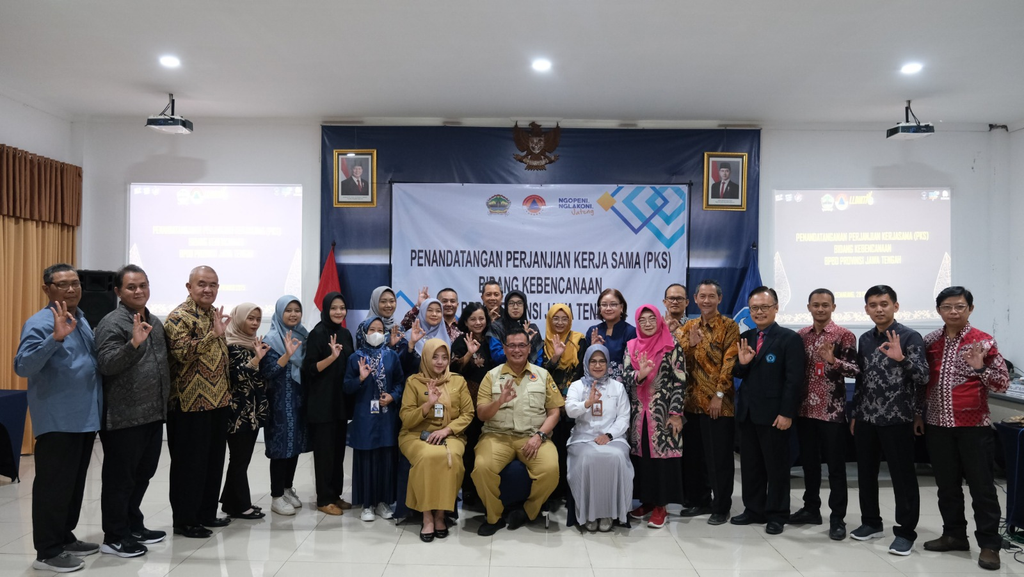
On 29 September 2025, UNISSULA and the Government of Central Java established a formal Cooperation Agreement concerning the implementation of higher-education tridharma activities in support of disaster management in Central Java.
The agreement provides a structured basis for collaboration between the university and BPBD Provinsi Jawa Tengah in disaster-management activities, research and development, community service, education, humanitarian activities, and other mutually agreed programmes.
This formal relationship enables UNISSULA to contribute academic and technical capacity to government disaster-risk management while also providing a mechanism for sharing information, research findings, and community-based knowledge.
Supporting Disaster-Risk Information
Effective early warning and disaster monitoring depend on the availability and communication of reliable information.
Through its cooperation framework with BPBD, UNISSULA participates in activities involving disaster-related data, information, academic expertise, research, and programme implementation.
Government partners may provide relevant disaster information, operational knowledge, and access to supporting facilities, while UNISSULA contributes researchers, academics, students, analytical capacity, community-service programmes, and scientific expertise.
This two-way exchange strengthens the ability of government and university partners to understand disaster risks and support preparedness and monitoring activities.
Climate-Related Disaster Risks
Climate-related risks are an important component of UNISSULA’s environmental and community-engagement activities.
Central Java faces a range of hazards associated with changing environmental conditions, including:
- River and urban flooding;
- Tidal flooding in coastal communities;
- Extreme rainfall;
- Coastal vulnerability;
- Water-management challenges;
- Infrastructure disruption; and
- Environmental risks affecting communities and public services.
UNISSULA addresses these issues through research, environmental monitoring, community engagement, disaster-management collaboration, and education.
Its Strategic Plan 2025–2029 identifies environmental performance areas including energy, emissions, water, waste, transport, open space, sustainability education, and sustainability research, establishing an institutional basis for measurable environmental action.
Disaster Risk Monitoring
UNISSULA supports disaster-risk monitoring through research and academic activities related to environmental conditions, flooding, water management, coastal areas, infrastructure, and community vulnerability.
Research and development are explicitly included in the formal cooperation with BPBD Central Java.
This allows academic findings and technical analysis to contribute to a wider government disaster-management framework.
Monitoring-related support may include the assessment of environmental risks, identification of vulnerable areas, analysis of community impacts, evaluation of infrastructure conditions, and examination of potential measures for reducing disaster impacts.
Early-Warning Awareness and Preparedness
UNISSULA’s role in early warning is closely connected with risk information, preparedness, education, and communication.
Early warning is not limited to the operation of warning devices. An effective disaster-risk approach also requires communities and institutions to:
- Understand existing hazards;
- Recognise changing environmental conditions;
- Receive and interpret risk information;
- Understand appropriate responses;
- Prepare for potential disaster impacts; and
- Coordinate with responsible government agencies.
Through university–government cooperation, research, education, and community service, UNISSULA contributes to these preparedness functions.
The university supports the development and dissemination of knowledge that can assist government institutions and communities in understanding and responding to disaster risks.
Research Support for Government
Research and development form an important component of UNISSULA’s cooperation with government.
University researchers can contribute expertise in areas such as:
- Flood-risk assessment;
- Tidal-flood and coastal vulnerability;
- Water-resource management;
- Resilient infrastructure;
- Environmental engineering;
- Community adaptation;
- Disaster-risk communication; and
- Evaluation of mitigation and preparedness measures.
This research capacity enables UNISSULA to support evidence-based government decision-making and provides a scientific basis for understanding changing disaster risks.
The university’s Strategic Plan also emphasises research and community service that generate measurable impact for society rather than being limited to academic outputs alone.
Community-Based Risk Information
Local communities play an important role in climate-related disaster monitoring and preparedness.
UNISSULA’s institutional collaboration model identifies society as a partner in co-creation and a beneficiary of university programmes, while government provides policy direction and institutional support.
This approach enables information from research, government agencies, and community experience to be connected.
Community engagement may help identify local conditions, vulnerable locations, recurring flood patterns, infrastructure problems, and preparedness needs that can support wider disaster-risk assessment.
Flood and Coastal Risk Support
UNISSULA has particular academic and community-engagement experience related to flood and coastal risks.
These areas are highly relevant to climate-related disaster monitoring because coastal and low-lying communities in Central Java may experience tidal flooding, heavy rainfall, drainage problems, and other water-related hazards.
University expertise in engineering, water management, environmental planning, infrastructure, and community resilience can therefore support government efforts to understand and reduce these risks.
Information Exchange with Government
The cooperation framework with BPBD establishes a formal channel for communication between university and government.
Such information exchange enables research findings, community observations, technical expertise, and academic analysis to be linked with government disaster-management information and operational priorities.
This relationship is important because effective monitoring and early warning require collaboration between institutions that generate knowledge and institutions responsible for public disaster management.
Integration with Community Service
Community service is explicitly included in the cooperation between UNISSULA and BPBD Central Java.
Through community-service activities, university knowledge can be translated into:
- Disaster-risk education;
- Preparedness awareness;
- Community capacity building;
- Environmental education;
- Flood-risk awareness;
- Resilience activities; and
- Support for vulnerable communities.
These activities help ensure that disaster-risk information is not limited to institutional reports but can be communicated to people who may directly experience climate-related hazards.
Humanitarian and Disaster Response Support
The formal cooperation agreement also includes humanitarian projects.
Humanitarian activities can support communities before, during, and after disasters through education, preparedness, assistance, assessment, and recovery-related activities.
Experience from humanitarian and community programmes can also provide information that contributes to future risk reduction and preparedness planning.
Institutional Monitoring and Evaluation
UNISSULA’s Strategic Plan establishes a broader performance-management framework based on monitoring, evaluation, evidence, risk management, and continuous improvement.
The university conducts operational review, periodic performance review, annual evaluation, and corrective action as part of its institutional governance cycle.
This monitoring culture supports the university’s capacity to manage disaster-related collaboration systematically rather than treating activities as isolated projects.
Pentahelix Approach to Disaster Risk Management
UNISSULA uses a pentahelix collaboration model involving government, communities, industry, media, and academia.
Within this model:
- Government provides policy direction and institutional support;
- Universities contribute research and scientific expertise;
- Communities provide local knowledge and participate in resilience activities;
- Industry may contribute technology and operational resources; and
- Media can support public information and awareness.
The Strategic Plan explicitly positions government and society as important partners in institutional collaboration.
This multi-stakeholder approach is particularly valuable for early warning and disaster-risk monitoring because climate-related risks often require information and action from multiple institutions.
Evidence of Implementation
- Formal Cooperation Agreement between the Government of Central Java through BPBD and UNISSULA, dated 29 September 2025, supporting disaster-management activities through university education, research, and community service.
- Research and development collaboration included within the formal cooperation framework, enabling academic expertise to support disaster-risk assessment and government decision-making.
- Exchange of data, information, resources, expertise, and institutional support between university and government within disaster-management programmes.
- Community-service and humanitarian activities included in the cooperation framework, supporting disaster preparedness, risk awareness, and community resilience.
- UNISSULA Strategic Plan 2025–2029, which establishes measurable environmental action in areas including emissions, water, energy, transport, environmental education, and sustainability research.
- Institutional pentahelix collaboration framework, connecting government, communities, academia, industry, and media in addressing societal challenges.
- Continuous monitoring and evaluation framework, enabling programmes and risks to be reviewed and improved through evidence-based institutional governance.
13.3.5
Environmental Education Collaborate With NGO
13.3.5 Collaboration with NGOs on Climate Adaptation
Universitas Islam Sultan Agung (UNISSULA) collaborates with non-governmental organisations and independent foundations on climate adaptation, water resilience, and community-based environmental solutions. A key example is the university’s collaboration with Wetskills Foundation, The Netherlands, an independent foundation that develops international water challenges bringing together universities, professionals, governments, and communities.
Wetskills Foundation identifies itself as an independent foundation based in the Netherlands and works on water and sustainability challenges through collaborative, multidisciplinary programmes.
UNISSULA’s cooperation with Wetskills provides a structured platform for addressing practical climate-adaptation challenges, particularly those affecting coastal and urban communities in Semarang.

Formal Collaboration with Wetskills Foundation
UNISSULA and Wetskills Foundation established a formal Memorandum of Understanding providing a framework for educational and research cooperation.
The agreement includes the possibility of jointly conducting the Wetskills Challenge in Semarang, facilitating mobility of students, academic staff, and professionals for research, lectures, and discussions, and seeking support for mutually beneficial projects.
This formal cooperation provides the institutional basis for joint activities in water management, sustainability, climate resilience, education, research, and innovation.
Wetskills-Indonesia 2025 at UNISSULA
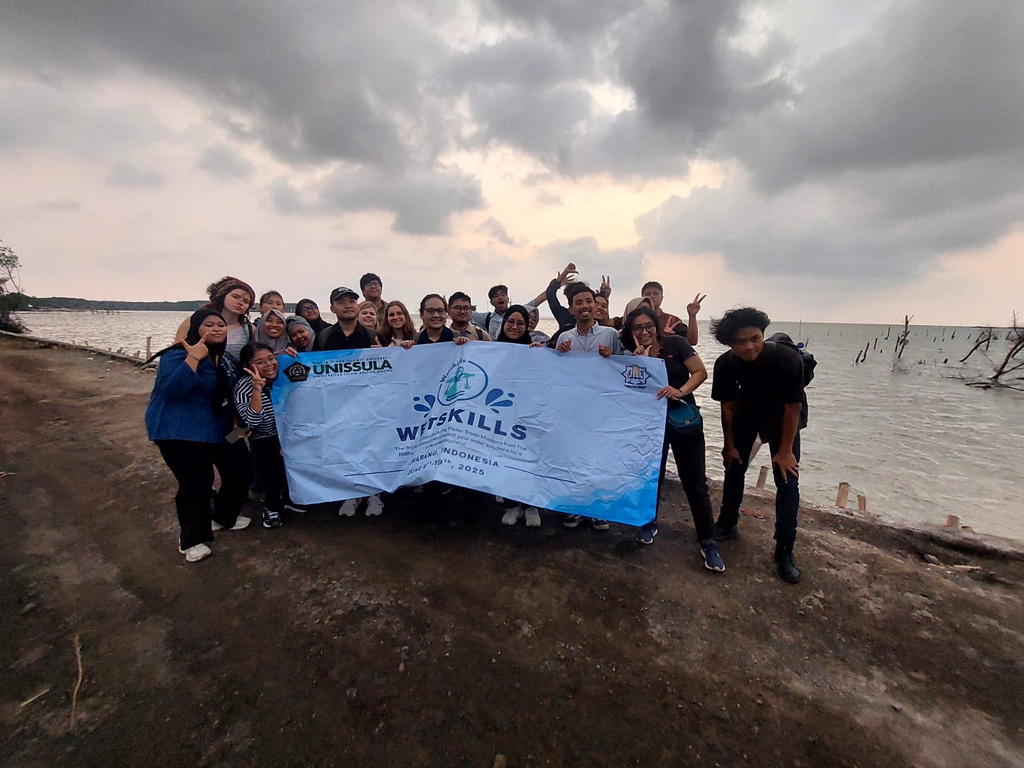
The collaboration was implemented through Wetskills-Indonesia 2025, held in Semarang from 8–19 June 2025, with UNISSULA serving as a venue and partner.
The programme brought together 24 young talents from different countries to work on real-life water challenges affecting Semarang and surrounding areas. According to Wetskills, the city faces land subsidence, frequent flooding, wastewater-management problems, and other pressures that are becoming more severe because of rapid urbanisation and climate change.
Participants worked in multidisciplinary teams supported by experts, local partners, field visits, and case owners to develop practical and innovative responses.
Climate Adaptation through Water Resilience
Water management is a critical part of climate adaptation in coastal cities.
The Wetskills programme addressed several practical challenges directly connected with climate resilience, including:
- Coastal flooding;
- Groundwater depletion;
- Wastewater reuse;
- Flood-basin planning;
- Community engagement in water management;
- Natural coastal protection;
- Water security; and
- Local resilience to climate change.
The programme was therefore not limited to general environmental awareness. It asked participants to develop concrete solutions for real climate- and water-related challenges faced by communities and public institutions.
Community Engagement for Climate Resilience
One of the Wetskills-Indonesia 2025 cases specifically focused on engaging communities in water solutions.
The case recognised that Indonesian communities experience frequent local and coastal flooding and that technical measures by government are more effective when residents understand, support, and participate in resilience-building efforts.
The challenge explored how local governments can move beyond awareness-raising and achieve genuine community participation in water and climate resilience.
The stated objective was to strengthen communities so that they become more resilient to their living environment and climate change.
This community dimension is particularly important because effective climate adaptation requires not only infrastructure but also public understanding, participation, and behavioural change.
Field-Based Climate Adaptation Learning
UNISSULA and Wetskills combined academic activities with field-based learning.
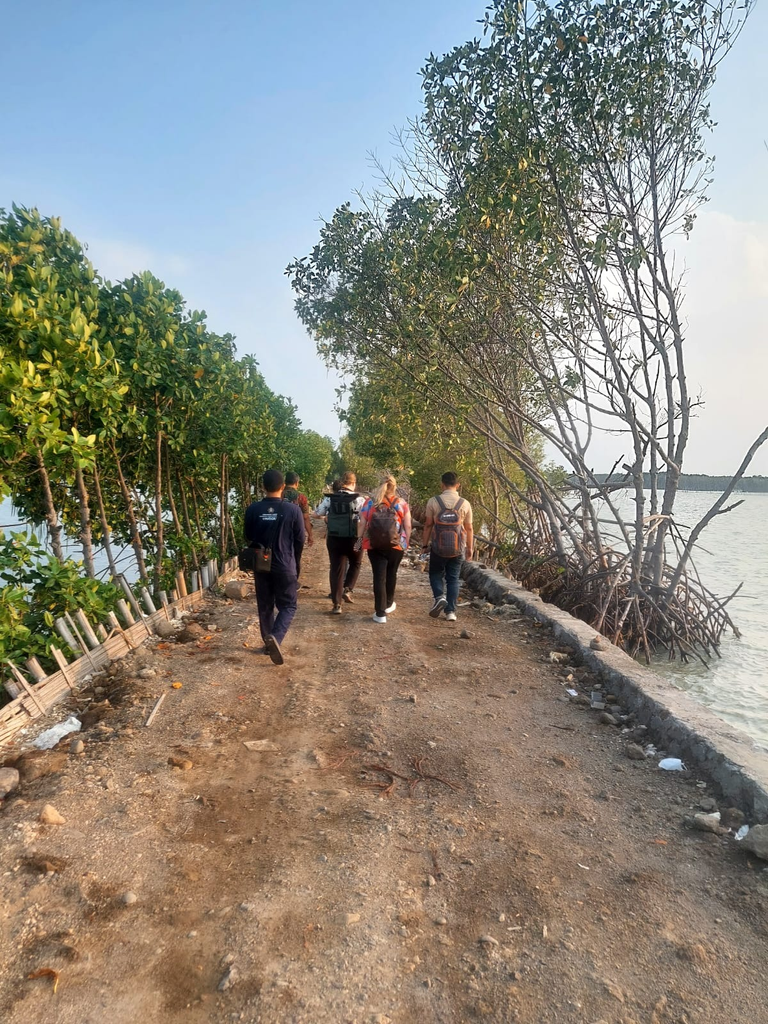
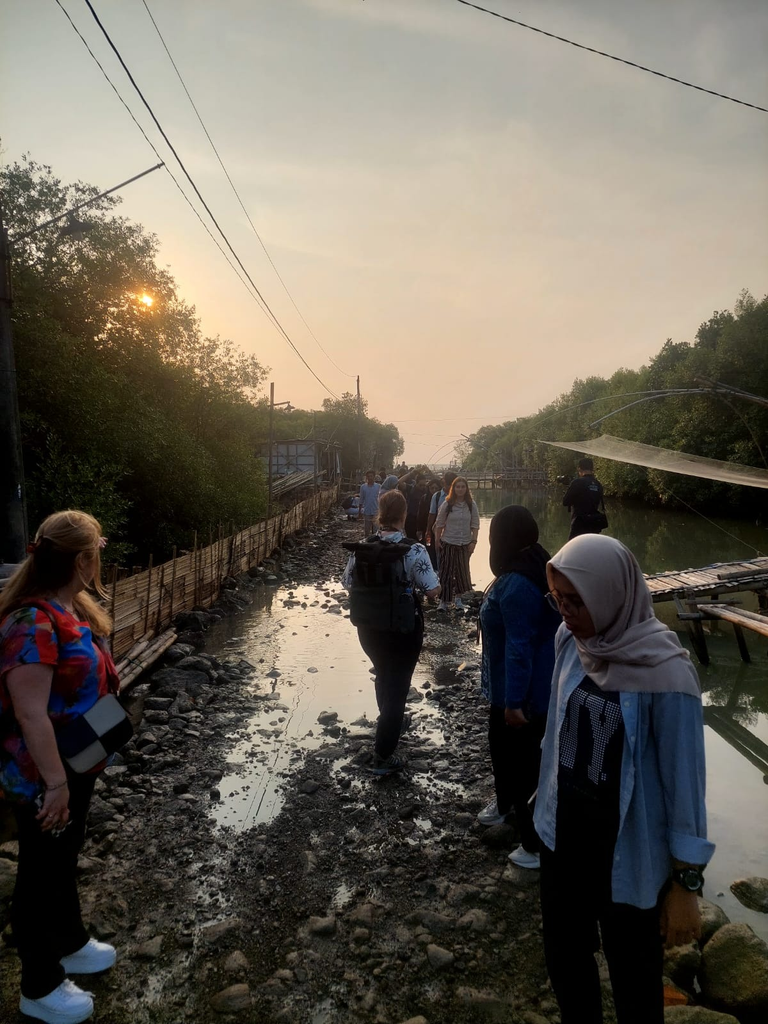
The photographs documenting the 2025 programme show participants conducting visits to coastal and water-related environments in Semarang. These activities enabled participants to directly observe environmental conditions, coastal ecosystems, water infrastructure, settlement conditions, and climate-related vulnerabilities.
Field observation allowed teams to connect technical analysis with the realities faced by local communities.
The documentation also shows international and Indonesian participants working together under the Wetskills-Indonesia 2025 programme, strengthening knowledge exchange between different academic and professional backgrounds.
Coastal Adaptation and Nature-Based Approaches
One of the cases in Wetskills-Indonesia 2025 addressed the development of natural foreshores for Semarang.
Nature-based coastal approaches can strengthen coastal resilience while supporting environmental functions and reducing vulnerability to flooding and erosion.
The field activities documented during the programme included visits to mangrove and coastal environments, providing participants with opportunities to understand the relationship between coastal ecosystems, water systems, infrastructure, and climate adaptation.
These activities reinforced the programme’s practical focus on building resilience in vulnerable coastal environments.
Responding to Flooding and Sea-Level-Related Risks
Semarang faces significant water-related challenges.
Wetskills describes problems including frequent flooding, land subsidence, sea-level rise, and inadequate wastewater management, noting that these challenges are becoming more severe because of climate change and urban development.
Through collaboration with Wetskills Foundation, UNISSULA contributes to the development of innovative ideas that can support adaptation to these pressures.
Students and young professionals are encouraged to analyse technical, social, environmental, and governance dimensions rather than approaching climate adaptation from a single disciplinary perspective.
Multi-Stakeholder Collaboration
The Wetskills model connects academia with government, the water sector, professionals, communities, and other organisations.
The 2025 programme included case owners and partners from local and international water-sector organisations and involved challenges relevant to local government and community needs.
This model supports climate adaptation because water-related climate risks generally require coordinated responses involving multiple stakeholders.
UNISSULA’s participation therefore contributes to a broader ecosystem of climate-resilience planning and innovation.
Sustainable Water Management and Innovation
The UNISSULA–Wetskills partnership was further strengthened in 2025 through a formal continuation of cooperation focused on sustainable water management and innovation.
Wetskills reported that a Memorandum of Agreement was signed during the Dutch Trade Mission to Indonesia, continuing the collaboration between the two organisations.
The agreement includes future Wetskills activities in Indonesia, follow-up research through the WetsNext framework, and knowledge exchange among students and professionals.UNISSULA also publicly reported that the agreement strengthens youth engagement and water cooperation and supports sustainable water management, innovation, research, and knowledge exchange.
Education and Capacity Building
An important feature of the partnership is the involvement of students and young professionals.
Participants are not only introduced to climate and water problems but are required to:
- Analyse real-world cases;
- Interact with local stakeholders;
- Participate in field visits;
- Work in international teams;
- Develop innovative solutions;
- Evaluate technical and social feasibility; and
- Present recommendations to experts and stakeholders.
This approach develops practical capacity for climate adaptation and prepares future professionals to address increasingly complex environmental challenges.
From Climate Challenges to Practical Solutions
Wetskills-Indonesia 2025 emphasised solution development rather than discussion alone.
Teams worked on real cases related to climate resilience and water management and presented their proposed solutions to expert juries and relevant stakeholders.
The programme culminated in the Wetskills Finals and Awarding Ceremony associated with the Netherlands–Indonesia Water Mission in Semarang.
This process connects education, NGO collaboration, technical innovation, and practical climate adaptation.
Continued Research and Knowledge Exchange
The collaboration is designed to continue beyond individual events.
The 2025 cooperation includes opportunities for:
- Follow-up research;
- Future Wetskills Challenges;
- Knowledge exchange;
- Student and professional engagement;
- Joint water-sector initiatives; and
- Development of further practical solutions.
This continuity is important because climate adaptation requires sustained collaboration and iterative improvement rather than one-time activities.
Evidence of Implementation
- Formal Memorandum of Understanding between UNISSULA and Wetskills Foundation, The Netherlands, establishing cooperation in education, research, Wetskills Challenges, mobility, and mutually beneficial projects.
- Wetskills Foundation is an independent foundation based in the Netherlands, providing the NGO/non-governmental partner basis for the collaboration.
- Wetskills-Indonesia 2025 in Semarang, held from 8–19 June 2025 with UNISSULA involvement and participation by international young professionals and students.
- Climate-adaptation challenges addressed during the programme, including flooding, groundwater depletion, wastewater reuse, flood-basin planning, community engagement, water resilience, and coastal challenges.
- Field documentation from the 2025 programme, showing participants visiting coastal, mangrove, and water-related environments and conducting practical observation related to local resilience challenges.
- Community-focused climate resilience case, addressing how local governments and communities can work together to respond to flooding and become more resilient to climate change.
- Formal continuation of UNISSULA–Wetskills cooperation in 2025, including future Wetskills activities, WetsNext research, sustainable water management, innovation, and knowledge exchange.
13.4.1
Commitmen-t To Carbon Neutral University
13.4.1 Commitment to Carbon Neutrality
Universitas Islam Sultan Agung (UNISSULA) is committed to reducing greenhouse gas emissions and strengthening institutional climate action through a long-term pathway toward carbon neutrality.
As part of the UNISSULA Strategic Plan 2025–2029, the university has established a target to achieve carbon neutrality by 2040 in accordance with the Greenhouse Gas Protocol. The commitment covers Scope 1 and Scope 2 emissions, with the progressive inclusion of relevant Scope 3 emissions as institutional data, measurement systems, and implementation capacity continue to develop.
This commitment provides a long-term direction for integrating emissions reduction into university operations, energy management, mobility, waste management, infrastructure, education, research, and institutional governance.
Carbon Neutrality Target
UNISSULA has established the following institutional direction:
UNISSULA targets carbon neutrality by 2040 in accordance with the Greenhouse Gas Protocol, covering Scope 1 and Scope 2 emissions, with the progressive inclusion of relevant Scope 3 emissions.
The target is incorporated into the university’s strategic planning framework under its climate-action agenda.
The same framework also requires UNISSULA to develop and improve its emissions inventory, monitor emissions reduction, implement climate-adaptation measures, strengthen emergency preparedness, and maintain supporting evidence such as energy and travel data, calculation methodologies, risk maps, simulation results, incident records, and follow-up reports.
Alignment with the Greenhouse Gas Protocol
UNISSULA uses the Greenhouse Gas Protocol framework as a reference for defining the institutional boundaries of greenhouse gas emissions.
Under this framework:
- Scope 1 covers direct greenhouse gas emissions from sources owned or controlled by the university.
- Scope 2 covers indirect greenhouse gas emissions associated with purchased energy, particularly electricity used in university facilities.
- Scope 3 covers other indirect greenhouse gas emissions associated with university activities and value-chain operations.
UNISSULA’s 2040 commitment explicitly includes Scope 1 and Scope 2, while Scope 3 coverage will be progressively expanded as reliable institutional data becomes available.
This progressive approach enables the university to improve the completeness and quality of its emissions inventory while maintaining transparent and evidence-based reporting.
Scope of the 2040 Commitment
| Emission Scope | UNISSULA Commitment |
|---|---|
| Scope 1 | Included |
| Scope 2 | Included |
| Scope 3 | Progressive inclusion of relevant categories |
| Carbon neutrality target | 2040 |
| Reference framework | Greenhouse Gas Protocol |
The approach reflects UNISSULA’s commitment to establishing a measurable and realistic pathway toward institutional carbon neutrality.
Institutional Emissions Inventory
The development of an institutional emissions inventory is an important component of UNISSULA’s climate strategy.
The Strategic Plan identifies the completeness of the emissions inventory and the reduction of emissions per university community member as climate-performance measures. It also identifies supporting evidence including energy and travel data and calculation methodologies.
These measures provide a basis for improving the identification, calculation, monitoring, and reduction of greenhouse gas emissions over time.
The university will continue strengthening its emissions-data systems so that climate performance can be assessed consistently and supported by verifiable institutional records.
Scope 1 Emissions
Scope 1 represents direct emissions from sources under university ownership or operational control.
Relevant sources may include direct fuel consumption associated with university operations, vehicles, generators, and other controlled activities.
The university’s broader environmental management framework already recognises emissions as a measurable institutional environmental indicator.
UNISSULA’s Strategic Plan requires environmental action to be translated into measurable performance covering areas including energy, emissions, water, waste, transport, open space, sustainability education, and sustainability research.
This framework supports the systematic identification and reduction of direct emissions.
Scope 2 Emissions
Scope 2 relates primarily to emissions associated with purchased electricity and other purchased energy.
Energy management therefore forms an important component of UNISSULA’s pathway toward carbon neutrality.
The Strategic Plan integrates energy and emissions within the university’s environmental performance framework.
Actions supporting Scope 2 reduction include improvements in energy efficiency, monitoring of electricity consumption, implementation of lower-carbon technologies, and greater utilisation of renewable or low-carbon energy where feasible.
The relationship between energy use and emissions enables energy-management initiatives to contribute directly to the university’s long-term carbon-neutrality objective.
Progressive Inclusion of Scope 3
Scope 3 emissions are generally more complex to measure because they arise from activities connected to university operations but outside direct university ownership or control.
These may include categories associated with transport, travel, procurement, waste, water, purchased goods and services, and other indirect activities.
For this reason, UNISSULA has adopted a progressive Scope 3 approach rather than immediately claiming comprehensive Scope 3 coverage.
The university will gradually strengthen:
- Identification of relevant Scope 3 emission sources;
- Availability and quality of activity data;
- Calculation methodologies;
- Institutional responsibilities for data collection;
- Monitoring and verification; and
- Emissions-reduction measures.
This approach supports the development of a credible greenhouse gas inventory while allowing Scope 3 coverage to expand as institutional systems mature.
Energy Efficiency and Low-Carbon Transition
UNISSULA recognises that reducing energy-related emissions is central to the achievement of carbon neutrality.
The university’s strategic direction includes energy efficiency, controlled energy consumption, renewable energy utilisation, and low-carbon technology development.
The Strategic Plan also links energy performance with reductions in energy-related emissions, supported by evidence such as energy bills, meter data, energy audits, monitoring systems, and verification reports.
Together, these measures provide an operational foundation for reducing Scope 1 and Scope 2 emissions while supporting broader climate objectives.
Sustainable Mobility
Transport and mobility are also included within UNISSULA’s environmental framework.
The Strategic Plan identifies transport as one of the areas in which environmental performance should be measured.
Improving mobility patterns can contribute to both direct and indirect emissions reduction.
Potential measures include more efficient institutional transport, support for lower-emission mobility, improved pedestrian infrastructure, increased use of shared or public transportation, and improved measurement of university-related travel.
These efforts also contribute to the gradual development of relevant Scope 3 emissions data.
Waste and Resource Management
Waste reduction and improved resource management form another part of UNISSULA’s broader environmental strategy.
The Strategic Plan includes waste as a measurable environmental area alongside energy, emissions, water, transport, and open space.
Waste measurement, segregation, recycling, reduction of disposable materials, and responsible waste management support both environmental improvement and the future measurement of indirect greenhouse gas emissions.
As the university expands Scope 3 measurement, these operational data can contribute to a more comprehensive institutional emissions inventory.
Climate Mitigation and Adaptation
UNISSULA’s climate strategy addresses both mitigation and adaptation.
The Strategic Plan states that climate action includes:
- Emissions inventory;
- Energy and mobility efficiency;
- Strengthening green spaces;
- Waste reduction;
- Infrastructure adaptation; and
- Climate education.
It also identifies risks including flooding, heat waves, health disruption, and interruption of academic services, which are incorporated into institutional continuity planning.
This integrated approach reflects the recognition that carbon reduction must be accompanied by greater resilience to climate-related impacts.
Monitoring and Institutional Accountability
UNISSULA applies an evidence-based approach to institutional performance.
The Strategic Plan states that targets represent managerial ambitions and that achievement is recognised only after supporting evidence has been verified.
The university’s governance system includes:
- Target setting;
- Implementation;
- Performance monitoring;
- Evidence-based evaluation;
- Risk management;
- Corrective action; and
- Continuous improvement.
Operational reviews are conducted monthly, performance reviews quarterly, and institutional evaluations annually, with additional mid-term and final strategic-plan evaluations.
This governance mechanism provides a basis for monitoring progress toward the university’s 2040 carbon-neutrality commitment.
Integration with Research and Education
Carbon neutrality is not limited to campus operations.
UNISSULA also integrates sustainability, climate action, and low-carbon development into research and education.
The Strategic Plan identifies sustainability education and sustainability research alongside operational environmental indicators.Research, interdisciplinary learning, innovation, and community engagement can therefore contribute to the development of new approaches to energy efficiency, renewable energy, sustainable infrastructure, mobility, waste management, and climate resilience.
Long-Term Carbon Reduction Pathway
The 2040 target provides a long-term institutional direction beyond the current 2025–2029 Strategic Plan period.
During the current planning period, priority is placed on strengthening the foundations required for future carbon neutrality, including:
- Emissions inventory development;
- Energy monitoring;
- Emissions calculation methodologies;
- Energy efficiency;
- Low-carbon energy use;
- Emissions reduction;
- Improved mobility;
- Waste reduction;
- Climate adaptation; and
- Progressively broader Scope 3 data coverage.
These foundations will enable future institutional plans to establish increasingly detailed milestones toward the 2040 target.
Evidence of Implementation
- The UNISSULA Strategic Plan 2025–2029 establishes a carbon-neutrality target for 2040, aligned with the Greenhouse Gas Protocol and covering Scope 1, Scope 2, and progressive Scope 3 inclusion.
- The Strategic Plan requires an institutional emissions inventory and monitoring of emissions reduction, supported by energy and travel data, calculation methodologies, risk information, and follow-up documentation.
- Energy and emissions are explicitly included as measurable environmental indicators, together with water, waste, transport, open space, sustainability education, and research.
- Climate action includes energy efficiency, mobility, waste reduction, green spaces, infrastructure adaptation, and climate education, demonstrating that the carbon-neutrality commitment is supported by a broader institutional climate-action framework.
- Institutional targets are subject to evidence-based verification, ensuring that progress is supported by measurable and auditable information.
- UNISSULA maintains structured monitoring and evaluation mechanisms, including monthly, quarterly, annual, mid-term, and end-of-period review processes.