

















UNISSULA SUSTAINABILITY REPORTING
SDG 2 – Zero Hunger
Progress Report 2025
2025 Report Overview
In 2025, Universitas Islam Sultan Agung (UNISSULA) documented its progress towards SDG 2 – Zero Hunger through campus food-waste monitoring, student and staff food assistance, sustainable and affordable food provision, and support for local farmers and food producers. The university recorded 63.05 metric tonnes of food waste through monthly monitoring while implementing free-meal programmes, sustainable agricultural training, smart farming initiatives, and agricultural technology transfer. This report presents UNISSULA’s institutional initiatives, measurable achievements, and continuing priorities for improving food security and promoting sustainable food systems during the 2025 reporting period.
Full SDG 2 Progress Report 2025
2.2.1
Campus food waste tracking
2.2.1 Campus Food Waste Tracking
University-Wide Food Waste Measurement and Monitoring
Universitas Islam Sultan Agung (UNISSULA) systematically measures and monitors food waste generated across the university as part of its environmental sustainability and waste-management practices.
Throughout the 2025 reporting period, food waste was recorded monthly through the UNISSULA Waste Monitor, a digital monitoring system that separates food waste from other campus waste streams, including garden waste and other waste.
Based on monthly monitoring from January to December 2025, UNISSULA recorded a total of 63,050 kg of food waste, equivalent to 63.05 metric tonnes.
The availability of monthly quantitative data enables UNISSULA to monitor changes in food-waste generation, identify trends, evaluate waste-management performance, and support the development of future food-waste reduction initiatives.
Digital Food Waste Monitoring System
UNISSULA operates a digital Waste Monitor to record campus waste generation according to waste type and reporting period.
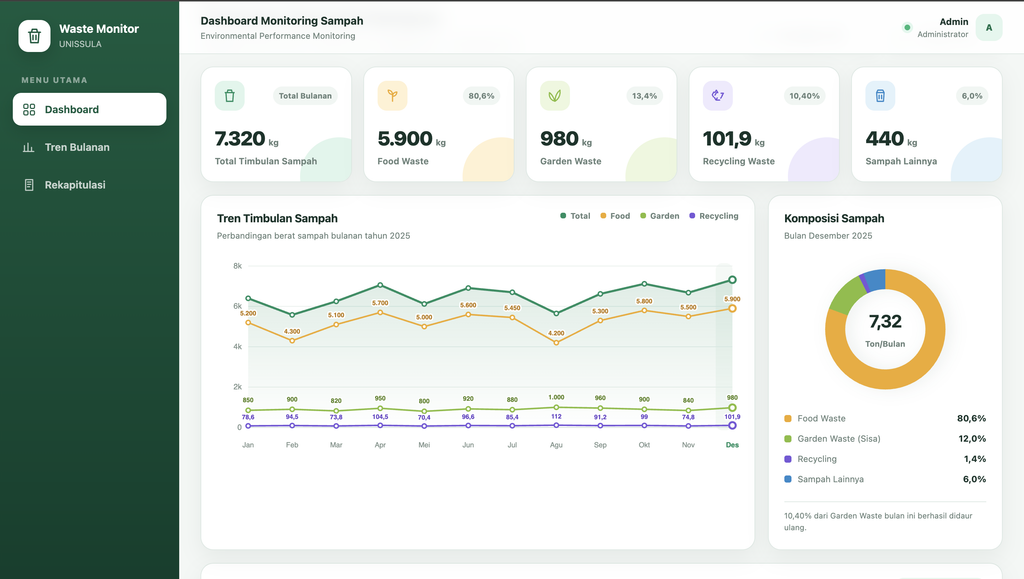
The monitoring system distinguishes between:
- Food Waste;
- Garden Waste;
- Other Waste; and
- Total Waste Generated.
Food waste is recorded separately in kilograms, allowing it to be measured independently from garden waste and other waste categories.
The system also provides monthly trend information covering the full reporting period from January to December 2025.
This separation enables UNISSULA to monitor food waste as a distinct waste stream rather than combining it with general organic waste, thereby improving the accuracy and transparency of institutional waste reporting.
Monthly Food Waste Measurement in 2025
UNISSULA recorded food waste every month throughout the 2025 reporting year.
| Month | Food Waste |
|---|---|
| January | 5,200 kg |
| February | 4,300 kg |
| March | 5,100 kg |
| April | 5,700 kg |
| May | 5,000 kg |
| June | 5,600 kg |
| July | 5,450 kg |
| August | 4,200 kg |
| September | 5,300 kg |
| October | 5,800 kg |
| November | 5,500 kg |
| December | 5,900 kg |
| Total 2025 | 63,050 kg |
| Total in Metric Tonnes | 63.05 metric tonnes |
The monthly records demonstrate continuous food-waste measurement throughout the reporting year rather than measurement at only a single point in time.
2025 Food Waste Measurement Summary
| Indicator | 2025 Result |
|---|---|
| Measurement coverage | University-wide |
| Monitoring period | January–December 2025 |
| Measurement frequency | Monthly |
| Number of monthly records | 12 months |
| Total food waste | 63,050 kg |
| Total food waste in metric tonnes | 63.05 metric tonnes |
| Monitoring system | UNISSULA Waste Monitor |
The annual total is calculated from the monthly food-waste records maintained through the university’s digital monitoring system.
Food Waste as a Distinct Waste Stream
UNISSULA differentiates food waste from other waste generated across the campus.
Food waste monitored through the system includes discarded food arising from food-service and food-consumption activities, such as:
- uneaten food;
- meal leftovers;
- food-preparation residues;
- spoiled or unusable food ingredients; and
- other discarded food materials.
Garden waste is recorded separately and is therefore not included in the food-waste total.
This distinction improves the reliability of food-waste measurement and enables UNISSULA to monitor food-related waste independently from leaves, landscaping materials, and other garden waste.
Example of Monthly Waste Composition
The December 2025 monitoring record illustrates how the system separates different campus waste streams.
| Waste Category | December 2025 | Share |
|---|---|---|
| Food Waste | 5,900 kg | 80.6% |
| Garden Waste | 980 kg | 13.4% |
| Other Waste | 440 kg | 6.0% |
| Total Waste Generated | 7,320 kg | 100% |
The December record demonstrates that food waste is quantitatively recorded as a separate category within UNISSULA’s waste-monitoring system.
Similar monthly monitoring is maintained throughout the reporting year.
Food Waste Monitoring Process
UNISSULA integrates food-waste measurement into its broader campus waste-management system.
The monitoring process includes:
- identifying sources of food waste;
- separating food waste from other waste streams;
- collecting food waste from designated areas;
- measuring the amount generated;
- recording measurements in kilograms;
- consolidating monthly food-waste data;
- monitoring trends throughout the year; and
- using the information for sustainability evaluation and improvement.
This process provides a quantitative basis for campus food-waste management and supports evidence-based sustainability planning.
Waste Segregation Infrastructure
Food-waste tracking is supported by waste-segregation infrastructure across UNISSULA.
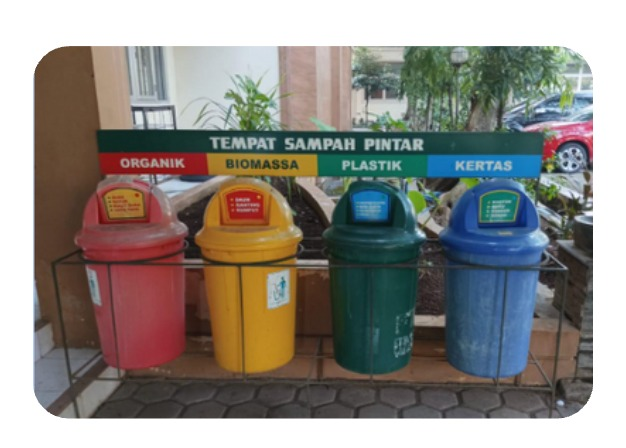
Designated waste containers are provided for different waste categories, including:
- organic waste;
- biomass;
- plastic; and
- paper.
Segregation at source helps prevent different waste streams from being mixed and supports more accurate collection, classification, and measurement.
Combined with the digital monitoring system, this infrastructure enables UNISSULA to maintain more reliable and structured waste data.
Monitoring Monthly Trends
Continuous monthly monitoring enables UNISSULA to observe variations in food-waste generation over time.
During 2025, monthly food waste ranged from:
- 4,200 kg in August, the lowest monthly value; to
- 5,900 kg in December, the highest monthly value.
These variations can be evaluated alongside university activities, food-service operations, academic schedules, and other factors that may influence campus food consumption.
Maintaining monthly records also enables UNISSULA to compare food-waste performance across future reporting periods.
Use of Food Waste Data
UNISSULA uses quantitative food-waste data to support environmental management and sustainability evaluation.
The data provide a basis for:
- monitoring food-waste generation;
- comparing monthly performance;
- identifying changes and trends;
- evaluating food-service waste patterns;
- improving waste-segregation practices;
- identifying opportunities for reducing food waste;
- evaluating future interventions; and
- supporting institutional sustainability reporting.
The 63.05 metric tonnes of food waste recorded in 2025 therefore serves as an institutional baseline against which future food-waste performance can be compared.
Data-Based Waste Management
UNISSULA’s food-waste management approach is based on measurable data rather than qualitative observation alone.
The digital monitoring system provides three key elements:
Separate food-waste classification → Monthly quantitative measurement → Annual data consolidation
This approach enables the university to establish a clear and measurable record of the quantity of food waste generated during the reporting period.
The system also enables UNISSULA to distinguish food waste from other forms of waste, particularly garden waste, thereby improving the accuracy and transparency of institutional food-waste reporting.
Continuous Improvement
UNISSULA continues to strengthen its food-waste monitoring and management practices.
Future development includes:
- maintaining consistent monthly measurement;
- strengthening digital data management;
- improving source-based tracking;
- evaluating food waste by food-service location;
- comparing annual food-waste performance;
- identifying areas with higher food-waste generation; and
- developing measurable food-waste reduction initiatives.
Long-term monitoring will enable the university to evaluate whether future interventions result in measurable reductions in food-waste generation.
Institutional Commitment to Food Waste Tracking
UNISSULA recognises that effective food-waste management requires consistent, reliable, and measurable data.
By maintaining monthly food-waste records, separating food waste from other waste streams, consolidating annual data, and using a digital monitoring system, the university establishes an evidence-based framework for food-waste management.
This approach enables UNISSULA to move beyond one-time measurement and maintain a continuous monitoring system that can support future reduction targets, waste-management improvements, and sustainability reporting.
Evidence of Implementation
UNISSULA’s food-waste tracking system is demonstrated through the following institutional evidence:
- A dedicated UNISSULA Waste Monitor for digital campus waste measurement.
- Monthly food-waste measurements from January to December 2025.
- A total of 63,050 kg (63.05 metric tonnes) of food waste recorded in 2025.
- Separate quantitative recording of Food Waste, Garden Waste, and Other Waste.
- Food-waste measurements recorded in kilograms.
- Monthly trend monitoring across the entire 2025 reporting period.
- Waste-composition monitoring by category.
- Campus waste-segregation infrastructure supporting source separation and waste classification.
- Consolidation and use of quantitative food-waste data for sustainability monitoring, evaluation, and future reduction planning.
2.3.1
Student food insecurity and hunger
2.3.1 Student Food Insecurity and Hunger
UNISSULA Student Food Security and Hunger Support Programme
Universitas Islam Sultan Agung (UNISSULA) implements a recurring food-support programme to help reduce the risk of food insecurity among students and members of the university community.
The programme provides direct access to free meals through regular food-distribution activities at Abu Bakar Assegaf Mosque, UNISSULA, and is complemented by additional food support during Ramadan.
This programme is designed as a continuing and coordinated form of support rather than a one-time activity. Its purpose is to ensure that students who may experience difficulties in accessing adequate food can obtain meals without financial cost while remaining engaged in their academic and campus activities.
Weekly Friday Free Meal Programme
One of the main components of UNISSULA’s student food-support programme is the Friday Free Meal Programme (Jumat Berkah) at Abu Bakar Assegaf Mosque.
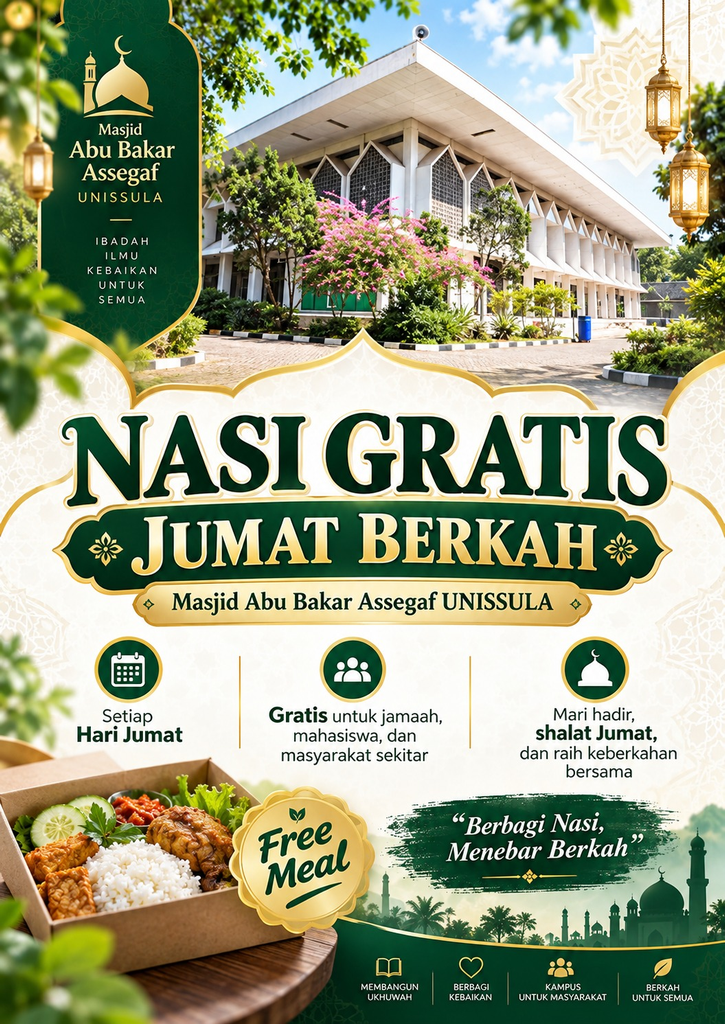
The programme is conducted every Friday and provides free ready-to-eat meals to:
- UNISSULA students;
- mosque worshippers; and
- members of the surrounding community.
Meals are distributed directly to beneficiaries without charge.
By operating on a recurring weekly basis, the Friday Free Meal Programme provides predictable and repeated access to free food throughout the academic year.
This regular schedule distinguishes the programme from one-time food-distribution activities and establishes it as an ongoing component of UNISSULA’s student welfare and social-support framework.
Direct Food Support for Students
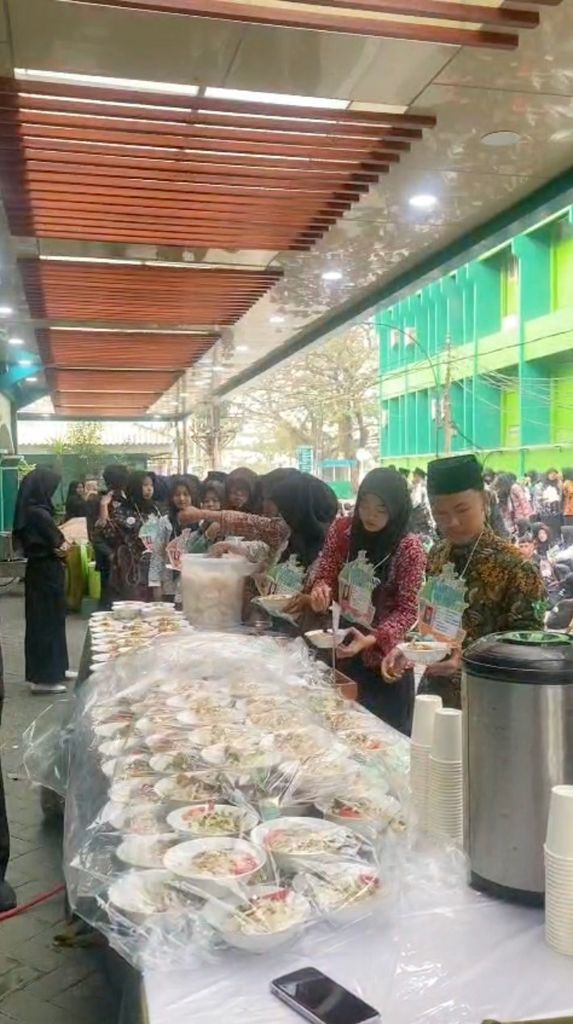
Students are explicitly included among the beneficiaries of the Friday Free Meal Programme.
Providing meals free of charge can support students who experience financial limitations or temporary difficulties in meeting their daily food needs.
By removing the financial cost of a meal, the programme helps improve access to food and supports students in maintaining participation in academic and campus activities.
The programme therefore addresses potential food insecurity through a direct and practical intervention rather than relying solely on awareness or information-based activities.
Ramadan Free Iftar and Suhoor Programme
UNISSULA further strengthens student food support during the month of Ramadan through the provision of free iftar and suhoor meals.
This programme provides meals to students and members of the university community during Ramadan, when food-support needs are concentrated around fasting schedules.
The Ramadan programme complements the regular Friday Free Meal Programme by expanding direct food assistance during a specific period of increased need.
Together, these initiatives provide:
- regular weekly food assistance throughout the year; and
- additional food support during Ramadan.
Continuous and Coordinated Food Support
UNISSULA’s approach to student food security is based on recurring and coordinated support.
The programme combines:
- regular weekly free meals;
- additional Ramadan meal support;
- on-campus food distribution;
- direct access to ready-to-eat meals; and
- institutional and community participation.
This approach allows food assistance to be provided repeatedly rather than only in response to isolated events.
The recurring nature of these activities demonstrates UNISSULA’s continuing commitment to reducing the risk of student hunger and food insecurity.
Programme Location and Accessibility
The Friday Free Meal Programme is implemented at Abu Bakar Assegaf Mosque, UNISSULA, located within the university environment.
The on-campus location makes the programme accessible to students during their academic and campus activities.
Students do not need to travel outside the university to access the support, making the programme practical, visible, and easy to reach.
Supporting Students at Risk of Food Insecurity
Food insecurity may occur when students do not have reliable access to sufficient and affordable food.
UNISSULA’s food-support programme helps reduce this risk by providing meals free of charge.
The programme is particularly relevant for students who may experience:
- financial limitations;
- temporary economic difficulties;
- limited access to affordable meals; or
- other circumstances affecting their ability to obtain food consistently.
By providing food directly and repeatedly, UNISSULA offers a practical support mechanism that can help students maintain access to meals during their studies.
Student Welfare and Social Responsibility
The food-support programme forms part of UNISSULA’s broader commitment to student welfare, social responsibility, and community support.
UNISSULA recognises that student success depends not only on academic services but also on access to basic needs that support well-being and continued participation in university life.
Through recurring food assistance, UNISSULA supports:
- student well-being;
- access to basic food needs;
- inclusive campus participation;
- social solidarity; and
- a supportive university environment.
Programme Continuity in 2025
The Student Food Security and Hunger Support Programme continued during the 2025 reporting period.
In 2025, UNISSULA maintained:
- the Weekly Friday Free Meal Programme (Jumat Berkah) at Abu Bakar Assegaf Mosque; and
- the Ramadan Free Iftar and Suhoor Programme.
The continuation of these initiatives demonstrates that student food support is maintained as an ongoing programme rather than being implemented only as an occasional or one-time activity.
Institutional Commitment to Student Food Security
UNISSULA recognises access to food as an important element of student welfare and study continuity.
By providing recurring free meals on campus and expanding food assistance during Ramadan, the university establishes a direct support mechanism for students and other members of the university community who may experience difficulties in accessing adequate food.
This approach strengthens UNISSULA’s broader student-support system by addressing an essential daily need through practical and recurring assistance.
Evidence of Implementation
UNISSULA’s Student Food Security and Hunger Support Programme is demonstrated through the following institutional evidence:
- A recurring free-meal programme conducted every Friday.
- UNISSULA students are explicitly included among the programme beneficiaries.
- Ready-to-eat meals are provided free of charge.
- The programme is implemented on campus at Abu Bakar Assegaf Mosque, UNISSULA.
- The programme continued throughout the 2025 reporting period.
- Additional free iftar and suhoor meals are provided during Ramadan.
- Food assistance is provided directly to beneficiaries rather than limited to food-related information or awareness activities.
- The programme operates repeatedly and forms part of UNISSULA’s broader student welfare and social-support framework.
2.3.2
Students hunger interventions
2.3.2 Students Hunger Interventions
Direct Food Support for Students at UNISSULA
Universitas Islam Sultan Agung (UNISSULA) provides direct food-support interventions to help prevent and alleviate hunger among students.
The university implements practical food-assistance activities through recurring free-meal distribution, Ramadan food support, food packages, and student welfare initiatives. These interventions are intended to help students experiencing economic difficulties or limited access to food obtain meals and continue their academic activities without basic food needs becoming a barrier.
UNISSULA’s student hunger interventions involve collaboration among university units, campus mosque management, student organisations, social institutions, volunteers, and members of the university community.
Friday Free Meal Intervention
One of UNISSULA’s main direct food interventions is the Friday Free Meal Programme (Jumat Berkah) conducted at Abu Bakar Assegaf Mosque, UNISSULA.

The programme distributes ready-to-eat meals free of charge and explicitly includes UNISSULA students among its beneficiaries.
The intervention provides:
- free ready-to-eat meals;
- direct on-campus access to food;
- recurring distribution every Friday;
- support for students who may face financial or food-access difficulties; and
- an easily accessible food-support point within the university environment.
Because meals are provided directly and free of charge, the programme represents a practical intervention to help reduce the risk of hunger among students.
Direct Assistance for Students in Need
UNISSULA also provides food assistance and social support for students experiencing economic challenges or difficulties in meeting basic daily needs.
Student hunger interventions include:
- distribution of food assistance for students in need;
- food-sharing activities;
- student welfare support through university social institutions; and
- assistance for economically disadvantaged students.
These interventions help students maintain access to food while continuing their education and participating in university activities.
Ramadan Free Iftar and Suhoor Intervention
During Ramadan, UNISSULA strengthens its student food-support interventions through the provision of free iftar and suhoor meals.
This programme provides direct food assistance at times when students require access to meals around fasting schedules.
Ramadan food-support activities include:
- distribution of free iftar meals;
- provision of food packages;
- free suhoor support;
- direct food distribution to students; and
- collaboration among university units, campus mosques, student organisations, volunteers, and social institutions.
These activities complement the regular Friday Free Meal Programme by increasing direct food support during Ramadan.
Practical and Direct Hunger Intervention
UNISSULA’s approach prioritises direct food provision rather than relying solely on food-related awareness, education, or information.
Students can receive actual meals and food assistance through:
- weekly free-meal distribution;
- Ramadan iftar and suhoor programmes;
- food packages;
- direct student food assistance;
- basic-needs support; and
- social welfare assistance.
This practical approach helps reduce the immediate effects of food insecurity among students who may otherwise have difficulty obtaining sufficient food.
LAZIS UNISSULA and Student Welfare Support
LAZIS UNISSULA contributes to student welfare through social-assistance programmes supported by zakat, infaq, sadaqah, and other charitable resources.
Its support includes:
- assistance for economically disadvantaged students;
- basic-needs support;
- social and humanitarian assistance; and
- welfare support for vulnerable beneficiaries.
These forms of assistance complement direct food-distribution programmes by supporting students whose financial circumstances may affect their ability to meet basic daily needs, including access to food.
On-Campus Accessibility
UNISSULA’s student hunger interventions are implemented within the university environment.
The Friday Free Meal Programme at Abu Bakar Assegaf Mosque provides a visible and accessible location where students can obtain food while participating in academic and campus activities.
On-campus provision reduces barriers to accessing assistance because students do not need to travel outside the university to receive food support.
Student Participation and Community Support
Students participate not only as beneficiaries but also as contributors to UNISSULA’s food-support and social-welfare initiatives.
Student participation may include:
- volunteering in food-distribution activities;
- organising food-support programmes;
- supporting Ramadan activities;
- assisting university social institutions; and
- participating in community-service and welfare initiatives.
This participation strengthens social solidarity within the university and helps sustain recurring food-support activities.
Intervention Continuity in 2025
During the 2025 reporting period, UNISSULA continued to provide direct student hunger interventions through:
- the Weekly Friday Free Meal Programme at Abu Bakar Assegaf Mosque;
- free Ramadan iftar and suhoor support;
- food packages and direct food assistance;
- student welfare and basic-needs assistance; and
- support for economically disadvantaged students.
These interventions provide direct and practical assistance aimed at preventing or alleviating student hunger.
Institutional Commitment to Hunger Intervention
UNISSULA recognises that students’ ability to participate successfully in higher education can be affected when basic food needs are not adequately met.
For this reason, the university combines recurring food distribution, seasonal Ramadan support, social assistance, and student welfare mechanisms to provide direct support to students who may experience food insecurity or economic hardship.
This approach strengthens UNISSULA’s wider student-support framework by ensuring that hunger is addressed through practical interventions that provide food and basic-needs assistance directly to beneficiaries.
Evidence of Implementation
UNISSULA’s student hunger interventions are demonstrated through the following institutional evidence:
- Recurring Friday free-meal distribution for students.
- Free ready-to-eat meals provided directly on campus.
- Free iftar and suhoor meals during Ramadan.
- Food packages provided during Ramadan and related food-support activities.
- Direct food assistance for students in need.
- Basic-needs support for economically disadvantaged students.
- Student welfare assistance through university social institutions, including LAZIS UNISSULA.
- Participation of student organisations and volunteers in food-support and social-welfare activities.
2.3.3
Sustainable food choices on campus
2.3.3 Sustainable Food Choices on Campus
Sustainable, Vegetarian, and Vegan Food Choices at UNISSULA
Universitas Islam Sultan Agung (UNISSULA) provides sustainable food choices across all campus food outlets for students, lecturers, staff, visitors, and other members of the university community.
The university’s campus food-service environment offers a variety of healthy, affordable, vegetarian, vegan, and plant-based meal choices. These options enable campus users to select food according to their dietary preferences, nutritional needs, and sustainability considerations.
UNISSULA also integrates sustainable food practices into its food-service environment by encouraging responsible consumption, the use of local food resources, food-waste reduction, appropriate waste segregation, and environmentally responsible food-service practices.
Availability Across All Campus Food Outlets
Vegetarian and vegan food choices are available across UNISSULA campus food outlets.
Each outlet provides plant-based meal options so that students, lecturers, staff, and visitors can access sustainable food choices regardless of the campus food-service location they use.
This approach ensures that sustainable dietary choices are not limited to selected outlets but are available throughout the university’s food-service environment.
Vegetarian Food Choices
Vegetarian meal options are available across campus food outlets.
Examples include:
- vegetable dishes;
- bean sprouts;
- leafy vegetables;
- vegetable soups;
- vegetable stir-fries;
- urap;
- pecel;
- tofu;
- tempeh;
- fresh fruit; and
- other meat-free dishes.
These choices enable members of the university community to select meals without meat while maintaining access to nutritious and affordable food.
Vegetable-based and plant-based dishes are available alongside other menu options in campus food-service areas, giving campus users greater flexibility in choosing meals according to their dietary preferences.
Vegan Food Choices
Vegan food choices are also available across UNISSULA campus food outlets.
These options are prepared without:
- meat;
- fish;
- eggs;
- dairy products; and
- other animal-derived ingredients.
Examples of vegan meal combinations available through campus food services include:
- rice with vegetables;
- rice with tofu and tempeh;
- vegetable soup with rice;
- stir-fried vegetables;
- urap prepared without animal-derived ingredients;
- pecel prepared without animal-based additions;
- fresh fruit; and
- other fully plant-based meal combinations.
The availability of vegan choices provides additional sustainable dietary options for members of the university community who prefer meals made entirely from plant-derived ingredients.
Plant-Based Food Options
UNISSULA campus food outlets provide a broad range of foods based primarily on plant-derived ingredients.
Examples include:
- tofu;
- tempeh;
- vegetables;
- legumes;
- fresh fruit;
- traditional vegetable dishes; and
- other locally available plant-based ingredients.
Plant-based meals provide alternatives that can reduce reliance on animal-based foods while supporting healthy, diverse, and sustainable dietary choices.
Examples of Sustainable Menu Items
Examples of vegetable-based and plant-based menu items available across campus food-service areas include:
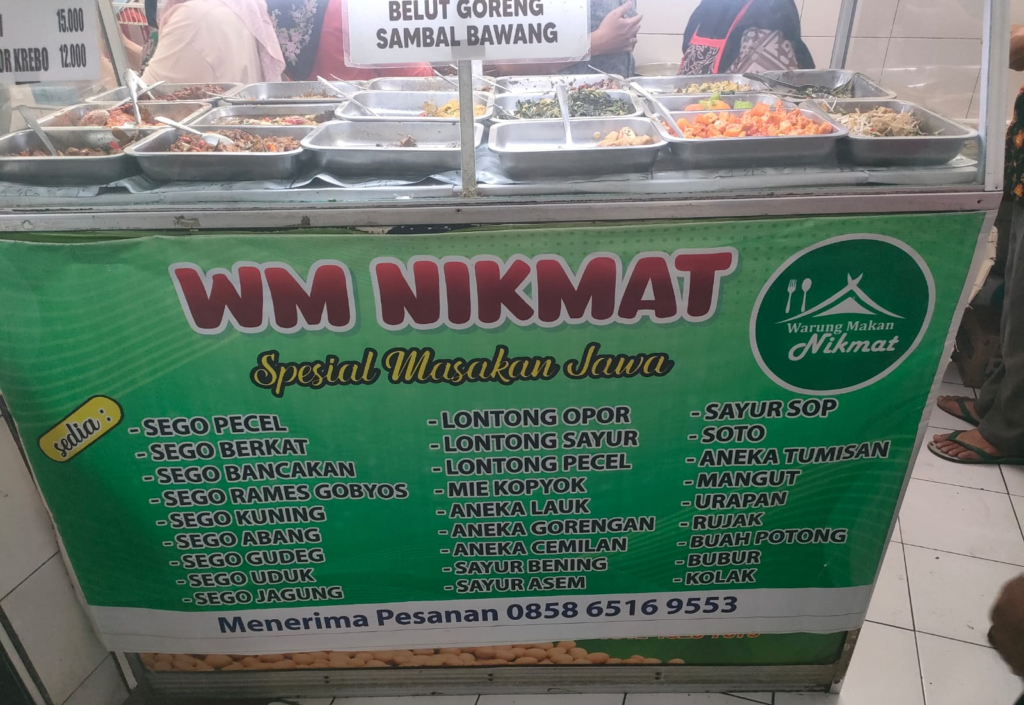
- Sayur Bening;
- Sayur Asem;
- Urapan;
- Aneka Tumisan;
- Pecel;
- Buah Potong;
- fresh vegetables;
- bean sprouts;
- tofu; and
- tempeh.
These food choices allow students, lecturers, staff, and visitors to select meals according to their dietary preferences, nutritional needs, and sustainability considerations.
The availability of vegetable-based dishes, tofu, tempeh, fresh fruit, and other meat-free options demonstrates the diversity of sustainable food choices within UNISSULA’s campus food-service environment.
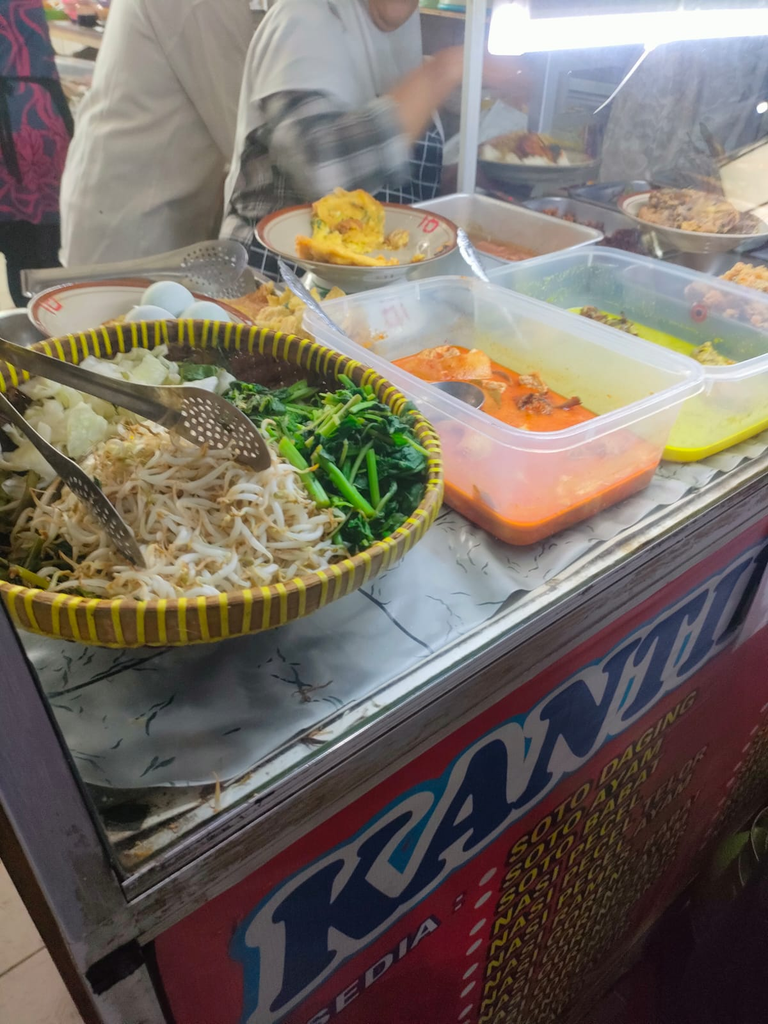

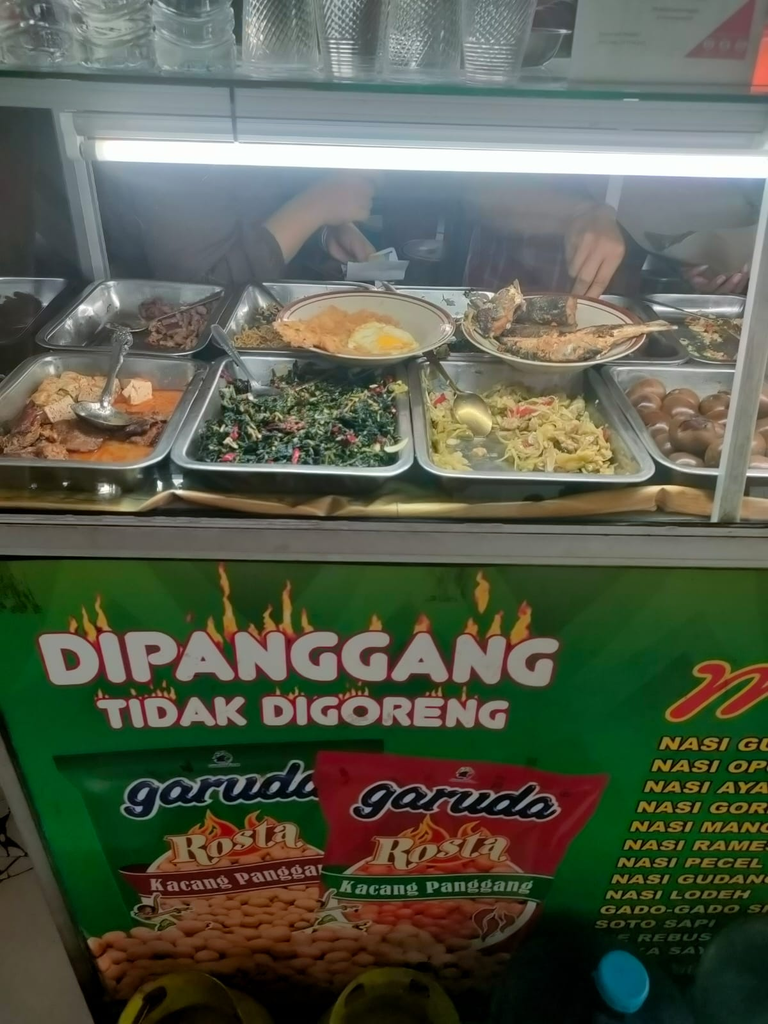
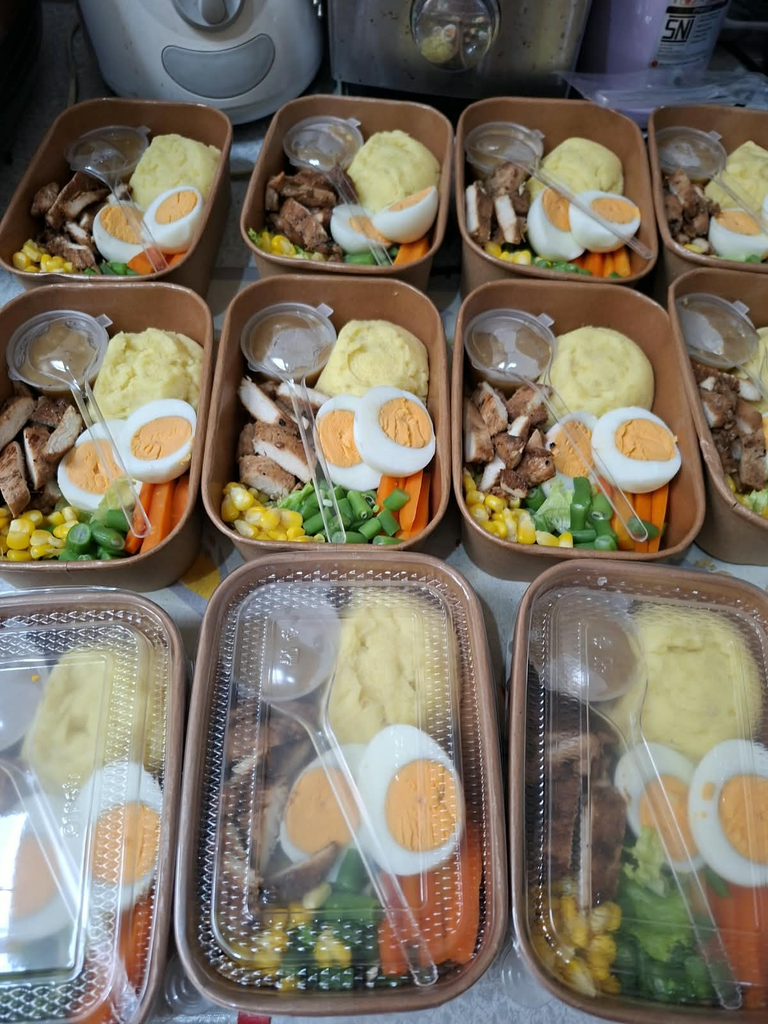
Healthy and Affordable Sustainable Food
UNISSULA recognises that sustainable food choices should also remain accessible and affordable.
Campus food outlets provide meals at different price levels, allowing students and other campus users to choose food according to their financial circumstances.
Affordable vegetarian, vegan, and plant-based food options help make sustainable dietary choices more accessible across the university community.
The availability of lower-cost vegetable-based meals also supports balanced nutrition while providing alternatives to more expensive food choices.
Sustainable Food-Service Practices
UNISSULA integrates sustainable food practices into campus food services.
Food-service providers and members of the university community are encouraged to support:
- reduction of unnecessary single-use packaging;
- use of reusable food and beverage containers;
- separation of organic and inorganic waste;
- reduction of food waste;
- appropriate portion selection;
- responsible food consumption; and
- environmental awareness.
These measures support a campus food environment that considers both nutritional needs and environmental impact.
Supporting Local Food Resources
UNISSULA also supports the use of locally available food products and ingredients.
The use of local food resources can contribute to sustainability by:
- reducing dependence on long-distance supply chains;
- supporting local economic activity;
- promoting Indonesian food diversity;
- strengthening local food resilience; and
- encouraging the use of traditional plant-based ingredients.
Traditional Indonesian foods commonly available on campus naturally incorporate vegetables, tofu, tempeh, legumes, and other plant-derived ingredients.
This allows UNISSULA to combine local culinary traditions with sustainable food choices.
Food Safety and Nutrition
UNISSULA recognises that sustainable food choices should also be safe, hygienic, and nutritionally appropriate.
Campus food-service providers are encouraged to maintain:
- food hygiene;
- safe food preparation;
- nutritional quality;
- appropriate food portions;
- ingredient quality; and
- responsible food handling.
These practices help ensure that vegetarian, vegan, and other sustainable food choices also contribute to the health and well-being of the university community.
Responsible Consumption and Food Waste Reduction
Sustainable food consumption at UNISSULA is integrated with the university’s wider food-waste management practices.
Students, staff, and other campus users are encouraged to:
- choose appropriate meal portions;
- avoid unnecessary leftovers;
- separate food waste correctly;
- select food according to actual consumption needs; and
- use food resources responsibly.
These practices complement UNISSULA’s food-waste monitoring, waste-segregation, and wider sustainability initiatives.
Sustainable Food Choices for the Entire University Community
UNISSULA provides sustainable food choices for:
- students;
- lecturers;
- academic staff;
- non-academic staff;
- university visitors; and
- other members of the campus community.
Because vegetarian and vegan choices are available across campus food outlets, members of the university community can access sustainable food options regardless of the food-service location they use.
This university-wide availability supports inclusive access to food choices that reflect different dietary preferences, nutritional needs, and sustainability considerations.
Institutional Commitment to Sustainable Food Choices
UNISSULA recognises that a sustainable campus food system involves more than simply providing individual menu items.
A sustainable food-service environment combines the availability of vegetarian, vegan, and plant-based options with affordability, food safety, responsible consumption, support for local food resources, waste reduction, and environmental awareness.
By providing sustainable food choices across campus food outlets and encouraging environmentally responsible food-service practices, UNISSULA supports a food environment that promotes health, accessibility, dietary diversity, and sustainability.
Evidence of Implementation
UNISSULA’s sustainable food choices are demonstrated through the following institutional evidence:
- Vegetarian food choices available across all campus food outlets.
- Vegan food choices available across all campus food outlets.
- Plant-based dishes containing vegetables, tofu, tempeh, legumes, and fresh fruit.
- Vegetable-based menu items such as sayur bening, sayur asem, urap, pecel, and stir-fried vegetables.
- Affordable sustainable food choices available to students and other campus users.
- Sustainable food-service practices, including waste separation and food-waste reduction.
- Promotion of responsible food consumption and appropriate portion selection.
- Support for local food resources and traditional plant-based ingredients.
- Campus food outlets providing varied meal choices for different dietary preferences.
2.3.4
Healthy and affordable food choices
2.3.4 Healthy and Affordable Food Choices
Healthy and Affordable Food Choices Across UNISSULA Campus
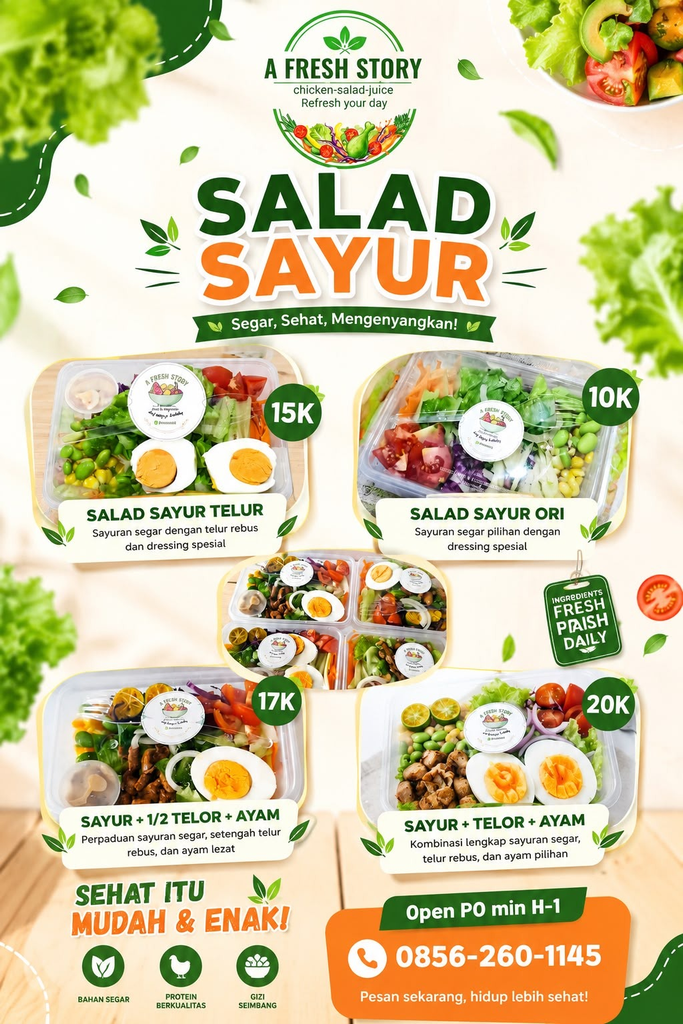
Universitas Islam Sultan Agung (UNISSULA) provides healthy, safe, nutritious, and affordable food choices across its campus food-service environment for students, lecturers, academic and non-academic staff, visitors, and other members of the university community.
During the 2025 reporting period, campus food services provided a diverse range of meals and beverages at different price levels, enabling campus users to select food according to their nutritional needs, dietary preferences, and financial circumstances.
UNISSULA recognises that reliable access to healthy and reasonably priced food is an important component of student welfare, health, academic participation, and an inclusive university environment.
Availability Across All Campus Food Outlets
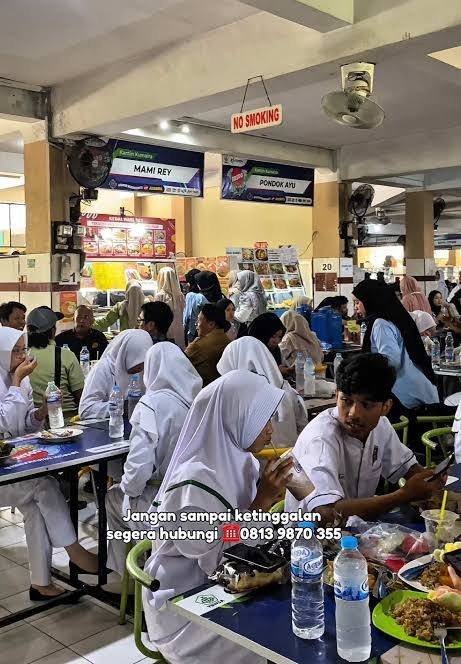
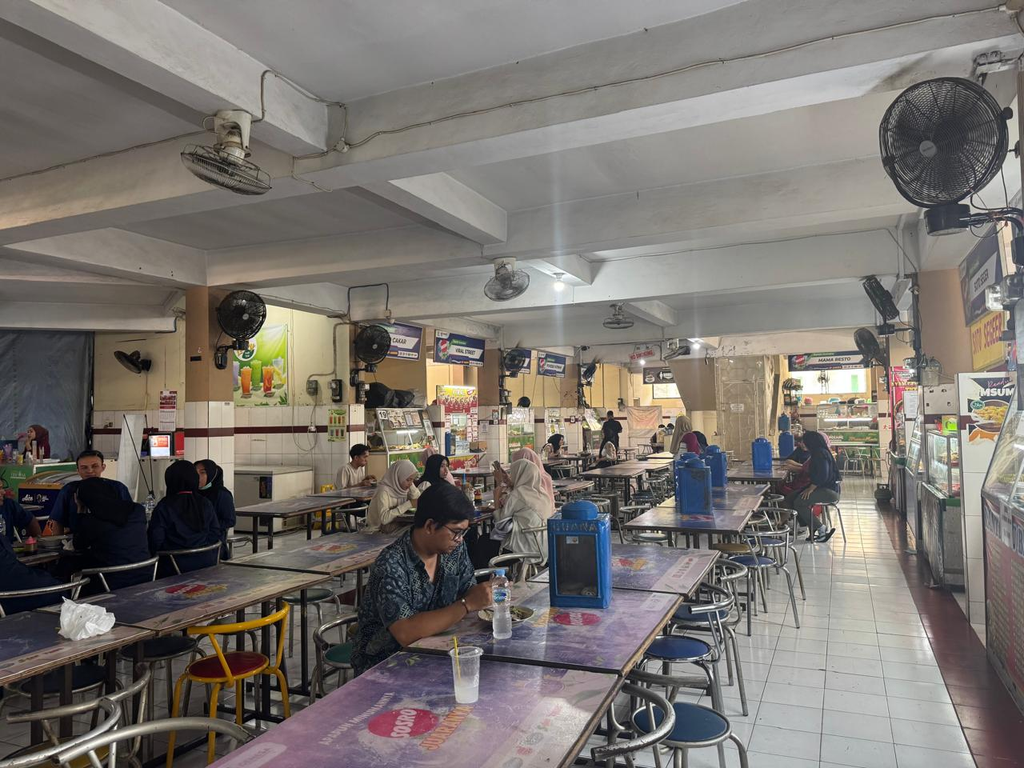
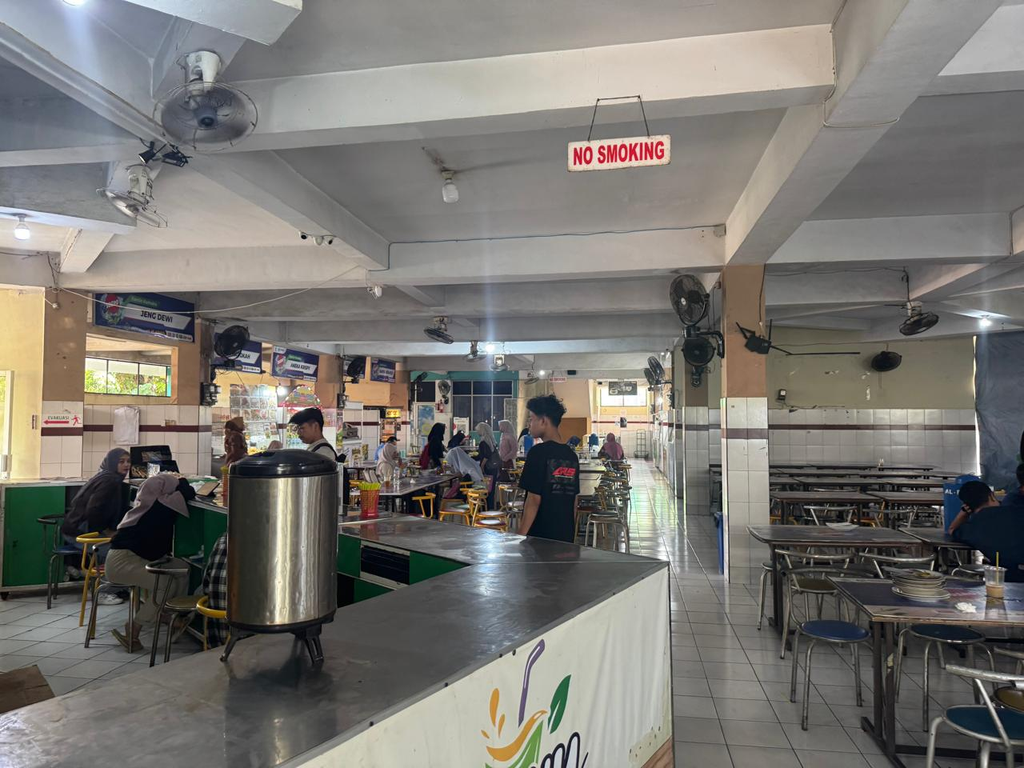
Healthy and affordable food choices are available across UNISSULA campus food outlets.
This university-wide availability enables students and other members of the campus community to access nutritious meals at reasonable prices regardless of the food-service location they use.
Campus food outlets provide different types of meals and beverages at varied price levels, helping ensure that food remains accessible to people with different dietary requirements and financial capacities.
This approach integrates healthy and affordable food provision throughout the university’s campus food-service environment rather than limiting it to selected locations.
Healthy Food Choices
UNISSULA encourages campus food-service providers to offer meals that support health, food safety, hygiene, and nutritional adequacy.
Campus food services consider important aspects including:
- nutritional value of food and beverages;
- hygienic food preparation;
- food safety;
- appropriate food storage;
- appropriate portion sizes;
- diverse menu options; and
- affordability.
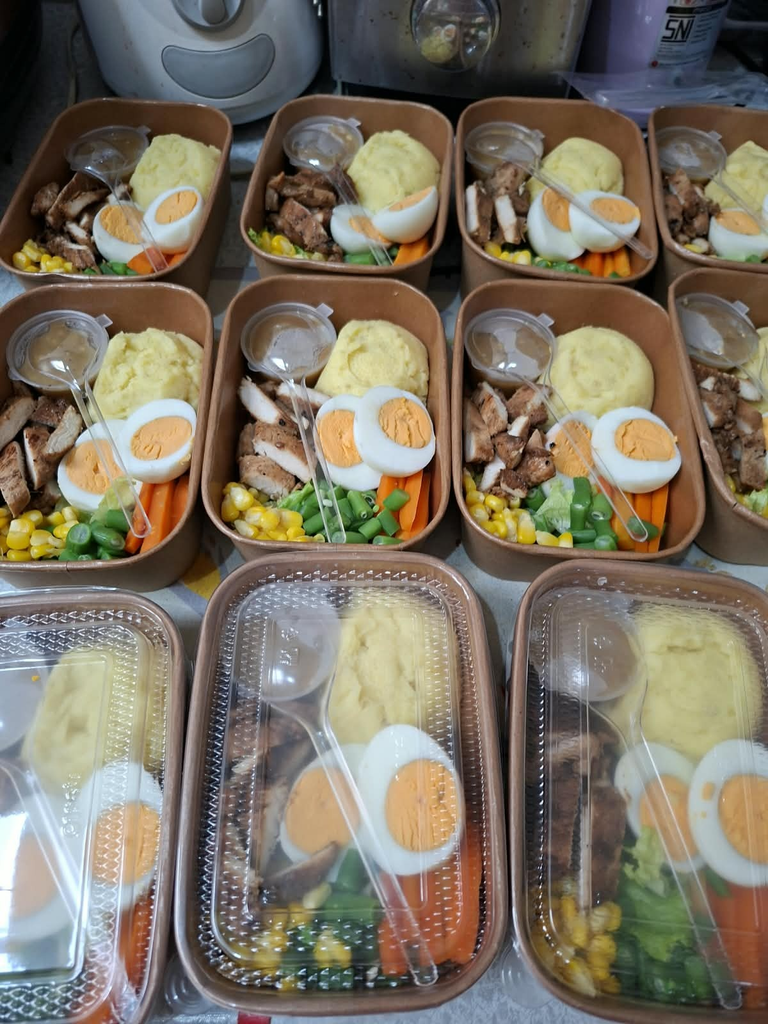
Healthy choices available through the campus food environment include meals containing:
- vegetables;
- plant-based ingredients;
- tofu;
- tempeh;
- fresh fruit;
- vegetable soups;
- other vegetable-based dishes; and
- balanced combinations of staple foods and protein sources.
These options enable campus users to select food according to their nutritional needs and dietary preferences.
Affordable Food Choices
Affordability is an important component of UNISSULA’s campus food provision.
Campus food outlets provide meals across different price ranges, allowing students and other campus users to choose food according to their individual financial circumstances.
The availability of reasonably priced food is particularly relevant for students who may have limited financial resources.
By maintaining affordable meal choices throughout the campus, UNISSULA helps reduce the risk that financial limitations become a barrier to obtaining adequate food during academic and extracurricular activities.
Healthy and Affordable Choices for All Campus Users
UNISSULA’s campus food services are accessible to:
- students;
- lecturers;
- academic staff;
- non-academic staff;
- university visitors; and
- other members of the campus community.
The university’s food-service approach combines health and affordability rather than treating them as separate objectives.
Campus users can therefore select meals according to:
- nutritional needs;
- dietary preferences;
- portion requirements; and
- financial circumstances.
This supports inclusive access to food across the university community.
Diverse Menu Options
Campus food outlets provide diverse meal choices that support different dietary preferences and nutritional needs.
Available options include combinations of:
- staple foods;
- vegetables;
- tofu and tempeh;
- vegetable dishes;
- fresh fruit;
- soups;
- plant-based menu items;
- protein sources; and
- other locally available foods.
Menu diversity helps campus users construct meals according to their individual nutritional preferences while remaining within their available budget.
Food Safety and Hygiene
UNISSULA recognises that healthy food must also be safe and hygienic for consumption.
Campus food-service providers are encouraged to maintain appropriate standards relating to:
- clean food-preparation areas;
- proper food handling;
- clean utensils and serving equipment;
- appropriate food storage;
- clean dining environments; and
- responsible waste management.
Maintaining food hygiene alongside affordability helps ensure that lower-priced food choices do not compromise basic standards of safety and quality.
Supporting Student Welfare
Healthy and affordable food provision forms part of UNISSULA’s broader commitment to student welfare.
Students experiencing financial difficulties may also receive support through:
- university welfare programmes;
- scholarships;
- social assistance;
- LAZIS UNISSULA; and
- other relevant university support mechanisms.
These programmes complement affordable campus food provision by supporting students whose economic circumstances may affect their ability to meet basic daily needs.
This integrated approach combines everyday access to affordable meals with additional support for students who may require greater assistance.
Affordability and Inclusive Education
UNISSULA considers access to food an important part of an inclusive educational environment.
Students from different socioeconomic backgrounds should be able to participate in university life without food costs becoming an unnecessary barrier.
Affordable campus meals contribute to this objective by helping students:
- manage daily expenses;
- remain on campus for academic activities;
- obtain meals during study periods;
- maintain adequate food intake; and
- participate in university activities.
In this way, accessible campus food supports both student welfare and continued participation in higher education.
Nutrition and Responsible Portions
Healthy food provision also involves appropriate meal selection and portioning.
Campus food-service providers are encouraged to support:
- adequate nutritional value;
- varied food choices;
- reasonable portion sizes;
- responsible food preparation; and
- informed meal selection.
Appropriate portions can help support balanced food consumption while also reducing unnecessary food waste.
Integration with Sustainable Campus Practices
Healthy and affordable food provision is connected with UNISSULA’s broader sustainable-campus initiatives.
Campus food services are encouraged to combine health and affordability with:
- food-waste reduction;
- responsible food consumption;
- separation of organic and inorganic waste;
- reduction of unnecessary packaging; and
- sustainable food-service practices.
These activities connect food provision with student welfare, food security, environmental management, and responsible consumption.
University-Wide Food Accessibility in 2025
Throughout the 2025 reporting period, UNISSULA maintained healthy and affordable food choices across its campus food-service environment.
The university-wide approach includes:
- healthy food choices;
- affordable meals at different price levels;
- diverse menu options;
- food-safety and hygiene practices;
- access across campus food outlets;
- availability for students, lecturers, staff, visitors, and other campus users; and
- additional welfare support for students experiencing financial difficulties.
This approach ensures that healthy and affordable food provision is integrated into the university’s broader campus food-service system rather than being limited to a particular student group or a single location.

Continuous Improvement
UNISSULA continues to strengthen the quality, affordability, and accessibility of its campus food services.
Areas for continuous development include:
- strengthening standards for campus food providers;
- improving food-quality and safety monitoring;
- maintaining affordable meal choices;
- increasing nutritious menu options;
- strengthening student food-security support;
- improving food-waste monitoring and reduction; and
- conducting regular evaluation of campus food services.
These priorities support the university’s continuing efforts to improve campus food provision and student welfare.
Institutional Commitment to Healthy and Affordable Food
UNISSULA recognises that access to healthy and affordable food contributes directly to student well-being and participation in university life.
By combining nutritious meal options, varied price levels, food-safety practices, diverse menus, and additional welfare support, the university provides a food-service environment designed to remain accessible to members of the campus community with different dietary and financial needs.
This approach strengthens UNISSULA’s broader commitment to health, food security, inclusive education, and student welfare.
Evidence of Implementation
UNISSULA’s provision of healthy and affordable food choices is demonstrated through the following institutional evidence:
- Healthy and affordable food choices available across campus food outlets.
- Food provision accessible to students, lecturers, staff, visitors, and other campus users.
- Meals available at different price levels.
- Diverse food and beverage choices.
- Consideration of nutritional value and appropriate portion sizes.
- Food-safety and hygiene practices.
- Vegetable, plant-based, and other nutritious menu choices.
- Additional welfare support for students experiencing financial difficulties.
- Integration of campus food provision with sustainable-campus and food-waste reduction practices.
2.3.5
Staff hunger interventions
2.3.5 Staff Hunger Interventions
Regular Free Meal Programme for Lecturers and Staff at UNISSULA
Universitas Islam Sultan Agung (UNISSULA) provides direct and practical food-support interventions to help prevent or alleviate hunger and food insecurity among members of staff.
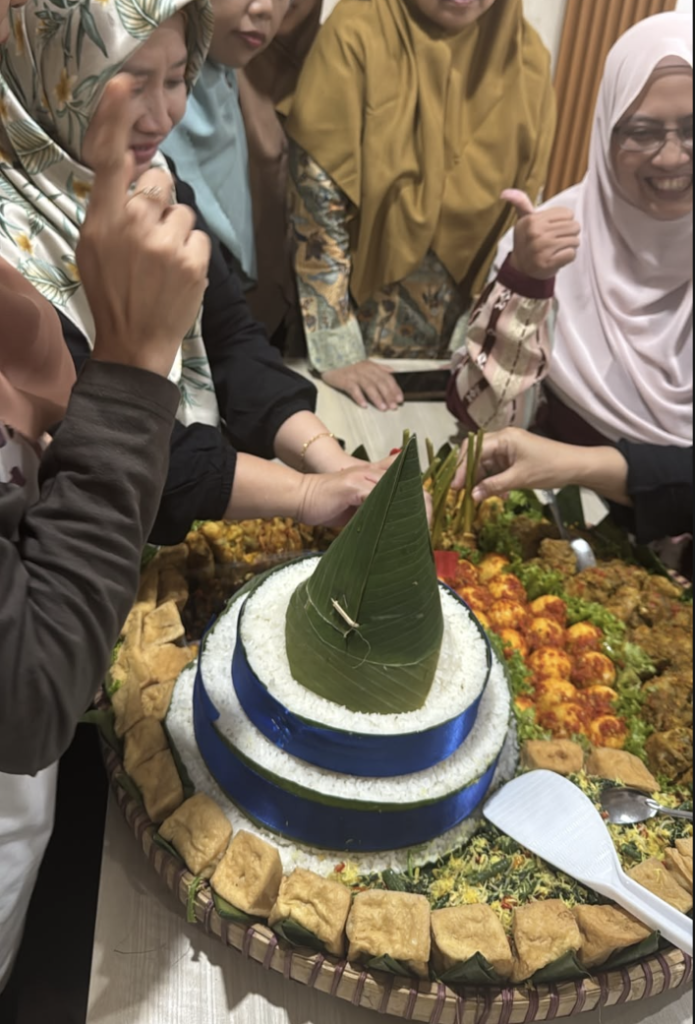
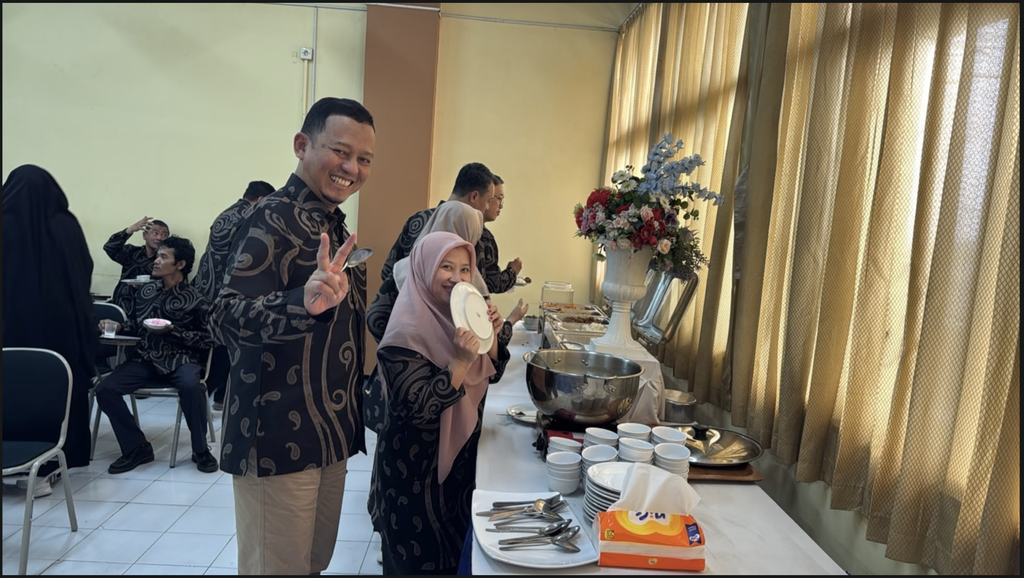
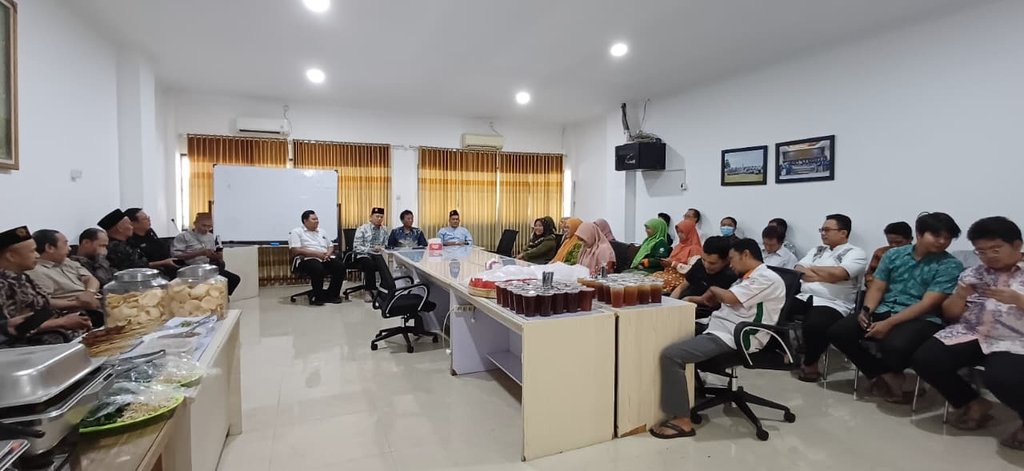
During the 2025 reporting period, UNISSULA implemented a recurring Free Meal Programme for Lecturers and Staff, with meals provided every Tuesday and Friday within the university environment.
The programme provides ready-to-eat meals directly to lecturers and staff free of charge, helping ensure that employees have reliable access to food during working hours.
This recurring initiative forms part of UNISSULA’s broader commitment to employee welfare, social solidarity, and Sustainable Development Goal 2: Zero Hunger.
Free Meals Every Tuesday and Friday
One of UNISSULA’s principal staff hunger interventions is the provision of free meals every Tuesday and Friday.
The programme is conducted regularly and provides direct access to meals without charge.
The intervention includes:
- free ready-to-eat meals;
- regular provision every Tuesday;
- regular provision every Friday;
- direct access for lecturers and staff;
- on-campus implementation; and
- recurring support throughout the working year.
Because the intervention is repeated twice each week, it provides predictable and continuing food support rather than being limited to a one-time or occasional activity.
Direct Food Support for Staff
The Free Meal Programme is designed to support university employees directly.
Beneficiaries include:
- lecturers;
- academic staff;
- administrative staff;
- non-academic staff; and
- other eligible university employees.
By providing meals directly and without charge, UNISSULA helps reduce the financial burden associated with daily food needs and supports staff welfare during working hours.
The programme therefore represents a direct and practical hunger intervention rather than relying solely on awareness campaigns or the general availability of food on campus.
On-Campus Accessibility
The programme is implemented within the UNISSULA campus environment.
This makes the intervention easily accessible to employees during working hours and enables lecturers and staff to receive meals without having to leave the university.
On-campus provision reduces practical barriers to food access and makes the programme suitable for regular staff welfare support.
Recurring and Continuous Intervention
The Free Meal Programme is not implemented as a one-time activity.
Free meals are provided on a recurring basis every:
- Tuesday; and
- Friday.
This regular schedule demonstrates a continuing institutional intervention to support staff access to food.
The repeated provision of meals throughout the year also strengthens the programme’s role as part of UNISSULA’s broader employee welfare system.
Food Support during the 2025 Reporting Period
The Free Meal Programme continued throughout the 2025 reporting year.
During 2025, UNISSULA maintained regular meal support for lecturers and staff through twice-weekly free food provision.
This continuity demonstrates that staff food support is integrated into university welfare practices rather than being limited to temporary or isolated activities.
Supporting Staff Welfare
UNISSULA recognises that adequate access to food contributes to employee health, well-being, and productivity.
Regular free meal provision supports staff by:
- reducing daily food expenses;
- improving access to meals during working hours;
- supporting employee well-being;
- strengthening social solidarity among staff; and
- contributing to a supportive working environment.
The programme therefore connects access to food with the university’s broader commitment to staff welfare and well-being.
Additional Social and Food-Support Mechanisms
The regular Tuesday and Friday Free Meal Programme is complemented by other forms of food and social support within UNISSULA.
Additional support may include:
- Ramadan food-sharing activities;
- free iftar meals;
- food packages;
- social assistance;
- LAZIS UNISSULA support;
- zakat, infaq, and sadaqah-based welfare assistance; and
- other humanitarian and basic-needs support programmes.
These additional mechanisms complement recurring meal provision and strengthen UNISSULA’s wider framework for supporting members of the university community who may experience financial or social difficulties.
LAZIS UNISSULA and Staff Welfare
LAZIS UNISSULA contributes to social protection and welfare through charitable-support mechanisms.
Through the management of zakat, infaq, sadaqah, and other charitable resources, assistance may be provided to members of the university community who require additional support.
For staff experiencing financial hardship, these mechanisms can complement direct meal provision by helping address broader basic-needs challenges.
Affordable Campus Food as Complementary Support
In addition to direct free-meal interventions, lecturers and staff also have access to affordable campus food services.
Campus food outlets provide meals and beverages at different price levels, allowing employees to select food according to their preferences and financial circumstances.
Campus food services also consider:
- nutritional quality;
- reasonable pricing;
- food variety;
- hygiene and safety;
- clean preparation and dining areas; and
- responsible waste management.
Affordable campus food therefore complements, but does not replace, the university’s direct hunger-intervention programmes.
Social Solidarity and Employee Well-Being
UNISSULA’s staff food-support initiatives reflect the university’s broader culture of social responsibility and mutual assistance.
The programme contributes to:
- social solidarity;
- employee welfare;
- collegial support;
- shared responsibility; and
- a caring university environment.
This approach is consistent with UNISSULA’s broader Budaya Akademik Islami (BudAI) values and institutional commitment to staff well-being.
Institutional Commitment to Staff Hunger Intervention
UNISSULA recognises that staff well-being includes access to basic daily needs, including food.
By maintaining recurring free-meal provision twice each week and complementing it with Ramadan food-sharing, welfare assistance, LAZIS support, and affordable campus food services, the university provides a practical framework for supporting staff food access.
This approach demonstrates that UNISSULA’s staff hunger intervention is based on direct, recurring, and accessible assistance rather than one-time food distribution alone.
Evidence of Implementation
UNISSULA’s staff hunger interventions are demonstrated through the following institutional evidence:
- A recurring Free Meal Programme for lecturers and staff.
- Free meals provided every Tuesday.
- Free meals provided every Friday.
- Lecturers, academic staff, administrative staff, and non-academic staff included as beneficiaries.
- Ready-to-eat meals provided directly without charge.
- On-campus delivery of food support.
- Programme continuity throughout the 2025 reporting period.
- Additional Ramadan food-sharing, iftar, food-package, and social-assistance mechanisms.
- Support through LAZIS UNISSULA and other welfare programmes.
- Affordable campus food access as a complementary support mechanism.
2.5.1
Access to food security knowledge
2.5.1 Access to Food Security Knowledge, Skills, and Technology
UNISSULA Provides Knowledge, Skills, and Technology to Local Farmers and Food Producers
Universitas Islam Sultan Agung (UNISSULA) provides local farmers and food producers with access to knowledge, practical skills, and technology related to food security, sustainable agriculture, food production, food processing, and sustainable livelihoods.
During the 2025 reporting period, UNISSULA implemented community-engagement programmes that transferred technology and practical expertise directly to local agricultural producers and food-processing businesses.
The programmes included:
- smart farming technology;
- hydroponic production;
- Internet of Things (IoT)-based monitoring;
- green-energy applications;
- food-production technology;
- food-processing technology;
- technical training;
- digital marketing;
- production management; and
- business-development assistance.
These activities enable local producers to improve productivity, production efficiency, product quality, and the long-term sustainability of their food-production activities.
Smart Hydroponic Farming and Green Energy in Kedungcino, Jepara
In 2025, UNISSULA implemented the programme “Implementasi Teknologi Smart Farming dan Green Energy untuk Pengembangan Pertanian Hidroponik di Desa Kedungcino Kabupaten Jepara.”

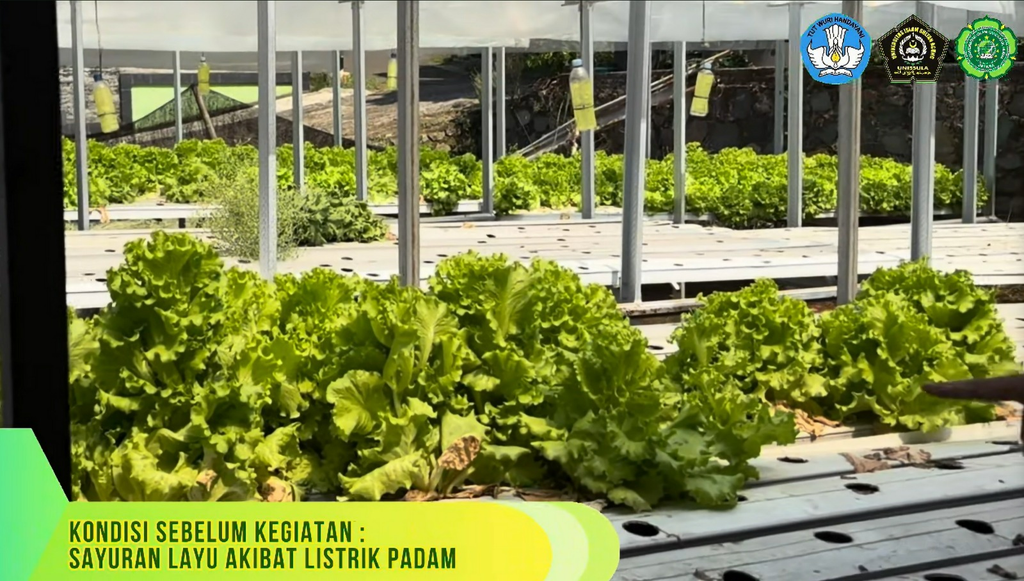
The programme was formally recorded within UNISSULA’s 2025 community-service activities and focused on developing hydroponic agriculture through the application of smart farming and green-energy technologies.
The programme provided local hydroponic farmers and agricultural producers with practical access to technologies and knowledge that support more sustainable and efficient food production.
The intervention included the introduction and application of:
- smart farming systems;
- Internet of Things (IoT) technology;
- environmental monitoring;
- hydroponic production management;
- green-energy applications;
- technology-based farm management; and
- practical skills for improving agricultural productivity.
Through this programme, local agricultural producers were able to strengthen their technical capabilities and gain practical experience in the use of technology for sustainable food production.
Technology Transfer for Sustainable Agriculture
The Kedungcino programme represents direct technology transfer from the university to local agricultural producers.
Rather than limiting support to academic discussion, UNISSULA applied relevant technologies within a real agricultural-production environment.
Through this approach, farmers gained access to:
- practical knowledge of digital agriculture;
- experience using monitoring technologies;
- improved understanding of hydroponic cultivation;
- skills in managing agricultural inputs;
- greater ability to monitor production conditions;
- knowledge of renewable-energy applications; and
- improved capacity to manage food production sustainably.
The programme therefore connects university expertise with practical agricultural needs at the community level.
Supporting Sustainable Food Production
Smart hydroponic farming can improve the efficiency and reliability of food production by enabling producers to monitor growing conditions more systematically.
UNISSULA’s intervention combines:
Hydroponic cultivation → Digital monitoring → Smart farming → Green energy → Producer skills development
This integrated approach supports agricultural productivity while encouraging more efficient use of production resources and environmentally responsible farming practices.
Kopi Boyo: Technology and Skills for a Local Food Producer
UNISSULA also supported a local coffee producer in Sumanding Village, Kembang District, Jepara, during 2025.
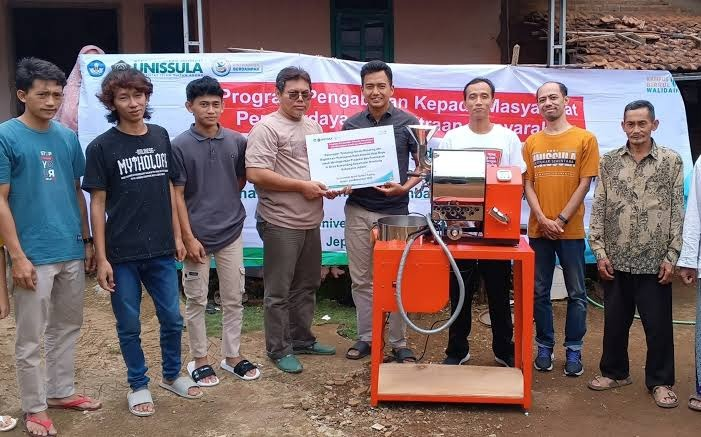
On 30 August 2025, the UNISSULA Community Service Team provided a coffee-roasting machine to UMKM Kopi Vinzoei / Kopi Boyo as part of a programme designed to strengthen local food-production capacity and improve product quality.
The programme did not consist solely of equipment provision. UNISSULA also provided technical and business-development training covering:
- machine operation;
- roasting temperature;
- roasting time;
- basic machine maintenance;
- production management;
- internet marketing;
- product-packaging improvement; and
- financial recording.
The local producer therefore received both productive technology and practical knowledge required to operate and manage the equipment independently.
Improving Food-Production Capacity
Before receiving its own roasting equipment, the coffee producer relied on external roasting services.
Following the intervention, the producer was able to manage the roasting process independently and increase production capacity.
UNISSULA reported that monthly production increased from approximately 50 kg to 80–100 kg. The intervention also contributed to improved production efficiency and more consistent coffee quality.
This demonstrates how access to university knowledge, practical skills, and technology can strengthen the production capacity of local food businesses.
Digital Skills and Market Access
Knowledge transfer also covered the commercial and management aspects of sustainable food production.
The Kopi Boyo programme included:
- internet marketing;
- product-packaging redesign;
- production management;
- financial-recording assistance; and
- digital-market development.
These skills help local food producers strengthen their commercial sustainability and improve the long-term viability of their food-production activities.
UNISSULA reported that the integrated intervention contributed to an increase in partner turnover of approximately 30%.
Historical Continuity: Greenhouse Development for Farmers in Manggihan
UNISSULA’s support for local farmers did not begin in 2025.
An earlier community-engagement programme in Manggihan Village, Getasan, Semarang Regency, provided farmers with training and assistance related to organic vegetable production and greenhouse-based agriculture.
Activities included:
- entrepreneurship training;
- organic vegetable certification training;
- online marketing;
- intellectual-property training;
- assistance with organic fertiliser and vegetable enterprises; and
- development of a greenhouse to improve the quality and standardisation of organic vegetables.
This earlier programme demonstrates institutional continuity in transferring agricultural knowledge, skills, and technology to local farming communities.
Smart Farming Experience in Manggihan
UNISSULA has also worked with the Mulyo Langgeng farmer group in Manggihan on smart-greenhouse technology.
The programme included workshops and practical assistance involving:
- automatic watering technology;
- photovoltaic energy;
- smart-greenhouse implementation; and
- renewable-energy applications.
Published programme results reported reductions in farmer operational costs and improvements in agricultural output following the application of these technologies.
These activities provide additional evidence of UNISSULA’s continuing experience in agricultural technology transfer.
Knowledge Access for Local Farmers and Food Producers
UNISSULA provides local farmers and food producers with access to university knowledge and expertise through several forms of support:
- technical training;
- technology transfer;
- hands-on implementation;
- community-service mentoring;
- production-management support;
- digitalisation assistance;
- marketing skills;
- sustainable farming technology;
- renewable-energy applications; and
- food-processing technology.
This approach ensures that university knowledge is translated into practical skills and technologies that producers can apply directly within their farming and food-production activities.
Community-Based Knowledge and Technology Support
These programmes are implemented as part of UNISSULA’s community-service and community-engagement activities, providing local partners with access to university expertise, mentoring, and applied technology.
All participating farmers and food producers received the training, mentoring, technology transfer, and programme access free of charge. The activities were funded through community-service grants, and beneficiaries were not charged participation, training, mentoring, or technology-access fees.
This funding model provides local farmers and food producers with free access to knowledge, skills, and technology, enabling them to benefit from university expertise without financial barriers.
Contribution to Food Security
UNISSULA’s activities support food security by strengthening the capacity of local producers to:
- produce food more efficiently;
- adopt sustainable production technologies;
- improve product quality;
- reduce production constraints;
- strengthen local food businesses;
- improve economic sustainability; and
- increase access to knowledge and technology.
The university therefore contributes to food security not only through academic research, but also through the practical transfer of knowledge, skills, and technology to local farmers and food producers.
Institutional Commitment to Knowledge and Technology Transfer
UNISSULA recognises that improving food security requires more than increasing food production alone.
Local producers also require access to practical knowledge, appropriate technology, technical skills, management capacity, and market-development support.
By combining smart farming, hydroponics, renewable energy, food-processing technology, technical training, digitalisation, and business-development assistance, UNISSULA provides an integrated framework for strengthening the capacity of local farmers and food producers.
This approach supports both sustainable food production and the long-term economic resilience of local food enterprises.
Free Access for Farmers and Food Producers
UNISSULA provides access to its food-security and sustainable-production programmes free of charge to participating farmers and food producers.
The training, mentoring, technology transfer, and practical assistance are financed through community-service grants, meaning that beneficiaries are not required to pay participation or service fees.
This funding model enables local farmers and food producers to access university knowledge, skills, and technology without financial barriers.
Evidence of Implementation
UNISSULA’s implementation in 2025 is demonstrated through the following institutional activities:
- Smart Farming and Green Energy for Hydroponic Agriculture in Kedungcino, Jepara.
- Direct transfer of smart-farming and hydroponic-production technology to local agricultural producers.
- Training and practical skills development related to sustainable agricultural production.
- Provision of coffee-roasting technology to Kopi Boyo / Kopi Vinzoei in Jepara.
- Technical training in coffee roasting and machine operation.
- Production-management and equipment-maintenance training.
- Internet-marketing and packaging-development support.
- Financial-management and record-keeping assistance for a local food producer.
- Continuing institutional experience in greenhouse development, smart farming, renewable energy, and organic-vegetable support for local farmer groups.
2.5.2
Events for local farmers and food producers
2.5.2 Events for Local Farmers and Food Producers
UNISSULA Provides Knowledge-Transfer Events for Local Farmers and Food Producers
Universitas Islam Sultan Agung (UNISSULA) organises events for local farmers and food producers to connect with university experts, exchange knowledge, develop practical skills, and gain access to appropriate technologies that support sustainable food production.
During the 2025 reporting period, UNISSULA organised community-engagement activities involving local farmers, agricultural producers, and food producers through training, workshops, mentoring, technology demonstrations, and hands-on implementation.
These events form part of UNISSULA’s community-service and knowledge-transfer activities and are designed to translate university expertise into practical solutions that can be directly applied by local food-production communities.
UNISSULA’s institutional approach combines community service, applied research, training, mentoring, technology transfer, and practical implementation as mechanisms for engaging farmers and food producers.

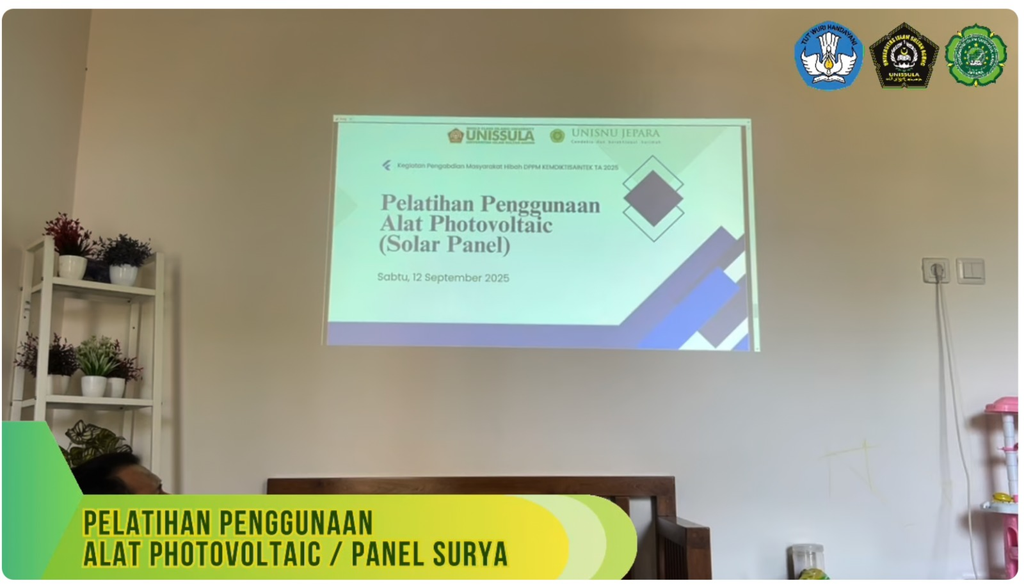
Smart Hydroponic Farming Knowledge-Transfer Event in Kedungcino, Jepara
In 2025, UNISSULA implemented the programme “Implementasi Teknologi Smart Farming dan Green Energy untuk Pengembangan Pertanian Hidroponik di Desa Kedungcino Kabupaten Jepara.”
The programme involved local hydroponic farmers and agricultural producers and provided them with direct access to knowledge and technology related to sustainable food production.
Training and practical knowledge-transfer activities covered:
- smart farming systems;
- Internet of Things (IoT) technology;
- environmental monitoring;
- hydroponic production management;
- temperature control;
- nutrient management;
- green-energy applications;
- technology-based farm management; and
- sustainable agricultural production.
These activities enabled participating farmers to learn directly from university experts and strengthen practical skills that could be applied to their own production activities.
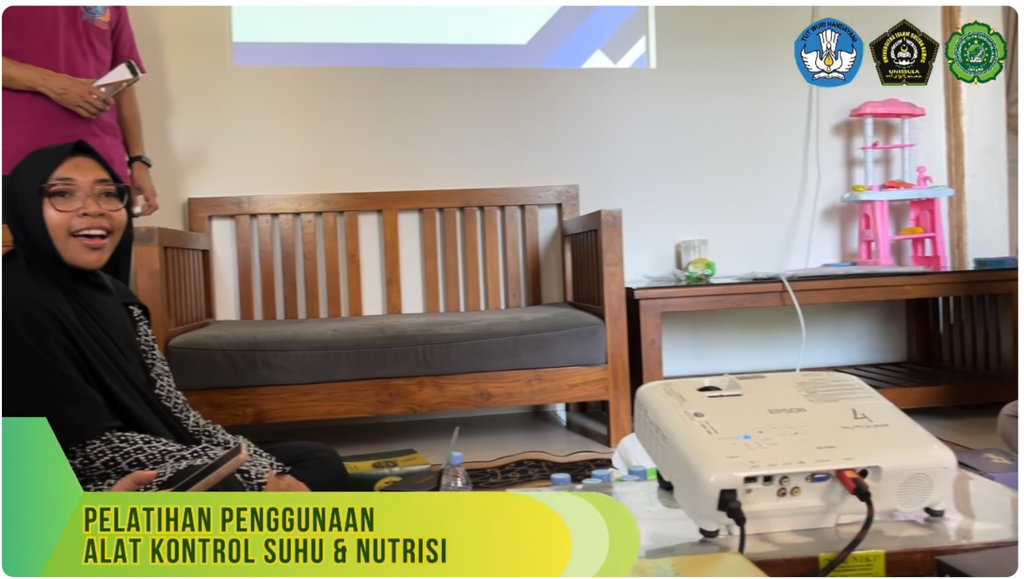
Training on Temperature and Nutrient Control Equipment
As part of the 2025 sustainable-agriculture programme, UNISSULA conducted practical training on the use of temperature and nutrient control equipment for participating farmers and food producers.
The training focused on helping participants understand how monitoring and control technologies can be used to manage growing conditions more effectively.
Knowledge and skills transferred through the event included:
- temperature monitoring;
- nutrient monitoring;
- control-system operation;
- interpretation of environmental conditions;
- improved management of hydroponic production; and
- practical application of technology in agricultural production.
The training also enabled local producers to interact directly with university facilitators, ask questions, discuss operational challenges, and develop practical technological skills.
Photovoltaic and Solar-Energy Training
UNISSULA also conducted training on the use of photovoltaic and solar-panel technology as part of the programme.
The documented training session was held on 12 September 2025 and introduced local farmers and food producers to renewable-energy applications that can support agricultural production.
Participants received knowledge and practical guidance related to:
- basic photovoltaic systems;
- solar-energy applications;
- renewable energy for agricultural operations;
- equipment operation;
- integration of green energy into food production; and
- potential reduction of dependence on conventional energy sources.
The event connected sustainable agriculture with renewable-energy knowledge and demonstrated how university expertise can support lower-impact and more resource-efficient local food production.
Direct Knowledge Exchange Between University Experts and Producers
The 2025 activities were designed as interactive knowledge-transfer events rather than passive information sessions.
Participating farmers and food producers were able to:
- interact directly with university lecturers and facilitators;
- observe technology demonstrations;
- receive operational guidance;
- discuss production challenges;
- gain hands-on experience;
- exchange knowledge with other participants; and
- learn how technologies could be adapted to local production conditions.
This interaction creates opportunities for both connection and knowledge exchange, which are central to UNISSULA’s community-engagement approach.
Kopi Boyo Food-Producer Training
UNISSULA also conducted knowledge-transfer activities for Kopi Vinzoei / Kopi Boyo, a local coffee producer in Sumanding Village, Kembang District, Jepara, during 2025.
On 30 August 2025, the UNISSULA Community Service Team provided coffee-roasting technology together with practical training intended to strengthen local food-production capacity.
Training topics included:
- coffee-roasting machine operation;
- roasting temperature;
- roasting time;
- machine maintenance;
- production management;
- product packaging;
- internet marketing; and
- financial recording.
This activity gave the local food producer an opportunity to interact directly with university experts and receive technical and business knowledge relevant to food processing and production.
Knowledge Transfer Beyond Equipment Provision
The Kopi Boyo activity demonstrates that UNISSULA’s engagement with food producers extends beyond equipment provision.
The programme combined:
Technology provision → Technical training → Production management → Marketing knowledge → Financial skills
This integrated event-based approach strengthened both the technical and business capabilities of the beneficiary.
Following the intervention, monthly production increased from approximately 50 kg to 80–100 kg, alongside improvements in production efficiency and coffee quality.
Connecting Farmers and Food Producers with University Expertise
UNISSULA’s events provide local farmers and food producers with opportunities to connect with university expertise in:
- smart farming;
- hydroponic agriculture;
- Internet of Things (IoT);
- temperature and nutrient control;
- renewable energy;
- food-processing technology;
- production management;
- digital marketing;
- product packaging; and
- business management.
These events help bridge the gap between academic knowledge and practical food-production needs.
Free Participation for Farmers and Food Producers
Participation in these community-engagement events is provided free of charge to participating farmers and food producers.
The programmes are financed through community-service grants, and beneficiaries are not required to pay:
- participation fees;
- training fees;
- mentoring fees; or
- technology-access fees.
This community-service model enables local farmers and food producers to participate in training and knowledge-transfer activities without financial barriers.
It also provides free access to university expertise, mentoring, practical training, and relevant technology-transfer opportunities.
Event-Based Learning and Practical Skills Development
UNISSULA’s knowledge-transfer events are designed around practical learning.
Participants are given opportunities to:
- observe demonstrations;
- use or examine relevant technologies;
- discuss practical production challenges;
- obtain direct guidance from university experts;
- develop new technical skills;
- exchange knowledge with other farmers and producers; and
- apply lessons within their own production activities.
This format enables local stakeholders to gain both theoretical understanding and practical experience.
Contribution to Sustainable Food Production
UNISSULA’s events support sustainable food production by strengthening local producers’ capacity to:
- manage production more efficiently;
- adopt smart-farming technologies;
- improve resource efficiency;
- apply renewable-energy systems;
- monitor growing conditions;
- improve food-processing practices;
- increase product quality; and
- strengthen long-term business sustainability.
Through these activities, UNISSULA contributes to food security by strengthening the capabilities of people directly involved in local food production.
Historical Continuity of Farmer Knowledge-Exchange Activities
UNISSULA has also previously worked with farmer groups in Manggihan through knowledge-transfer and agricultural-development activities involving:
- greenhouse development;
- automatic watering technology;
- photovoltaic energy;
- organic vegetable production;
- certification training;
- entrepreneurship; and
- online marketing.
These earlier activities provide supporting evidence of UNISSULA’s continuing institutional experience in organising agricultural knowledge-transfer and community-engagement programmes.
Institutional Commitment to Farmer and Food-Producer Engagement
UNISSULA recognises that sustainable food production requires not only access to technology, but also opportunities for farmers and food producers to interact with experts, receive practical guidance, test appropriate technologies, and exchange knowledge.
By organising workshops, training sessions, demonstrations, mentoring, and hands-on technology-transfer activities, UNISSULA creates direct opportunities for local food producers to connect with university knowledge and expertise.
This approach strengthens the practical capacity of farmers and food producers while supporting more sustainable, efficient, and resilient local food-production systems.
Evidence of Implementation
UNISSULA’s 2025 events for local farmers and food producers are demonstrated through the following institutional activities:
- Smart Hydroponic Farming and Green Energy activities in Kedungcino, Jepara.
- Training on temperature and nutrient control equipment.
- Photovoltaic / solar-panel training for agricultural participants.
- Hands-on technology demonstrations for local farmers and food producers.
- Direct interaction between participants and university experts.
- Coffee-roasting and production training for Kopi Boyo / Kopi Vinzoei.
- Training in machine operation and maintenance.
- Training in production management, packaging, digital marketing, and financial recording.
- Free participation funded through community-service grants.
2.5.3
University access to local farmers and food producers
2.5.3 University Access for Local Farmers and Food Producers
UNISSULA Provides Access to Agricultural Facilities, Technology, and Learning Resources
Universitas Islam Sultan Agung (UNISSULA) provides local farmers and food producers with access to university agricultural facilities, practical technologies, and learning resources that support more sustainable farming and food-production practices.
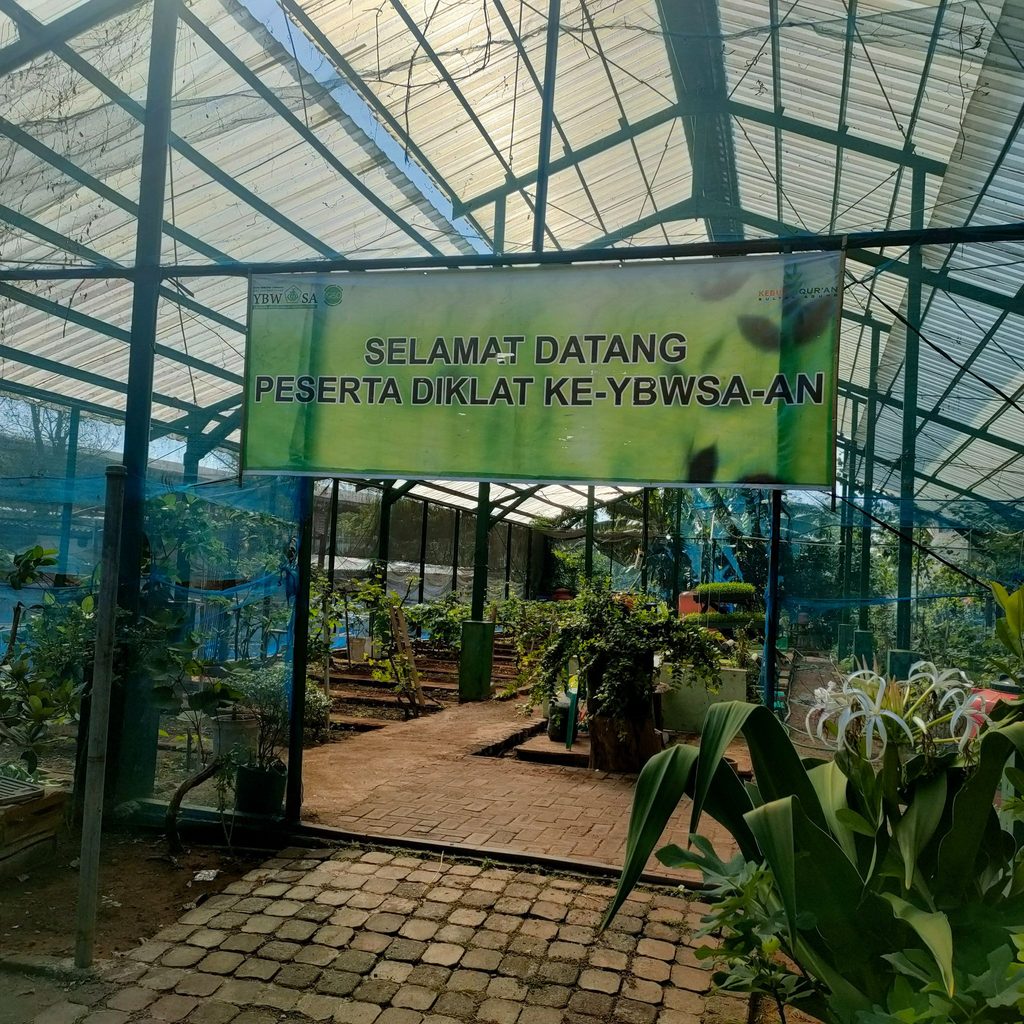
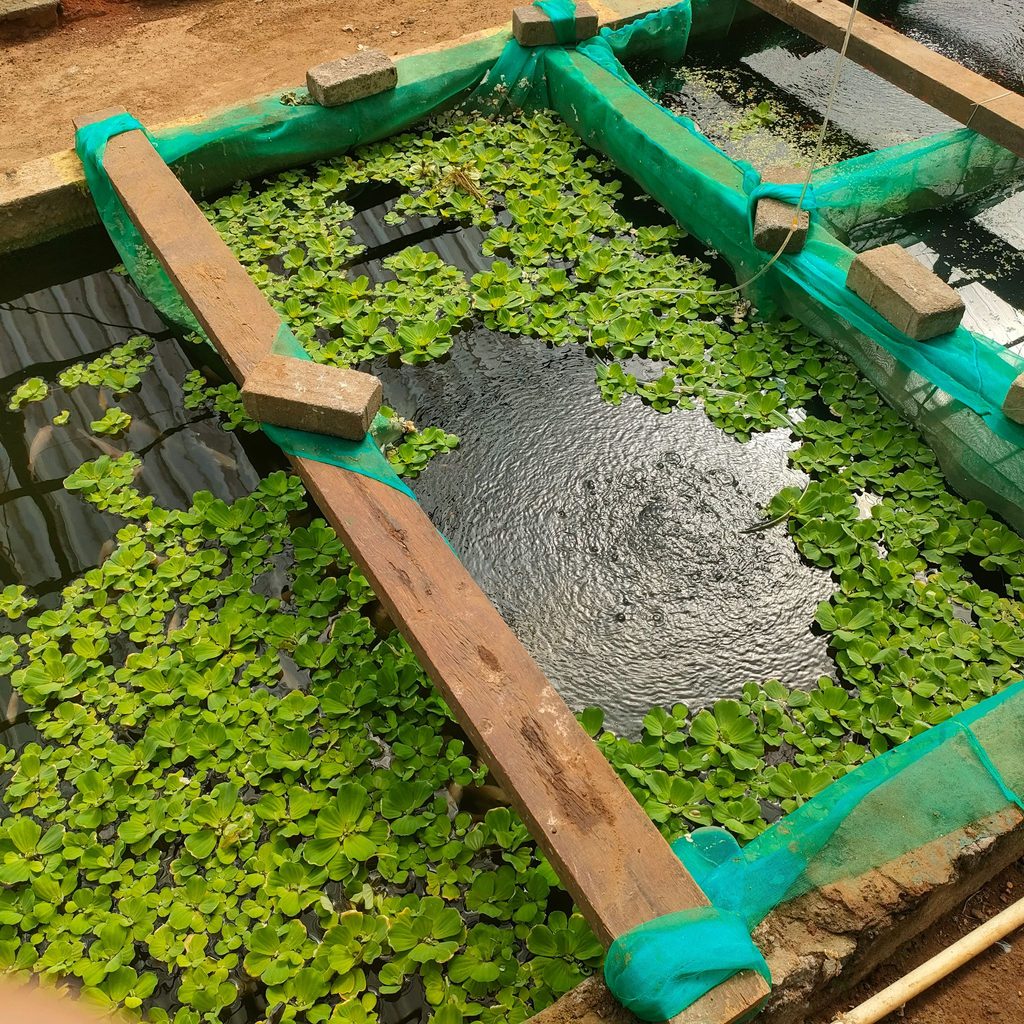
During the 2025 reporting period, UNISSULA continued to use its agricultural and environmental facilities as community-learning and demonstration resources. These facilities include the Qur’anic Garden (Kebun Qur’an), hydroponic systems, cultivation areas, water-based production facilities, demonstration technologies, and other practical agricultural resources.
These facilities enable local farmers, food producers, students, lecturers, and community stakeholders to learn about sustainable cultivation, resource efficiency, biodiversity, food production, and environmentally responsible agricultural practices.
The Qur’anic Garden serves as an important university resource connecting biodiversity, agriculture, education, environmental stewardship, and sustainable food systems.
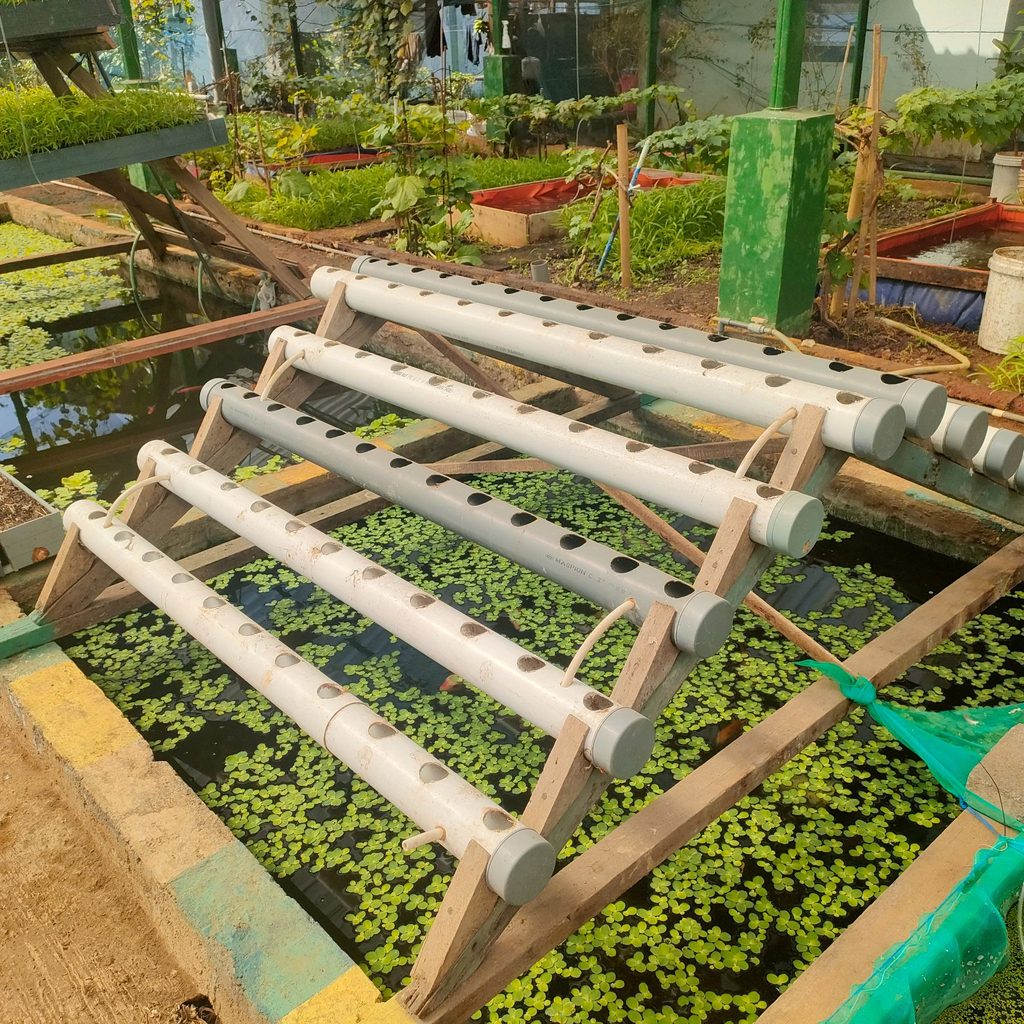
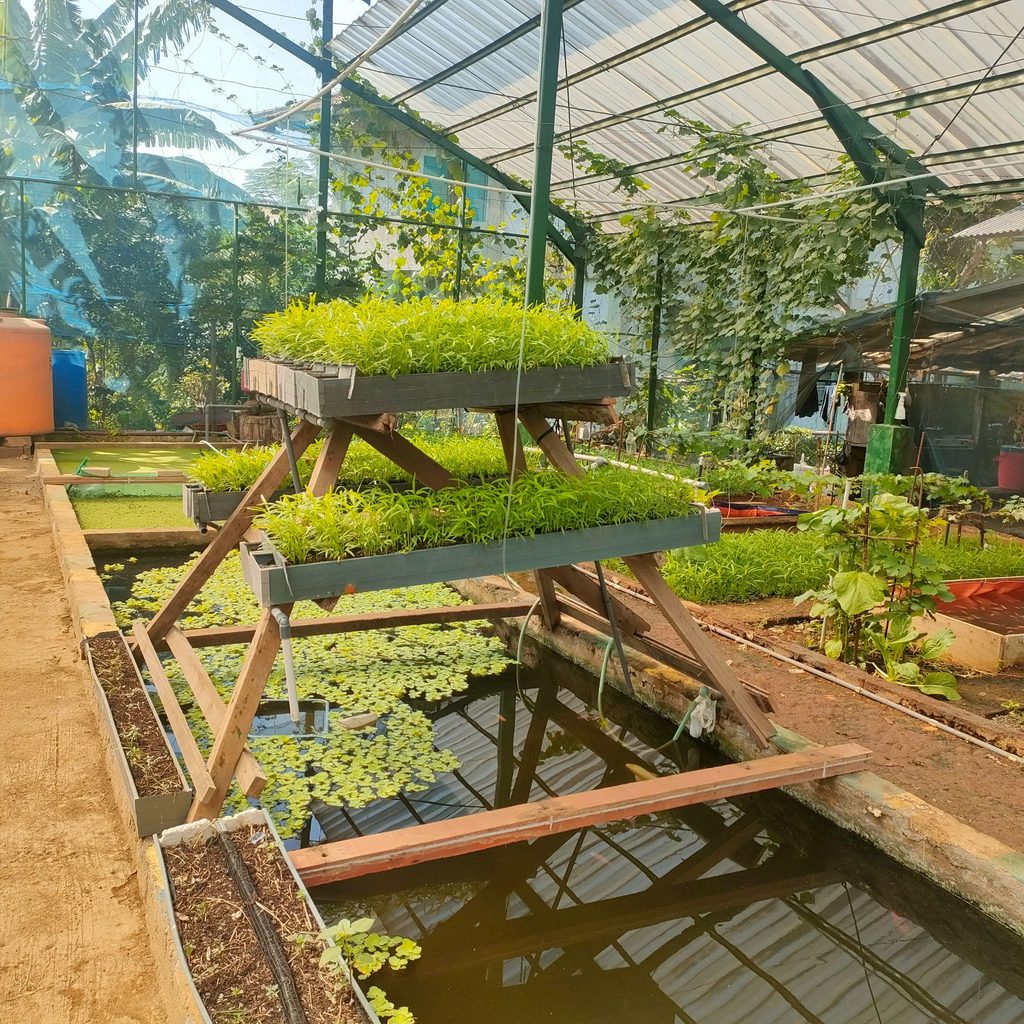
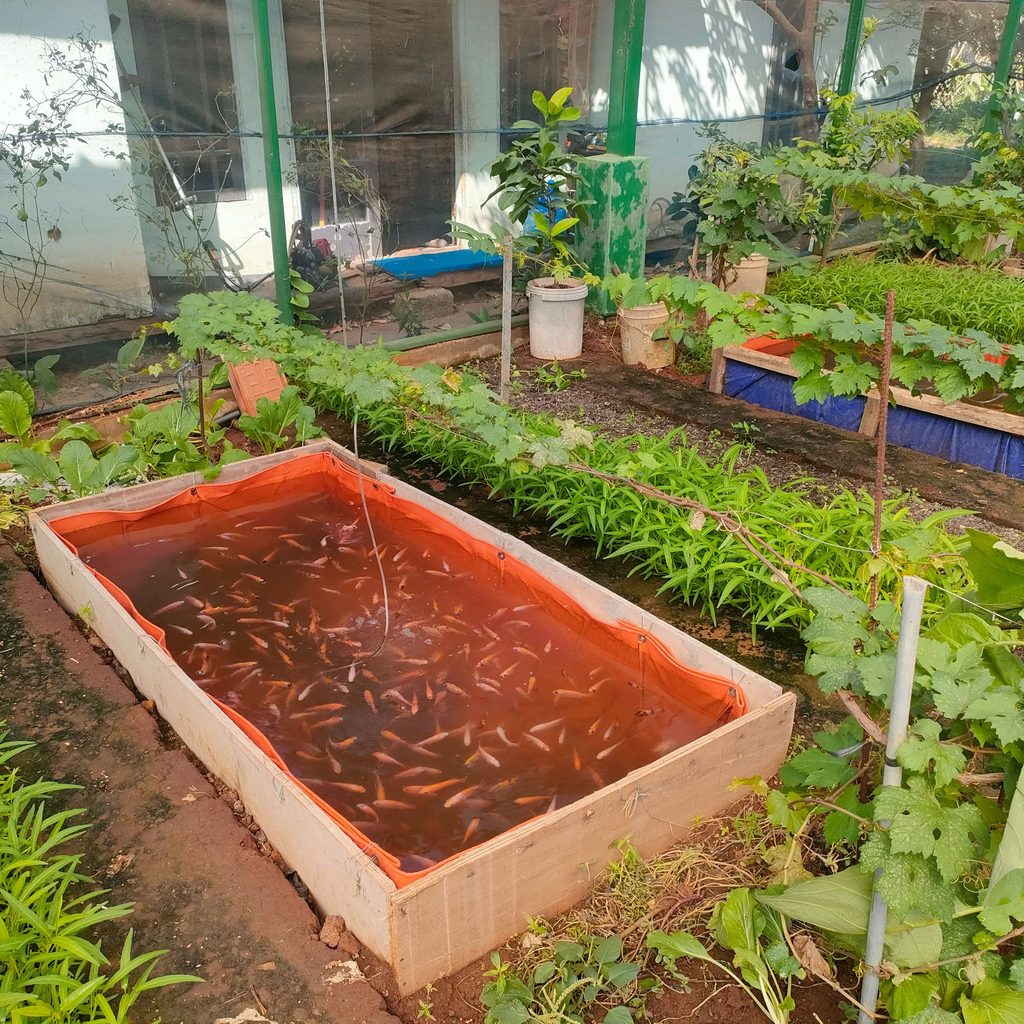
Qur’anic Garden as a Living Agricultural Learning Facility
The Qur’anic Garden (Kebun Qur’an) functions as a living-learning facility where agricultural and environmental knowledge can be demonstrated in practical settings.
The garden provides access to and demonstrates:
- useful and food-related plants;
- cultivation areas;
- hydroponic systems;
- aquatic and water-based cultivation;
- biodiversity resources;
- environmentally responsible production practices; and
- other practical agricultural-learning resources.
The facility supports practical learning about plants, cultivation techniques, biodiversity, environmental stewardship, and the sustainable use of natural resources.
Access for Local Farmers and Food Producers
UNISSULA provides local farmers and food producers with access to its agricultural facilities and demonstration resources for practical learning and the improvement of sustainable farming practices.
Through this access, participants can:
- observe sustainable cultivation methods;
- learn how hydroponic systems operate;
- understand resource-efficient food production;
- examine practical agricultural technologies;
- discuss cultivation challenges with university experts;
- learn about biodiversity and plant resources;
- study environmentally responsible farming approaches; and
- relate university knowledge to real production conditions.
This approach enables local producers to use university facilities as practical learning environments rather than limiting agricultural knowledge to classroom-based or academic activities.
Hydroponic Facilities and Sustainable Cultivation Demonstration
UNISSULA’s agricultural-learning environment includes hydroponic systems that demonstrate food production using controlled cultivation techniques.
These facilities provide practical examples of:
- soilless cultivation;
- nutrient management;
- water-use efficiency;
- controlled growing conditions;
- sustainable food production; and
- alternative cultivation methods.
Local farmers and food producers can use these facilities as demonstration and learning resources to understand how hydroponic technologies may be adapted to their own production activities.
The hydroponic installations and cultivation areas within the Qur’anic Garden form part of UNISSULA’s wider agricultural-learning environment.
Aquatic and Integrated Food-Production Resources
The Qur’anic Garden also includes water-based and aquatic cultivation resources that broaden the range of sustainable food-production practices demonstrated by the university.
These resources provide opportunities to learn about:
- water-based food systems;
- integrated cultivation;
- efficient use of land and water resources;
- basic aquatic production concepts; and
- sustainable management of agricultural ecosystems.
Such facilities support practical understanding of diversified food-production systems and resource-efficient cultivation methods.
Plant and Biodiversity Learning Resources
The Qur’anic Garden provides access to a variety of plants and agricultural resources relevant to education, cultivation, biodiversity, and food systems.
These resources are used to demonstrate:
- plant diversity;
- useful plants;
- food-related species;
- cultivation practices;
- ecosystem relationships; and
- responsible use of natural resources.
The Qur’anic Garden therefore functions both as a biodiversity resource and as a practical agricultural-learning facility.
Smart and Appropriate Agricultural Technology
UNISSULA also integrates practical technologies into its agricultural and food-production engagement activities.
Relevant technologies include:
- hydroponic production systems;
- environmental monitoring;
- temperature and nutrient control;
- renewable-energy applications;
- photovoltaic technology;
- smart farming;
- water-management systems; and
- other applied technologies used in agricultural community-service programmes.
These technologies provide local farmers and food producers with opportunities to observe, understand, and learn about practical tools that can improve production efficiency and sustainability.
Practical Learning with University Experts
Access to university facilities is complemented by guidance from lecturers, researchers, and community-service teams.
Local farmers and food producers are able to:
- visit agricultural facilities;
- observe technologies in operation;
- receive practical demonstrations;
- participate in hands-on learning;
- ask questions directly to university experts;
- discuss production challenges;
- receive technical guidance; and
- explore how technologies can be adapted to local conditions.
This interaction strengthens the role of university facilities as practical community-learning resources.
Supporting Sustainable Farming Practices
UNISSULA’s agricultural facilities and technologies support sustainable farming by demonstrating approaches that can contribute to:
- improved resource efficiency;
- reduced environmental impact;
- improved water management;
- renewable-energy use;
- sustainable cultivation;
- biodiversity conservation;
- improved food-production efficiency; and
- responsible use of natural resources.
The Qur’anic Garden supports agricultural and environmental education through useful and food-related plants, sustainable cultivation systems, biodiversity awareness, and community engagement.
Community Engagement Through University Facilities
UNISSULA uses university resources as community-engagement facilities rather than limiting them to internal academic use.
The university’s approach can be represented as:
University facilities → Community access → Agricultural learning → Technology demonstration → Sustainable farming practices
This model enables local farmers and food producers to benefit directly from university resources, practical technologies, and applied knowledge.
Free Access for Farmers and Food Producers
Access to these facilities and related community-engagement activities is provided free of charge to participating local farmers and food producers.
The activities are implemented through UNISSULA’s community-service framework and are supported by institutional and community-service funding.
Participants are not charged fees for:
- facility access;
- demonstrations;
- training;
- mentoring;
- practical learning; or
- technology-related guidance.
This funding model removes financial barriers and enables local farmers and food producers to benefit directly from university facilities, expertise, and practical learning resources.
Institutional Commitment to Community Access
UNISSULA recognises that universities can contribute to food security not only through research and classroom education, but also by opening relevant facilities, technologies, and expertise to local food producers.
By providing access to the Qur’anic Garden, hydroponic systems, cultivation facilities, biodiversity resources, agricultural technologies, and university experts, UNISSULA strengthens the capacity of local producers to understand and apply more sustainable farming practices.
This approach supports knowledge transfer, practical skills development, resource efficiency, and the long-term sustainability of local food-production activities.
Evidence of Implementation
UNISSULA’s provision of university access for local farmers and food producers is demonstrated through the following institutional evidence:
- Access to the Qur’anic Garden as an agricultural and environmental learning facility.
- Hydroponic cultivation facilities used for practical learning and demonstration.
- Water-based and integrated cultivation resources.
- Access to food-related plants and biodiversity-learning resources.
- Practical exposure to sustainable cultivation methods.
- Access to agricultural and environmental technologies.
- Interaction with university experts through community-service activities.
- Free participation and facility access for local farmers and food producers.
- Use of university facilities to support sustainable farming knowledge and practice.
2.5.4
Sustainable food purchases
2.5.4 Sustainable Food Purchases
UNISSULA Prioritises Local and Sustainable Food Procurement
Universitas Islam Sultan Agung (UNISSULA) prioritises the purchase of food and food-related products from local and sustainable sources as part of its institutional procurement and campus sustainability practices.
During the 2025 reporting period, UNISSULA strengthened this approach through the implementation of the Close Loop System, an institutional procurement mechanism designed to direct purchasing through entities within the Sultan Agung foundation ecosystem.
This approach supports local supply chains, regional economic activity, and more sustainable procurement by prioritising suppliers and service providers connected to Semarang and Central Java.
Institutional Procurement Policy: Close Loop System
UNISSULA formalised the implementation of the Close Loop System through Rector Circular Letter No. 4493/J/SA/V/2025, dated 14 May 2025.
The circular directs faculties, study programmes, administrative units, institutions, bureaus, UPTs, and other university units to implement the Close Loop System when purchasing goods and using services through business units under Yayasan Badan Wakaf Sultan Agung (YBW-SA).
The designated business units include:
- PT Lumintu Agung Sejahtera;
- PT Generasi Sultan Agung;
- PT Setia Amanah Ummat; and
- PT SAFA.
For food-related procurement, PT Generasi Sultan Agung (Genesa) is particularly relevant because its services include:
- catering;
- snacks;
- supermarket services; and
- other food-related supplies.
These business entities operate within the local and regional economy and utilise local resources in their operations. By directing institutional procurement through these entities, UNISSULA supports local businesses, strengthens regional supply chains, and promotes the use of locally available goods and services.
The circular also explicitly requires university units to implement the Close Loop System while prioritising Sustainable Development Goals (SDGs) values.
This policy establishes a formal institutional mechanism for integrating local procurement practices and sustainability considerations into university purchasing decisions, including food-related procurement.
Local Food Sourcing from Semarang and Central Java
Food supplies within UNISSULA’s Close Loop System are sourced through suppliers located in Semarang and Central Java.
This local sourcing approach supports the regional food economy by strengthening demand for:
- local farmers;
- local food producers;
- regional suppliers;
- local food processors;
- catering providers; and
- small and medium food enterprises.
By prioritising suppliers from the surrounding region, UNISSULA strengthens relationships with local producers and businesses while reducing dependence on more distant supply chains.
Supporting Regional Food Systems
UNISSULA’s procurement model contributes to the development of more resilient local and regional food systems.
Prioritising local sources can help:
- shorten supply chains;
- improve traceability;
- strengthen relationships with regional suppliers;
- support local economic activity;
- improve responsiveness to campus food demand; and
- strengthen regional food availability.
This approach connects university procurement with broader community and regional-development objectives.
Sustainable Procurement Principles
UNISSULA’s sustainable food procurement approach considers not only the location of suppliers, but also the quality, affordability, safety, and responsibility of food sourcing.
Food procurement supports the availability of:
- safe food;
- nutritious food;
- affordable food;
- appropriate-quality ingredients;
- locally available products; and
- environmentally responsible food options.
These considerations support responsible procurement while maintaining the quality and accessibility of food provided within the university environment.
Integration with Campus Food Services
The Close Loop System supports food procurement for a range of university activities and services, including:
- catering;
- institutional meetings;
- university events;
- staff activities;
- student activities;
- campus food services;
- snacks and refreshments; and
- other institutional food requirements.
This creates a university-wide mechanism through which local and sustainable food sourcing can be integrated into routine institutional purchasing.
Prioritisation Through Institutional Channels
The 2025 Rector Circular demonstrates that local procurement is implemented through a formal institutional mechanism rather than relying only on informal or occasional purchasing preferences.
The university directs organisational units to use the Close Loop System when purchasing goods and services through the designated YBW-SA business units.
UNISSULA’s procurement approach can therefore be represented as:
University procurement → Close Loop System → Local and regional suppliers → Food products and services → Sustainable regional food system
This structured approach strengthens the consistency of local procurement practices across the university.
Contribution to Local Farmers and Food Producers
Local food procurement contributes to the sustainability of the regional food economy.
By purchasing food-related products and services through local and regional supply chains, UNISSULA helps support:
- demand for locally produced food;
- business continuity for regional food suppliers;
- local food-processing enterprises;
- community-based producers;
- local employment; and
- regional economic resilience.
This procurement model complements UNISSULA’s other SDG 2 initiatives that support farmers and food producers through knowledge transfer, training, technology, facility access, and community engagement.
Environmental Benefits of Local Sourcing
Local sourcing may also contribute to more environmentally responsible food procurement.
Shorter supply chains can support:
- lower transportation requirements;
- reduced logistics distances;
- more efficient distribution;
- fresher food supply;
- improved coordination with suppliers; and
- stronger regional resource cycles.
These factors are consistent with UNISSULA’s broader commitment to sustainable campus operations and responsible resource use.
Food Safety and Quality Considerations
UNISSULA’s sustainable food-purchasing approach also considers food safety, product quality, and reliability of supply.
Food and catering suppliers are expected to provide products appropriate for university consumption and to support safe and reliable campus food provision.
Important considerations include:
- food quality;
- hygiene;
- food safety;
- appropriate handling;
- reliable supply; and
- suitability for campus consumption.
These considerations help ensure that local sourcing is combined with responsible food procurement and appropriate service standards.
Institutional Commitment to Sustainable Food Procurement
UNISSULA recognises that institutional purchasing can contribute to the sustainability of local food systems.
By using the Close Loop System, prioritising suppliers from Semarang and Central Java, and integrating local sourcing into routine institutional purchasing, the university creates a structured procurement framework that supports both campus needs and regional economic activity.
This approach connects institutional procurement with:
- local economic development;
- support for regional suppliers;
- shorter supply chains;
- responsible food sourcing;
- food safety and quality; and
- sustainable campus operations.
Through this procurement framework, UNISSULA strengthens the role of university purchasing in supporting local and sustainable food systems.
Evidence of Implementation
UNISSULA’s prioritisation of local and sustainable food purchasing is demonstrated through the following institutional evidence:
- Rector Circular Letter No. 4493/J/SA/V/2025.
- Institutional implementation of the Close Loop System.
- Direction for university units to purchase goods and use services through designated YBW-SA business units.
- Food-related procurement through PT Generasi Sultan Agung, including catering, snacks, supermarket services, and other food supplies.
- Use of suppliers from Semarang and Central Java within the Close Loop supply chain.
- Prioritisation of locally available food products and regional suppliers.
- Integration of food safety, affordability, quality, and environmental considerations into procurement practices.
- Institutional purchasing that supports local food producers, processors, catering providers, and regional suppliers.