

















UNISSULA SUSTAINABILITY REPORTING
SDG 10 – Reduced Inequalities
Progress Report 2025
2025 Report Overview
In 2025, Universitas Islam Sultan Agung (UNISSULA) documented its progress towards SDG 10 – Reduced Inequalities through inclusive and non-discriminatory admissions, targeted recruitment of underrepresented groups, financial assistance for economically disadvantaged students, disability inclusion, and equal opportunities across university activities. The university strengthened its institutional policies on anti-discrimination, accessibility, reasonable accommodation, and protection against harassment, while supporting students through KIP Kuliah scholarships, dedicated disability admissions pathways, peer-support networks, and counselling services. This report presents UNISSULA’s institutional initiatives, documented achievements, and continuing priorities for reducing inequalities and promoting an inclusive university environment during the 2025 reporting period.
Full SDG 10 Progress Report 2025
10.6.1
Non-discriminatory admissions policy
10.6.1 Non-Discriminatory Admissions Policy
University-Wide Non-Discriminatory and Inclusive Admissions Policy
Universitas Islam Sultan Agung (UNISSULA) applies a university-wide admissions policy designed to ensure that prospective students are treated fairly, inclusively, and without discrimination during the student admissions process.
In 2025, UNISSULA formally reinforced this commitment through Circular Letter No. 83102/J/SA/IX/2025, issued on 7 September 2025, which establishes principles for fair, inclusive, and non-discriminatory student admissions across the university.
The policy states that UNISSULA provides equal opportunities to prospective students who meet the applicable academic and administrative requirements.
The Circular Letter specifically affirms that UNISSULA applies a non-discriminatory admissions principle and provides equal opportunities to prospective students in accordance with academic requirements and university regulations.

Equal Opportunity in Student Admissions
UNISSULA’s admissions policy establishes that prospective students should not be treated differently on the basis of personal or social background.
The policy explicitly states that the student admissions process does not discriminate on the basis of:
- Gender;
- Economic condition;
- Disability;
- Regional origin;
- Nationality; or
- Other social backgrounds.
Applicants remain subject to the academic and administrative requirements established by the university.
This approach enables UNISSULA to maintain academic admission standards while ensuring that characteristics unrelated to academic and administrative eligibility do not become unjustified barriers to higher education.
Inclusive Admissions for Underrepresented Groups
UNISSULA recognises that equal access to higher education may require additional support or specific admission mechanisms for groups that may face barriers in accessing university education.
The 2025 Circular Letter therefore states that the university provides support and inclusive admissions mechanisms for groups requiring particular attention, including:
- Prospective students with disabilities; and
- Other underrepresented groups.
These measures form part of UNISSULA’s effort to promote equal access to higher education.
The university therefore combines a general non-discrimination principle with targeted inclusive measures where additional support is required.
Positive and Inclusive Admissions Measures
UNISSULA’s admissions approach allows appropriate supportive measures for groups that may otherwise experience barriers to university access.
This is reflected particularly in the university’s arrangements for prospective students with disabilities.
UNISSULA has established a dedicated admissions mechanism for students with disabilities through the Special Selection Programme for Persons with Disabilities (Seleksi Program Khusus Penyandang Disabilitas/SPKPD).
The programme is specifically designed for prospective students with disabilities and includes an assessment process based on the applicant’s capabilities and suitability for the selected academic programme.
This represents a targeted institutional mechanism intended to improve access to higher education for students who may require additional consideration or support during the admission process.
Admissions Guide for Students with Disabilities
UNISSULA maintains a Guidebook for the Admission of Students with Disabilities as supporting institutional guidance for inclusive admissions.
The guide explains that the SPKPD is a dedicated student admissions route for persons with disabilities and that applicants are assessed according to their capabilities and the academic programme they select.
The guide also states that persons with disabilities may have opportunities to obtain scholarships according to the requirements of the relevant scholarship schemes.
This demonstrates that inclusive admissions at UNISSULA are supported not only through general policy statements but also through operational procedures.
Identification of Individual Support Needs
The admissions process for prospective students with disabilities includes procedures for identifying individual conditions and support needs.
The institutional documentation includes a disability and functional-capability assessment form that allows information to be recorded regarding different types of disabilities, including:
- Physical disabilities;
- Visual disabilities;
- Hearing disabilities;
- Speech disabilities;
- Intellectual or learning difficulties;
- Developmental or mental conditions; and
- Other disabilities.
The documentation also allows recommended support to be identified, including:
- Wheelchairs;
- Walking aids;
- Hearing aids;
- Other assistive devices;
- Sign-language assistance; and
- Other forms of recommended support or therapy.
This approach enables the university to consider the functional needs of prospective students rather than relying solely on a general disability classification.
Disability Information in the Admissions System
The UNISSULA student admissions system also includes a field for recording the type of disability of prospective students.
This enables disability-related information to be incorporated into the admissions process and supports the implementation of appropriate inclusive arrangements.
The inclusion of disability information within the admissions system also helps the university identify applicants who may require specific support.
Integration of Policy and Admissions Practice
The 2025 Circular Letter formally links the university’s non-discriminatory admissions policy with its existing disability admissions guidance.
The policy states that inclusive admissions for persons with disabilities are implemented with reference to the Guidebook for the Admission of Students with Disabilities of Universitas Islam Sultan Agung and the university’s applicable student admissions regulations.
This creates a clear relationship between:
University-wide policy
→ Inclusive admissions guidance
→ Operational admissions procedures
The policy therefore provides institutional direction, while the guidebook supports practical implementation for prospective students with disabilities.
University-Wide Application
The 2025 Circular Letter is addressed to university leaders and administrative units, including:
- Faculty leaders;
- Directors;
- Bureau heads;
- Institute heads;
- Technical implementation unit heads;
- Unit heads; and
- Administrative heads.
This demonstrates that the policy is intended to apply across the university rather than only within a single faculty or academic programme.
The university-wide scope helps ensure consistent implementation of non-discriminatory admissions principles across institutional units involved in student admission and administration.
Academic and Administrative Standards
The non-discriminatory admissions policy does not remove academic or administrative eligibility requirements.
Prospective students are still required to meet the academic and administrative requirements established by UNISSULA.
The principle of non-discrimination therefore relates to ensuring that applicants are not unfairly excluded because of personal characteristics or social background when they otherwise meet relevant admission requirements.
This approach enables UNISSULA to maintain academic standards while supporting fair and equal access.
Public Availability of Admissions Guidance
UNISSULA publicly provides information relating to inclusive admissions for students with disabilities through its official university website.
The Guidebook for the Admission of Students with Disabilities is publicly accessible through the UNISSULA Academic Administration Bureau website.
Public availability enables prospective students, families, and other stakeholders to understand the admissions mechanisms available for applicants with disabilities.
This transparency supports the implementation of inclusive admissions and enables the university’s practices to be externally reviewed.
2025 Policy Review and Reinforcement
The university’s non-discriminatory admissions commitment was formally reinforced in 2025 through Circular Letter No. 83102/J/SA/IX/2025.
The document was issued on 7 September 2025 on behalf of the Rector by the Vice Rector I of Universitas Islam Sultan Agung.
The issuance of the Circular Letter in 2025 provides current institutional confirmation that the principles of fair, inclusive, and non-discriminatory admissions remain applicable across UNISSULA.
Non-Discriminatory Admissions Framework
UNISSULA’s approach to student admissions can be summarised through the following institutional framework:
Equal opportunity in admissions
→ Non-discrimination
→ Inclusive support
→ Targeted admissions mechanisms
→ Public guidance
This framework combines general equal-treatment principles with practical mechanisms for applicants who may require additional support.
The university therefore seeks to ensure that access to higher education is based on relevant academic and administrative criteria while reducing unnecessary barriers for underrepresented groups.
Institutional Commitment to Inclusive Higher Education
UNISSULA recognises that non-discriminatory admissions are an important component of equitable access to higher education.
The university’s admissions policy seeks to ensure that applicants are assessed fairly and are not excluded because of unrelated personal or social characteristics.
At the same time, UNISSULA recognises that some groups may require additional support to achieve meaningful equality of access.
The university therefore maintains inclusive mechanisms, particularly for prospective students with disabilities, to support participation in higher education.
Evidence of Implementation
UNISSULA’s non-discriminatory admissions policy is demonstrated through the following institutional evidence:
- Circular Letter No. 83102/J/SA/IX/2025 on fair, inclusive, and non-discriminatory student admissions.
- A formal commitment to provide equal opportunities to prospective students who meet academic and administrative requirements.
- Explicit protection against discrimination based on gender, economic condition, disability, regional origin, nationality, and other social backgrounds.
- Inclusive admission mechanisms for students with disabilities and other underrepresented groups.
- A dedicated Special Selection Programme for Persons with Disabilities (SPKPD).
- A publicly available Guidebook for the Admission of Students with Disabilities.
- Procedures for identifying disability conditions and required support.
- Provision for assistive devices and support such as wheelchairs, hearing aids, walking aids, and sign-language assistance.
- Recording of disability information within the student admissions system.
- Formal linkage between the 2025 admissions policy and the university’s disability admissions guide.
- University-wide applicability across faculties and administrative units.
- Formal issuance of the policy in 2025, demonstrating current institutional reinforcement of non-discriminatory admissions.
10.6.2
Access To University Track Underrepresented Groups Applications
10.6.2 Tracking Applications and Admissions of Underrepresented Groups
University-Wide Tracking of Applications and Admissions
Universitas Islam Sultan Agung (UNISSULA) measures and tracks applications and admissions of underrepresented and potentially underrepresented groups as part of its commitment to equitable and inclusive access to higher education.
In 2025, UNISSULA formalised this practice through Circular Letter No. 83103/J/SA/IX/2025, issued on 7 September 2025, which establishes the university-wide measurement and monitoring of applications and admissions of underrepresented and potentially underrepresented groups.
The Circular Letter states that UNISSULA measures and monitors application and admission data for underrepresented or potentially underrepresented groups based on information available within the university’s student admissions system.

Categories Included in the Monitoring Framework
Under Circular Letter No. 83103/J/SA/IX/2025, the monitoring framework includes data based on:
- Gender
- Economic condition
- Disability
- Nationality
- International student status
- Other relevant categories available within the admissions system
These categories enable UNISSULA to identify participation patterns among groups that may be underrepresented or potentially underrepresented in higher education.
Tracking Applications and Admissions
UNISSULA’s monitoring framework covers both the application and admission stages.
The university tracks:
- The number of applicants
- The number of applicants admitted
- Changes in these data over time
Circular Letter No. 83103/J/SA/IX/2025 explicitly requires monitoring of applicant numbers, admitted student numbers, and the development of these data over time to support evaluation of access and equity in student admissions.
This enables UNISSULA to evaluate representation throughout the admissions process rather than relying only on the characteristics of currently enrolled students.
Student Admissions Information System
The UNISSULA student admissions system collects demographic and personal information that can be used to identify and monitor potentially underrepresented groups.
Among the information recorded during the admissions process are gender and disability status/type.
The admissions system also records nationality, providing a basis for identifying international applicants and monitoring participation by country of origin.
These structured data fields allow UNISSULA to distinguish applicant groups during the admissions process and support institutional monitoring of representation.
Tracking Women in the Admissions Process
Gender information is collected as part of the UNISSULA student application process.
The availability of gender data enables UNISSULA to identify female applicants and monitor their participation through the admissions process.
This can support analysis of:
- Female applicant participation
- Female admission outcomes
- Changes in representation over time
- Participation across faculties and academic programmes
The collection of gender information therefore provides an institutional basis for monitoring women as a potentially underrepresented group.
Tracking Students with Disabilities
UNISSULA also records disability information during the admissions process.
The student application system includes a field for the applicant’s type of disability, allowing applicants with disabilities to be identified within admissions data.
This tracking is supported by UNISSULA’s dedicated Special Selection Programme for Persons with Disabilities (Seleksi Program Khusus Penyandang Disabilitas/SPKPD).
The SPKPD provides a specific admissions mechanism for prospective students with disabilities and assesses applicants according to their capabilities and suitability for their selected academic programme.
Through this mechanism, UNISSULA is able to identify prospective students with disabilities at the application stage and follow their admission outcomes.
Disability and Functional Needs Information
The admissions process for prospective students with disabilities also includes structured information regarding disability and functional capability.
The university’s admissions documentation provides categories covering physical, visual, hearing, speech, intellectual, learning, developmental, mental, and other disabilities.
The documentation can also identify assistive support needs, including:
- Wheelchairs
- Walking aids
- Hearing aids
- Sign-language assistance
- Other recommended support
This information supports both the identification of applicants with disabilities and the university’s ability to respond to their needs after admission.
Tracking Low-Income Applicants through KIP Kuliah
UNISSULA identifies and tracks prospective students from economically disadvantaged backgrounds through its Kartu Indonesia Pintar Kuliah (KIP Kuliah) admission and financial-support pathway.
KIP Kuliah is intended for students who demonstrate academic potential but face financial limitations. Through this mechanism, UNISSULA identifies prospective students from economically vulnerable households using recognised socioeconomic criteria and supporting documentation.
The pathway supports the identification of applicants from the lowest-income households, including students corresponding to the bottom 20% of household income groups or equivalent nationally recognised low-income categories.
This mechanism enables UNISSULA to distinguish low-income applicants from those applying through the general admissions route.
Public information on this pathway is available through the UNISSULA Sustainability website under SDG 1, Indicator 1.3.1.
Formal Identification of Low-Income Students
UNISSULA formally records and confirms KIP Kuliah beneficiaries through Rector Decrees.
For the 2025 admissions cycle:
- Rector Decree No. 7500/F/SA/VIII/2025 establishes KIP Kuliah recipients among new students admitted to UNISSULA; and
- Rector Decree No. 10263/F/SA/X/2025 establishes additional KIP Kuliah recipients through the Usulan Masyarakat (USMAS) scheme.
These decisions provide formal institutional evidence that low-income applicants are identified, admitted, and recorded through a structured process.
Monitoring Low-Income Student Participation
The KIP Kuliah pathway connects:
Socioeconomic identification → Application → Admission → Financial support → Institutional monitoring
UNISSULA records KIP Kuliah recipients through official institutional decisions and maintains beneficiary data as part of its student admissions and support processes.
This provides a practical mechanism for identifying and monitoring one of the key underrepresented groups included in the university’s 2025 monitoring policy.
Tracking Nationality and International Students
UNISSULA’s admissions process records applicants’ nationality.
This information enables the university to identify international applicants and monitor their participation in admissions according to nationality.
Circular Letter No.83103/J/SA/IX/2025 explicitly includes nationality and international student status among the categories used for monitoring applications and admissions.
This provides an institutional basis for evaluating participation among international students and identifying nationalities that may be less represented within the student population.
Use of Monitoring Data
The purpose of collecting and tracking these data is not limited to reporting.
Circular Letter No. 83103/J/SA/IX/2025 establishes that the results of measurement and monitoring are used as a basis for:
- Evaluation
- Planning
- Development of more inclusive, fair, and responsive student admissions policies
The university can therefore use application and admission data to identify representation patterns, evaluate accessibility, and determine where additional institutional measures may be required.
Monitoring Changes Over Time
UNISSULA’s monitoring policy also requires consideration of changes in admissions data over time.
This enables the university to assess whether participation among potentially underrepresented groups is:
- Increasing
- Remaining stable
- Declining
Longitudinal monitoring strengthens the university’s ability to evaluate the effectiveness of inclusive admissions practices and targeted support mechanisms.
Relationship with the Non-Discriminatory Admissions Policy
The tracking framework complements UNISSULA’s broader non-discriminatory and inclusive admissions policy.
Through Circular Letter No. 83102/J/SA/IX/2025, UNISSULA states that its admissions process provides equal opportunities and does not discriminate against prospective students on the basis of gender, economic condition, disability, regional origin, nationality, or other social backgrounds, provided applicants meet applicable academic and administrative requirements.
The same policy also provides for inclusive admission mechanisms for applicants who require particular support, including prospective students with disabilities and other underrepresented groups.
The two policies therefore work together:
Non-discriminatory admissions policy → Identification of relevant applicant groups → Application tracking → Admission tracking → Evaluation → Inclusive admissions improvement
Evidence-Based Admissions Monitoring
UNISSULA’s approach combines several institutional data sources and mechanisms.
The admissions system provides demographic information such as gender, disability, and nationality.
Dedicated admission and support mechanisms provide additional identification of particular groups, including:
- SPKPD for prospective students with disabilities
- KIP Kuliah for students from economically disadvantaged households
This enables the university to identify potentially underrepresented groups through both general admissions data and dedicated admission pathways.
Institutional Monitoring Framework
UNISSULA’s monitoring framework can therefore be represented as:
Applicant data → Identification of underrepresented groups → Application monitoring → Admission monitoring → Institutional evaluation → Policy development
This structured approach enables admissions data to support evidence-based decisions concerning access and participation.
Continuous Improvement
UNISSULA continues to strengthen its measurement and monitoring of applications and admissions.
Future development includes:
- Maintaining consistent data collection across admissions cycles
- Strengthening integration between admissions and student information systems
- Comparing application and admission patterns across academic years
- Evaluating representation by gender, economic condition, disability, nationality, and other available categories
- Strengthening documentation of targeted admission pathways
- Using monitoring results to improve inclusive admissions strategies
These measures support continuous institutional improvement in equitable access to higher education.
Evidence of Implementation
UNISSULA’s measurement and tracking of applications and admissions of underrepresented and potentially underrepresented groups is demonstrated through the following institutional evidence:
- Circular Letter No. 83103/J/SA/IX/2025, issued on 7 September 2025, establishing university-wide measurement and monitoring of applications and admissions of underrepresented or potentially underrepresented groups.
- Monitoring of both applicant numbers and admitted student numbers.
- Monitoring of changes in admissions data over time.
- Admissions monitoring based on gender, economic condition, disability, nationality, and international student status.
- A student admissions system that records gender.
- A student admissions system that records disability status/type.
- A student admissions system that records nationality.
- A dedicated Special Selection Programme for Persons with Disabilities (SPKPD).
- Structured disability and functional-needs documentation for prospective students.
- A dedicated KIP Kuliah admission and financial-support pathway for economically disadvantaged students.
- Formal identification of KIP Kuliah recipients through Rector Decrees for the 2025 admissions cycle.
- Institutional monitoring of low-income student participation through admissions and financial-support records.
- Use of monitoring results for evaluation, planning, and development of more inclusive admissions policies.
- Integration of tracking activities with UNISSULA’s broader non-discriminatory and inclusive admissions policy.
10.6.3
Access To University Underrepresented Groups Recruit
10.6.3 Planned Actions to Recruit Students from Underrepresented Groups
University-Wide Planned Recruitment Actions
Universitas Islam Sultan Agung (UNISSULA) undertakes planned actions to expand access to higher education and recruit prospective students from underrepresented and potentially underrepresented groups.
In 2025, UNISSULA formalised this commitment through Circular Letter No. 8405/J/SA/IX/2025, issued on 9 September 2025. The Circular Letter establishes planned institutional actions to widen access and recruit prospective students from groups that are underrepresented or potentially underrepresented in higher education.
The university implements these actions through special or affirmative admission pathways, scholarships and educational assistance, targeted admissions outreach, and other forms of support designed to improve access for identified groups.
Planned Recruitment Mechanisms
UNISSULA’s approach combines institutional policy with practical recruitment programmes.
Planned recruitment actions include:
- Special or affirmative admission pathways
- Scholarships and financial assistance
- Targeted admissions promotion and outreach
- Selection arrangements adapted to particular target groups
- Institutional support intended to widen access to higher education
Two established programmes specifically identified in the university’s 2025 policy are:
- Kartu Indonesia Pintar Kuliah (KIP Kuliah) for prospective students from economically disadvantaged families
- Seleksi Program Khusus Penyandang Disabilitas (SPKPD) for prospective students with disabilities
These programmes are explicitly identified in Circular Letter No. 8405/J/SA/IX/2025 as institutional actions supporting the recruitment of underrepresented students.
Recruiting Economically Disadvantaged Students through KIP Kuliah
UNISSULA implements KIP Kuliah as a dedicated admission and financial-support pathway for prospective students from economically disadvantaged backgrounds.
The programme provides an identifiable route through which low-income applicants can apply to UNISSULA while also being considered for financial support.
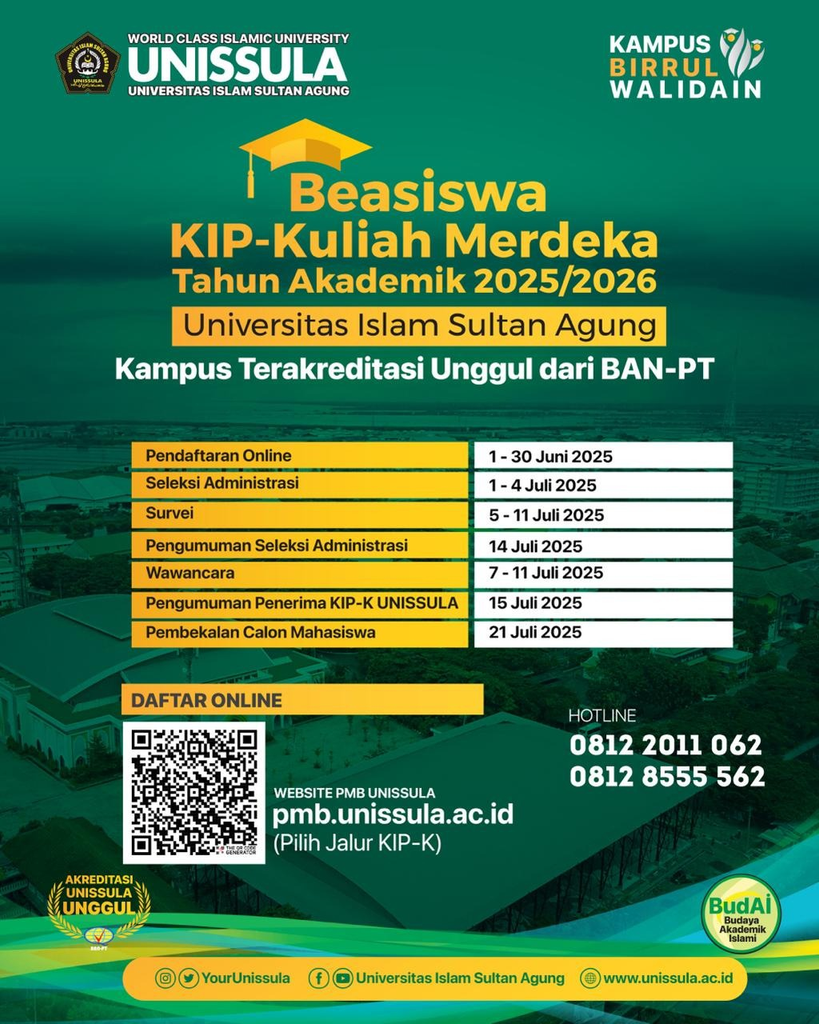
For the 2025/2026 academic year, UNISSULA publicly promoted KIP Kuliah through official admissions materials.
The recruitment process included:
Online Registration → Administrative Selection → Survey → Interview → Recipient Announcement → Student Preparation
This demonstrates that the programme is not limited to passive financial assistance after enrolment. It forms part of a planned recruitment and selection process through which economically disadvantaged prospective students are actively encouraged to enter higher education at UNISSULA.
Targeted KIP Kuliah Recruitment
UNISSULA also conducted geographically targeted KIP Kuliah recruitment for prospective students from:
- Brebes Regency
- Tegal City
- Tegal Regency
The 2025 recruitment materials established a specific schedule covering online registration, administrative selection, survey and interview, and the announcement of successful KIP Kuliah recipients.
This targeted activity demonstrates a planned effort to reach prospective students through a clearly defined recruitment campaign rather than relying only on general university admissions.
Structured KIP Kuliah Selection Process
The KIP Kuliah recruitment process enables UNISSULA to identify prospective students who require financial support before and during the admissions process.
The 2025 recruitment activities included several stages of assessment, including administrative verification, surveys, and interviews.
This structure supports the identification of students whose economic circumstances may otherwise create barriers to university participation.
The recruitment pathway can therefore be represented as:
Targeted outreach → Application → Eligibility verification → Selection → Admission → Financial support
This process provides a practical institutional mechanism for widening access for economically disadvantaged students.
Recruitment of Students with Disabilities
UNISSULA also maintains a dedicated recruitment mechanism for prospective students with disabilities through the Seleksi Program Khusus Penyandang Disabilitas (SPKPD).
The programme is specifically designed as a student admissions route for persons with disabilities.
The UNISSULA disability admissions guide states that SPKPD is a special selection process for prospective students with disabilities and that applicants are assessed according to their capabilities and suitability for their selected academic programmes.
This dedicated pathway represents a planned institutional action because prospective students with disabilities are provided with a specifically designed admission mechanism rather than being addressed only through the general admissions process.
Identifying Support Needs during Recruitment
The recruitment and admission process for students with disabilities also includes structured assessment of disability and functional needs.
The university’s documentation provides for the identification of disabilities including:
- Physical disabilities
- Visual disabilities
- Hearing disabilities
- Speech disabilities
- Intellectual or learning difficulties
- Developmental and mental conditions
- Other disabilities
The process can also identify required forms of assistance, including wheelchairs, walking aids, hearing aids, sign-language assistance, and other recommended support.
This enables UNISSULA to connect recruitment and admissions with the support that students may require to participate successfully in higher education.
Scholarships as a Recruitment and Access Mechanism
Financial assistance forms an important part of UNISSULA’s planned recruitment actions.
Through KIP Kuliah, economically disadvantaged applicants are provided with a dedicated pathway that combines admission with financial assistance.
Through the SPKPD mechanism, prospective students with disabilities can also be connected with scholarship opportunities subject to applicable scholarship requirements. The disability admissions guide explicitly states that persons with disabilities have opportunities to obtain scholarships according to the relevant conditions.
These mechanisms help reduce financial and accessibility barriers that could otherwise prevent prospective students from entering university.
Relationship with the Non-Discriminatory Admissions Policy
UNISSULA’s planned recruitment actions operate alongside its university-wide non-discriminatory admissions policy.
Through Circular Letter No. 83102/J/SA/IX/2025, UNISSULA establishes equal opportunity in student admissions and states that admissions should not discriminate on the basis of gender, economic condition, disability, regional origin, nationality, or other social backgrounds.
The same policy recognises the need for inclusive admission mechanisms for prospective students requiring particular support, including students with disabilities and other underrepresented groups.
The relationship between the policies can therefore be represented as:
Non-discriminatory admissions → Identification of access barriers → Planned recruitment actions → Targeted admission pathways → Support and admission
Relationship with Underrepresented-Group Monitoring
UNISSULA also measures and monitors applications and admissions of underrepresented and potentially underrepresented groups through Circular Letter No. 83103/J/SA/IX/2025.
The monitoring policy covers categories including gender, economic condition, disability, nationality, and international student status.
It also requires monitoring of the number of applicants, admitted students, and changes in these data over time.
This means that planned recruitment and monitoring operate as complementary institutional processes:
Tracking representation → Identifying access needs → Planned recruitment → Monitoring applications and admissions → Evaluation
Public Recruitment Activities
UNISSULA makes its targeted recruitment activities visible to prospective students through publicly distributed admissions information.
The KIP Kuliah 2025/2026 recruitment materials provide prospective students with:
- The application period
- Selection stages
- Survey and interview schedules
- Recipient announcement dates
- Online registration information
- Access to the official UNISSULA student admissions website
Public communication is important because planned recruitment actions must be capable of reaching the groups for whom the programmes are intended.
The availability of a dedicated KIP Kuliah option through the UNISSULA admissions process makes the programme identifiable to prospective low-income students during application.
Evidence-Based Recruitment Approach
UNISSULA’s approach does not rely on a single mechanism.
The university combines:
Institutional policy + Targeted admission pathways + Financial support + Public recruitment + Selection mechanisms
For economically disadvantaged prospective students, this is demonstrated through KIP Kuliah.
For prospective students with disabilities, this is demonstrated through SPKPD and the university’s dedicated disability admissions procedures.
These programmes provide concrete examples of planned actions intended to widen access to higher education.
Continuous Development of Inclusive Recruitment
UNISSULA continues to strengthen recruitment practices designed to expand participation among groups that may experience barriers to higher education.
Institutional development can include:
- Continuing targeted KIP Kuliah recruitment
- Maintaining dedicated disability admission mechanisms
- Expanding outreach to economically disadvantaged communities
- Strengthening targeted admissions communication
- Connecting admissions with scholarship and student-support programmes
- Monitoring application and admission outcomes
- Using monitoring results to improve future recruitment strategies
This approach allows recruitment programmes to be evaluated and developed according to institutional data and identified access needs.
Evidence of Implementation
UNISSULA’s planned actions to recruit students from underrepresented and potentially underrepresented groups are demonstrated through the following institutional evidence:
- Circular Letter No. 8405/J/SA/IX/2025, issued on 9 September 2025, establishing planned actions to widen access and recruit prospective students from underrepresented or potentially underrepresented groups.
- Institutional use of special or affirmative admission pathways.
- Use of scholarships and educational assistance as part of access and recruitment measures.
- Targeted admissions outreach and support for identified groups.
- A dedicated KIP Kuliah 2025/2026 admission pathway for economically disadvantaged prospective students.
- A structured KIP Kuliah process covering application, administrative selection, survey/interview, and recipient announcement.
- Targeted KIP Kuliah recruitment for prospective students from Brebes Regency, Tegal City, and Tegal Regency.
- A dedicated Special Selection Programme for Persons with Disabilities (SPKPD).
- Structured assessment of disability and functional support needs during the admissions process.
- Scholarship opportunities for prospective students with disabilities subject to applicable requirements.
- Integration with UNISSULA’s non-discriminatory and inclusive admissions policy.
- Integration with the university’s system for measuring and monitoring applications and admissions of underrepresented groups.
- Public communication of targeted recruitment opportunities through official UNISSULA admissions materials and channels.
10.6.4
Anti-Discrimination Policies
10.6.4 Anti-Discrimination Policy
University-Wide Anti-Discrimination Policy
Universitas Islam Sultan Agung (UNISSULA) maintains a university-wide anti-discrimination policy designed to ensure fair, respectful, inclusive, and equal treatment across the institution and its operations.
In 2025, UNISSULA formalised this commitment through Circular Letter No. 8406/J/SA/IX/2025, issued on 9 September 2025. The Circular Letter establishes a university-wide prohibition of discrimination across institutional activities and operations.
The policy is intended to support a university environment that is fair, safe, inclusive, and respectful of the dignity of all members of the university community.
Prohibition of Discrimination
UNISSULA explicitly prohibits all forms of discrimination in university activities and operations.
Circular Letter No. 8406/J/SA/IX/2025 states that discrimination is prohibited on the basis of:
- Gender
- Economic condition
- Disability
- Age
- Race
- Nationality
- Social status
- Other characteristics protected under applicable regulations
This policy provides a clear institutional standard that discriminatory treatment is not acceptable within the university.
University-Wide Scope
The anti-discrimination policy applies across the institution rather than to only one unit, programme, or group.
The policy applies to:
- Students
- Academic staff
- Non-academic staff
- Prospective students
- Other parties interacting with the university
Its scope covers major areas of university activity, including:
- Education
- Research
- Community service
- Employment
- University services
- Other institutional activities
This broad scope ensures that the anti-discrimination principle applies to both academic and non-academic university operations.
Equal Treatment in Education
The policy applies to educational activities involving students and prospective students.
This supports the principle that students should not experience discriminatory treatment because of personal, social, economic, demographic, or disability-related characteristics.
The anti-discrimination policy therefore complements UNISSULA’s broader admissions policy, which provides equal opportunities to prospective students and prohibits discrimination in the admissions process based on gender, economic condition, disability, regional origin, nationality, or other social backgrounds.
Together, these policies establish a consistent institutional approach from admission through participation in university life.
Equal Treatment in Employment
The policy also applies to employment-related activities.
Because the Circular Letter covers lecturers and education personnel and explicitly includes employment among the areas of university activity, its anti-discrimination principles extend to the university as an employer.
This supports fair treatment of academic and non-academic staff within university operations.
Protection of Persons with Disabilities
Disability is explicitly identified as a protected characteristic under the policy.
This prohibition of disability-based discrimination is supported by UNISSULA’s existing inclusive admissions mechanisms for prospective students with disabilities.
The university maintains a Special Selection Programme for Persons with Disabilities (SPKPD), providing a dedicated admissions pathway for prospective students with disabilities.
UNISSULA also maintains structured procedures for identifying disability and functional support needs, including the potential need for assistive devices and sign-language support.
These practices demonstrate that disability inclusion is supported through both policy and operational measures.
Protection against Economic Discrimination
Economic condition is also explicitly included in the university’s anti-discrimination policy.
This principle is reinforced by UNISSULA’s KIP Kuliah pathway for prospective students from economically disadvantaged backgrounds.
Through targeted admission and financial-support mechanisms, the university seeks to ensure that economic disadvantage does not become an unnecessary barrier to higher education.
Nationality and Social Background
The policy also prohibits discrimination based on nationality and social status.
This is relevant to a university environment that includes students and staff from different geographic, national, and social backgrounds.
The inclusion of these categories helps establish a broader institutional framework for equitable treatment across academic, employment, and service activities.
Mechanism for Reporting and Handling Discrimination
UNISSULA’s anti-discrimination policy does not stop at prohibition.
The Circular Letter explicitly states that the university provides a mechanism for handling reports or suspected incidents of discrimination and takes necessary action in accordance with applicable regulations.
This establishes three important institutional elements:
Prohibition → Reporting mechanism → Institutional response
The existence of a reporting and handling mechanism strengthens the practical implementation of the policy.
Supporting Anti-Bullying Policy
UNISSULA’s anti-discrimination framework is supported by an existing institutional policy on bullying prevention.
The university has Rector Decree No. 7993/E/SA/VIII/2023 concerning the Prevention of Bullying in the UNISSULA Environment. The decree establishes institutional measures for preventing bullying and protecting students.
The decree covers physical, verbal, relational, and cyberbullying and establishes preventive actions, responsibilities, reporting, handling, and sanctions.
Although the bullying policy and anti-discrimination policy address different forms of harmful behaviour, they operate together to support a safe and respectful university environment.
Prevention of Harmful Conduct
The bullying prevention policy provides a practical framework for preventing behaviour that may involve humiliation, intimidation, verbal abuse, harmful communication, or other forms of mistreatment.
The policy also establishes institutional responsibilities for prevention and response.
This supports the broader anti-discrimination framework by helping create a campus environment in which harmful or degrading treatment is actively addressed.
Institutional Reporting and Response
UNISSULA’s policies provide mechanisms through which harmful or discriminatory conduct can be identified and addressed.
Under the anti-discrimination policy, reports or suspected incidents of discrimination are subject to institutional handling.
Under the bullying prevention framework, the university also establishes procedures for prevention, identification, reporting, follow-up, and sanctions.
Together, these mechanisms strengthen institutional accountability.
Relationship with Non-Discriminatory Admissions
The anti-discrimination policy complements UNISSULA’s Circular Letter No. 83102/J/SA/IX/2025 on non-discriminatory and inclusive admissions.
That policy states that admissions provide equal opportunity and should not discriminate on the basis of gender, economic condition, disability, regional origin, nationality, or other social backgrounds.
This creates a consistent institutional principle:
Equal access at admission → Equal treatment during university participation → Protection against discrimination
Relationship with Underrepresented-Group Measures
The policy also complements UNISSULA’s measures to support underrepresented and potentially underrepresented groups.
Through Circular Letter No. 83103/J/SA/IX/2025, UNISSULA measures and monitors applications and admissions according to characteristics including gender, economic condition, disability, nationality, and international student status.
Through Circular Letter No. 8405/J/SA/IX/2025, the university also undertakes planned actions to widen access for underrepresented groups through affirmative admission pathways, scholarships, and support mechanisms.
These policies collectively support an institutional framework in which equality is addressed through:
Non-discrimination → Monitoring → Targeted support → Reporting and response
Policy Coverage across University Operations
Circular Letter No. 8406/J/SA/IX/2025 explicitly extends the anti-discrimination principle across the university’s operations.
Its coverage includes:
- Academic activities
- Research
- Community engagement
- Employment
- Administrative and service activities
- Other university operations
This institution-wide coverage is important because discrimination may occur in multiple contexts beyond student admissions or classroom activity.
Institutional Framework for Anti-Discrimination
UNISSULA’s approach can be summarised as:
University-wide policy → Protected characteristics → Institutional coverage → Reporting mechanism → Corrective action
The framework is supported by complementary policies covering inclusive admissions, disability access, recruitment of underrepresented groups, and bullying prevention.
This integrated approach helps ensure that anti-discrimination principles are embedded across different areas of university activity.
Continuous Improvement
UNISSULA continues to strengthen its institutional framework for equality, inclusion, and prevention of discrimination.
Ongoing development includes:
- Maintaining university-wide implementation of the anti-discrimination policy
- Ensuring awareness among students and staff
- Strengthening reporting and response mechanisms
- Maintaining supporting policies on bullying prevention
- Integrating anti-discrimination principles into admissions and employment practices
- Supporting students and staff from underrepresented groups
- Periodically reviewing institutional practices to improve inclusivity and fairness
Evidence of Implementation
UNISSULA’s anti-discrimination policy is demonstrated through the following institutional evidence:
- Circular Letter No. 8406/J/SA/IX/2025, issued on 9 September 2025, establishing a university-wide prohibition of discrimination.
- Explicit prohibition of discrimination based on gender, economic condition, disability, age, race, nationality, social status, and other protected characteristics.
- Policy coverage of students, lecturers, education personnel, prospective students, and other parties interacting with the university.
- Application of the policy across education, research, community service, employment, services, and other university activities.
- An institutional mechanism for handling reports or suspected cases of discrimination.
- Rector Decree No. 7993/E/SA/VIII/2023 concerning the Prevention of Bullying in the UNISSULA Environment as supporting institutional policy.
- Integration with UNISSULA’s non-discriminatory admissions policy.
- Integration with institutional monitoring of underrepresented groups.
- Integration with planned actions to widen access for underrepresented students.
- Supporting mechanisms for disability inclusion and economically disadvantaged students.
10.6.5
University Diversity Officer
10.6.5 Diversity, Equality and Inclusion Function
University-Level Function for Equality, Inclusion and Human Rights
Universitas Islam Sultan Agung (UNISSULA) maintains an institutional function responsible for supporting equality, inclusion, and human rights within the university.
This function is located within the Lembaga Pengembangan Kemahasiswaan dan Alumni (LPKA), particularly under the Student Development / Pembinaan Kemahasiswaan function, where responsibilities related to Kesetaraan, Inklusi, dan Hak Asasi Manusia are coordinated as part of student development and university support activities.
UNISSULA therefore fulfils this function through an existing institutional structure rather than through a separately named “Diversity Office”.

Institutional Position within LPKA
LPKA is an official university unit within the organisational structure of UNISSULA.
Rector Decree No. 1268/E/SA/II/2022 formally appoints heads of university units, bureaus, institutes, technical units, divisions, and sub-divisions. The decree identifies Lembaga Pengembangan Kemahasiswaan dan Alumni (LPKA) as an official institutional unit and includes a dedicated Student Development / Pembinaan Kemahasiswaan function within its organisational structure.
Within this student development structure, UNISSULA assigns institutional functions related to:
- equality;
- inclusion;
- human rights;
- student participation;
- support for underrepresented groups; and
- the development of an inclusive campus environment.
This arrangement enables UNISSULA to integrate equality and inclusion work directly into student-development activities.
Equality, Inclusion and Human Rights Function
The Kesetaraan, Inklusi, dan Hak Asasi Manusia function supports the university’s efforts to ensure that students can participate in university life fairly and without unjustified barriers.
Its institutional role includes supporting the development and implementation of university approaches related to:
- equal treatment;
- non-discrimination;
- inclusion of students from diverse backgrounds;
- disability inclusion;
- access for economically disadvantaged students;
- protection of student rights; and
- awareness of human-rights principles in university life.
The function also supports coordination between institutional policy and practical student-development programmes.
Advising on Equality and Inclusion Policies
The equality and inclusion function contributes to the university’s implementation of policies related to fair treatment and inclusive access.
This includes supporting institutional policy areas such as:
- non-discriminatory admissions;
- anti-discrimination;
- inclusion of students with disabilities;
- support for economically disadvantaged students;
- participation of underrepresented groups; and
- protection of students from harmful or discriminatory treatment.
Through this institutional function, LPKA can provide input and coordination for university programmes and policies affecting student equality and inclusion.
Implementation of Inclusive Programmes
The equality and inclusion function is connected with practical university programmes designed to support students who may face barriers to higher education.
Examples of relevant institutional programmes include:
- Kartu Indonesia Pintar Kuliah (KIP Kuliah) for economically disadvantaged students;
- Seleksi Program Khusus Penyandang Disabilitas (SPKPD) for prospective students with disabilities;
- student-development and support programmes;
- inclusion-related socialisation;
- student guidance and support; and
- other activities aimed at strengthening equitable participation in university life.
These programmes demonstrate that equality and inclusion are implemented through operational activities rather than existing only as policy statements.
Supporting Students with Disabilities
Disability inclusion is an important component of UNISSULA’s equality and inclusion framework.
The university maintains a Special Selection Programme for Persons with Disabilities (SPKPD) as a dedicated admissions mechanism for prospective students with disabilities.
The university’s disability admissions documentation also provides structured information on disability conditions, functional capability, assistive devices, hearing support, sign-language assistance, and other required support.
These measures support the broader institutional responsibility for inclusion and equitable participation.
Supporting Economically Disadvantaged Students
UNISSULA also supports equality of access through programmes for students from economically disadvantaged backgrounds.
The KIP Kuliah pathway enables prospective students from low-income households to access higher education through dedicated admissions and financial-support mechanisms.
This complements the equality and inclusion function by addressing economic barriers that can affect participation in higher education.
Relationship with the Anti-Discrimination Policy
The equality, inclusion and human-rights function supports implementation of UNISSULA’s university-wide anti-discrimination framework.
Through Circular Letter No. 8406/J/SA/IX/2025, UNISSULA prohibits discrimination across university activities and operations on the basis of gender, economic condition, disability, age, race, nationality, social status, and other protected characteristics.
The same policy provides a mechanism for handling reports or suspected cases of discrimination.
The equality and inclusion function within LPKA therefore operates within a broader institutional framework that includes policy, student support, prevention, and response.
Relationship with Inclusive Admissions
UNISSULA also maintains a non-discriminatory and inclusive admissions policy.
Circular Letter No. 83102/J/SA/IX/2025 states that student admissions provide equal opportunities and should not discriminate on the basis of gender, economic condition, disability, regional origin, nationality, or other social backgrounds.
The policy also provides for inclusive mechanisms for groups requiring particular support, including students with disabilities and other underrepresented groups.
The equality and inclusion function supports the continuation of these principles beyond the admissions stage and into student life.
Relationship with Monitoring of Underrepresented Groups
UNISSULA also measures and monitors applications and admissions of underrepresented and potentially underrepresented groups.
Through Circular Letter No. 83103/J/SA/IX/2025, the university monitors categories including gender, economic condition, disability, nationality, and international student status.
The university also monitors the number of applicants, admitted students, and changes in these data over time.
These data can support equality and inclusion planning by helping the university identify participation patterns and areas requiring additional attention.
Relationship with Planned Recruitment Actions
UNISSULA’s equality and inclusion framework is also connected to planned recruitment activities for underrepresented students.
Through Circular Letter No. 8405/J/SA/IX/2025, UNISSULA implements planned actions to widen access through affirmative or special admission pathways, scholarships, educational assistance, and targeted support.
These actions include KIP Kuliah for economically disadvantaged prospective students and SPKPD for students with disabilities.
The equality and inclusion function therefore operates alongside recruitment, admissions, monitoring, and student-support mechanisms.
Human Rights within Student Development
Human-rights principles form part of the Kesetaraan, Inklusi, dan Hak Asasi Manusia function within student development.
This includes promoting respect for individual dignity, equal opportunity, non-discrimination, and fair participation in university life.
Human-rights considerations are relevant across areas including:
- student participation;
- access to education;
- protection from discrimination;
- disability inclusion;
- fair treatment;
- student welfare; and
- protection from harmful behaviour.
By embedding this function within student development, UNISSULA integrates human-rights considerations into practical student-support activities.
Awareness, Programmes and Training
The equality and inclusion function can support university programmes, socialisation, and training activities related to:
- non-discrimination;
- equality and inclusion;
- disability awareness;
- student rights;
- respectful campus behaviour;
- prevention of bullying;
- human-rights awareness; and
- inclusive student services.
These activities help translate institutional policy into practical awareness and implementation across the university community.
Coordination with Other University Units
Because equality and inclusion issues can involve admissions, student affairs, human resources, academic units, facilities, and university management, the LPKA function operates within a wider institutional network.
Coordination may involve:
- faculties and study programmes;
- student affairs units;
- academic administration;
- human resources;
- admissions;
- international affairs;
- student support services; and
- university leadership.
This enables equality and inclusion to be addressed across multiple aspects of university life.
Institutional Framework
UNISSULA’s approach can be represented as:
Institutional structure → Equality, Inclusion and Human Rights function → Policy advice and coordination → Programmes and awareness → Student support → Monitoring and evaluation
This framework allows the university to connect institutional responsibility with practical implementation.
Evidence of Implementation
UNISSULA’s institutional function for diversity, equality, inclusion and human rights is demonstrated through the following evidence:
- Rector Decree No. 1268/E/SA/II/2022, which formally establishes and appoints leadership within the university organisational structure, including LPKA and its student-development functions.
- An institutional Kesetaraan, Inklusi, dan Hak Asasi Manusia function within the Student Development / Pembinaan Kemahasiswaan structure.
- Integration of equality and inclusion responsibilities into university student-development activities.
- Circular Letter No. 8406/J/SA/IX/2025 establishing a university-wide anti-discrimination policy.
- Circular Letter No. 83102/J/SA/IX/2025 establishing non-discriminatory and inclusive admissions.
- Circular Letter No. 83103/J/SA/IX/2025 establishing monitoring of applications and admissions of underrepresented groups.
- Circular Letter No. 8405/J/SA/IX/2025 establishing planned recruitment actions for underrepresented students.
- A dedicated SPKPD mechanism for prospective students with disabilities.
- Disability and functional-needs assessment procedures supporting inclusive participation.
- KIP Kuliah and other student-support mechanisms for economically disadvantaged students.
- Institutional programmes and activities related to equality, inclusion, student rights, non-discrimination and human-rights awareness.
10.6.6
Support For Underrepresented Groups
10.6.6 Mentoring, Counselling and Peer Support for Underrepresented Groups
University-Wide Support for Underrepresented Groups
Universitas Islam Sultan Agung (UNISSULA) provides mentoring, counselling, and peer-support mechanisms to support members of the university community, including students, lecturers, and staff from underrepresented or potentially underrepresented groups.
The university combines professional counselling services with student-led peer-support and development programmes. These mechanisms are intended to reduce barriers, strengthen academic and personal well-being, and provide additional support to members of the university community who may face financial, social, psychological, or other challenges.
Peer Support for Economically Disadvantaged Students
One of UNISSULA’s key peer-support mechanisms is the Forum Bidikmisi dan KIP-K Sultan Agung (FORBISA).
FORBISA provides a student community for recipients of Bidikmisi and Kartu Indonesia Pintar Kuliah (KIP Kuliah), programmes that support students from economically disadvantaged backgrounds.
The forum provides a space for scholarship recipients to interact, exchange information, support one another, and participate in activities aimed at academic and non-academic development.
This peer-based structure helps students from economically disadvantaged backgrounds develop social connections and access support within the university community.
FORBISA as a Peer-Support Community
FORBISA functions as more than a scholarship-recipient association.
Its activities provide opportunities for:
- peer interaction;
- information sharing;
- student development;
- academic and non-academic support;
- organisational participation;
- leadership development; and
- strengthening solidarity among KIP Kuliah and Bidikmisi recipients.
The existence of a dedicated community for scholarship recipients helps reduce isolation and creates a structured peer network for students who may face financial or social barriers to participation in higher education.
Public information about FORBISA identifies it as the Forum Bidikmisi dan KIP-K Sultan Agung, representing recipients of these scholarship programmes at UNISSULA. UKM/UKIM UNISSULA
Academic and Non-Academic Development
FORBISA activities support both academic and non-academic student development.
Through its community structure, scholarship recipients can exchange experiences, develop organisational skills, receive information relevant to their scholarship status, and participate in activities aimed at strengthening student achievement and personal development.
The programme therefore creates a peer-support environment in which students with similar socioeconomic backgrounds can support one another throughout their university experience.
Student Development and Community Activities
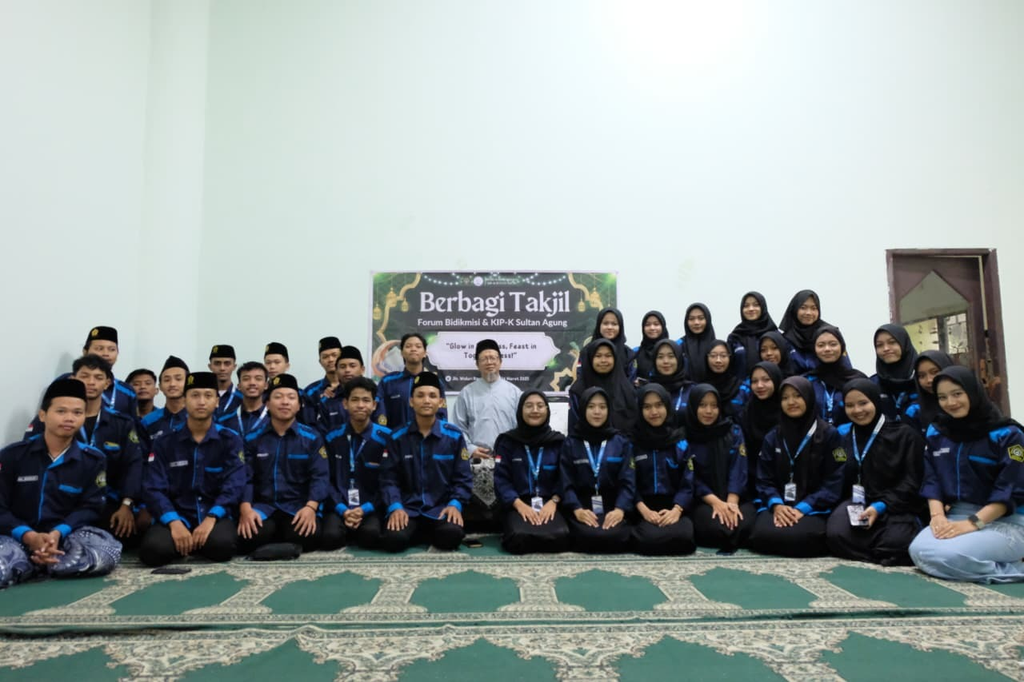
FORBISA organises activities that strengthen interaction and solidarity among KIP Kuliah and Bidikmisi recipients.
Examples documented through FORBISA activities include:
- organisational gatherings;
- student development activities;
- study visits and institutional exchanges;
- social and community activities;
- religious and cultural activities;
- recognition of student achievement; and
- peer interaction among scholarship recipients.
These activities provide opportunities for students to build networks, develop confidence, exchange experiences, and support one another.
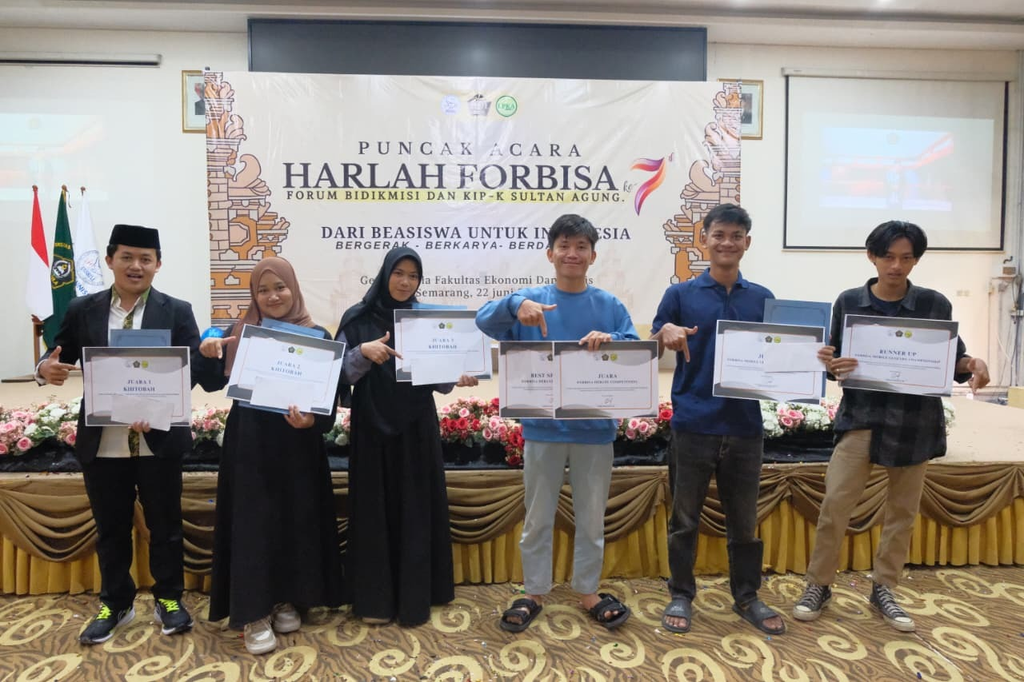
FORBISA Anniversary and Student Recognition
UNISSULA’s FORBISA community also holds institutional gatherings such as the FORBISA Anniversary (HARLAH FORBISA).
The activity brings together scholarship recipients and provides opportunities for participation, recognition, and community development.
Such activities strengthen the sense of belonging among students from economically disadvantaged backgrounds and create opportunities for peer engagement beyond formal academic settings.
Peer Interaction and Organisational Development
FORBISA also provides students with opportunities to develop organisational and communication skills.
Student-led activities encourage participants to:
- work collaboratively;
- develop leadership skills;
- communicate with peers;
- organise programmes;
- participate in institutional activities; and
- build supportive networks.
These functions are particularly valuable for students who may require additional social and institutional support during their university experience.
Study Visits and Peer Learning
FORBISA activities include opportunities for study visits and exchanges with other student communities.
These activities allow students to share organisational practices, learn from peers, exchange ideas, and build wider networks.
The study-visit activities therefore provide another form of peer learning and development for scholarship recipients.
Social and Community Support Activities
FORBISA also organises social activities that strengthen relationships among members.
Activities such as collective gatherings and community programmes provide informal opportunities for students to interact, share experiences, and strengthen peer relationships.
These activities contribute to a supportive environment in which scholarship recipients can maintain connections with students who share similar experiences.
Professional Counselling for Students
In addition to peer support, UNISSULA provides professional counselling and psychological services for students.
The university provides access to mental-health support, counselling, psychological services, and guidance for personal, social, academic, emotional, and psychological concerns.
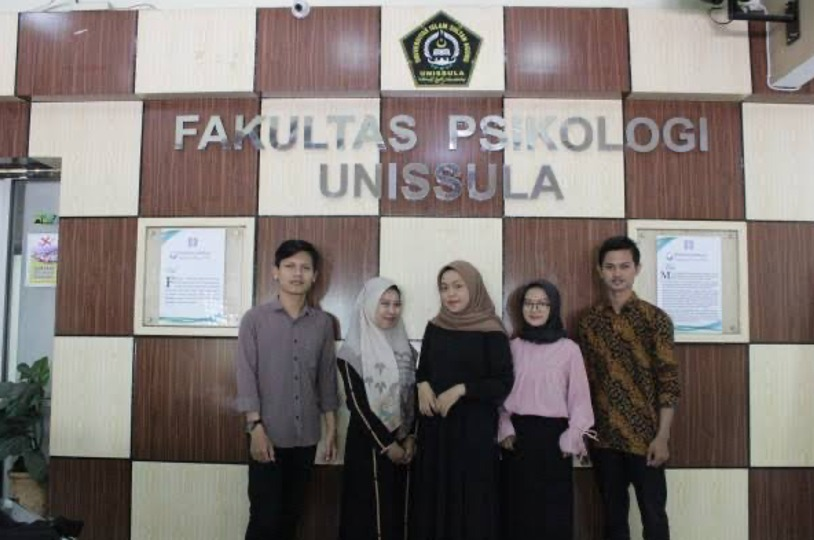
Professional psychological support is available through the Badan Konsultasi Psikologi & Pembangunan Masyarakat (BKP2M) under the Faculty of Psychology.
Services include:
- psychological assessment;
- personal consultation;
- psychological counselling;
- mental-health education;
- human-resource development training; and
- mental-health outreach.
Multiple Student Counselling Channels
UNISSULA provides several channels through which students can access support.
These include:
- professional psychological services;
- counselling and guidance services;
- academic advisers;
- faculty support;
- online counselling portals; and
- WhatsApp counselling.
The availability of multiple channels helps reduce barriers to accessing support and allows students to seek assistance through the mechanism most appropriate to their circumstances.
Academic and Personal Guidance
Student support at UNISSULA also includes academic and personal guidance.
Academic advisers can identify students experiencing difficulties and refer them to appropriate counselling or psychological services where necessary.
The university monitors academic and non-academic student development so that students facing challenges can receive appropriate guidance and intervention.
This creates an additional mentoring and support pathway alongside formal counselling services.
Accessible and Free Student Support
Where provided through university-supported services, counselling and student-support access is available free of charge to UNISSULA students.
This reduces financial barriers to:
- counselling;
- initial consultation;
- mental-health guidance;
- student-support services; and
- referral to appropriate professional assistance.
This is particularly relevant for economically disadvantaged students, including KIP Kuliah recipients, because financial circumstances do not need to prevent access to support.
Counselling Support for Lecturers and Staff
UNISSULA’s counselling provision extends beyond students.
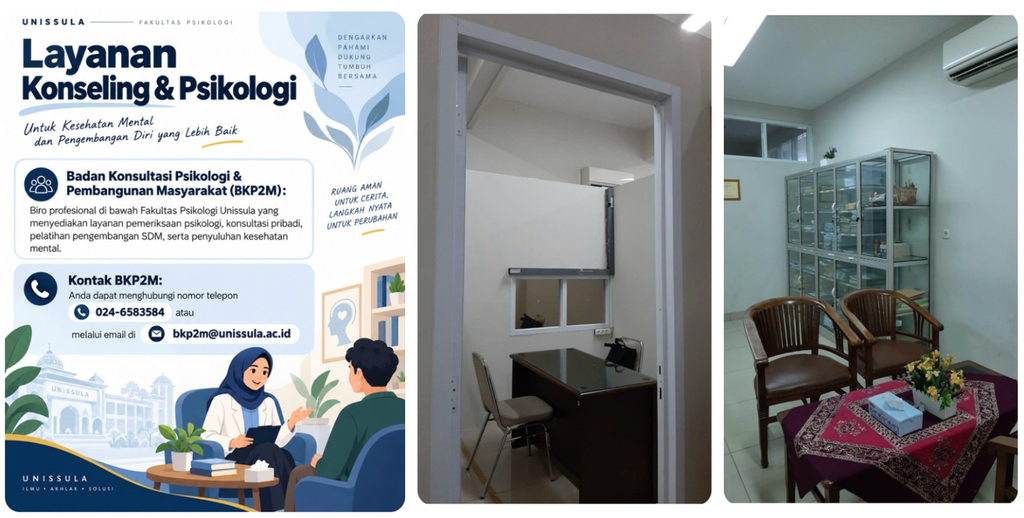
Lecturers and university staff also have access to professional mental-health support, psychological consultation, counselling, and well-being services.
The services are intended to address:
- psychological concerns;
- emotional difficulties;
- personal problems;
- social challenges;
- workplace-related concerns; and
- other issues affecting well-being.
Professional Support through BKP2M for Staff
BKP2M also serves lecturers and staff.
Available services include:
- psychological assessment;
- consultation;
- psychological counselling;
- mental-health education;
- human-resource development training; and
- outreach.
This means UNISSULA provides an institutional support mechanism for both academic and non-academic staff.
Multiple Access Channels for Staff and Faculty
Lecturers and staff may access counselling through:
- professional psychological services;
- direct consultation with counsellors;
- faculty or university support channels;
- telephone;
- email; and
- other digital communication channels where available.
This multi-channel approach helps make professional support accessible across the university community.
Supporting Underrepresented Members of the University Community
UNISSULA’s counselling and peer-support mechanisms are available within the university’s wider inclusion framework.
This means that students, lecturers, and staff from underrepresented or potentially underrepresented groups can access university support services where needed.
For economically disadvantaged students, FORBISA provides a particularly relevant targeted peer-support mechanism.
For other members of the university community, professional counselling and psychological support provide an accessible institutional pathway for addressing personal, academic, social, emotional, or workplace difficulties.
Relationship with KIP Kuliah Support
FORBISA complements UNISSULA’s broader KIP Kuliah access and financial-support system.
While KIP Kuliah reduces financial barriers to higher education, FORBISA creates a community and peer-support structure for scholarship recipients after admission.
The combined approach can therefore be represented as:
Financial access → Admission → Scholarship support → Peer community → Student development
This extends support beyond tuition or financial assistance alone.
Relationship with Equality and Inclusion
UNISSULA’s mentoring, counselling and peer-support mechanisms also complement its wider equality and inclusion framework.
Students from economically disadvantaged backgrounds, students with disabilities, international students, and other potentially underrepresented groups may require different forms of academic, social, psychological, or peer support.
By maintaining professional counselling services and student peer-support programmes, UNISSULA provides multiple pathways through which these needs can be addressed.
Integrated Support Framework
UNISSULA’s support framework can be summarised as:
Professional counselling + Academic guidance + Peer support + Student development + Financial-support community
This integrated approach enables different members of the university community to access support appropriate to their circumstances.
For KIP Kuliah and Bidikmisi students, FORBISA provides a targeted peer community.
For students more broadly, counselling, academic advisers, and psychological services provide professional support.
For lecturers and staff, BKP2M and related services provide psychological counselling and well-being support.
Evidence of Implementation
UNISSULA’s mentoring, counselling and peer-support provision is demonstrated through the following institutional evidence:
- FORBISA (Forum Bidikmisi dan KIP-K Sultan Agung) as a dedicated student community for Bidikmisi and KIP Kuliah scholarship recipients. UKM/UKIM UNISSULA
- Peer interaction and student-development activities for economically disadvantaged scholarship recipients.
- Organisational, social, and student-development activities supporting KIP Kuliah and Bidikmisi students.
- FORBISA anniversary activities strengthening community and peer interaction.
- Study visits and peer-learning activities supporting networking and organisational development.
- Professional student counselling through BKP2M Faculty of Psychology.
- Faculty-based counselling and guidance services for students.
- Student access to academic advisers, online counselling portals, and WhatsApp counselling.
- Regular monitoring and guidance relating to academic and non-academic student development.
- Free access to university-supported counselling services for students where applicable.
- Professional psychological counselling and consultation for lecturers and staff through BKP2M.
- Mental-health education, consultation, referral, and well-being support for staff and faculty.
10.6.7
Accessible Facilities
10.6.7 Accessible Facilities for People with Disabilities
University-Wide Accessible Campus Facilities
Universitas Islam Sultan Agung (UNISSULA) provides accessible facilities across the campus to support students, lecturers, staff, visitors, and other members of the university community with disabilities and special mobility needs.
UNISSULA’s campus accessibility framework is designed to improve mobility, safety, comfort, and independent access to academic, administrative, religious, and public facilities.
The university provides a range of physical and supporting facilities, including ramps, accessible pathways, elevators, handrails, accessible entrances, accessible toilets, priority parking areas, pedestrian routes, seating areas, wheelchairs, and service assistance.
Accessible Building Access
Several campus buildings and public areas are equipped with infrastructure intended to facilitate access for people with mobility limitations.
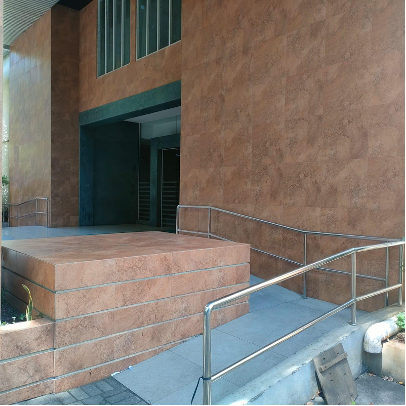
Accessible building features include:
- ramps;
- accessible pathways;
- wide corridors;
- handrails;
- accessible entrances; and
- elevators in multi-storey buildings.
These facilities help people with disabilities move more safely and comfortably between university spaces.
The visual evidence provided in the campus accessibility documentation also shows ramps and dedicated access routes at university buildings.
Ramps and Accessible Pathways
UNISSULA provides ramps and specially designed pathways to reduce physical barriers at building entrances and along campus routes.
These facilities are important for users who:
- use wheelchairs;
- have limited mobility;
- use walking aids; or
- require step-free access.
The accessibility evidence includes examples of ramps with handrails leading to building entrances and dedicated routes designed to improve mobility across campus.
Accessible Elevators
Multi-storey buildings at UNISSULA include elevators that support access between floors.
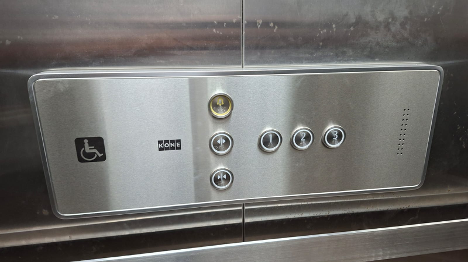
The accessibility documentation includes visual evidence of elevators and control panels with accessibility features.
Elevator access allows users with mobility limitations to move between building levels without relying on stairs.
This supports more equitable access to classrooms, offices, laboratories, and other facilities located on upper floors.
Accessible Toilets
UNISSULA provides accessible toilets for people with disabilities and users with special mobility needs.
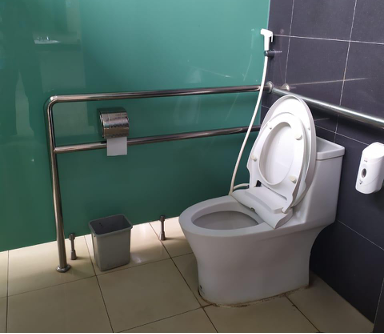
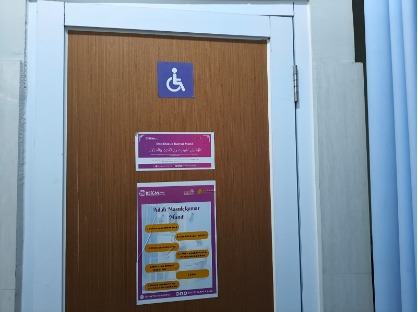
The documented facilities include:
- designated accessible toilet rooms;
- handrails beside toilet facilities;
- sufficient space to support safer use; and
- disability signage identifying accessible facilities.
The evidence document explicitly identifies accessible toilets as part of the university’s disability-support infrastructure.
Priority Parking for People with Disabilities
UNISSULA provides priority parking areas for people with disabilities.
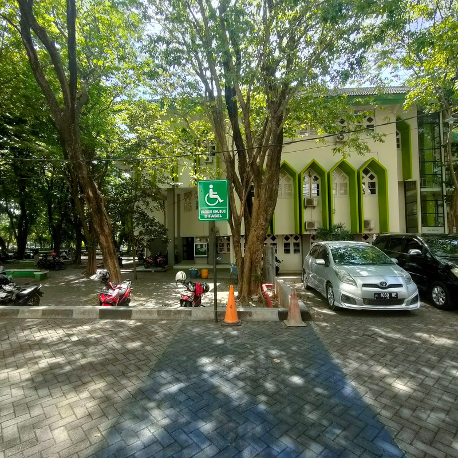
These areas are marked with disability-access signage and are positioned to support convenient access to university buildings.
The accessibility evidence includes photographs of designated disability parking spaces.
Priority parking helps reduce the distance that users with mobility limitations need to travel between vehicles and campus facilities.
Wheelchair Availability
Wheelchairs are also available as part of UNISSULA’s accessibility support.
The visual evidence includes wheelchairs located within university facilities for use by individuals requiring mobility assistance.
Wheelchair availability provides practical support for:
- students with temporary or permanent mobility limitations;
- staff and lecturers;
- visitors; and
- other individuals who may require mobility assistance while on campus.
Accessible Pedestrian Routes
The campus provides pedestrian routes designed to improve movement between buildings and public areas.
These routes support access to facilities such as:
- lecture rooms;
- laboratories;
- administrative offices;
- libraries;
- mosques;
- public spaces; and
- student-service areas.
The accessibility documentation explicitly identifies pedestrian paths as part of UNISSULA’s inclusive campus infrastructure.
Campus Accessibility Map
UNISSULA has documented a campus accessibility map showing disability routes and accessible toilet locations.

The map identifies:
- designated disability routes; and
- accessible toilet points within the campus.
This provides a practical reference for users with mobility limitations and demonstrates that accessibility is considered at the campus-planning level, not only at individual buildings.
The map is included in the institutional evidence on campus facilities for disabled and special-needs users.
Accessible Academic and Administrative Services
Accessibility at UNISSULA also includes service assistance in academic and administrative offices.
This helps ensure that students and visitors with disabilities can access university services in addition to physical infrastructure.
The university’s accessibility framework therefore includes both:
Physical access → Service access
The institutional evidence states that service assistance is provided in academic and administrative offices as part of disability-support arrangements.
Access to Academic Facilities
Accessible facilities help students and visitors reach key academic spaces more easily.
These include:
- classrooms;
- laboratories;
- offices;
- libraries; and
- other academic facilities.
The combination of ramps, elevators, accessible entrances, pedestrian routes, and service assistance supports participation in teaching, learning, and administrative activities.
Access to Religious Facilities
As an Islamic university, UNISSULA also considers accessibility in relation to religious activities.
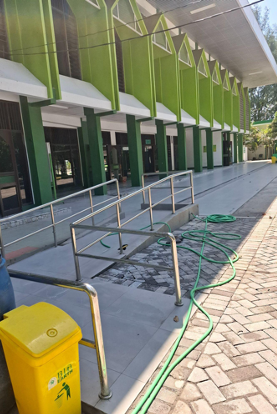
The accessibility documentation includes support for people with disabilities in accessing religious facilities.
UNISSULA also provides supporting innovation such as the Gelang Getar Shalat (GGS), designed to assist people with disabilities in worship-related activities.
The evidence document identifies the GGS article on the official UNISSULA website as additional supporting evidence.
Safety and Comfort
Accessible facilities are designed not only to provide entry but also to support safety and comfort.
Features such as:
- handrails;
- ramps;
- accessible toilets;
- wide corridors;
- seating areas;
- priority parking; and
- wheelchairs
help reduce physical barriers and improve the campus experience for users with different mobility and accessibility needs.
Inclusion of Students, Staff and Visitors
UNISSULA’s accessible facilities are intended to support a wide range of campus users.
The institutional evidence states that the university provides facilities for:
- students;
- lecturers;
- staff;
- visitors;
- people with disabilities;
- individuals with special needs; and
- users requiring additional physical or health-related support.
This demonstrates that accessibility is treated as a university-wide responsibility.
Integration with Inclusive Admissions
Accessible facilities complement UNISSULA’s inclusive admissions framework.
The university maintains dedicated mechanisms for prospective students with disabilities, including the Special Selection Programme for Persons with Disabilities (SPKPD).
Providing accessible infrastructure ensures that students admitted through inclusive admission pathways can participate more effectively in university life after enrolment.
The relationship can be represented as:
Inclusive admission → Accessible campus → Participation in university life
Integration with Anti-Discrimination Policy
UNISSULA’s accessibility measures also support the university’s anti-discrimination framework.
The university prohibits discrimination based on disability as part of its wider anti-discrimination policy.
Providing accessible facilities helps translate this policy into practical campus conditions by reducing physical barriers that could otherwise limit participation.
Integration with Equality and Inclusion Functions
Campus accessibility also supports UNISSULA’s broader commitment to equality, inclusion, and human rights.
The university’s institutional inclusion functions address barriers that can affect participation among students and staff with different needs.
Accessible facilities therefore contribute to a wider institutional framework of:
Equality → Inclusion → Accessibility → Participation
Accessible and Inclusive Campus Environment
UNISSULA’s approach to accessibility extends beyond individual facilities.
The campus environment includes:
- accessible building access;
- ramps;
- elevators;
- accessible toilets;
- priority parking;
- disability pathways;
- wheelchairs;
- handrails;
- service assistance;
- rest areas; and
- health-support facilities.
This combination helps create a more inclusive environment for people with different physical and mobility needs.
Continuous Improvement
UNISSULA continues to strengthen accessible infrastructure across the campus.
Future development may include:
- increasing the number of accessible routes;
- improving signage;
- expanding accessible toilet coverage;
- strengthening accessible building entrances;
- improving accessibility information;
- maintaining elevators, ramps, and handrails;
- expanding mobility assistance; and
- improving coordination between infrastructure and student-support services.
Continuous improvement helps ensure that accessibility remains responsive to the needs of the university community.
Evidence of Implementation
UNISSULA’s accessible facilities for people with disabilities are demonstrated through the following institutional evidence:
- Designated disability parking areas.
- Ramps and special pathways for wheelchair and mobility access.
- Accessible entrances to university buildings.
- Elevators in multi-storey buildings.
- Accessible elevator controls.
- Handrails supporting safer movement.
- Accessible toilets with support rails and disability signage.
- Wheelchairs available for mobility assistance.
- Accessible pedestrian routes across campus.
- Service assistance in academic and administrative offices.
- A documented campus map identifying disability routes and accessible toilet locations.
- Accessibility support for lecture rooms, laboratories, offices, libraries, mosques, and other public facilities.
- Additional disability-support innovation, including the Gelang Getar Shalat (GGS).
- Institutional documentation demonstrating that accessibility facilities support students, lecturers, staff, visitors, and people with special needs.
10.6.8
Disability Support Services
10.6.8 Support Services for People with Disabilities
University-Wide Disability Support Services
Universitas Islam Sultan Agung (UNISSULA) provides support services for people with disabilities to help students, staff, lecturers, prospective students, and visitors access university activities and services more effectively.
The university’s disability-support approach combines mobility assistance, communication support, administrative assistance, and individual needs assessment.
These services complement UNISSULA’s accessible campus facilities and inclusive admissions arrangements.
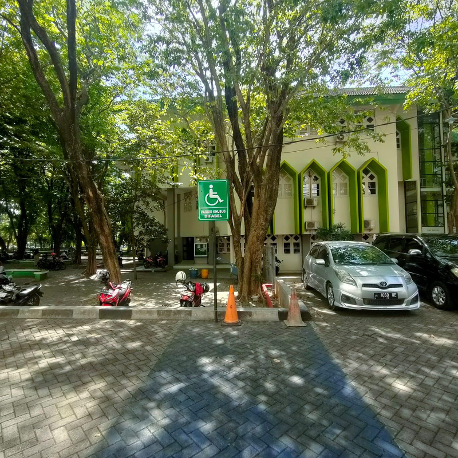
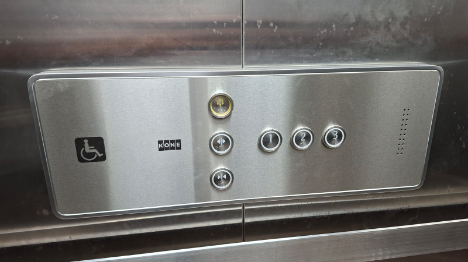
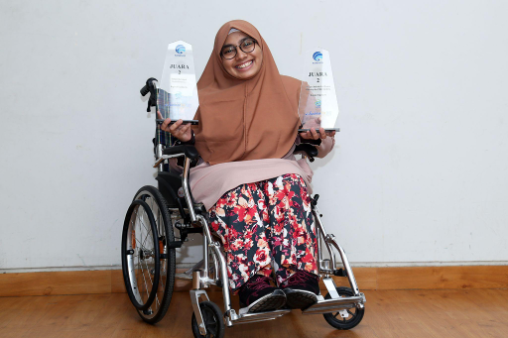
Needs-Based Disability Support
UNISSULA identifies the individual support needs of prospective students with disabilities through structured disability and functional-needs assessment.
The university’s disability documentation records different disability conditions and enables appropriate forms of support to be identified according to individual needs.
Support needs may include:
- wheelchair assistance;
- walking aids;
- hearing aids;
- sign-language assistance; and
- other recommended forms of support.
This approach enables UNISSULA to provide support according to the needs of each individual rather than applying a single standard form of assistance.
Sign-Language Assistance
Communication support is available for people with hearing or communication disabilities.
UNISSULA’s disability-support documentation includes sign-language assistance among the forms of support that may be recommended for prospective students with disabilities.
This provides an important form of communication assistance for students who may require interpretation or sign-language support during university processes.
Mobility Assistance
UNISSULA provides mobility support for people with physical disabilities or mobility limitations.
This includes access to wheelchairs and other mobility assistance where needed.
The university’s accessibility documentation includes wheelchair availability as part of the support provided for people with disabilities.
Wheelchair support helps users who may experience temporary or permanent mobility limitations participate more safely and independently in university activities.
Administrative and Service Assistance
UNISSULA also provides service assistance in academic and administrative offices for people with disabilities and special needs.
The university’s accessibility documentation explicitly states that service assistance is available in academic and administrative offices to support access to university services.
This helps ensure that accessibility is not limited to physical infrastructure, but also extends to institutional services.
Support during Admissions
Disability support begins from the admissions stage.
UNISSULA maintains the Special Selection Programme for Persons with Disabilities (SPKPD) as a dedicated admissions mechanism for prospective students with disabilities.
The programme allows applicants’ capabilities and support needs to be identified during the admissions process.
This enables the university to prepare appropriate support before students begin their studies.
Individualised Support Planning
The disability-support process allows UNISSULA to identify the type of assistance required by each applicant.
This can include:
- mobility support;
- communication support;
- assistive devices;
- sign-language assistance;
- academic or administrative service assistance; and
- other forms of individualised support.
The use of structured needs assessment strengthens the university’s ability to provide targeted support rather than generic assistance.
Integration with Accessible Facilities
Disability support services operate alongside UNISSULA’s accessible campus infrastructure.
The university provides:
- ramps;
- accessible pathways;
- elevators;
- handrails;
- accessible toilets;
- priority parking; and
- accessible building entrances.
These facilities support the effectiveness of disability services by ensuring that users receiving assistance can also move through the campus environment more easily.
Support for Participation in Academic Activities
Disability support services are intended to help people with disabilities participate in:
- admissions;
- lectures;
- academic administration;
- laboratory activities;
- library services;
- campus services;
- religious activities; and
- other university activities.
The combination of individual support and accessible facilities helps reduce barriers to participation.
Communication and Assistive Support
UNISSULA recognises that disability support can involve both physical and communication needs.
Accordingly, the university’s support arrangements may include:
- sign-language assistance;
- hearing-support devices;
- wheelchair assistance;
- walking aids;
- service assistance; and
- other assistive support identified through assessment.
This broad approach reflects the diversity of disability-related needs.
Relationship with Inclusive Admissions
Support services for people with disabilities complement UNISSULA’s non-discriminatory and inclusive admissions policy.
The university provides inclusive admission mechanisms for prospective students with disabilities and other groups requiring particular support.
This creates a continuous support pathway:
Inclusive admission → Identification of needs → Support services → Accessible campus participation
Relationship with Anti-Discrimination Policy
UNISSULA’s disability-support services also support the implementation of its anti-discrimination policy.
Disability is explicitly included among the protected characteristics under the university-wide anti-discrimination framework.
Providing support services helps ensure that non-discrimination is translated into practical access and participation.
Relationship with Equality and Inclusion
The university’s broader equality and inclusion framework also supports disability inclusion.
Support services for people with disabilities contribute to the institution’s commitment to:
- equal access;
- inclusive participation;
- non-discrimination;
- respect for individual needs; and
- human rights.
These services therefore form part of a wider institutional approach to inclusion.
Evidence of Implementation
UNISSULA’s disability support services are demonstrated through the following evidence:
- Structured disability and functional-needs assessment for prospective students.
- Identification of required assistive support based on individual needs.
- Sign-language assistance as a recognised form of support.
- Wheelchair assistance and mobility support.
- Availability of walking aids and other assistive devices where required.
- Administrative and service assistance in academic and administrative offices.
- A dedicated SPKPD admission mechanism for prospective students with disabilities.
- Integration of disability support with accessible facilities such as ramps, elevators, handrails, accessible toilets, and accessible pathways.
- University-wide inclusion and anti-discrimination policies supporting disability access.
- Public documentation of disability-support facilities and services.
10.6.9
Disability Access Scheme
10.6.9 Disability Access Schemes
University-Wide Access Schemes for People with Disabilities
Universitas Islam Sultan Agung (UNISSULA) provides dedicated access schemes for people with disabilities to support equitable participation in higher education.
The university’s approach combines a special admissions pathway, disability and functional-needs assessment, and targeted support according to individual needs.
This framework is designed to reduce barriers at the point of entry and support students with disabilities in accessing university education.
Special Selection Programme for Persons with Disabilities (SPKPD)
A key access scheme at UNISSULA is the Seleksi Program Khusus Penyandang Disabilitas (SPKPD).
SPKPD is a dedicated admissions mechanism for prospective students with disabilities.
The programme provides a specific route through which applicants with disabilities can apply to UNISSULA and be assessed according to their capabilities and suitability for the academic programme they select.
This means that prospective students with disabilities are not required to rely solely on the general admissions route.
Dedicated Access Pathway
The SPKPD pathway represents a targeted access mechanism because it is specifically intended for applicants with disabilities.
The scheme enables UNISSULA to:
- identify applicants with disabilities;
- assess their individual circumstances;
- consider programme suitability;
- identify required support;
- facilitate access to university study; and
- connect admitted students with appropriate support mechanisms.
This targeted approach helps reduce barriers that may otherwise prevent people with disabilities from accessing higher education.
Individual Disability and Functional-Needs Assessment
UNISSULA’s disability access scheme includes structured assessment of disability and functional needs.
The university’s documentation enables the identification of conditions including:
- physical disabilities;
- visual disabilities;
- hearing disabilities;
- speech disabilities;
- intellectual or learning difficulties;
- developmental or mental conditions; and
- other disabilities.
This assessment provides a basis for determining appropriate support according to the individual needs of each applicant.
Targeted Support Based on Individual Needs
Following the identification of functional needs, UNISSULA can identify forms of targeted support that may be required.
These may include:
- wheelchair assistance;
- walking aids;
- hearing aids;
- sign-language assistance; and
- other recommended forms of support.
This needs-based approach strengthens the access scheme because support is linked to the individual circumstances of the person with a disability.
From Admission to Participation
UNISSULA’s disability access scheme is not limited to entry into the university.
The process connects admissions with support and participation:
Dedicated disability admission pathway → Needs assessment → Targeted support → Accessible campus participation
This creates a more structured pathway for students with disabilities from application through participation in university life.
Integration with Accessible Facilities
The disability access scheme is supported by accessible campus infrastructure.
UNISSULA provides facilities including:
- ramps;
- accessible pathways;
- elevators;
- handrails;
- accessible entrances;
- accessible toilets;
- priority parking areas; and
- pedestrian routes.
These facilities help ensure that students admitted through the disability access scheme can access academic, administrative, religious, and public spaces more effectively.
Mobility Support
UNISSULA also provides mobility-related support for users with physical disabilities.
Wheelchairs are available to support people who require mobility assistance.
This complements the disability access scheme by providing practical support after admission and during participation in campus activities.
Communication Support
Communication-related support is also included within the university’s disability-support framework.
The university’s disability needs assessment allows sign-language assistance and hearing-support needs to be identified.
This is particularly relevant for students with hearing or communication disabilities.
Administrative and Service Assistance
The access scheme is further supported by service assistance in academic and administrative offices.
UNISSULA’s accessibility documentation states that service assistance is available for people with disabilities and special needs in university service areas.
This helps ensure that access includes not only physical entry to buildings, but also access to university services.
Scholarship Opportunities
The disability admissions guide also indicates that prospective students with disabilities may have opportunities to obtain scholarships subject to the requirements of the relevant scholarship schemes.
Financial support can strengthen access by reducing economic barriers that may compound disability-related barriers.
Relationship with Inclusive Admissions Policy
The disability access scheme complements UNISSULA’s broader non-discriminatory and inclusive admissions policy.
The university states that admissions should provide equal opportunity and should not discriminate on the basis of disability or other protected characteristics.
The same policy explicitly recognises the need for inclusive admissions mechanisms for prospective students with disabilities and other groups requiring particular support.
This creates a clear institutional framework:
Non-discrimination → Dedicated disability access scheme → Targeted support → Participation
Relationship with Disability Support Services
UNISSULA’s disability access scheme also connects with the support services provided under the university’s disability-support framework.
While the access scheme focuses on enabling entry and participation, support services provide assistance such as:
- mobility support;
- sign-language assistance;
- assistive devices;
- administrative assistance; and
- other needs-based support.
The two areas therefore complement each other.
Relationship with Campus Accessibility
The scheme also operates alongside the university’s accessible facilities.
Accessible routes, lifts, ramps, toilets, priority parking, and other physical infrastructure provide the campus environment needed to support students who enter through the disability access scheme.
This integration helps ensure that access does not end once a student is admitted.
Evidence-Based Access Approach
UNISSULA’s disability access approach combines several institutional elements:
Special admissions pathway + Needs assessment + Targeted support + Accessible facilities + Service assistance
This creates a structured and practical access framework for people with disabilities.
Evidence of Implementation
UNISSULA’s access schemes for people with disabilities are demonstrated through the following institutional evidence:
- Special Selection Programme for Persons with Disabilities (SPKPD) as a dedicated admissions pathway.
- Structured disability and functional-needs assessment for prospective students.
- Identification of disability type and individual support requirements.
- Targeted support including wheelchair assistance.
- Targeted support including walking aids.
- Targeted support including hearing aids.
- Targeted support including sign-language assistance.
- Administrative and service assistance for people with disabilities.
- Accessible campus facilities supporting continued participation after admission.
- Scholarship opportunities for students with disabilities subject to applicable requirements.
- Integration with UNISSULA’s non-discriminatory and inclusive admissions framework.
- Public institutional documentation of disability admissions and support mechanisms.
10.6.10
Disability Accommodation Policy
10.6.10 Reasonable Accommodation Policy and Funding for Persons with Disabilities
University-Wide Reasonable Accommodation Strategy
Universitas Islam Sultan Agung (UNISSULA) has a university-wide strategy to provide reasonable accommodation for persons with disabilities, supported by institutional planning, designated responsibilities, accessibility targets, assistive technology, individual support planning, and budgeting mechanisms.
This strategy is embedded in the UNISSULA Strategic Plan (RENSTRA) 2025–2029, which serves as the university’s institutional framework for policy direction, strategic programmes, annual targets, resource allocation, and evaluation.
The Strategic Plan explicitly identifies disability inclusion through the principles of equal access, reasonable accommodation, and non-discrimination, with implementation through disability services, universal design, and assistive technology.
Policy Basis for Reasonable Accommodation
UNISSULA’s Strategic Plan places disability inclusion within the university’s institutional policy framework.
For the disability domain, the Strategic Plan identifies the following institutional direction:
Equal access → Reasonable accommodation → Non-discrimination
The implementation implications include:
- Disability Services;
- universal design; and
- assistive technology.
This provides a formal institutional basis for reasonable accommodation rather than treating disability support as an isolated activity.
Institutional Accessibility Targets
UNISSULA has established measurable institutional targets for disability services and reasonable accommodation.
The Strategic Plan includes an indicator covering the proportion of faculties that meet standards for:
- disability services;
- physical accessibility;
- assistive technology; and
- reasonable accommodation.
The target increases progressively from:
- 40% in 2025;
- 60% in 2026;
- 75% in 2027;
- 90% in 2028; to
- 100% in 2029.
Responsibility for this indicator is assigned to the Disability Services Unit / Facilities and Infrastructure function.
This demonstrates that reasonable accommodation is monitored through measurable institutional performance targets.
Individual Support Plans for Students with Disabilities
UNISSULA’s Strategic Plan also establishes an individualised support mechanism for students with disabilities.
A specific key activity is:
“Rencana dukungan individual mahasiswa penyandang disabilitas”
(Individual support plans for students with disabilities).
The required evidence includes:
- case files;
- reasonable accommodation; and
- service evaluation.
Responsibility is assigned to the Disability Services Unit and Academic Administration.
This approach ensures that accommodation can be adapted to the specific needs of individual students.
Needs-Based Accommodation
Reasonable accommodation at UNISSULA is based on identifying barriers and individual requirements.
The broader disability-support framework includes:
- assessment of individual needs;
- appropriate assistive devices;
- mobility support;
- communication support;
- accessible learning;
- academic support;
- psychosocial assistance; and
- other adjustments required to support participation.
The Strategic Plan for SDG 10 specifically states that UNISSULA provides needs assessment, reasonable accommodation, assistive technology, accessible learning materials, flexible learning, and academic and psychosocial assistance for students from vulnerable groups, including persons with disabilities.
Assistive Technology
Assistive technology is an integral part of UNISSULA’s reasonable accommodation strategy.
The Strategic Plan includes the upgrading of:
- smart classrooms;
- laboratories;
- digital libraries; and
- assistive technology.
Required outputs include needs mapping, procurement, functional testing, and utilisation.
This demonstrates that reasonable accommodation includes both physical and technological support.
Universal Design
UNISSULA also applies a universal-design approach to improve accessibility.
The Strategic Plan includes:
Campus accessibility audits and the implementation of universal design
with required evidence including:
- barrier mapping;
- improvement plans; and
- verification results.
Responsibility is assigned to the Disability Services Unit and Facilities/Infrastructure function.
This helps the university identify and remove environmental barriers systematically.
Physical Accessibility
Reasonable accommodation is also supported through physical accessibility improvements.
UNISSULA provides facilities such as:
- ramps;
- accessible pathways;
- elevators;
- handrails;
- accessible entrances;
- accessible toilets;
- disability parking; and
- pedestrian routes.
These facilities support students, staff, lecturers, and visitors with mobility limitations.
The accessibility infrastructure complements individual reasonable-accommodation measures.
Accessible Learning Materials and Flexible Learning
Reasonable accommodation also includes academic adjustments.
The Strategic Plan identifies:
- accessible learning materials;
- flexible learning arrangements;
- assistive technology; and
- academic support
as part of UNISSULA’s inclusion framework for students with disabilities.
This is important because accommodation is not limited to buildings or facilities, but also applies to teaching and learning.
Academic and Psychosocial Support
UNISSULA’s reasonable-accommodation strategy also includes support for academic and psychosocial participation.
The Strategic Plan explicitly includes academic and psychosocial assistance for students with disabilities and other vulnerable groups.
This enables the university to address barriers that may affect student participation, progression, and well-being.
Institutional Responsibility
The Strategic Plan assigns responsibility for disability inclusion and reasonable accommodation across several institutional units.
Responsible units include:
- Disability Services Unit;
- Academic Administration;
- Student Affairs;
- Facilities and Infrastructure;
- faculties; and
- study programmes.
For SDG 10 implementation, the Strategic Plan identifies the Disability Services Unit, LP3M, Academic Administration Bureau, LPKA, all faculties, and study programmes as responsible institutional actors.
This demonstrates that reasonable accommodation is a shared university-wide responsibility.
Integration into University Planning
UNISSULA integrates disability accommodation into institutional planning.
The Strategic Plan requires every university unit to translate strategic targets into:
- annual work plans; and
- RKAT (Annual Work Plan and Budget).
It also states that new programmes must identify:
- responsible capacity;
- funding sources;
- risk analysis; and
- impact evaluation.
This creates a formal mechanism connecting disability-related strategic programmes with institutional budgeting.
Funding Mechanism
The funding requirement for reasonable accommodation is embedded in UNISSULA’s institutional planning and budgeting system.
Because disability services and reasonable-accommodation targets are included in the Strategic Plan, responsible units are required to incorporate relevant programmes into annual work plans and RKAT.
The Strategic Plan explicitly requires programmes to identify a funding source and implementation capacity.
This provides the institutional mechanism through which reasonable accommodation, assistive technology, accessibility improvements, and support services can be funded.
Procurement and Resource Allocation
Reasonable accommodation may require procurement of equipment, facilities, or assistive technologies.
UNISSULA’s Strategic Plan includes:
- needs mapping;
- procurement;
- functional testing; and
- utilisation
for assistive technology and related educational infrastructure.
This shows that resource provision is built into implementation rather than treated only as a policy commitment.
Monitoring and Evaluation
The reasonable-accommodation strategy includes measurable monitoring.
UNISSULA evaluates:
- faculty compliance with disability-service standards;
- accessibility;
- assistive technology;
- reasonable accommodation;
- timely individual support plans; and
- service outcomes.
The proportion of students with disabilities receiving timely individual support plans is also established as a performance indicator, with targets increasing from 80% in 2025 to 100% by 2028–2029.
This supports continuous evaluation of implementation.
Annual Improvement Targets
The Strategic Plan establishes progressive annual targets, demonstrating that UNISSULA treats reasonable accommodation as an ongoing institutional improvement process.
For faculty compliance with disability standards, targets increase from 40% to 100%.
For individual support plans, targets increase from 80% to 100%.
This target-based approach enables UNISSULA to track implementation and progressively expand accessible and inclusive services.
Relationship with Disability Support Services
The reasonable-accommodation strategy complements UNISSULA’s disability support services.
Support services may include:
- wheelchair assistance;
- walking aids;
- hearing support;
- sign-language assistance;
- administrative assistance; and
- individualised support.
These services help operationalise reasonable accommodation at the individual level.
Relationship with Disability Access Schemes
UNISSULA also provides dedicated access schemes for people with disabilities through the Special Selection Programme for Persons with Disabilities (SPKPD).
SPKPD provides a dedicated route for prospective students with disabilities and supports identification of individual requirements from the admissions stage.
The relationship can therefore be represented as:
Accessible admission → Needs assessment → Individual support plan → Reasonable accommodation → Ongoing evaluation
Relationship with Anti-Discrimination Policy
Reasonable accommodation also supports UNISSULA’s anti-discrimination framework.
UNISSULA’s anti-discrimination policy explicitly includes disability among protected characteristics. SURAT EDARAN 10.6.4
The provision of reasonable accommodation helps ensure that formal non-discrimination is supported by practical adjustments that enable equitable participation.
Institutional Framework
UNISSULA’s reasonable accommodation framework can be summarised as:
Strategic policy → Needs assessment → Individual support plan → Reasonable accommodation → Assistive technology → Universal design → Funding through RKAT → Monitoring and evaluation
This structure links institutional policy, implementation, finance, and accountability.
Evidence of Implementation
UNISSULA’s reasonable accommodation strategy for persons with disabilities is demonstrated through the following institutional evidence:
- UNISSULA Strategic Plan 2025–2029 explicitly identifying equal access, reasonable accommodation, and non-discrimination as institutional principles for disability inclusion.
- Institutional implementation through Disability Services, universal design, and assistive technology.
- Annual targets for faculties meeting standards on disability services, physical accessibility, assistive technology, and reasonable accommodation.
- Individual support plans for students with disabilities.
- Required evidence including case files, reasonable accommodation, and service evaluation.
- Needs assessment for students with disabilities.
- Provision of assistive technology.
- Use of accessible learning materials and flexible learning arrangements.
- Provision of academic and psychosocial support.
- Campus accessibility audits and universal-design implementation.
- Accessible physical infrastructure supporting accommodation.
- Assignment of responsible institutional units including Disability Services, Academic Administration, Student Affairs, and faculties.
- Integration of strategic targets into annual work plans and RKAT.
- Requirement for programmes to identify funding sources, implementation capacity, and evaluation mechanisms.
- Progressive monitoring targets through 2029.
10.6.11
Anti-Harassment Policy
10.6.11 Anti-Harassment Policy
University-Wide Anti-Harassment Policy
Universitas Islam Sultan Agung (UNISSULA) maintains a university-wide policy framework to prevent and address harassment, bullying, intimidation, and other harmful behaviour across the institution and its operations.
A principal policy instrument is Rector Decree No. 7993/E/SA/VIII/2023 concerning the Prevention of Bullying within Universitas Islam Sultan Agung (UNISSULA). The decree establishes institutional rules for preventing bullying and protecting members of the university community from harmful conduct.
The policy is complemented by UNISSULA’s 2025 anti-discrimination framework, which prohibits discriminatory treatment and provides mechanisms for handling reports or suspected incidents.
Scope of the Anti-Harassment Framework
UNISSULA’s anti-harassment framework applies within the university environment and covers behaviour that may harm, intimidate, distress, humiliate, or otherwise negatively affect members of the university community.
The bullying prevention policy recognises several forms of harmful behaviour, including:
- physical bullying;
- verbal bullying;
- relational bullying; and
- cyberbullying.
These categories cover behaviour that may cause physical, psychological, social, or reputational harm.
Physical Harassment and Bullying
The policy addresses physical bullying, including behaviour intended to harm or intimidate another person physically.
Examples identified within the policy include acts such as hitting, kicking, pushing, pinching, intimidating gestures, damaging belongings, and other forms of physical aggression.
By explicitly identifying physical forms of bullying, UNISSULA establishes that physical intimidation or harmful conduct is not acceptable within the university environment.
Verbal Harassment and Bullying
UNISSULA also recognises verbal bullying as a form of harmful conduct.
The policy covers behaviour such as:
- insulting remarks;
- ridicule;
- defamation;
- harsh criticism;
- humiliation;
- threatening statements; and
- sexually inappropriate or degrading verbal behaviour.
This broad scope helps protect members of the university community from harassment that may occur through spoken or written communication.
Relational Harassment
Relational bullying is also included within the policy.
This form of harmful conduct can involve actions intended to damage social relationships, isolate individuals, or undermine their participation in university life.
Examples may include:
- deliberate exclusion;
- hostile treatment;
- spreading harmful information;
- social intimidation; and
- behaviour intended to damage interpersonal relationships.
Recognising relational harassment is important because harmful behaviour is not always physical or verbal.
Cyber-Harassment
The policy also includes cyberbullying, covering harmful behaviour carried out through digital communication.
This may include:
- harmful or humiliating messages;
- repeated unwanted communication;
- intimidating digital content;
- misuse of images;
- social-media harassment; and
- distribution of content intended to embarrass or distress another person.
The inclusion of cyberbullying extends the anti-harassment framework beyond physical campus spaces into digital interactions.
Prevention Measures
UNISSULA’s policy includes institutional measures to prevent bullying and harassment.
The university establishes a Bullying Prevention Team and assigns responsibilities for prevention, monitoring, reporting, and coordination.
Preventive measures include:
- identifying risks;
- conducting awareness activities;
- creating a safe campus environment;
- developing prevention programmes;
- monitoring implementation; and
- providing guidance to students and relevant university units.
These measures demonstrate that the policy is not limited to responding after incidents occur.
Bullying Prevention Team
The policy provides for a dedicated institutional team responsible for coordinating bullying prevention.
The team is tasked with supporting the university’s efforts to:
- coordinate prevention activities;
- monitor implementation;
- conduct preventive programmes;
- report to university leadership; and
- help maintain a campus environment free from bullying.
This institutional responsibility strengthens the implementation of the anti-harassment policy.
Safe and Respectful Campus Environment
UNISSULA’s policy aims to create a campus environment that is safe, respectful, and supportive.
The prevention framework emphasises:
- protection of students;
- safe participation in academic and extracurricular activities;
- respectful behaviour;
- prevention of violence and intimidation;
- inclusive campus conditions; and
- appropriate institutional response.
These principles support the wider objective of preventing harassment and harmful conduct.
Reporting and Handling Mechanisms
The anti-harassment framework includes mechanisms for identifying, reporting, and addressing harmful behaviour.
The university’s bullying prevention policy provides institutional procedures for:
- identifying incidents;
- reporting concerns;
- following up on cases;
- conducting appropriate handling;
- referring cases where necessary; and
- applying sanctions in accordance with university rules.
This enables the university to respond to harassment rather than relying only on general statements of principle.
Sanctions for Bullying and Harassment
The policy establishes sanctions for violations.
Sanctions may include:
- verbal warnings;
- written warnings; and
- termination or dismissal in serious cases.
The level of sanction is linked to the seriousness and recurrence of the conduct.
This provides an institutional accountability mechanism for harmful behaviour.
Protection from Discrimination and Harassment
UNISSULA’s anti-harassment framework is reinforced by Circular Letter No. 8406/J/SA/IX/2025, which prohibits discrimination across university activities and operations.
The policy covers students, lecturers, education personnel, prospective students, and other parties interacting with the university.
SURAT EDARAN 10.6.4
The Circular Letter also establishes a mechanism for handling reports or suspected cases of discrimination.
SURAT EDARAN 10.6.4
Together, these policies strengthen protection against both discriminatory and harassing behaviour.
Coverage across University Operations
UNISSULA’s broader anti-discrimination and anti-harassment framework extends across:
- education;
- research;
- community service;
- employment;
- university services;
- academic activities;
- student activities; and
- other university operations.
This ensures that harmful conduct is addressed across the institution rather than only in one specific area.
Relationship with Student Protection
The anti-harassment policy is closely connected to student protection.
The bullying prevention framework aims to protect students from harmful behaviour occurring:
- on campus;
- during university activities;
- in extracurricular activities;
- in digital communication; and
- in other contexts connected with university participation.
This supports students’ ability to participate in university life without fear of intimidation or harassment.
Relationship with Anti-Discrimination Policy
Harassment and discrimination can overlap but are addressed through complementary institutional mechanisms.
UNISSULA’s anti-discrimination policy prohibits discriminatory treatment based on characteristics such as gender, economic condition, disability, age, race, nationality, social status, and other protected characteristics.
SURAT EDARAN 10.6.4
The anti-harassment framework addresses harmful behaviour such as bullying, intimidation, humiliation, and cyber-harassment.
Together, these policies provide broader protection for members of the university community.
Relationship with Equality and Inclusion
UNISSULA’s anti-harassment policy also supports its broader equality and inclusion framework.
A safe and inclusive campus requires both:
Equal treatment → Protection from harmful behaviour
By preventing harassment and responding to harmful conduct, UNISSULA supports participation and well-being across diverse groups within the university community.
Institutional Response Framework
UNISSULA’s approach can be summarised as:
Policy prohibition → Prevention → Reporting → Institutional handling → Sanctions → Continuous improvement
This framework combines preventive and corrective measures.
Evidence of Implementation
UNISSULA’s anti-harassment policy is demonstrated through the following institutional evidence:
- Rector Decree No. 7993/E/SA/VIII/2023 concerning the Prevention of Bullying within UNISSULA.
- Formal recognition of physical, verbal, relational, and cyberbullying.
- Establishment of a Bullying Prevention Team.
- Institutional responsibilities for prevention and monitoring.
- Prevention programmes and awareness measures.
- Reporting and case-handling mechanisms.
- Sanctions for bullying and harmful conduct.
- Circular Letter No. 8406/J/SA/IX/2025 as supporting anti-discrimination policy.
- Policy coverage across students, staff, faculty, prospective students, and other members of the university community.
- Application across university operations and activities.
- Policy review/creation within the period 2022–2026, through the 2023 Rector Decree and 2025 supporting policy.