

















UNISSULA SUSTAINABILITY REPORTING
SDG 6 – Clean Water and Sanitation
Progress Report 2025
2025 Report Overview
In 2025, Universitas Islam Sultan Agung (UNISSULA) documented its progress towards SDG 6 – Clean Water and Sanitation through water consumption monitoring, wastewater treatment, water recycling, water-efficient infrastructure, and community-based water management initiatives. The university recorded annual water consumption of 90,491 m³ and total water reuse of 25,294 m³, while implementing water conservation policies, providing free drinking water, and promoting responsible water use across campus. UNISSULA also supported local communities through clean-water infrastructure planning, flood management, and cooperation with government and international partners. This report presents the university’s measurable achievements, institutional initiatives, and continuing priorities for sustainable water management during the 2025 reporting period.
Full SDG 6 Progress Report 2025
6.2.1
Water Consumption Tracking
6.2.1 Water Consumption Tracking at UNISSULA
Measuring Water Use Across the University Campus
Universitas Islam Sultan Agung (UNISSULA) monitors the volume of water used across the university campus as part of its commitment to sustainable water management and responsible use of natural resources.
In 2025, UNISSULA recorded a total annual water consumption of 90,491 m³. The university’s water supply is primarily sourced from groundwater extracted through wells and aquifers and from the campus lake.
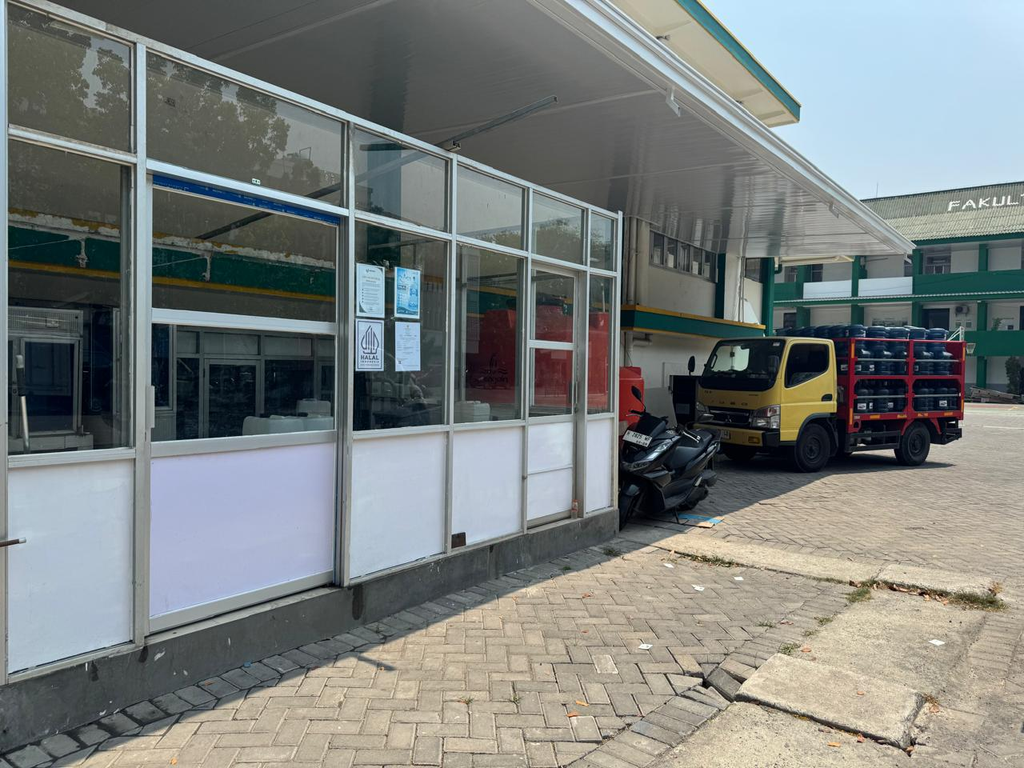
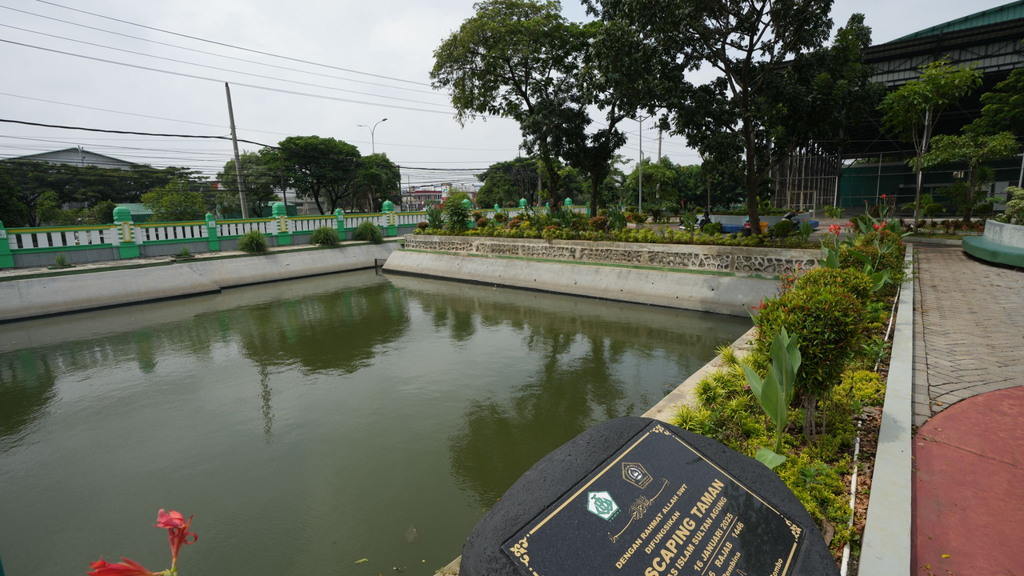
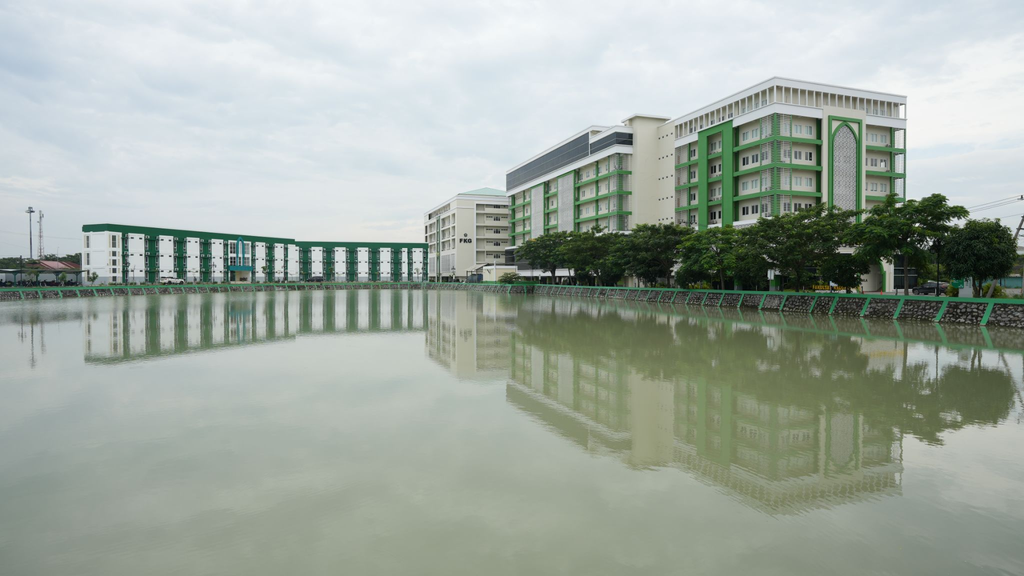
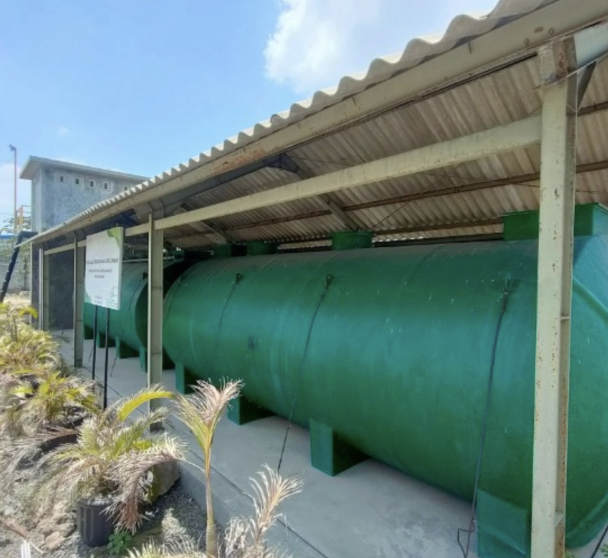
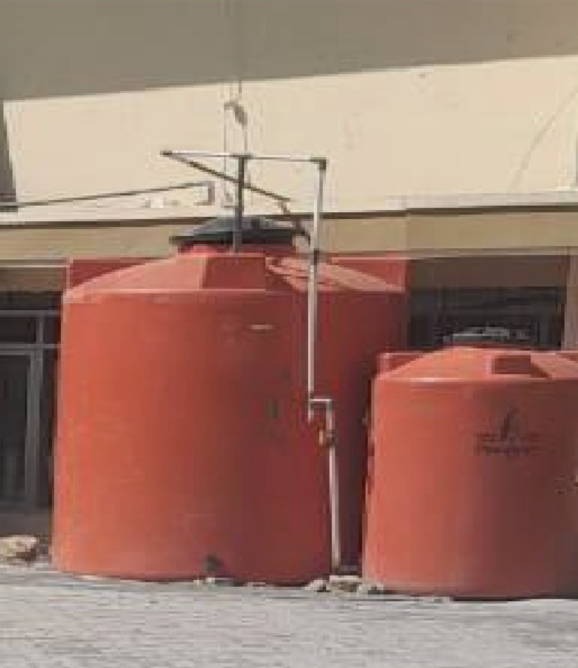
The university also maintains water treatment, storage, and distribution infrastructure to support the daily needs of students, lecturers, staff, and other campus users. The available documentation identifies this evidence under Consumption of treated water and includes visual documentation of water-related facilities and the campus lake.
Water Sources
UNISSULA uses local water sources to support academic, administrative, and other campus activities.
The main water sources used by the university are:
- groundwater extracted through wells and aquifers;
- water from the campus lake.
The supporting document states that UNISSULA uses water extracted from sources including lakes and aquifers, which is then treated and distributed for campus use.
The use of these extracted water sources makes regular monitoring important for maintaining responsible and sustainable water management.


Total Water Consumption in 2025
UNISSULA measures the total volume of water used throughout the university.
For the 2025 reporting period, the recorded water-consumption data were:
| Water Consumption Indicator | 2025 Data |
|---|---|
| Main water sources | Wells / aquifers and campus lake |
| Reporting period | January–December 2025 |
| Total annual water consumption | 90,491 m³ |
| Measurement unit | m³ per year |
| Measurement coverage | University-wide |
The figure of 90,491 m³ represents the total volume of water measured for university use during 2025.
University-Wide Water Monitoring
Water-consumption monitoring covers the university campus and is used to understand overall water demand across institutional operations.
The monitoring includes water used in areas such as:
- academic buildings;
- administrative facilities;
- supporting campus facilities;
- sanitation facilities;
- worship facilities;
- student activity areas; and
- other operational areas of the university.
This university-wide approach provides UNISSULA with a clear picture of its annual water use and supports more effective planning for conservation and efficiency.
Water Treatment and Distribution
Water from available sources is managed through campus water infrastructure before being distributed for use.
The university has facilities that support water treatment, storage, and distribution. The supporting documentation shows water-related infrastructure, including storage facilities and the campus lake.
This infrastructure supports the daily water requirements of the university community while helping UNISSULA manage water resources in a more organised and sustainable manner.
Supporting Responsible Water Use
Monitoring total annual water consumption provides an important baseline for sustainable campus management.
By recording water use, UNISSULA is able to:
- understand annual water demand;
- monitor changes in water consumption;
- identify opportunities for water-efficiency improvements;
- support conservation planning;
- manage water infrastructure more effectively; and
- promote responsible use of water resources.
The annual monitoring process therefore supports both operational management and long-term sustainability planning.
Sustainable Management of Groundwater and Lake Water
Because UNISSULA uses groundwater and lake water, monitoring consumption is particularly important.
Groundwater extracted from wells and aquifers is a valuable natural resource, while lake water is part of the university’s local water environment. Responsible use of these sources requires the university to understand how much water is being consumed and to manage extraction and distribution carefully.
The measurement of 90,491 m³ in 2025 provides a quantitative basis for evaluating water use and improving future water-management practices.
Supporting Campus Operations
Water is used across many areas of university life, including:
- teaching and learning activities;
- laboratories;
- sanitation;
- administration;
- religious activities;
- student facilities;
- maintenance; and
- other daily campus operations.
By measuring total water consumption, UNISSULA can manage these needs while also maintaining attention to sustainability and resource efficiency.
2025 Water Consumption Summary
UNISSULA’s water-consumption monitoring for 2025 can be summarised as follows:
- Water sources: groundwater from wells/aquifers and campus lake;
- Total annual water consumption: 90,491 m³;
- Reporting period: January–December 2025;
- Coverage: university-wide;
- Measurement purpose: operational management, resource efficiency, and sustainable water use.
Commitment to Sustainable Water Management
UNISSULA recognises that responsible water management is an important part of building a sustainable university campus.
By monitoring the volume of water used each year, the university strengthens its ability to make informed decisions about water conservation, infrastructure, efficiency, and future resource needs.
The university’s water-consumption data also provide an important foundation for evaluating water use in relation to the size of the campus population.
6.3.1
Waste Water Treatment
6.3.1 Wastewater Treatment at UNISSULA
Managing Wastewater Through Treatment and Reuse
Universitas Islam Sultan Agung (UNISSULA) has established a wastewater treatment process as part of its sustainable water management system. The university manages wastewater through dedicated treatment facilities and recycling processes designed to improve effluent quality, reduce environmental pollution, and enable the reuse of treated water for non-potable purposes.
The wastewater treatment process was already in place by 2025 and forms part of UNISSULA’s wider commitment to responsible water use and environmental protection.

Wastewater Treatment Facilities
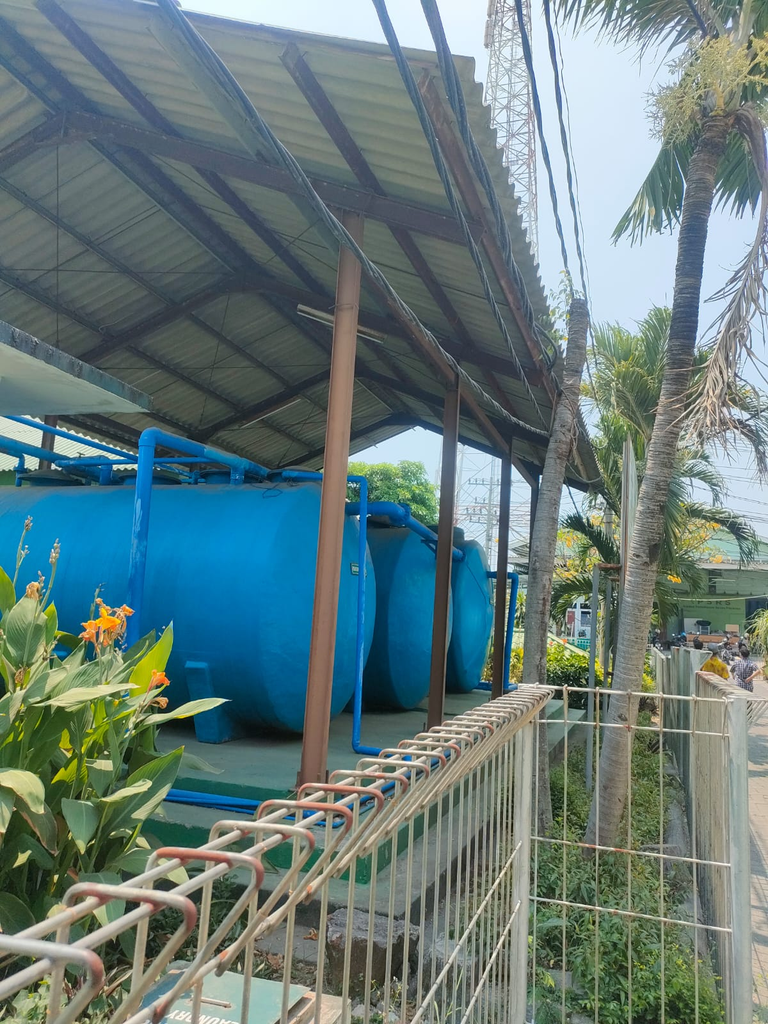
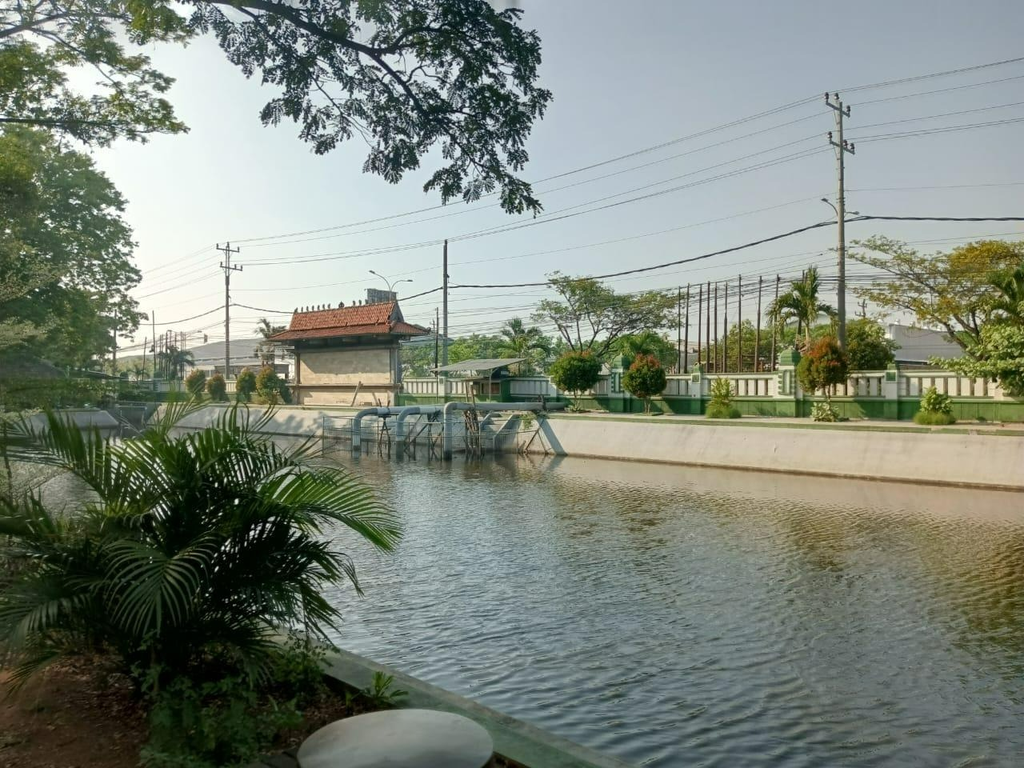
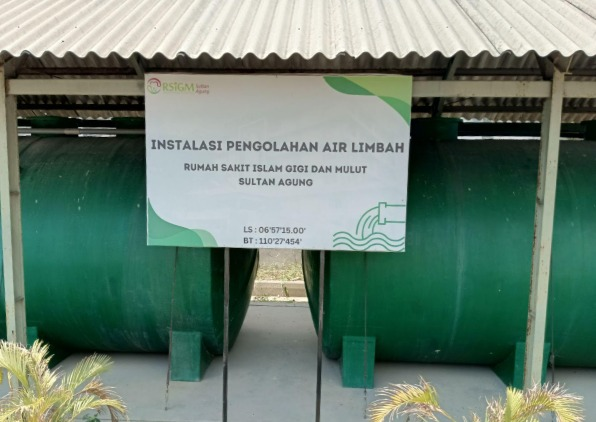
UNISSULA operates wastewater treatment facilities within the university environment, including treatment units associated with the campus and Sultan Agung Islamic Hospital.
The university’s 2025 Sustainability Report records that sewage is treated through tertiary treatment at campus wastewater units and at Sultan Agung Islamic Hospital. The purpose of this treatment is to improve effluent quality and support more sustainable water management.
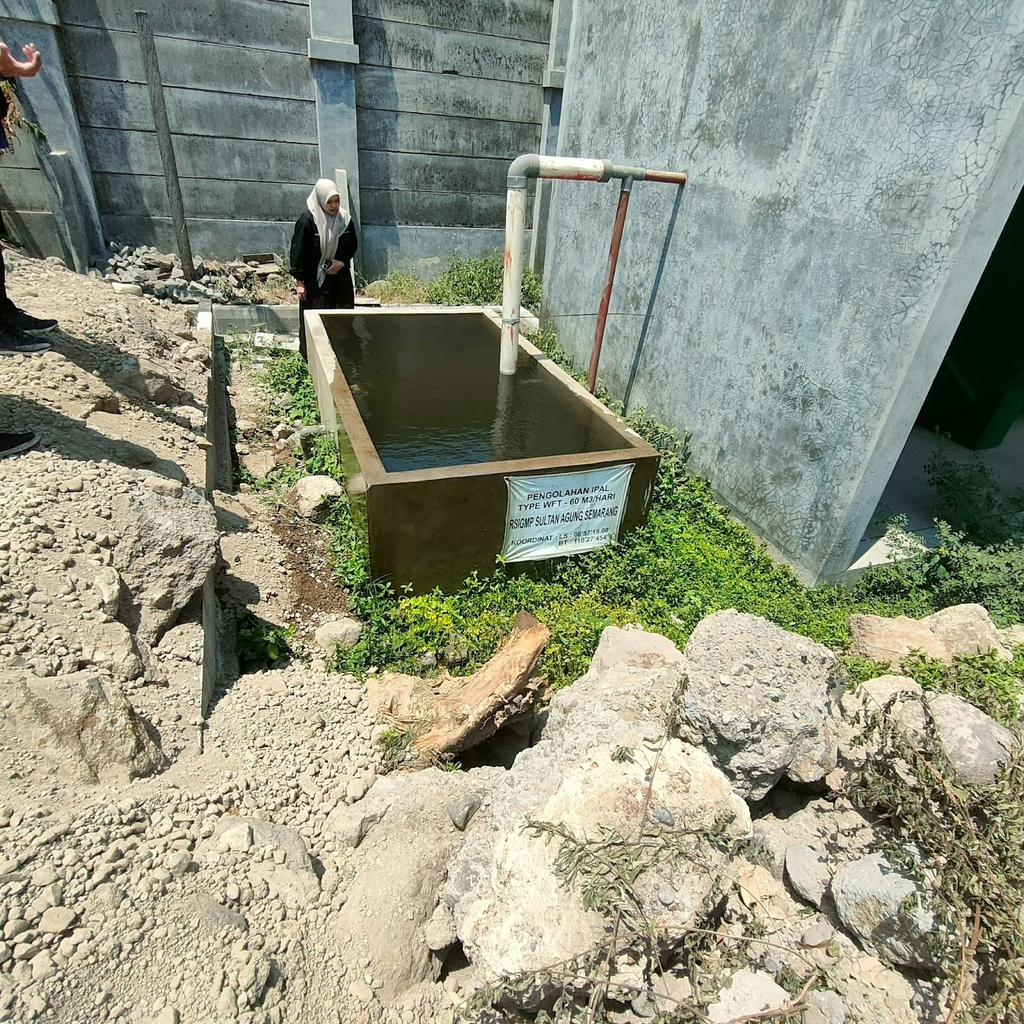
Physical documentation also shows the presence of an Instalasi Pengolahan Air Limbah (IPAL) or Wastewater Treatment Plant within the Sultan Agung environment, reinforcing that wastewater treatment is supported by dedicated infrastructure.
Campus Water Recycling Process
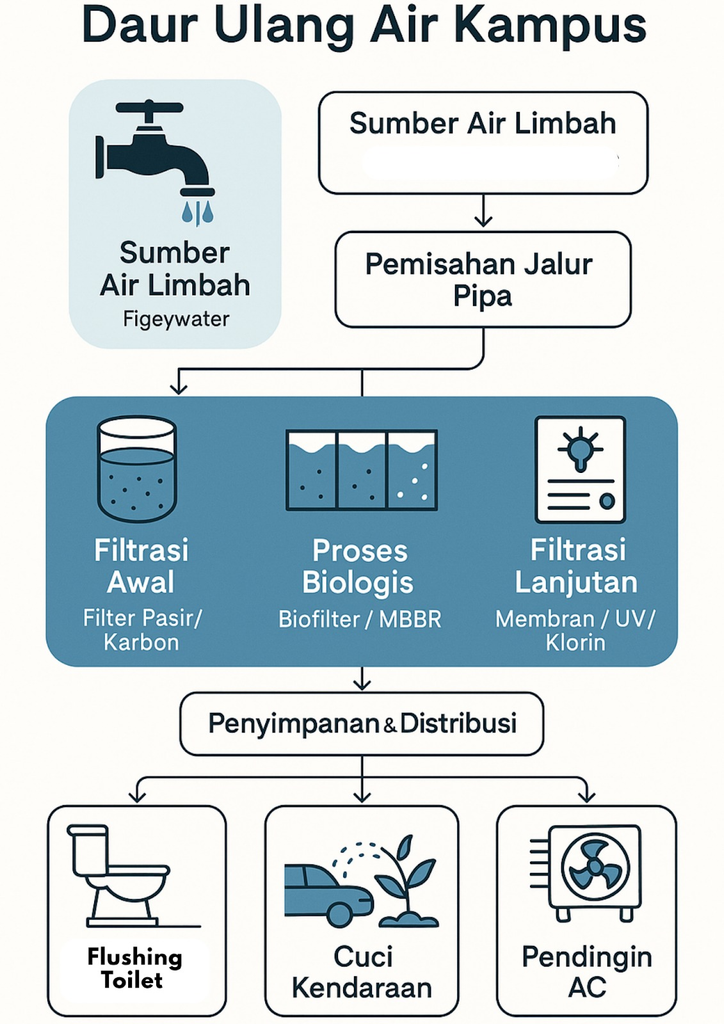
UNISSULA also operates a campus water recycling system for greywater.
Greywater is collected from sources such as:
- sinks;
- showers; and
- air-conditioner condensate.
The wastewater is then conveyed through separate piping to the treatment system.
The treatment process consists of several stages.
1. Pre-Filtration
The first stage uses sand and activated carbon filters to remove suspended solids, impurities, and odours from the wastewater.
This initial stage prepares the water for further treatment.
2. Biological Treatment
After initial filtration, wastewater undergoes biological treatment using a biofilter or Moving Bed Biofilm Reactor (MBBR).
This process helps degrade organic materials contained in the wastewater and improves overall water quality.
3. Advanced Filtration and Disinfection
Following biological treatment, the water undergoes further purification through advanced filtration and disinfection.
The treatment methods documented by UNISSULA include:
- membrane filtration;
- ultraviolet (UV) treatment; or
- chlorination.
These processes are used to improve the clarity and safety of the treated water before storage, reuse, or controlled discharge.
Storage and Distribution of Treated Water
After treatment, the water is stored and distributed for appropriate non-potable uses.
The university’s water recycling system is designed so that treated water can be used again instead of being immediately discarded.
This supports more efficient use of water resources and reduces demand for fresh water.
Reuse of Treated Wastewater
UNISSULA reuses treated non-potable water for several purposes.
The Sustainability Report identifies reuse applications including:
- fish ponds;
- landscape and ornamental plants; and
- controlled drainage recharge.
The campus water recycling programme also documents reuse applications such as:
- toilet flushing;
- vehicle washing; and
- selected operational uses.
This approach connects wastewater treatment directly with water conservation and reuse.
Water Pollution Control
Wastewater treatment at UNISSULA is also linked to water pollution control.
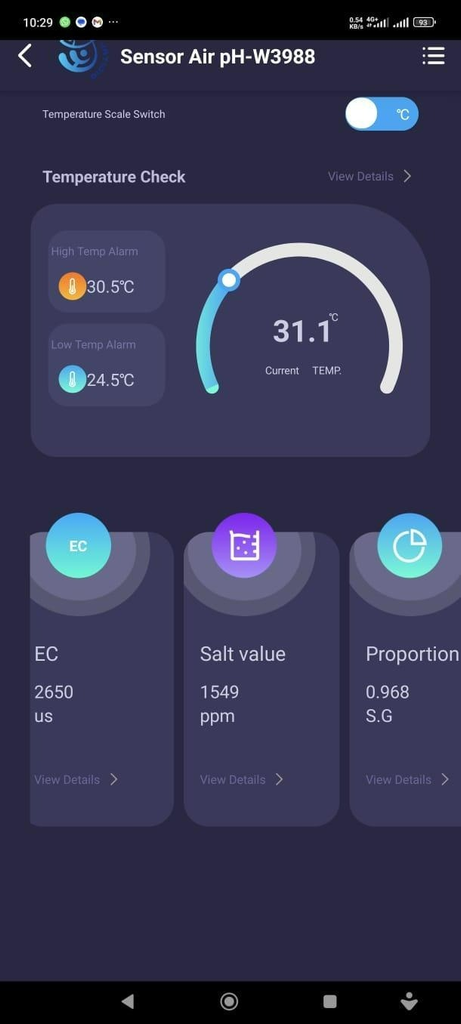
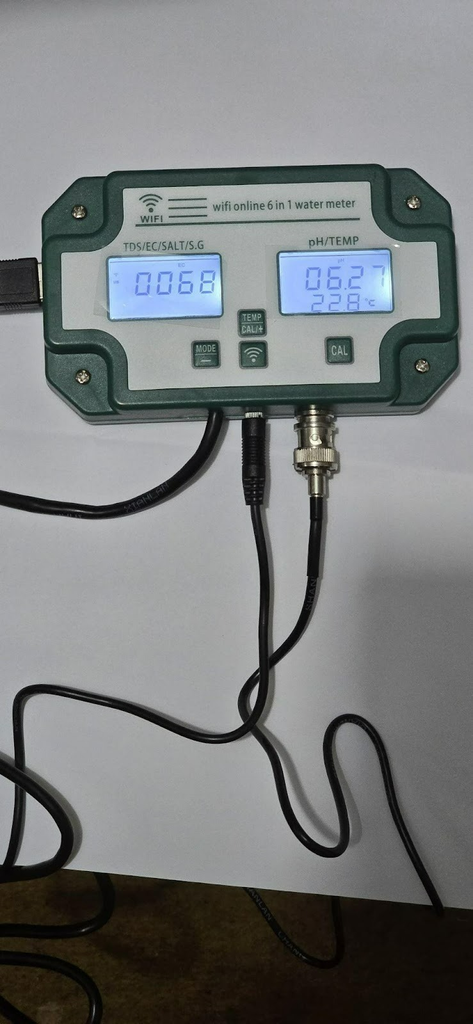
The university conducts water auditing and quality testing as part of its environmental management practices. The Sustainability Report states that these activities are supported by the installation and operation of Wastewater Treatment Plants (WWTPs) to ensure that discharged water meets required quality standards.
This demonstrates that wastewater treatment is not limited to physical infrastructure alone, but also includes monitoring and quality-control activities.
Protecting Water Quality
The wastewater treatment process helps prevent untreated wastewater from entering the surrounding water environment.
Through filtration, biological treatment, disinfection, monitoring, and controlled discharge or reuse, UNISSULA seeks to improve the quality of effluent before it leaves the treatment system.
These practices contribute to:
- pollution prevention;
- protection of surface water and groundwater;
- improved wastewater quality;
- safer reuse of treated water; and
- more responsible management of campus water resources.
Integration with Water Conservation
UNISSULA’s wastewater management system is integrated with broader water-conservation activities.
The university also maintains rainwater collection, storage systems, and a campus retention lake. Harvested and recovered non-potable water is used for landscape irrigation, cleaning, pond replenishment, and selected toilet flushing.
Together, wastewater treatment, water recycling, and rainwater management support a more circular approach to water use across the campus.
A Practical Treatment Process
The documented wastewater treatment process can be summarised as follows:
Wastewater and greywater collection → separate piping → pre-filtration → biological treatment → advanced filtration/disinfection → storage and distribution → non-potable reuse or controlled discharge.
This process demonstrates that UNISSULA has an operational system for treating wastewater rather than relying only on direct disposal.
Process in Place by 2025
The university’s Sustainability Report 2025 documents both the wastewater treatment facilities and the treatment and reuse process.
Evidence includes:
- tertiary sewage treatment;
- wastewater treatment units;
- greywater collection;
- sand and activated-carbon filtration;
- biological treatment using biofilter or MBBR;
- membrane filtration, UV treatment, or chlorination;
- wastewater quality monitoring; and
- reuse of treated water for non-potable purposes.
This confirms that the wastewater treatment process was established and operating by 2025.
Contribution to Sustainable Water Management
Wastewater treatment is an important part of UNISSULA’s approach to sustainable campus management.
By treating and reusing wastewater, the university can:
- reduce freshwater demand;
- reduce the risk of environmental pollution;
- improve effluent quality;
- conserve water resources;
- reuse water for appropriate non-potable purposes; and
- strengthen the resilience of campus water systems.
6.3.2
Preventing Water System Population
6.3.2 Preventing Water System Pollution at UNISSULA
Preventing Polluted Water from Entering the Water System
Universitas Islam Sultan Agung (UNISSULA) has established processes to prevent polluted water from entering the campus water system and surrounding environment. These processes combine wastewater treatment, water-quality monitoring, controlled discharge, hazardous-waste management, spill prevention, and incident-response procedures.
By 2025, these measures were already in place across the Sultan Agung environment, including campus wastewater facilities, laboratory operations, and the Sultan Agung Islamic Hospital.
Water Pollution Control
UNISSULA applies regular water-quality monitoring and wastewater control as part of its environmental management system.
The university’s Sustainability Report 2025 documents regular water audits and quality testing across the campus, supported by the operation of Wastewater Treatment Plants (WWTPs) to help ensure that discharged water meets required quality standards.
This provides an important preventive layer by ensuring that wastewater is monitored and treated before it is discharged into the surrounding water environment.
Wastewater Segregation and Treatment
UNISSULA’s wastewater-management process separates wastewater streams and directs them to treatment facilities rather than allowing untreated wastewater to enter the drainage or water system.
The documented campus water-recycling process includes:
- collection of greywater;
- separate piping;
- pre-filtration;
- biological treatment;
- advanced filtration;
- disinfection;
- storage; and
- controlled reuse.
Greywater from sources such as sinks, showers, and air-conditioner condensate is routed to treatment units where it undergoes sand and activated-carbon filtration, biological treatment using biofilter or Moving Bed Biofilm Reactor (MBBR), and advanced filtration or disinfection.
These processes reduce the risk of untreated or contaminated water entering the wider water system.
Wastewater Treatment Infrastructure
The university environment also includes dedicated wastewater-treatment infrastructure.
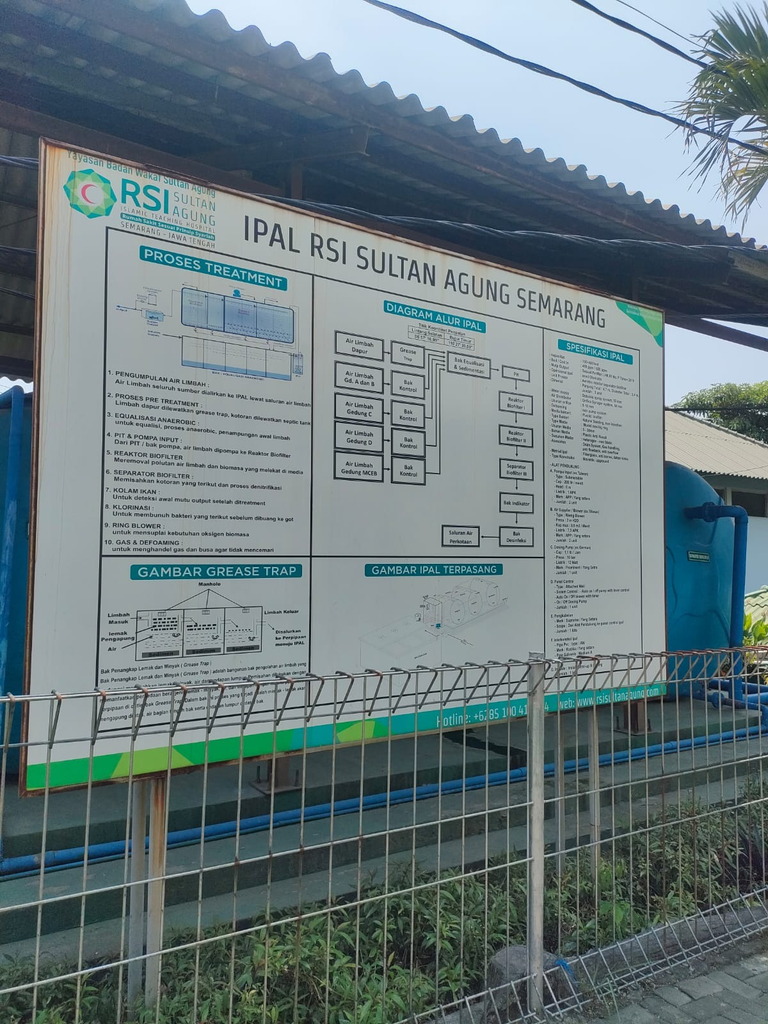
Physical evidence shows the operation of IPAL (Instalasi Pengolahan Air Limbah) facilities in the Sultan Agung environment. The treatment flow includes multiple stages such as:
- grease trapping;
- control tanks;
- equalisation and sedimentation;
- biofilter treatment;
- separator stages;
- indicator tanks;
- disinfection; and
- controlled discharge.
This infrastructure demonstrates that wastewater is managed through a defined treatment pathway before leaving the treatment system.
Hazardous Waste Management
Pollution prevention at UNISSULA is also supported by procedures for the management of hazardous and toxic waste.
Within the Sultan Agung environment, the Guidelines for Hazardous and Toxic Waste Management (B3) are established through Director Regulation No. 629/PER/RSI-SA/IX/2022. The regulation was created to prevent the negative impacts of hazardous waste on the environment, human health, and other living organisms.
The guidance states that hazardous-waste management is intended to prevent and control environmental pollution and environmental damage caused by B3 waste.
Segregation, Storage, and Control of Hazardous Waste
The hazardous-waste framework covers several stages of management, including:
- reduction and segregation;
- storage;
- transportation;
- treatment;
- burial where applicable; and
- final disposal.
Waste is separated according to type and characteristics, placed in appropriate containers, labelled, and stored before further treatment or authorised removal.
Storage facilities are required to use impermeable floors, appropriate drainage, secure access, and protection from rain, flooding, and other conditions that could contribute to accidental release.
These preventive controls reduce the risk that hazardous substances can leak or be washed into drainage channels or surrounding water systems.
Prevention of Accidental Pollution
UNISSULA’s pollution-prevention approach also addresses accidental events and incidents.
Laboratory safety and hazardous-waste procedures require users to report damage, spills, accidents, and unsafe conditions. Hazardous chemicals and B3 waste must be separated and handled according to their characteristics.
A particularly important principle is that hazardous waste must not be disposed of into sinks, drains, soil, or general waste streams.
Where spills occur, the procedure requires action to prevent the spilled material from entering drains or spreading to other areas. Spill kits, absorbent materials, sand, or other suitable containment materials are used, and contaminated absorbents are subsequently managed as hazardous waste.
This creates a direct preventive mechanism against accidental contamination of the water system.
Emergency and Incident Response
The B3 management framework also includes emergency-response provisions.
Hazardous-waste transport documentation is required to include special handling instructions for emergency conditions as well as emergency contact information.
During hazardous-waste treatment operations, the guidance also requires operators to prevent leaks and spills and to use automatic shut-off systems where operating conditions do not meet required specifications.
These measures are particularly relevant because they address not only routine pollution prevention but also pollution arising from accidents and operational incidents.
Monitoring and Quality Assurance
Pollution prevention is reinforced through monitoring.
The Sustainability Report 2025 documents water auditing and quality testing, while wastewater-treatment facilities are used to control the quality of discharged water.
The B3 management framework further requires wastewater generated from hazardous-waste treatment to comply with applicable wastewater-quality standards before discharge.
This combination of treatment and monitoring provides an additional safeguard against contaminated water entering the environment.
Controlled Wastewater Discharge
UNISSULA does not rely on uncontrolled discharge.
Wastewater is treated before discharge or reuse, and tertiary treatment is documented for sewage generated within the Sultan Agung environment. Treated non-potable water is reused for purposes such as fish ponds, landscape and ornamental plants, and controlled drainage recharge.
This helps reduce direct discharge of untreated wastewater and supports more responsible water management.
Integration Across the Sultan Agung Environment
Water pollution prevention is implemented through a combination of university and associated Sultan Agung facilities.
The campus applies wastewater treatment, greywater separation, water-quality monitoring, and recycling processes, while Sultan Agung Islamic Hospital applies detailed B3 waste-management procedures and wastewater controls.
Because these facilities operate within the broader Sultan Agung environment, they provide practical examples of how pollution risks are managed in areas where wastewater, laboratory materials, chemicals, and healthcare-related waste are generated.
Preventing Pollution Before It Reaches the Water System
The overall preventive process can be summarised as:
source segregation → safe storage → separate wastewater routing → treatment → quality monitoring → disinfection → controlled reuse or discharge
For accidents and incidents, the process adds:
incident identification → spill containment → prevention of entry into drains → collection of contaminated material → hazardous-waste handling → incident reporting and evaluation
This combination of routine controls and emergency-response measures reduces the likelihood that polluted water can enter the campus or surrounding water system.
Supporting Sustainable Water Management
These processes support several environmental objectives:
- preventing untreated wastewater discharge;
- preventing hazardous substances from entering drains;
- containing accidental spills;
- controlling wastewater quality;
- reducing pollution risk;
- protecting groundwater and surface water; and
- improving long-term environmental management.
They also complement UNISSULA’s broader water-recycling and conservation initiatives.
6.3.3
Free Drinking Water Provided
6.3.3 Free Drinking Water Provision at UNISSULA
Free Drinking Water for Students, Staff, Lecturers, and Visitors
Universitas Islam Sultan Agung (UNISSULA) provides free drinking water as part of its commitment to health, wellbeing, and a supportive campus environment. During the 2025 reporting year, free drinking water was made available not only to lecturers and staff, but also to students and campus visitors.
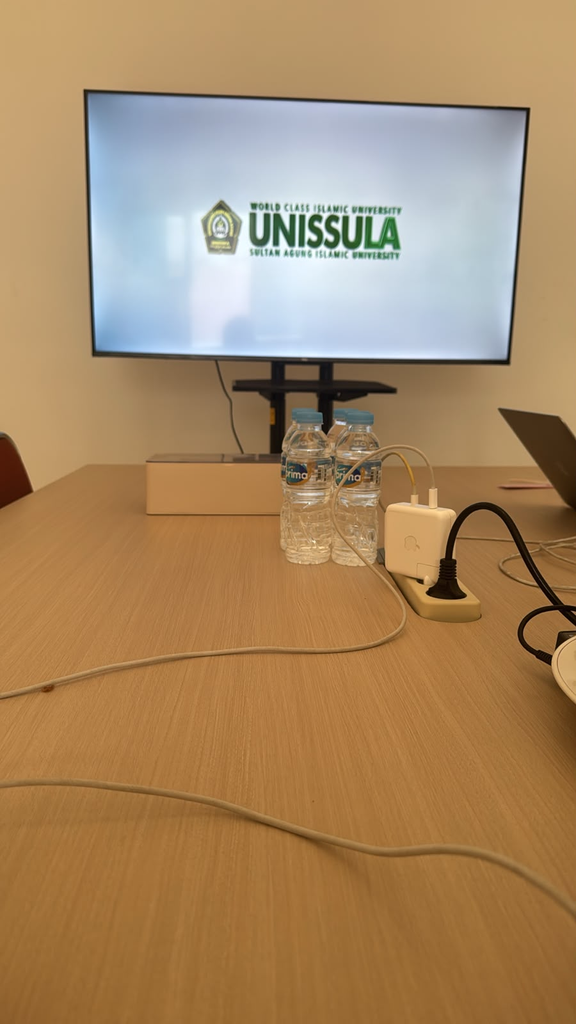
This provision is implemented through drinking-water facilities and bottled drinking water provided by the university in academic, administrative, and public service areas. Although some of the drinking water is procured by the university from external suppliers, it is distributed and made available free of charge to users on campus.
Scope of Access
The provision of free drinking water at UNISSULA covers:
- Students, who may access drinking water during academic activities and while using campus facilities;
- Lecturers, who are provided drinking water in offices, meeting spaces, and academic activities;
- Staff and employees, who receive drinking water during daily work and institutional activities;
- Visitors, who are also served through drinking-water provision in reception, meeting, and service areas.
This demonstrates that access to drinking water is not limited to internal staff only, but is part of a broader campus service available to the university community and guests.
Forms of Provision
UNISSULA provides drinking water in several practical forms, including:
- bottled drinking water distributed in offices and meeting rooms;
- drinking water made available during seminars, meetings, and campus events;
- campus drinking-water facilities associated with the UNISSULA water system;
- water provision points that support routine academic and administrative activities.
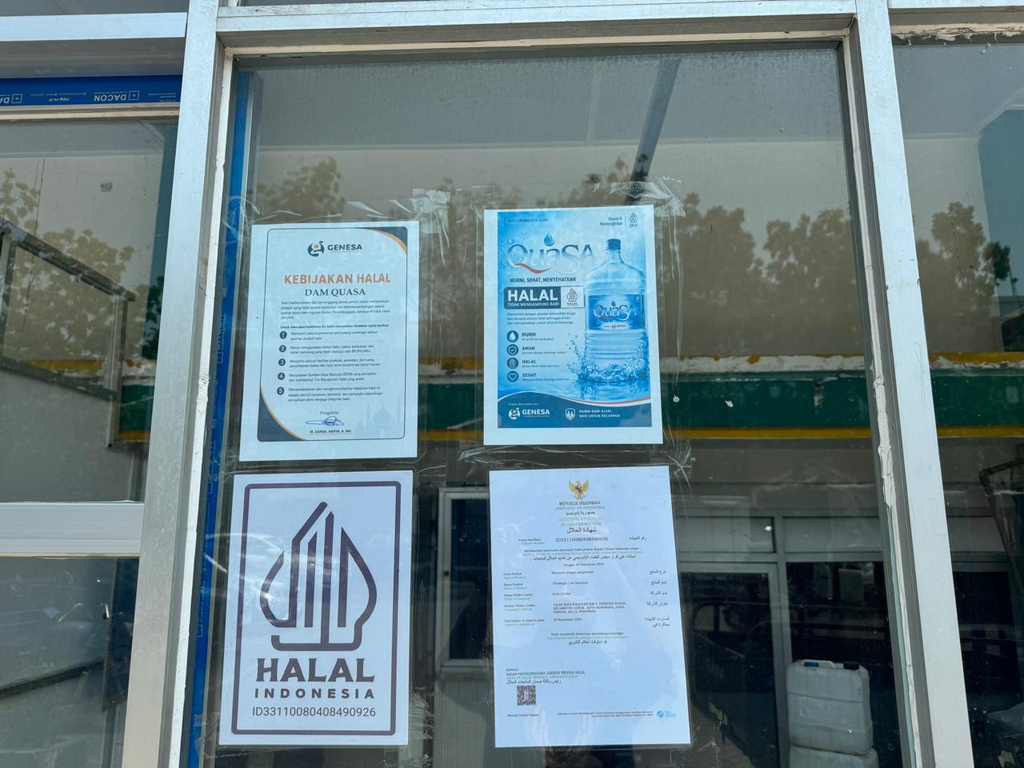
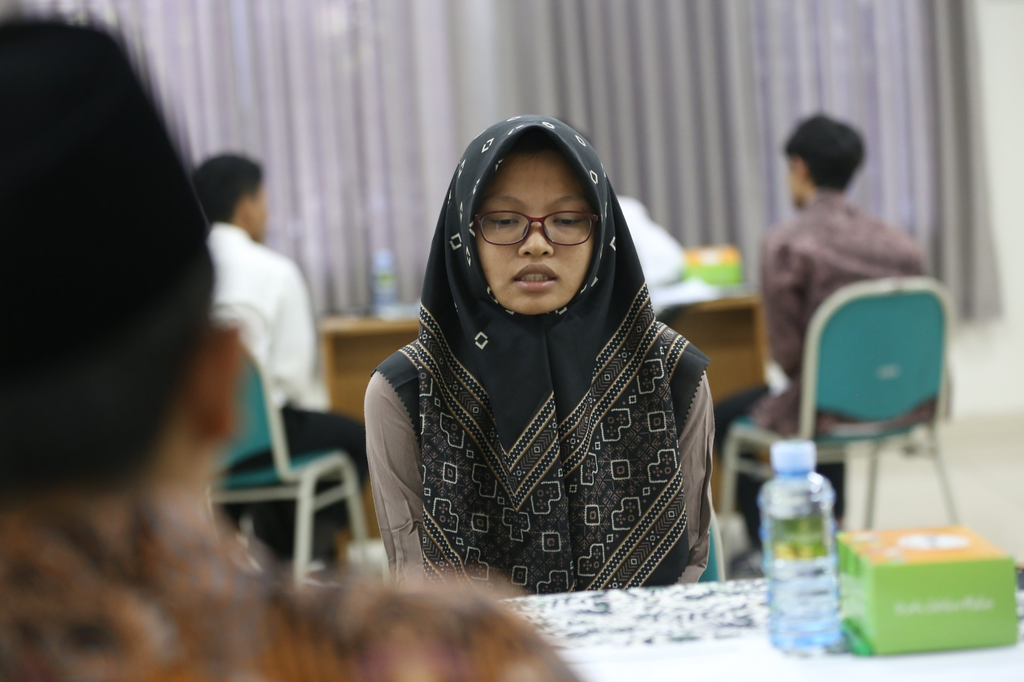
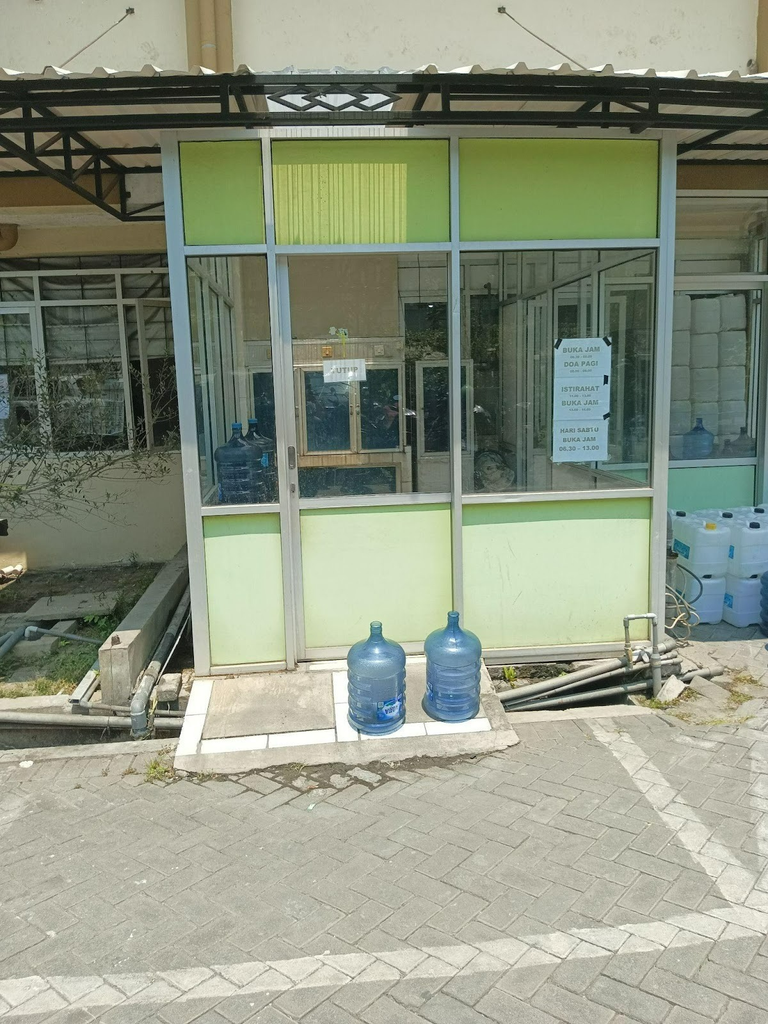
Photographic evidence shows drinking water provided in university spaces, including bottled water distributed free for use on campus. Additional documentation also shows the presence of the QUASA drinking-water facility, which supports safe drinking-water provision within the UNISSULA environment.
Support for Health and Wellbeing
Providing free drinking water is an important part of creating a healthy campus. Adequate hydration supports concentration, productivity, and wellbeing for all campus users, including students in lectures, lecturers in teaching activities, staff in administrative work, and visitors attending university events or services.
By ensuring access to drinking water at no cost, UNISSULA supports a more inclusive and comfortable campus environment.
Institutional Commitment
The free drinking-water provision reflects UNISSULA’s institutional commitment to campus welfare and basic service accessibility. Even when drinking water is purchased by the university, the final access point for students, staff, lecturers, and visitors remains free of charge.
This means the university bears the cost of provision while users benefit directly from free access to safe drinking water.
2025 Implementation
During the 2025 reporting year, UNISSULA actively provided free drinking water across campus functions and facilities. This included water provision for:
- academic activities;
- offices and staff workspaces;
- meetings and seminars;
- public-facing service areas; and
- university events attended by internal and external participants.
The provision therefore meets the intent of the indicator by showing that UNISSULA provides free drinking water for multiple campus user groups, including students, staff, lecturers, and visitors.
6.3.4
Water-Conscious Building Standards
6.3.4 Water-Conscious Building Standards at UNISSULA
Applying Building Standards to Minimise Water Use
Universitas Islam Sultan Agung (UNISSULA) applies water-conscious building practices across its campus to reduce unnecessary water consumption and improve the efficiency of water use in university facilities.
By 2025, these practices were implemented through a combination of water-efficient sanitary fixtures, rainwater harvesting, water storage, non-potable water reuse, and supporting infiltration infrastructure.
The university’s approach integrates water efficiency into both building facilities and wider campus infrastructure.
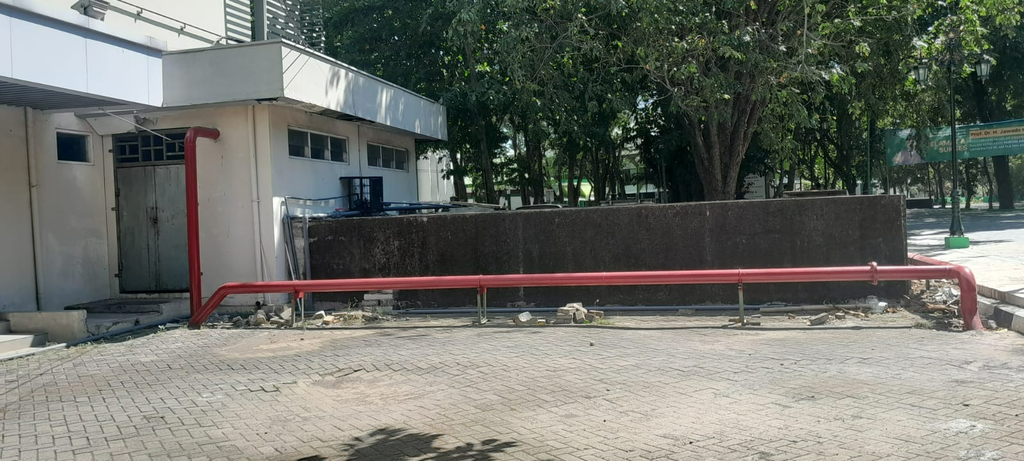
Water-Efficient Fixtures in Campus Buildings
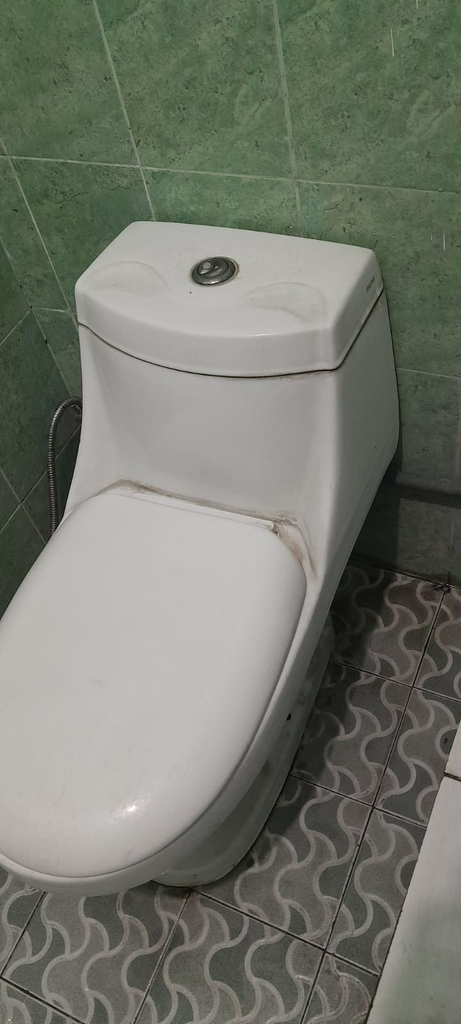
UNISSULA has installed high-efficiency water-saving devices across a large proportion of its campus buildings.
The university’s Sustainability Report 2025 states that approximately 83% of campus buildings are equipped with water-efficient devices, including:
- automatic sensor taps;
- dual-flush toilets;
- efficient urinal systems.
These installations are intended to reduce unnecessary water use during daily building operations and improve the efficiency of sanitation facilities.
Automatic sensor taps help reduce water loss from taps being left open, while dual-flush toilets allow users to select a lower or higher flush volume according to need. Efficient urinals similarly help reduce the amount of water required for sanitation.
Promoting Responsible Water Use
Water-efficient infrastructure is supported by visible reminders encouraging responsible behaviour.
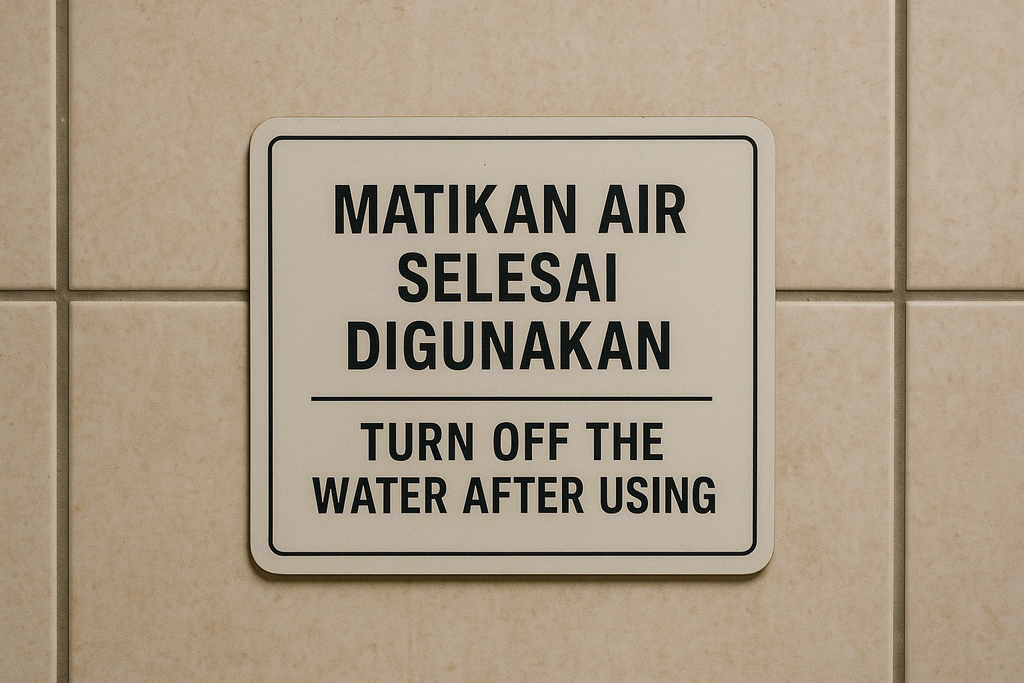
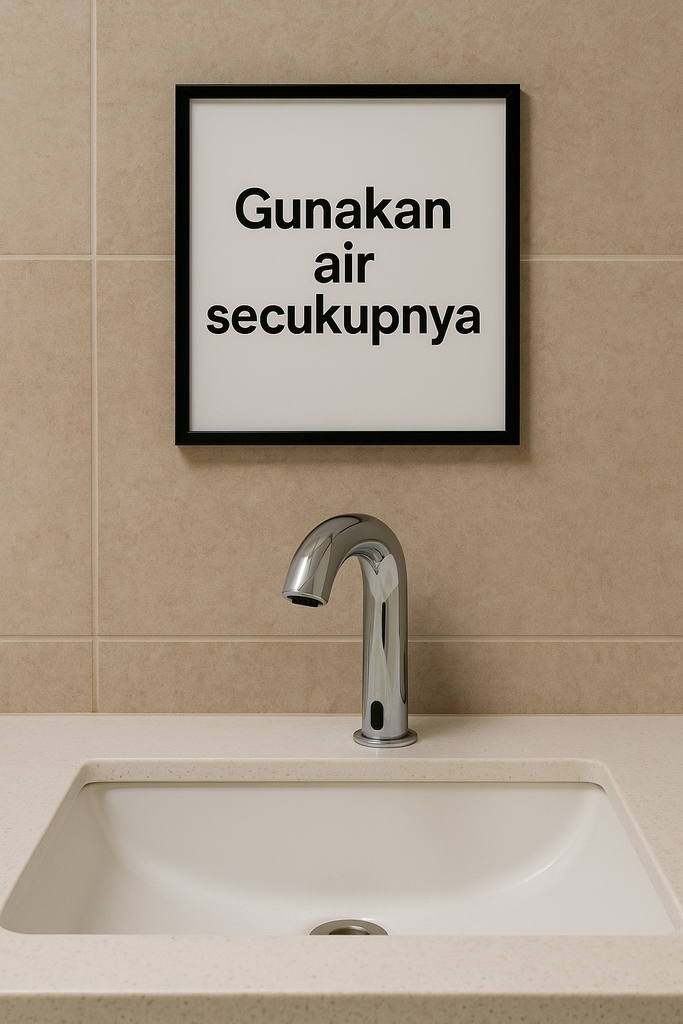
Signage such as “Use water as needed” and “Turn off the water after using” is displayed near sanitation facilities.
These reminders complement the technical measures installed in campus buildings and encourage students, lecturers, staff, and visitors to participate in water conservation.
Rainwater Collection in Campus Buildings
UNISSULA also incorporates rainwater harvesting into its water-conscious building approach.
Rainwater from rooftops is collected through gutters and directed through first-flush diverters and leaf screens before entering storage tanks.
The collected rainwater can then undergo basic treatment using sediment and carbon filtration before being used for suitable non-potable purposes.
These uses include:
- landscape irrigation;
- cleaning;
- pond top-ups; and
- selected toilet flushing.
This system reduces reliance on primary water sources for activities that do not require potable water.
In-Ground Water Storage
The university also uses in-ground water tanks to store harvested rainwater and other recoverable non-potable water.
In-ground storage helps:
- reduce evaporation;
- reduce algae growth;
- stabilise water temperature;
- conserve space around campus buildings; and
- maintain a supply of non-potable water for reuse.
Stored water can be reused for landscape irrigation, floor and area cleaning, pond replenishment, and selected toilet flushing.
This helps reduce demand for fresh water in routine building and campus operations.
Campus Lake and Stormwater Management
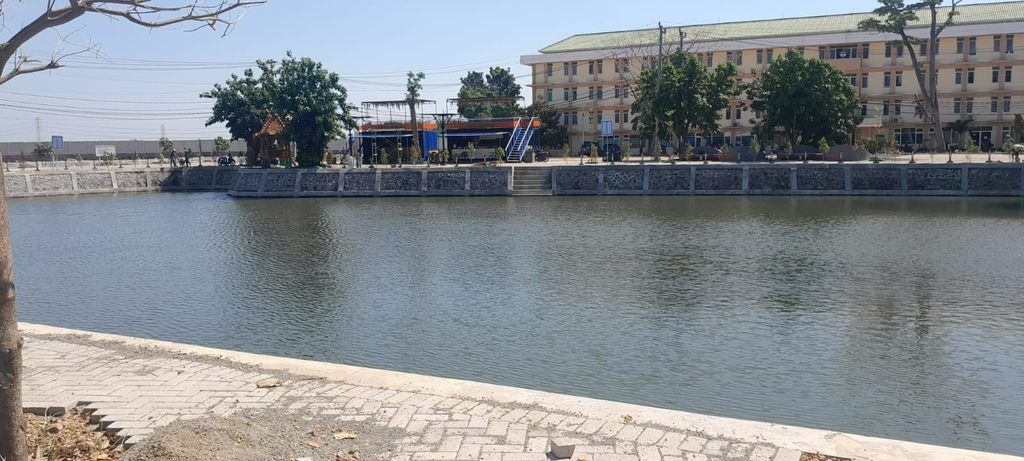
UNISSULA’s water-conscious infrastructure also includes a campus lake or retention pond.
The lake receives stormwater from rooftops and campus grounds and helps:
- reduce peak runoff;
- settle sediment;
- support groundwater recharge; and
- provide a source of non-potable water for selected reuse.
Water from the lake can support landscape irrigation and pond replenishment after appropriate basic treatment.
This approach links building water management with broader campus drainage and conservation infrastructure.
Water Reuse in Building Operations
A key component of UNISSULA’s water-conscious building approach is the reuse of non-potable water.
Where appropriate, treated or harvested water is used instead of fresh water for functions such as:
- toilet flushing;
- cleaning;
- irrigation; and
- other non-potable applications.
This reduces pressure on primary water supplies and improves overall water efficiency across campus facilities.
Smart Building Water Monitoring
UNISSULA also applies smart-building approaches to optimise resource use.
The university’s Sustainability Report describes the use of a Building Management System (BMS), sub-metered monitoring, and environmental sensors to support more efficient water and energy use in campus buildings.
These systems enable the university to monitor building performance, identify abnormal use, and support more effective maintenance and resource management.
Relevant Water-Conscious Building Standards Applied
UNISSULA’s building practices include the following water-efficiency standards and measures:
| Water-Conscious Building Measure | Application |
|---|---|
| Automatic sensor taps | Reduce unnecessary tap water use |
| Dual-flush toilets | Reduce flushing water demand |
| Efficient urinal systems | Improve sanitation water efficiency |
| Rainwater harvesting | Capture rooftop rainwater |
| First-flush and filtration systems | Improve quality of harvested water |
| Above-ground and in-ground storage | Store recoverable non-potable water |
| Non-potable water reuse | Toilet flushing, cleaning and irrigation |
| Infiltration wells, bioswales and biopores | Support stormwater management and groundwater recharge |
| Water sub-metering and monitoring | Support detection and management of inefficient water use |
Together, these measures form a practical framework for reducing water consumption in campus buildings.
Building-Level Implementation
The water-saving measures are not limited to plans or design concepts.
UNISSULA has documented their actual implementation in campus buildings and facilities. The evidence shows physical installation of water-efficient fixtures as well as rainwater collection, storage, and reuse infrastructure.
The reported coverage of 83% of campus buildings with high-efficiency water-saving devices demonstrates that the approach has been applied broadly across the university.
Supporting Sustainable Campus Development
Applying water-conscious building standards helps UNISSULA reduce the environmental impact of campus operations.
The measures contribute to:
- lower demand for fresh water;
- reduced water wastage;
- greater use of harvested and recovered water;
- more effective stormwater management;
- groundwater recharge; and
- improved resource efficiency.
These practices support UNISSULA’s broader commitment to sustainable campus management and responsible use of water resources.
6.3.5
Water-Conscious Planting
6.3.5 Water-Conscious Landscaping at UNISSULA
Designing Campus Landscapes to Reduce Water Use
Universitas Islam Sultan Agung (UNISSULA) applies water-conscious landscaping practices as part of its wider approach to sustainable campus water management.
By 2025, the university had developed and maintained landscaped areas using vegetation suited to local conditions and supported these areas with alternative water sources such as harvested rainwater, stored non-potable water, and water from the campus lake.
This approach helps reduce dependence on freshwater for maintaining green spaces while supporting a comfortable, shaded, and environmentally sustainable campus.
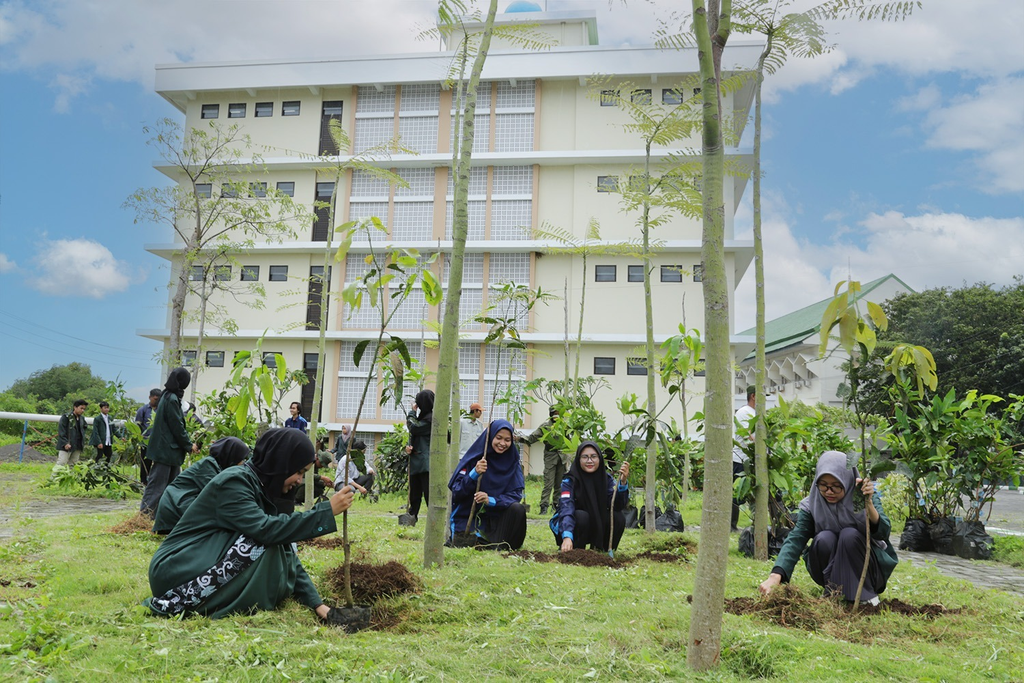


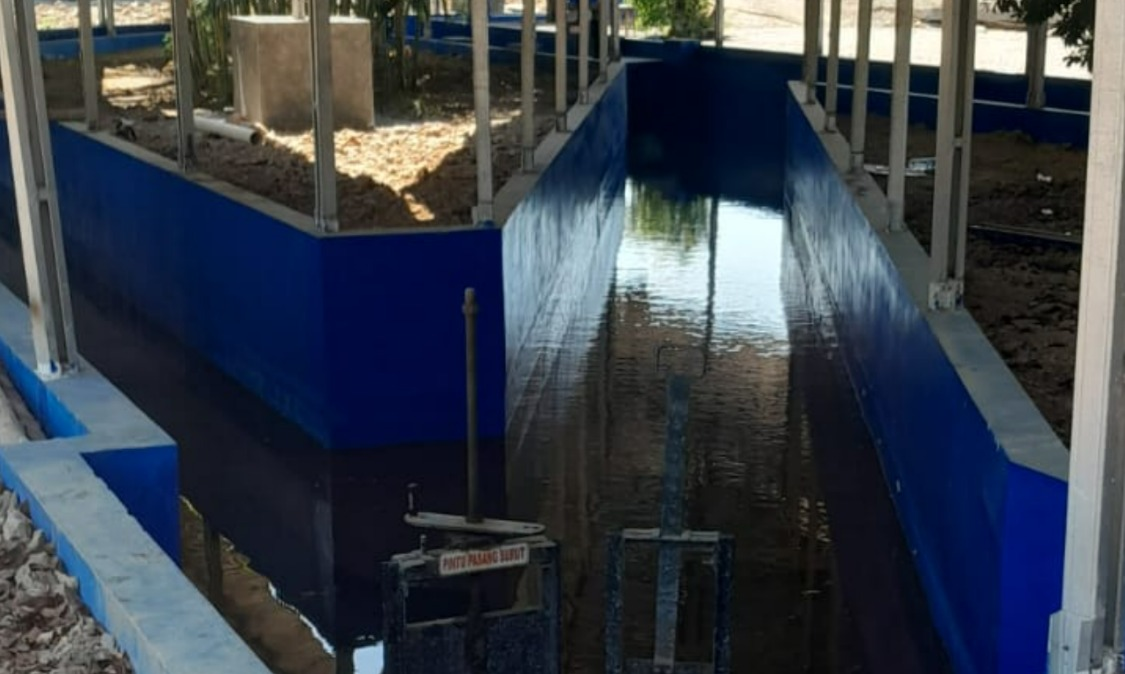
Locally Adapted and Low-Water-Demand Vegetation
UNISSULA maintains campus landscapes using trees, palms, shrubs, ground-cover vegetation, and other plants that are suitable for the local tropical climate.
The landscaping approach prioritises vegetation that can adapt to local environmental conditions and can be maintained without intensive irrigation.
This includes the use of:
- shade trees;
- locally adapted trees and shrubs;
- palms;
- ground-cover vegetation; and
- other relatively low-water-demand plants.
The use of vegetation suited to local conditions helps reduce the need for excessive watering compared with landscapes that depend on high-maintenance or water-intensive planting.
Tree Planting and Landscape Development
UNISSULA actively develops and renews green areas through tree-planting and campus landscaping activities.
Photographic documentation shows members of the university community planting trees and vegetation within campus grounds. These planting activities contribute to the long-term development of shaded and vegetated areas around university buildings.
The use of trees and established vegetation also helps:
- provide shade;
- improve soil moisture retention;
- reduce direct exposure of soil to sunlight;
- reduce evaporation; and
- create a more comfortable outdoor environment.
Established Green Areas Across Campus
Mature landscaped areas can be found around university buildings and public spaces.
These areas combine trees, palms, shrubs, grass, and ground-cover planting in ways that create green spaces without relying solely on intensive watering.
As vegetation becomes established, deeper root systems and increased shade can help improve water retention in the soil and reduce irrigation demand.
This makes long-term planting an important part of the university’s water-conscious landscape strategy.
Using Harvested Rainwater for Landscape Irrigation
Water-conscious planting at UNISSULA is supported by the university’s rainwater-harvesting system.
Rainwater from rooftops is collected and stored for non-potable use. After basic treatment, harvested water can be reused for purposes including landscape irrigation.
The university’s Sustainability Report documents that rooftop rainwater is collected, filtered, and reused for landscape irrigation, cleaning, pond top-ups, and selected toilet flushing.
Using harvested rainwater for irrigation reduces the need to use primary freshwater supplies for maintaining campus vegetation.
In-Ground Water Storage
UNISSULA also uses in-ground water tanks to store harvested rainwater and other recoverable non-potable water.
The stored water can be reused for:
- landscape irrigation;
- floor and area cleaning;
- pond top-ups; and
- selected toilet flushing.
The Sustainability Report notes that this stored non-potable water helps reduce demand on primary water supplies.
This infrastructure supports a more efficient irrigation system for landscaped areas.
Campus Lake as a Water Resource
The campus lake or retention pond forms another part of UNISSULA’s water-conscious landscape system.
The lake captures stormwater from roofs and surrounding grounds and functions as a retention area within the campus.
After appropriate basic treatment, water from the lake can be reused for non-potable purposes including landscape irrigation and pond top-ups.
This creates an additional alternative source of irrigation water and helps reduce reliance on groundwater or other primary sources.
Reducing Irrigation Demand
UNISSULA’s approach to landscaping combines two complementary strategies:
First, reducing water demand through the use of locally adapted and relatively low-water-demand vegetation.
Second, reducing freshwater dependence by using harvested and recovered non-potable water for irrigation.
Together, these strategies allow the university to maintain green campus areas while managing water resources more efficiently.
Shade and Ground Cover
Trees, shrubs, and ground-cover vegetation also contribute indirectly to water conservation.
Shade from trees can reduce surface temperatures and slow evaporation from soil.
Ground-cover vegetation helps protect soil from direct sunlight and can support moisture retention.
These landscape characteristics make planted areas more resilient and reduce the need for frequent irrigation.
Integration with Campus Water Conservation
The landscaping strategy is integrated with wider water-conservation infrastructure.
UNISSULA uses:
- rooftop rainwater collection;
- first-flush systems;
- water-storage tanks;
- in-ground water storage;
- campus retention facilities;
- infiltration systems; and
- non-potable water reuse.
The Sustainability Report documents the use of these systems for landscape irrigation and broader water conservation.
This integration makes landscaping part of a wider institutional water-management approach rather than an isolated beautification activity.
Water-Conscious Landscape Practices
UNISSULA’s water-conscious landscaping can be summarised as follows:
| Landscape Practice | Water-Conservation Function |
|---|---|
| Locally adapted vegetation | Reduces intensive irrigation requirements |
| Relatively low-water-demand plants | Helps minimise routine watering |
| Shade trees | Reduce surface heat and evaporation |
| Ground-cover vegetation | Supports soil-moisture retention |
| Rainwater harvesting | Provides alternative irrigation water |
| In-ground water storage | Stores non-potable water for later use |
| Campus lake / retention pond | Supports stormwater capture and irrigation reuse |
| Non-potable water reuse | Reduces freshwater demand for landscaping |
Implementation by 2025
These practices were already in place by 2025.
The university had established landscaped areas, ongoing tree-planting activities, and water-conservation infrastructure that supports irrigation using harvested and non-potable water.
The available visual documentation shows both active planting and established landscaped areas, while the Sustainability Report confirms the use of alternative water sources for landscape irrigation.
6.4.1
Water Reuse Policy
6.4.1 Water Reuse Policy at UNISSULA
Institutional Policy to Maximise Water Reuse
Universitas Islam Sultan Agung (UNISSULA) has an institutional policy in place to support water conservation and maximise the use of recycled water across university operations.
This policy is formally stated in Circular Letter No. 8386/J/SA/IX/2025, issued on 4 September 2025 and addressed to leaders and administrative units throughout Universitas Islam Sultan Agung.
The circular was issued as part of the university’s efforts to conserve electricity and clean water while maintaining environmental cleanliness across the campus.
Explicit Direction to Maximise Recycled Water
A key provision of the circular directly addresses the efficient use of clean water and the reuse of recycled water.
The policy instructs university units to use clean water appropriately, close water taps after use, and maximise the use of recycled water.
This provision establishes a clear institutional direction that water reuse should be maximised across university activities wherever appropriate.
University-Wide Scope
The circular applies across the institution rather than to a single faculty or facility.
It is addressed to faculty leaders, the Director of RSIGM, Bureau Heads, Heads of Institutions, Heads of UPTs, Heads of Units, and Heads of Administration within Universitas Islam Sultan Agung.
This broad institutional scope demonstrates that water conservation and water reuse are intended to be implemented throughout the university.
Water Conservation and Reuse in Campus Operations
The policy combines efficient use of clean water with the maximisation of recycled water.
This approach supports practical measures already implemented across the campus, including the reuse of:
- treated wastewater;
- harvested rainwater;
- recoverable non-potable water; and
- other suitable recycled water sources.
These water sources can be used for non-potable purposes such as landscape irrigation, cleaning, selected toilet flushing, pond replenishment, and other appropriate operational needs.
Rainwater Reuse
UNISSULA integrates rainwater harvesting into its broader water-management practices.
Rainwater collected from rooftops is directed into storage systems and can be reused for non-potable purposes. This reduces dependence on freshwater for activities that do not require potable water.
Examples include landscape irrigation, cleaning, selected toilet flushing, and pond top-ups.
Treated Wastewater Reuse
The university also supports the reuse of treated wastewater.
Wastewater and greywater are treated before being reused for appropriate non-potable purposes. This practice contributes to reducing demand for fresh water and supports more circular water use within the campus environment.
Supporting Infrastructure
The university’s water-reuse policy is supported by physical infrastructure and operational systems, including:
- wastewater treatment facilities;
- rainwater collection systems;
- in-ground water storage;
- campus retention and water-storage facilities; and
- non-potable water reuse systems.
These facilities allow the university to translate the institutional policy into practical water-reuse activities.
Institutional Responsibility
Circular Letter No. 8386/J/SA/IX/2025 was issued under university authority and signed on behalf of the Rector by the Vice Rector II of UNISSULA on 4 September 2025.
Its institutional distribution and formal issuance provide a governance basis for implementing water conservation and recycled-water use across the university.
The circular therefore establishes a university-wide direction to conserve clean water and maximise recycled water use across institutional operations.
Supporting Sustainable Water Management
The policy forms part of UNISSULA’s broader commitment to sustainable water management.
By promoting efficient use of clean water and maximising recycled water, the university seeks to:
- reduce demand for freshwater;
- increase the use of alternative water sources;
- improve resource efficiency;
- reduce unnecessary water consumption; and
- strengthen sustainable campus operations.
The policy also supports the continued development of water-treatment, rainwater-harvesting, and water-reuse systems across the campus.
6.4.2
Water Reuse Measurement
6.4.2 Water Reuse Measurement at UNISSULA
Measuring Water Reuse Across the University
Universitas Islam Sultan Agung (UNISSULA) measures the volume of water reused across university operations as part of its commitment to sustainable water management and efficient use of water resources.
During the 2025 reporting year, UNISSULA recorded water reuse from several sources, including treated wastewater, harvested rainwater, and greywater. These reused water streams support non-potable activities across the campus and reduce dependence on freshwater.
THE defines water reuse as the recycling of treated wastewater for beneficial purposes such as landscape irrigation, toilet flushing, industrial processes, and groundwater replenishment. The methodology also recognises reused greywater and harvested rainwater used again for appropriate purposes as water reuse.
Measured Water Reuse in 2025
UNISSULA recorded the following volumes of reused water during 2025:
| Water Reuse Component | Volume 2025 |
|---|---|
| Treated wastewater reused | 12,451 m³ |
| Harvested rainwater reused | 5,612 m³ |
| Greywater reused | 7,231 m³ |
| Total water reused | 25,294 m³ |
The total measured volume of reused water in 2025 was therefore 25,294 m³.
These figures represent separate measured water-reuse streams and are consolidated to provide an institution-wide picture of water reuse.
Treated Wastewater Reuse
A substantial share of UNISSULA’s reused water comes from treated wastewater.
In 2025, the university recorded 12,451 m³ of treated wastewater reused for suitable non-potable purposes.
Treated wastewater can be reused for activities such as:
- landscape irrigation;
- pond replenishment;
- cleaning;
- selected toilet flushing; and
- other suitable operational uses.
The reuse of treated wastewater reduces the need to draw additional freshwater for activities that do not require potable water.
Harvested Rainwater Reuse
UNISSULA also measures the reuse of harvested rainwater.
During 2025, 5,612 m³ of harvested rainwater was reused across campus.
Rainwater collected from rooftops and other suitable surfaces can be stored and reused for activities such as:
- landscape irrigation;
- cleaning;
- pond top-ups; and
- selected toilet flushing.
The reuse of harvested rainwater supports more efficient use of natural water resources and reduces pressure on groundwater and other primary supplies.
Greywater Reuse
Greywater is another important component of UNISSULA’s water-reuse system.
In 2025, the university measured 7,231 m³ of greywater reused across campus operations.
Greywater may include water collected from sources such as sinks, showers, and air-conditioner condensate before treatment and reuse for appropriate non-potable purposes.
This practice supports a more circular approach to water management by extending the useful life of water before final discharge.
Institution-Wide Water Reuse Monitoring
The measurement of water reuse is not limited to one single source.
UNISSULA consolidates data from several reuse streams to understand the total amount of water recovered and reused across the university.
This includes:
- treated wastewater;
- harvested rainwater;
- greywater; and
- other non-potable water sources where applicable.
By recording these sources separately, the university can monitor changes in water reuse and identify opportunities to further improve water efficiency.
Supporting Water Conservation
Measuring reused water provides UNISSULA with a stronger basis for water-management planning.
The data help the university:
- understand how much water is being recovered;
- compare reuse between different sources;
- reduce freshwater demand;
- evaluate the effectiveness of treatment and harvesting systems; and
- support future improvements in water-reuse infrastructure.
This measurement process complements the university’s wider water-conservation and sustainability initiatives.
Relationship with Total Water Use
The measured water reuse of 25,294 m³ represents a substantial contribution to UNISSULA’s water-management system.
By reusing water for non-potable purposes, the university reduces the need to use fresh water for every campus activity.
This contributes to a more efficient and resilient campus water system.
Supporting Circular Water Management
UNISSULA’s water-reuse measurement supports a circular approach in which water is not treated as a single-use resource.
Instead, water is:
- collected;
- treated where necessary;
- stored;
- reused; and
- monitored.
This helps extend the useful life of available water resources and supports more sustainable campus operations.
Monitoring and Future Improvement
The measurement of water reuse also provides a baseline for future sustainability planning.
By tracking treated wastewater, rainwater, and greywater reuse, UNISSULA can identify trends, improve infrastructure, and expand reuse opportunities where technically appropriate.
The 2025 data therefore provide both an operational record and a basis for future water-efficiency improvements.
6.5.1
Water Management Educational Opportunities
6.5.1 Water Management Educational Opportunities for Local Communities
Supporting Community Learning on Clean Water Management
Universitas Islam Sultan Agung (UNISSULA) provides educational and technical assistance to local communities to strengthen their understanding and capacity in water management.
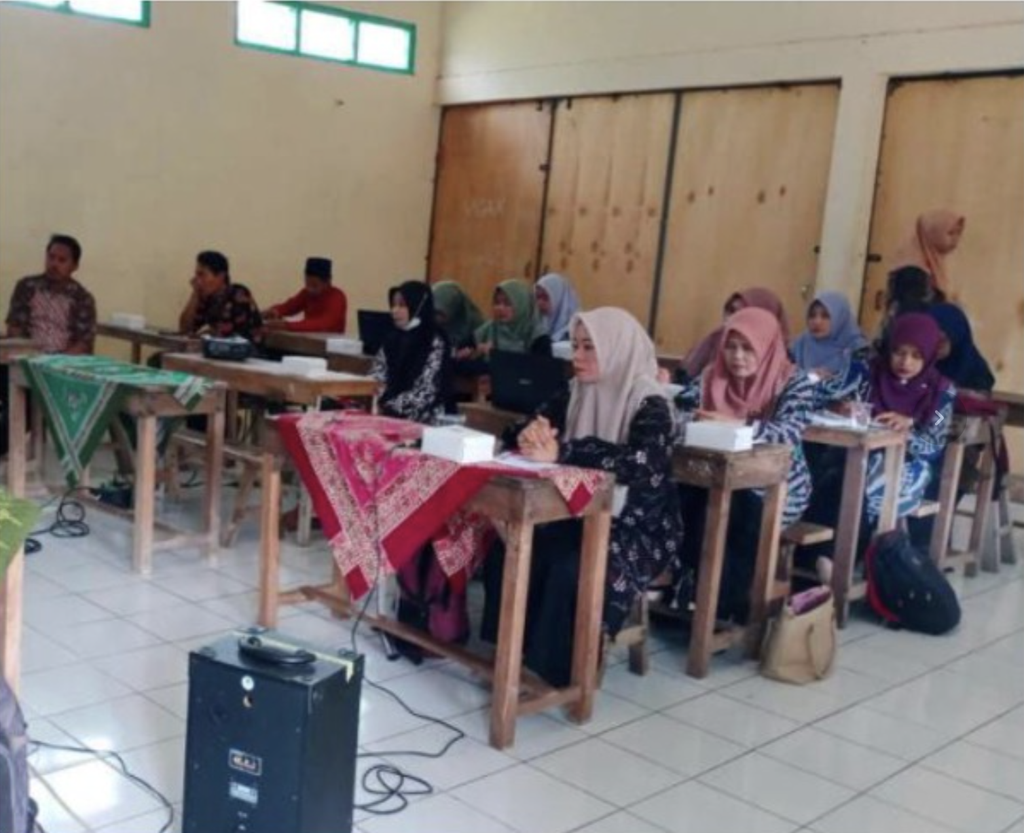
In 2025, lecturers from the Civil Engineering Department, Faculty of Engineering, UNISSULA carried out a community-service programme in Karangrejo Village, Pucakwangi District, Pati Regency focusing on the planning of clean-water supply infrastructure and a community water-storage reservoir.
The programme was documented in the Indonesian Journal of Community Services, Volume 7 No. 2, November 2025, under the title “Pendampingan Perencanaan Penyediaan Air Bersih dan Tandon Air Desa Karangrejo, Kecamatan Pucakwangi, Kabupaten Pati.”
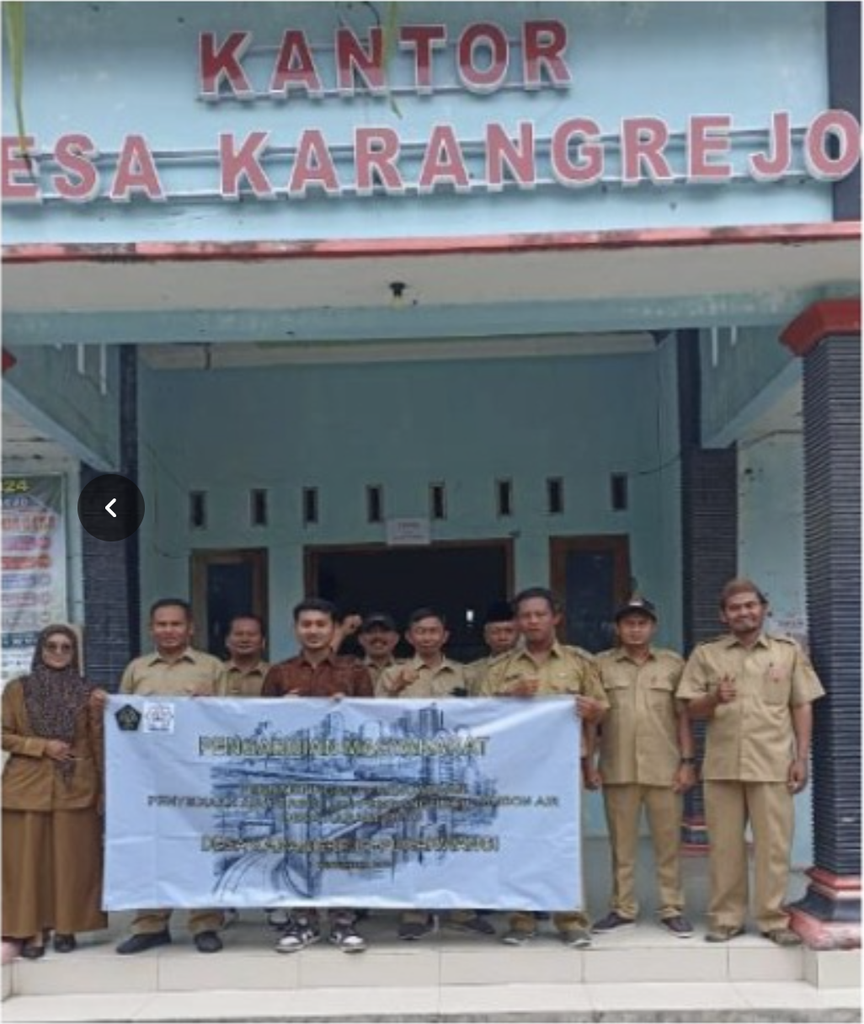
Responding to Local Clean-Water Challenges
Karangrejo Village faces significant challenges in accessing clean water.
The community continues to depend on groundwater because the existing PDAM distribution network does not adequately reach the area. At the same time, groundwater sources are located at considerable depth, in some cases reaching hundreds of metres below the surface.
The village consists of 15 neighbourhood units and has a population of approximately 2,840 residents, while the available clean-water supply remains insufficient to meet community needs.
These conditions created the need for a more efficient and better-planned community water-supply system.
Community Education and Technical Assistance
UNISSULA’s role went beyond preparing technical documents.
The community-service activity included guidance, assistance, coordination, and discussion with local partners during the planning of the clean-water reservoir.
The programme provided direction and mentoring in:
- identifying community clean-water needs;
- planning a clean-water storage system;
- designing the reservoir;
- calculating structural requirements;
- preparing construction plans; and
- estimating the required budget.
The documented methodology specifically states that guidance and assistance were provided throughout the planning process, including reservoir design, construction calculations, and cost estimation.
This approach enabled local partners to participate in understanding how clean-water infrastructure should be planned and managed.
Engagement with Local Government and Residents
The programme involved direct engagement with both the Karangrejo Village Government and local residents.
The implementation began with coordination and discussion about existing conditions and problems experienced by the community.
The documentation on page 3 includes photographs of:
- coordination and discussion with the Karangrejo Village Government; and
- discussion and observation of existing conditions together with Karangrejo residents.
This demonstrates that the programme was implemented with the local community rather than being limited to an internal academic exercise.
Planning a Community Water Reservoir
A major focus of the educational and technical assistance was the planning of a clean-water reservoir.
Based on field observation, community needs, and technical analysis, the project developed a plan for a 100 m³ water tank for Karangrejo Village.
The proposed structure was designed as a reinforced-concrete water-storage facility and included consideration of:
- structural design;
- foundation type;
- construction materials;
- implementation requirements; and
- estimated costs.
Through this process, local partners gained access to practical knowledge about how community water infrastructure is planned and prepared.
Improving Local Water-Management Capacity
The programme helped address an important local challenge: how to manage limited clean-water resources more effectively.
The community and village government were assisted in understanding the relationship between:
- water availability;
- storage capacity;
- infrastructure design;
- distribution needs; and
- financial planning.
This type of community engagement strengthens local capacity to make more informed decisions regarding future clean-water infrastructure.
A Practical Learning Process
The activity was structured as a collaborative learning process.
UNISSULA lecturers worked with community partners to:
- discuss the existing water-supply situation;
- observe conditions in the village;
- review the proposed water-storage plan;
- prepare the technical design;
- calculate construction requirements;
- prepare the cost estimate; and
- discuss the results with the local partner.
The article identifies the Karangrejo Village Government as the programme partner.
This process provided the community with educational opportunities related directly to practical water management.
Supporting More Efficient Water Distribution
The programme was designed not only to provide storage capacity but also to support more efficient future water distribution.
The authors explain that development of a water tank is expected to improve the availability of clean water for residents and allow water to be distributed more effectively through the planned network.
The final planning results proposed a reservoir with dimensions and capacity based on population, available water flow, and local water-source conditions.
UNISSULA Support for Community Service
The activity was supported by Universitas Islam Sultan Agung as part of its community-service programme.
The publication acknowledges that UNISSULA provided the opportunity and funding for the community-service activity under the 2024/2025 budget year.
This demonstrates institutional support for applying university expertise to community water-management challenges.
Linking Academic Knowledge with Community Needs
The programme illustrates how UNISSULA connects academic knowledge in civil engineering with practical community needs.
Rather than limiting knowledge to the university environment, lecturers worked directly with local partners to help them understand and plan infrastructure needed to improve access to clean water.
The activity therefore combines:
- education;
- community engagement;
- technical assistance;
- infrastructure planning; and
- sustainable water management.
6.5.3
Off-Campus Water Conservation Support
6.5.3 Off-Campus Water Conservation Support at UNISSULA
Supporting Practical Water Management Beyond the Campus
Universitas Islam Sultan Agung (UNISSULA) supports practical water-conservation and water-management initiatives beyond the university campus through community service, technical assistance, clean-water infrastructure planning, and flood-management activities.
During 2025, this support included community-based clean-water planning in Karangrejo Village, Pucakwangi District, Pati Regency, as well as practical flood and drainage management in the Kaligawe area of Semarang.
These activities demonstrate how UNISSULA applies academic expertise and institutional resources to water-related challenges experienced by communities outside the campus.
Clean-Water Infrastructure Support in Karangrejo Village
One of UNISSULA’s off-campus water-management initiatives focused on Karangrejo Village, Pucakwangi District, Pati Regency.
The community faces limited access to clean water because the public water-distribution network does not adequately reach the area, while available groundwater sources are located at considerable depth.
To help address this challenge, lecturers from the Civil Engineering Department of UNISSULA provided technical support and assistance for the planning of a clean-water supply system and community water reservoir.
The programme included:
- assessment of local clean-water needs;
- coordination with the village government and residents;
- planning of water-storage infrastructure;
- structural design;
- construction calculations; and
- preparation of a project budget.
The community-service programme specifically involved guidance and assistance during the planning of the reservoir and its supporting infrastructure.
A 100 m³ Community Water Reservoir
The technical planning produced a design for a 100 m³ clean-water reservoir for Karangrejo Village.
The proposed facility was designed as a reinforced-concrete structure, with technical specifications developed to support future community water storage and distribution.
This intervention was intended to improve the village’s capacity to store available clean water before distribution to residents.
By improving storage capacity, the planned reservoir can help communities use available water resources more effectively and reduce the impact of irregular or limited water supply.
Direct Engagement with the Local Community
UNISSULA’s support involved direct interaction with local stakeholders.
The programme documented coordination and discussion with the Karangrejo Village Government as well as observation and discussion with local residents regarding existing water conditions.
The village government was formally identified as the community-service partner.
This community-based approach allowed technical planning to be aligned with actual local water needs.
Improving Water Distribution Efficiency
The Karangrejo programme also addressed the need for more efficient water distribution.
The community-service study explains that the proposed reservoir is expected to support clean-water provision and allow water to be distributed more effectively through the local network.
The final design was developed based on factors including population, available water flow, and local source conditions.
Through this support, UNISSULA contributed practical engineering expertise to a real community water-management challenge.
Institutional Support for the Karangrejo Programme
The Karangrejo activity was supported institutionally by UNISSULA.
The published report acknowledges that Universitas Islam Sultan Agung provided both the opportunity and funding for the community-service activity under the 2024/2025 budget year.
This demonstrates that the support was not merely an individual academic initiative, but part of the university’s wider community-engagement activities.
Flood and Drainage Management in Kaligawe
UNISSULA also supports practical water management in the Kaligawe area of Semarang, where flooding and waterlogging are recurring environmental challenges.


Practical measures have included support for drainage and water-flow management intended to help reduce standing water and improve the movement of floodwater in the surrounding area.
Photographic documentation shows drainage-channel works near the Sultan Agung environment, illustrating practical efforts to improve water flow and reduce the risk of prolonged inundation.
In this context, the infrastructure is more appropriately described as flood-control drainage rather than irrigation, because its primary purpose is to manage excess water and reduce flooding.
Community Flood Response in 2025
UNISSULA also participated in practical efforts to address flooding in the Kaligawe area during 2025.
These activities included helping manage standing water in the Jalan Pantura/Kaligawe area through pumping and coordination with external stakeholders.
This type of intervention represents practical off-campus water-management support because it helps communities and road users affected by flooding while supporting more effective movement and removal of excess water.
Combining Clean-Water and Flood-Water Management
UNISSULA’s off-campus water support addresses two different but related challenges.
In Karangrejo Village, the focus is on:
- clean-water availability;
- water storage;
- efficient distribution; and
- long-term infrastructure planning.
In Kaligawe, the focus is on:
- flood-water management;
- drainage improvement;
- reduction of standing water; and
- practical response to inundation.
Together, these initiatives show that UNISSULA’s off-campus contribution to water management is not limited to one type of intervention.
Practical Application of University Expertise
The activities also demonstrate how academic expertise is translated into practical community benefit.
Civil-engineering knowledge is applied to:
- water-storage design;
- infrastructure planning;
- drainage management;
- hydraulic considerations;
- budgeting; and
- community-based technical assistance.
This allows UNISSULA to contribute directly to local water challenges beyond its campus boundaries.
Supporting Sustainable Water Management
Off-campus water initiatives contribute to sustainable water management in several ways:
- improve access to clean water;
- strengthen water-storage capacity;
- support more efficient water distribution;
- reduce the impact of flooding;
- improve local drainage; and
- strengthen community resilience to water-related challenges.
6.5.4
Sustainable Water Extraction on Campus
6.5.4 Sustainable Water Extraction and Source Management at UNISSULA
Managing Extracted Water Sustainably
Universitas Islam Sultan Agung (UNISSULA) manages water extraction and water-source use through an integrated system designed to reduce pressure on primary water sources, particularly groundwater and surface-water resources.
By 2025, the university had implemented supporting technologies for sustainable water management, including rainwater collection, water-storage infrastructure, groundwater-recharge systems, non-potable water reuse, and campus retention facilities.
These measures help reduce unnecessary extraction by increasing the amount of water that can be captured, stored, reused, and returned to the local water cycle.
Sustainable Use of Groundwater and Surface Water
UNISSULA uses water from sources including groundwater and the campus lake.
Because these sources are finite and environmentally sensitive, the university complements water extraction with conservation and recharge measures intended to maintain a more sustainable balance between water use and replenishment.
The university’s Sustainability Report documents a combination of rainwater harvesting, storage, groundwater recharge, and non-potable water reuse.
Rainwater Collection to Reduce Extraction Pressure
Rainwater harvesting is one of the university’s main supporting technologies for reducing dependence on extracted water.
Rainwater from selected rooftops is collected through gutters and directed through a first-flush system and screening before entering storage facilities.
The collected water can then be used for non-potable purposes such as:
- landscape irrigation;
- cleaning;
- pond replenishment; and
- selected toilet flushing.
By substituting harvested rainwater for groundwater or other extracted water, UNISSULA reduces the need for additional abstraction from primary water sources.
Water Storage Infrastructure
UNISSULA also uses dedicated water-storage infrastructure to improve the efficiency of water use.
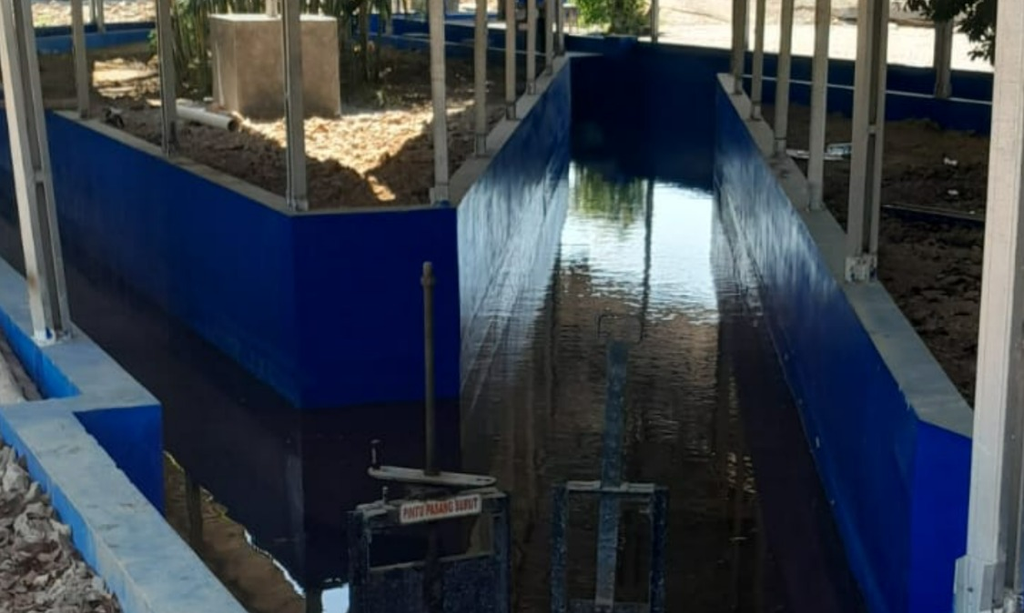
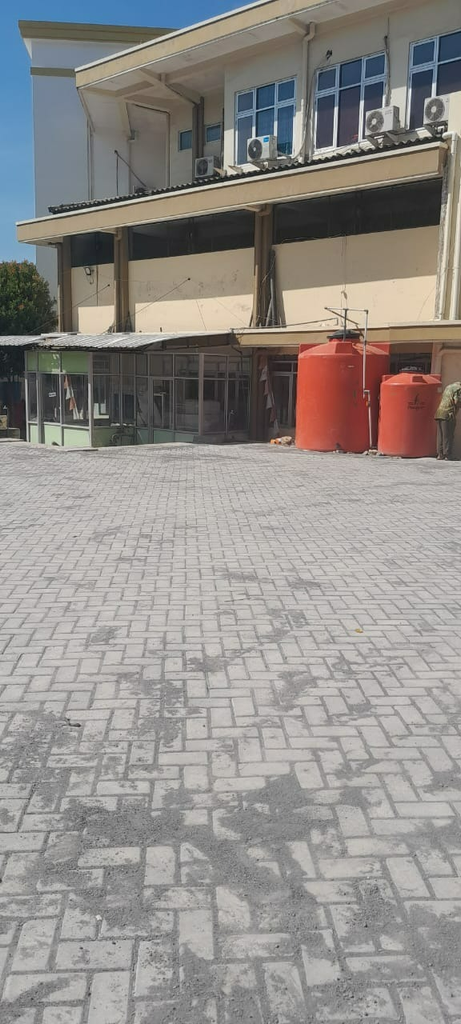
Photographic documentation shows large storage tanks, water-transfer piping, and in-ground storage facilities that support the collection and retention of water for later use.
These systems make it possible to store available water rather than relying solely on continuous extraction.
Stored water can then be reused according to operational needs, particularly for non-potable purposes.
In-Ground Water Tanks
In-ground water tanks are used to store harvested rainwater and other recoverable non-potable water.
The Sustainability Report notes that these tanks help reduce evaporation and support the reuse of stored water for landscape irrigation, cleaning, pond top-ups, and selected toilet flushing.
This approach helps lower demand on fresh and extracted water sources.
Groundwater Recharge Technologies
UNISSULA also applies technologies that support groundwater replenishment.
Overflow from rainwater-harvesting systems is directed toward:
- infiltration wells;
- bioswales; and
- biopores.
These systems allow water to infiltrate into the ground rather than being lost immediately as surface runoff.
The Sustainability Report specifically identifies these measures as supporting groundwater recharge.
This is particularly important in a campus environment where groundwater is one of the water sources used.
Campus Lake and Retention System
The campus lake also functions as part of UNISSULA’s sustainable water-management system.
It acts as a retention pond by capturing stormwater from roofs and surrounding grounds, reducing peak runoff and supporting local water retention.
The lake also supports groundwater recharge through pervious edges and infiltration facilities and can provide non-potable water for landscape irrigation and pond replenishment after appropriate treatment.
This allows the lake to serve both as a water source and as a water-conservation facility.
Reducing the Need for New Water Extraction
A key principle of UNISSULA’s approach is to reduce reliance on continuous extraction.
This is achieved by increasing the use of:
- harvested rainwater;
- stored non-potable water;
- treated wastewater; and
- other reused water sources.
Using these alternative sources for activities that do not require potable water helps preserve groundwater and other primary water resources.
Supporting Technologies for Sustainable Extraction
UNISSULA’s sustainable water-source management is supported by several technologies and infrastructure elements, including:
- rainwater-harvesting systems;
- storage tanks;
- in-ground water reservoirs;
- water-transfer piping;
- campus retention ponds;
- infiltration wells;
- bioswales;
- biopores; and
- non-potable water reuse systems.
Together, these technologies help reduce extraction pressure and support recharge and reuse.
Integrated Water Management
Rather than treating extraction as a standalone activity, UNISSULA integrates water sourcing with conservation, reuse, storage, and recharge.
The overall approach can be described as:
water capture → storage → reuse → controlled use → recharge
This helps ensure that extracted water is supplemented by alternative sources and that part of the available water is returned to the local groundwater system.
6.5.5
Cooperation Water on Campus Security
6.5.5 Cooperation on Water Security
UNISSULA Cooperation with Government and International Partners on Water Security
Universitas Islam Sultan Agung (UNISSULA) works with government institutions and international academic partners to address water-security challenges, particularly flooding, drainage, water conservation, climate adaptation, and sustainable urban water management.
During 2025, this cooperation involved local government, regional government, national government agencies, and international partners. The activities ranged from practical flood-response operations in Kaligawe to infrastructure development, retention systems, pumping, and international knowledge exchange on wastewater management and water conservation.
Cooperation with the Semarang City Government
At the local level, UNISSULA cooperated with the Semarang City Government in responding to flooding and standing water in the Kaligawe area.
On 3 February 2025, UNISSULA conducted a community-service activity on the Pantura road in front of Sultan Agung Islamic Hospital to help remove floodwater and restore traffic movement. The activity involved cooperation with the Semarang City Government, Sultan Agung Islamic Hospital, the Indonesian National Armed Forces, and the Indonesian National Police. UNISSULA also operated a large-capacity pump as part of the response.
This cooperation demonstrates practical engagement with local government on urban flood-water management.
Flood-Control Infrastructure in Kaligawe
The cooperation extended beyond emergency pumping.
In October 2025, the Mayor of Semarang inspected the construction of a 227-metre flood diversion channel within the UNISSULA/YBWSA environment and visited five retention ponds with a combined storage capacity of approximately 125,485 m³.
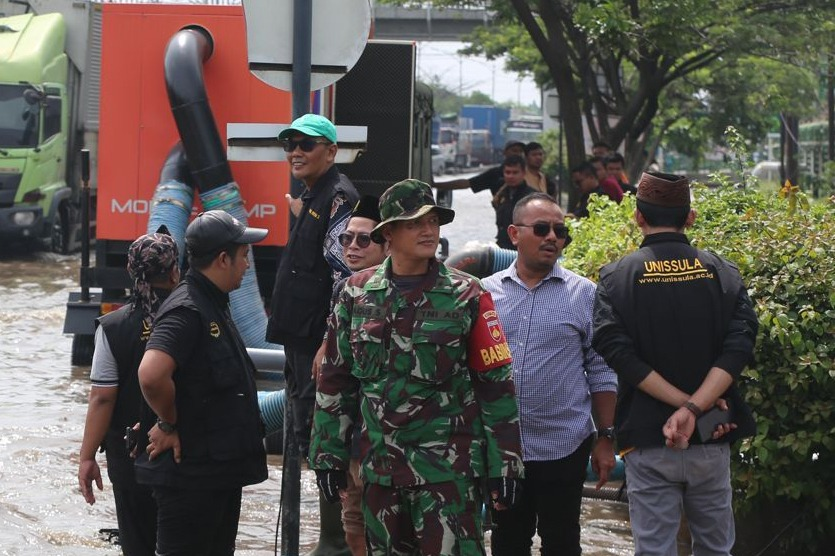
These facilities are designed to improve water retention and drainage in an area that regularly experiences flooding and tidal inundation.
The involvement of the city government alongside university-supported infrastructure demonstrates a practical partnership in improving local water security and reducing flood risk.
Cooperation with the Central Java Provincial Government
At the regional level, UNISSULA has formal cooperation with the Government of Central Java Province.
A joint agreement between UNISSULA and the Provincial Government of Central Java was signed on 17 March 2025 to support regional development through education, research, training, community service, human-resource development, and other agreed areas.
This wider institutional cooperation provides a framework for collaboration on regional challenges, including environmental resilience and disaster management.
The water-security dimension became particularly visible during the major Semarang flooding in late 2025.
Integrated Regional Flood Management
In November 2025, UNISSULA participated in high-level discussions concerning flood and tidal-flood management in the Semarang-Demak area.
A UNISSULA civil-engineering professor explained the contribution of UNISSULA and Yayasan Badan Wakaf Sultan Agung to flood mitigation in Kaligawe in the presence of the Vice President of Indonesia, Governor of Central Java, Mayor of Semarang, Head of BNPB, and other officials.
The university’s contributions included:
- flood diversion channels;
- temporary water-storage areas;
- pumping systems; and
- planned connection to the Terboyo retention-pond system.
This reflects UNISSULA’s participation in a broader regional response to flooding and coastal-water challenges.
Cooperation with the National Disaster Management Agency
At the national level, UNISSULA’s water-security activities are supported by cooperation with the National Disaster Management Agency (BNPB).
In October 2025, UNISSULA deployed two mobile pumps to help remove floodwater from Jalan Kaligawe. One of the pumping units used in the response was provided through BNPB support and had a pumping capacity of up to approximately 1,000 litres per second.
BNPB was also directly involved in the wider flood-response operation in Semarang.
On 2 November 2025, BNPB reported that emergency flood management in Semarang was being conducted in an integrated and structured manner under the coordination of BNPB and the Central Java Provincial Government, supported by relevant technical agencies.
The Kaligawe corridor and Terboyo retention area formed part of this wider emergency water-management effort.
Building Long-Term Flood Resilience
UNISSULA’s engagement with BNPB was not limited to emergency response.
Earlier discussions between BNPB leadership and UNISSULA had addressed the need for preventive measures, improved infrastructure, pumping capacity, and better coordination in dealing with recurring flooding in Kaligawe.
This provides continuity between disaster preparedness, emergency response, and longer-term flood-resilience planning.
International Cooperation with VIA University College Denmark
At the international level, UNISSULA also collaborates with VIA University College Denmark on water-related knowledge exchange and research.
In May 2025, lecturers from the Faculty of Engineering visited VIA University College Denmark as part of an ongoing international collaboration supported through Erasmus+.
The activities included learning and discussion on:
- household wastewater management separated from rainwater;
- green-wall systems and water utilisation;
- porous road technologies;
- tidal-flood management in coastal areas; and
- water-conservation methods designed to improve infiltration into the ground.
The UNISSULA team also visited Klimatorium in Lemvig, Denmark, a climate-adaptation research institution, as part of the programme.
Global Knowledge Exchange on Water Security
The Denmark collaboration strengthens UNISSULA’s international capacity in areas directly related to water security.
Knowledge gained through this collaboration is relevant to challenges faced in Semarang and the northern coast of Java, including:
- coastal flooding;
- tidal inundation;
- urban drainage;
- wastewater management;
- rainfall management;
- groundwater recharge; and
- climate-resilient infrastructure.
The cooperation is therefore an important part of UNISSULA’s broader global engagement on water-security and climate-adaptation issues.
Linking Local Action and International Knowledge
UNISSULA’s approach to water security combines practical intervention with research and knowledge exchange.
At the local and regional levels, the university contributes directly to flood-control and water-management infrastructure.
At the national level, it works alongside disaster-management institutions such as BNPB.
At the international level, it exchanges knowledge with universities and research institutions working on advanced water-management and climate-adaptation approaches.
This combination allows UNISSULA to connect international knowledge with local water challenges.
6.5.6
Promoting Conscious Water Usage on Campus
6.5.6 Promoting Conscious Water Usage on Campus
Promoting Responsible Water Use Across the UNISSULA Campus
Universitas Islam Sultan Agung (UNISSULA) actively promotes conscious and responsible water usage across its campus through institutional guidance, awareness campaigns, visual communication, and sustainable water-management practices.
During 2025, the university strengthened its efforts to encourage students, lecturers, staff, and other members of the campus community to use water efficiently, avoid unnecessary waste, and support more sustainable use of water resources.
These efforts combine formal institutional direction with public awareness activities.
Official Guidance on Responsible Water Use
UNISSULA issued Circular Letter No. 8386/J/SA/IX/2025, dated 4 September 2025, addressed to leaders of faculties, bureaus, institutes, technical units, administrative units, and other parts of the university.
The circular was issued in the context of conserving electricity and clean water and maintaining environmental cleanliness across the university.
One of its central instructions is to:
use clean water as needed, close water taps after use, and maximise the use of recycled water.
This guidance provides a clear behavioural message for responsible water use and reinforces water-saving practices throughout the university community.
The circular therefore serves not only as an administrative instruction, but also as an institutional mechanism for promoting conscious water consumption on campus.
Encouraging Daily Water-Saving Behaviour
The university promotes simple but important daily practices that can significantly reduce unnecessary water consumption.
These include:
- using only the amount of water needed;
- turning off taps immediately after use;
- avoiding unnecessary water loss;
- increasing the use of recycled water where appropriate; and
- maintaining clean and efficient water-use areas.
By promoting these behaviours, UNISSULA encourages individual responsibility alongside institutional water-management systems.
World Water Day 2025 Awareness Campaign
UNISSULA also strengthened water-awareness activities through its World Water Day 2025 campaign, commemorated on 22 March 2025.
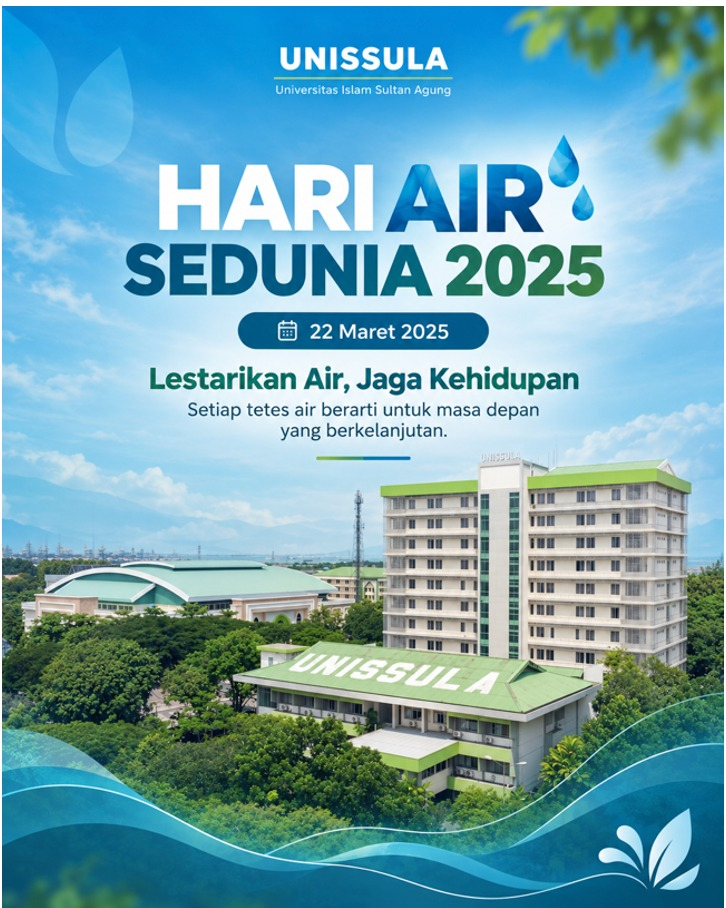
The official UNISSULA campaign poster carried the message:
“Lestarikan Air, Jaga Kehidupan”
“Every drop of water matters for a sustainable future.”
The campaign connects everyday water use with long-term environmental sustainability and encourages the university community to recognise water as a limited and valuable resource.
The use of a dedicated World Water Day campaign demonstrates that water conservation is communicated not only through internal policy, but also through public environmental-awareness messaging.
Building a Water-Conscious Campus Culture
The World Water Day campaign supports the development of a broader culture of water responsibility within UNISSULA.
By linking water conservation with sustainability and future generations, the campaign encourages members of the university community to understand that individual behaviour contributes to wider environmental outcomes.
This complements the university’s practical water-saving measures and institutional policies.
Visual Reminders and Environmental Communication
UNISSULA also uses visual communication to reinforce responsible water use in campus spaces.
Messages and reminders placed near water-use points can encourage users to:
- use water efficiently;
- avoid leaving taps running; and
- recognise the importance of water conservation.
These reminders help translate university policy into everyday behaviour.
Supporting Behaviour Through Water-Efficient Infrastructure
Awareness promotion at UNISSULA is supported by physical infrastructure designed to reduce unnecessary water use.
The university has implemented water-efficient appliances in many campus buildings, including:
- automatic sensor taps;
- dual-flush toilets;
- efficient urinal systems; and
- other water-saving devices.
These systems complement awareness campaigns by making water-conscious behaviour easier to practise in daily campus life.
Promoting Recycled Water Use
The university’s 2025 circular also encourages the maximisation of recycled water.
This is supported by UNISSULA’s broader water-recycling programme, where treated greywater and other non-potable water sources are reused for appropriate purposes.
Promoting recycled water use helps reduce dependence on fresh water and reinforces awareness that not all activities require potable-quality water.
Linking Awareness and Practice
UNISSULA’s approach combines communication with practical implementation.
The university promotes responsible water use through:
- formal institutional guidance;
- World Water Day awareness campaigns;
- visual reminders;
- efficient water-use infrastructure;
- water recycling; and
- conservation-oriented campus practices.
This combination helps ensure that water-conscious behaviour is supported both culturally and operationally.
6.5.7
Promoting Conscious Water Usage in the Widger Community
6.5.7 Promoting Conscious Water Usage in the Wider Community
Promoting Responsible Water Use Beyond the UNISSULA Campus
Universitas Islam Sultan Agung (UNISSULA) actively promotes responsible and conscious water use in the wider community through community-service programmes, public awareness campaigns, and practical assistance on clean-water management.
During 2025, these efforts included community engagement in Karangrejo Village, Pucakwangi District, Pati Regency, where UNISSULA provided guidance and technical assistance related to clean-water supply, groundwater dependence, water storage, and distribution planning.
UNISSULA also promoted broader public awareness through its World Water Day 2025 campaign, encouraging people to recognise the importance of conserving water for a sustainable future.
Community Water Awareness in Karangrejo Village
One of UNISSULA’s main 2025 community-based water initiatives took place in Karangrejo Village, Pucakwangi District, Pati Regency.
Residents in the village still depend heavily on groundwater because the available regional water-distribution network does not adequately reach the area. The community also faces difficulties accessing clean groundwater because water sources are located at significant depth.
This situation provided an important context for promoting more careful and responsible management of available water resources.
Guidance and Assistance for Better Water Management
UNISSULA’s community-service activity was not limited to infrastructure planning.
The programme included guidance, discussion, and assistance related to the planning of clean-water sources and water-storage facilities.
The community was supported in understanding how water could be:
- collected;
- stored;
- distributed more effectively;
- managed according to local demand; and
- planned in a way that reduces the risk of shortages.
The activity also included technical discussion on the design and budgeting of a community water reservoir.
Through this process, UNISSULA helped strengthen awareness that reliable water access depends not only on finding a source, but also on managing that source carefully and efficiently.
Encouraging Efficient Use of Limited Water Resources
Because Karangrejo Village has limited access to clean water, the programme highlighted the importance of using available water resources efficiently.
Community discussions addressed the need to improve water storage and distribution so that available water could be managed more effectively across the village.
The planned 100 m³ reservoir was developed as part of this broader approach to improving the reliability and efficiency of local clean-water management.
This type of intervention helps encourage communities to think about water availability, storage capacity, distribution, and responsible consumption as interconnected issues.
Direct Engagement with Local Residents
The programme involved direct engagement with local stakeholders, including the village government and residents.
This participatory approach is important because conscious water use is most effective when communities understand their own water conditions and are involved in planning how water resources are managed.
By combining technical knowledge with local discussion, UNISSULA helped promote a more informed approach to water use and water-resource planning.
Supporting Community Capacity
The Karangrejo initiative demonstrates how UNISSULA uses community service to build local capacity in water management.
The university provided:
- technical knowledge;
- planning assistance;
- discussion and consultation;
- clean-water infrastructure design; and
- support for long-term water-storage planning.
These activities help communities better understand the value of water resources and the importance of managing them carefully.
World Water Day 2025 Public Awareness Campaign
UNISSULA also promoted water awareness through its World Water Day 2025 campaign on 22 March 2025.
The campaign carried the message:
“Lestarikan Air, Jaga Kehidupan”
“Every drop of water matters for a sustainable future.”
This message encourages the wider public to recognise that water conservation is directly connected to environmental sustainability and future quality of life.
The campaign complements community-based activities by communicating a simple and accessible message about responsible water use.
Extending Water Awareness Beyond Campus
The World Water Day campaign allows UNISSULA’s water-conservation message to reach beyond university operations.
Public environmental communication can encourage broader awareness of:
- the importance of conserving clean water;
- avoiding unnecessary water waste;
- protecting water sources;
- increasing water-use efficiency; and
- supporting sustainable water management.
Through public-facing communication and community engagement, UNISSULA extends water-conscious messages beyond students and staff to wider society.
Linking Awareness with Practical Action
UNISSULA’s approach combines awareness promotion with practical intervention.
In Karangrejo Village, the university supported community understanding through guidance and planning assistance.
Through World Water Day, the university communicated a broader conservation message to the public.
Together, these approaches connect:
awareness → knowledge → planning → responsible water management
This helps ensure that water-conscious behaviour is supported by both education and practical community action.
Community Service as a Platform for Water Education
Community-service programmes provide an important platform for UNISSULA to share water-management knowledge beyond campus.
Through direct engagement with villages and local communities, university expertise can be translated into practical guidance on:
- water supply;
- groundwater use;
- storage;
- distribution;
- conservation; and
- long-term water planning.
This strengthens the role of the university as a source of practical knowledge for sustainable community development.