

















11.4.8 Sustainable Standards for New Buildings
University Commitment to Sustainable Building Standards
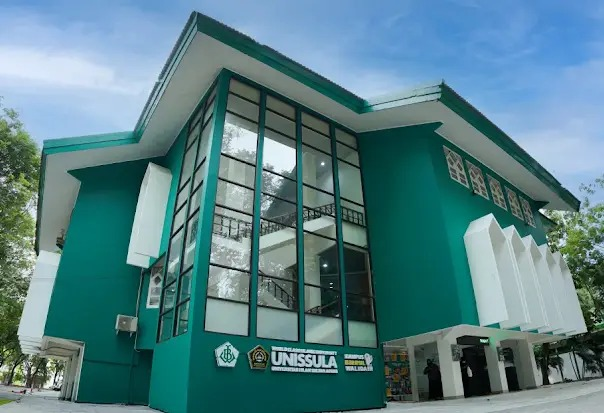
Universitas Islam Sultan Agung (UNISSULA) requires new buildings and building renovations to follow sustainable building and energy-efficiency standards as part of its commitment to environmentally responsible campus development.
The university applies formal institutional requirements to ensure that new construction and renovation projects incorporate energy conservation, efficient building systems, and relevant Indonesian green-building standards.
This approach supports the development of campus infrastructure that is more energy-efficient, resource-conscious, and aligned with sustainable development principles.
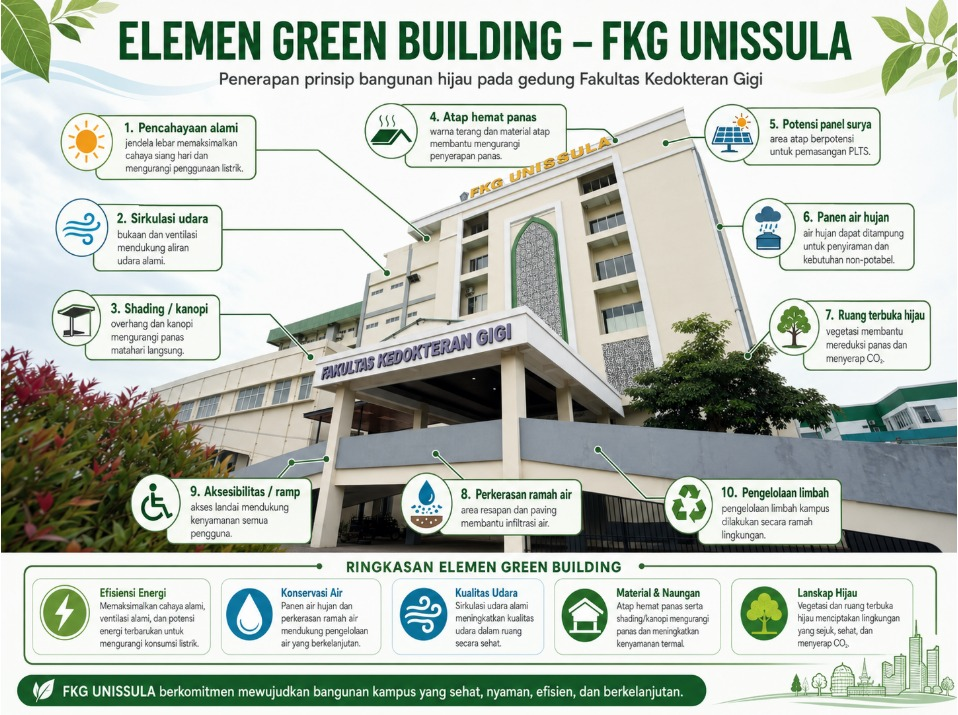


Formal Institutional Requirement
UNISSULA has established a formal policy requiring all new buildings and renovations to comply with energy-efficiency and sustainable-building standards.
Through Circular Letter No. 8391/J/SA/IX/2025, the university requires every new building project and building renovation to apply relevant energy-efficiency standards.
The circular provides an institution-wide framework for sustainable construction and renovation across the university.
National Standards Applied
UNISSULA’s sustainable building requirements refer to recognised Indonesian national standards.
The university requires planning and implementation to follow relevant standards including:
- SNI 6197:2020 for energy conservation in lighting systems;
- SNI 6390:2020 for energy conservation in air-conditioning systems;
- SNI 6389:2020 for building-envelope energy efficiency; and
- applicable Bangunan Gedung Hijau (Green Building) requirements.
These standards provide a technical basis for improving the environmental performance of new and renovated buildings.
Sustainable Building Design
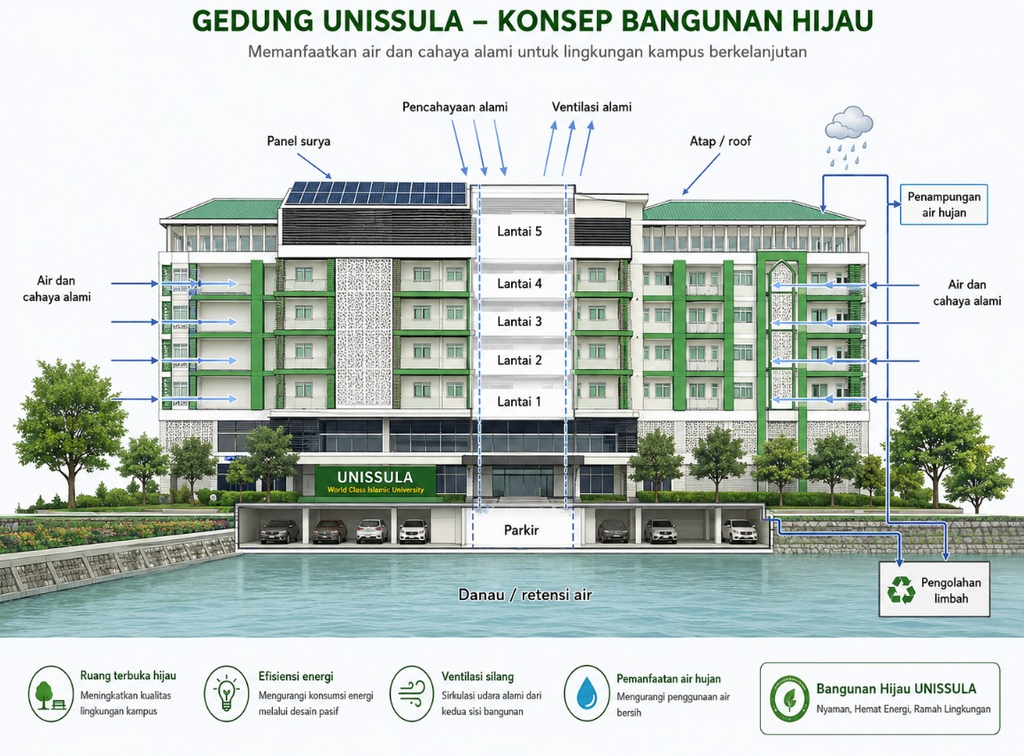
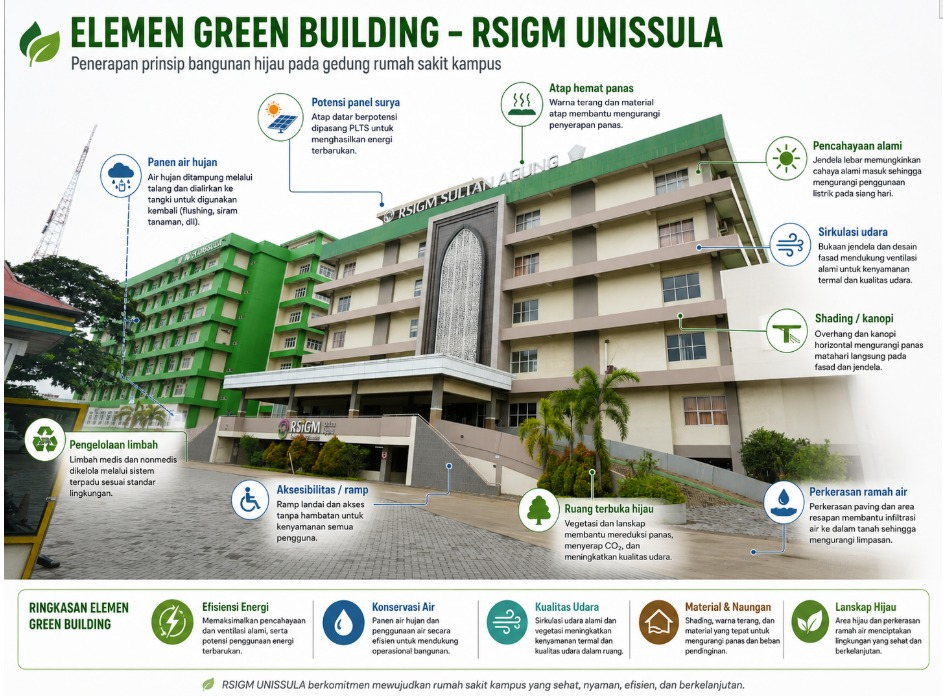
UNISSULA requires sustainable principles to be considered during both the design and implementation stages of building projects.
The university’s approach includes attention to:
- energy-efficient lighting;
- efficient cooling systems;
- building-envelope performance;
- natural lighting;
- natural ventilation;
- efficient electrical equipment; and
- environmentally responsible building operation.
This ensures that sustainability is integrated into building planning rather than added only after construction.
Energy-Efficient Lighting
Lighting is one of the key areas addressed by UNISSULA’s sustainable-building policy.
New buildings and renovations are required to follow SNI 6197:2020, which relates to energy conservation in lighting systems.
The university also promotes the use of energy-efficient technologies such as LED lighting.
This helps reduce:
- electricity consumption;
- operating costs;
- unnecessary energy use; and
- environmental impacts associated with building operation.
Efficient Air-Conditioning Systems
UNISSULA also requires building projects to consider energy efficiency in air-conditioning systems.
The policy refers to SNI 6390:2020 as a relevant standard for energy conservation in air-conditioning.
Efficient cooling systems help reduce electricity demand while maintaining appropriate indoor environmental conditions.
Building-Envelope Efficiency
Building-envelope performance is another important element of sustainable construction.
UNISSULA requires reference to SNI 6389:2020, which addresses energy efficiency in building envelopes.
Efficient building envelopes can reduce heat gain and help lower cooling demand.
This contributes to more efficient overall building performance.
Natural Lighting and Ventilation
UNISSULA’s policy encourages the use of natural lighting and natural ventilation wherever appropriate.
These design strategies can reduce dependence on artificial lighting and mechanical cooling.
Natural building design can contribute to:
- reduced electricity consumption;
- improved indoor environmental quality;
- lower operational costs; and
- more sustainable use of energy.
Energy-Efficient Technology
New construction and renovation projects are required to prioritise energy-efficient technologies.
Examples include:
- LED lighting;
- efficient air-conditioning;
- energy-efficient electrical equipment;
- natural lighting;
- natural ventilation; and
- other technologies that reduce unnecessary energy consumption.
This requirement demonstrates that sustainable building standards are translated into practical design and equipment choices.
Green Building Requirements
In addition to specific SNI standards, UNISSULA requires projects to consider applicable Bangunan Gedung Hijau requirements.
This connects university building development with Indonesia’s broader framework for environmentally responsible buildings.
UNISSULA therefore uses nationally recognised standards rather than relying solely on internal sustainability guidelines.
Pre-Construction Evaluation
An important element of UNISSULA’s sustainable-building policy is the requirement for evaluation before project implementation.
Planning documents for new buildings and renovations must be reviewed before construction begins to ensure compliance with energy-efficiency requirements.
This creates a preventive approach in which sustainability is considered during the planning stage.
Sustainable Construction Governance
The university’s approach can be represented as:
Planning → Standards review → Sustainable design → Construction/renovation → Energy-efficient operation
This helps ensure that environmental performance is considered throughout the building-development process.
New Buildings and Renovations
The policy applies not only to completely new buildings but also to building renovations.
This broadens the impact of the sustainable-building framework because existing facilities can also be improved when renovation occurs.
The university therefore addresses both:
- future campus expansion; and
- improvement of existing building performance.
Reducing Operational Energy Use
Buildings account for a significant share of campus energy consumption.
By requiring efficiency in lighting, cooling, building envelopes, and electrical equipment, UNISSULA aims to reduce operational energy use.
This can contribute to:
- lower electricity demand;
- lower carbon emissions;
- reduced operating costs;
- improved resource efficiency; and
- more sustainable campus infrastructure.
Supporting Long-Term Campus Sustainability
Sustainable building standards support long-term environmental performance.
Buildings constructed or renovated according to energy-efficiency standards can provide benefits throughout their operational life.
This helps ensure that campus development does not increase environmental impacts unnecessarily.
Institutional Standardisation
The use of national standards provides consistency across university development projects.
Rather than assessing each building independently without a common framework, UNISSULA establishes recognised technical requirements for construction and renovation.
This standardisation improves accountability and strengthens institutional sustainability governance.
Relationship with Green Campus Development
Sustainable buildings form part of UNISSULA’s wider Green Campus strategy.
Building performance is closely connected with:
- energy use;
- emissions;
- water;
- transport;
- open space;
- indoor environmental quality; and
- long-term campus resilience.
Applying sustainable standards to new development therefore supports multiple environmental objectives simultaneously.
Contribution to SDG 11
UNISSULA’s sustainable building requirements contribute to SDG 11: Sustainable Cities and Communities by promoting more environmentally responsible infrastructure and campus development.
THE Sustainability Impact Ratings 2027 assesses whether universities build new buildings to sustainable standards.
The methodology recognises the use of formal standards and provides up to three points based on:
- existence of standards;
- evidence provided; and
- public availability of the evidence.
THE gives examples such as recognised green-building certification systems, but UNISSULA’s approach is based on applicable Indonesian national standards and green-building requirements.
Evidence of Implementation
UNISSULA’s sustainable building framework is demonstrated through:
- Circular Letter No. 8391/J/SA/IX/2025 on energy-efficiency standards for new buildings and renovations.
- Mandatory application of energy-efficiency standards to new buildings.
- Mandatory application of standards to renovations.
- Use of SNI 6197:2020 for lighting energy conservation.
- Use of SNI 6390:2020 for air-conditioning energy conservation.
- Use of SNI 6389:2020 for building-envelope energy efficiency.
- Reference to applicable Bangunan Gedung Hijau requirements.
- Priority use of LED lighting.
- Promotion of natural lighting.
- Promotion of natural ventilation.
- Use of efficient air-conditioning systems.
- Use of energy-efficient electrical equipment.
- Pre-construction evaluation of planning documents.
- Institution-wide application of sustainable building requirements.