

















13.3.5 Collaboration with NGOs on Climate Adaptation
Universitas Islam Sultan Agung (UNISSULA) collaborates with non-governmental organisations and independent foundations on climate adaptation, water resilience, and community-based environmental solutions. A key example is the university’s collaboration with Wetskills Foundation, The Netherlands, an independent foundation that develops international water challenges bringing together universities, professionals, governments, and communities.
Wetskills Foundation identifies itself as an independent foundation based in the Netherlands and works on water and sustainability challenges through collaborative, multidisciplinary programmes.
UNISSULA’s cooperation with Wetskills provides a structured platform for addressing practical climate-adaptation challenges, particularly those affecting coastal and urban communities in Semarang.

Formal Collaboration with Wetskills Foundation
UNISSULA and Wetskills Foundation established a formal Memorandum of Understanding providing a framework for educational and research cooperation.
The agreement includes the possibility of jointly conducting the Wetskills Challenge in Semarang, facilitating mobility of students, academic staff, and professionals for research, lectures, and discussions, and seeking support for mutually beneficial projects.
This formal cooperation provides the institutional basis for joint activities in water management, sustainability, climate resilience, education, research, and innovation.
Wetskills-Indonesia 2025 at UNISSULA
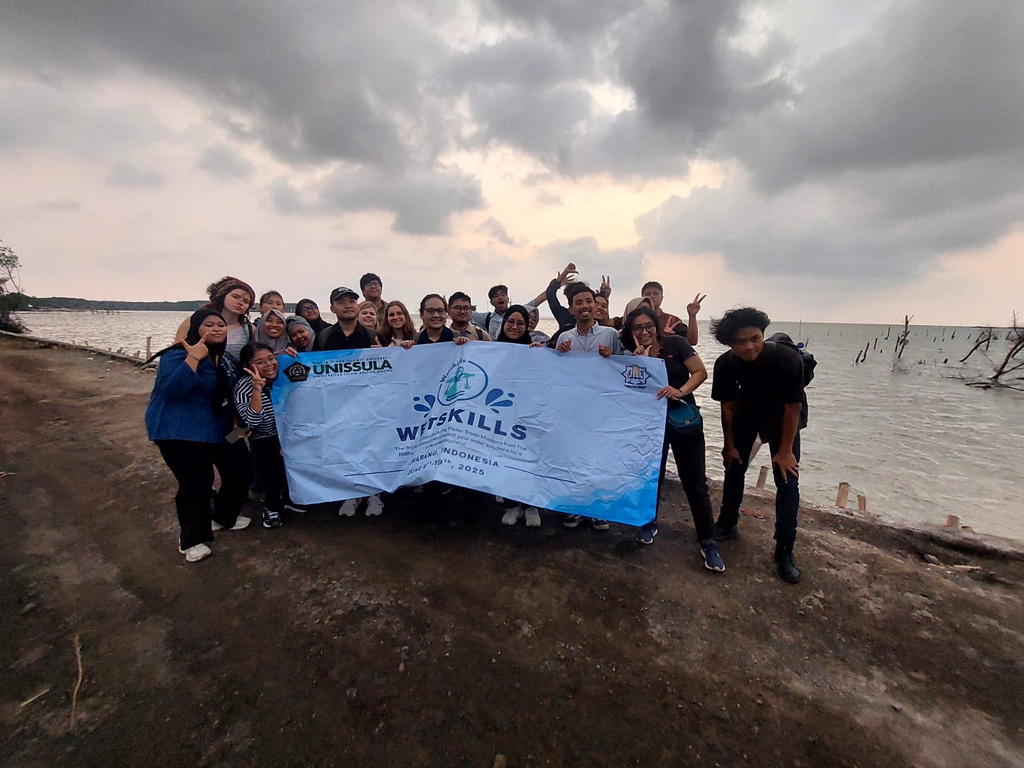
The collaboration was implemented through Wetskills-Indonesia 2025, held in Semarang from 8–19 June 2025, with UNISSULA serving as a venue and partner.
The programme brought together 24 young talents from different countries to work on real-life water challenges affecting Semarang and surrounding areas. According to Wetskills, the city faces land subsidence, frequent flooding, wastewater-management problems, and other pressures that are becoming more severe because of rapid urbanisation and climate change.
Participants worked in multidisciplinary teams supported by experts, local partners, field visits, and case owners to develop practical and innovative responses.
Climate Adaptation through Water Resilience
Water management is a critical part of climate adaptation in coastal cities.
The Wetskills programme addressed several practical challenges directly connected with climate resilience, including:
- Coastal flooding;
- Groundwater depletion;
- Wastewater reuse;
- Flood-basin planning;
- Community engagement in water management;
- Natural coastal protection;
- Water security; and
- Local resilience to climate change.
The programme was therefore not limited to general environmental awareness. It asked participants to develop concrete solutions for real climate- and water-related challenges faced by communities and public institutions.
Community Engagement for Climate Resilience
One of the Wetskills-Indonesia 2025 cases specifically focused on engaging communities in water solutions.
The case recognised that Indonesian communities experience frequent local and coastal flooding and that technical measures by government are more effective when residents understand, support, and participate in resilience-building efforts.
The challenge explored how local governments can move beyond awareness-raising and achieve genuine community participation in water and climate resilience.
The stated objective was to strengthen communities so that they become more resilient to their living environment and climate change.
This community dimension is particularly important because effective climate adaptation requires not only infrastructure but also public understanding, participation, and behavioural change.
Field-Based Climate Adaptation Learning
UNISSULA and Wetskills combined academic activities with field-based learning.
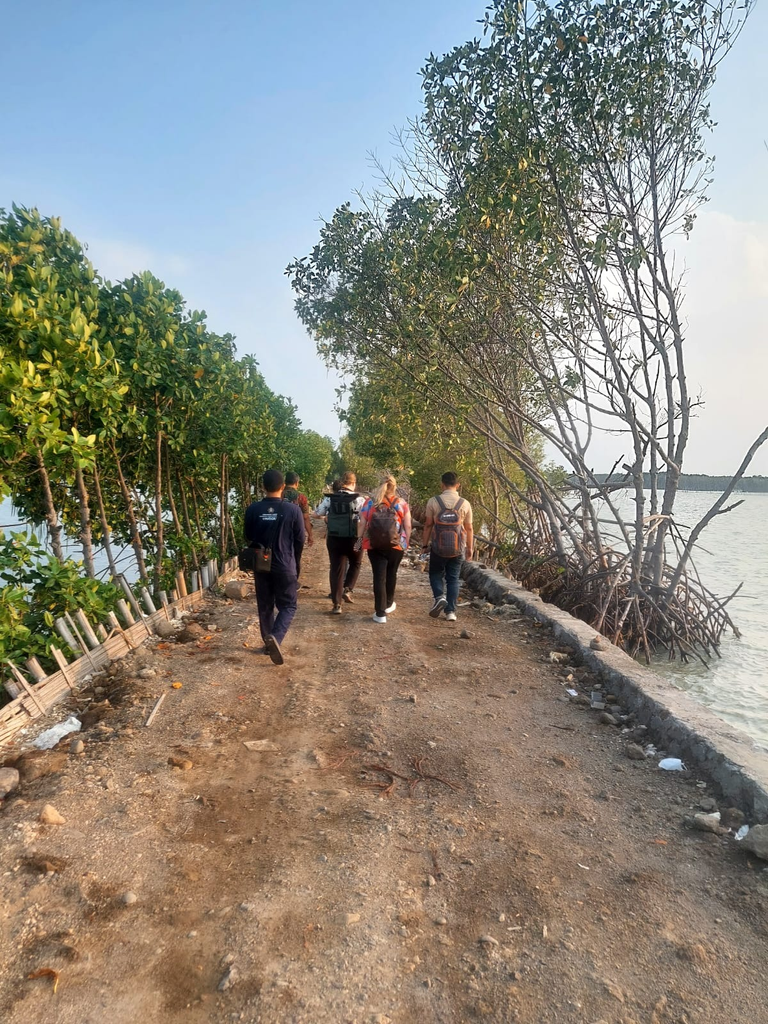
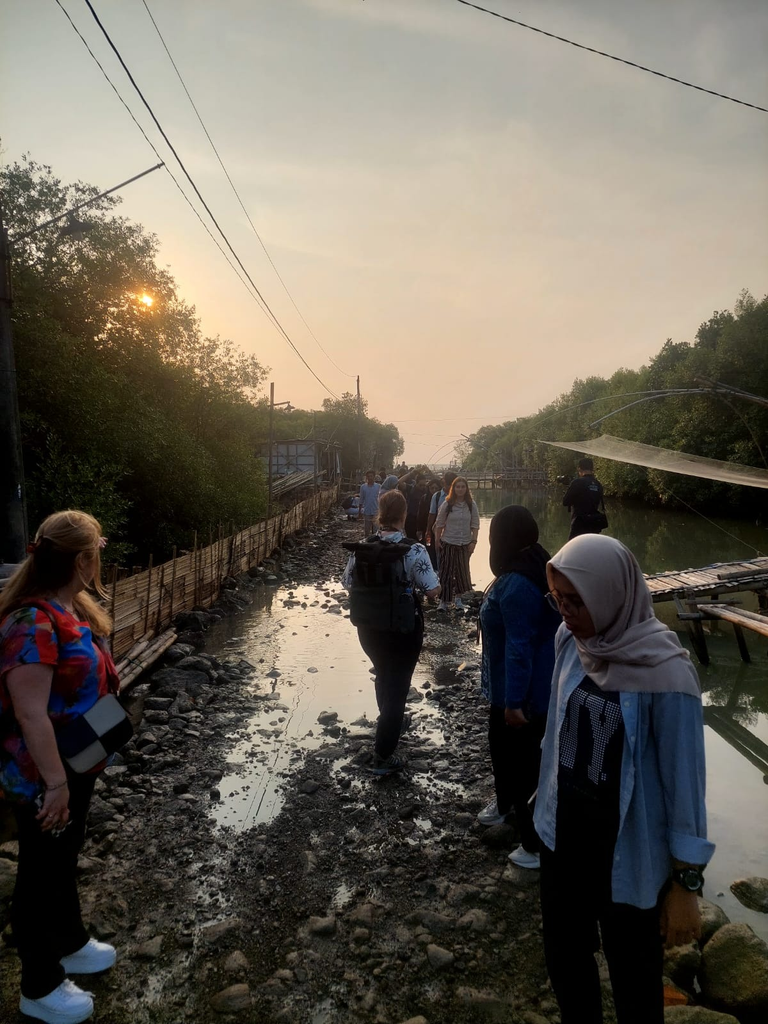
The photographs documenting the 2025 programme show participants conducting visits to coastal and water-related environments in Semarang. These activities enabled participants to directly observe environmental conditions, coastal ecosystems, water infrastructure, settlement conditions, and climate-related vulnerabilities.
Field observation allowed teams to connect technical analysis with the realities faced by local communities.
The documentation also shows international and Indonesian participants working together under the Wetskills-Indonesia 2025 programme, strengthening knowledge exchange between different academic and professional backgrounds.
Coastal Adaptation and Nature-Based Approaches
One of the cases in Wetskills-Indonesia 2025 addressed the development of natural foreshores for Semarang.
Nature-based coastal approaches can strengthen coastal resilience while supporting environmental functions and reducing vulnerability to flooding and erosion.
The field activities documented during the programme included visits to mangrove and coastal environments, providing participants with opportunities to understand the relationship between coastal ecosystems, water systems, infrastructure, and climate adaptation.
These activities reinforced the programme’s practical focus on building resilience in vulnerable coastal environments.
Responding to Flooding and Sea-Level-Related Risks
Semarang faces significant water-related challenges.
Wetskills describes problems including frequent flooding, land subsidence, sea-level rise, and inadequate wastewater management, noting that these challenges are becoming more severe because of climate change and urban development.
Through collaboration with Wetskills Foundation, UNISSULA contributes to the development of innovative ideas that can support adaptation to these pressures.
Students and young professionals are encouraged to analyse technical, social, environmental, and governance dimensions rather than approaching climate adaptation from a single disciplinary perspective.
Multi-Stakeholder Collaboration
The Wetskills model connects academia with government, the water sector, professionals, communities, and other organisations.
The 2025 programme included case owners and partners from local and international water-sector organisations and involved challenges relevant to local government and community needs.
This model supports climate adaptation because water-related climate risks generally require coordinated responses involving multiple stakeholders.
UNISSULA’s participation therefore contributes to a broader ecosystem of climate-resilience planning and innovation.
Sustainable Water Management and Innovation
The UNISSULA–Wetskills partnership was further strengthened in 2025 through a formal continuation of cooperation focused on sustainable water management and innovation.
Wetskills reported that a Memorandum of Agreement was signed during the Dutch Trade Mission to Indonesia, continuing the collaboration between the two organisations.
The agreement includes future Wetskills activities in Indonesia, follow-up research through the WetsNext framework, and knowledge exchange among students and professionals.UNISSULA also publicly reported that the agreement strengthens youth engagement and water cooperation and supports sustainable water management, innovation, research, and knowledge exchange.
Education and Capacity Building
An important feature of the partnership is the involvement of students and young professionals.
Participants are not only introduced to climate and water problems but are required to:
- Analyse real-world cases;
- Interact with local stakeholders;
- Participate in field visits;
- Work in international teams;
- Develop innovative solutions;
- Evaluate technical and social feasibility; and
- Present recommendations to experts and stakeholders.
This approach develops practical capacity for climate adaptation and prepares future professionals to address increasingly complex environmental challenges.
From Climate Challenges to Practical Solutions
Wetskills-Indonesia 2025 emphasised solution development rather than discussion alone.
Teams worked on real cases related to climate resilience and water management and presented their proposed solutions to expert juries and relevant stakeholders.
The programme culminated in the Wetskills Finals and Awarding Ceremony associated with the Netherlands–Indonesia Water Mission in Semarang.
This process connects education, NGO collaboration, technical innovation, and practical climate adaptation.
Continued Research and Knowledge Exchange
The collaboration is designed to continue beyond individual events.
The 2025 cooperation includes opportunities for:
- Follow-up research;
- Future Wetskills Challenges;
- Knowledge exchange;
- Student and professional engagement;
- Joint water-sector initiatives; and
- Development of further practical solutions.
This continuity is important because climate adaptation requires sustained collaboration and iterative improvement rather than one-time activities.
Evidence of Implementation
- Formal Memorandum of Understanding between UNISSULA and Wetskills Foundation, The Netherlands, establishing cooperation in education, research, Wetskills Challenges, mobility, and mutually beneficial projects.
- Wetskills Foundation is an independent foundation based in the Netherlands, providing the NGO/non-governmental partner basis for the collaboration.
- Wetskills-Indonesia 2025 in Semarang, held from 8–19 June 2025 with UNISSULA involvement and participation by international young professionals and students.
- Climate-adaptation challenges addressed during the programme, including flooding, groundwater depletion, wastewater reuse, flood-basin planning, community engagement, water resilience, and coastal challenges.
- Field documentation from the 2025 programme, showing participants visiting coastal, mangrove, and water-related environments and conducting practical observation related to local resilience challenges.
- Community-focused climate resilience case, addressing how local governments and communities can work together to respond to flooding and become more resilient to climate change.
- Formal continuation of UNISSULA–Wetskills cooperation in 2025, including future Wetskills activities, WetsNext research, sustainable water management, innovation, and knowledge exchange.