

















13.3.2 Climate Action Plan Shared with Local Government and Community Partners
Universitas Islam Sultan Agung (UNISSULA) integrates climate action into its institutional strategic planning, environmental management, research, community engagement, and disaster-risk reduction activities. The university’s climate action framework is aligned with the UNISSULA Strategic Plan 2025–2029 and is supported by formal collaboration with local and regional government institutions, including the Government of Central Java through the Regional Disaster Management Agency (BPBD).
The framework provides a strategic basis for measuring environmental performance, planning climate-related actions, reducing greenhouse-gas emissions and related environmental impacts, improving resilience, and strengthening collaboration with communities and government partners.
Institutional Climate Action Framework
The UNISSULA Strategic Plan 2025–2029 establishes the university’s institutional direction for sustainability and environmental performance.
The Strategic Plan states that environmental action should be translated into measurable indicators covering:
- Energy;
- Emissions;
- Water;
- Waste;
- Transport;
- Open space;
- Sustainability education; and
- Sustainability research.
This establishes a broad institutional framework for climate and environmental action rather than treating sustainability as a stand-alone activity.
The Strategic Plan also requires university targets to be measurable, traceable, periodically evaluated, and supported by clear ownership of indicators, data, implementation, and evidence.
Climate Action Priorities
UNISSULA’s climate-action framework includes both mitigation and adaptation measures.
Key areas include:
Energy efficiency and low-carbon energy
UNISSULA monitors institutional energy use, reviews areas of high electricity consumption, promotes energy-efficiency measures, and tracks low-carbon energy sources such as Solar PV and biodiesel.
Greenhouse-gas and emissions management
The university’s environmental planning identifies emissions as a measurable environmental indicator and connects energy management with wider climate-performance monitoring.
Water and flood resilience
Climate adaptation activities include attention to flooding, tidal flooding, water management, drainage, coastal resilience, and infrastructure preparedness.
Waste reduction and recycling
UNISSULA implements institutional waste measurement, recycling monitoring, plastic reduction, disposable-item reduction, and hazardous-waste management.
Sustainable transport and mobility
Environmental planning includes transport as one of the operational areas to be measured and improved.
Education and research
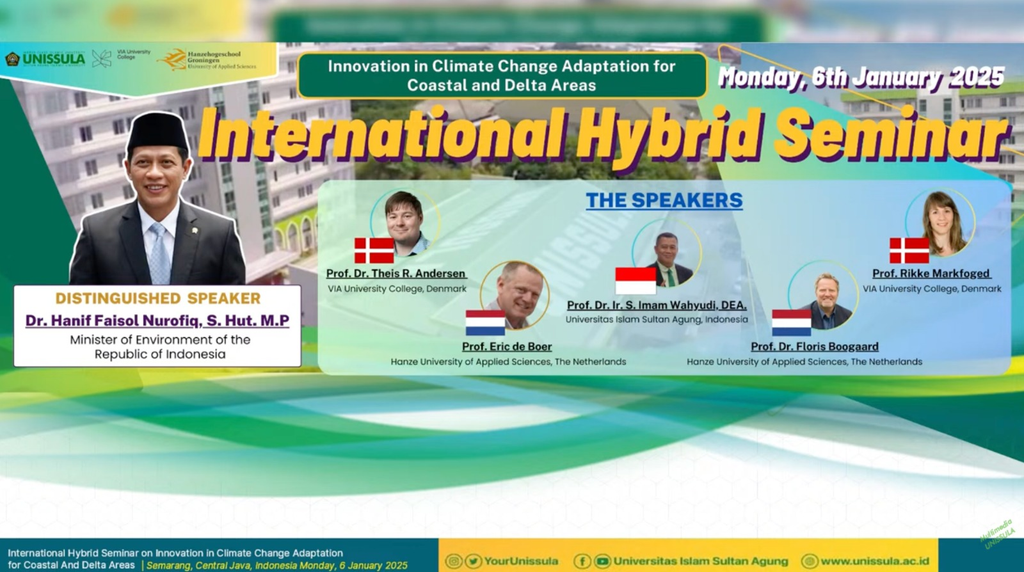
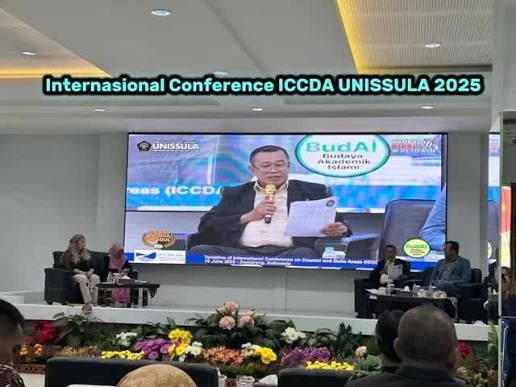
Climate action is supported through teaching, seminars, applied research, community-service programmes, and international collaboration addressing climate risks, adaptation, resilience, and sustainable development.
Measuring and Monitoring Climate Action
The climate-action framework is implemented through the university’s broader performance-management system.
UNISSULA’s Strategic Plan establishes a monitoring architecture involving strategic objectives, measurable indicators, implementation activities, data owners, risk owners, and review cycles.
The governance system includes:
- Operational monitoring;
- Periodic performance review;
- Evidence-based evaluation;
- Risk management;
- Corrective action; and
- Continuous improvement.
The university conducts operational reviews, quarterly performance reviews, annual evaluations, a mid-term evaluation, and a final strategic-plan evaluation.
This governance structure provides a mechanism for ensuring that environmental and climate objectives are monitored and adjusted over time.
Collaboration with Government and Community Stakeholders
UNISSULA applies an external collaboration model based on the pentahelix approach, involving government, industry, society, media, and global academia.
Within this framework, government provides policy direction and institutional support, while communities participate as co-creation partners and beneficiaries of university programmes.
This model allows climate-related programmes to be connected with local and regional needs, particularly in areas such as flood resilience, disaster-risk reduction, coastal adaptation, environmental education, and community preparedness.
Formal Cooperation with the Government of Central Java
A major example of the sharing and implementation of UNISSULA’s climate- and resilience-related action is the formal cooperation between UNISSULA and the Government of Central Java through BPBD Provinsi Jawa Tengah.
This cooperation was formalised through Cooperation Agreement No. 005/C.2/MoA-DN/SA/IX/2025, dated 29 September 2025, establishes collaboration between the Government of Central Java and UNISSULA for higher-education activities supporting disaster management in Central Java.
The agreement supports the integration of education, research, and community service with regional disaster-management priorities.
Its stated purpose is to strengthen the potential and resources of both institutions in supporting disaster-management implementation in Central Java through university tridharma activities.
Scope of Government Collaboration
The cooperation with BPBD Central Java includes several areas relevant to climate resilience and climate-impact reduction.
The scope includes:
- Support for provincial disaster-management and environmental programmes;
- Activities in the field of disaster management;
- Research and development;
- Community service;
- Student internships and work-based learning;
- Teaching assistance in educational institutions;
- Humanitarian projects; and
- Other activities jointly agreed by the parties.
These areas are explicitly set out in the cooperation agreement.
The collaboration therefore provides a formal mechanism through which UNISSULA’s institutional climate, resilience, and disaster-related activities are connected with regional government priorities.
Supporting Climate Adaptation and Disaster Resilience
Climate change in Central Java is closely associated with risks such as extreme rainfall, flooding, tidal flooding, coastal vulnerability, sea-level rise, and disruption to infrastructure and communities.
UNISSULA’s climate-action approach therefore combines greenhouse-gas reduction and environmental management with adaptation and resilience.
The cooperation with BPBD provides an institutional pathway for joint activities related to disaster management, community education, applied research, preparedness, humanitarian response, and resilience-building.
This is particularly relevant to communities in Semarang and other areas of Central Java that experience flooding and coastal hazards.
Shared Implementation with Government
The climate-action framework is not limited to internal university operations.
Through cooperation with regional government institutions, UNISSULA connects its planning, research, education, and community-service activities with external stakeholders responsible for environmental management and disaster-risk reduction.
The BPBD agreement demonstrates that climate- and disaster-related activities are implemented through formal collaboration with the Government of Central Java rather than being managed solely within the university.
The cooperation also includes access to data, information, facilities, teaching support, community programmes, and joint evaluation.
Community Engagement
Community involvement forms an important part of UNISSULA’s climate-action approach.
The Strategic Plan positions society as both a partner in co-creation and a beneficiary of university activities.
Climate-related community engagement includes education, applied research, public outreach, disaster preparedness, flood mitigation, infrastructure resilience, and other community-service activities.
Through these activities, climate action is translated from institutional planning into practical collaboration with communities and public-sector partners.
Integration with Research and Community Service
UNISSULA’s Strategic Plan emphasises research and community service that produce measurable social impact.
Research and community-service programmes are expected to move beyond activity counts and demonstrate adoption, outcomes, sustainability, and benefits for partners and communities.
This approach supports the application of climate-related research in areas such as flood management, water systems, infrastructure, energy, resilience, and community adaptation.
Governance and Responsibility
The implementation of institutional plans follows the university’s formal governance structure.
The Rectorate provides strategic integration and resource allocation, faculties and study programmes implement academic and operational activities, and supporting units are responsible for standards, data, assurance, research, community service, and institutional monitoring.
This structure ensures that climate-related activities can be integrated across teaching, research, operations, community service, and external partnerships.
Continuous Review and Improvement
UNISSULA’s climate-action framework is designed as an ongoing process.
Environmental performance is reviewed within the wider strategic-management cycle, enabling the university to evaluate progress, identify risks, correct implementation gaps, and strengthen future programmes.
The Strategic Plan explicitly uses evidence-based monitoring and a continuous cycle of target setting, implementation, monitoring, evaluation, risk control, and improvement.
This creates a foundation for progressively strengthening energy efficiency, emissions management, climate adaptation, disaster resilience, and community collaboration.
Evidence of Implementation
- UNISSULA Strategic Plan 2025–2029, which identifies environmental action areas including energy, emissions, water, waste, transport, open space, sustainability education, and sustainability research.
- Institutional monitoring and evaluation framework, including measurable indicators, data ownership, periodic review, risk management, and evidence-based evaluation.
- Pentahelix stakeholder collaboration model, involving government, society, industry, media, and academia.
- Cooperation Agreement between the Government of Central Java and UNISSULA dated 29 September 2025, supporting disaster-management activities through education, research, and community service.
- Government collaboration covering disaster management, environmental programmes, research, community service, teaching assistance, humanitarian projects, and joint programme implementation.
- Formal university governance and monitoring structures, supporting continuous planning, implementation, evaluation, corrective action, and institutional improvement.