

















11.4.1 Sustainable Commuting Measurement and Targets
University-Wide Sustainable Commuting Strategy
Universitas Islam Sultan Agung (UNISSULA) measures and promotes more sustainable commuting as part of its university-wide commitment to creating a low-emission, accessible, safe, and sustainable campus environment.
The university’s sustainable mobility approach is embedded in the UNISSULA Strategic Plan (RENSTRA) 2025–2029, which integrates the Sustainable Development Goals into institutional performance indicators, annual targets, programmes, monitoring, and evaluation.
For SDG 11, the Strategic Plan specifically addresses public transportation access, low-emission mobility, pedestrian pathways, green open spaces, safety, universal accessibility, and pollution reduction. Performance is measured through indicators that include the use of sustainable transportation, supported by mobility data and other institutional evidence.
Strategic Planning and Annual Targets
UNISSULA’s Strategic Plan establishes a performance-management framework in which institutional objectives are translated into measurable indicators, programmes, activities, and annual targets for the 2025–2029 period.
The university uses this framework to monitor progress and evaluate sustainability-related performance.
The Strategic Plan states that quantitative targets for 2025–2029 are incorporated into institutional performance matrices and subsequently translated into annual work plans and budgets.
Sustainable mobility therefore forms part of a broader institutional system of:
Planning → Measurement → Annual targets → Implementation → Monitoring → Improvement
Sustainable Transportation as an SDG 11 Priority
Within the SDG 11 framework, UNISSULA identifies campus transportation and mobility as important components of sustainable campus management.
The university’s strategy includes:
- access to public transportation;
- low-emission mobility;
- pedestrian infrastructure;
- universal accessibility;
- reduction of environmental pollution;
- safe campus movement; and
- monitoring of sustainable transportation use.
The Strategic Plan also identifies mobility data as evidence for evaluating implementation.
Measuring Sustainable Commuting
UNISSULA measures sustainable commuting through institutional mobility information and the use of sustainable transport modes across the campus.
Measurement can include the use and operation of:
- electric shuttle services;
- university buses;
- electric vehicles;
- electric bicycles;
- pedestrian pathways;
- park-and-ride connections;
- charging infrastructure; and
- other low-emission mobility facilities.
The university uses mobility-related information to support the evaluation of sustainable transportation and campus accessibility.
Electric Shuttle Service
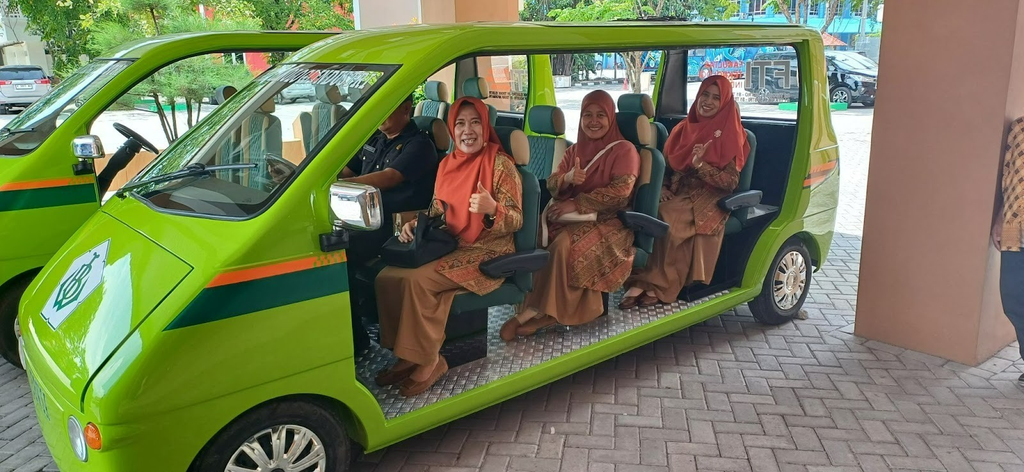
UNISSULA operates an on-campus electric shuttle service to connect key university locations.
The service connects areas including:
- campus gates;
- park-and-ride areas;
- faculties;
- the library;
- the teaching hospital;
- dormitories;
- the mosque; and
- student service centres.
The electric shuttle is intended to reduce dependence on private vehicles in core campus corridors, lower emissions and noise, and improve safety for pedestrians and cyclists.
Transportation Support
UNISSULA provides several forms of institutional transportation support to reduce mobility barriers for students and other members of the university community.
The university provides:
- electric campus vehicles;
- electric bicycles;
- electric shuttle vehicles;
- university buses; and
- electric-vehicle charging infrastructure.
These facilities support movement between faculties, academic buildings, administrative units, and other campus facilities.
For short-distance campus mobility, electric vehicles and bicycles provide alternatives to private motorcycles and cars.
This supports the university’s objectives to:
- reduce transportation costs;
- improve connectivity between campus facilities;
- reduce dependence on private vehicles;
- support students with mobility or financial barriers; and
- promote low-emission transportation.
Electric Vehicle Infrastructure
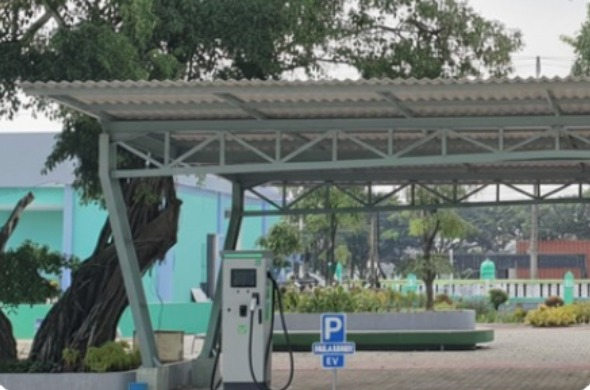
UNISSULA supports the transition towards low-emission transportation through electric mobility infrastructure.
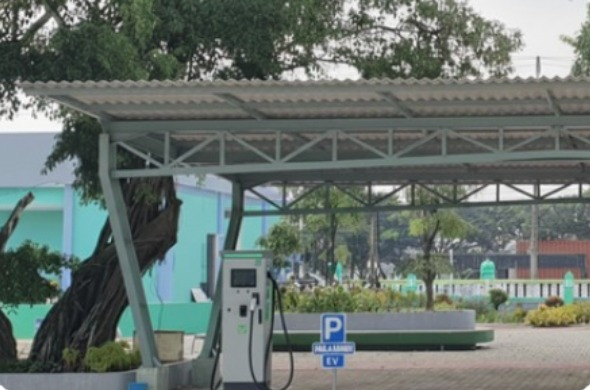
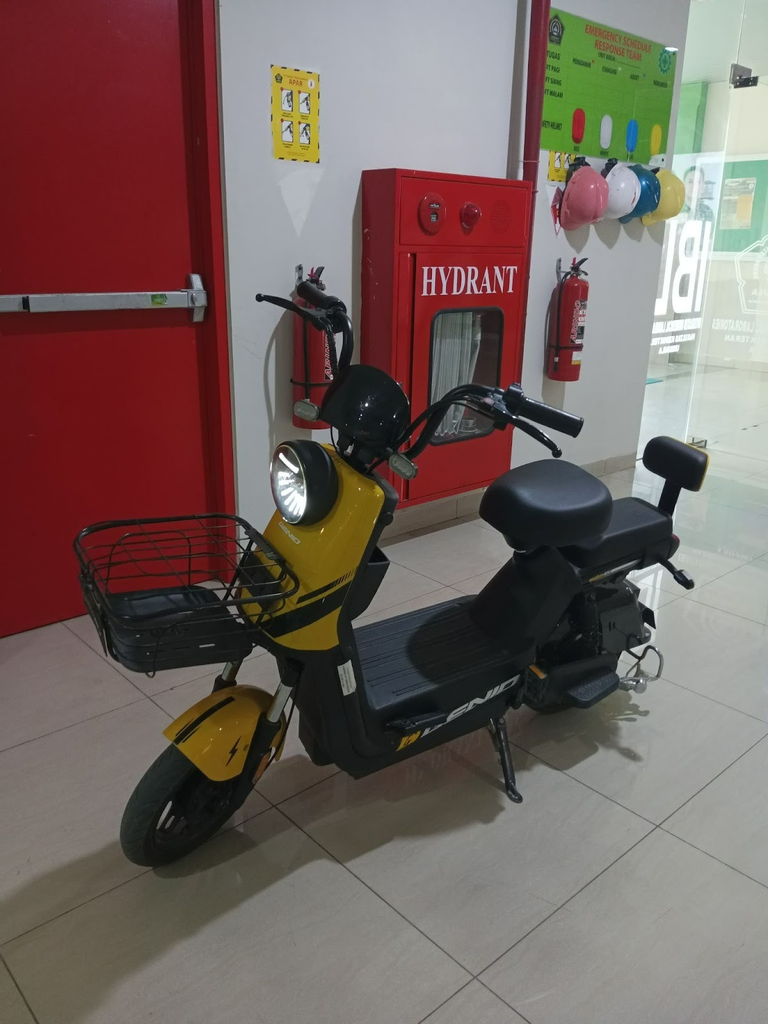
Electric vehicle charging facilities are available on campus to support the operation and use of electric vehicles.
The presence of charging infrastructure complements the university’s electric shuttle and other electric-mobility facilities and supports the gradual development of a lower-emission campus transport system.
University Bus Services
For longer-distance institutional activities, UNISSULA also maintains university buses.
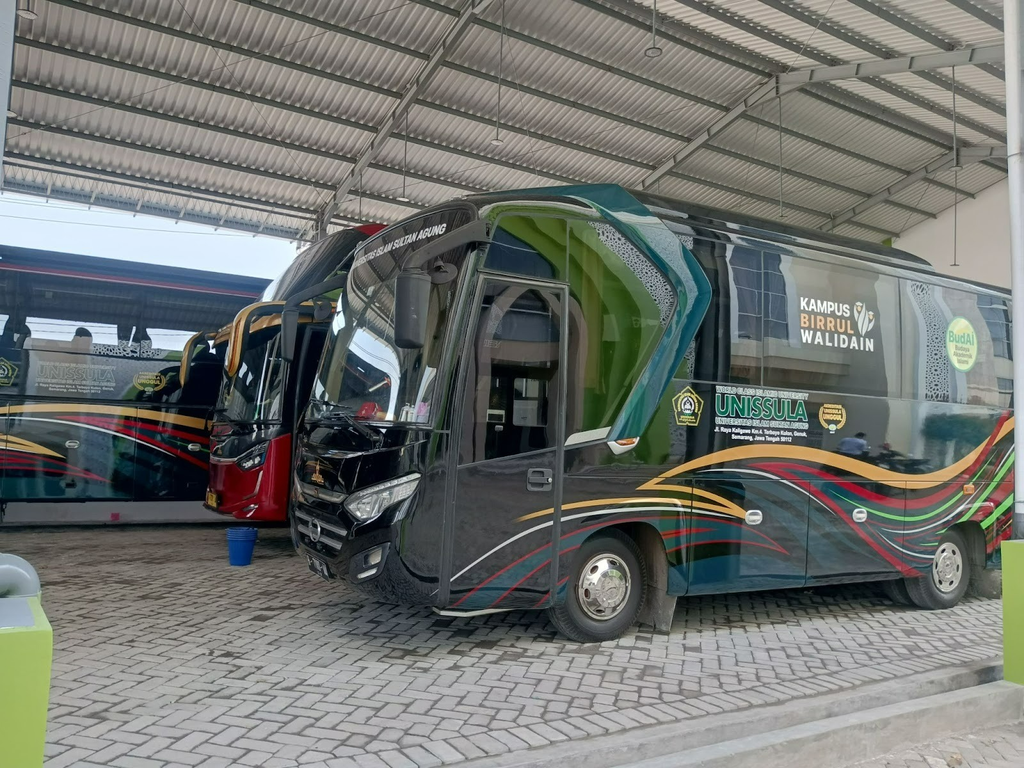
Students and student organisations may request university bus services through established institutional procedures.
Shared university transportation can reduce the need for multiple private vehicles when university groups travel for academic, student, or institutional activities.
Pedestrian-Friendly Campus
Walking is an important component of UNISSULA’s sustainable commuting strategy.

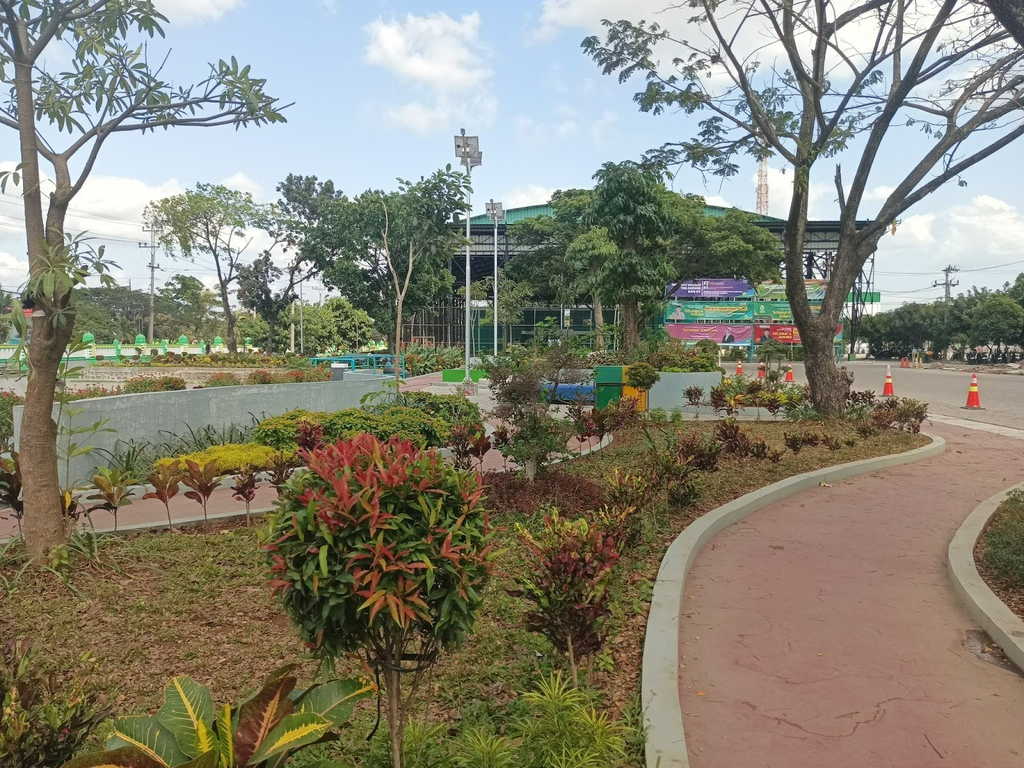
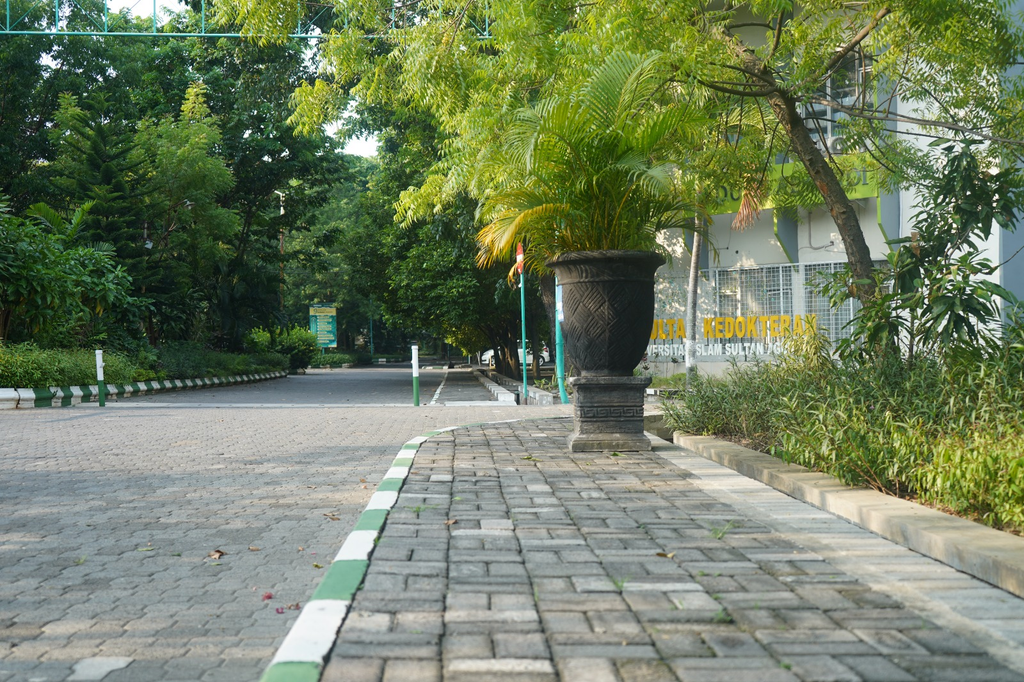


The university provides pedestrian pathways across the campus designed to support safe and accessible movement for students, staff, and visitors.
The pathways include:
- separated pedestrian routes;
- ramps;
- wheelchair-accessible entrances;
- directional signage;
- shaded walking environments; and
- sustainable lighting.
UNISSULA’s pedestrian infrastructure is explicitly intended to reduce reliance on motorised transportation for short-distance movement across campus.
Safe Pedestrian Infrastructure
Physical separators are installed between pedestrian pathways and vehicle roads to improve pedestrian safety.
The campus also provides ramps and accessible paths for wheelchair users and others requiring mobility assistance.
This allows sustainable commuting policies to support both environmental sustainability and universal accessibility.
Sustainable Lighting for Pedestrian Mobility
Pedestrian routes are supported by solar-powered street lighting.
These lights operate according to ambient light intensity and provide sustainable illumination for pedestrian movement during evening and nighttime periods.
This improves both the safety and environmental performance of campus walking infrastructure.
Encouraging Walking
UNISSULA’s pedestrian infrastructure is part of a broader strategy to encourage an active and environmentally responsible campus lifestyle.
By providing safe, comfortable, shaded, and connected pedestrian routes, the university encourages students and staff to walk for short-distance trips rather than relying on motorised vehicles.
This contributes to:
- lower transport emissions;
- reduced traffic pressure;
- improved health and physical activity;
- reduced dependence on private vehicles; and
- a more pedestrian-friendly campus.
Awareness and Behaviour Change
UNISSULA also supports sustainable commuting through awareness and educational activities.
The university promotes the benefits of pedestrian movement and environmentally responsible transportation to the campus community.
These initiatives help build a culture in which mobility choices are understood as part of shared environmental responsibility.
Low-Emission Mobility
The combination of electric mobility, shared transportation, and pedestrian infrastructure supports UNISSULA’s transition toward lower-emission campus transportation.
The university’s approach can be represented as:
Walking + Electric mobility + Shared transport + Public transport access → Reduced private vehicle dependence → Lower emissions
This approach aligns transport infrastructure with institutional sustainability goals.
Integration with Park-and-Ride
The electric shuttle system connects campus gates and park-and-ride areas with academic and service facilities.
This arrangement can reduce the need for private vehicles to travel through central campus areas.
Instead, users can combine:
Private/public arrival → Park-and-ride → Electric shuttle → Walking
This integrated approach supports more sustainable movement within the campus.
Accessibility and Inclusive Mobility
Sustainable transportation at UNISSULA is designed to be inclusive.
The electric shuttle documentation states that vehicles are accessible for persons with disabilities.
Pedestrian routes also incorporate:
- ramps;
- wheelchair-accessible pathways;
- accessible entrances; and
- safe route separation.
This ensures that sustainable mobility improvements also support people with different physical and mobility needs.
Monitoring and Institutional Evaluation
The Strategic Plan establishes monitoring as an integral part of institutional performance management.
Under the SDG 11 framework, achievement is evaluated through measures that include the use of sustainable transport, while supporting evidence includes mobility data, area maps, accessibility audits, and safety audits.
This provides an institutional basis for monitoring sustainable commuting rather than relying only on qualitative observation.
Target-Oriented Sustainable Mobility
UNISSULA’s Strategic Plan 2025–2029 operates through annual targets and periodic performance evaluation.
Sustainable transportation is incorporated into this framework as part of SDG 11 implementation.
The university therefore uses a target-oriented approach in which sustainable mobility measures are:
planned → implemented → measured → evaluated → progressively improved
The framework allows performance and mobility data to be reviewed as part of institutional sustainability management.
Continuous Improvement
UNISSULA continues to strengthen sustainable transportation through the development and improvement of:
- electric vehicles;
- electric shuttle services;
- electric bicycles;
- pedestrian pathways;
- public transportation access;
- shared university transportation;
- EV charging infrastructure;
- mobility monitoring; and
- awareness programmes.
Future improvements can be informed by mobility data and institutional performance evaluation.
Relationship with Green Campus Development
Sustainable commuting forms part of UNISSULA’s broader Green Campus agenda.
The university recognises transportation as one of the environmental areas requiring measurable improvement alongside energy, emissions, water, waste, and green spaces.
RENSTRA identifies the need for sustainability performance to be translated into measurable environmental outcomes, including transportation.
Contribution to SDG 11
UNISSULA’s sustainable commuting strategy contributes to SDG 11: Sustainable Cities and Communities by reducing dependence on private vehicles, supporting low-emission mobility, providing accessible walking infrastructure, and improving sustainable transportation options.
THE Sustainability Impact Ratings 2027 specifically assesses whether universities measure and set targets for more sustainable commuting, including walking, cycling, shuttle buses, public transportation, and electric vehicles.
The indicator provides up to three points based on:
- existence of measures and targets;
- evidence provided; and
- public availability of evidence.
Evidence of Implementation
UNISSULA’s measurement and target-oriented approach to sustainable commuting is demonstrated through:
- UNISSULA Strategic Plan 2025–2029, which integrates SDG 11 into institutional performance management.
- Institutional focus on public transport access and low-emission mobility.
- Measurement of sustainable transportation use as part of SDG 11 performance.
- Use of mobility data as institutional evidence.
- Electric campus shuttle services.
- Electric vehicles for internal campus movement.
- Electric bicycles for short-distance mobility.
- University bus services for shared transportation.
- Electric-vehicle charging infrastructure.
- Park-and-ride connections supported by campus shuttle services.
- Extensive pedestrian pathways.
- Wheelchair-accessible pedestrian infrastructure.
- Physical separation between pedestrian paths and vehicle roads.
- Solar-powered lighting along pedestrian areas.
- Programmes encouraging walking and reduced dependence on motorised transport.
- Annual institutional planning, monitoring, and performance review mechanisms.