

















15.3.5 Collaboration for Shared Land Ecosystems
Universitas Islam Sultan Agung (UNISSULA) collaborates directly with local communities to maintain and improve shared land ecosystems through community-based environmental programmes, tree planting, land rehabilitation, and continuing local participation.
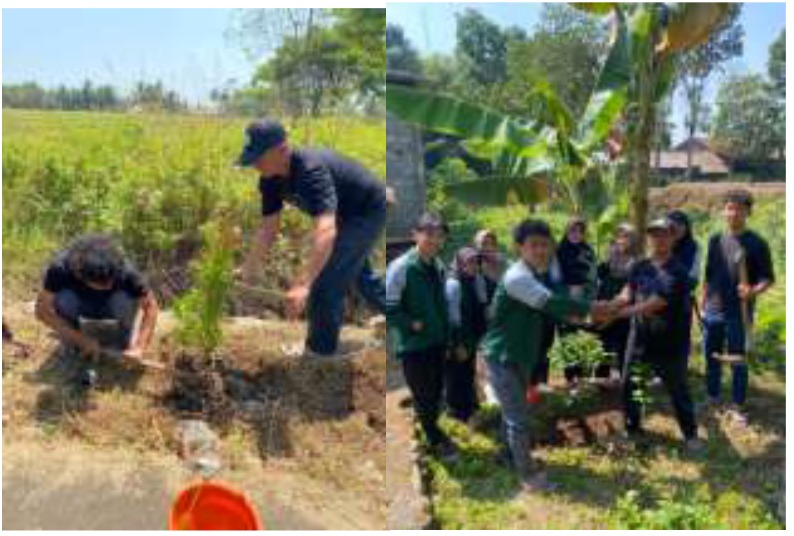
In 2025, UNISSULA implemented a collaborative environmental programme in Brumbung Village, Mranggen District, Demak Regency, through its Community Service Programme (KKN). The programme brought together UNISSULA students, village leaders, neighbourhood representatives, village officials, and local residents to restore and maintain shared village land through tree planting and environmental care.
The activity was conducted on 9 August 2025 and involved the planting and distribution of 160 guava and rambutan seedlings. Its stated purposes included ecosystem conservation, improvement of environmental quality, and prevention of land degradation.


Collaboration with the Local Community
The Brumbung programme was implemented as a collaborative activity rather than a university-only intervention.
Participants included:
- UNISSULA students
- The Head of Brumbung Village
- The heads of RT 01 and RW 02
- Village officials
- Local residents
The programme therefore connected university community service with local leadership and community participation.
The tree-planting activity was carried out across gardens, residential yards, and village roads, making the programme directly relevant to land that is used and experienced collectively by the local community.
This collaborative approach can be represented as:
University involvement → Local leadership → Community participation → Tree planting → Land protection → Continued ecosystem maintenance
Maintaining Shared Village Land
The programme focused on maintaining and improving land within the village environment.
Tree planting was undertaken not only to increase greenery, but also to support ecosystem conservation and help prevent environmental degradation.
The programme recognised that land in rapidly developing areas can face pressures from changing land use, population growth, and environmental disturbance.
Tree planting therefore served as a practical intervention to help maintain vegetation cover and improve the ecological condition of shared village areas.
Preventing Land Degradation
One of the explicit objectives of the programme was to help prevent land degradation.
The planting of trees in gardens, residential areas, and along village roads contributed to increasing vegetation coverage and improving land condition.
The programme also linked tree planting with environmental protection, ecosystem conservation, and improved soil conditions.
These activities support a broader approach to land management:
Vegetation establishment → Soil protection → Ecosystem maintenance → Reduced degradation
Direct Community Participation
Community participation formed a central part of the programme.
Local residents did not act only as recipients of seedlings.
The programme encouraged active participation in planting, caring for vegetation, and maintaining the local environment.
The documentation states that the programme aimed to increase environmental awareness and involve local communities directly in maintaining their local environment. Residents were encouraged to understand the importance of ecosystem conservation through collective tree planting and plant maintenance.
Joint Tree Planting
Tree planting was conducted collaboratively by UNISSULA participants and the local community.
The activity included preparation of seedlings, planting equipment, site preparation, and direct planting in village land areas.
The Head of Brumbung Village, neighbourhood leaders, village officials, and residents participated in the implementation of the programme.
This direct participation demonstrates that the programme was not limited to environmental education or awareness raising.
It involved physical action to maintain and improve the land ecosystem itself.
160 Tree Seedlings for Ecosystem Rehabilitation
The programme successfully planted and distributed 160 guava and rambutan seedlings.
These seedlings were selected for use in village greening and land rehabilitation.
The trees were expected to contribute to:
- Increasing vegetation cover
- Improving local environmental quality
- Supporting soil stability
- Providing shade
- Reducing environmental degradation
- Strengthening community responsibility for maintaining the local environment
The programme therefore combined environmental restoration with community involvement.
Shared Responsibility for Ecosystem Maintenance
UNISSULA’s approach recognises that shared land ecosystems cannot be maintained by the university alone.
Long-term conservation requires local participation because the community interacts with and manages these areas on a daily basis.
The Brumbung programme therefore promoted shared responsibility:
UNISSULA contributes knowledge and action → Community participates directly → Vegetation is established → Local stewardship continues
This shared approach strengthens the sustainability of environmental interventions after the university programme has ended.
Community-Based Environmental Stewardship
The programme also aimed to increase environmental awareness among local residents.
By participating directly in tree planting and environmental care, community members were encouraged to understand the relationship between vegetation, soil, land quality, and ecosystem sustainability.
This approach helps transform environmental protection from a one-time activity into a shared community responsibility.
Land, Vegetation and Local Environmental Quality
Maintaining shared land ecosystems requires more than increasing the number of trees.
Vegetation contributes to several environmental functions, including:
- Reducing soil exposure
- Supporting water infiltration
- Providing shade
- Improving microclimate
- Supporting local biodiversity
- Improving overall environmental quality
By increasing vegetation in community areas, the programme contributed to maintaining the ecological functions of village land.
Long-Term Community Involvement
The programme emphasised that planted trees require continued maintenance.
Local participation in watering, protecting, and caring for vegetation is therefore important for the long-term success of the programme.
This continuing role means that community members remain active partners in maintaining the shared land ecosystem after the initial planting activity.
Evidence of 2025 Implementation
The 2025 Brumbung programme provides direct evidence of collaboration between UNISSULA and the local community.
The evidence demonstrates that:
- The activity took place in 2025, with tree planting conducted on 9 August 2025.
- UNISSULA participated directly through its 2025 Community Service Programme.
- Local community representatives participated, including the Village Head, RT/RW leaders, village officials, and residents.
- The activity took place on shared village land, including gardens, residential areas, and village roads.
- The programme involved direct ecosystem-maintenance action, not only education or discussion.
- A total of 160 guava and rambutan seedlings were planted or distributed.
- The programme explicitly aimed to support ecosystem conservation and prevent land degradation.
- Community members participated in planting and were encouraged to continue maintaining the local environment.