

















15.3.3 Local Biodiversity Included in Planning and Development
Universitas Islam Sultan Agung (UNISSULA) integrates local biodiversity considerations into campus planning, construction, and renovation processes to ensure that physical development is carried out alongside the protection of existing trees, vegetation, green spaces, and local habitats.
In 2025, this approach was formally incorporated into UNISSULA Circular Letter No. 8391/J/SA/IX/2025, which applies to the construction of new buildings and renovation of existing buildings across the university.
The Circular Letter requires new construction and renovation projects to consider the presence of trees, vegetation, green spaces, and local habitats at development sites. Planning documents must also be evaluated before implementation to ensure the protection of local biodiversity, with restoration or replanting required where vegetation or green space is affected.
Integrating Biodiversity into Development Planning
UNISSULA recognises that campus development should not be considered only in terms of buildings and infrastructure.
Trees, vegetation, green spaces, and habitats are also part of the physical and ecological characteristics of the campus.
For this reason, biodiversity considerations are incorporated from the planning stage of new construction and renovation.
The approach can be described as:
Development planning → identification of existing green elements → biodiversity consideration → protection during implementation → restoration where necessary
This enables the university to develop its facilities while continuing to maintain the ecological functions of its campus environment.
Considering Existing Trees and Vegetation
The 2025 Circular Letter explicitly requires construction and renovation activities to consider existing trees and vegetation at the development location.
This is particularly important in a developed campus environment, where mature trees and established vegetation contribute to:
- Shade and thermal comfort
- Habitat availability
- Landscape continuity
- Soil protection
- Rainwater absorption
- Local microclimate regulation
- Overall campus biodiversity
Considering these elements during planning helps prevent unnecessary removal of established vegetation.
Green Spaces as Part of the Built Environment
UNISSULA’s campus development approach integrates green space with buildings, pedestrian areas, roads, and other infrastructure.
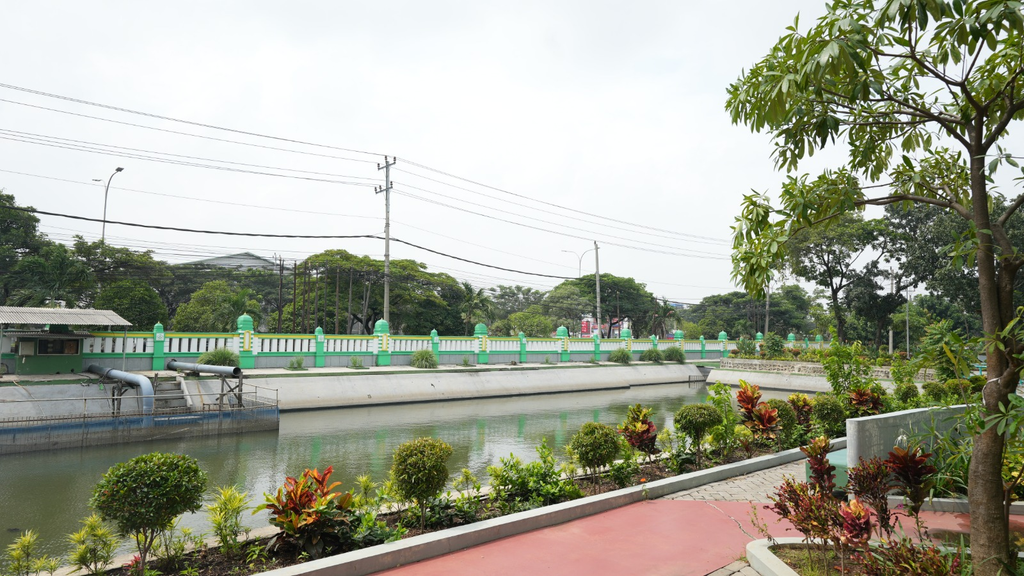
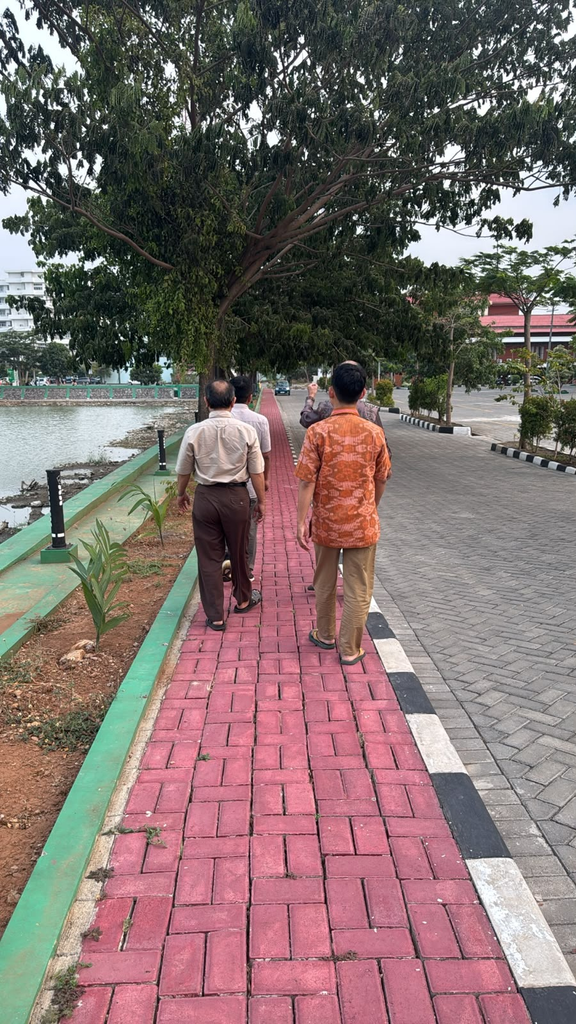
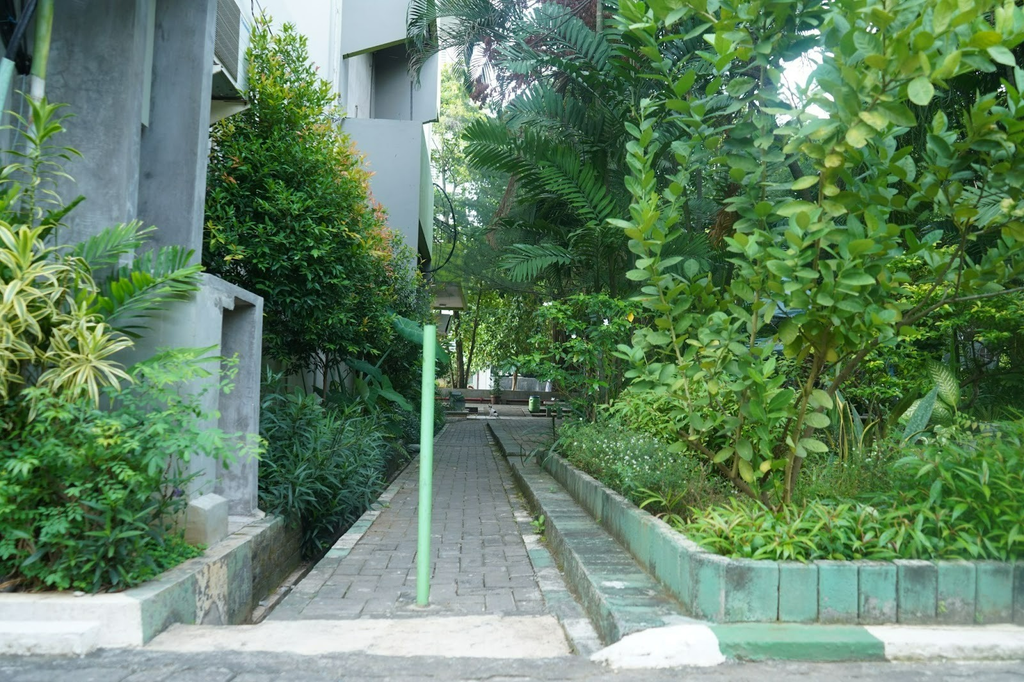
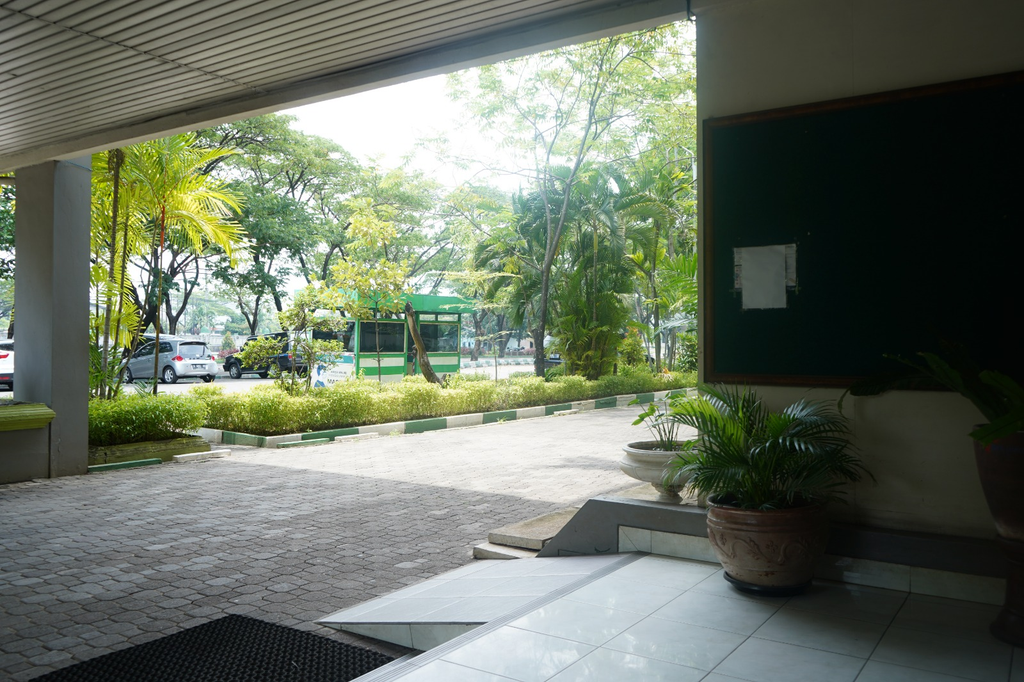
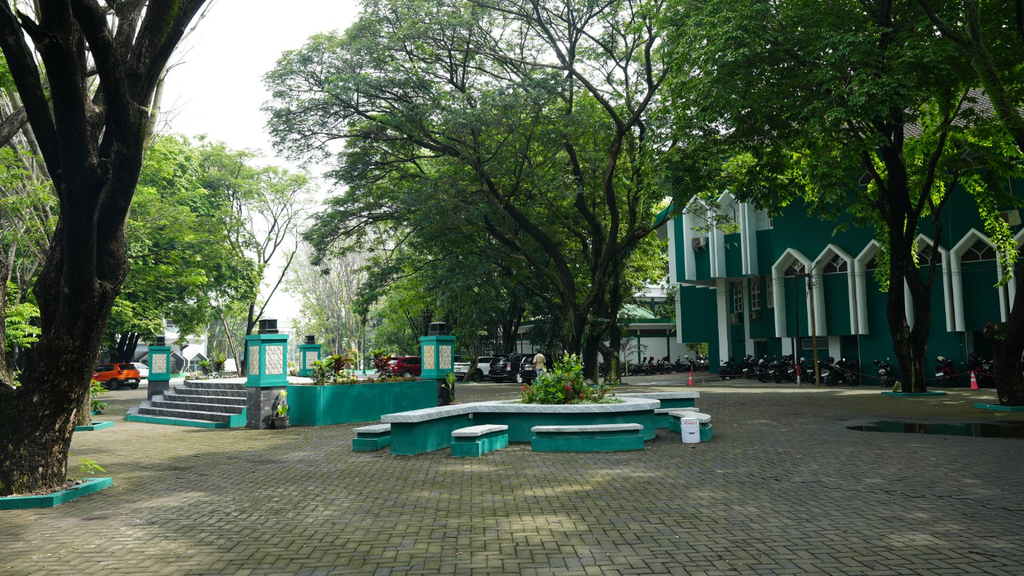
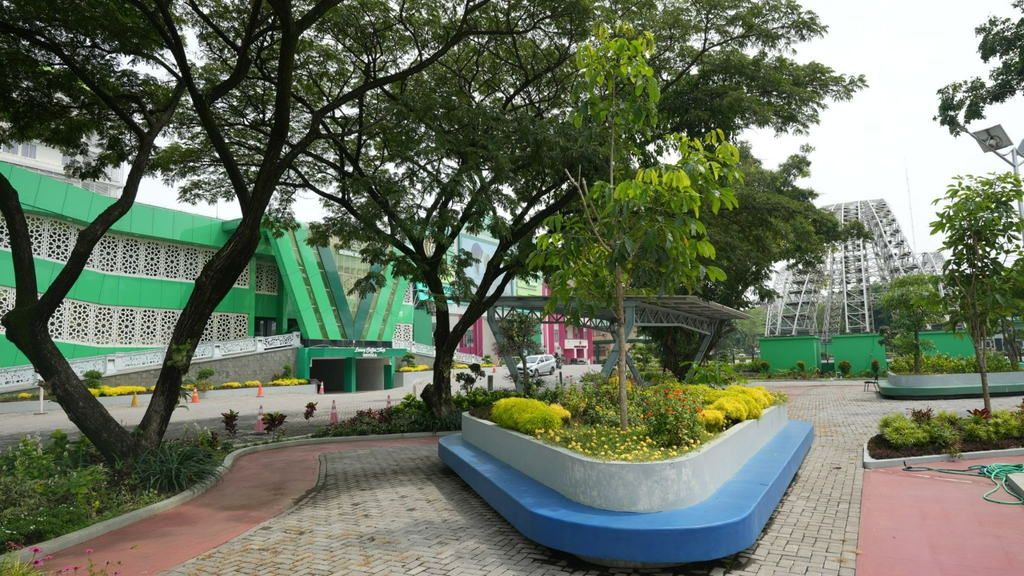
Campus documentation shows buildings and circulation areas located alongside established trees, planted landscapes, gardens, and vegetated corridors.
Rather than separating built infrastructure from the natural environment, the campus layout allows green areas to remain part of the everyday academic environment.
This demonstrates an approach in which:
Buildings + pedestrian areas + existing trees + gardens + green corridors
are planned as interconnected parts of the campus.
Protecting Local Habitats
The Circular Letter also identifies local habitats as an element that must be considered during construction and renovation planning.
Vegetated areas can provide habitat and ecological resources for organisms living within or moving through the campus environment.
Protecting vegetation and green spaces therefore contributes not only to campus aesthetics but also to maintaining ecological functions.
The consideration of habitats encourages development decisions that avoid unnecessary disturbance to existing ecological areas.
Biodiversity Review before Construction
An important component of the UNISSULA approach is the requirement to evaluate planning documents before implementation.
This evaluation is intended to ensure both energy efficiency and the protection of local biodiversity.
Biodiversity is therefore not considered only after a construction project has been completed.
Instead, it becomes part of the pre-construction planning process.
This approach allows potential effects on trees, vegetation, green areas, and habitats to be considered before physical work begins.
Restoration and Replanting
Where construction or renovation affects vegetation or green space, the Circular Letter requires appropriate restoration or replanting.
This creates a mitigation process:
Avoid unnecessary impact → protect existing vegetation → minimise disturbance → restore or replant when impact occurs
The restoration requirement helps ensure that physical development does not result in unnecessary long-term loss of green space.
Biodiversity-Sensitive Renovation
Renovation provides an important opportunity to improve university facilities without replacing existing ecological features unnecessarily.
UNISSULA’s campus documentation shows renovated and developed areas where mature trees, vegetation, landscaped areas, and green corridors continue to exist alongside buildings and pedestrian infrastructure.
In several areas, pedestrian routes have been arranged through or alongside established vegetation, allowing trees and planted areas to remain integrated within campus circulation.
This reflects a development approach that seeks to accommodate physical improvements while maintaining existing green elements.
Maintaining Mature Trees
Mature trees are an important component of campus biodiversity and landscape structure.
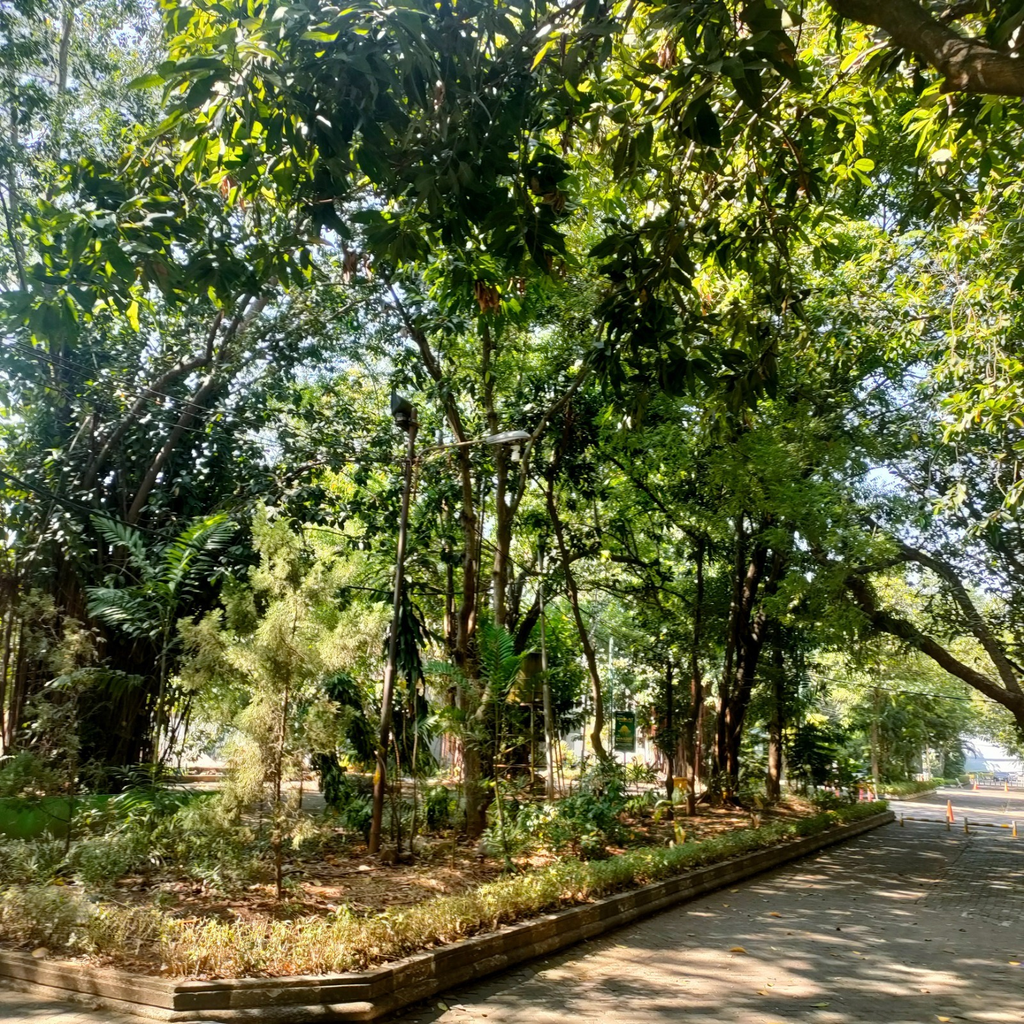
Campus documentation shows large established trees retained within developed areas, including trees located close to buildings, pedestrian paths, roads, and landscaped public spaces.
Maintaining mature trees provides continuity in canopy cover and avoids the ecological loss that would occur if established vegetation were routinely removed during development.
The physical arrangement of campus spaces demonstrates that infrastructure can be adapted around existing trees rather than requiring their automatic removal.
Green Landscaping around Buildings
Landscape areas surrounding campus buildings include combinations of trees, shrubs, ground vegetation, planted beds, and other greenery.
These areas help maintain a transition between built structures and the natural environment.
Green landscaping can also support:
- Habitat functions
- Infiltration of rainwater
- Shaded outdoor spaces
- Environmental comfort
- Biodiversity
- Visual continuity across the campus
UNISSULA therefore treats landscape planning as part of sustainable campus development rather than simply as decoration.
Green Corridors and Pedestrian Areas
Campus pedestrian areas also demonstrate integration between development and local vegetation.
Walkways are located alongside trees and landscaped areas, allowing users to move through shaded and vegetated spaces.
This arrangement helps maintain green connections within developed parts of the campus.
Such green corridors can contribute to ecological continuity while simultaneously improving the quality of pedestrian spaces.
Maintaining and Managing Campus Vegetation
Protection of biodiversity requires continued management after planning and construction are completed.
Campus landscaping is maintained as an active part of the university environment.
The presence of irrigation systems within landscaped areas demonstrates continuing management of vegetation and green spaces.
Maintaining planted areas helps sustain the ecological and environmental functions intended through biodiversity-sensitive planning.
Connection with Green Building Principles
The biodiversity provisions are integrated within a broader approach to sustainable building development.
The same Circular Letter requires new buildings and renovations to apply relevant energy-efficiency standards, including energy conservation standards for lighting, air-conditioning systems, building envelopes, and applicable Green Building requirements.
This means that sustainable campus development at UNISSULA considers both the performance of buildings and the environmental characteristics surrounding them.
The approach combines:
Energy efficiency + green building + local biodiversity + green-space protection
Planning before Development
UNISSULA’s approach places environmental consideration at the planning stage.
Before development is implemented, planning documents are reviewed to ensure that both technical sustainability requirements and biodiversity protection are addressed.
This is important because biodiversity conservation is most effective when incorporated before construction decisions become irreversible.
The planning process therefore supports a preventive rather than purely corrective approach.
2025 Institutional Implementation
Circular Letter No. 8391/J/SA/IX/2025 was issued on 4 September 2025 on behalf of the Rector by the Vice Rector II of UNISSULA.
Its application to new buildings and renovations provides an institutional basis for incorporating biodiversity considerations into campus development during 2025.
The provisions ensure that development planning considers existing ecological elements while providing measures for protection and restoration where impacts occur.
Evidence of Implementation
- UNISSULA formally incorporated local biodiversity into construction and renovation planning in 2025 through Circular Letter No. 8391/J/SA/IX/2025
- New construction and renovation projects are required to consider existing trees, vegetation, green spaces, and local habitats at development locations.
- Planning documents must be evaluated before implementation to ensure protection of local biodiversity.
- Where vegetation or green space is affected by development, the planning process requires restoration or replanting.
- Campus documentation demonstrates the continued presence of mature trees, vegetated areas, landscaped gardens, and green corridors alongside buildings and pedestrian infrastructure.
- Developed campus areas show that buildings, circulation routes, and public spaces can coexist with established vegetation rather than automatically replacing green areas.
- Landscaped areas continue to be maintained, including through irrigation and vegetation management.
- Biodiversity-sensitive planning is integrated with broader sustainable-building measures, including energy-efficiency and Green Building requirements.