

















6.3.5 Water-Conscious Landscaping at UNISSULA
Designing Campus Landscapes to Reduce Water Use
Universitas Islam Sultan Agung (UNISSULA) applies water-conscious landscaping practices as part of its wider approach to sustainable campus water management.
By 2025, the university had developed and maintained landscaped areas using vegetation suited to local conditions and supported these areas with alternative water sources such as harvested rainwater, stored non-potable water, and water from the campus lake.
This approach helps reduce dependence on freshwater for maintaining green spaces while supporting a comfortable, shaded, and environmentally sustainable campus.



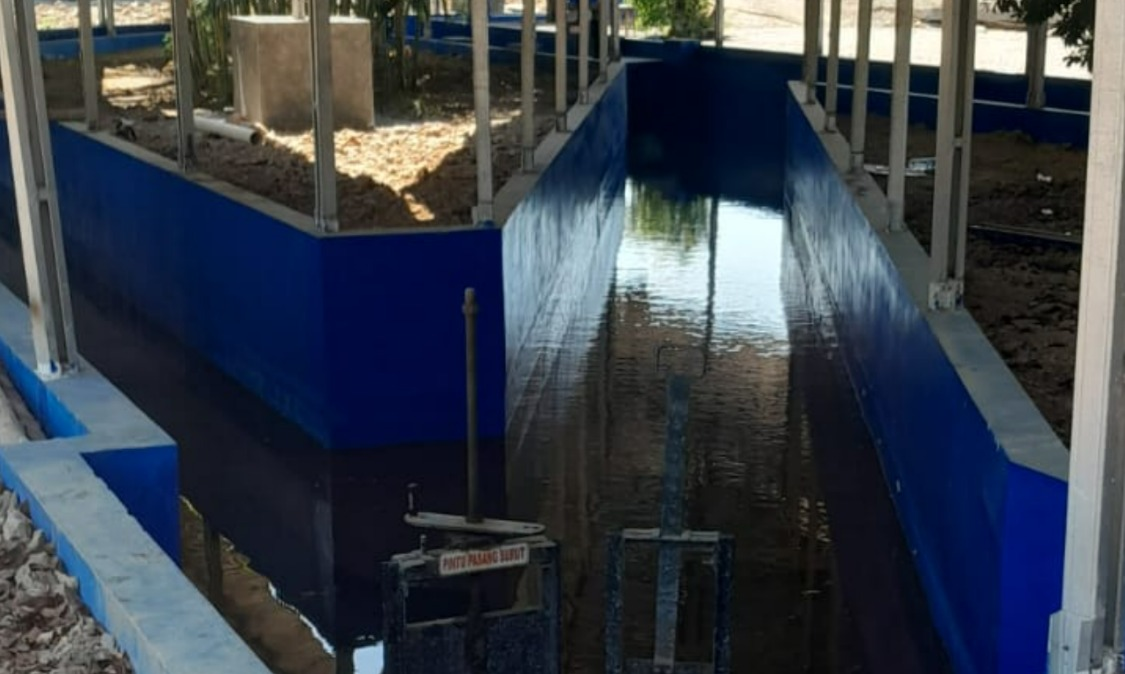
Locally Adapted and Low-Water-Demand Vegetation
UNISSULA maintains campus landscapes using trees, palms, shrubs, ground-cover vegetation, and other plants that are suitable for the local tropical climate.
The landscaping approach prioritises vegetation that can adapt to local environmental conditions and can be maintained without intensive irrigation.
This includes the use of:
- shade trees;
- locally adapted trees and shrubs;
- palms;
- ground-cover vegetation; and
- other relatively low-water-demand plants.
The use of vegetation suited to local conditions helps reduce the need for excessive watering compared with landscapes that depend on high-maintenance or water-intensive planting.
Tree Planting and Landscape Development
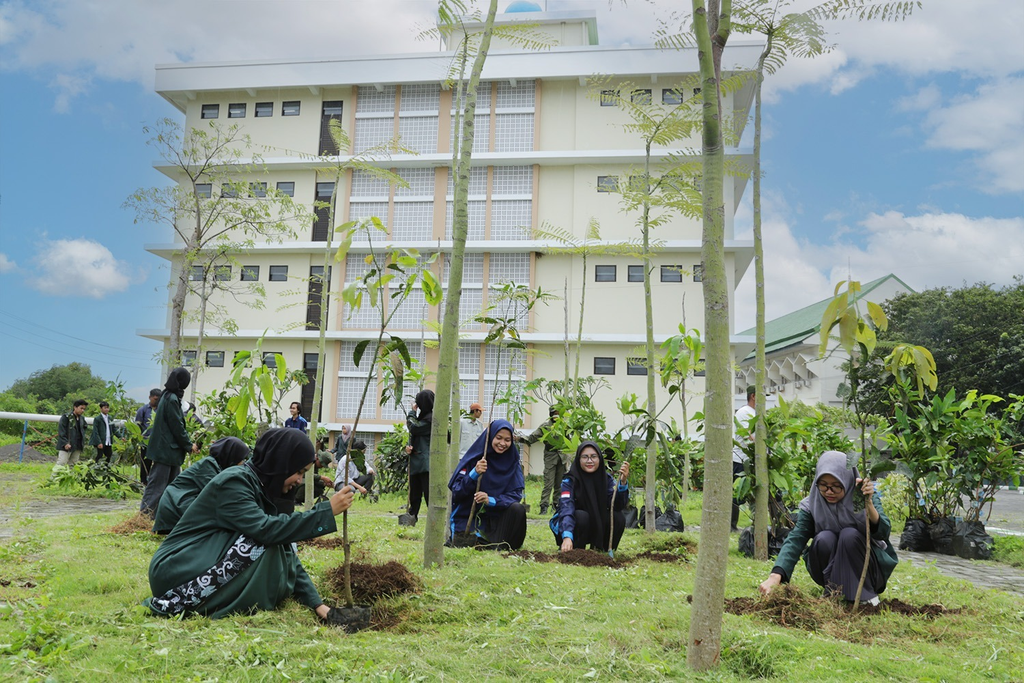
UNISSULA actively develops and renews green areas through tree-planting and campus landscaping activities.
Photographic documentation shows members of the university community planting trees and vegetation within campus grounds. These planting activities contribute to the long-term development of shaded and vegetated areas around university buildings.
The use of trees and established vegetation also helps:
- provide shade;
- improve soil moisture retention;
- reduce direct exposure of soil to sunlight;
- reduce evaporation; and
- create a more comfortable outdoor environment.
Established Green Areas Across Campus
Mature landscaped areas can be found around university buildings and public spaces.
These areas combine trees, palms, shrubs, grass, and ground-cover planting in ways that create green spaces without relying solely on intensive watering.
As vegetation becomes established, deeper root systems and increased shade can help improve water retention in the soil and reduce irrigation demand.
This makes long-term planting an important part of the university’s water-conscious landscape strategy.
Using Harvested Rainwater for Landscape Irrigation
Water-conscious planting at UNISSULA is supported by the university’s rainwater-harvesting system.
Rainwater from rooftops is collected and stored for non-potable use. After basic treatment, harvested water can be reused for purposes including landscape irrigation.
The university’s Sustainability Report documents that rooftop rainwater is collected, filtered, and reused for landscape irrigation, cleaning, pond top-ups, and selected toilet flushing.
Using harvested rainwater for irrigation reduces the need to use primary freshwater supplies for maintaining campus vegetation.
In-Ground Water Storage
UNISSULA also uses in-ground water tanks to store harvested rainwater and other recoverable non-potable water.
The stored water can be reused for:
- landscape irrigation;
- floor and area cleaning;
- pond top-ups; and
- selected toilet flushing.
The Sustainability Report notes that this stored non-potable water helps reduce demand on primary water supplies.
This infrastructure supports a more efficient irrigation system for landscaped areas.
Campus Lake as a Water Resource
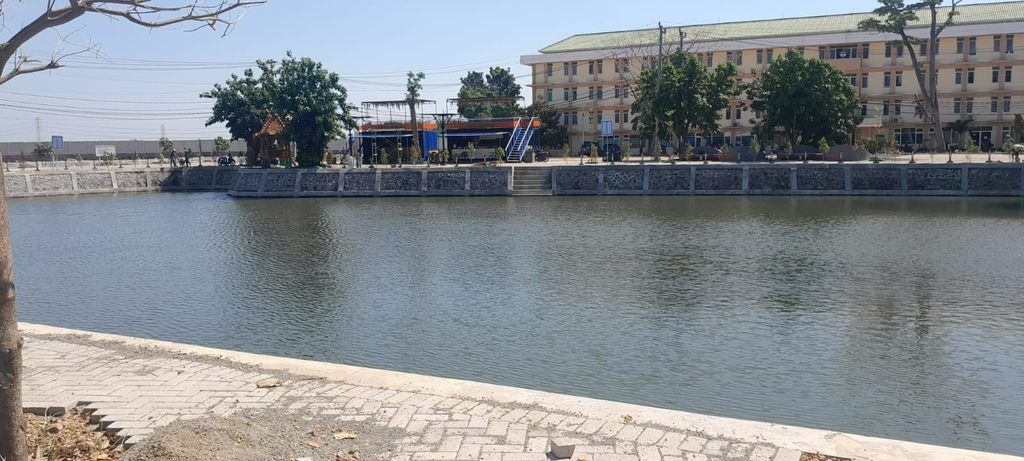
The campus lake or retention pond forms another part of UNISSULA’s water-conscious landscape system.
The lake captures stormwater from roofs and surrounding grounds and functions as a retention area within the campus.
After appropriate basic treatment, water from the lake can be reused for non-potable purposes including landscape irrigation and pond top-ups.
This creates an additional alternative source of irrigation water and helps reduce reliance on groundwater or other primary sources.
Reducing Irrigation Demand
UNISSULA’s approach to landscaping combines two complementary strategies:
First, reducing water demand through the use of locally adapted and relatively low-water-demand vegetation.
Second, reducing freshwater dependence by using harvested and recovered non-potable water for irrigation.
Together, these strategies allow the university to maintain green campus areas while managing water resources more efficiently.
Shade and Ground Cover
Trees, shrubs, and ground-cover vegetation also contribute indirectly to water conservation.
Shade from trees can reduce surface temperatures and slow evaporation from soil.
Ground-cover vegetation helps protect soil from direct sunlight and can support moisture retention.
These landscape characteristics make planted areas more resilient and reduce the need for frequent irrigation.
Integration with Campus Water Conservation
The landscaping strategy is integrated with wider water-conservation infrastructure.
UNISSULA uses:
- rooftop rainwater collection;
- first-flush systems;
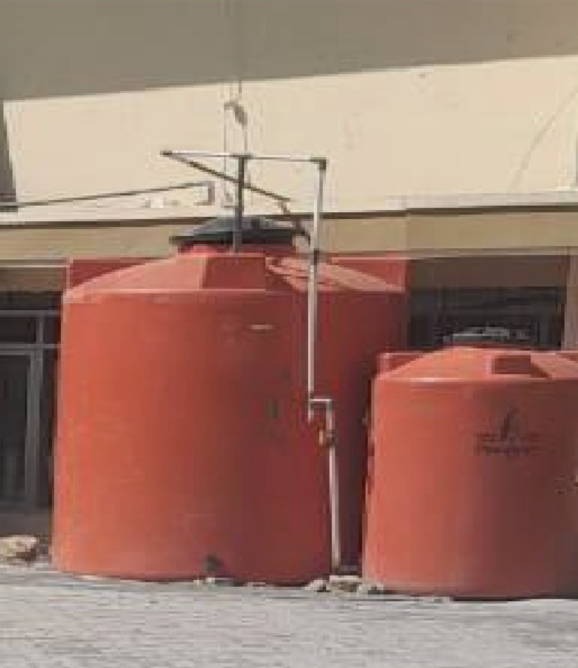
- water-storage tanks;
- in-ground water storage;
- campus retention facilities;
- infiltration systems; and
- non-potable water reuse.
The Sustainability Report documents the use of these systems for landscape irrigation and broader water conservation.
This integration makes landscaping part of a wider institutional water-management approach rather than an isolated beautification activity.
Water-Conscious Landscape Practices
UNISSULA’s water-conscious landscaping can be summarised as follows:
| Landscape Practice | Water-Conservation Function |
|---|---|
| Locally adapted vegetation | Reduces intensive irrigation requirements |
| Relatively low-water-demand plants | Helps minimise routine watering |
| Shade trees | Reduce surface heat and evaporation |
| Ground-cover vegetation | Supports soil-moisture retention |
| Rainwater harvesting | Provides alternative irrigation water |
| In-ground water storage | Stores non-potable water for later use |
| Campus lake / retention pond | Supports stormwater capture and irrigation reuse |
| Non-potable water reuse | Reduces freshwater demand for landscaping |
Implementation by 2025
These practices were already in place by 2025.
The university had established landscaped areas, ongoing tree-planting activities, and water-conservation infrastructure that supports irrigation using harvested and non-potable water.
The available visual documentation shows both active planting and established landscaped areas, while the Sustainability Report confirms the use of alternative water sources for landscape irrigation.