

















6.3.2 Preventing Water System Pollution at UNISSULA
Preventing Polluted Water from Entering the Water System
Universitas Islam Sultan Agung (UNISSULA) has established processes to prevent polluted water from entering the campus water system and surrounding environment. These processes combine wastewater treatment, water-quality monitoring, controlled discharge, hazardous-waste management, spill prevention, and incident-response procedures.
By 2025, these measures were already in place across the Sultan Agung environment, including campus wastewater facilities, laboratory operations, and the Sultan Agung Islamic Hospital.
Water Pollution Control
UNISSULA applies regular water-quality monitoring and wastewater control as part of its environmental management system.
The university’s Sustainability Report 2025 documents regular water audits and quality testing across the campus, supported by the operation of Wastewater Treatment Plants (WWTPs) to help ensure that discharged water meets required quality standards.
This provides an important preventive layer by ensuring that wastewater is monitored and treated before it is discharged into the surrounding water environment.
Wastewater Segregation and Treatment
UNISSULA’s wastewater-management process separates wastewater streams and directs them to treatment facilities rather than allowing untreated wastewater to enter the drainage or water system.
The documented campus water-recycling process includes:
- collection of greywater;
- separate piping;
- pre-filtration;
- biological treatment;
- advanced filtration;
- disinfection;
- storage; and
- controlled reuse.
Greywater from sources such as sinks, showers, and air-conditioner condensate is routed to treatment units where it undergoes sand and activated-carbon filtration, biological treatment using biofilter or Moving Bed Biofilm Reactor (MBBR), and advanced filtration or disinfection.
These processes reduce the risk of untreated or contaminated water entering the wider water system.
Wastewater Treatment Infrastructure
The university environment also includes dedicated wastewater-treatment infrastructure.
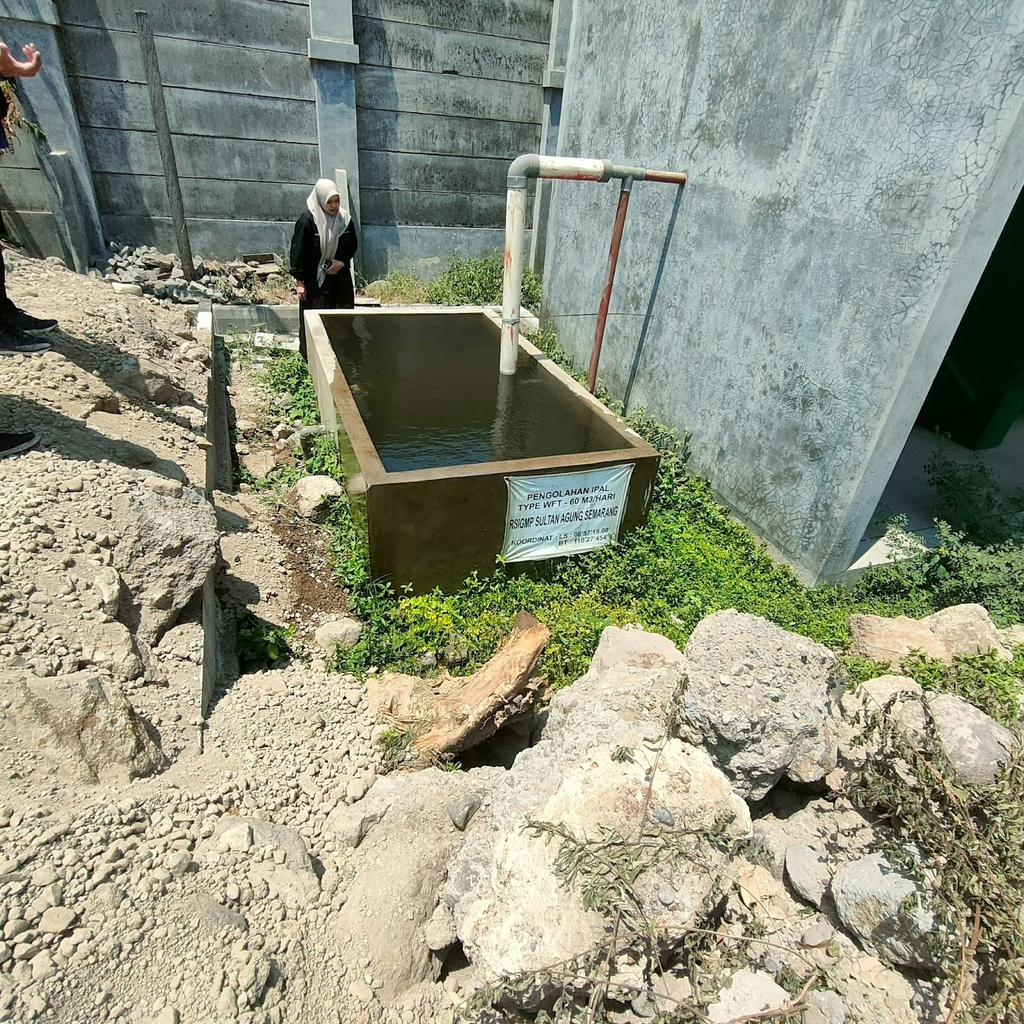
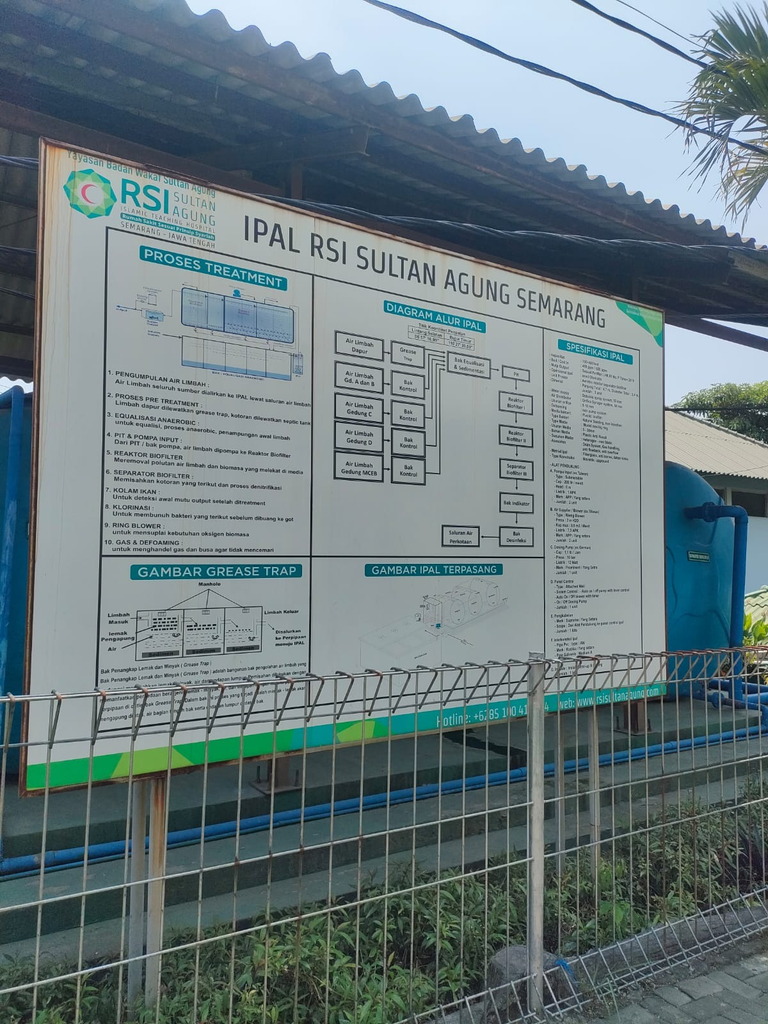
Physical evidence shows the operation of IPAL (Instalasi Pengolahan Air Limbah) facilities in the Sultan Agung environment. The treatment flow includes multiple stages such as:
- grease trapping;
- control tanks;
- equalisation and sedimentation;
- biofilter treatment;
- separator stages;
- indicator tanks;
- disinfection; and
- controlled discharge.
This infrastructure demonstrates that wastewater is managed through a defined treatment pathway before leaving the treatment system.
Hazardous Waste Management
Pollution prevention at UNISSULA is also supported by procedures for the management of hazardous and toxic waste.
Within the Sultan Agung environment, the Guidelines for Hazardous and Toxic Waste Management (B3) are established through Director Regulation No. 629/PER/RSI-SA/IX/2022. The regulation was created to prevent the negative impacts of hazardous waste on the environment, human health, and other living organisms.
The guidance states that hazardous-waste management is intended to prevent and control environmental pollution and environmental damage caused by B3 waste.
Segregation, Storage, and Control of Hazardous Waste
The hazardous-waste framework covers several stages of management, including:
- reduction and segregation;
- storage;
- transportation;
- treatment;
- burial where applicable; and
- final disposal.
Waste is separated according to type and characteristics, placed in appropriate containers, labelled, and stored before further treatment or authorised removal.
Storage facilities are required to use impermeable floors, appropriate drainage, secure access, and protection from rain, flooding, and other conditions that could contribute to accidental release.
These preventive controls reduce the risk that hazardous substances can leak or be washed into drainage channels or surrounding water systems.
Prevention of Accidental Pollution
UNISSULA’s pollution-prevention approach also addresses accidental events and incidents.
Laboratory safety and hazardous-waste procedures require users to report damage, spills, accidents, and unsafe conditions. Hazardous chemicals and B3 waste must be separated and handled according to their characteristics.
A particularly important principle is that hazardous waste must not be disposed of into sinks, drains, soil, or general waste streams.
Where spills occur, the procedure requires action to prevent the spilled material from entering drains or spreading to other areas. Spill kits, absorbent materials, sand, or other suitable containment materials are used, and contaminated absorbents are subsequently managed as hazardous waste.
This creates a direct preventive mechanism against accidental contamination of the water system.
Emergency and Incident Response
The B3 management framework also includes emergency-response provisions.
Hazardous-waste transport documentation is required to include special handling instructions for emergency conditions as well as emergency contact information.
During hazardous-waste treatment operations, the guidance also requires operators to prevent leaks and spills and to use automatic shut-off systems where operating conditions do not meet required specifications.
These measures are particularly relevant because they address not only routine pollution prevention but also pollution arising from accidents and operational incidents.
Monitoring and Quality Assurance
Pollution prevention is reinforced through monitoring.
The Sustainability Report 2025 documents water auditing and quality testing, while wastewater-treatment facilities are used to control the quality of discharged water.
The B3 management framework further requires wastewater generated from hazardous-waste treatment to comply with applicable wastewater-quality standards before discharge.
This combination of treatment and monitoring provides an additional safeguard against contaminated water entering the environment.
Controlled Wastewater Discharge
UNISSULA does not rely on uncontrolled discharge.
Wastewater is treated before discharge or reuse, and tertiary treatment is documented for sewage generated within the Sultan Agung environment. Treated non-potable water is reused for purposes such as fish ponds, landscape and ornamental plants, and controlled drainage recharge.
This helps reduce direct discharge of untreated wastewater and supports more responsible water management.
Integration Across the Sultan Agung Environment
Water pollution prevention is implemented through a combination of university and associated Sultan Agung facilities.
The campus applies wastewater treatment, greywater separation, water-quality monitoring, and recycling processes, while Sultan Agung Islamic Hospital applies detailed B3 waste-management procedures and wastewater controls.
Because these facilities operate within the broader Sultan Agung environment, they provide practical examples of how pollution risks are managed in areas where wastewater, laboratory materials, chemicals, and healthcare-related waste are generated.
Preventing Pollution Before It Reaches the Water System
The overall preventive process can be summarised as:
source segregation → safe storage → separate wastewater routing → treatment → quality monitoring → disinfection → controlled reuse or discharge
For accidents and incidents, the process adds:
incident identification → spill containment → prevention of entry into drains → collection of contaminated material → hazardous-waste handling → incident reporting and evaluation
This combination of routine controls and emergency-response measures reduces the likelihood that polluted water can enter the campus or surrounding water system.
Supporting Sustainable Water Management
These processes support several environmental objectives:
- preventing untreated wastewater discharge;
- preventing hazardous substances from entering drains;
- containing accidental spills;
- controlling wastewater quality;
- reducing pollution risk;
- protecting groundwater and surface water; and
- improving long-term environmental management.
They also complement UNISSULA’s broader water-recycling and conservation initiatives.