

















6.5.1 Water Management Educational Opportunities for Local Communities
Supporting Community Learning on Clean Water Management
Universitas Islam Sultan Agung (UNISSULA) provides educational and technical assistance to local communities to strengthen their understanding and capacity in water management.
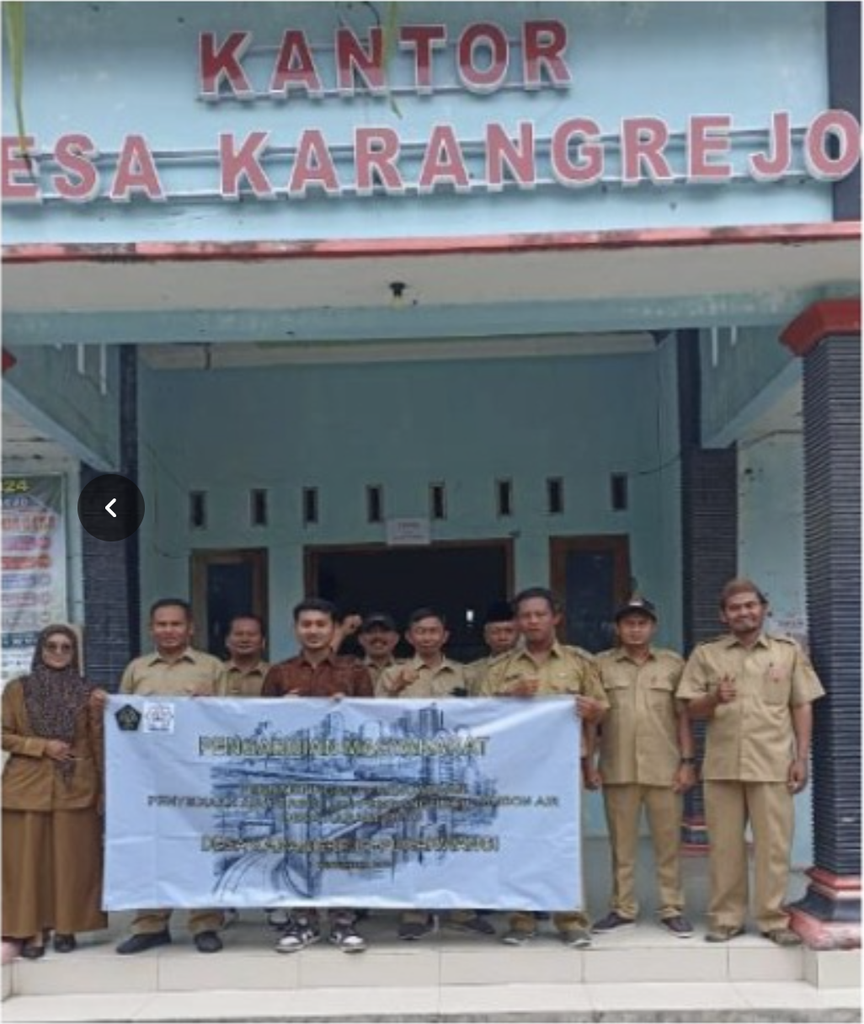
In 2025, lecturers from the Civil Engineering Department, Faculty of Engineering, UNISSULA carried out a community-service programme in Karangrejo Village, Pucakwangi District, Pati Regency focusing on the planning of clean-water supply infrastructure and a community water-storage reservoir.
The programme was documented in the Indonesian Journal of Community Services, Volume 7 No. 2, November 2025, under the title “Pendampingan Perencanaan Penyediaan Air Bersih dan Tandon Air Desa Karangrejo, Kecamatan Pucakwangi, Kabupaten Pati.”
Responding to Local Clean-Water Challenges
Karangrejo Village faces significant challenges in accessing clean water.
The community continues to depend on groundwater because the existing PDAM distribution network does not adequately reach the area. At the same time, groundwater sources are located at considerable depth, in some cases reaching hundreds of metres below the surface.
The village consists of 15 neighbourhood units and has a population of approximately 2,840 residents, while the available clean-water supply remains insufficient to meet community needs.
These conditions created the need for a more efficient and better-planned community water-supply system.
Community Education and Technical Assistance
UNISSULA’s role went beyond preparing technical documents.
The community-service activity included guidance, assistance, coordination, and discussion with local partners during the planning of the clean-water reservoir.
The programme provided direction and mentoring in:
- identifying community clean-water needs;
- planning a clean-water storage system;
- designing the reservoir;
- calculating structural requirements;
- preparing construction plans; and
- estimating the required budget.
The documented methodology specifically states that guidance and assistance were provided throughout the planning process, including reservoir design, construction calculations, and cost estimation.
This approach enabled local partners to participate in understanding how clean-water infrastructure should be planned and managed.
Engagement with Local Government and Residents
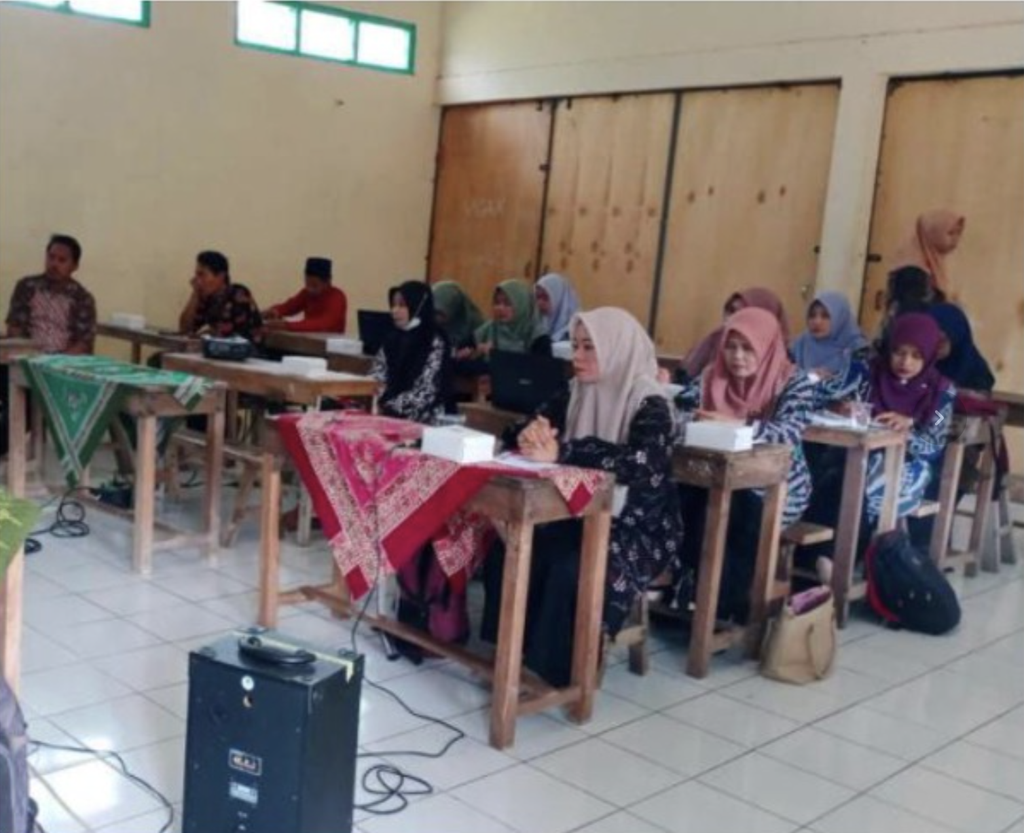
The programme involved direct engagement with both the Karangrejo Village Government and local residents.
The implementation began with coordination and discussion about existing conditions and problems experienced by the community.
The documentation on page 3 includes photographs of:
- coordination and discussion with the Karangrejo Village Government; and
- discussion and observation of existing conditions together with Karangrejo residents.
This demonstrates that the programme was implemented with the local community rather than being limited to an internal academic exercise.
Planning a Community Water Reservoir
A major focus of the educational and technical assistance was the planning of a clean-water reservoir.
Based on field observation, community needs, and technical analysis, the project developed a plan for a 100 m³ water tank for Karangrejo Village.
The proposed structure was designed as a reinforced-concrete water-storage facility and included consideration of:
- structural design;
- foundation type;
- construction materials;
- implementation requirements; and
- estimated costs.
Through this process, local partners gained access to practical knowledge about how community water infrastructure is planned and prepared.
Improving Local Water-Management Capacity
The programme helped address an important local challenge: how to manage limited clean-water resources more effectively.
The community and village government were assisted in understanding the relationship between:
- water availability;
- storage capacity;
- infrastructure design;
- distribution needs; and
- financial planning.
This type of community engagement strengthens local capacity to make more informed decisions regarding future clean-water infrastructure.
A Practical Learning Process
The activity was structured as a collaborative learning process.
UNISSULA lecturers worked with community partners to:
- discuss the existing water-supply situation;
- observe conditions in the village;
- review the proposed water-storage plan;
- prepare the technical design;
- calculate construction requirements;
- prepare the cost estimate; and
- discuss the results with the local partner.
The article identifies the Karangrejo Village Government as the programme partner.
This process provided the community with educational opportunities related directly to practical water management.
Supporting More Efficient Water Distribution
The programme was designed not only to provide storage capacity but also to support more efficient future water distribution.
The authors explain that development of a water tank is expected to improve the availability of clean water for residents and allow water to be distributed more effectively through the planned network.
The final planning results proposed a reservoir with dimensions and capacity based on population, available water flow, and local water-source conditions.
UNISSULA Support for Community Service
The activity was supported by Universitas Islam Sultan Agung as part of its community-service programme.
The publication acknowledges that UNISSULA provided the opportunity and funding for the community-service activity under the 2024/2025 budget year.
This demonstrates institutional support for applying university expertise to community water-management challenges.
Linking Academic Knowledge with Community Needs
The programme illustrates how UNISSULA connects academic knowledge in civil engineering with practical community needs.
Rather than limiting knowledge to the university environment, lecturers worked directly with local partners to help them understand and plan infrastructure needed to improve access to clean water.
The activity therefore combines:
- education;
- community engagement;
- technical assistance;
- infrastructure planning; and
- sustainable water management.