

















6.3.4 Water-Conscious Building Standards at UNISSULA
Applying Building Standards to Minimise Water Use
Universitas Islam Sultan Agung (UNISSULA) applies water-conscious building practices across its campus to reduce unnecessary water consumption and improve the efficiency of water use in university facilities.
By 2025, these practices were implemented through a combination of water-efficient sanitary fixtures, rainwater harvesting, water storage, non-potable water reuse, and supporting infiltration infrastructure.
The university’s approach integrates water efficiency into both building facilities and wider campus infrastructure.
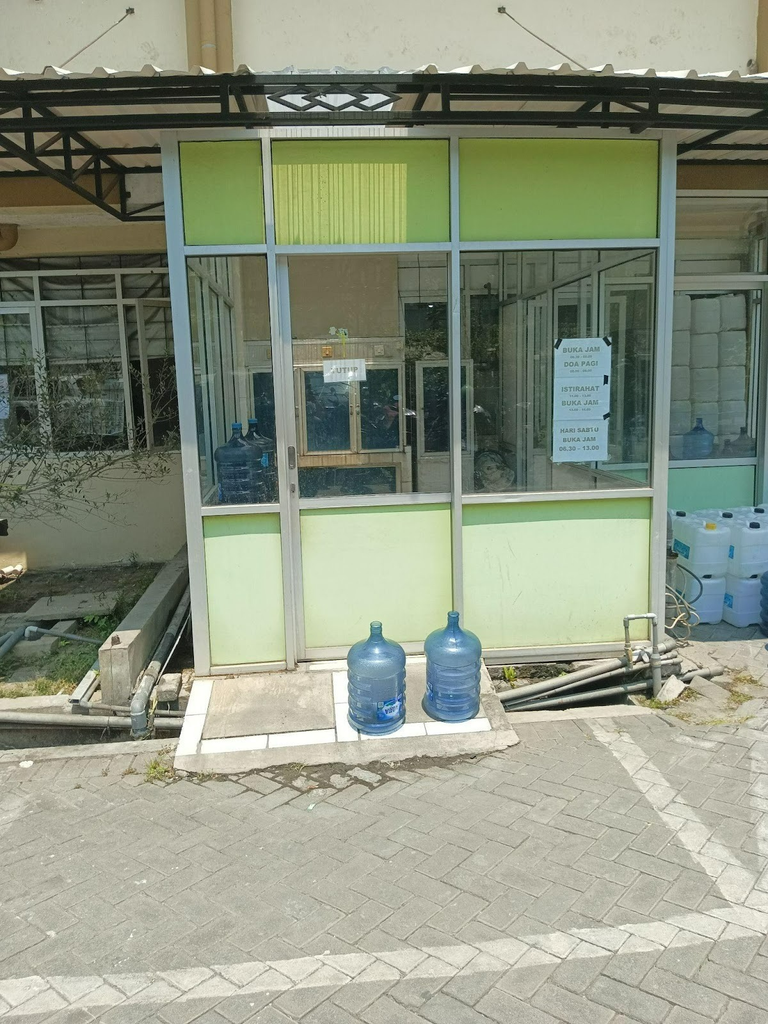
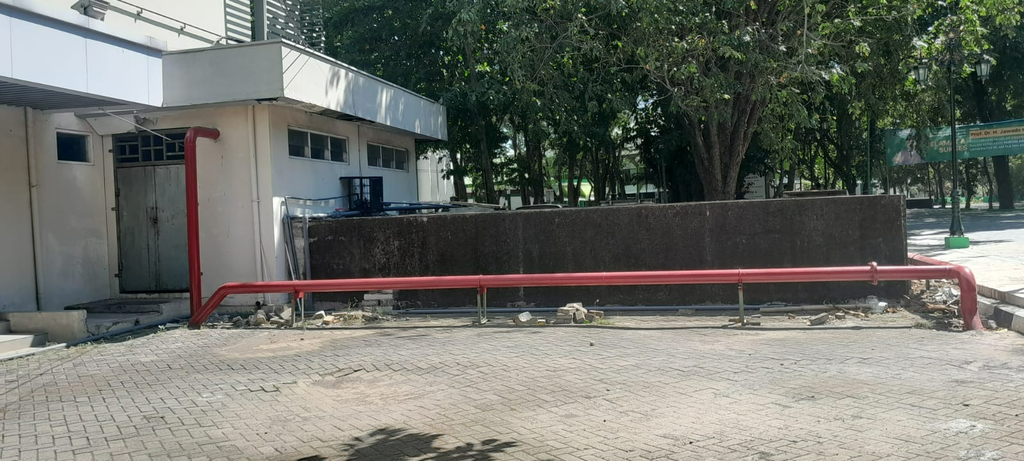
Water-Efficient Fixtures in Campus Buildings
UNISSULA has installed high-efficiency water-saving devices across a large proportion of its campus buildings.
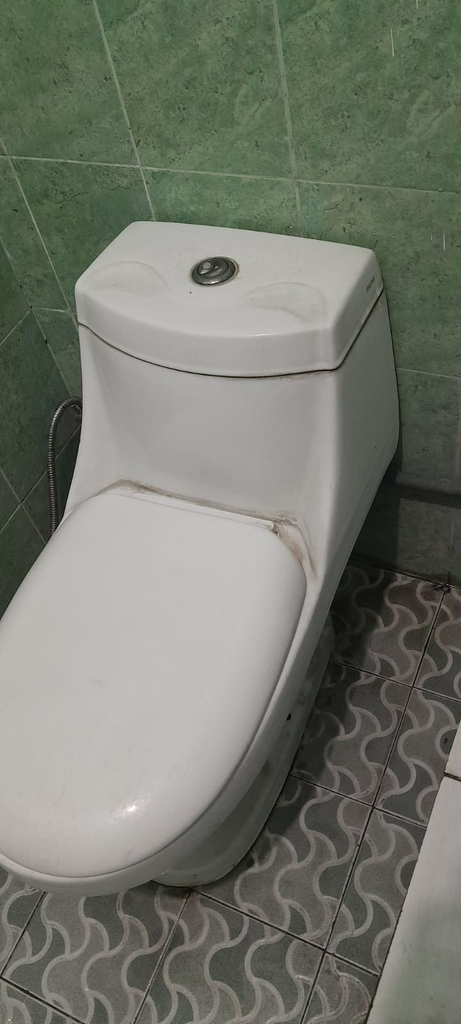
The university’s Sustainability Report 2025 states that approximately 83% of campus buildings are equipped with water-efficient devices, including:
- automatic sensor taps;
- dual-flush toilets;
- efficient urinal systems.
These installations are intended to reduce unnecessary water use during daily building operations and improve the efficiency of sanitation facilities.
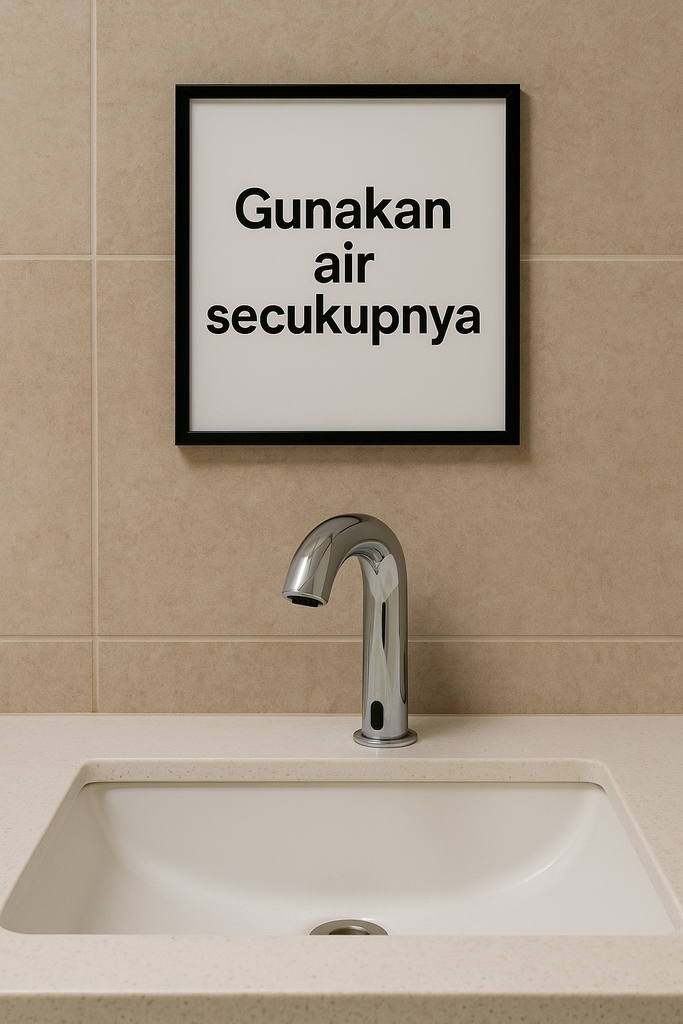
Automatic sensor taps help reduce water loss from taps being left open, while dual-flush toilets allow users to select a lower or higher flush volume according to need. Efficient urinals similarly help reduce the amount of water required for sanitation.
Promoting Responsible Water Use
Water-efficient infrastructure is supported by visible reminders encouraging responsible behaviour.
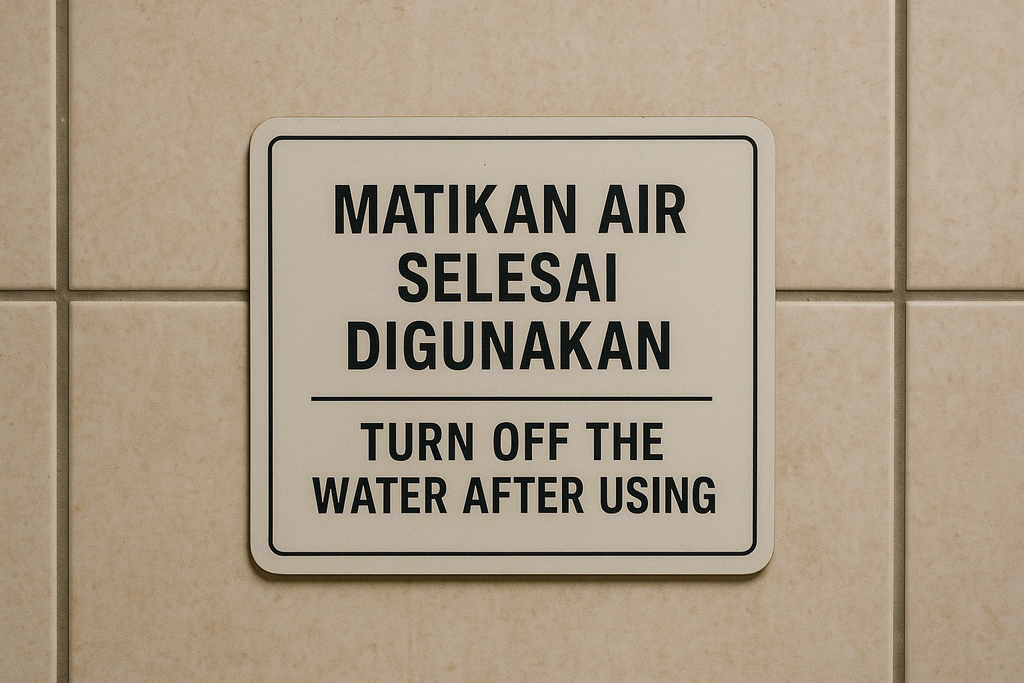
Signage such as “Use water as needed” and “Turn off the water after using” is displayed near sanitation facilities.
These reminders complement the technical measures installed in campus buildings and encourage students, lecturers, staff, and visitors to participate in water conservation.
Rainwater Collection in Campus Buildings
UNISSULA also incorporates rainwater harvesting into its water-conscious building approach.
Rainwater from rooftops is collected through gutters and directed through first-flush diverters and leaf screens before entering storage tanks.
The collected rainwater can then undergo basic treatment using sediment and carbon filtration before being used for suitable non-potable purposes.
These uses include:
- landscape irrigation;
- cleaning;
- pond top-ups; and
- selected toilet flushing.
This system reduces reliance on primary water sources for activities that do not require potable water.
In-Ground Water Storage
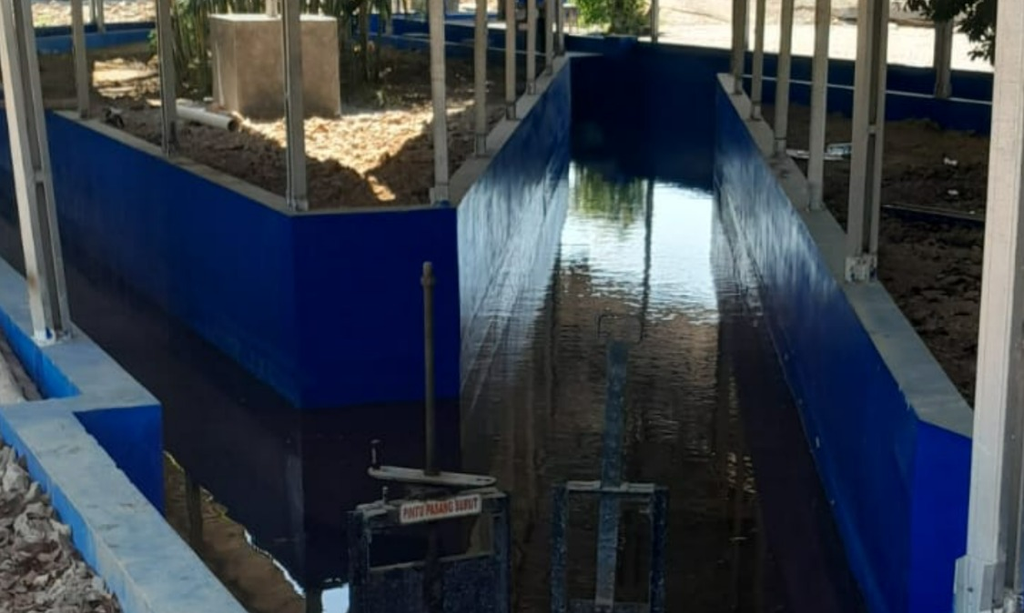
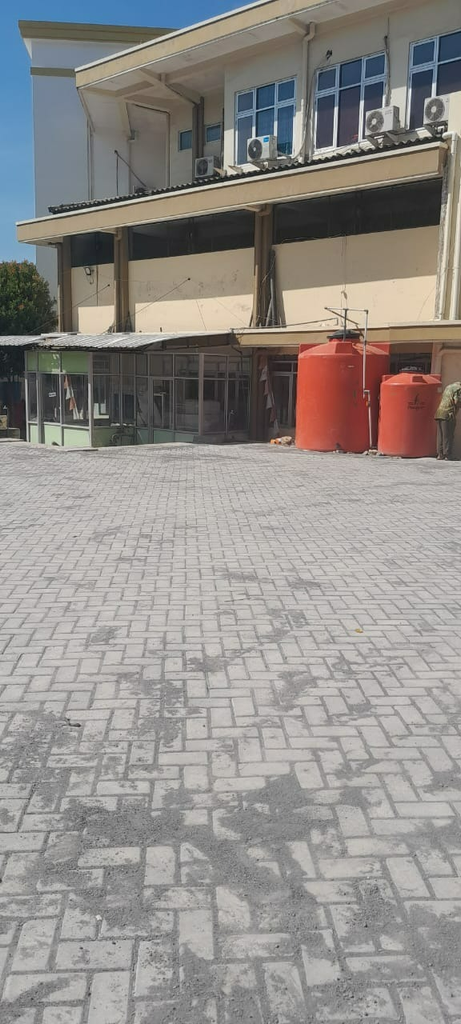
The university also uses in-ground water tanks to store harvested rainwater and other recoverable non-potable water.
In-ground storage helps:
- reduce evaporation;
- reduce algae growth;
- stabilise water temperature;
- conserve space around campus buildings; and
- maintain a supply of non-potable water for reuse.
Stored water can be reused for landscape irrigation, floor and area cleaning, pond replenishment, and selected toilet flushing.
This helps reduce demand for fresh water in routine building and campus operations.
Campus Lake and Stormwater Management
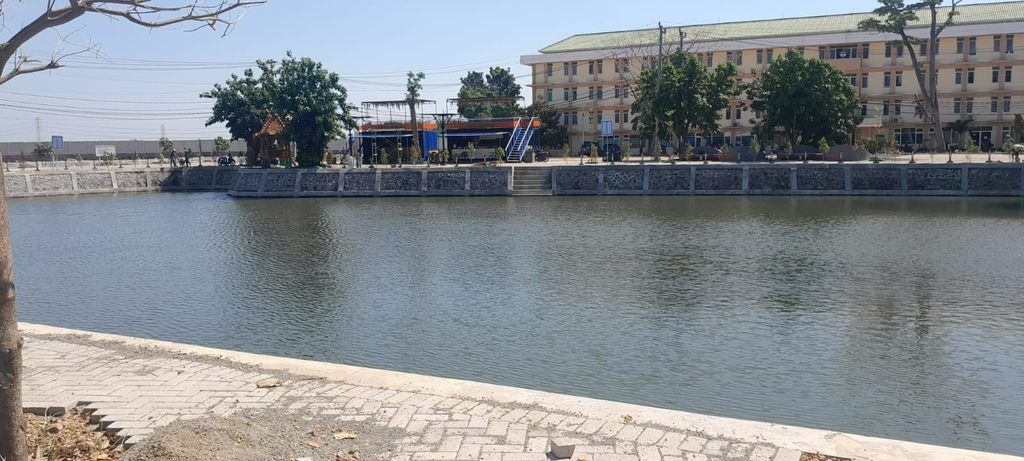
UNISSULA’s water-conscious infrastructure also includes a campus lake or retention pond.
The lake receives stormwater from rooftops and campus grounds and helps:
- reduce peak runoff;
- settle sediment;
- support groundwater recharge; and
- provide a source of non-potable water for selected reuse.
Water from the lake can support landscape irrigation and pond replenishment after appropriate basic treatment.
This approach links building water management with broader campus drainage and conservation infrastructure.
Water Reuse in Building Operations
A key component of UNISSULA’s water-conscious building approach is the reuse of non-potable water.
Where appropriate, treated or harvested water is used instead of fresh water for functions such as:
- toilet flushing;
- cleaning;
- irrigation; and
- other non-potable applications.
This reduces pressure on primary water supplies and improves overall water efficiency across campus facilities.
Smart Building Water Monitoring
UNISSULA also applies smart-building approaches to optimise resource use.
The university’s Sustainability Report describes the use of a Building Management System (BMS), sub-metered monitoring, and environmental sensors to support more efficient water and energy use in campus buildings.
These systems enable the university to monitor building performance, identify abnormal use, and support more effective maintenance and resource management.
Relevant Water-Conscious Building Standards Applied
UNISSULA’s building practices include the following water-efficiency standards and measures:
| Water-Conscious Building Measure | Application |
|---|---|
| Automatic sensor taps | Reduce unnecessary tap water use |
| Dual-flush toilets | Reduce flushing water demand |
| Efficient urinal systems | Improve sanitation water efficiency |
| Rainwater harvesting | Capture rooftop rainwater |
| First-flush and filtration systems | Improve quality of harvested water |
| Above-ground and in-ground storage | Store recoverable non-potable water |
| Non-potable water reuse | Toilet flushing, cleaning and irrigation |
| Infiltration wells, bioswales and biopores | Support stormwater management and groundwater recharge |
| Water sub-metering and monitoring | Support detection and management of inefficient water use |
Together, these measures form a practical framework for reducing water consumption in campus buildings.
Building-Level Implementation
The water-saving measures are not limited to plans or design concepts.
UNISSULA has documented their actual implementation in campus buildings and facilities. The evidence shows physical installation of water-efficient fixtures as well as rainwater collection, storage, and reuse infrastructure.
The reported coverage of 83% of campus buildings with high-efficiency water-saving devices demonstrates that the approach has been applied broadly across the university.
Supporting Sustainable Campus Development
Applying water-conscious building standards helps UNISSULA reduce the environmental impact of campus operations.
The measures contribute to:
- lower demand for fresh water;
- reduced water wastage;
- greater use of harvested and recovered water;
- more effective stormwater management;
- groundwater recharge; and
- improved resource efficiency.
These practices support UNISSULA’s broader commitment to sustainable campus management and responsible use of water resources.