

















6.3.1 Wastewater Treatment at UNISSULA
Managing Wastewater Through Treatment and Reuse
Universitas Islam Sultan Agung (UNISSULA) has established a wastewater treatment process as part of its sustainable water management system. The university manages wastewater through dedicated treatment facilities and recycling processes designed to improve effluent quality, reduce environmental pollution, and enable the reuse of treated water for non-potable purposes.
The wastewater treatment process was already in place by 2025 and forms part of UNISSULA’s wider commitment to responsible water use and environmental protection.

Wastewater Treatment Facilities
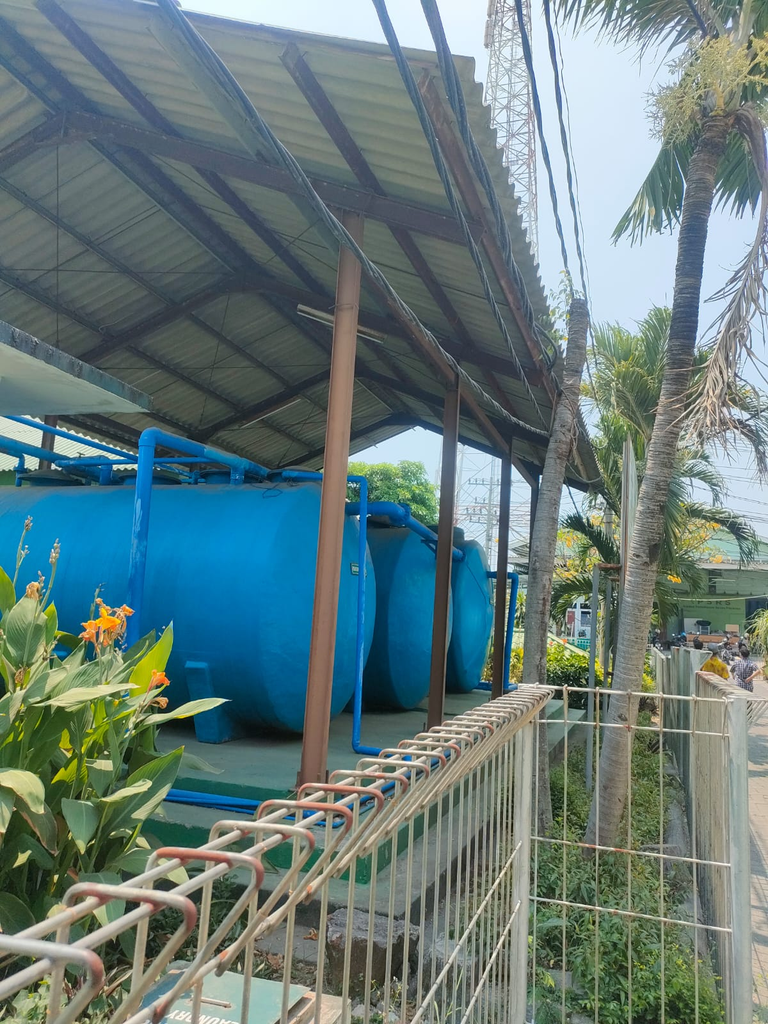
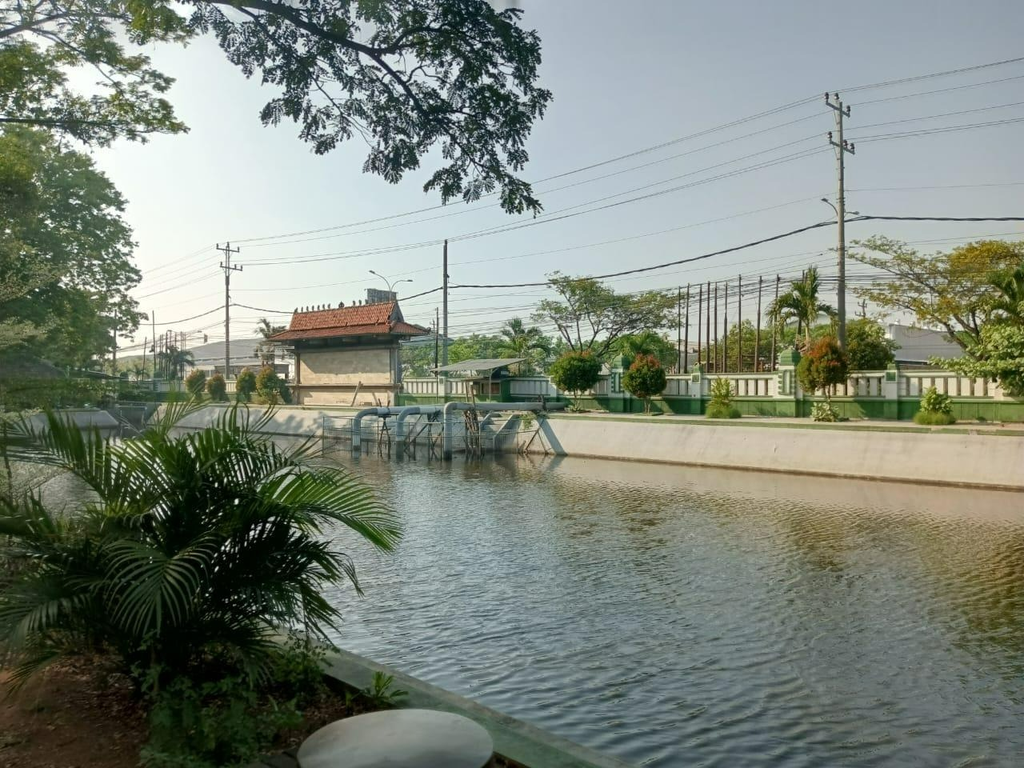
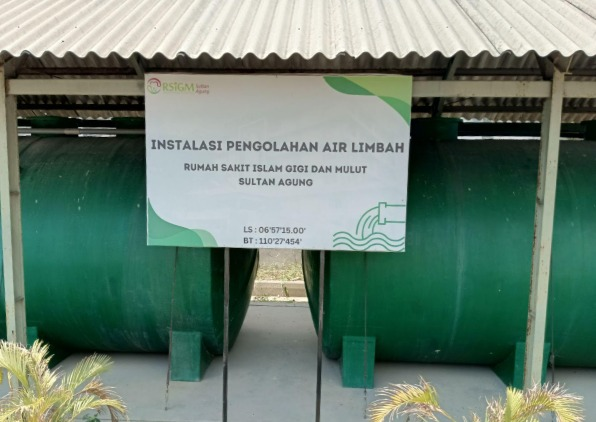
UNISSULA operates wastewater treatment facilities within the university environment, including treatment units associated with the campus and Sultan Agung Islamic Hospital.
The university’s 2025 Sustainability Report records that sewage is treated through tertiary treatment at campus wastewater units and at Sultan Agung Islamic Hospital. The purpose of this treatment is to improve effluent quality and support more sustainable water management.
Physical documentation also shows the presence of an Instalasi Pengolahan Air Limbah (IPAL) or Wastewater Treatment Plant within the Sultan Agung environment, reinforcing that wastewater treatment is supported by dedicated infrastructure.
Campus Water Recycling Process
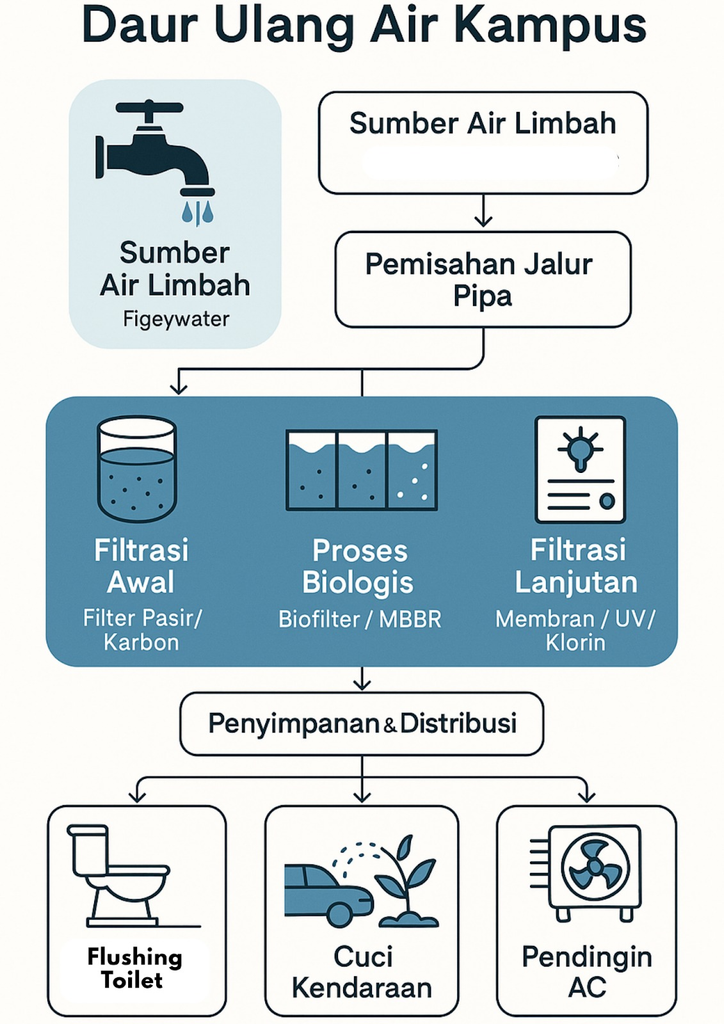
UNISSULA also operates a campus water recycling system for greywater.
Greywater is collected from sources such as:
- sinks;
- showers; and
- air-conditioner condensate.
The wastewater is then conveyed through separate piping to the treatment system.
The treatment process consists of several stages.
1. Pre-Filtration
The first stage uses sand and activated carbon filters to remove suspended solids, impurities, and odours from the wastewater.
This initial stage prepares the water for further treatment.
2. Biological Treatment
After initial filtration, wastewater undergoes biological treatment using a biofilter or Moving Bed Biofilm Reactor (MBBR).
This process helps degrade organic materials contained in the wastewater and improves overall water quality.
3. Advanced Filtration and Disinfection
Following biological treatment, the water undergoes further purification through advanced filtration and disinfection.
The treatment methods documented by UNISSULA include:
- membrane filtration;
- ultraviolet (UV) treatment; or
- chlorination.
These processes are used to improve the clarity and safety of the treated water before storage, reuse, or controlled discharge.
Storage and Distribution of Treated Water
After treatment, the water is stored and distributed for appropriate non-potable uses.
The university’s water recycling system is designed so that treated water can be used again instead of being immediately discarded.
This supports more efficient use of water resources and reduces demand for fresh water.
Reuse of Treated Wastewater
UNISSULA reuses treated non-potable water for several purposes.
The Sustainability Report identifies reuse applications including:
- fish ponds;
- landscape and ornamental plants; and
- controlled drainage recharge.
The campus water recycling programme also documents reuse applications such as:
- toilet flushing;
- vehicle washing; and
- selected operational uses.
This approach connects wastewater treatment directly with water conservation and reuse.
Water Pollution Control
Wastewater treatment at UNISSULA is also linked to water pollution control.
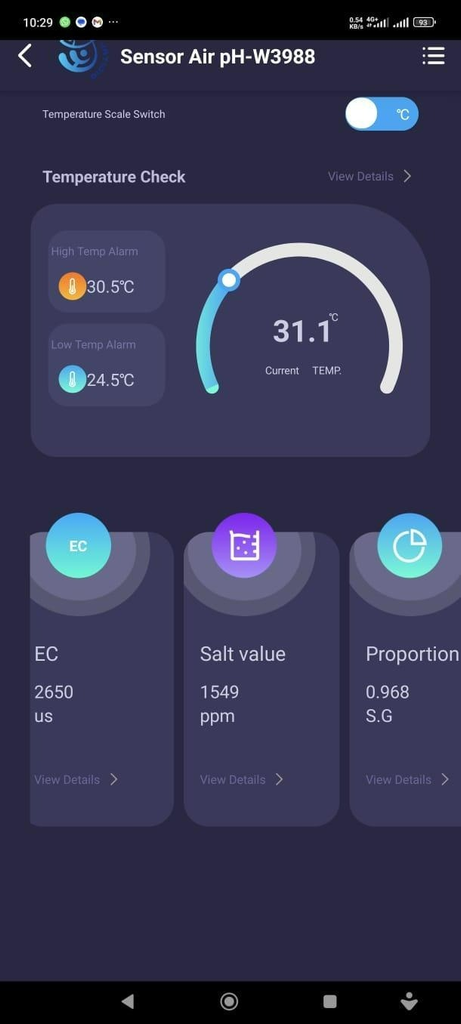
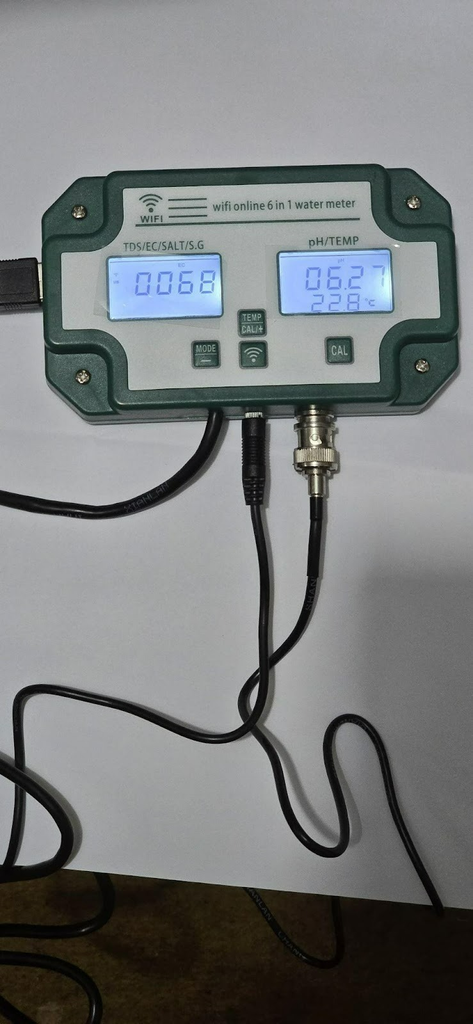
The university conducts water auditing and quality testing as part of its environmental management practices. The Sustainability Report states that these activities are supported by the installation and operation of Wastewater Treatment Plants (WWTPs) to ensure that discharged water meets required quality standards.
This demonstrates that wastewater treatment is not limited to physical infrastructure alone, but also includes monitoring and quality-control activities.
Protecting Water Quality
The wastewater treatment process helps prevent untreated wastewater from entering the surrounding water environment.
Through filtration, biological treatment, disinfection, monitoring, and controlled discharge or reuse, UNISSULA seeks to improve the quality of effluent before it leaves the treatment system.
These practices contribute to:
- pollution prevention;
- protection of surface water and groundwater;
- improved wastewater quality;
- safer reuse of treated water; and
- more responsible management of campus water resources.
Integration with Water Conservation
UNISSULA’s wastewater management system is integrated with broader water-conservation activities.
The university also maintains rainwater collection, storage systems, and a campus retention lake. Harvested and recovered non-potable water is used for landscape irrigation, cleaning, pond replenishment, and selected toilet flushing.
Together, wastewater treatment, water recycling, and rainwater management support a more circular approach to water use across the campus.
A Practical Treatment Process
The documented wastewater treatment process can be summarised as follows:
Wastewater and greywater collection → separate piping → pre-filtration → biological treatment → advanced filtration/disinfection → storage and distribution → non-potable reuse or controlled discharge.
This process demonstrates that UNISSULA has an operational system for treating wastewater rather than relying only on direct disposal.
Process in Place by 2025
The university’s Sustainability Report 2025 documents both the wastewater treatment facilities and the treatment and reuse process.
Evidence includes:
- tertiary sewage treatment;
- wastewater treatment units;
- greywater collection;
- sand and activated-carbon filtration;
- biological treatment using biofilter or MBBR;
- membrane filtration, UV treatment, or chlorination;
- wastewater quality monitoring; and
- reuse of treated water for non-potable purposes.
This confirms that the wastewater treatment process was established and operating by 2025.
Contribution to Sustainable Water Management
Wastewater treatment is an important part of UNISSULA’s approach to sustainable campus management.
By treating and reusing wastewater, the university can:
- reduce freshwater demand;
- reduce the risk of environmental pollution;
- improve effluent quality;
- conserve water resources;
- reuse water for appropriate non-potable purposes; and
- strengthen the resilience of campus water systems.