

















2.5.2 Events for Local Farmers and Food Producers
UNISSULA Provides Knowledge-Transfer Events for Local Farmers and Food Producers
Universitas Islam Sultan Agung (UNISSULA) organises events for local farmers and food producers to connect with university experts, exchange knowledge, develop practical skills, and gain access to appropriate technologies that support sustainable food production.
During the 2025 reporting period, UNISSULA organised community-engagement activities involving local farmers, agricultural producers, and food producers through training, workshops, mentoring, technology demonstrations, and hands-on implementation.
These events form part of UNISSULA’s community-service and knowledge-transfer activities and are designed to translate university expertise into practical solutions that can be directly applied by local food-production communities.
UNISSULA’s institutional approach combines community service, applied research, training, mentoring, technology transfer, and practical implementation as mechanisms for engaging farmers and food producers.

Smart Hydroponic Farming Knowledge-Transfer Event in Kedungcino, Jepara
In 2025, UNISSULA implemented the programme “Implementasi Teknologi Smart Farming dan Green Energy untuk Pengembangan Pertanian Hidroponik di Desa Kedungcino Kabupaten Jepara.”
The programme involved local hydroponic farmers and agricultural producers and provided them with direct access to knowledge and technology related to sustainable food production.
Training and practical knowledge-transfer activities covered:
- smart farming systems;
- Internet of Things (IoT) technology;
- environmental monitoring;
- hydroponic production management;
- temperature control;
- nutrient management;
- green-energy applications;
- technology-based farm management; and
- sustainable agricultural production.
These activities enabled participating farmers to learn directly from university experts and strengthen practical skills that could be applied to their own production activities.
Training on Temperature and Nutrient Control Equipment
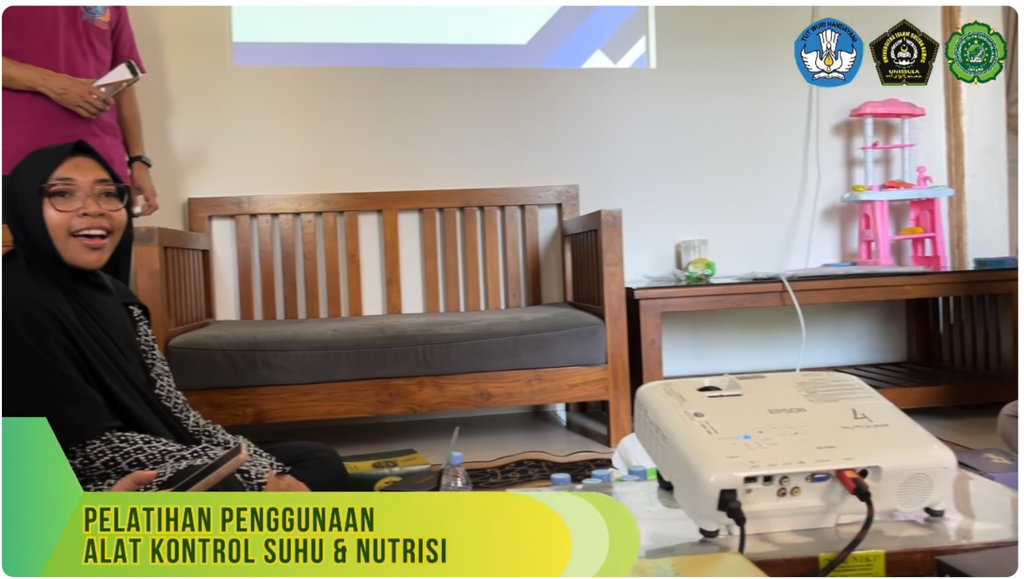
As part of the 2025 sustainable-agriculture programme, UNISSULA conducted practical training on the use of temperature and nutrient control equipment for participating farmers and food producers.
The training focused on helping participants understand how monitoring and control technologies can be used to manage growing conditions more effectively.
Knowledge and skills transferred through the event included:
- temperature monitoring;
- nutrient monitoring;
- control-system operation;
- interpretation of environmental conditions;
- improved management of hydroponic production; and
- practical application of technology in agricultural production.
The training also enabled local producers to interact directly with university facilitators, ask questions, discuss operational challenges, and develop practical technological skills.
Photovoltaic and Solar-Energy Training
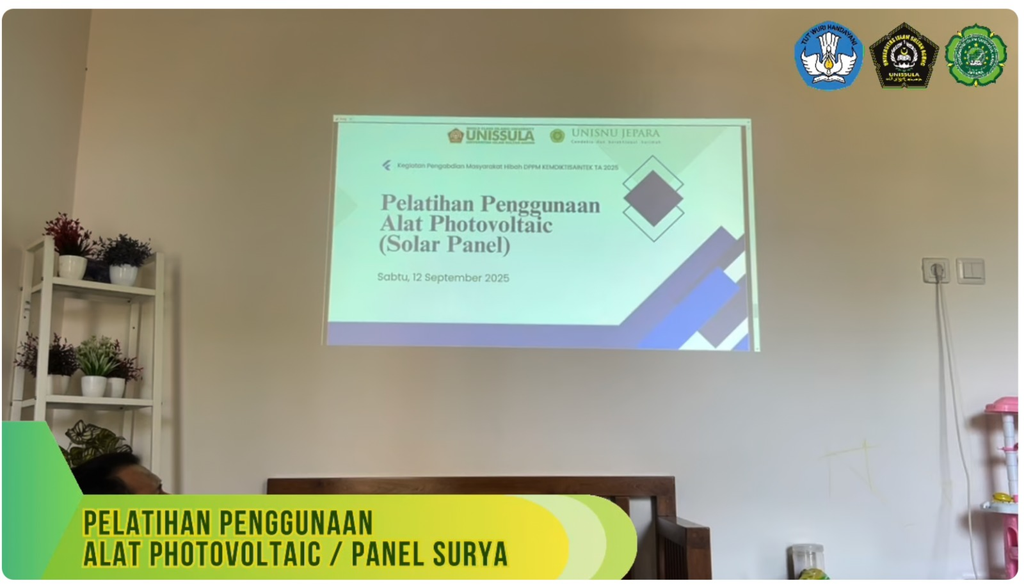
UNISSULA also conducted training on the use of photovoltaic and solar-panel technology as part of the programme.
The documented training session was held on 12 September 2025 and introduced local farmers and food producers to renewable-energy applications that can support agricultural production.
Participants received knowledge and practical guidance related to:
- basic photovoltaic systems;
- solar-energy applications;
- renewable energy for agricultural operations;
- equipment operation;
- integration of green energy into food production; and
- potential reduction of dependence on conventional energy sources.
The event connected sustainable agriculture with renewable-energy knowledge and demonstrated how university expertise can support lower-impact and more resource-efficient local food production.
Direct Knowledge Exchange Between University Experts and Producers
The 2025 activities were designed as interactive knowledge-transfer events rather than passive information sessions.
Participating farmers and food producers were able to:
- interact directly with university lecturers and facilitators;
- observe technology demonstrations;
- receive operational guidance;
- discuss production challenges;
- gain hands-on experience;
- exchange knowledge with other participants; and
- learn how technologies could be adapted to local production conditions.
This interaction creates opportunities for both connection and knowledge exchange, which are central to UNISSULA’s community-engagement approach.
Kopi Boyo Food-Producer Training
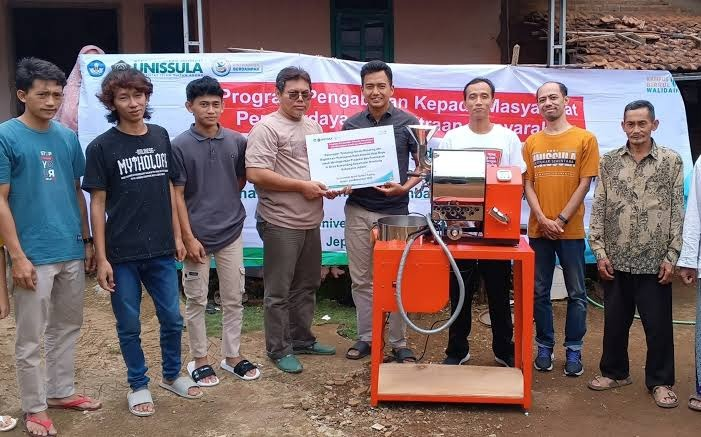
UNISSULA also conducted knowledge-transfer activities for Kopi Vinzoei / Kopi Boyo, a local coffee producer in Sumanding Village, Kembang District, Jepara, during 2025.
On 30 August 2025, the UNISSULA Community Service Team provided coffee-roasting technology together with practical training intended to strengthen local food-production capacity.
Training topics included:
- coffee-roasting machine operation;
- roasting temperature;
- roasting time;
- machine maintenance;
- production management;
- product packaging;
- internet marketing; and
- financial recording.
This activity gave the local food producer an opportunity to interact directly with university experts and receive technical and business knowledge relevant to food processing and production.
Knowledge Transfer Beyond Equipment Provision
The Kopi Boyo activity demonstrates that UNISSULA’s engagement with food producers extends beyond equipment provision.
The programme combined:
Technology provision → Technical training → Production management → Marketing knowledge → Financial skills
This integrated event-based approach strengthened both the technical and business capabilities of the beneficiary.
Following the intervention, monthly production increased from approximately 50 kg to 80–100 kg, alongside improvements in production efficiency and coffee quality.
Connecting Farmers and Food Producers with University Expertise
UNISSULA’s events provide local farmers and food producers with opportunities to connect with university expertise in:
- smart farming;
- hydroponic agriculture;
- Internet of Things (IoT);
- temperature and nutrient control;
- renewable energy;
- food-processing technology;
- production management;
- digital marketing;
- product packaging; and
- business management.
These events help bridge the gap between academic knowledge and practical food-production needs.
Free Participation for Farmers and Food Producers
Participation in these community-engagement events is provided free of charge to participating farmers and food producers.
The programmes are financed through community-service grants, and beneficiaries are not required to pay:
- participation fees;
- training fees;
- mentoring fees; or
- technology-access fees.
This community-service model enables local farmers and food producers to participate in training and knowledge-transfer activities without financial barriers.
It also provides free access to university expertise, mentoring, practical training, and relevant technology-transfer opportunities.
Event-Based Learning and Practical Skills Development
UNISSULA’s knowledge-transfer events are designed around practical learning.
Participants are given opportunities to:
- observe demonstrations;
- use or examine relevant technologies;
- discuss practical production challenges;
- obtain direct guidance from university experts;
- develop new technical skills;
- exchange knowledge with other farmers and producers; and
- apply lessons within their own production activities.
This format enables local stakeholders to gain both theoretical understanding and practical experience.
Contribution to Sustainable Food Production
UNISSULA’s events support sustainable food production by strengthening local producers’ capacity to:
- manage production more efficiently;
- adopt smart-farming technologies;
- improve resource efficiency;
- apply renewable-energy systems;
- monitor growing conditions;
- improve food-processing practices;
- increase product quality; and
- strengthen long-term business sustainability.
Through these activities, UNISSULA contributes to food security by strengthening the capabilities of people directly involved in local food production.
Historical Continuity of Farmer Knowledge-Exchange Activities
UNISSULA has also previously worked with farmer groups in Manggihan through knowledge-transfer and agricultural-development activities involving:
- greenhouse development;
- automatic watering technology;
- photovoltaic energy;
- organic vegetable production;
- certification training;
- entrepreneurship; and
- online marketing.
These earlier activities provide supporting evidence of UNISSULA’s continuing institutional experience in organising agricultural knowledge-transfer and community-engagement programmes.
Institutional Commitment to Farmer and Food-Producer Engagement
UNISSULA recognises that sustainable food production requires not only access to technology, but also opportunities for farmers and food producers to interact with experts, receive practical guidance, test appropriate technologies, and exchange knowledge.
By organising workshops, training sessions, demonstrations, mentoring, and hands-on technology-transfer activities, UNISSULA creates direct opportunities for local food producers to connect with university knowledge and expertise.
This approach strengthens the practical capacity of farmers and food producers while supporting more sustainable, efficient, and resilient local food-production systems.
Evidence of Implementation
UNISSULA’s 2025 events for local farmers and food producers are demonstrated through the following institutional activities:
- Smart Hydroponic Farming and Green Energy activities in Kedungcino, Jepara.
- Training on temperature and nutrient control equipment.
- Photovoltaic / solar-panel training for agricultural participants.
- Hands-on technology demonstrations for local farmers and food producers.
- Direct interaction between participants and university experts.
- Coffee-roasting and production training for Kopi Boyo / Kopi Vinzoei.
- Training in machine operation and maintenance.
- Training in production management, packaging, digital marketing, and financial recording.
- Free participation funded through community-service grants.