

















2.5.1 Access to Food Security Knowledge, Skills, and Technology
UNISSULA Provides Knowledge, Skills, and Technology to Local Farmers and Food Producers
Universitas Islam Sultan Agung (UNISSULA) provides local farmers and food producers with access to knowledge, practical skills, and technology related to food security, sustainable agriculture, food production, food processing, and sustainable livelihoods.
During the 2025 reporting period, UNISSULA implemented community-engagement programmes that transferred technology and practical expertise directly to local agricultural producers and food-processing businesses.
The programmes included:
- smart farming technology;
- hydroponic production;
- Internet of Things (IoT)-based monitoring;
- green-energy applications;
- food-production technology;
- food-processing technology;
- technical training;
- digital marketing;
- production management; and
- business-development assistance.
These activities enable local producers to improve productivity, production efficiency, product quality, and the long-term sustainability of their food-production activities.
Smart Hydroponic Farming and Green Energy in Kedungcino, Jepara
In 2025, UNISSULA implemented the programme “Implementasi Teknologi Smart Farming dan Green Energy untuk Pengembangan Pertanian Hidroponik di Desa Kedungcino Kabupaten Jepara.”

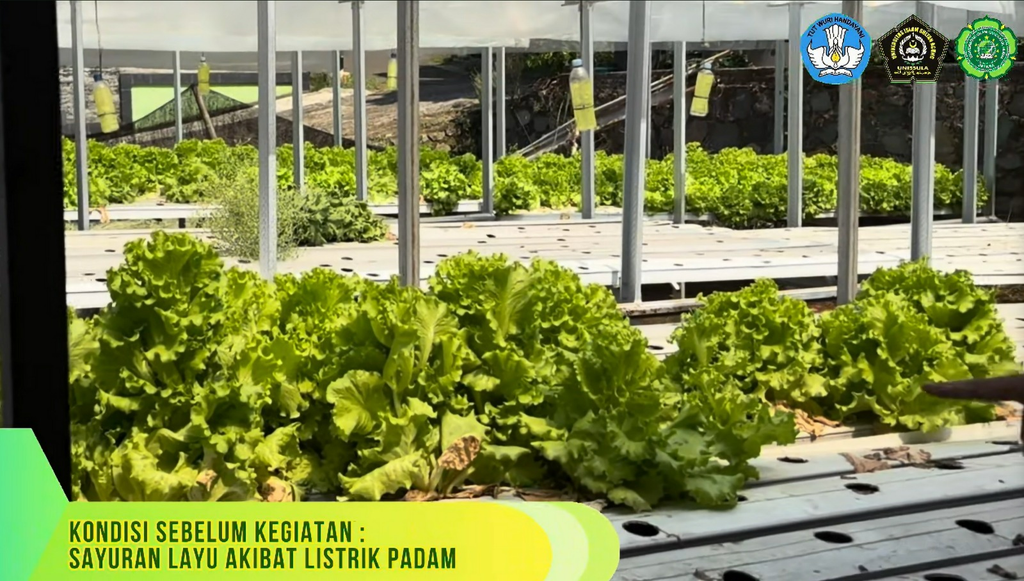
The programme was formally recorded within UNISSULA’s 2025 community-service activities and focused on developing hydroponic agriculture through the application of smart farming and green-energy technologies.
The programme provided local hydroponic farmers and agricultural producers with practical access to technologies and knowledge that support more sustainable and efficient food production.
The intervention included the introduction and application of:
- smart farming systems;
- Internet of Things (IoT) technology;
- environmental monitoring;
- hydroponic production management;
- green-energy applications;
- technology-based farm management; and
- practical skills for improving agricultural productivity.
Through this programme, local agricultural producers were able to strengthen their technical capabilities and gain practical experience in the use of technology for sustainable food production.
Technology Transfer for Sustainable Agriculture
The Kedungcino programme represents direct technology transfer from the university to local agricultural producers.
Rather than limiting support to academic discussion, UNISSULA applied relevant technologies within a real agricultural-production environment.
Through this approach, farmers gained access to:
- practical knowledge of digital agriculture;
- experience using monitoring technologies;
- improved understanding of hydroponic cultivation;
- skills in managing agricultural inputs;
- greater ability to monitor production conditions;
- knowledge of renewable-energy applications; and
- improved capacity to manage food production sustainably.
The programme therefore connects university expertise with practical agricultural needs at the community level.
Supporting Sustainable Food Production
Smart hydroponic farming can improve the efficiency and reliability of food production by enabling producers to monitor growing conditions more systematically.
UNISSULA’s intervention combines:
Hydroponic cultivation → Digital monitoring → Smart farming → Green energy → Producer skills development
This integrated approach supports agricultural productivity while encouraging more efficient use of production resources and environmentally responsible farming practices.
Kopi Boyo: Technology and Skills for a Local Food Producer
UNISSULA also supported a local coffee producer in Sumanding Village, Kembang District, Jepara, during 2025.
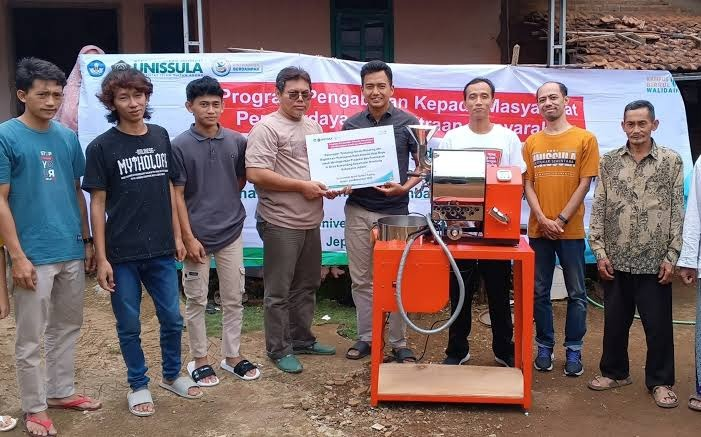
On 30 August 2025, the UNISSULA Community Service Team provided a coffee-roasting machine to UMKM Kopi Vinzoei / Kopi Boyo as part of a programme designed to strengthen local food-production capacity and improve product quality.
The programme did not consist solely of equipment provision. UNISSULA also provided technical and business-development training covering:
- machine operation;
- roasting temperature;
- roasting time;
- basic machine maintenance;
- production management;
- internet marketing;
- product-packaging improvement; and
- financial recording.
The local producer therefore received both productive technology and practical knowledge required to operate and manage the equipment independently.
Improving Food-Production Capacity
Before receiving its own roasting equipment, the coffee producer relied on external roasting services.
Following the intervention, the producer was able to manage the roasting process independently and increase production capacity.
UNISSULA reported that monthly production increased from approximately 50 kg to 80–100 kg. The intervention also contributed to improved production efficiency and more consistent coffee quality.
This demonstrates how access to university knowledge, practical skills, and technology can strengthen the production capacity of local food businesses.
Digital Skills and Market Access
Knowledge transfer also covered the commercial and management aspects of sustainable food production.
The Kopi Boyo programme included:
- internet marketing;
- product-packaging redesign;
- production management;
- financial-recording assistance; and
- digital-market development.
These skills help local food producers strengthen their commercial sustainability and improve the long-term viability of their food-production activities.
UNISSULA reported that the integrated intervention contributed to an increase in partner turnover of approximately 30%.
Historical Continuity: Greenhouse Development for Farmers in Manggihan
UNISSULA’s support for local farmers did not begin in 2025.
An earlier community-engagement programme in Manggihan Village, Getasan, Semarang Regency, provided farmers with training and assistance related to organic vegetable production and greenhouse-based agriculture.
Activities included:
- entrepreneurship training;
- organic vegetable certification training;
- online marketing;
- intellectual-property training;
- assistance with organic fertiliser and vegetable enterprises; and
- development of a greenhouse to improve the quality and standardisation of organic vegetables.
This earlier programme demonstrates institutional continuity in transferring agricultural knowledge, skills, and technology to local farming communities.
Smart Farming Experience in Manggihan
UNISSULA has also worked with the Mulyo Langgeng farmer group in Manggihan on smart-greenhouse technology.
The programme included workshops and practical assistance involving:
- automatic watering technology;
- photovoltaic energy;
- smart-greenhouse implementation; and
- renewable-energy applications.
Published programme results reported reductions in farmer operational costs and improvements in agricultural output following the application of these technologies.
These activities provide additional evidence of UNISSULA’s continuing experience in agricultural technology transfer.
Knowledge Access for Local Farmers and Food Producers
UNISSULA provides local farmers and food producers with access to university knowledge and expertise through several forms of support:
- technical training;
- technology transfer;
- hands-on implementation;
- community-service mentoring;
- production-management support;
- digitalisation assistance;
- marketing skills;
- sustainable farming technology;
- renewable-energy applications; and
- food-processing technology.
This approach ensures that university knowledge is translated into practical skills and technologies that producers can apply directly within their farming and food-production activities.
Community-Based Knowledge and Technology Support
These programmes are implemented as part of UNISSULA’s community-service and community-engagement activities, providing local partners with access to university expertise, mentoring, and applied technology.
All participating farmers and food producers received the training, mentoring, technology transfer, and programme access free of charge. The activities were funded through community-service grants, and beneficiaries were not charged participation, training, mentoring, or technology-access fees.
This funding model provides local farmers and food producers with free access to knowledge, skills, and technology, enabling them to benefit from university expertise without financial barriers.
Contribution to Food Security
UNISSULA’s activities support food security by strengthening the capacity of local producers to:
- produce food more efficiently;
- adopt sustainable production technologies;
- improve product quality;
- reduce production constraints;
- strengthen local food businesses;
- improve economic sustainability; and
- increase access to knowledge and technology.
The university therefore contributes to food security not only through academic research, but also through the practical transfer of knowledge, skills, and technology to local farmers and food producers.
Institutional Commitment to Knowledge and Technology Transfer
UNISSULA recognises that improving food security requires more than increasing food production alone.
Local producers also require access to practical knowledge, appropriate technology, technical skills, management capacity, and market-development support.
By combining smart farming, hydroponics, renewable energy, food-processing technology, technical training, digitalisation, and business-development assistance, UNISSULA provides an integrated framework for strengthening the capacity of local farmers and food producers.
This approach supports both sustainable food production and the long-term economic resilience of local food enterprises.
Free Access for Farmers and Food Producers
UNISSULA provides access to its food-security and sustainable-production programmes free of charge to participating farmers and food producers.
The training, mentoring, technology transfer, and practical assistance are financed through community-service grants, meaning that beneficiaries are not required to pay participation or service fees.
This funding model enables local farmers and food producers to access university knowledge, skills, and technology without financial barriers.
Evidence of Implementation
UNISSULA’s implementation in 2025 is demonstrated through the following institutional activities:
- Smart Farming and Green Energy for Hydroponic Agriculture in Kedungcino, Jepara.
- Direct transfer of smart-farming and hydroponic-production technology to local agricultural producers.
- Training and practical skills development related to sustainable agricultural production.
- Provision of coffee-roasting technology to Kopi Boyo / Kopi Vinzoei in Jepara.
- Technical training in coffee roasting and machine operation.
- Production-management and equipment-maintenance training.
- Internet-marketing and packaging-development support.
- Financial-management and record-keeping assistance for a local food producer.
- Continuing institutional experience in greenhouse development, smart farming, renewable energy, and organic-vegetable support for local farmer groups.