













1.4.1 Local Start-Up Assistance
Universitas Islam Sultan Agung (UNISSULA) consistently implements programmes to support the development of local entrepreneurship, student businesses, start-ups, and Micro, Small and Medium Enterprises (MSMEs). Through business incubation, entrepreneurship education, mentoring, training, community engagement, and collaboration with external partners, UNISSULA contributes to the development of businesses that are financially sustainable and capable of creating wider social and economic benefits.
UNISSULA’s approach to entrepreneurship is not limited to encouraging students to establish businesses. The university also supports business development through mentoring, business planning, digital marketing, financial management, legalisation, product promotion, and connections with entrepreneurs and external partners. These initiatives help strengthen the entrepreneurial ecosystem both within the university and among local communities in Central Java.
UNISSULA Business Incubator
A key component of this ecosystem is the UNISSULA Student Business Incubator (Inkubator Bisnis UNISSULA). The incubator was established as a platform where students can develop entrepreneurial knowledge, transform business ideas into viable enterprises, and acquire practical business experience. UNISSULA describes the incubator as a facility for entrepreneurship training and development, enabling students to directly practise and strengthen their entrepreneurial skills.
The role of the business incubator is also formally integrated into UNISSULA’s entrepreneurship education system. UNISSULA’s academic guidelines state that the UNISSULA Career Center works together with study programmes, partner institutions, and the Business Incubator to provide an integrated entrepreneurship learning system involving training and workshops, business surveys, mentoring, and guidance from experienced entrepreneurs.
Students participating in entrepreneurial programmes are supported in preparing business proposals, developing and implementing their businesses, and presenting the outcomes of their entrepreneurial activities. During the programme, students are guided by lecturers and experienced business mentors.
The UNISSULA Career Center and Business Incubator also organise entrepreneurship expos to promote student products and business profiles. Following the entrepreneurship programme, students who wish to further develop their businesses may receive additional support from the Business Incubator, particularly in relation to business development and business legalisation.
This structure demonstrates that entrepreneurship assistance at UNISSULA extends beyond classroom learning and includes practical business development mechanisms that can support emerging enterprises toward greater financial and operational sustainability.
Entrepreneurship Through the MBKM Programme
Entrepreneurship is formally embedded into UNISSULA’s academic system through the Merdeka Belajar Kampus Merdeka (MBKM) Entrepreneurship Programme.
At university level, the programme is coordinated through the UNISSULA Career Center in collaboration with study programmes and the Business Incubator. Students can undertake structured entrepreneurial activities equivalent to up to 20 credits in one semester or 40 credits in one academic year, depending on the approved programme. Preparatory entrepreneurship activities undertaken during earlier semesters may also be recognised in the students’ Diploma Supplement (Surat Keterangan Pendamping Ijazah/SKPI).
The programme combines academic learning with practical entrepreneurship through:
- business and entrepreneurship workshops;
- business idea development;
- preparation of business proposals;
- mentoring by lecturers and entrepreneurs;
- practical implementation of business projects;
- business product exhibitions;
- evaluation of entrepreneurial performance; and
- follow-up support for business development.
This mechanism enables students to move from entrepreneurial knowledge to actual business implementation while receiving structured mentoring and academic recognition.
UNISSULA students have also participated in the Indonesian Government’s Wirausaha Merdeka Programme. In 2024, students from the Faculty of Economics and Business successfully participated in entrepreneurship programmes hosted by several Indonesian universities, including Universitas Muhammadiyah Surakarta, IPB University, and Universitas Dian Nuswantoro. The programme provides participants with opportunities to develop independent and innovative businesses through intensive entrepreneurship learning and mentoring
Supporting Local MSMEs through Digital Marketing
UNISSULA extends entrepreneurship support beyond students by assisting local MSMEs through community service programmes.
One example was an international community engagement programme organised by the Faculty of Economics and Business UNISSULA in collaboration with Universiti Teknologi MARA (UiTM), Malaysia, on 25–26 June 2024. The activity focused on helping Indonesian MSMEs improve their sales through the application of digital marketing. The programme brought together UNISSULA academics and international partners to strengthen local entrepreneurs’ ability to use digital technologies to develop their markets.
This initiative demonstrates UNISSULA’s approach to entrepreneurship assistance through multi-institutional collaboration. Rather than providing only theoretical knowledge, the university helps local businesses strengthen practical capabilities that can improve market access, sales performance, and long-term competitiveness.
Digital Business Management Training for Local MSMEs
Another concrete example is UNISSULA’s community empowerment programme for the Rahmat Semesta Foundation MSMEs in Rowosari, Kendal.
The programme was conducted by lecturers from UNISSULA’s Faculty of Economics and Business and Faculty of Industrial Technology and focused on digital-based business management and transaction processes.
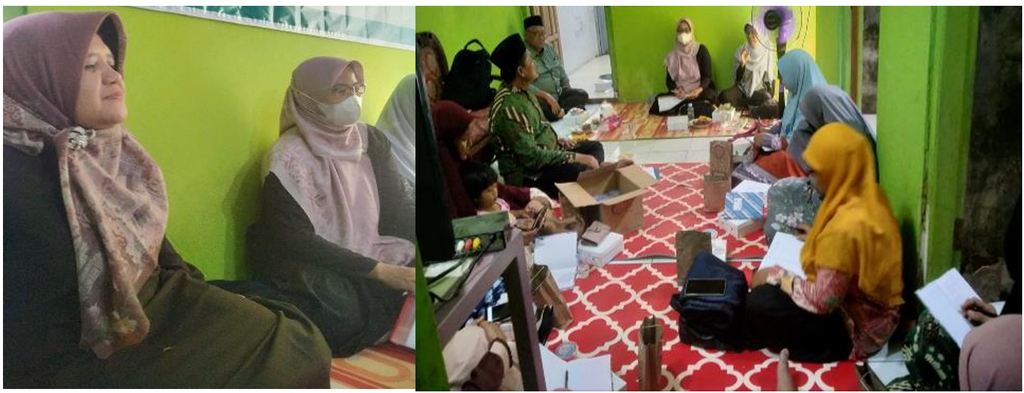
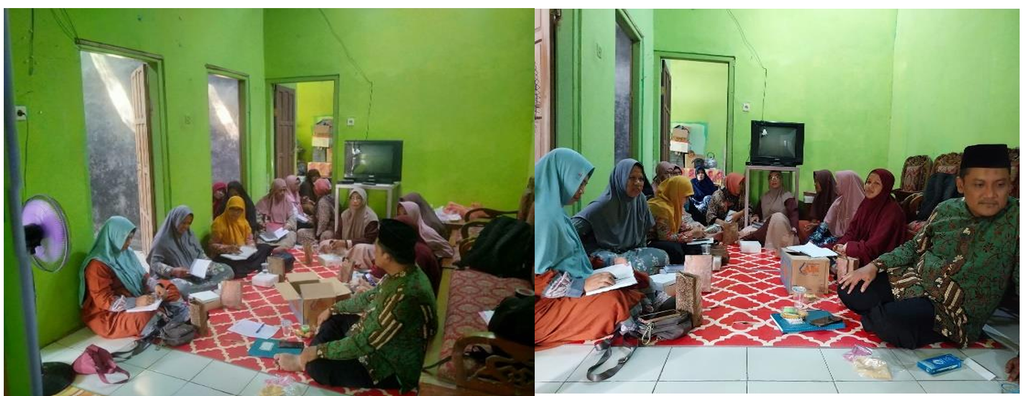
Before the programme, participating MSMEs relied heavily on manual business processes. UNISSULA therefore provided training covering:
- digital business transaction recording;
- business transaction management;
- transaction processing;
- financial reporting; and
- monitoring and evaluation.
Following the programme, participating entrepreneurs demonstrated increased knowledge and competencies in recording, managing, and processing digital business transactions. This enabled them to maintain more systematic financial records and better evaluate business performance and profitability.
This programme illustrates how UNISSULA helps local businesses strengthen not only marketing activities but also internal financial and operational capacity, an important element of long-term business sustainability.
Digitalpreneurship for MSMEs in Semarang
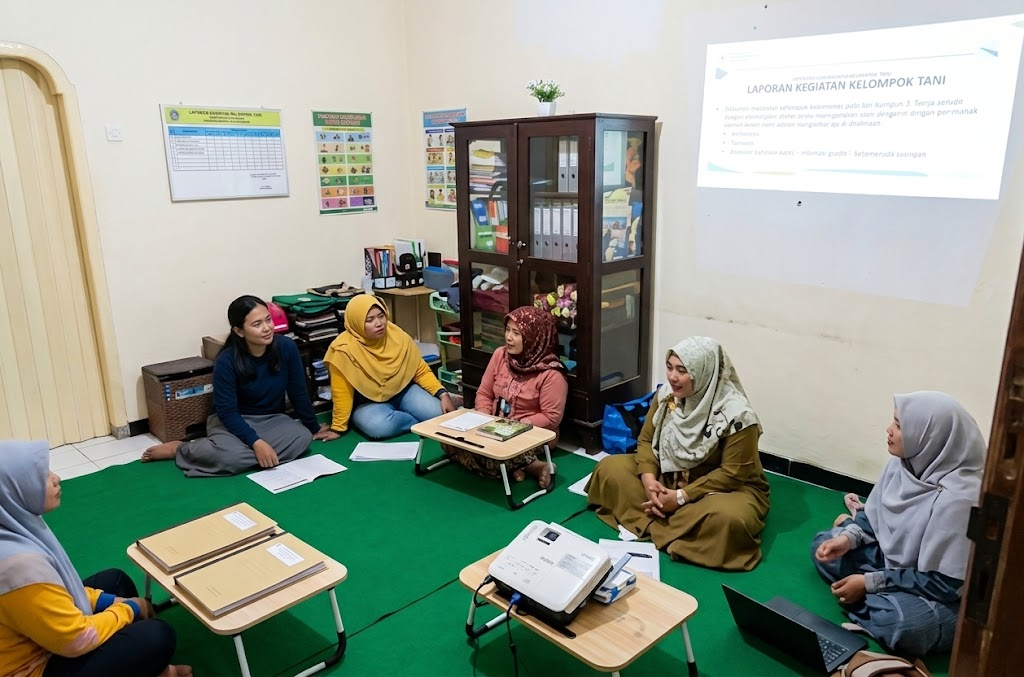
UNISSULA academics also implemented a Digitalpreneurship Programme for MSMEs in Krobokan Village, Semarang.
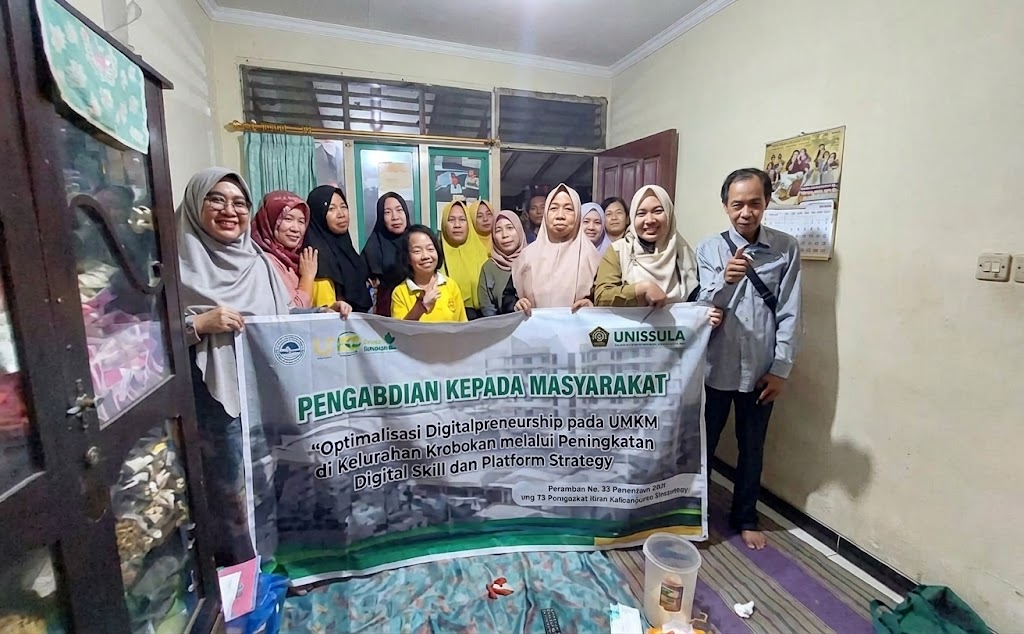
The programme was specifically designed to provide education on digital entrepreneurship so that local MSMEs could manage their businesses more effectively and strengthen their business sustainability.
By introducing digital entrepreneurial approaches to local enterprises, UNISSULA contributes to strengthening the capacity of community businesses to adapt to changing consumer behaviour and increasingly digital markets.
Such initiatives are particularly important for micro and small businesses because digital tools can expand market access without requiring large physical infrastructure investments.
Integrating Entrepreneurship into the Curriculum
Entrepreneurship is also integrated into academic programmes across UNISSULA.
For example, the Industrial Engineering Programme includes the course Sharia Entrepreneurship (Kewirausahaan Syariah) as a 2-credit course. Its MBKM entrepreneurship pathway also allows entrepreneurial activities that result in the establishment of a new business operating for at least one semester.
The Bachelor of Management Programme includes entrepreneurship-oriented courses such as:
- Startup Business;
- Digital Marketing; and
- SME and Cooperative Management.
These courses strengthen students’ practical competencies in creating, managing, and developing businesses.
Similarly, the Bachelor of Accounting Programme provides an entrepreneurship pathway containing courses such as Entrepreneurial Business Planning, Best Practice Entrepreneurship, and Startup of Business.
Sharia Entrepreneurship is also included in other academic disciplines, including Industrial Engineering, Law, and Dentistry.
This interdisciplinary integration demonstrates that entrepreneurial competence is regarded by UNISSULA as an important graduate capability rather than being limited to business students.
Contribution to Poverty Reduction and Inclusive Economic Development
Through the combination of the UNISSULA Business Incubator, Career Center, MBKM Entrepreneurship Programme, entrepreneurship curriculum, mentoring activities, MSME digitalisation programmes, community service, and entrepreneurship research, UNISSULA provides an integrated framework for supporting the development of local businesses.
These initiatives contribute to financial sustainability by helping entrepreneurs improve business planning, financial management, market access, digital capabilities, and competitiveness. They also contribute to social sustainability by encouraging entrepreneurship as a mechanism for creating employment, increasing household income, strengthening local economic activity, and improving community resilience.
UNISSULA’s local entrepreneurship support therefore contributes directly to SDG 1: No Poverty, particularly through the empowerment of individuals and communities to establish and develop sustainable sources of income.
The programme also contributes to SDG 8: Decent Work and Economic Growth through entrepreneurship and employment creation, SDG 9: Industry, Innovation and Infrastructure through business and digital innovation, and SDG 17: Partnerships for the Goals through collaboration with government programmes, international universities, businesses, and local communities.
Through these interconnected activities, UNISSULA demonstrates its continuing commitment to ensuring that entrepreneurship and innovation serve not only as academic outcomes, but also as practical instruments for economic empowerment, job creation, social mobility, and sustainable poverty reduction.