


















1.3.3 Support for Students from Low-Income Families to Complete University
Universitas Islam Sultan Agung (UNISSULA) provides a range of financial and non-financial support mechanisms for students from low-income and economically disadvantaged families to help them remain enrolled, progress academically, and successfully complete their university education.
UNISSULA recognises that financial barriers to completing higher education extend beyond tuition fees. Students from low-income families may also experience difficulties in meeting daily living expenses, including food, accommodation, transportation, healthcare, and other essential needs.
To reduce these barriers, UNISSULA combines direct financial assistance, living-cost support, scholarships, institutional fee relief, student accommodation, transportation facilities, academic guidance, and other student-support mechanisms throughout the period of study.
Direct Financial and Living-Cost Support
A principal mechanism for supporting students from low-income families is the Kartu Indonesia Pintar Kuliah (KIP Kuliah) programme.
UNISSULA’s official Rector Decrees establish KIP Kuliah support for students who demonstrate academic potential but have limited economic capacity. The programme therefore supports students whose financial circumstances might otherwise restrict their ability to participate in and complete higher education.
KIP Kuliah recipients at UNISSULA receive both education-cost assistance and living-cost assistance.
Living-cost assistance provides direct financial support that can help eligible students meet essential day-to-day expenses during their studies, including food, accommodation, local transportation, and other basic living needs.
This assistance represents one of UNISSULA’s principal mechanisms for helping students from low-income families maintain active enrolment and continue progressing toward graduation.
Free Meal Support
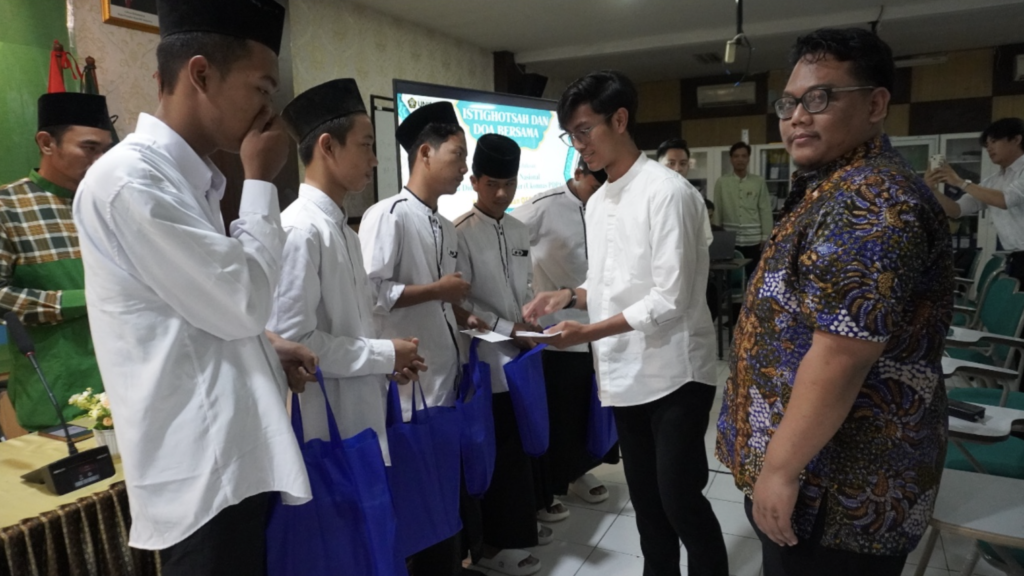
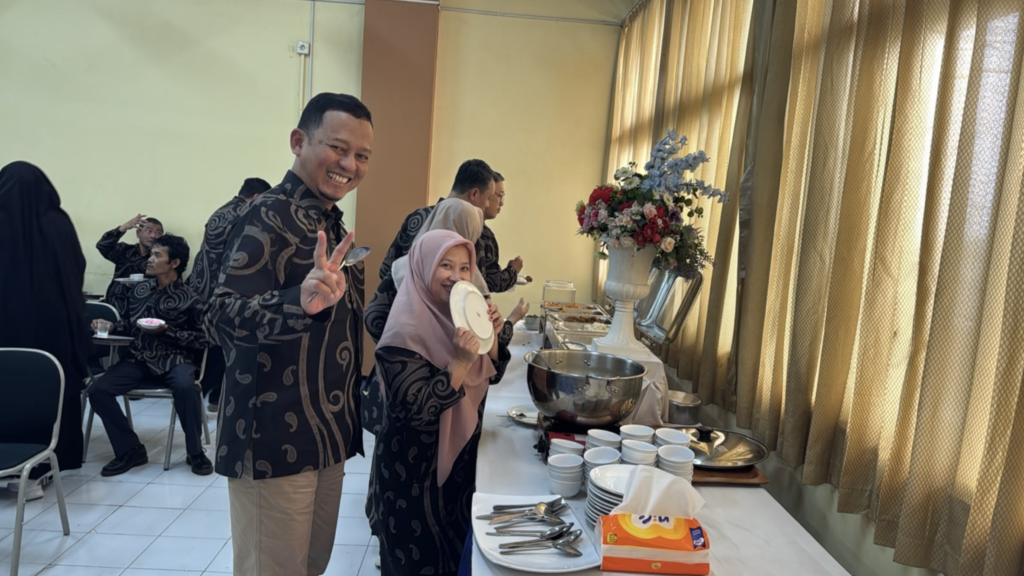
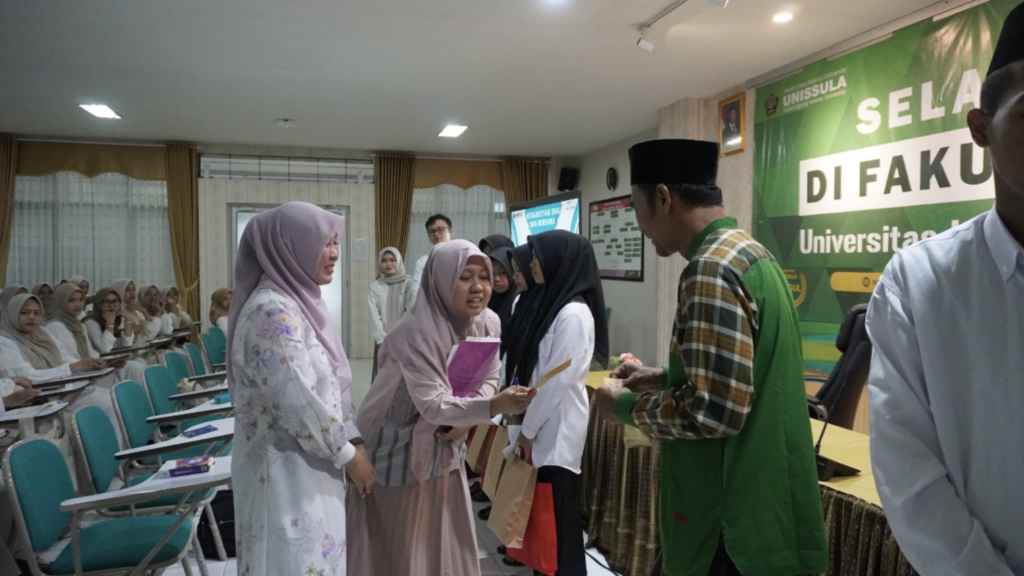
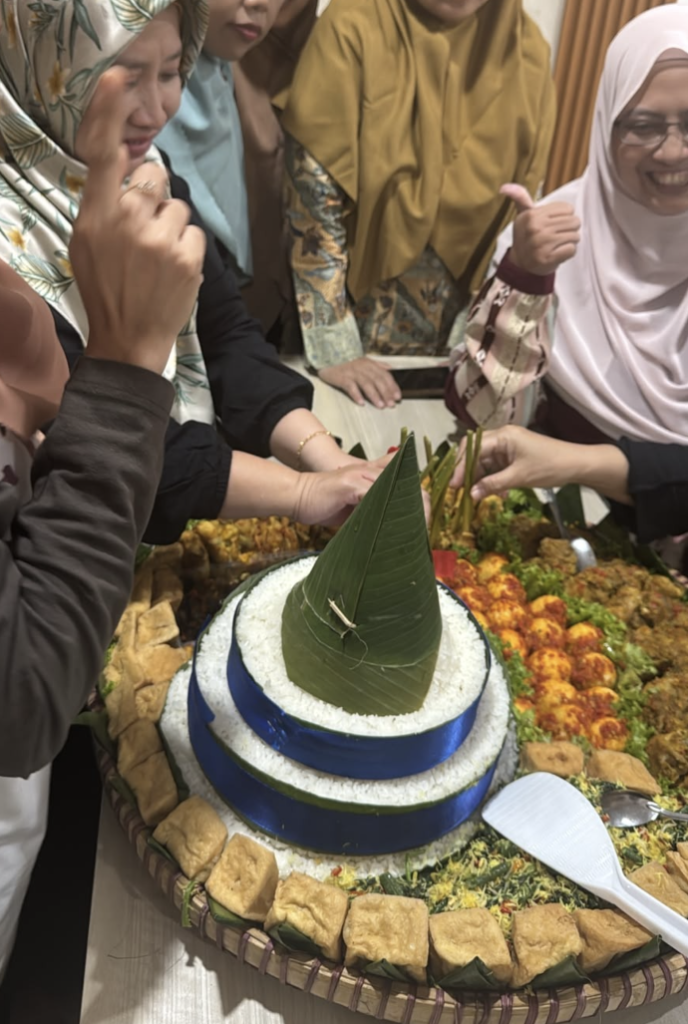
UNISSULA also provides free meals for members of the university community, including students, lecturers, and staff, as part of its institutional welfare and community-support activities.
The provision of free meals helps reduce students’ day-to-day food expenditure and is particularly beneficial for students from low-income families, for whom regular living expenses can create additional barriers to continuing university study.
Because the meals are provided free of charge, eligible students can access food support without incurring additional costs. This complements UNISSULA’s other low-income student-support mechanisms, including KIP Kuliah living-cost assistance, the Khaira Ummah Scholarship, and LAZIS Sultan Agung support.
For students experiencing financial hardship, access to free meals can help reduce essential living expenses and support continued participation in academic activities.
Formal Institutional Support for Low-Income Students
UNISSULA formally documents the implementation of KIP Kuliah through official Rector Decrees.
Rector Decree No. 7500/F/SA/VIII/2025 establishes KIP Kuliah beneficiaries among newly admitted students in 2025 and formally recognises their participation in the programme.
Rector Decree No. 10263/F/SA/X/2025 establishes additional KIP Kuliah beneficiaries through the Usulan Masyarakat (USMAS) scheme and provides education-cost and living-cost support for eligible recipients.
These formal decisions demonstrate that support for low-income students is implemented through a structured, documented, and institutionally recognised mechanism rather than through ad hoc assistance.
Continued Financial Support for KIP Kuliah Beneficiaries in 2025
In 2025, Universitas Islam Sultan Agung (UNISSULA) formally continued financial assistance for 1,074 existing KIP Kuliah beneficiaries through Rector Decree No. 6683/F/SA/VIII/2025, dated 14 August 2025.
The decree covers students admitted in 2022, 2023, and 2024 who continued receiving financial support during the odd semester of the 2025/2026 academic year. The programme provides tuition assistance administered through the university and living-cost support for eligible students.
This formal continuation of assistance demonstrates UNISSULA’s institutional commitment to reducing financial barriers, maintaining student enrolment, and supporting the academic progression of economically disadvantaged students towards successful degree completion.
LAZIS Sultan Agung and Khaira Ummah Scholarship
UNISSULA’s low-income student-support framework is complemented by assistance provided through LAZIS Sultan Agung and the Khaira Ummah Scholarship.
The Khaira Ummah Scholarship is formally integrated into UNISSULA’s new-student admission process. Through this scholarship pathway, the university provides additional opportunities for financially disadvantaged and academically capable students to access and continue higher education.
Under UNISSULA’s educational-fee policy, eligible Khaira Ummah Scholarship recipients may receive substantial financial relief, including up to 100% exemption from Development Contribution Fees (DPI) and Tuition Fees (UKT), subject to eligibility requirements, programme provisions, and available quotas.
This scholarship provides an additional institutional mechanism for reducing educational costs that could otherwise limit students’ ability to continue their studies.
Support throughout the Study Period
UNISSULA’s approach is not limited to providing financial assistance at the point of admission.
Financial difficulties may arise at different stages of study and can affect students’ ability to maintain enrolment, meet educational costs, and complete academic requirements.
UNISSULA therefore combines:
- tuition assistance;
- living-cost assistance;
- scholarships for financially disadvantaged students;
- institutional fee relief;
- academic advising and progression support;
- student welfare support; and
- complementary accommodation and transportation facilities.
Together, these measures help students from low-income families remain enrolled and continue progressing toward successful completion.
Financial Relief during the Final Stages of Study
UNISSULA also provides institutional financial measures designed to reduce the burden on students who require additional time to complete their final academic requirements.
Under Rector Decree No. 9700/D.3/SA/IX/2024 concerning Educational Fees for the 2025/2026 Academic Year, reduced tuition obligations apply according to students’ remaining academic activities.
The policy provides that:
- students who are still taking courses may be charged 75% of the applicable UKT;
- students completing a thesis, final examination, pendadaran, or munaqosah may be charged 50% of the applicable UKT; and
- students who are only waiting for a final examination may be charged 25% of the applicable UKT.
These provisions reduce the additional financial burden students may face while completing the final stages of their studies.
Although these fee reductions apply more broadly than to low-income students alone, they complement UNISSULA’s targeted financial-support framework and contribute to supporting continued enrolment through completion.
Housing and Accommodation Support
UNISSULA also provides university-managed student accommodation through the Pesantren Mahasiswa Sultan Agung (Pesanmasa) residential system.
Pesanmasa provides student housing close to the university environment together with supporting facilities such as furnished rooms, Wi-Fi, common areas, parking areas, sports facilities, a canteen, laundry services, convenience-store facilities, and a student health unit.
For students coming from outside Semarang, university-managed accommodation helps reduce the practical difficulty of securing housing independently and provides a structured residential environment close to academic facilities.
Pesanmasa should be regarded as a form of student accommodation support rather than a universal free-housing programme, as available institutional evidence does not establish that accommodation is provided free of charge to all low-income students.
For economically disadvantaged students, however, the availability of university-managed accommodation complements direct financial assistance such as KIP Kuliah living-cost support.
Transportation Support
UNISSULA provides several forms of institutional transportation support to reduce mobility barriers for students and other members of the university community.
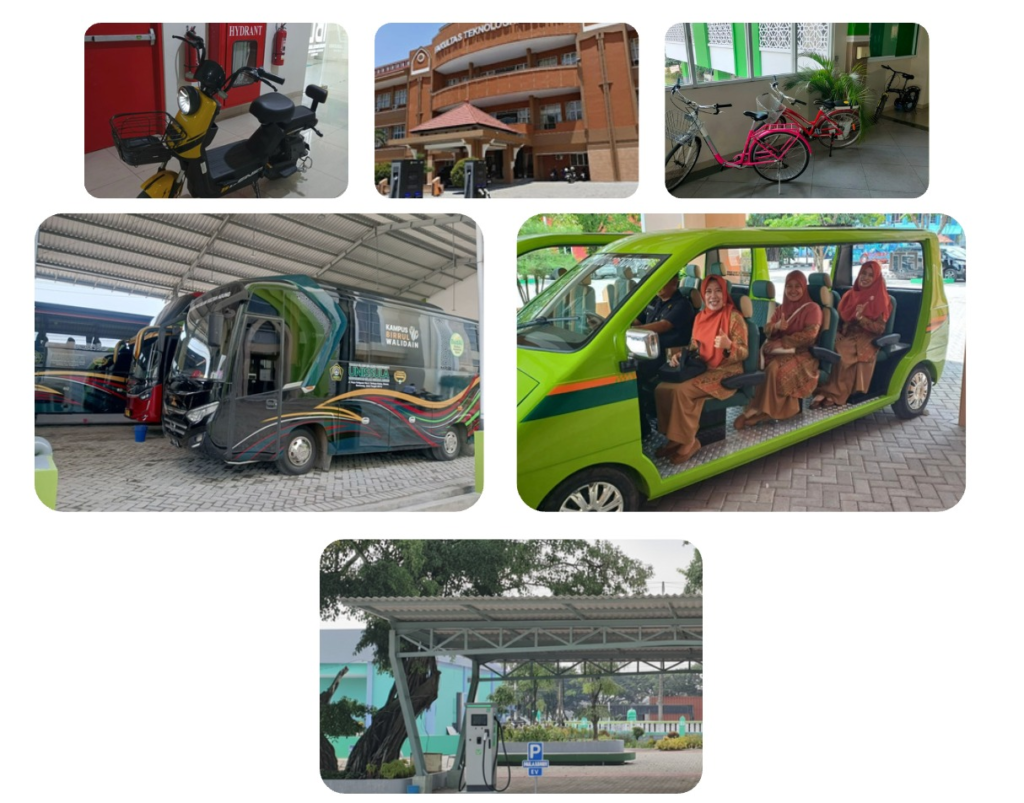
For internal campus mobility, UNISSULA provides university-developed electric vehicles and electric bicycles free of charge for movement between faculties, academic buildings, administrative units, and other campus facilities. These services are available to students, lecturers, and staff and support short-distance mobility without requiring users to rely on private motorcycles or cars.
The internal electric-mobility facilities help:
- reduce transportation costs for campus users;
- improve access between faculties and university facilities;
- support students who may face financial barriers to daily mobility;
- reduce dependence on private vehicles; and
- promote low-emission transportation within the campus.
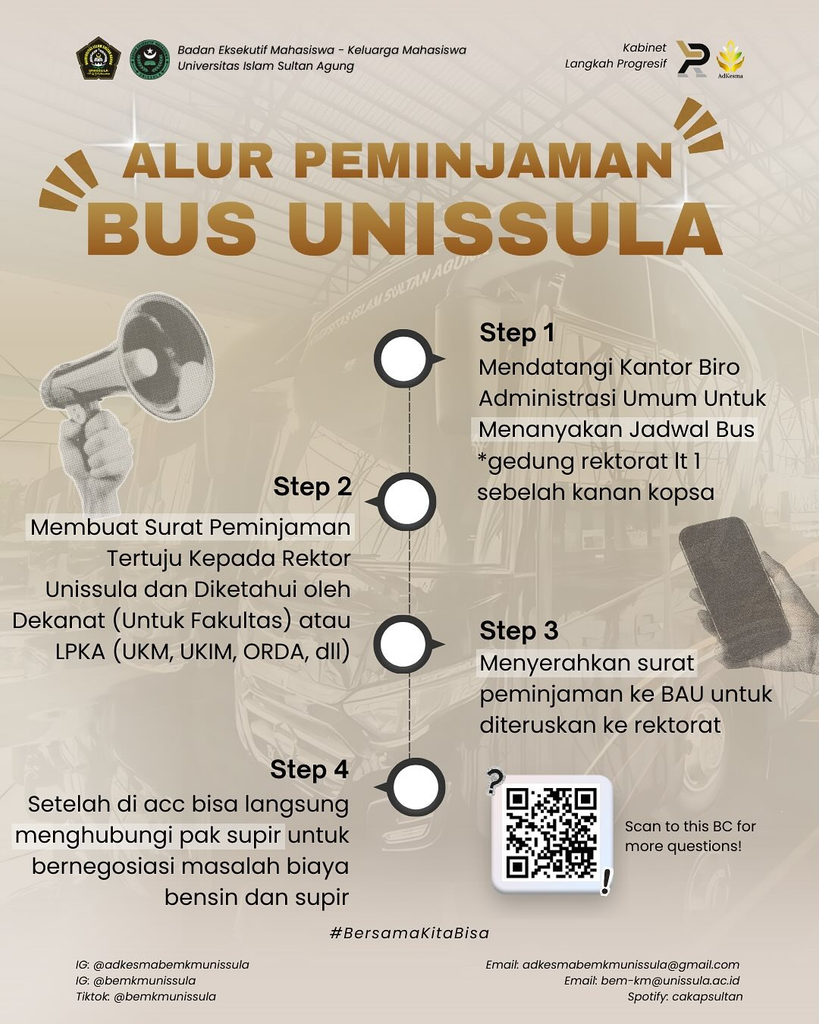
For longer-distance university activities, students and student organisations may request the use of UNISSULA buses through a formal borrowing procedure. The process requires checking bus availability with the General Administration Bureau, submitting a borrowing request for institutional approval, and coordinating with the driver after approval.
Legal Services (Free Legal Aid and Consultation)
Universitas Islam Sultan Agung (UNISSULA) provides institutional legal consultation and assistance through the Biro Konsultasi Hukum dan Bantuan Hukum Masyarakat (BKBHM) within the Faculty of Law.
BKBHM serves as an institutional legal-support unit that provides consultation, assistance, and legal services to members of the university community and the wider public.
The Faculty of Law Academic Guidelines establish BKBHM as a formal unit within the Faculty of Law. The Head of BKBHM is responsible for developing and implementing programmes related to legal consultation and legal assistance, managing legal-service mechanisms, and strengthening BKBHM as an institutional legal-support service.
Through this mechanism, members of the university community, including students, can access legal consultation and assistance when they face legal issues requiring professional support.
Scope of Legal Assistance
BKBHM provides legal-support services that may include:
- legal consultation;
- review of legal documents;
- preparation of legal responses and related documents;
- legal advocacy;
- assistance in resolving legal disputes; and
- support or representation in formal legal proceedings, where applicable.
Publicly documented activities demonstrate that BKBHM is actively involved in providing legal assistance and advocacy through its institutional role within the Faculty of Law.
Support for Students Facing Legal Difficulties
Access to university-based legal support can be particularly important for students when legal problems create financial, psychological, social, or academic pressures that may interfere with their studies.
Students from low-income families may have limited financial capacity to independently obtain professional legal consultation or representation.
The availability of BKBHM therefore provides an additional institutional support mechanism that can help students address legal difficulties without relying solely on privately funded legal services.
This support may contribute to reducing non-academic barriers that could otherwise affect students’ continued enrolment, academic progression, or ability to complete their university education.
Complementary Student Support
Legal assistance through BKBHM complements UNISSULA’s broader framework of financial and non-financial support for students from low-income and economically disadvantaged backgrounds.
This broader support framework includes:
- KIP Kuliah education and living-cost assistance;
- the Khaira Ummah Scholarship;
- LAZIS Sultan Agung support;
- meal and welfare assistance;
- student accommodation facilities;
- transportation support;
- academic guidance and counselling; and
- institutional legal consultation and assistance through BKBHM.
Together, these mechanisms support students in addressing both financial and non-financial challenges that could otherwise contribute to interruption of study or difficulty in completing their university education.
Institutional Role in Supporting Study Continuity
UNISSULA recognises that successful completion of university study may be affected by a range of circumstances beyond academic performance and tuition costs.
Legal difficulties can become significant barriers, particularly for students who do not have sufficient financial resources to obtain professional assistance independently.
By providing access to institutional legal consultation and assistance through BKBHM, UNISSULA strengthens its wider student-support framework and helps ensure that students facing legal difficulties have access to appropriate support mechanisms while continuing their studies.
Academic and Student-Support Mechanisms
Financial and practical assistance is complemented by academic and student-support mechanisms designed to help students maintain academic progression.
Through academic advising, study planning, counselling, and other student-support services, students can receive assistance when academic, personal, or financial difficulties affect their continued enrolment or academic progress.
For students from low-income families, these mechanisms complement financial assistance by addressing circumstances that could otherwise lead to delayed progression, interruption of study, or withdrawal from university.
Supporting Retention and Successful Completion
UNISSULA recognises that supporting students from low-income families requires more than simply enabling them to enter university.
Students must also be able to meet essential educational and living costs throughout their studies and receive appropriate institutional support when difficulties arise.
Through KIP Kuliah education and living-cost assistance, LAZIS Sultan Agung support, the Khaira Ummah Scholarship, institutional fee relief, university-managed accommodation, campus transportation, academic guidance, and student-support mechanisms, UNISSULA provides a comprehensive framework to help students from low-income families remain enrolled, progress academically, and successfully complete their university education.
This approach addresses both direct educational costs and broader barriers associated with living expenses, accommodation, transportation, and study continuity.
Evidence of Implementation
UNISSULA’s support for students from low-income families is demonstrated through the following institutional evidence:
- KIP Kuliah living-cost assistance for students with limited economic capacity.
- KIP Kuliah education-cost assistance covering eligible educational expenses.
- Rector Decree No. 7500/F/SA/VIII/2025, formally establishing KIP Kuliah recipients among new students admitted in 2025.
- Rector Decree No. 10263/F/SA/X/2025, establishing additional KIP Kuliah recipients under the USMAS scheme and providing education-cost and living-cost assistance.
- LAZIS Sultan Agung and Khaira Ummah Scholarship support for financially disadvantaged students, including substantial tuition and institutional-fee relief.
- Rector Decree No. 9700/D.3/SA/IX/2024, providing scholarship and fee-relief mechanisms for the 2025/2026 academic year.
- Free meal provision for students, providing food support without charge and reducing daily living expenses.
- Pesantren Mahasiswa Sultan Agung (Pesanmasa), providing university-managed student accommodation and residential facilities.
- UNISSULA campus transportation facilities, available through an institutional procedure for approved student activities.
- Legal consultation and assistance through BKBHM, Faculty of Law UNISSULA, providing institutional access to legal consultation, assistance, advocacy, and related legal-support services.
- Institutional academic advising, counselling, student-support, and progression-monitoring mechanisms supporting continued enrolment and successful completion.