

















14.2.2 Educational Outreach on Sustainable Tourism Management
Universitas Islam Sultan Agung (UNISSULA) supports community-based education and outreach on sustainable tourism management through applied community service programmes that strengthen the capacity of local tourism practitioners, village institutions, and community organisations.
In 2025, the Urban and Regional Planning Study Programme, Faculty of Engineering, UNISSULA, carried out a participatory community-service programme in Manggihan Village, Getasan Sub-district, Semarang Regency, to assist Pokdarwis Pepeling and the Manggihan Village Government in preparing an education- and ecotourism-based Tourism Village Masterplan.
The programme was designed not merely to produce a planning document, but also to strengthen local capacity for managing tourism in an environmentally responsible, educational, and sustainable manner.
Community-Based Sustainable Tourism Education
Manggihan Village is an emerging tourism village with natural, agricultural, livestock, and educational-tourism potential.
Before the programme, the village did not yet have a comprehensive tourism planning document, partly because of limited technical capacity among the local tourism-awareness group and village government.
UNISSULA therefore provided direct assistance to help local practitioners prepare a sustainable tourism development framework based on education, ecology, and community participation.
The programme placed local stakeholders at the centre of the planning process. Pokdarwis Pepeling, the village government, youth groups, and community business groups were actively involved in identifying local potential, analysing challenges, and formulating future tourism development.
Participatory Outreach with Local Practitioners
The programme used a participatory method involving UNISSULA lecturers and students together with:
- Manggihan Village Government;
- Pokdarwis Pepeling;
- Karang Taruna;
- Local community groups; and
- Kelompok Usaha Bersama.
The outreach process included perception alignment, primary surveys, Focus Group Discussions, aerial mapping using drones, and collaborative preparation of the masterplan.
This approach ensured that local tourism practitioners were not passive recipients of a university plan. Instead, they participated directly in identifying tourism assets, discussing development concepts, evaluating environmental conditions, and planning future tourism facilities and programmes.
Implementation During 2025
The community-service activities were carried out through several stages during 2025.
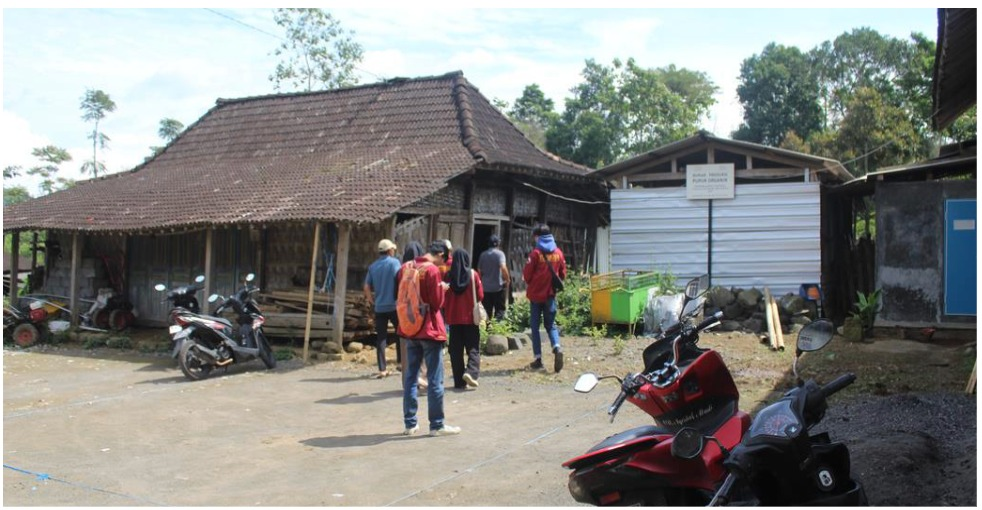
A primary survey was undertaken on 22 March 2025, involving UNISSULA, the village government, and local community organisations. The survey collected information on physical, social, and economic conditions across the village.
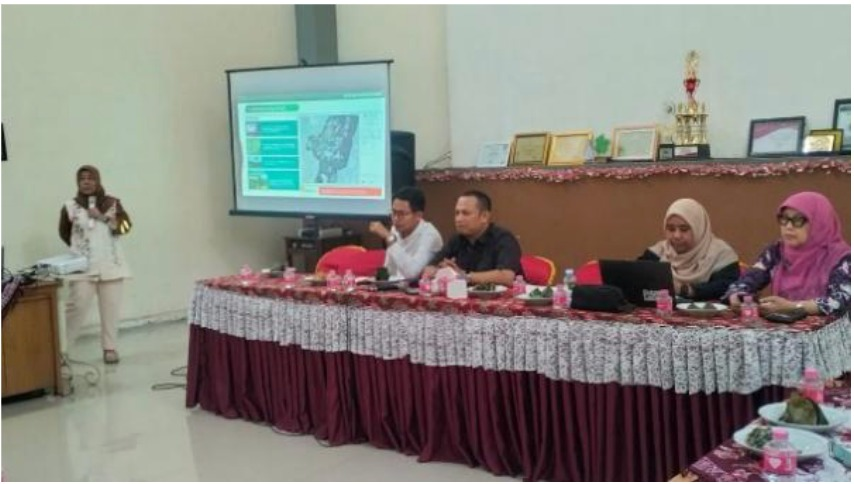
A Focus Group Discussion was held on 16 April 2025 at Manggihan Village Hall. It brought together village officials, Karang Taruna, Pokdarwis, local business groups, and the UNISSULA community-service team to discuss survey findings, identify key issues, and develop ideas for village tourism.
On 23 May 2025, the team conducted aerial mapping with drone technology together with village officials and Pokdarwis to support detailed spatial planning for future tourism development.
These activities demonstrate that the programme was a practical and structured outreach initiative conducted directly with local tourism practitioners.
Education- and Ecology-Based Tourism Planning
The programme adopted an eco-edutourism approach.
This approach combines three important elements:
- Tourism attractions based on the natural environment;
- Learning and educational interaction between visitors and the environment; and
- Sustainability principles.
The programme also recognised sustainable tourism as an approach that should maintain ecosystem functions, preserve natural tourism attractions, protect local social and cultural values, maintain visitor comfort, and create economic benefits for the community.
UNISSULA therefore assisted the local community in designing tourism development that could generate economic opportunities without neglecting environmental protection.
Strengthening Local Tourism Management Capacity
One of the principal objectives of the programme was to improve the technical capacity of Pokdarwis Pepeling and the Manggihan Village Government.
The completed masterplan was intended to function as both a technical planning guide and a capacity-building tool for local tourism managers. The programme strengthened their readiness to manage tourism development based on education and ecology in a more sustainable way.
The masterplan also identified human-resource development as an important part of future tourism management, including training in:
- Tourism management;
- Homestay management;
- Culinary services;
- Digital marketing;
- Tourism guiding; and
- Hospitality.
These capacity-building measures were designed to strengthen the professionalism and long-term sustainability of village tourism management.
Community-Based Tourism Development
The Manggihan programme places the community at the centre of tourism development.
The tourism village is managed by Pokdarwis Pepeling under the village institutional structure, and the programme emphasised community participation as a key requirement for sustainable tourism.
The resulting development concept seeks to create tourism products that allow visitors to interact with local landscapes, agriculture, livestock activities, local enterprises, and community life.
The planned tourism packages include nature tourism, educational tourism, integrated camping and educational tourism, homestays, and community-based experiences.
This model supports a form of tourism in which local people are directly involved in planning, management, service provision, and economic activity.
Sustainable Management of Natural Resources
Environmental sustainability is an important component of the Manggihan tourism-development strategy.
The village is located in the upper part of the Tuntang watershed, meaning that land-use decisions in Manggihan can influence the environmental condition of Lake Rawa Pening downstream.
The programme therefore recognised the need to control land use and tourism development so that it would not create negative environmental impacts downstream.
Environmental risks, including erosion and landslides, were also considered in the planning process, and the village’s natural assets were assessed together with ecological carrying capacity and spatial constraints.
This demonstrates that tourism development was addressed not only from an economic perspective, but also through environmental management and ecosystem protection.
Eco-Educational Tourism Products
The masterplan identifies two principal tourism products within the priority development area.
The first is a camping ground using the village’s natural landscape. The second is an educational tourism area where visitors can learn about local agriculture, livestock, seed nurseries, greenhouse activities, local products, organic fertiliser, and biogas.
These tourism products are intended to combine environmental education, local livelihoods, and visitor experiences.
By connecting tourism with local environmental practices and community enterprises, the programme supports a model of tourism development in which education and environmental responsibility are central components.
Supporting Infrastructure for Sustainable Tourism
The masterplan also includes supporting infrastructure intended to benefit both residents and future visitors.
Planned measures include pedestrian routes, interpretation and directional signage, improved village infrastructure, clean-water network expansion, drainage improvement, waste segregation facilities, and optimisation of a village reservoir for both irrigation and tourism purposes.
Within the educational tourism zone, planned environmental-support facilities include:
- An automatic fertiliser-sieving machine;
- Aqua Smart Micro Sprinkler;
- A rainwater harvesting installation;
- Solar panels;
- Educational information boards; and
- Improved facilities for organic fertiliser production.
These measures demonstrate an effort to integrate tourism development with practical environmental management.
Institutional and Community Collaboration
The programme was carried out through close collaboration between UNISSULA and local stakeholders.
Pokdarwis Pepeling and the Manggihan Village Government contributed data, participated in surveys, supported Focus Group Discussions, and helped formulate the masterplan.
The programme therefore represents more than academic research. It is a direct community-service and capacity-building activity in which the university works alongside local tourism practitioners.
The completed masterplan strengthened local understanding of tourism planning and provided a practical framework for future implementation.
Long-Term Sustainable Tourism Capacity
The programme concluded that Pokdarwis Pepeling and the Manggihan Village Government had strengthened their understanding of the importance of comprehensive tourism planning.
The masterplan also provides a basis for future collaboration between the village, local communities, government institutions, private partners, and UNISSULA.
Continued education and mentoring are recommended to improve community capacity in environmental management, local product development, tourism operations, and implementation of the tourism masterplan.
The programme was funded through UNISSULA’s internal community-service funding and was implemented in cooperation with Pokdarwis Pepeling and the Manggihan Village Government.
Evidence of Implementation
- Community-service programme in 2025 – UNISSULA assisted Pokdarwis Pepeling and the Manggihan Village Government in preparing an education- and ecotourism-based Tourism Village Masterplan.
- Direct engagement with local tourism practitioners – The programme involved the village government, Pokdarwis, Karang Taruna, local business groups, and other community stakeholders through participatory planning.
- Structured educational outreach – Activities included surveys, Focus Group Discussions, aerial mapping, analysis, and collaborative masterplan preparation.
- 2025 implementation was documented through activities on 22 March, 16 April, and 23 May 2025.
- Sustainable tourism principles were explicitly incorporated through the eco-edutourism approach, including ecosystem conservation, environmental learning, community participation, and long-term sustainability.
- Capacity building for sustainable tourism management included tourism management, homestay management, digital marketing, guiding, hospitality, and institutional strengthening.
- Environmental management was integrated into tourism planning, including watershed protection, irrigation-related infrastructure, rainwater harvesting, clean-water facilities, waste management, and renewable-energy support.