

















14.5.4 Collaboration with Local Communities to Maintain Shared Aquatic Ecosystems
Universitas Islam Sultan Agung (UNISSULA) supports the maintenance of shared aquatic and coastal ecosystems through collaboration with local communities, environmental organisations, student groups, and other stakeholders.
In 2025, UNISSULA participated in coastal stewardship activities in Mangkang and Tambakrejo, Semarang, while university research also documented community-based management practices in the mangrove ecosystems of Tapak and Tambakrejo. These activities support the protection of coastal habitats that are shared by local residents, fishing communities, aquatic organisms, and other users of the coastal environment.

Community-Oriented Mangrove Stewardship in Mangkang
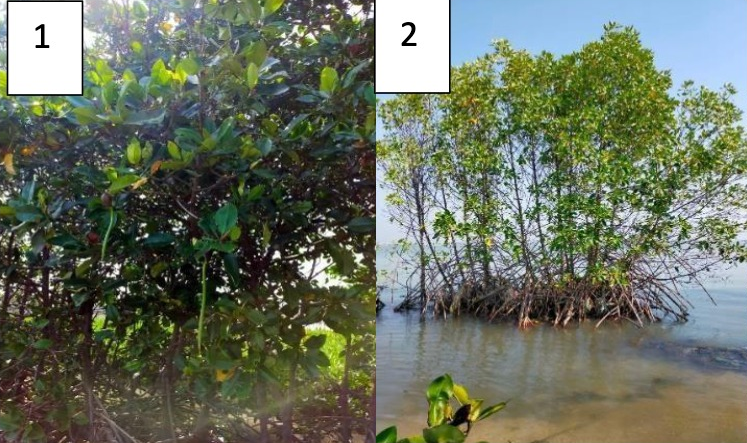
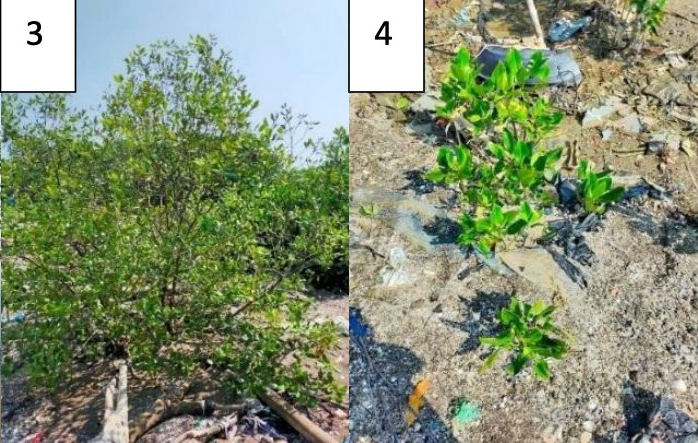
In 2025, students from the Faculty of Industrial Technology (FTI) UNISSULA conducted a community-oriented environmental activity in Mangkang, Semarang, as part of the Student Management Skills Training programme.
Approximately 70 students participated in the programme. On the third day, participants travelled to Mangkang for a community-service activity involving mangrove planting along the coastline. The planting site was reached through the coastal area, and participants returned to a nearby fishing-community settlement after completing the activity. Faculty of Technology and Informatics
Public evidence:
https://fti.unissula.ac.id/kegiatan-lkmm-bagi-mahasiswa-angkatan-2025
The activity demonstrates direct university involvement in maintaining a local coastal ecosystem located within a community environment.
Mangrove planting contributes to coastal ecosystem stewardship by supporting shoreline stability, habitat functions, and the resilience of coastal areas exposed to environmental pressure.
Collaboration in the Tambakrejo Coastal Restoration Programme
A particularly strong example of community collaboration occurred on 27 July 2025 at the coastal fishing village of Tambakrejo, Semarang.
The coastal restoration activity was organised by WALHI Central Java together with Kelompok Mangrove Nusantara and Ikatan Remaja Tambakrejo. The collaboration also involved several organisations, including Fikomedia Unissula, alongside foundations, environmental students, volunteers, and other community groups.
Fikomedia is a student organisation within UNISSULA’s Faculty of Communication.
Public evidence:
Mangrove Planting with Residents, Youth, Students, and Volunteers
The Tambakrejo restoration programme brought together 60 participants consisting of residents, young people, students, and volunteers.
During the activity, participants planted 1,200 Rhizophora mangrove seedlings along the Tambakrejo coast. The seedlings were provided through contributions from WALHI Central Java, the provincial environmental authority, and volunteers.
The activity was designed not only as a planting programme but also as an effort to strengthen collective awareness of the importance of protecting the coastal ecosystem that supports the social and economic life of the local fishing community.
This provides a clear example of university participation alongside local residents and community organisations in maintaining a shared aquatic and coastal ecosystem.
Strengthening Community-Led Coastal Stewardship
The Tambakrejo activity also marked the establishment of Kelompok Mangrove Nusantara, a local initiative involving residents and young people focused on the protection and restoration of the coastal environment.
A mangrove planting map was also launched to provide documentation and strategic direction for future mangrove planting.
This strengthens the long-term dimension of the activity because ecosystem maintenance is linked with local organisational capacity and future restoration planning.
UNISSULA’s participation alongside local community organisations contributes to a model of stewardship in which the university supports rather than replaces community leadership.
Community-Based Management of the Tapak Mangrove Ecosystem
UNISSULA also contributes academic knowledge to community-based coastal management.
A study published in 2025 in UNISSULA’s Jurnal Kajian Ruang examined community participation in managing the mangrove ecotourism area of Tapak Village, Tugurejo, Semarang.
The study identifies mangroves as important for preventing abrasion, supporting biodiversity, and neutralising pollutants. It also records environmental pressures including reclamation and industrial pollution.
Public evidence:
https://jurnal.unissula.ac.id/index.php/kr/article/view/44112
Local Community Participation in Tapak
The Tapak research found that local residents participate in environmental management, tourism operations, and educational programmes.
Their participation reached the partnership level, where communities influence decision-making with support from government. The study also highlights training and partnership schemes as mechanisms that can strengthen sustainable community-based ecosystem management.
This research provides additional evidence that maintaining local coastal ecosystems depends on active relationships among communities, institutions, government, and other stakeholders.
Full research:
https://jurnal.unissula.ac.id/index.php/kr/article/download/44112/12346
Community Participation in Mangrove Edupark Tambakrejo
UNISSULA’s 2025 research also examined Mangrove Edupark Tambakrejo and community participation in its management.
The study identifies the mangrove area as an important resource for protecting communities on the northern coast of Semarang from abrasion and tidal waves, while also supporting local economic and tourism activities. Unissula Repository
Public evidence:
https://repository.unissula.ac.id/46641
The study explicitly highlights the importance of involving local communities in the management and development of the area and in maintaining mangrove diversity. Unissula Repository
This provides supporting academic evidence for the community-based stewardship approach demonstrated through direct coastal activities.
Shared Responsibility for Coastal Ecosystems
Mangrove and coastal ecosystems are shared environmental resources.
Their ecological functions benefit both natural systems and surrounding communities through:
- Shoreline protection;
- Reduction of coastal erosion;
- Habitat provision;
- Biodiversity support;
- Fisheries-related ecological functions; and
- Increased resilience to coastal hazards.
Maintaining these benefits requires cooperation among universities, residents, young people, fishing communities, government institutions, environmental organisations, and other stakeholders.
UNISSULA contributes to this shared responsibility through direct environmental activities, student participation, community collaboration, and research supporting community-based ecosystem management.
Linking Community Engagement with Ecosystem Maintenance
UNISSULA’s 2025 activities demonstrate complementary forms of engagement.
In Mangkang, FTI students participated directly in mangrove planting within a local fishing-community environment.
In Tambakrejo, Fikomedia Unissula joined a multi-stakeholder coastal restoration initiative involving residents, local youth, environmental organisations, students, and volunteers, resulting in the planting of 1,200 mangrove seedlings.
Research in Tapak and Tambakrejo further supports understanding of how community participation contributes to sustainable mangrove management.
Together, these activities connect:
University participation → Local-community collaboration → Ecosystem restoration and management → Shared coastal stewardship
Evidence of Implementation
- FTI UNISSULA students conducted a community-service mangrove planting activity in the Mangkang coastal area in 2025, directly contributing to stewardship of a local coastal ecosystem near a fishing settlement.
- Fikomedia Unissula participated in the 2025 Tambakrejo Coastal Restoration programme, together with local community organisations, environmental groups, students, and volunteers.
- The Tambakrejo collaboration involved residents, young people, students, and volunteers and resulted in the planting of 1,200 Rhizophora mangrove seedlings.
- The programme supported a local community initiative, Kelompok Mangrove Nusantara, focused on coastal protection and restoration, strengthening community capacity for continued ecosystem stewardship.
- UNISSULA’s 2025 Tapak research documented community participation in environmental management and educational programmes at a local mangrove ecosystem, with participation reaching partnership level.
- UNISSULA’s 2025 Tambakrejo research documented the importance of local-community participation in mangrove management and the maintenance of mangrove diversity.