

















14.4.1 Water Quality Standards and Guidelines for Water Discharges
Universitas Islam Sultan Agung (UNISSULA) applies institutional standards and guidelines for wastewater management to ensure that water discharged from educational, healthcare, laboratory, and supporting activities is properly treated before release into the environment.
The university’s approach to wastewater management is based on pollution prevention, appropriate treatment, effluent monitoring, and compliance with applicable wastewater-quality standards. These measures are intended to protect water quality, aquatic ecosystems, living organisms, human health, and the surrounding environment.
Within the integrated Sultan Agung educational and healthcare environment, wastewater treatment is supported by operational procedures and dedicated Wastewater Treatment Plants.

Institutional Guidelines for Wastewater Management
UNISSULA applies wastewater management standards that require wastewater generated from institutional activities to be appropriately managed before discharge.
The approach includes:
- Identification and separation of potentially hazardous liquid waste;
- Treatment of wastewater through appropriate wastewater-treatment systems;
- Monitoring of treated effluent;
- Compliance with applicable wastewater-quality standards; and
- Prevention of direct discharge that may cause environmental pollution.
The institutional wastewater-management framework is supported by operational procedures within the Sultan Agung educational and healthcare environment, where wastewater treatment facilities are used to manage wastewater generated from healthcare, laboratory, clinical, and supporting activities.
Wastewater Treatment Before Discharge
Wastewater generated from activities that may contain biological, chemical, or other contaminants is required to undergo appropriate treatment before being discharged.
Institutional waste-management procedures recognise liquid waste as one of the waste streams that requires specific environmental management.
Liquid waste can be treated through a dedicated Wastewater Treatment Plant, locally referred to as an Instalasi Pengolahan Air Limbah (IPAL).
This treatment process is intended to reduce biological and chemical hazards and prevent untreated wastewater from entering the surrounding environment.
Wastewater Quality Standards
UNISSULA’s wastewater-management approach requires treated wastewater to comply with applicable wastewater-quality standards before discharge.
The operational guidelines used within the Sultan Agung environment explicitly state that wastewater treated through a wastewater treatment installation must meet the applicable wastewater-quality standards established under environmental regulations.
This requirement ensures that wastewater discharge is controlled not only by treatment processes but also by measurable quality standards.
The principle applied is:
Wastewater generation → Treatment → Quality control → Compliant discharge
This approach helps reduce the risk of pollutants entering drainage systems, groundwater, rivers, or other receiving environments.
Effluent Monitoring
Wastewater management also includes monitoring of treated effluent.
Operational procedures require liquid effluent to be measured and recorded, while wastewater treated through IPAL facilities must comply with applicable wastewater-quality regulations.
Monitoring supports verification that treatment systems are functioning properly and that treated water remains within acceptable environmental limits before discharge.
The guidelines also refer to wastewater-quality standards for healthcare facilities when assessing effluent generated from treatment operations.
Wastewater Treatment at Sultan Agung Islamic Hospital
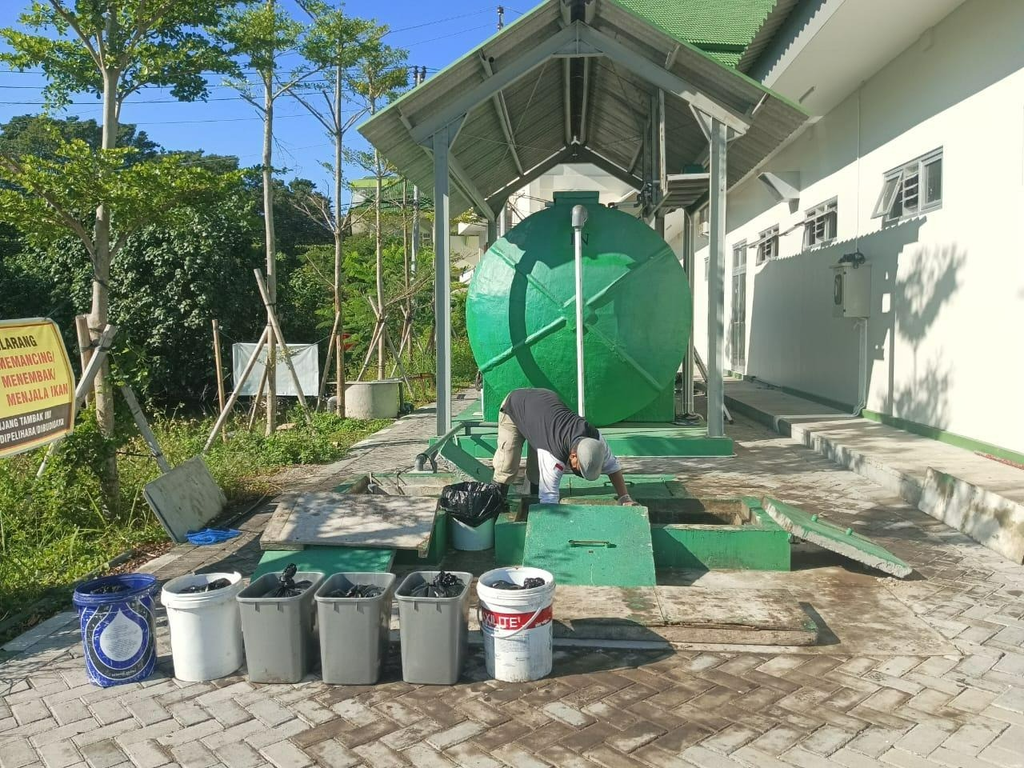
Implementation of UNISSULA’s environmental management approach can be seen at Sultan Agung Islamic Hospital, which operates a dedicated wastewater treatment installation.
The on-site IPAL facility includes a clearly documented treatment-flow system.
The facility processes wastewater through a sequence that includes:
Collection → Pretreatment → Equalisation → Biological treatment → Separation → Disinfection → Discharge
The wastewater streams shown on the facility’s treatment diagram include wastewater from kitchens and hospital buildings.
The treatment system also includes components such as:
- Grease traps;
- Equalisation tanks;
- Biofilter reactors;
- Biofilter separators;
- Disinfection units; and
- Controlled discharge channels.
The presence of this infrastructure demonstrates the practical implementation of wastewater-treatment requirements within the Sultan Agung environment.
Wastewater Treatment at Sultan Agung Dental and Oral Hospital
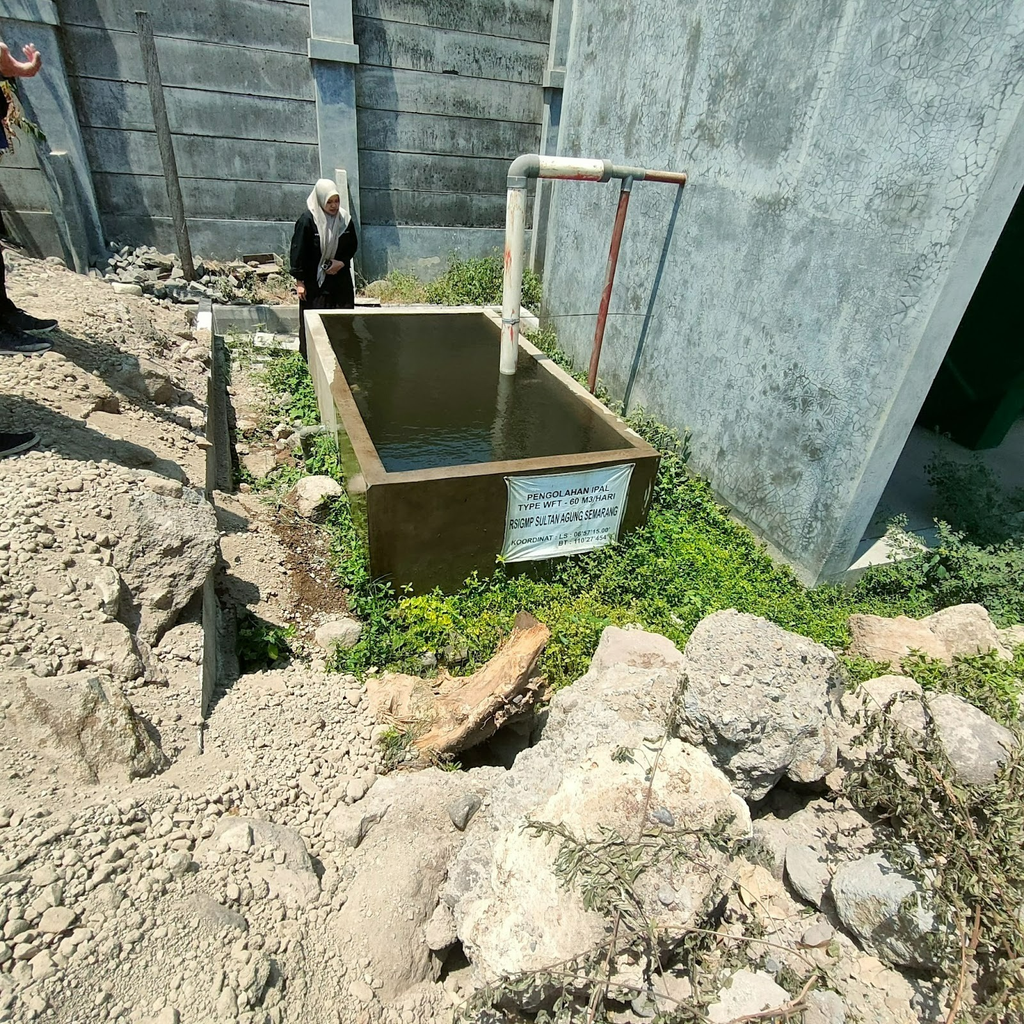
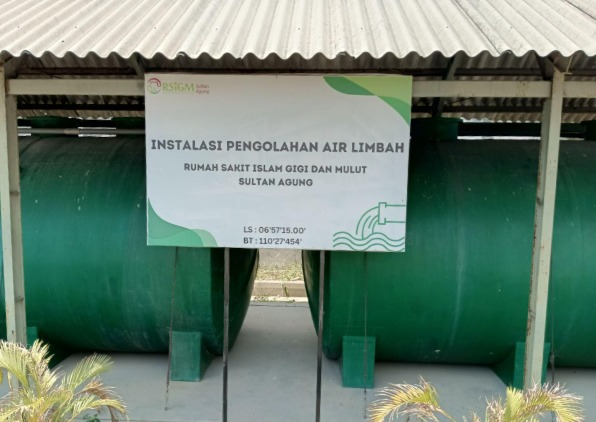
Wastewater-treatment infrastructure is also implemented at Sultan Agung Dental and Oral Hospital (RSIGM Sultan Agung).
RSIGM operates a dedicated Instalasi Pengolahan Air Limbah, providing treatment for wastewater generated from dental, clinical, laboratory, and supporting activities.
The existence of a dedicated wastewater-treatment facility at RSIGM demonstrates that wastewater management is applied across multiple healthcare facilities associated with the Sultan Agung educational environment.
This distributed wastewater-treatment approach helps ensure that potentially contaminated wastewater is treated close to its source before being released into the environment.
Management of Hazardous Liquid Waste
Wastewater management is supported by procedures for handling hazardous liquid waste.
Institutional operational guidelines recognise several potentially hazardous waste categories, including:
- Infectious waste;
- Chemical waste;
- Pharmaceutical waste;
- Heavy-metal waste;
- Laboratory waste; and
- Other hazardous materials.
These waste streams must be managed according to their characteristics and cannot simply be discharged directly into the environment.
For chemical waste, appropriate chemical treatment is identified as part of the required management process before liquid waste can enter the wastewater-management system.
This reduces the risk of hazardous substances contaminating water bodies or affecting aquatic organisms.
Pollution Prevention and Environmental Protection
The wastewater-management approach is intended to prevent environmental pollution and reduce risks to humans and other living organisms.
The operational guidelines state that hazardous waste must be managed to prevent negative impacts on:
- The environment;
- Human health; and
- Other living organisms.
The same framework also establishes the objective of preventing and controlling environmental pollution and damage caused by hazardous waste.
This makes water-quality protection part of a broader environmental-management system rather than a stand-alone technical process.
Protecting Aquatic Ecosystems and Human Health
Proper wastewater management is important because untreated or inadequately treated wastewater can affect:
- Surface water;
- Groundwater;
- Aquatic organisms;
- Soil quality;
- Surrounding communities; and
- Public health.
By requiring wastewater treatment, quality monitoring, and compliance with applicable discharge standards, UNISSULA contributes to protecting environmental quality and reducing potential harm to aquatic ecosystems.
The approach also supports safer management of wastewater from laboratories, healthcare facilities, kitchens, sanitation services, and other institutional activities.
Evidence of Implementation
- UNISSULA applies institutional wastewater-management practices that include treatment and control of liquid waste before discharge.
- Operational procedures recognise liquid waste as a waste stream that requires environmental management.
- Liquid waste can be treated through dedicated Wastewater Treatment Plants (IPAL).
- Wastewater treated through IPAL is required to meet applicable wastewater-quality standards.
- Effluent must be measured and recorded, and treated wastewater must comply with applicable wastewater-quality regulations.
- Wastewater-quality standards for healthcare facilities are referenced in operational procedures for effluent control.
- Sultan Agung Islamic Hospital operates a dedicated IPAL, supported by a documented treatment-flow system and on-site wastewater-treatment infrastructure.
- Sultan Agung Dental and Oral Hospital operates a dedicated IPAL, demonstrating wastewater-treatment implementation in another healthcare facility within the Sultan Agung environment.
- Hazardous liquid waste is subject to specific handling and treatment requirements, reducing the risk of inappropriate discharge into the environment.