


16.3.2 Educational Outreach and Capacity Building for Local Government Policymakers at Universitas Islam Sultan Agung (UNISSULA)
Institutional Commitment to Policy Education and Capacity Building
Universitas Islam Sultan Agung (UNISSULA) supports the development of effective, accountable, and sustainable local governance through educational outreach, professional training, and capacity-building programmes.
Through its community engagement activities, UNISSULA applies academic expertise to strengthen knowledge and practical skills in economics, financial management, cooperative governance, and public service administration.
These activities connect the university’s educational mission with the needs of local communities and government institutions, particularly in supporting village-level economic development.
In 2025, UNISSULA’s Faculty of Economics and Business (FEB) conducted educational outreach activities in Manggihan and Banyubiru villages, Semarang Regency, Central Java, focusing on the management and accounting practices relevant to the Indonesian government’s Koperasi Merah Putih initiative.
The programme provided a platform for knowledge exchange and practical learning relevant to community economic development and local cooperative governance.

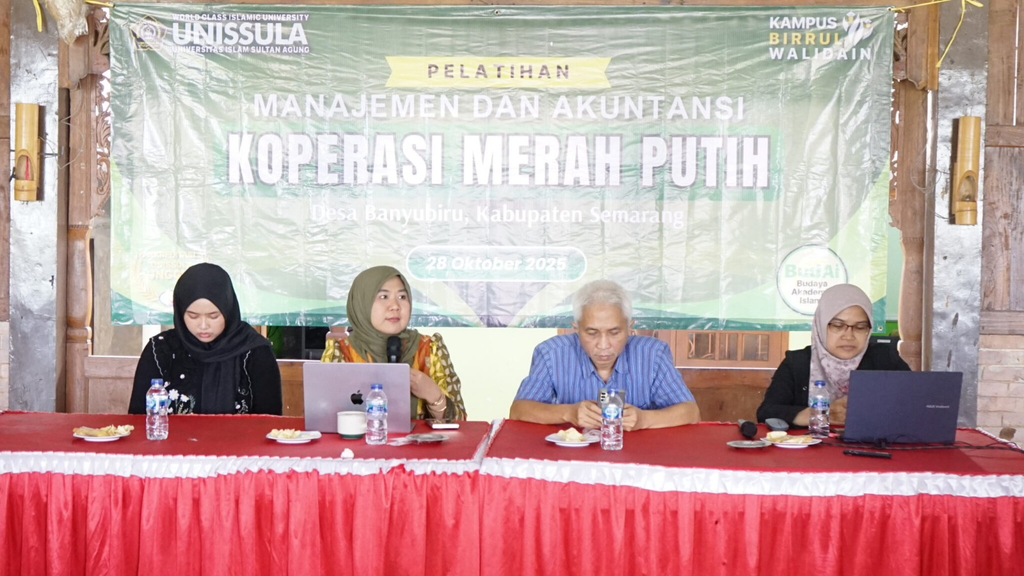
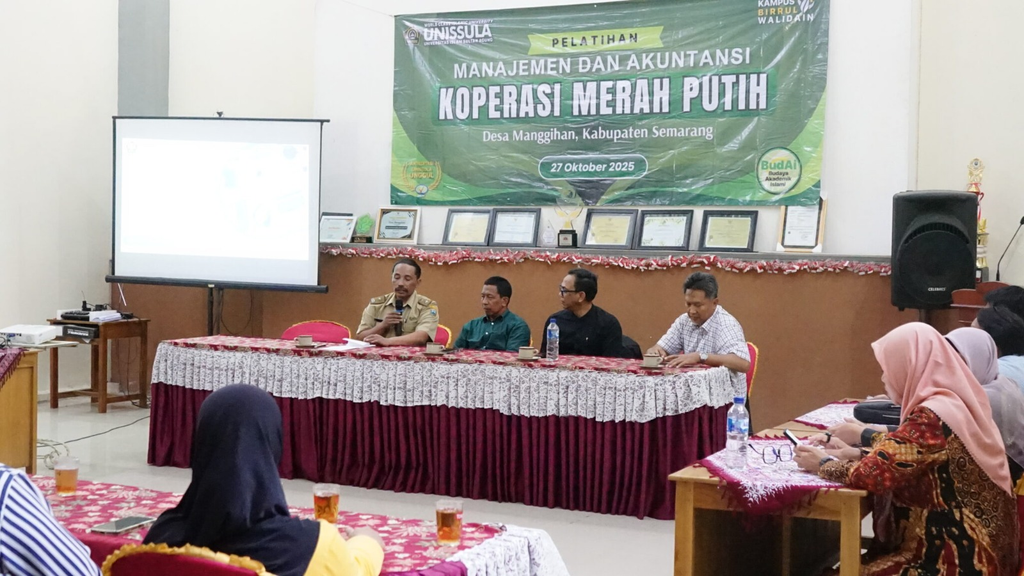
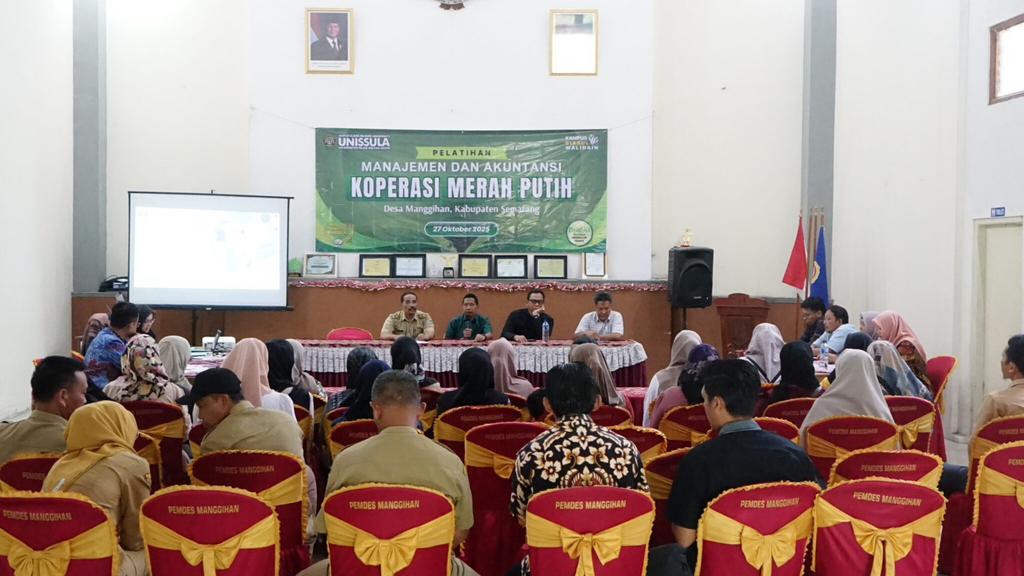
Economic and Financial Management Training in Manggihan and Banyubiru
On 27–28 October 2025, lecturers from the Accounting and Management Study Programmes of UNISSULA’s Faculty of Economics and Business conducted community training activities in two villages in Semarang Regency:
- Manggihan Village, Getasan District: 27 October 2025.
- Banyubiru Village, Banyubiru District: 28 October 2025.
The activities were organised under the theme:
“Management and Accounting Training for Koperasi Merah Putih.”
The programme focused on strengthening participants’ understanding of business management, financial recordkeeping, cooperative management, and Islamic cooperative principles.
The training addressed practical challenges in managing community-based economic activities, supporting financial accountability, and improving organisational sustainability.
Academic staff provided educational sessions followed by interactive discussions, questions and answers, and practical guidance.
Participants discussed challenges concerning financial records, business planning, and marketing strategies, enabling the university team to provide advice adapted to local needs.
The programme demonstrated the university’s commitment to sharing economic and management knowledge beyond the classroom and supporting local economic development.
Official University Publication:
Capacity Building Relevant to Village Economic Governance
The Koperasi Merah Putih programme is closely associated with village economic development and community-based institutional management.
UNISSULA’s educational outreach addressed subjects relevant to the knowledge and competencies needed for responsible cooperative governance and local economic development.
The training covered three principal areas.
Economic Management and Business Planning
Lecturers introduced practical approaches to managing economic activities, improving organisational effectiveness, and supporting sustainable business operations.
Accounting and Financial Accountability
Participants received guidance on basic financial recordkeeping, financial management, and the importance of accurate documentation in managing cooperative and business activities.
Cooperative Governance and Islamic Cooperative Principles
The training introduced cooperative management practices, including approaches relevant to cooperative sustainability, community participation, and Islamic economic principles.
These learning areas support the development of skills that are relevant to village-level economic governance and the implementation of community economic programmes.
The involvement of village government officials with relevant policy responsibilities, where documented in the programme’s participant records, provides a direct connection between the training activities and capacity building for local policymakers.
Interactive Education and Knowledge Transfer
UNISSULA’s training programme combined academic instruction with participatory learning.
Rather than relying exclusively on lectures, the activities encouraged participants to identify practical problems and discuss possible solutions with university experts.
Topics raised during the discussions included:
- financial administration;
- business planning;
- marketing; and
- the management of cooperative activities.
This approach enabled participants to connect economic and accounting concepts with challenges encountered in local economic development.
The university team provided practical guidance intended to help participants strengthen their management capabilities and make better-informed organisational decisions.
Through these educational activities, UNISSULA contributed to the transfer of academic knowledge to stakeholders involved in community development and local economic activities.
Strengthening University–Government–Community Collaboration
UNISSULA recognises that sustainable economic development requires collaboration between academic institutions, government authorities, local organisations, and communities.
Village-level economic initiatives benefit from access to financial management knowledge, organisational expertise, and practical education.
The 2025 activities in Manggihan and Banyubiru created opportunities for engagement between university lecturers and local stakeholders on economic and cooperative management issues.
The programme supports UNISSULA’s wider institutional commitment to promoting community-based economic development and responsible organisational practices.
Where village government policymakers participate directly in such educational activities, the university’s expertise can also strengthen their capacity to oversee, guide, and support local economic development initiatives.
This form of collaboration contributes to closer connections between academic knowledge and public-sector responsibilities.
Contribution to SDG 16 – Peace, Justice and Strong Institutions
UNISSULA’s educational outreach and capacity-building initiatives contribute to SDG 16: Peace, Justice and Strong Institutions by promoting practical knowledge, responsible financial conduct, and stronger local institutions.
The 2025 programme demonstrated the university’s provision of:
- educational outreach in economics and management;
- training in accounting and financial recordkeeping;
- capacity building relevant to cooperative governance;
- interactive learning and practical problem-solving; and
- community engagement supporting village economic development.
These activities support the broader objective of strengthening institutional knowledge and responsible governance at the local level.
They also illustrate how universities can contribute to the skills and capabilities needed by local stakeholders and government officials involved in economic development initiatives.