






16.2.4 Local Stakeholder Participation in University Decision-Making at Universitas Islam Sultan Agung (UNISSULA)
Institutional Commitment to Inclusive and Participatory Decision-Making
Universitas Islam Sultan Agung (UNISSULA) recognises the importance of meaningful participation by local external stakeholders in institutional decision-making, particularly in matters concerning public infrastructure, environmental sustainability, community welfare, and the utilisation of university-associated resources.
UNISSULA facilitates stakeholder engagement through institutional consultation, interinstitutional coordination meetings, joint infrastructure reviews, and cooperation procedures that provide opportunities for external parties to contribute their perspectives to university-related decisions.
These mechanisms enable the university to engage with local government institutions, public authorities, community stakeholders, and other relevant external organisations when addressing matters affecting both the university and the surrounding community.
A documented example of this participatory approach was implemented in 2025 through UNISSULA’s collaboration with the Semarang City Government, Yayasan Badan Wakaf Sultan Agung (YBWSA), and relevant public infrastructure agencies in addressing flooding in the Kaligawe area of Semarang.
The collaboration involved consultation and coordination concerning the utilisation of university-associated land, the integration of retention pond facilities, and the development of an emergency drainage diversion channel (sodetan).
The initiative demonstrates how engagement with external stakeholders can contribute to institutional resource-use decisions and practical solutions to challenges affecting surrounding communities.
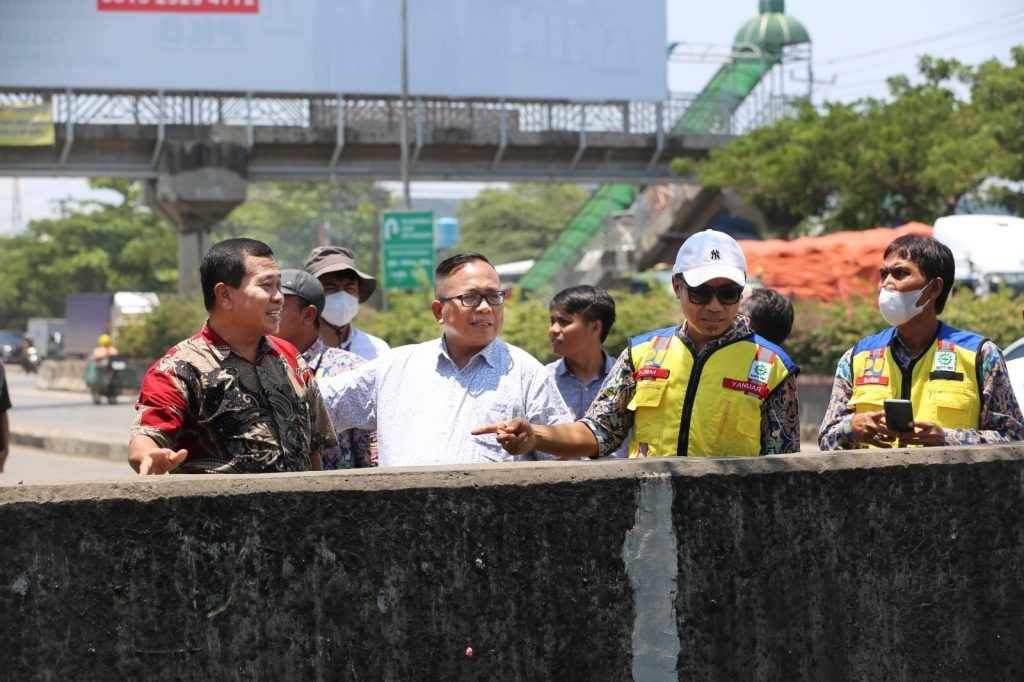

Local Government Participation through Joint Consultation and Infrastructure Review
On 30 October 2025, UNISSULA and YBWSA participated in a joint infrastructure review involving the Mayor of Semarang, Agustina Wilujeng Pramestuti, and representatives of the Semarang City Government.
The engagement also involved senior university leadership, including UNISSULA’s Vice-Rectors.
The participating institutions reviewed the construction of an emergency drainage diversion channel in the Kaligawe area and the retention pond infrastructure associated with the UNISSULA and YBWSA complex.
The consultation and site review addressed several interconnected issues, including drainage connectivity, land utilisation, floodwater management, infrastructure accessibility, and the potential benefits of the project for surrounding communities.
The participation of local government representatives provided an opportunity for public-sector perspectives and regional flood management priorities to be considered alongside the university’s institutional interests.
Through this direct consultation mechanism, university representatives and external stakeholders were able to exchange information, review ongoing infrastructure development, and coordinate activities affecting shared environmental resources.
This engagement illustrates a practical mechanism for stakeholder participation in university-related decisions rather than cooperation limited to ceremonial agreements.
Reference:
https://suarabaru.id/2025/10/30/walikota-tinjau-pembangunan-sodetan-untuk-atasi-banjir-di-kaligawe
Stakeholder Engagement in Decisions Concerning University-Associated Land
In 2025, UNISSULA and YBWSA supported flood mitigation infrastructure development by making land available for the construction of a drainage diversion channel connecting the Kaligawe area with retention ponds behind the university campus.
The initiative required coordination between university-related institutions, public infrastructure authorities, and the Semarang City Government concerning the utilisation of land and water management facilities.
The contribution of university-associated resources formed part of a collaborative response to flooding that affected public mobility, transportation infrastructure, local economic activities, and the university environment.
The engagement addressed practical considerations related to drainage alignment, access to retention facilities, coordination with public infrastructure systems, and the broader interests of surrounding communities.
On 2 November 2025, the Semarang City Government publicly acknowledged UNISSULA and YBWSA’s contribution to the flood mitigation initiative.
The institutional decision to make land available demonstrates a tangible outcome associated with cooperation and consultation involving external government stakeholders.
The initiative illustrates how decisions concerning university-associated resources can be connected to the needs and priorities of local stakeholders.
Reference:
Participatory Coordination with Public Authorities
The Kaligawe flood mitigation project brought together several institutions with responsibilities and interests in environmental management and public infrastructure.
The participating organisations included UNISSULA, YBWSA, the Semarang City Government, and relevant government infrastructure agencies.
Their engagement supported coordination on a shared environmental challenge directly affecting the university and surrounding communities.
The areas of coordination included:
- Reviewing the proposed and ongoing development of flood mitigation infrastructure.
- Considering the availability and utilisation of university-associated land.
- Coordinating the connection of drainage infrastructure with existing retention ponds.
- Supporting access to infrastructure needed for emergency flood management.
- Considering the potential effects of infrastructure development on surrounding communities.
- Coordinating implementation activities between institutional and public-sector stakeholders.
These activities provide a documented example of direct dialogue and coordinated implementation involving local government and university representatives.
The joint infrastructure review and interinstitutional coordination served as practical channels for exchanging information and considering external stakeholder interests in the implementation of a university-related infrastructure initiative.
References:
https://suarabaru.id/2025/10/30/walikota-tinjau-pembangunan-sodetan-untuk-atasi-banjir-di-kaligawe
Implementation of Stakeholder-Related Decisions in 2025
The engagement between the university-related institutions and public authorities was accompanied by the implementation of emergency flood mitigation infrastructure in October and November 2025.
The Ministry of Public Works implemented the construction of an emergency drainage diversion channel measuring approximately 227 metres.
Construction commenced on 26 October 2025 and was completed on 1 November 2025.
The channel connected the Kaligawe national road drainage system with retention pond infrastructure behind the UNISSULA campus.
This connection enabled floodwater to be diverted towards retention facilities and subsequently managed through the broader drainage and pumping system serving the Kaligawe and Terboyo areas.
The initiative required practical cooperation involving infrastructure access, the integration of existing facilities, and the utilisation of land associated with UNISSULA and YBWSA.
The completion of the drainage diversion project demonstrates that the engagement was associated with an implemented infrastructure outcome.
It also illustrates the university’s contribution to collaborative initiatives addressing community needs beyond its immediate academic activities.
Official government references:
Institutional Mechanisms Supporting External Stakeholder Participation
UNISSULA maintains written institutional procedures to support engagement with external stakeholders.
These procedures are established under Rector Regulation Number 04 of 2020 concerning Guidelines for Cooperation with Partners (Peraturan Rektor Nomor 04 Tahun 2020 tentang Pedoman Kerja Sama dengan Mitra).
The regulation provides an institutional framework for identifying prospective external partners, initiating communication, conducting discussions, developing cooperation arrangements, implementing collaborative activities, and evaluating cooperation outcomes.
The framework recognises several categories of external stakeholders, including government institutions, educational organisations, non-governmental organisations, non-profit institutions, and business partners.
The written procedures provide a basis for structured engagement between university units and external institutions.
In practice, such engagement can take place through consultation meetings, institutional discussions, joint reviews, and the implementation of agreed activities.
The 2025 Kaligawe flood mitigation initiative provides an example of these forms of engagement involving government institutions and university-related resources.
Through this initiative, external public authorities participated in the review and coordination of infrastructure activities associated with the university environment.
The combination of institutional cooperation procedures and documented consultation demonstrates that UNISSULA has channels for engaging external stakeholders in matters involving shared institutional and public interests.
Official university regulation:
https://lp3m.unissula.ac.id/img/store/dokumen/39_1605672523.pdf
Stakeholder Participation and Community-Oriented Institutional Decisions
UNISSULA recognises that decisions regarding university-associated infrastructure can have consequences beyond the campus.
The Kaligawe area is an important transportation corridor connecting Semarang, Demak, and surrounding communities.
Flooding in the area can disrupt transportation, access to education, economic activities, and the daily lives of local residents.
The 2025 flood mitigation initiative therefore addressed an issue of shared concern to the university, local government, and the wider community.
The participation of government representatives helped connect institutional infrastructure arrangements with public flood management priorities.
The use of university-associated land and retention ponds for public infrastructure demonstrates how UNISSULA can contribute resources to initiatives that respond to community needs.
The documented stakeholder engagement also illustrates how external perspectives and institutional resources can be brought together to address practical challenges.
Through such engagement, UNISSULA supports cooperation between higher education institutions and local authorities in responding to environmental risks and promoting community resilience.
Contribution to SDG 16 – Peace, Justice and Strong Institutions
UNISSULA’s stakeholder engagement practices contribute to SDG 16 by supporting consultation, institutional accountability, and cooperation between universities and public authorities.
The 2025 Kaligawe flood mitigation initiative demonstrates several relevant institutional practices:
- Direct consultation between UNISSULA representatives and the Semarang City Government.
- Participation of external government stakeholders in reviewing university-associated infrastructure development.
- Coordination regarding the utilisation of university-associated land and water management facilities.
- Collaborative implementation of infrastructure intended to benefit surrounding communities.
- Public reporting of institutional contributions and project outcomes.
These practices demonstrate stakeholder engagement in a matter connecting university resources with local public interests.
The initiative also highlights the importance of maintaining mechanisms through which universities and external stakeholders can communicate, coordinate, and consider shared priorities.
Such engagement supports responsive institutional development and contributes to stronger relationships between the university, government institutions, and the surrounding community.